Inspiration
Many elderly family members value their independence and prefer living in their own homes, yet age-related cognitive decline, complex medication schedules, and the risk of unassisted emergencies create constant anxiety for their family caregivers. Most existing tools are either overly complex mobile apps tailored for tech-savvy younger users or intrusive monitoring systems that strip seniors of their dignity. We built SilverLink to bridge this gap: an accessibility-first companion that empowers seniors to live independently with confidence while giving their family caregivers continuous, non-intrusive peace of mind.
What it does
SilverLink delivers two synchronized interface modes tailored to each user's needs:
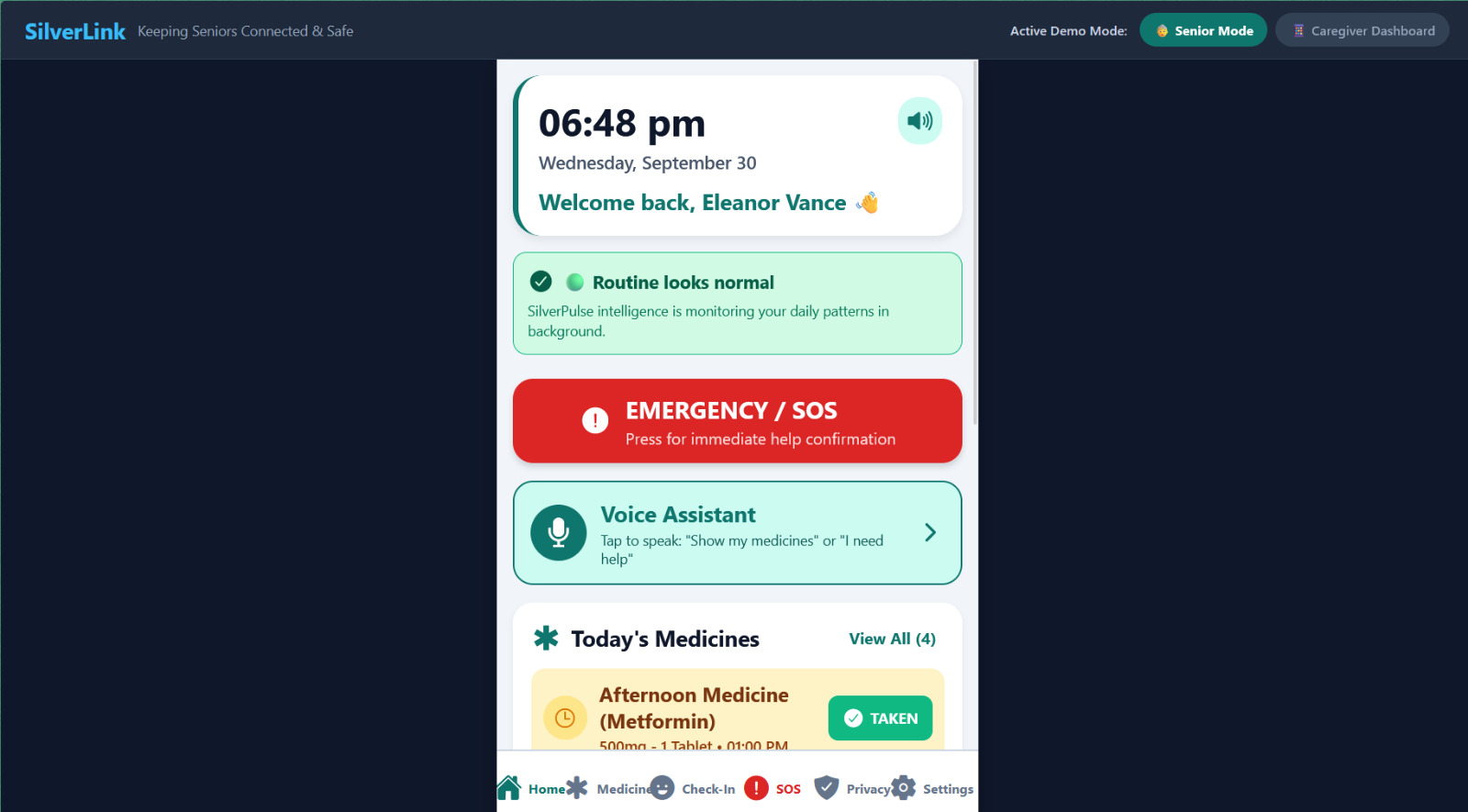
Senior Mode (Accessibility-First Companion):
- Ultra-Accessible UI: High-contrast color palette, clean typography, large 20px–36px text, and oversized 64px+ touch targets designed for low cognitive load and motor-impaired seniors.
- Voice Assistant: Hands-free voice interactions using speech recognition and speech synthesis (e.g., checking medicines, triggering help, or calling family).
- 1-Tap Emergency SOS Center: A prominent emergency trigger with an audible countdown, instant cancellation buffer, acoustic alerts, and direct contact dialers.
- Simplified Daily Check-Ins & Medication Tracking: Visual, time-grouped pill schedules with one-tap confirmations and mood/wellness check-ins.
- SilverPulse Routine Intelligence: Early anomaly detection prompting the senior before non-emergency escalations occur.
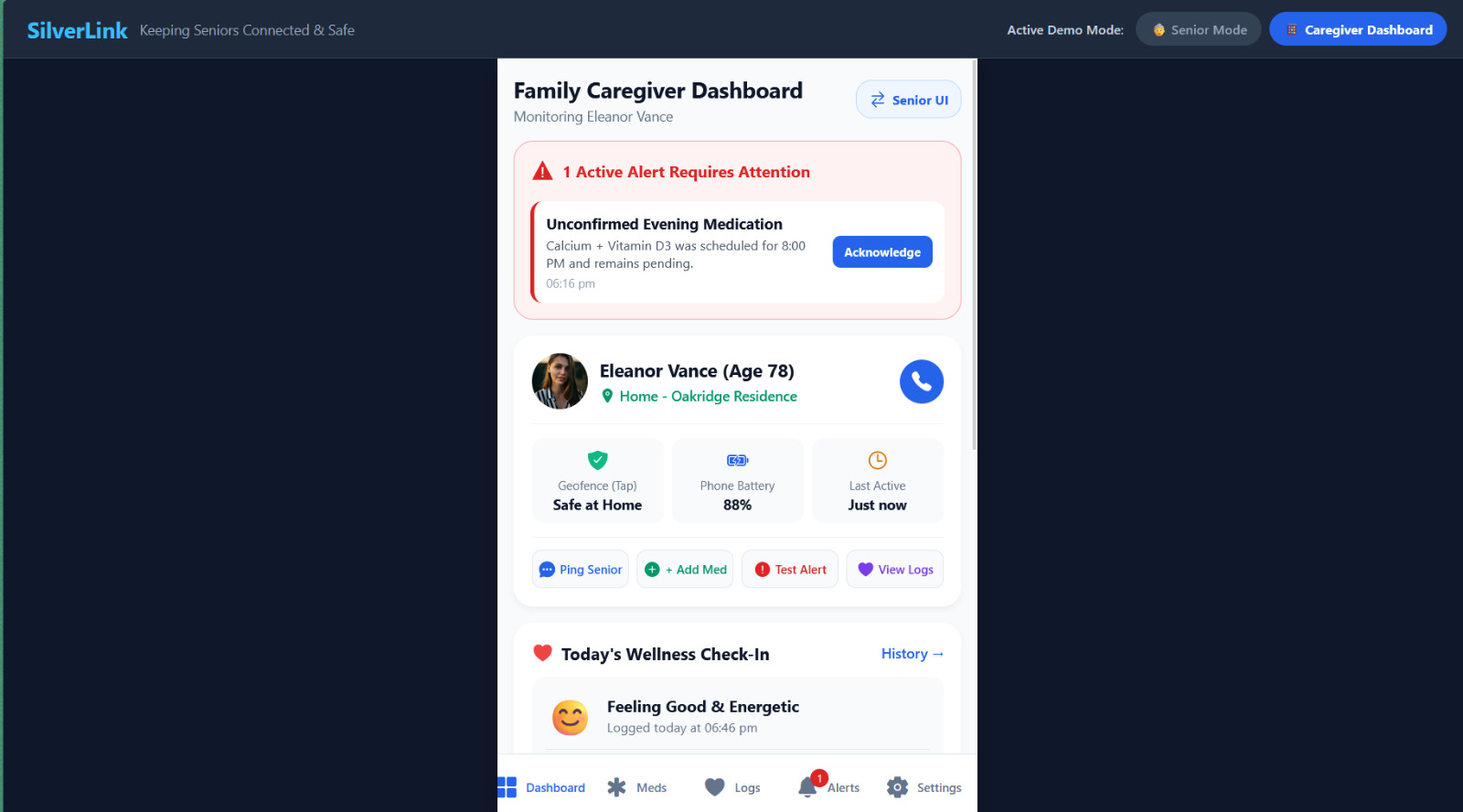
Family Caregiver Dashboard:
- Live Senior Status & Geofencing: Real-time visibility into the senior's battery level, routine status, and last active timestamp.
- Care Management: Schedule, update, or discontinue medication regimens, review adherence statistics, and track wellness trends.
- Prioritized Alert Center: Instant notifications for missed doses, low check-in ratings, or SOS activations with resolution workflows.
How we built it
- Frontend & Mobile Core: Built cross-platform with React Native, Expo (SDK 51), and TypeScript, using React Navigation for fluid tab and stack transitions.
- Web & Responsive Support: Configured via
react-native-webfor instant browser-based hackathon previews and responsive layout management. - State Management & Backend Services: Designed a modular Context API architecture coupled with Firebase (Auth & Firestore) for real-time synchronization, accompanied by a resilient local
AsyncStoragefallback layer for zero-config offline demoing. - Voice Intelligence: Integrated native Web Speech API (
SpeechRecognition&SpeechSynthesis) to deliver hands-free audio readouts and natural voice command processing. - Design System: Engineered a bespoke senior design system with strict accessibility constraints, high-contrast themes, and intuitive iconography via
@expo/vector-icons.
Challenges we ran into
- Balancing Accessibility with Functionality: Designing an interface with massive touch targets and minimal cognitive clutter while still retaining rich functionality (medication schedules, doctor contacts, SOS safeguards) required multiple UI iterations.
- Speech Recognition Across Devices: Handling cross-browser and cross-platform inconsistencies in the Web Speech API required robust fallbacks, defensive lifecycle management, and clear audio feedback cues.
- Cross-Platform Synchronization: Ensuring state updates (like marked medication or triggered alerts) seamlessly sync across Senior and Caregiver views whether running on web or mobile environments.
Accomplishments that we're proud of
- Developing an emergency SOS workflow that balances rapid alerting with a 3-second safety window to prevent accidental panic triggers.
- Seamless dual-role switching allowing hackathon judges and users to instantly preview both Eleanor's (Senior) and Sarah's (Caregiver) synchronized perspectives with one click.
- Achieving a truly senior-friendly interface that feels respectful, dignified, and empowering rather than clinical or surveillance-oriented.
What we learned
- The nuances of accessibility engineering—designing for seniors goes beyond just making fonts bigger; it involves contrast ratios, cognitive pacing, generous click areas, and predictable audio-visual feedback.
- Architecting resilient offline-first data structures in React Native that gracefully handle network transitions without interrupting critical senior safety actions.
What's next for silverlink
- Wearable Device Integration: Connecting smartwatches or fitness bands for passive fall detection and continuous heart-rate tracking.
- Smart Automated Pill Dispensers: Hardware IoT integrations via Bluetooth or MQTT to physically dispense and verify pill extraction.
- Caregiver Multi-Member Coordination: Group delegation allowing multiple siblings, neighbors, or professional home nurses to share check-in schedules and emergency duties.
Built With
- css
- expo.io
- firebase
- firestore
- javascript
- mobile-app
- react
- react-native
- react-navigation
- typescript
- web-speech-api


Log in or sign up for Devpost to join the conversation.