Inspiration
Skincare in India is bought from a listing that says "for oily skin", usually after a reel or a friend's tip. That tag is written by the seller, and opened skincare usually can't be returned. We wanted the shopper to hold the listing up to their own reading before they pay.
Desk research shaped the brief. It is desk research only; nobody was interviewed for these numbers (sources graded in design/research/05_desk_research_baseline.md):
- Opened skincare usually can't be returned on Nykaa and Purplle.
- About 40% of self-reported skin types matched instrument measurement (Youn et al. 2002, via a secondary summary). People guess their skin type, often wrongly.
- 43% of shoppers worry that AI recommendations are paid placements, so the app had to show its working and rank without paid slots.
- Store skin tools already exist, but each one recommends from its own shelf.
What it does
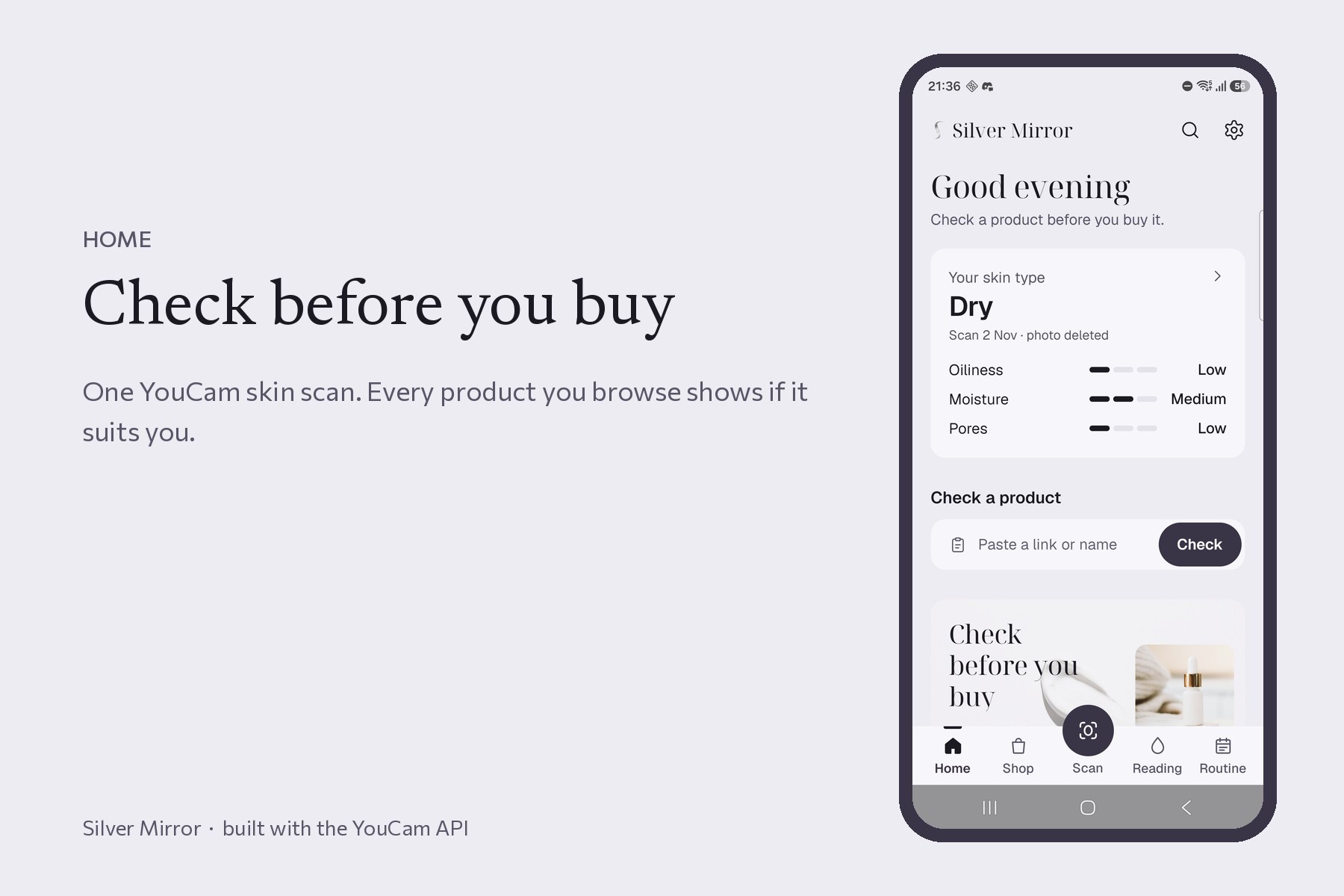
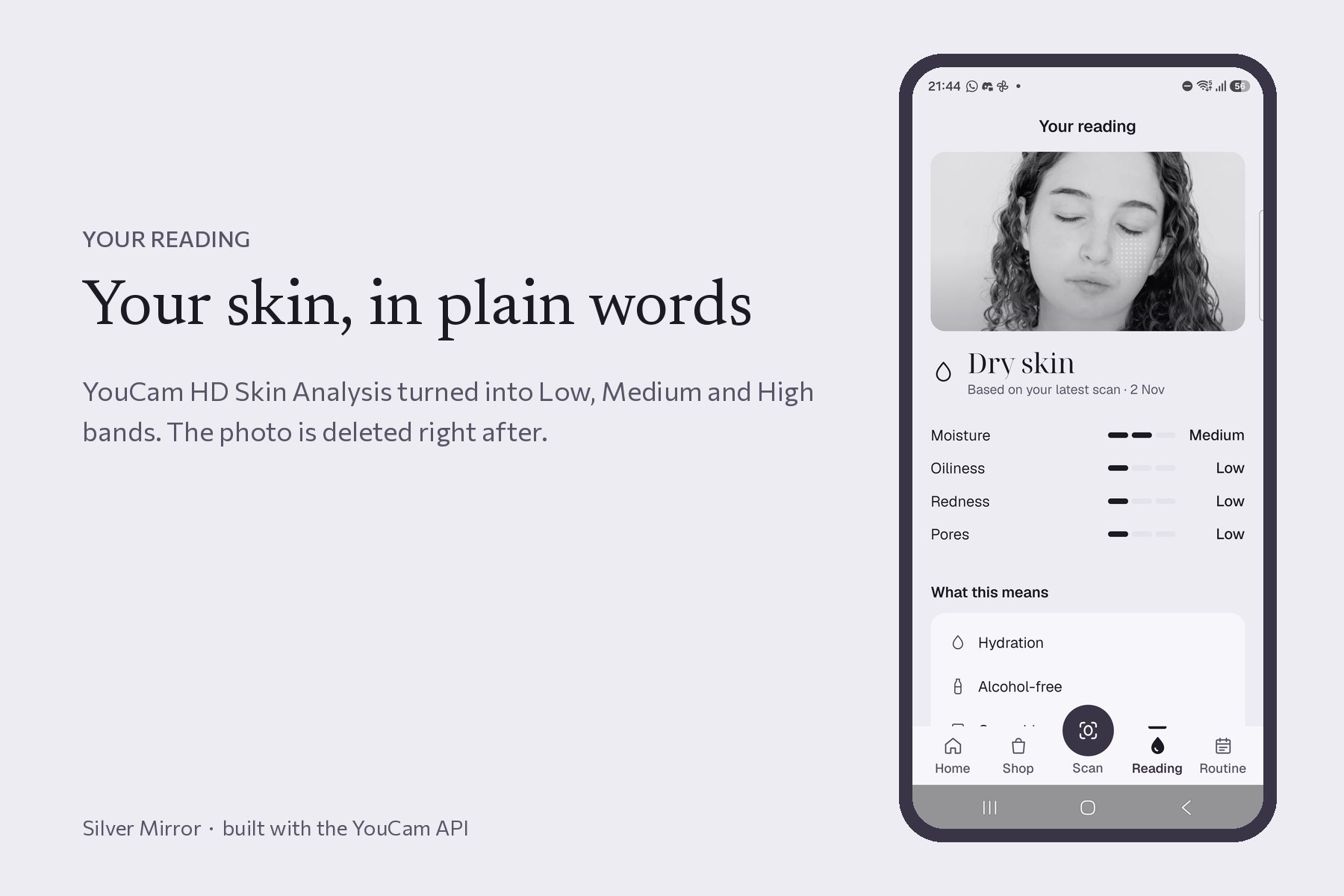
- One reading. After consent, one selfie goes to YouCam HD Skin Analysis. Silver Mirror keeps only Low / Medium / High bands for oiliness, moisture, redness and pores, the per-zone skin-type labels and the scan date, on the phone. The photo is deleted from YouCam straight after, and the app waits for YouCam to confirm the delete before it shows the tick.
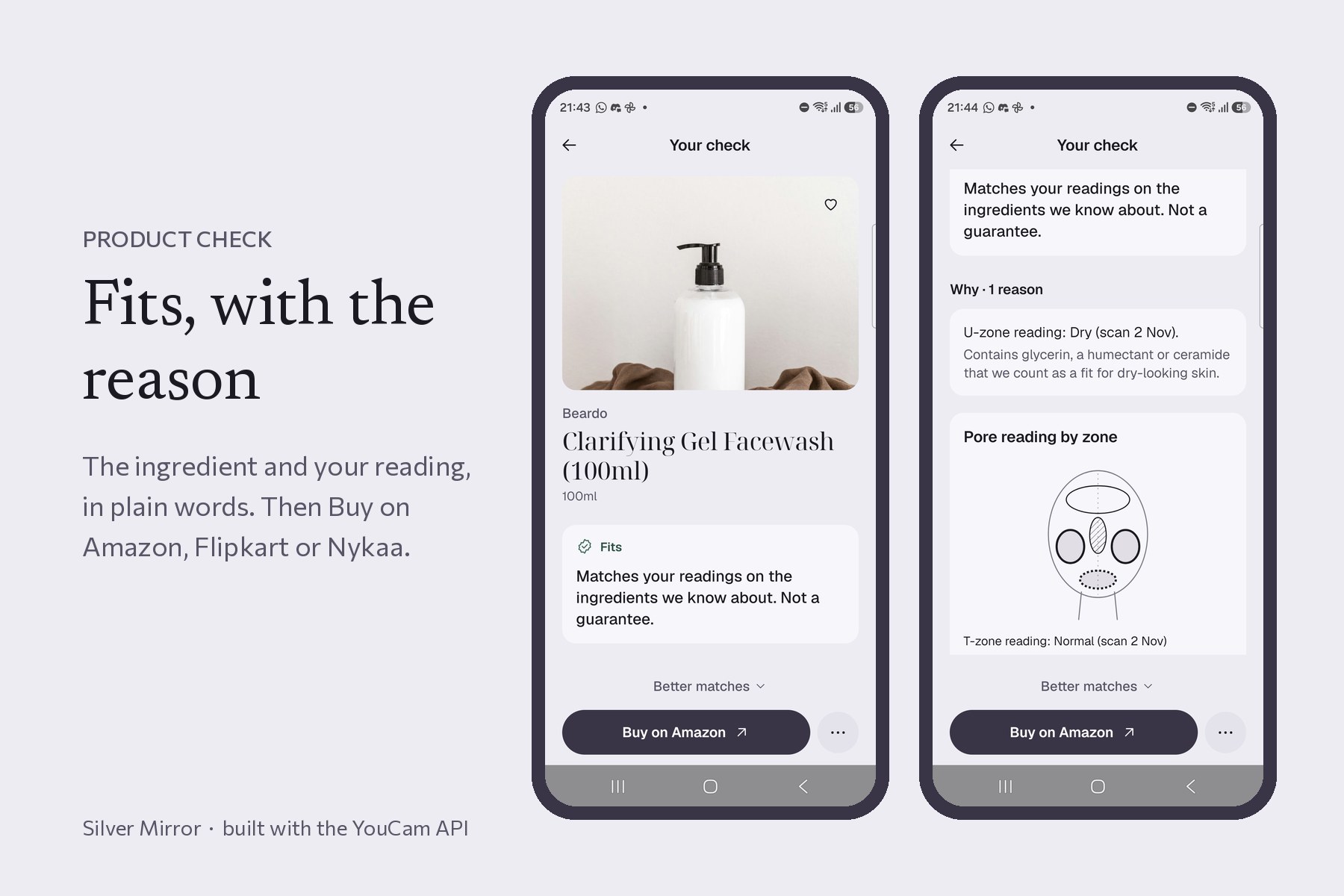
- Browse, check, then buy on the store. Home ("Chosen for you"), Shop and Your Routine show catalogue products already checked against the reading. Open one to see why it fits, then Buy on Amazon (or Flipkart / Nykaa) takes the shopper straight to that product on the store's website. Silver Mirror is where people decide; the stores are where they pay. Links are built after ranking, so a store link can never change what we recommend, and the link builder already has an off-by-default slot for affiliate tags (disclosed in the app when switched on).
- Or share in from the store app. In Flipkart or Nykaa, tap Share, then Silver Mirror. In Amazon, Share, then More, then Silver Mirror. Flipkart sends only a short link; the phone follows it, stops as soon as the listing address arrives (the page itself is never read), and the product slug becomes the title.
- Confirm the product. A deterministic name match against the catalogue proposes rows first, with SKU disqualifiers for a conflicting SPF, body vs face and product type. Claude (effort low, catalogue ids only) is asked only when the name doesn't match or the shopper shares a screenshot, and the same disqualifiers re-check its picks. The shopper picks one; nothing is judged before that.
- Verdict with reasons. A published, deterministic rules engine returns FITS, CAUTION, UNKNOWN or MEDICINE. Each reason names the ingredient and the reading behind it, in plain words: "Contains glycerin, a fit for your dry U-zone reading." The rule behind each reason is published (
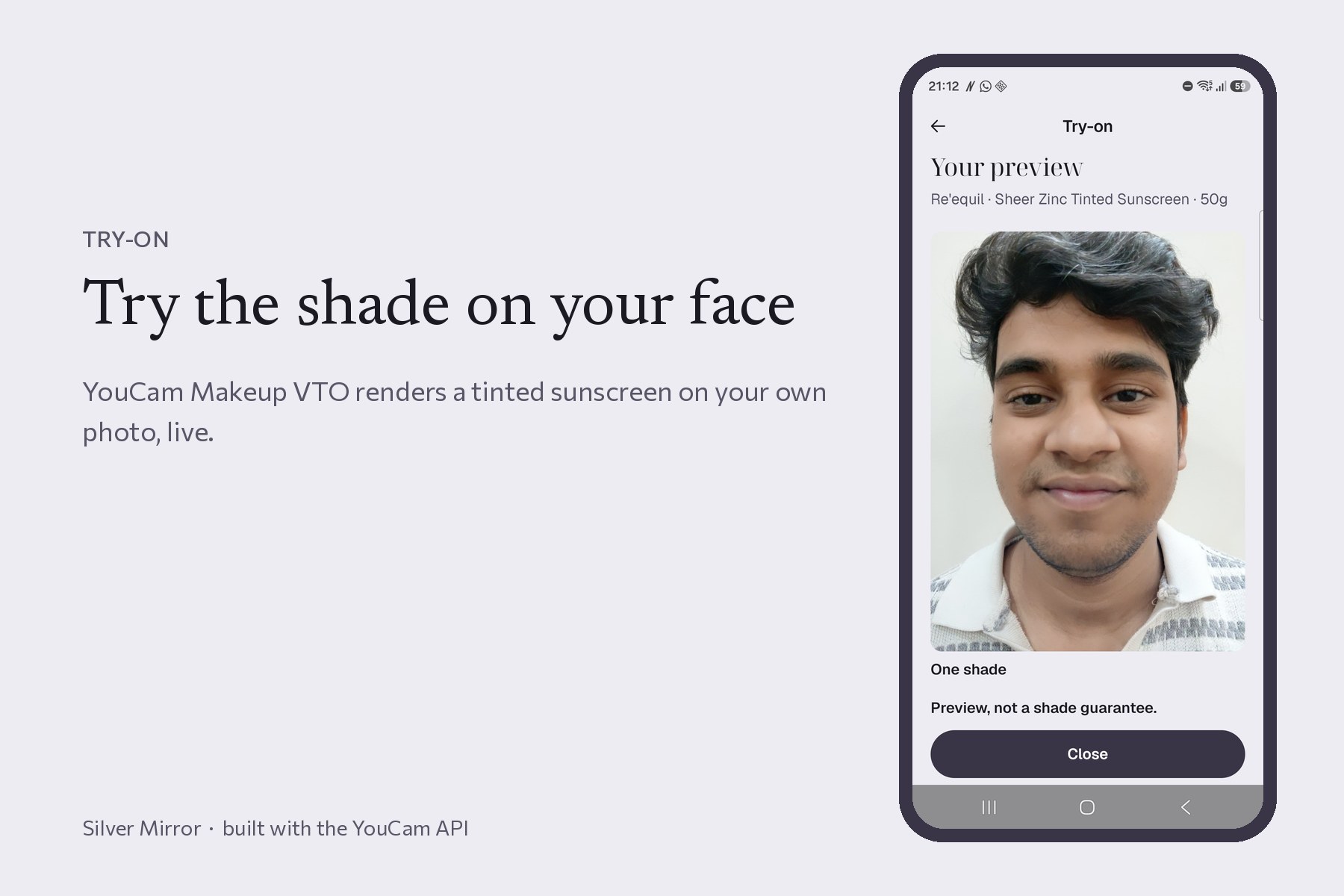
/rules) but kept out of the shopper's way. CAUTION says "May not suit your readings. A cosmetic fit note, not a health warning." - Try-on. For tinted sunscreens with a brand-sourced shade colour (7 of our 11, e.g. Foxtale SPF 50 Tinted Fluid Sunscreen), YouCam Makeup VTO renders the brand's shades on the shopper's own photo, right under the verdict's reasons: two shades picked with YouCam Skin Tone where the brand sells several, the one shade otherwise. Preview, not a shade guarantee. Shade colours come only from each brand's own swatch or texture image, with the source recorded per shade; the 4 tinted rows without one hide the button rather than guess.
- Better matches. Up to three FITS products from the verified catalogue, ranked by fit with no paid placements. Each opens a search for that product in the store the shopper came from, and one more link opens a Flipkart search filtered to their skin-type reading.
- Honest UNKNOWN. If we have no ingredient list, we say so ("This doesn't mean it's bad") and offer a label photo: Claude reads the ingredient names into editable chips, the shopper confirms, the rules decide.
- Medicine gate. Adapalene, tretinoin and similar actives stop the flow and point to a pharmacist.
- Audit. A pre-registered audit runs the same rules over 136 brand-page products and their own ingredient lists, published at
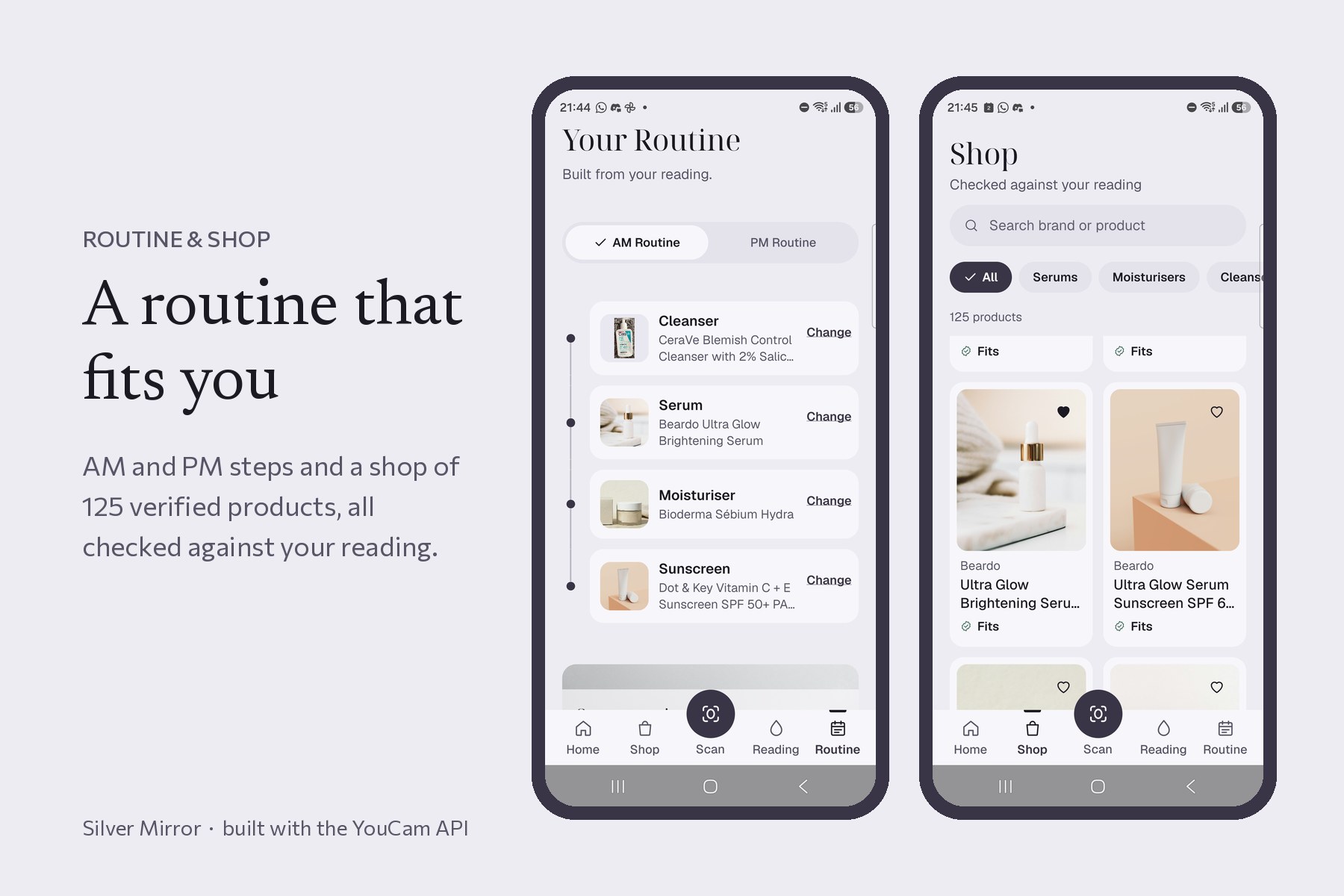
/audit. - Shop, Routine and saved products. A Shop tab browses the 125 verified catalogue products by category, each card showing whether it fits the shopper's reading; a heart saves a product on the phone. Your Routine builds an AM and PM routine (cleanser, serum, moisturiser, sunscreen) only from catalogue products that fit the reading, mixing brands, and any step can be swapped.
- For retailers and brands (built, no partner yet). The same deterministic check is an API:
POST /v1/label-checktakes up to 500 seller-feed items (claims + ingredient list) and returns label-check hits and per-profile verdicts, with no model on the path. The audit is this check over 136 brand pages. For Perfect Corp, 16 units buy one reading that powers every check for 30 days, checks spend 0 YouCam units, and try-on spends 22 units only when a shopper is choosing a tinted product. No partner, no pricing claimed, no affiliate revenue in this build.
How we built it
- YouCam first. Before writing app code we ran live spikes on Perfect Corp's official sample face (18 units): HD Skin Analysis, Makeup VTO and delete. That found three things the build depends on: higher
raw_scoremeans less visible concern (so bands invert it),hd_skin_typecomes back per zone, and deletes are eventually consistent (about 2 s), so the delete needs a confirming GET. - A Cloudflare Worker (Hono) holds the YouCam and Anthropic keys, runs scan and try-on jobs with a delete state machine, and keeps a ledger of task ids, units and delete state. A full mock mode replays the real spike responses, so tests and emulator QA spend no units.
- Claude (
claude-opus-5-5) does two reading jobs with structured JSON output, both as fallbacks: share title to catalogue ids when the deterministic name match finds nothing (or for a screenshot), and label photo to ingredient tokens. It never writes verdict text and never decides a verdict. packages/rulesis a pure TypeScript function: 11 rules (OCC-1, OCC-2, FRG-1, ALC-1, SUP-1, SUP-2, LC-1a, LC-1b, LC-2, LC-3, MED-1), each with an evidence grade and sources, versioned by hash (440f555a8845).- Catalogue: 180 rows from 30 brand files; 125 count for verdicts because a second, independent read matched the brand page's ingredient list word for word.
- Expo SDK 58 + expo-router for the Android app (share intent, camera, five tabs: Home, Shop, Scan, Reading, Routine; a calm lavender-grey light theme), Vite + React for the web (
/check,/audit,/rules,/how), zod contracts shared by all three, and one token pipeline for both React Native and CSS. - A copy linter fails the build on banned words (medical, safety and colourist terms, numeric scores) in app, web, shared copy, README and these submission docs.
- Heavy builds ran on a remote VM (
scripts/remote.sh), including a headless Android emulator walkthrough of the release APK; the final build was then run live on a Samsung phone.
Challenges we ran into
- Score direction. On the sample face, oiliness raw was 99.5 and pores 100: higher means less visible concern. Bands invert it, and the cutoffs stay provisional until calibrated on consenting people.
- Eventual delete. A GET straight after delete still returned results. We built a state machine that confirms before the tick, and says so plainly if a delete fails ("auto-removed within 30 days").
- Share sheets differ by store. Flipkart shares only a short link, Amazon hides third-party apps behind More, Nykaa shares title and URL. Each needed its own parser and onboarding hint, found by testing on a real Samsung phone.
- Flipkart from Cloudflare. The one-redirect lookup worked from a home connection but stalled from Cloudflare IPs. The phone now follows the short link itself and sends the listing address; the Worker parses it with no network call.
- Audit frame. The spec's original audit used a Flipkart filter page. Collecting it would need automated store access, which Flipkart's terms don't allow, so we re-registered the method on brand pages only, before running it, with git tags.
- Honest catalogue tiers. Gating on human ticks made every real product UNKNOWN on device. We added a recorded second-read tier and label which tier each verdict used.
Accomplishments that we're proud of
- A working Android APK where a real share from the Flipkart, Amazon.in or Nykaa app lands on a verdict with reasons.
- The app's own live YouCam chain, end to end on a real phone (2 Nov): one consented HD Skin Analysis (16 units, 13.5 s, every upload deleted and the delete confirmed by YouCam) and one Makeup VTO try-on of Re'equil Sheer Zinc Tinted Sunscreen (1 unit). Both are in the demo video.
- Two-shade YouCam Makeup VTO on 7 tinted sunscreens, each shade colour taken from the brand's own page with its source recorded.
- A pre-registered, tagged audit with its own result published as is: 0 of 136 label-check mismatches, 70 of 136 flagged CAUTION for a profile their own claim points to, 0 reviewed by a person so far.
- Every verdict names the ingredient and the reading behind it. The rule id, ruleset version, YouCam task id, units and delete state are recorded by the Worker ledger and the published rules, not shown as developer detail in the app.
- No numeric skin score, no age estimate, no before/after anywhere.
What we learned
- Spike the API before designing: three of our biggest decisions (inverted bands, zone copy, delete confirmation) came from 18 units of live calls.
- Honest "we don't know" needs design work, a next step and a catalogue count, or it reads as broken.
- A model is most useful at the messy edges (share titles, label photos), and most trustworthy when it never holds the verdict.
What's next for Silver Mirror
- Hallway feedback with consenting shoppers, then band cutoffs calibrated on real readings.
- A person reviews the 86 flagged audit rows; re-run as
audit-run-2if anything changes. - Re-scan after 30 days, Hindi, iOS, a pharmacist QR for the medicine gate.
- A retailer or brand pilot of
POST /v1/label-checkon a real seller feed, run on their own YouCam account. - Brand-sourced shade colours for the 4 tinted rows that have none, so they can offer try-on too.
Built With
- cloudflare
- expo.io
- facial
- hono
- react-native
- typescript
- vitest
- youcam
- zodo
