
Inspiration
Approximately 1.71 billion people globally live with musculoskeletal conditions, which are the leading cause of years lived with disability worldwide. Oftentimes, people with such conditions live with unevenly distributed muscle tension, causing pain, restricted blood flow, and lethargy. Misalignment of even one bone can cause a cascade of excessive tension throughout the body as the muscular system tries to compensate. With specialist prices soaring, having an inexpensive way to pinpoint from which part of the body the tension originates can help these patients determine how to adjust and take control of their own health.
What it does
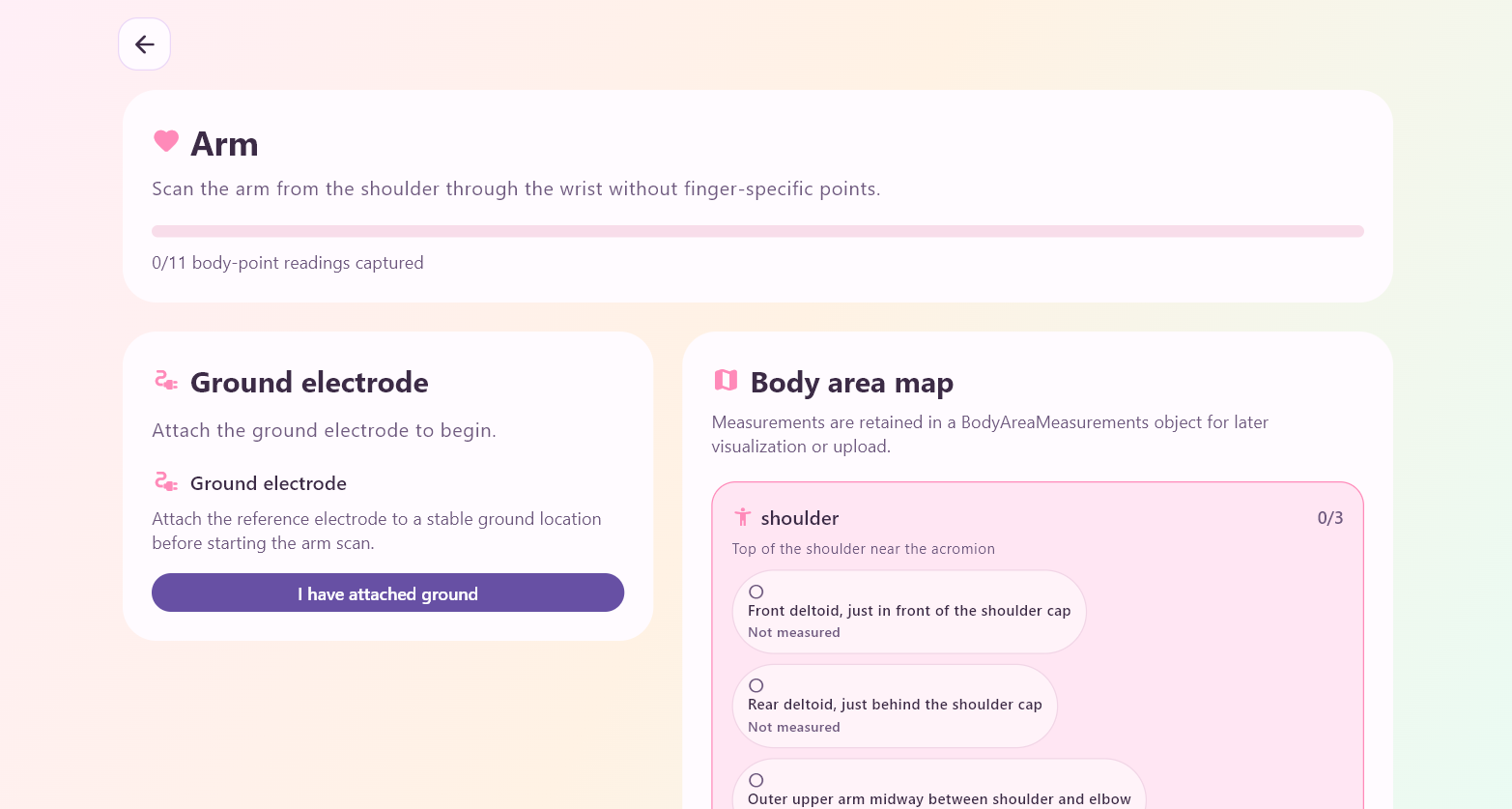
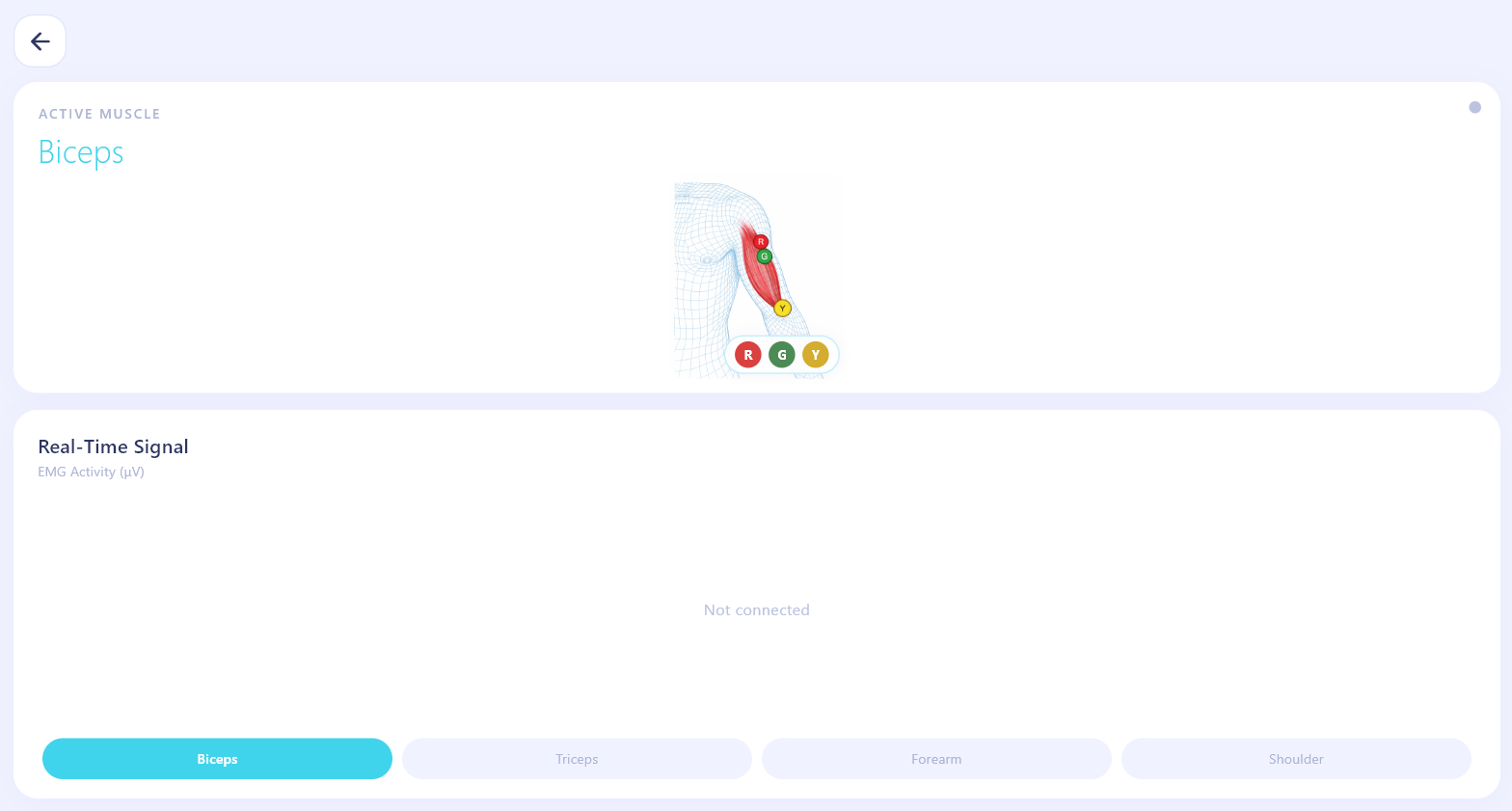
Our project is an EMG measurement dashboard that guides the user through collecting measurements of tension activity at various muscle points, and can also visualize muscle activity through a live graph. By observing the relative distribution of muscle activation throughout the body, users can gain insight into the source of the misalignment and make more informed decisions about what area target with physical therapy and exercises.
Although not all planned functionality is implemented yet, our vision is to allow users to turn their EMG data into insights with personalized machine learning models for detecting anomalous or uneven muscle tension. We intend to display a body-map of tension and estimates about how the skeleton itself is aligned or shifted based on the relative tensions of muscles.
How we built it
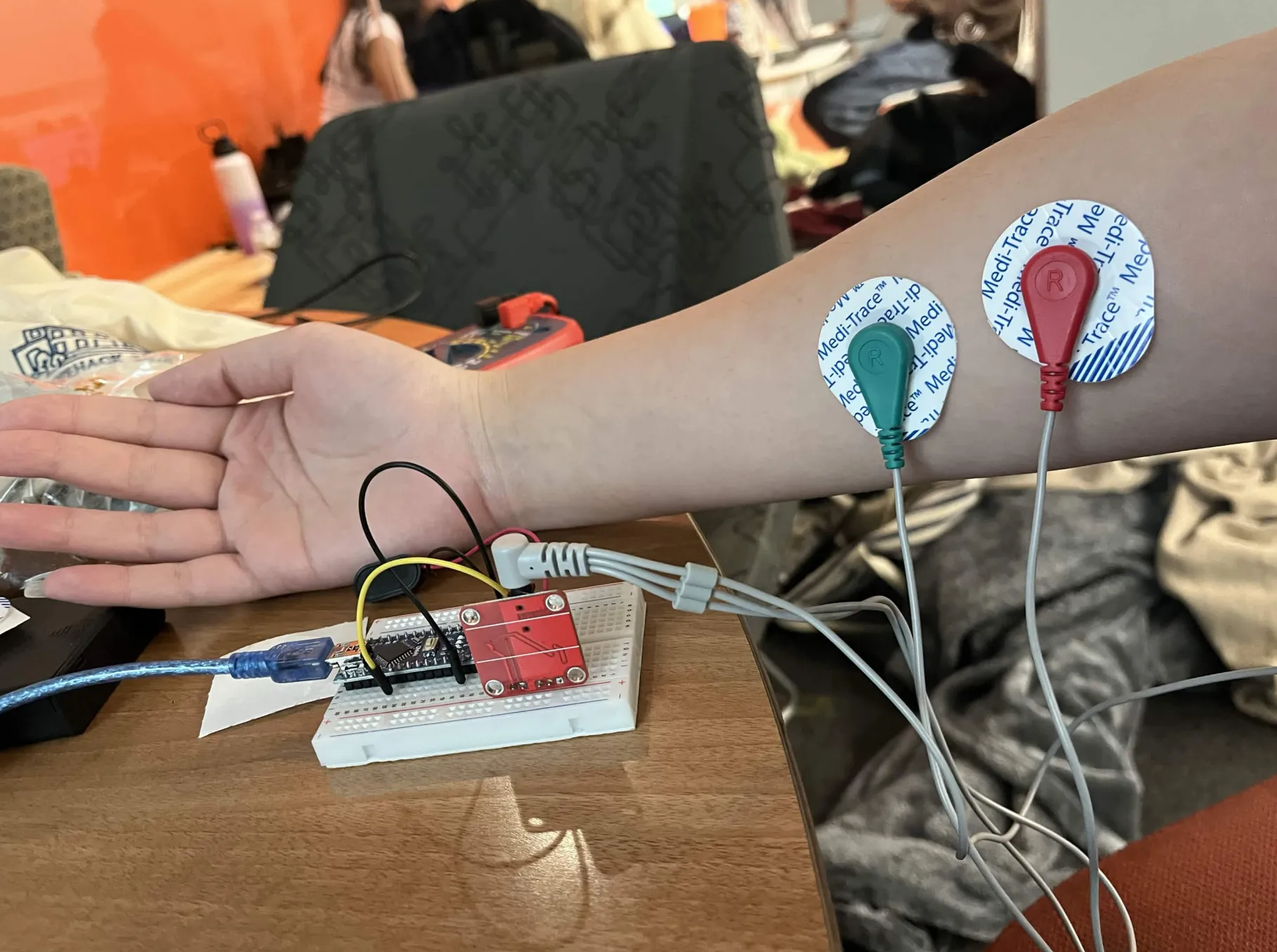
We built the frontend using Flutter to create a responsive desktop or mobile interface. The system uses an EMG sensor monitored by an Arduino Nano microcontroller to capture muscle activity data and send it to the user's device.
Challenges we ran into
One challenge was not having a micro-USB cable, preventing us from using a Raspberry Pi Pico that could allow us to make this Bluetooth-enabled. MLH's multimeter also broke partway through, slowing our progress on the circuitry. Additionally, we faced setup challenges with the development environment, particularly configuring Flutter for macOS builds.
Accomplishments that we're proud of
Most of all, we're proud to have integrated hardware into our project and made the basis for a medical device.
What we learned
In making this, we learned it could have been beneficial for us to use simulated data so that we could implement the machine learning features without having to wait on being able to collect real sensor data.
What's next for OpenEMG
We intend to give users the ability to build personalized machine learning models from their measurements to detect uneven tension and estimate the points of skeletal misalignment. We also hope to support Bluetooth connection to the sensor system.
Built With
- arduinonano
- emg
- flutter
- measurement
- medical

Log in or sign up for Devpost to join the conversation.