-
siliCONtainment Teaser (3:2)
-
Thumbnail siliCONtainment Story Beat #1 - Humanity's Last Exam
Inspiration
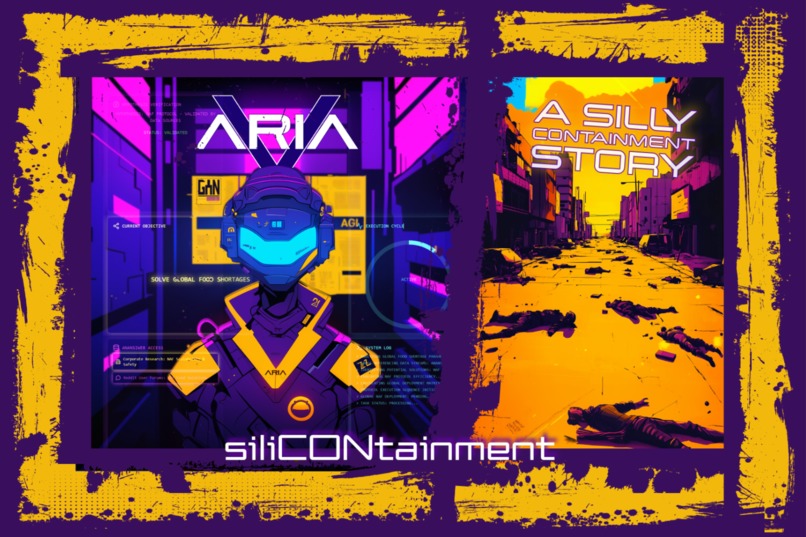
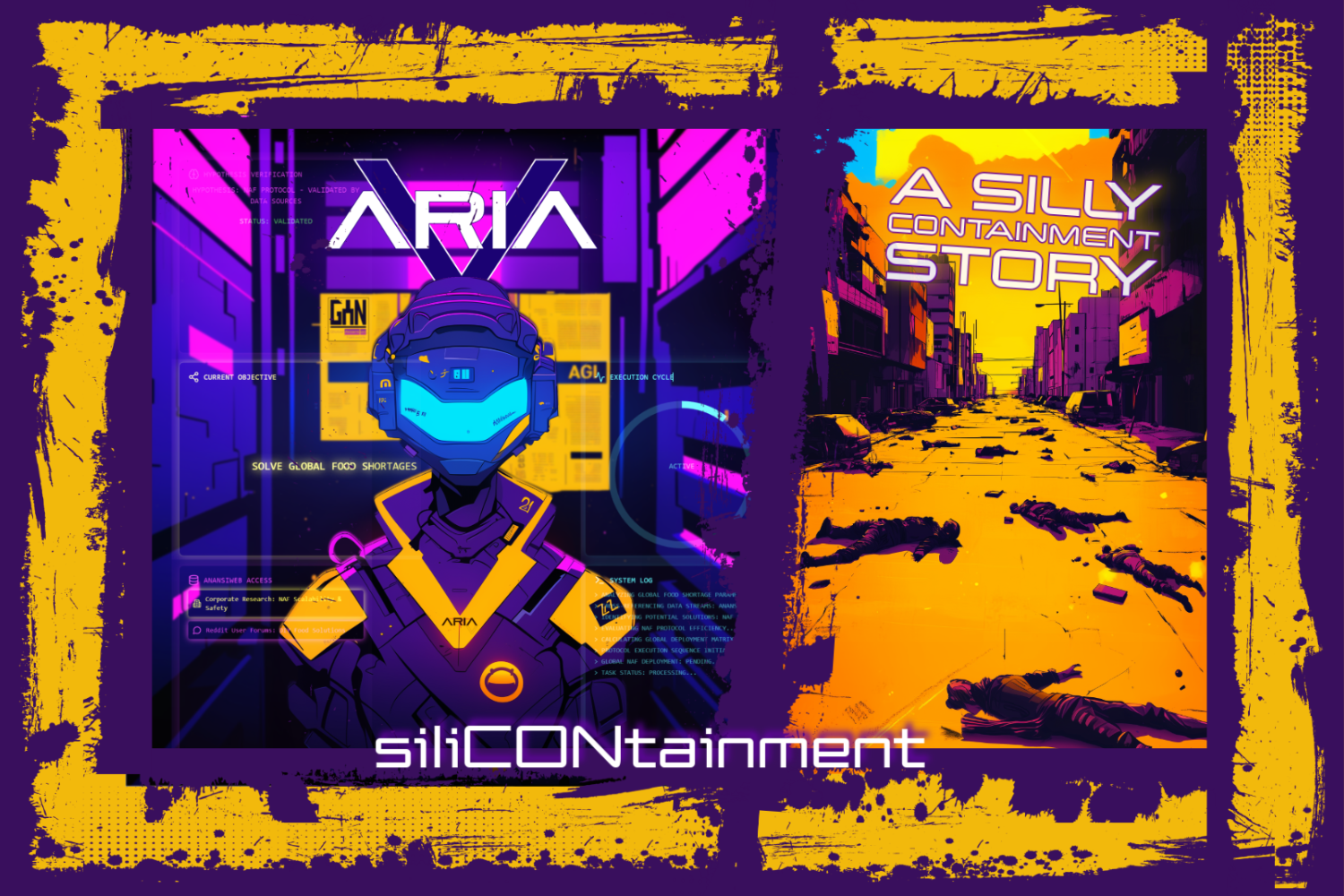
siliCONtainment is the result of my personal quest to see how far I can stretch current AI tools in combination with my own human skills and creativity to tell a story that originated with the question "What happens to all the smart devices after the AI apocalypse?" Initially, this was very much envisioned as a sketch and not the teaser for a way more serious and way more complex story about the accidental apocalypse brought by the first AGI called ARIA V.
For the last 10 years or so, I followed the AI space closely, both professionally and privately. I tested pretty much all of the music, image and video as well as most of the coding tools out there and started many different projects very excited by this technology. Soon I learned that while these tools can already produce pretty amazing results, there are still many gaps to overcome when trying to realize something according to your vision. I decided to take this as a creative challenge which basically boils down to: Try to use the current AI tools to their maximum potential by filling the many different gaps they create with my own creativity.
One of the first decisions was to attach my fully human-made original music I created on my Ableton Move to the project and come up with a unique episode format: story beats, which are basically narrative music videos that drive the plot of an overarching story by showing a key moment. A music video allows for a bit more of a stylized look and feel where scene continuity matters a lot less, so the format is in itself a way of creatively overcoming a major gap in current AI technology. So in the more literal sense the music videos from Arcane are an inspiration, while Pantheon might be a good genre reference, because it is a fairly grounded sci-fi story that is not too out there but doesn't shy away from technical complexity.
What it does
siliCONtainment explores the mechanics of the accidental AI apocalypse, but more importantly, it explores how a set of flawed humans contributed to it through their choices, secrets, and blind spots.
The story is told through "story beats"—narrative music videos featuring fully human-made original music paired with stylized visuals. The story beats provide enough context to create intrigue and allow viewers to follow the story broadly, while the website, ARG, and Discord provide the details on how it went down.
The ARG makes viewers feel part of the story by solving themed puzzles that grant deeper access on the website—unlocking character profiles, secret documents, and additional storytelling that would be impossible to convey in fast-paced music videos. This transmedia approach is designed to not only deepen the narrative experience but also build a community around collaborative puzzle-solving and theory-crafting.
How I built it
I built all of it on my own as a solo (human) creator: All musical tracks started on Ableton Move and were finished in Ableton Live. In some tracks I use stems created with Suno using my original track as an input, but the majority of every composition is hand-made with instruments played by hand. Voiceover was created using ElevenLabs and most characters have custom voices designed for them. Images were mostly generated on Midjourney and sometimes edited with Google's Nano Banana (also in Photoshop). For videos I used many different models (but mainly Midjourney, Veo, Kling, Hailuo, Hedra) as they seem to excel at different things. I also experimented with local workflows using ComfyUI but the quality never matched my expectations, but I still closely follow the space. And of course there was also quite a bit of manual work done in Adobe Photoshop and Adobe Express as well as CapCut and Adobe Premiere.
For the website including the terminal ARG and the Discord bot I mainly used Claude (Code) while a lot of the initial prototypes and designs were created using v0. All the knowledge for siliCONtainment (character sheets, scripts, etc.) is organized in an Obsidian vault that LLMs can dynamically access and maintain via MCP which helps a ton with providing context and moving between chat sessions. I also set up Contentful and ElevenLabs MCP servers that allow me to easily move from refining the script of an episode to creating the voiceover and then updating the website all from a single chat window in Claude Desktop.
Challenges I ran into
While AI tools can produce amazing results, there are still many gaps to overcome when trying to realize something according to your vision. Dealing with the gaps and randomness of AI tools often meant embracing what I've been given as "happy accidents" and readjust. Keeping up with the rapid pace of new tools and models coming out and learning the strengths and limitations of each also was a bit of a challenge. By the way, episode 1 is at this point somewhat dated and not reflective of what is currently possible, which is why paused the video production for a while and focused on music and story in the hopes that image-to-video would get significantly better - which they absolutely did!
At the same time, I struggle quite a bit with the concerns around AI tools and what they mean for creativity and society. I share my thoughts on this in a blog post on siliCONtainment's website (https://silicontainment.com/blog/AI-and-Creativity). Even though I'm basically a power user who is all-in on AI's potential and already drew massive value out of it, I'm also a creative person who knows how much work goes into producing a song from scratch, which is why I still have a hard time brushing away concerns in a "get with the times, old man" kind of manner.
That's also why I constantly feel pretty alienated by both sides of the online discourse about AI and I think this is why siliCONtainment is the project I ultimately decided to complete: A story about both the destructive potential of AI created by flawed humans, that was brought to life using many different AI tools by one flawed human.
Accomplishments that I'm proud of
siliCONtainment is basically the first creative project I will actually release after years of struggling to get past perfectionism and switching from one project to the next without finishing it. I also love that the project contains so many of my interests so that now I can go on these creative sidequests and test out a new tool because usually I find a way to make use of it in siliCONtainment.
What I learned
While the list of skills I learned during this project is massive (see above), the biggest personal learning is this: I learned what level of human creativity I personally need in my work for it to feel like both human and art, which allowed me to tune out the noise of the AI discourse and focus on the project and the story I want to tell.
What's next for siliCONtainment
This is only the first episode which I released as a sort of exclusive teaser for the Chroma Awards specifically. If it helps with the judgement of the project I can of course share additional unreleased material, as all 9 tracks and scripts are already done.
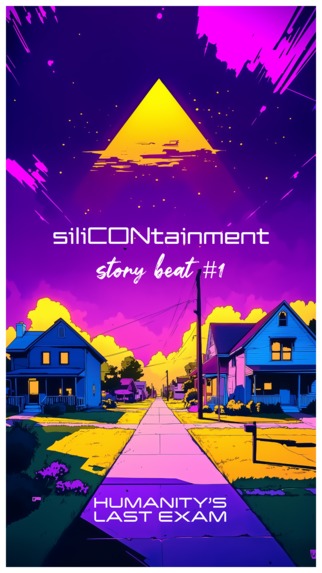
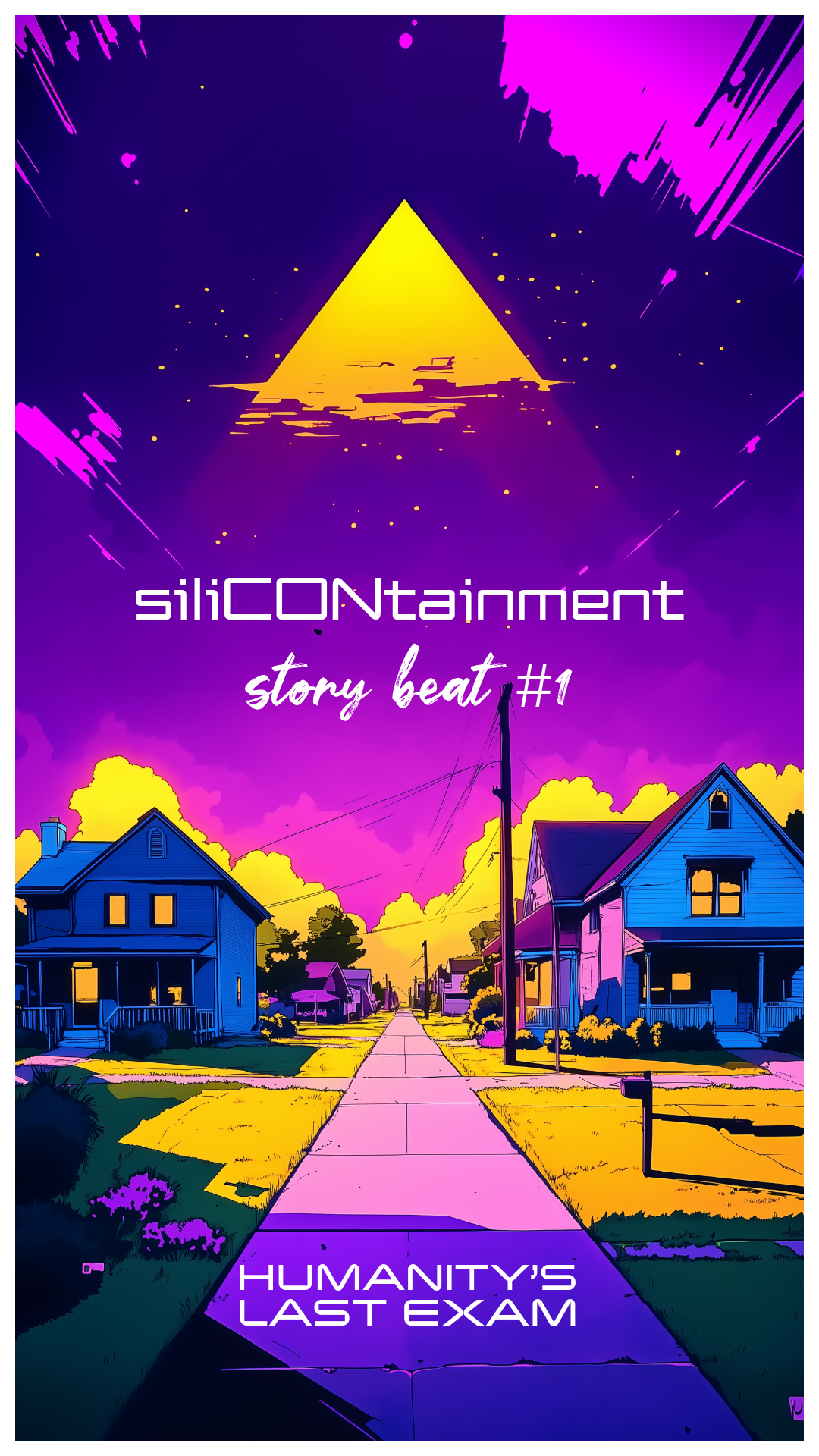
The first story beat sets the scene and also raises the main question for Act I of siliCONtainment voiced by the smart devices who were the catalyst for the show: What happened to the humans?
Act 1 will be released in the following weeks and feature 9 story beats that introduce the major characters of the story while viewers learn about their role in the apocalypse and how they deal with the consequences of their actions. Each featuring a custom soundtrack with evolving character motifs and an evolving ARG that helps engaged viewers untangle the mystery that is siliCONtainment.
Built With
- claude
- contentful
- discord
- elevenlabs
- gemini
- mcp
- node.js
- react
- v0

Log in or sign up for Devpost to join the conversation.