-
-
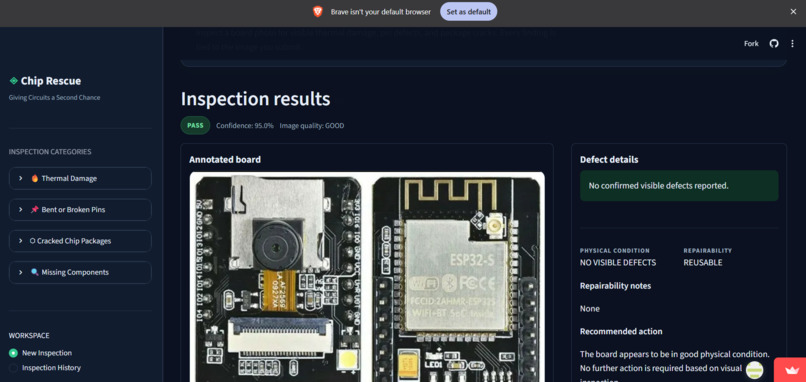
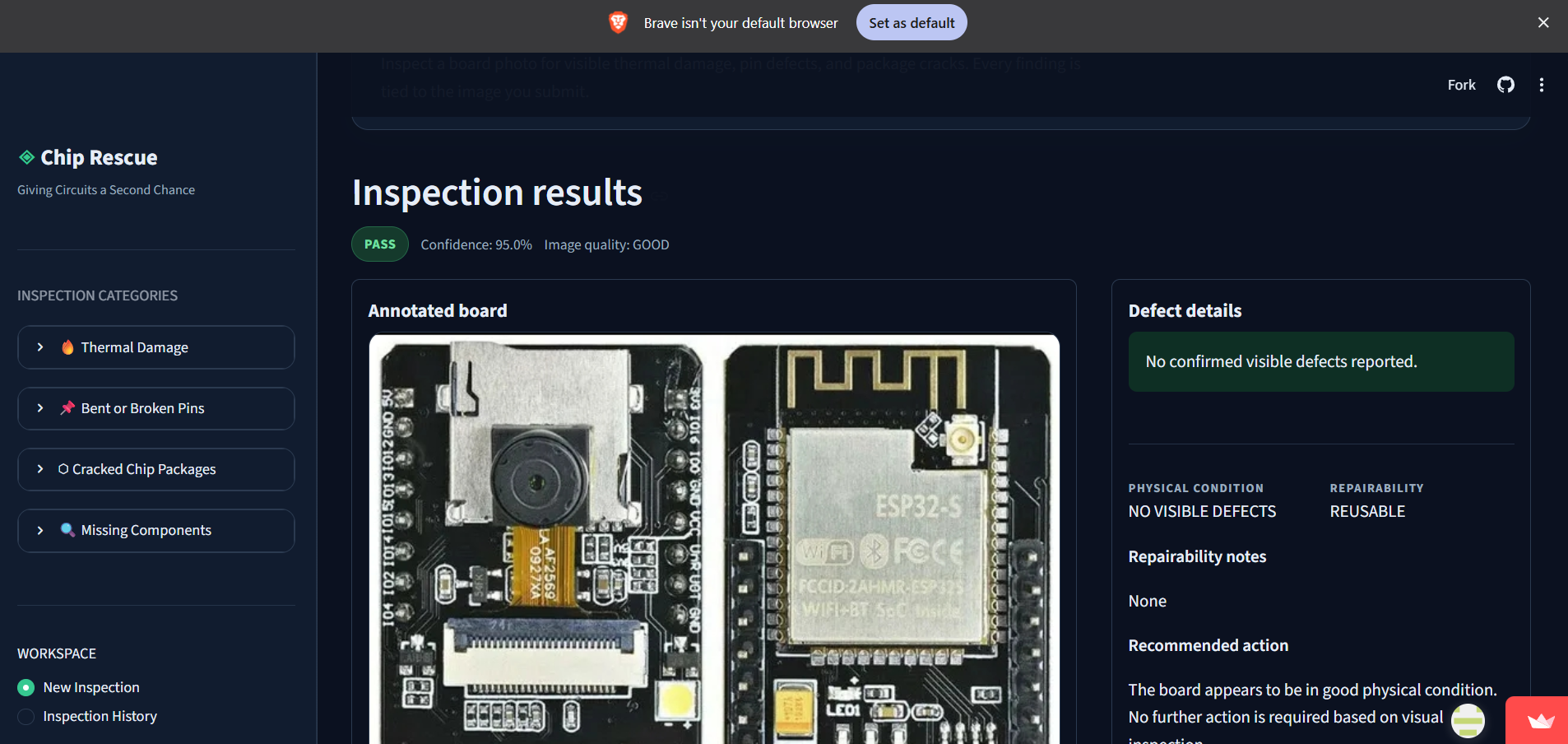
Image of the App Interface
-
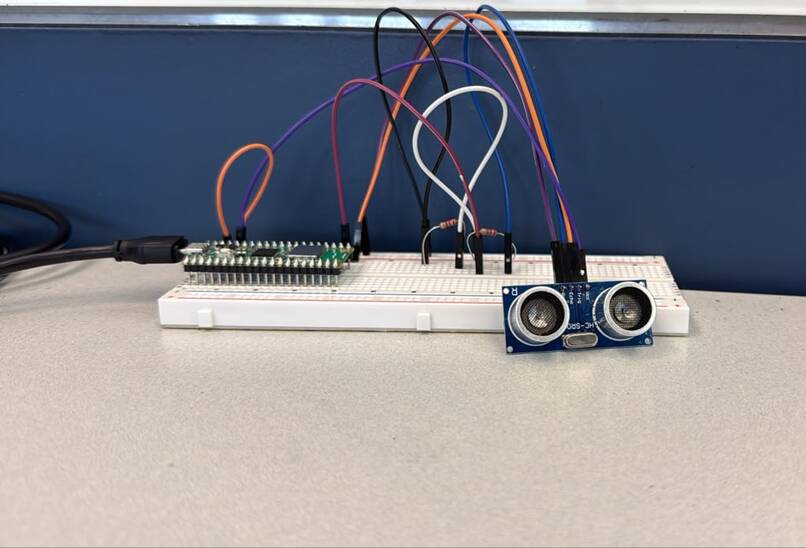
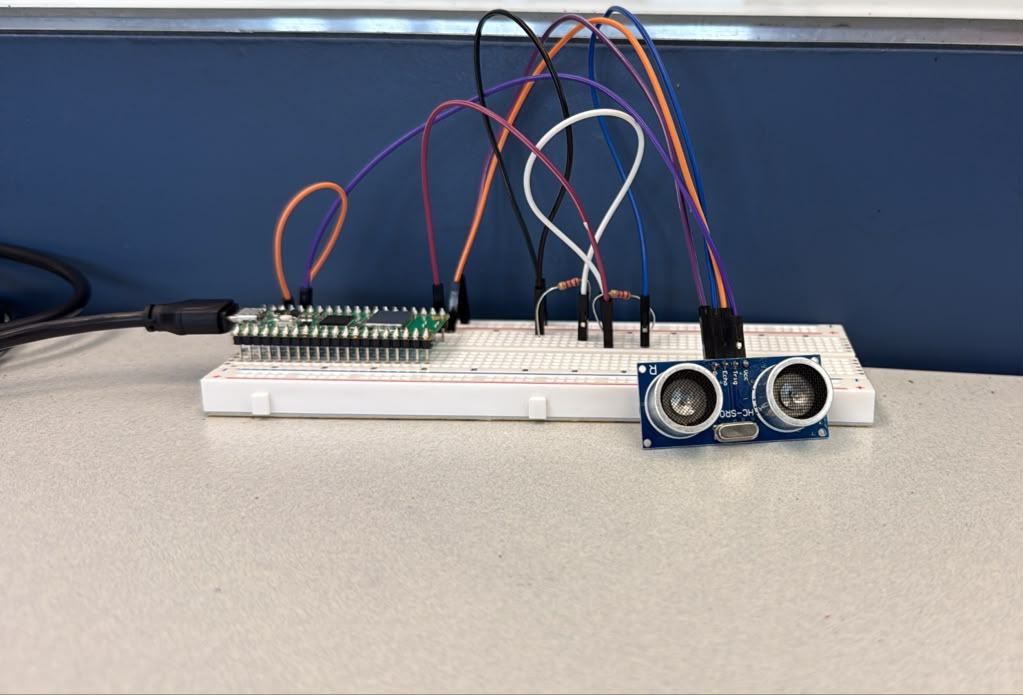
Our Hardware Prototype
Inspiration
The world generated 62 million metric tonnes of electronic waste in 2022, and that number keeps growing. Inside discarded electronics are circuit boards, microcontrollers, and semiconductor chips. But here's the problem: not every component that gets thrown away is necessarily broken. Some might still work, while others could be repaired. Without proper inspection, it's difficult to tell which ones are worth saving.
That's what got us thinking. Instead of focusing only on recycling electronics after they're discarded, what if we could identify components worth reusing before they become e-waste?
So we built Chip Rescue, combining Google Gemini AI, Python, and electronic inspection to help identify visible damage and give potentially reusable components a second chance.
What it does
Chip Rescue helps users inspect electronic components through an AI-powered platform.
- AI-Powered Inspection: Analyzes electronic components using Google Gemini.
- Smart Defect Detection: Identifies visible thermal damage, bent pins, and cracked packages.
- Component Recognition: Identifies recognizable electronic components.
- Visual Analysis: Highlights defects with bounding boxes and supporting evidence.
- Repairability Insights: Provides preliminary repair and reuse guidance.
- Inspection History: Saves previous inspection results.
- Automated Reporting: Generates downloadable PDF inspection reports. Our goal is simple: Identify potential for reuse before deciding to discard.
How we built it
We combined AI-powered image analysis, Python-based processing, and an interactive application.
- Google Gemini API: Multimodal visual inspection and structured defect analysis.
- Python: Backend logic, report validation, and data processing.
- Streamlit: Interactive web application and inspection dashboard.
- Pillow: Image annotations and defect localization.
- ReportLab: Automated PDF inspection reports.
- GitHub: Version control and team collaboration.
- Hardware Exploration: Studied microcontrollers, development boards, and component testing requirements. Our workflow:
Image Input → Python Backend → Gemini AI Analysis → Defect Detection → Streamlit Dashboard → Inspection Report
Challenges we ran into
- AI Reliability: Distinguishing actual damage from shadows, reflections, and normal component appearances.
- Hardware Complexity: Understanding different voltage requirements, pin configurations, and communication protocols.
- Defect Localization: Translating AI-generated coordinates into accurate image annotations.
- System Integration: Connecting AI analysis, backend processing, and the interactive frontend.
- Time Constraints: Building and integrating multiple features within the hackathon timeframe. These challenges pushed us to refine our prompts, improve validation, and develop a more reliable inspection workflow.
Accomplishments that we're proud of
- Built a functional AI-powered electronics inspection application.
- Integrated Gemini AI for visual defect identification.
- Implemented defect highlighting and inspection analysis.
- Created an interactive dashboard with inspection history.
- Developed downloadable PDF reports.
- Combined software engineering, electronics, and environmental sustainability into one project. Our biggest accomplishment was turning a sustainability-focused idea into a working application.
What we learned
- Integrating generative AI into practical applications.
- Prompt engineering for visual defect analysis.
- Processing images and structured AI responses using Python.
- Developing interactive applications with Streamlit.
- Understanding hardware compatibility and electronic testing.
- Collaborating through Git and GitHub under time pressure. Most importantly, we learned that identifying visible damage is only the first step toward determining whether an electronic component can be reused.
What's next for Chip Rescue
- Electrical Testing: Verify the functionality of inspected components.
- Improved AI Accuracy: Expand and validate defect detection capabilities.
- Broader Compatibility: Support additional electronic components and development boards.
- Component Recovery: Track electronics that have been tested and verified for reuse.
- Real-World Deployment: Make the platform accessible to students, makers, and repair communities. Our vision is to help transform electronic waste into opportunities for recovery and reuse. Because not every discarded chip is a dead chip.
