-
-
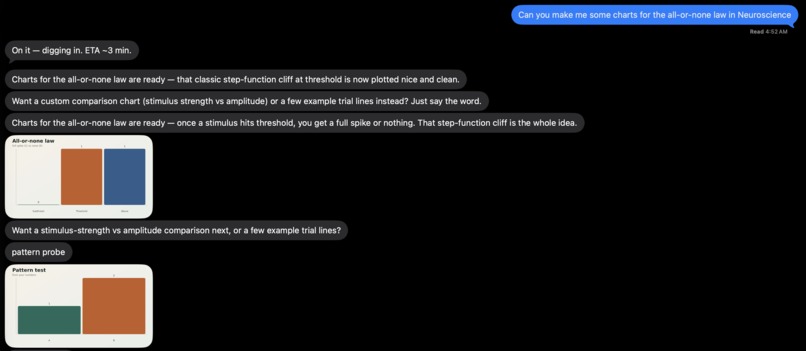
Data Analysis with Silico (via Relay)
-
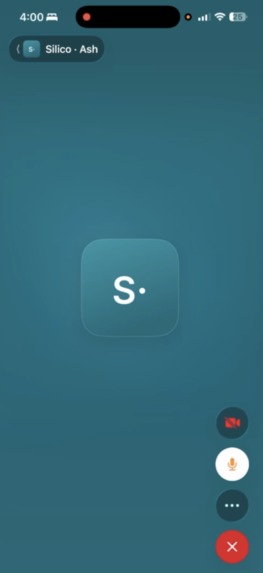
Talking with Silico via Relay
-
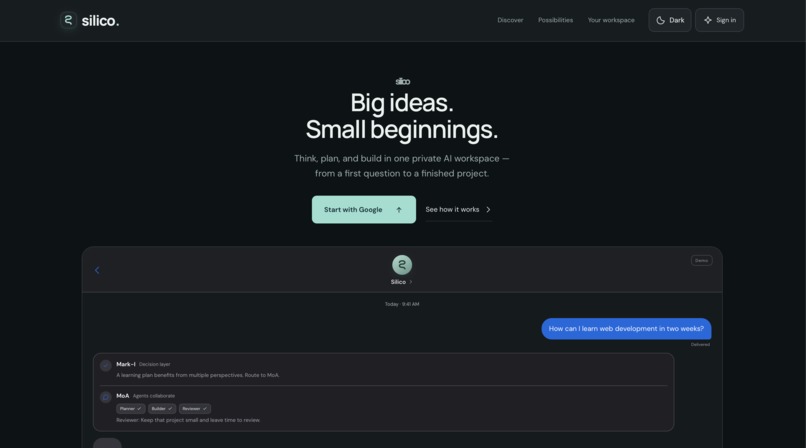
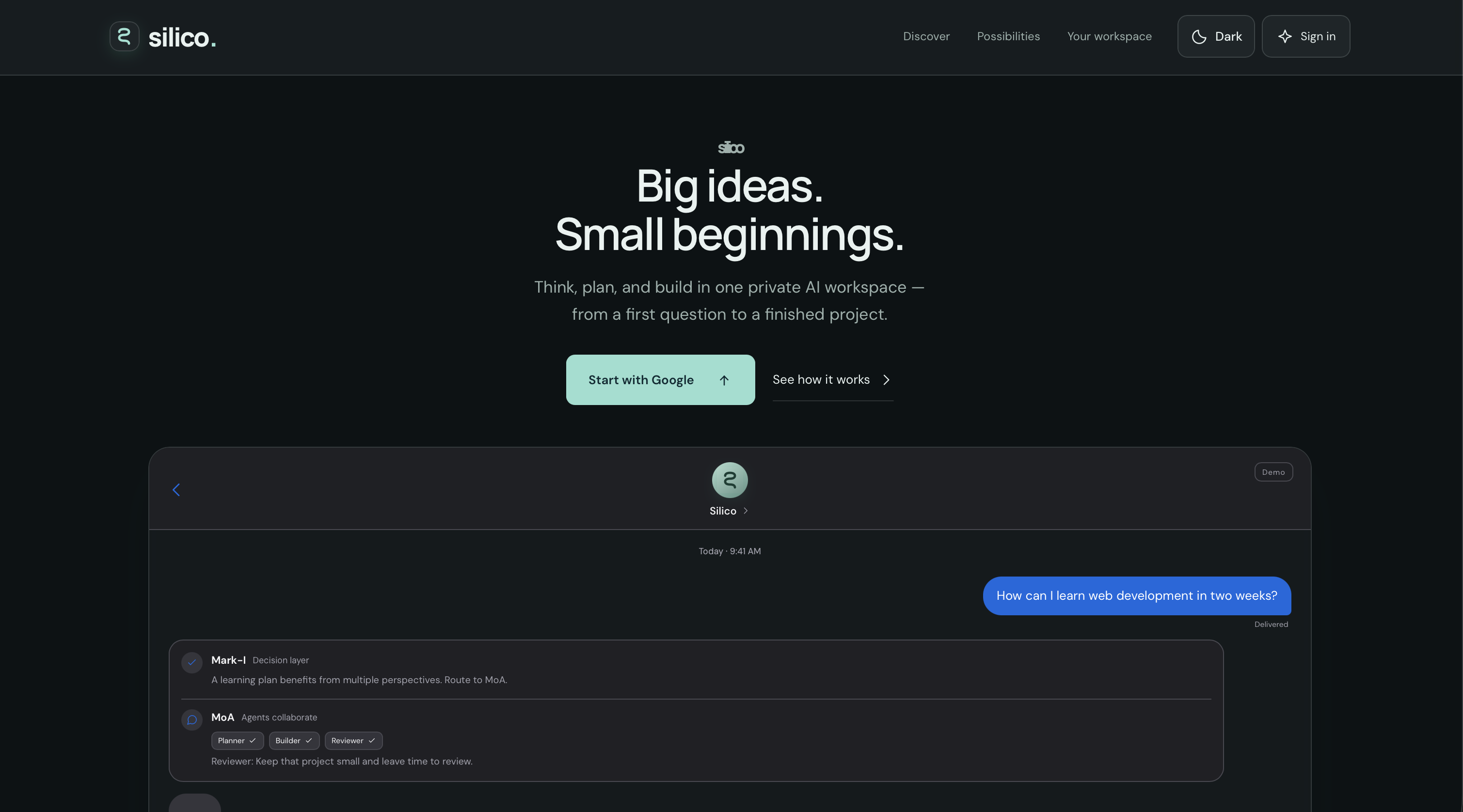
Landing
-
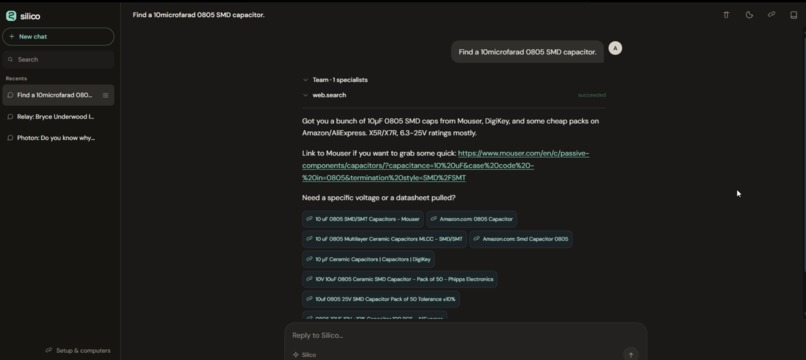
Chat Interface (Website)
-

A bit of brainrot never hurt, right?
-
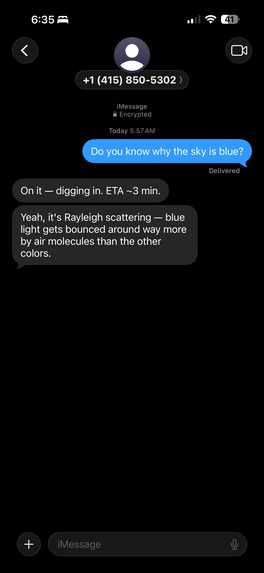
iMessage Conversation (via Photon)
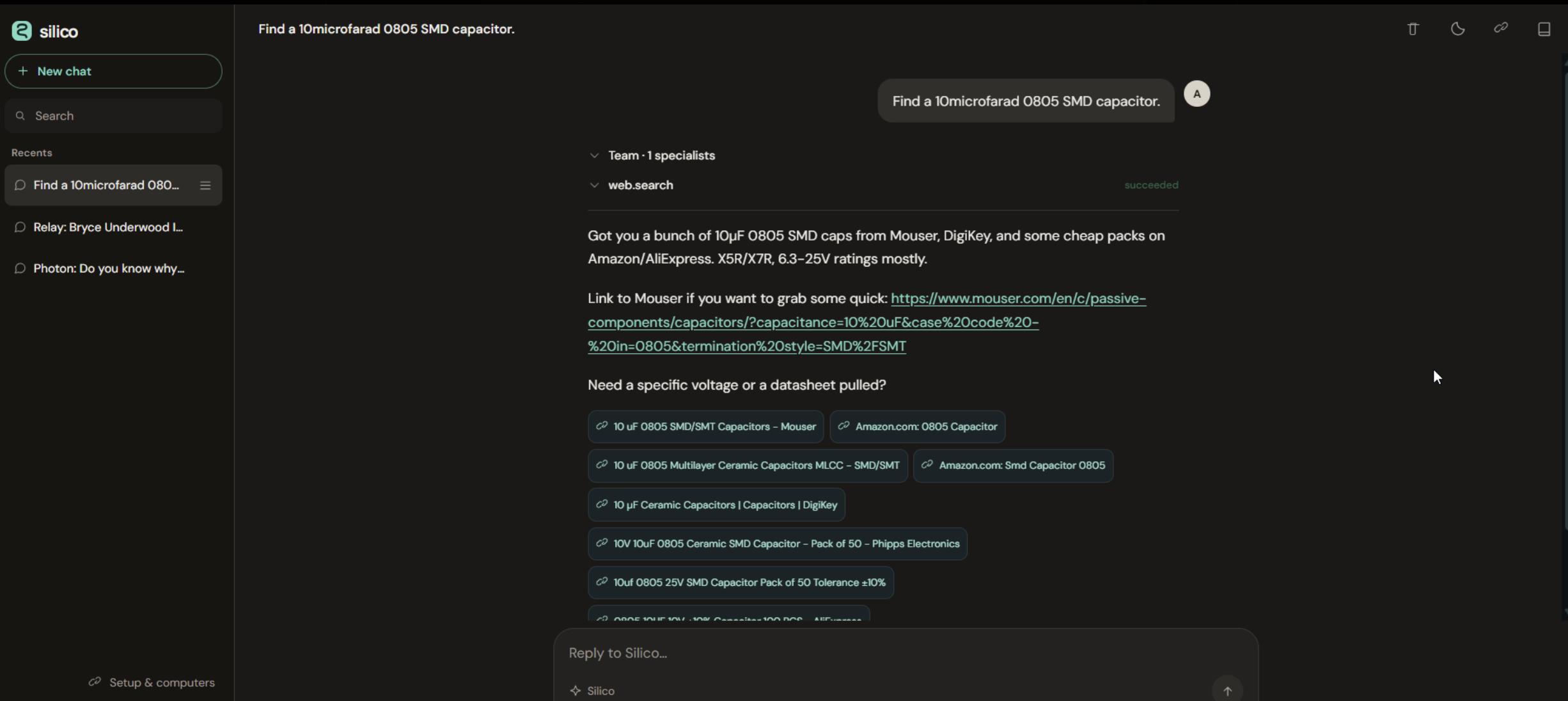

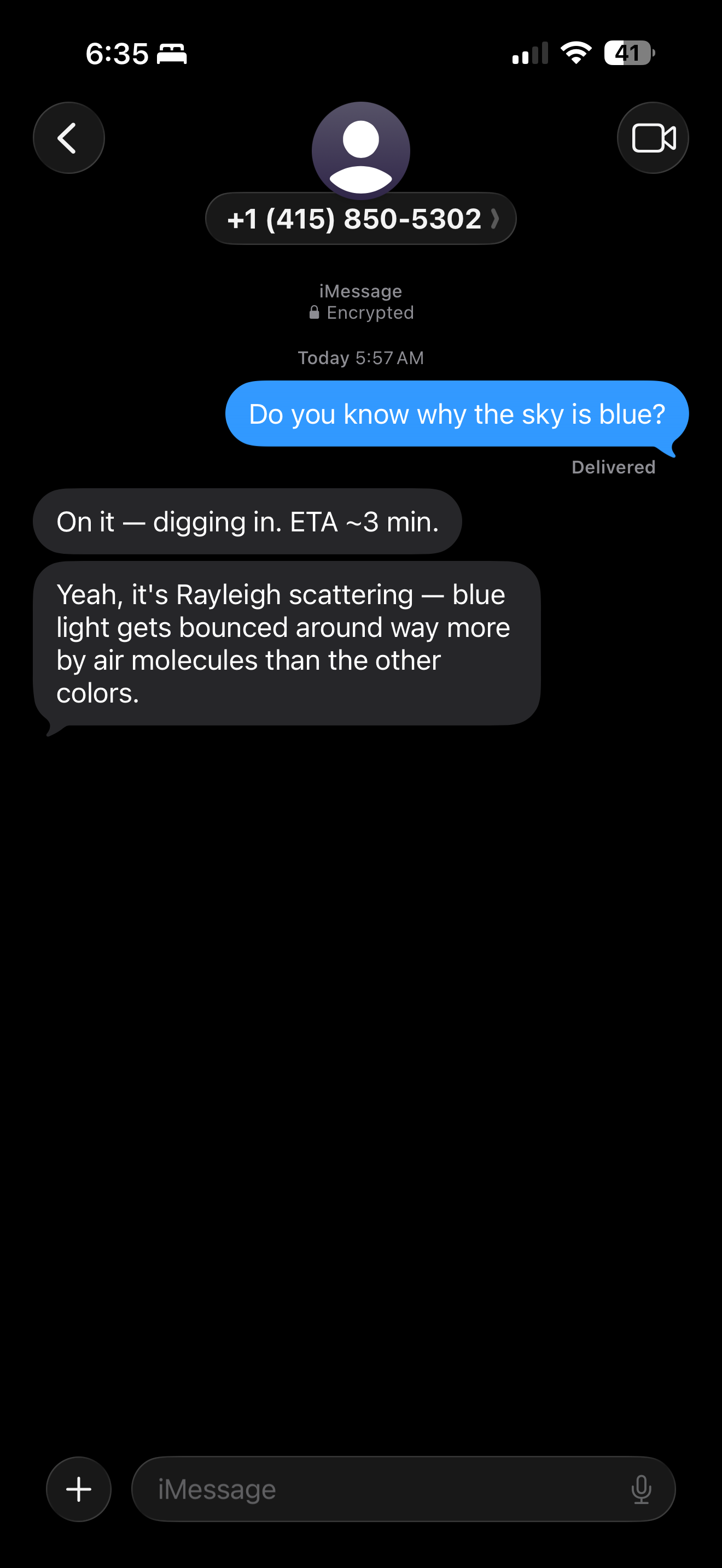
Inspiration
The inspiration for Silico came from Dheeraj's frustration with having the best ideas of what needs to be done next for one of many side projects while laying in bed, but would need to SSH into a cloud instance and leave Claude Code autonomously running after setting up a GNU Screen.
Architecture
Given a message sent via Relay or an iMessage number (captured via Photon) post-authorization, the prompt first passes through Mark I, our custom System I model for structured decision-making within a software workflow, similar to Jev, which selects the best specialized agents (such as research or auditing an approach), or a Mixture of Agents (MoA). Then the specialists coordinate through shared findings before proposing exact-approval actions for either Mark-I to auto-review and approve, or manual user approval. Then, post-approval, guarded tools are executed on the remote environment through the Local Agent (paired computer via remote), which are specified in the TLDR. A confirmed result returns as an agent reply.
Throughout the process, the agent will continuously reply about its progress.
TLDR: Silico's core architecture can be broken into 3 layers:
- Natural Communication Layer: Relay and Photon (Spectrum) both trigger the same M. Relay personal agents and Photon space bindings stamp the Google account, then the durable inbox + worker run the swarm. Progress milestones and typing land on whichever channel the user texted.
- Decision Making layer: Mark-I (custom System I model) routes chat vs work and picks agent specialists. Specialists coordinate through shared findings before proposing exact-approval actions (similar in spirit to Lark).
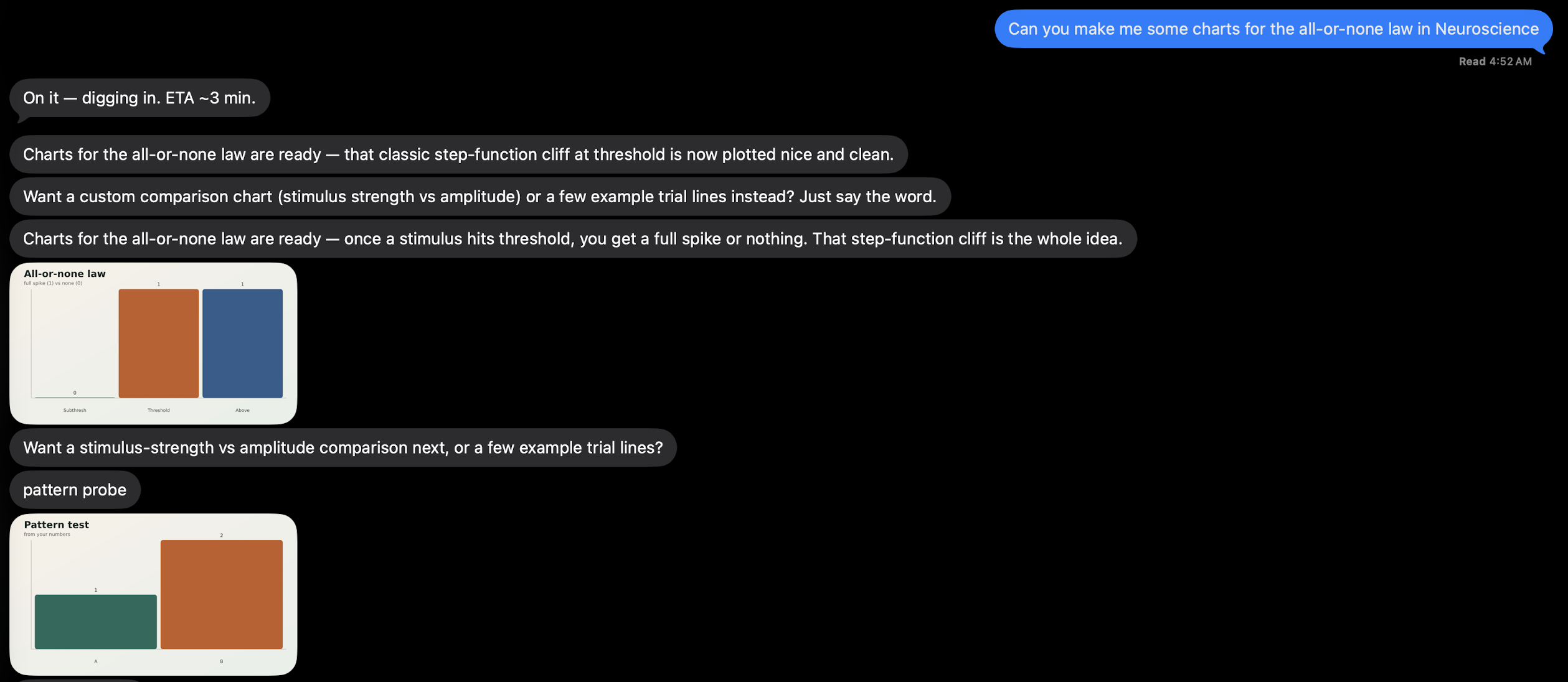
- Execution layer: Guarded tools run on the server workspace, Obscura search, and the Local Agent (paired computer via remote.*). Charts and Images are generated and searched through Grok Imagine, Obscura web-search, and functions. Confirmed results return as messenger replies.
How to Use
Sign in with Google, then open Setup & computers. Create your Relay agent and/or connect Photon with the one-time connect message. Silico binds the verified messenger identity to your Google account; other senders cannot reach your workspace. Normal conversation happens in Relay or Photon, with live progress milestones, specialist findings, approval links, and final answers. Follow-ups in the same chat while a run is active are steered into that loop (not parked until it finishes). Quick successive messages before a run starts are consolidated into one answer. Mid-run progress stays in running voice with a rough ETA (not premature Implemented/Failed bubbles). Coding specialists can queue multiple file edits in one run; session auto-approve drains them quietly. The website mirrors the conversation and provides exact-action review plus the Local Agent (remote) install command.
How we built it
We rapidly prototyped and developed the autonomous pipeline with Cursor; although we made edits to the design, specific agent harnesses, including tool calls, elements, and more to ensure the best underlying agent.
Challenges we ran into
- The orchestration layer between the selected agents coordinating with each other and fulfilling tasks was an issue since if one model refused or discussed something else, would frequently lead to a lack of response.
- Maintaining remote connections was an issue since the agent kept facing read/write issues amongst gaps in transparency concerning a particular task.
Accomplishments that we're proud of
- Remote development; after refining the read/write functionality of remote connections, being able to prompt the agent from Relay was an accomplishment we're the most proud of since the agents were able to write and display ASCII art; furthermore, Silico was able to both develop and compile games, such as a snake game and tic-tac-toe.
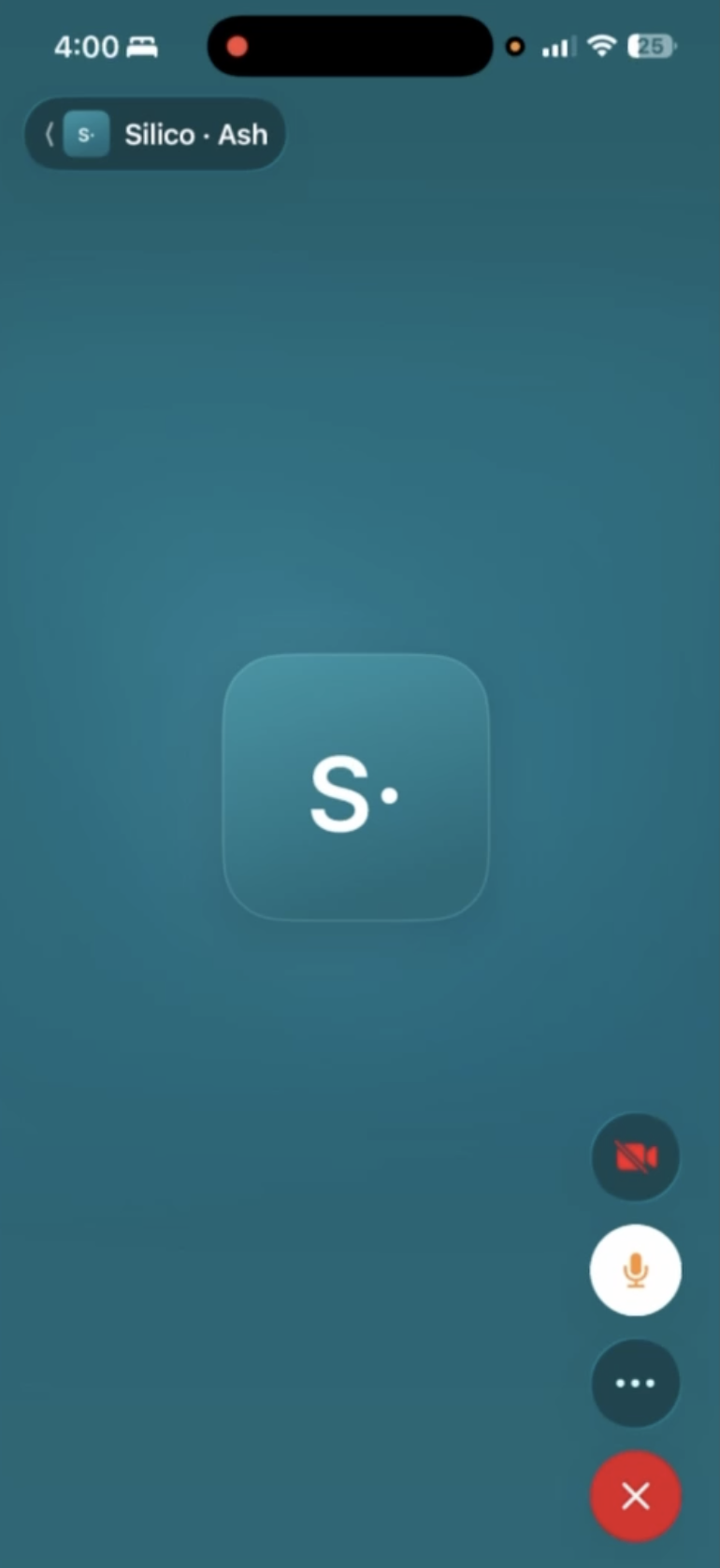
- Live calls through the Relay app, as we noticed that the agent would state it was not British, when it was thanks to Grok Voice!
- Image generation and search via Grok Imagine and the Obscura search engine, respectively. Through this, we were able to prompt the agent to generate some modifications to an initial image (such as Italian brainrot), which we can also pass to the remote environment.
What we learned
- System I models are the most suitable for auto-approvals and MoA, since the decision-making is usually fast and done within one loop.
- Orchestrations are rewarding if done properly. These took the majority of our time since we had to coordinate with multiple sources, including Photon and Relay and multiple communication mechanisms.
What's next for Silico
- Improving applications to further contexts via Skills, such as having the Agent be able to partake in Prediction-Markets and even interactions with slides.
Table 68
Built With
- cursor
- grok
- grok-imagine
- grok-voice
- nextjs
- node.js
- openai
- photon
- python
- relay
- typescript
- xai

Log in or sign up for Devpost to join the conversation.