

Inspiration
Growing up in the Cape Flats, I witnessed a reality far removed from headlines — where gunshots are part of the soundtrack of life, and fear becomes second nature. Here, gun violence doesn’t knock — it kicks down doors, takes lives, and leaves families broken.
We’ve buried too many children. We’ve grieved for brothers, sisters, mothers — some taken by mistaken identity, others by bullets never meant for them. We’ve seen the heartbreak of a child caught in the crossfire — the result of a gun being cleaned inside, going off and stealing the life of someone outside.
And through it all, we are told to wait. Wait for help. Wait for change. Wait for justice — long after the damage is done.
But how do you wait when gangsterism is worse than cancer? Cancer has research, treatments, and hope. Gang violence has none of that. No cure. No countdown. Just silence, trauma, and a growing graveyard.
In these communities, trust in the system has collapsed. Surveillance feels like spying. Police are stretched thin. And safety is a privilege we cannot afford to hope for anymore.
That’s why we imagined something different. What if the very light poles on our streets could help? What if they became more than infrastructure — What if they became silent guardians, powered by AI, IoT, and purpose?
That vision became SilentWatch AI: A proactive early-warning system designed to detect concealed firearms in public spaces — before a shot is fired. It blends into everyday infrastructure, scans for threat patterns without invading privacy, and sends real-time alerts to those who can act — not record the tragedy but prevent it.
This isn’t just technology. Its hope disguised in hardware. It’s smart tech with heart, designed for the places that need it most.
Because we're tired of seeing my community suffer. We're tired of seeing lives stolen in silence. And we're done waiting for someone else to fix it.
SilentWatch AI is our answer. To build not just safer streets — but a future where children can play without fear, where families don’t have to flee their own front yards, and where prevention finally replaces pain.
Because we cannot cure gangsterism with words alone. But with innovation, compassion, and courage — we can fight back.
What It Does
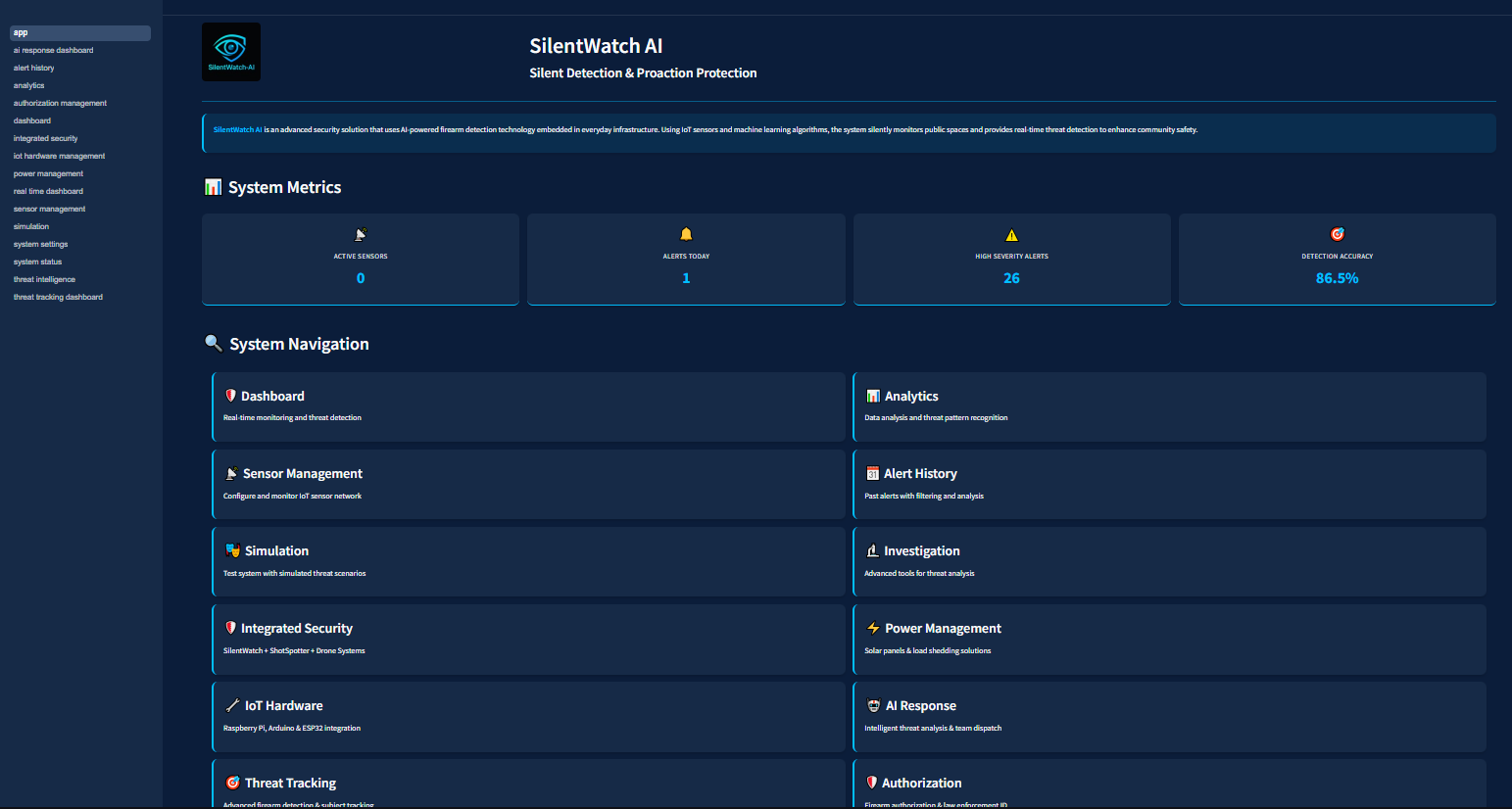
SilentWatch AI is a proactive firearm detection system that combines smart IoT sensors, AI analysis, and real-time alerts to help prevent gun violence — not just respond to it.
🔍 Concealed Firearm Detection IoT sensors (e.g., embedded in light poles or entryways) scan for suspicious metal signatures consistent with firearms — even if the weapon is hidden under clothing or inside a bag. These sensors use electromagnetic pattern detection, similar to airport metal detectors, but adapted for public spaces.
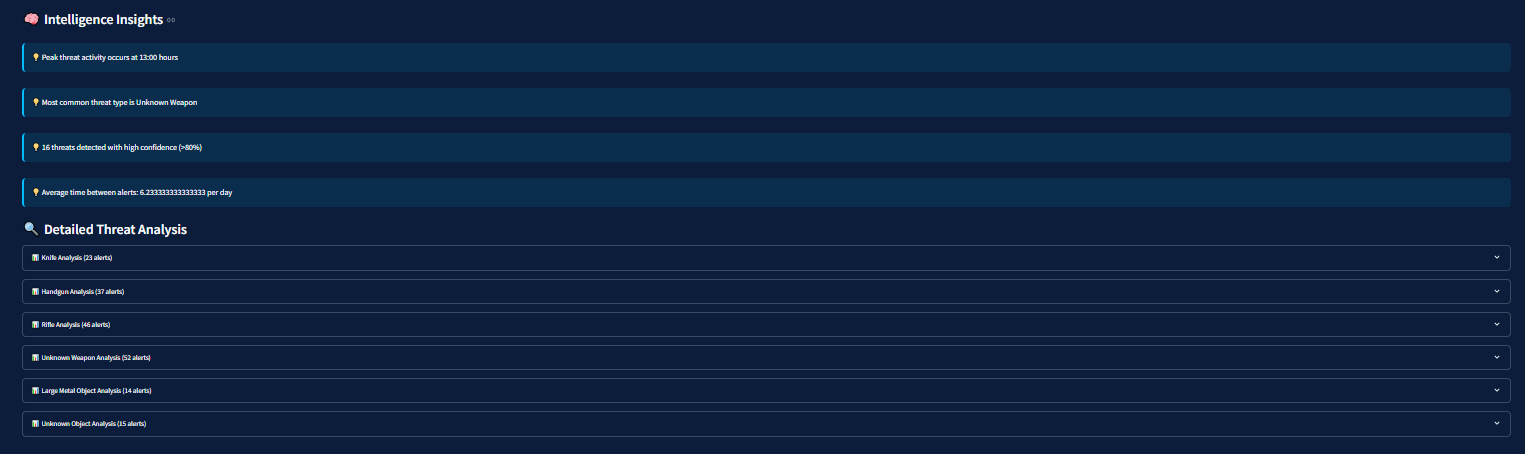
🧠 AI-Powered Threat Analysis AI algorithms analyze the metal signature data, filtering out false positives (e.g., phones, keys) and identifying patterns likely to indicate a concealed weapon. The system also learns from past data to improve accuracy over time — turning raw signals into real insight.
⚡ Real-Time Alerts & Escalation When a high-confidence threat is detected, SilentWatch AI instantly sends alerts to designated responders: law enforcement, community security, or AI-driven drone units. Alerts include location, timestamp, threat type, and a confidence score — helping responders prioritize and act swiftly.
🛡️ Privacy-Respecting by Design Unlike traditional CCTV, SilentWatch AI doesn’t use facial recognition or identity tracking. It focuses on object-level detection (metal, shapes, behavior), ensuring it can protect communities without surveilling them.
🔗 Integrated Ecosystem SilentWatch AI is designed to work hand-in-hand with other public safety technologies: ShotSpotter: Verifies if a gunshot was actually fired, adding acoustic evidence to metal detection. Drones: Triggered autonomously to track suspects, monitor areas from above, or assist emergency responders — creating a connected ground-to-air safety net.
How We Built It
SilentWatch AI was developed with a focus on real-world usability, modular architecture, and rapid prototyping — all built and deployed using Replit for seamless collaboration and cloud-based scaling.
⚙️ Backend Python + Flask powers the backend, handling incoming sensor data, AI-driven threat evaluation, and secure communication between components. Detection logic is abstracted into reusable Python modules to ensure flexibility and future hardware integration.
🧠 Detection Engine We simulated an AI model that mimics how a trained system would detect patterns from low-power metal sensors embedded in public infrastructure. The model flags high-confidence firearm signatures based on custom thresholds and logic for concealed object identification.
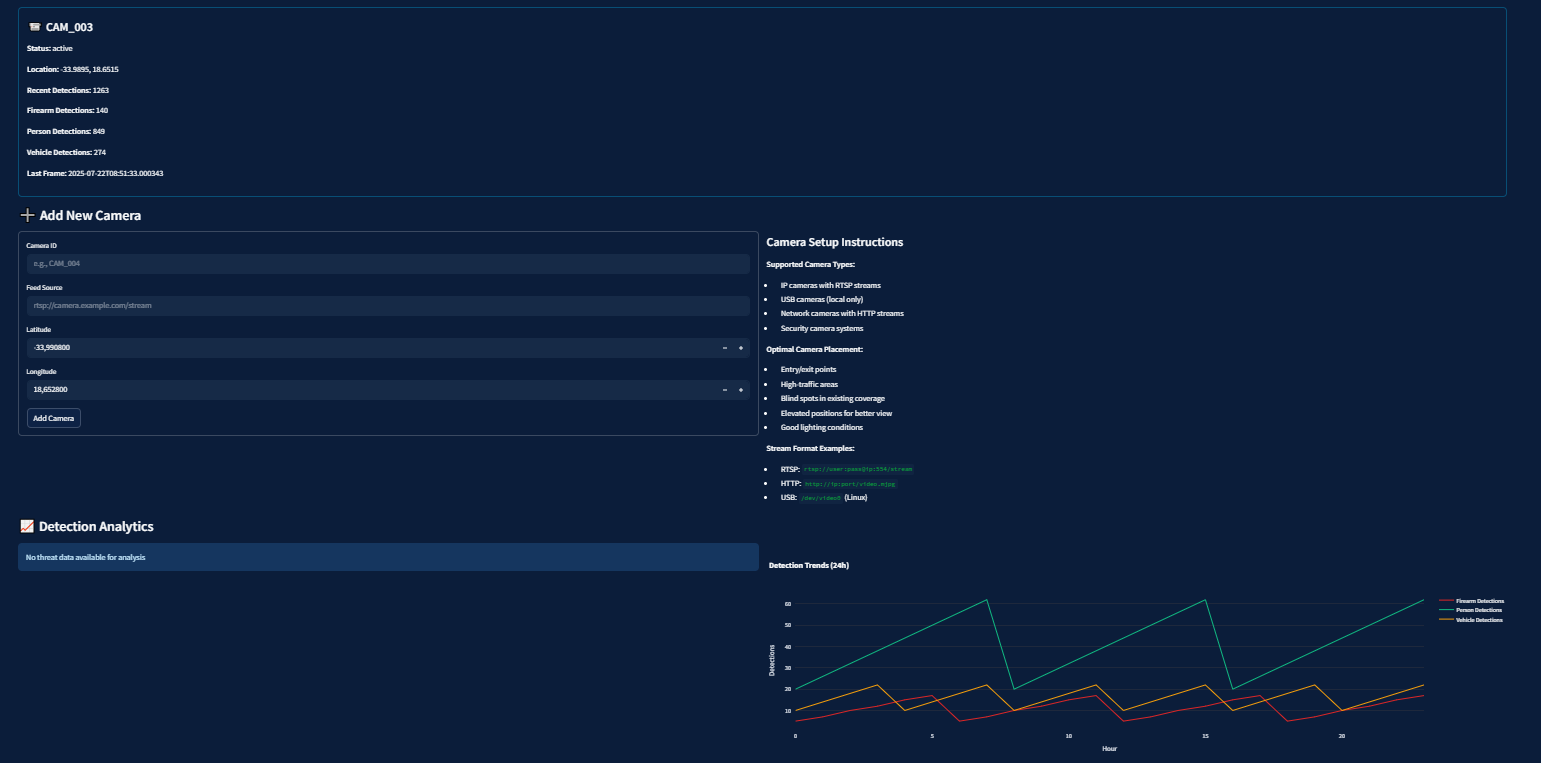
🧪 IoT Simulation Using mock sensor data, we represented how Raspberry Pi, ESP32, or Arduino devices would emit detection signals in a real deployment. The utils/iot_hardware_integration.py module was written to support actual sensor integration in future development.
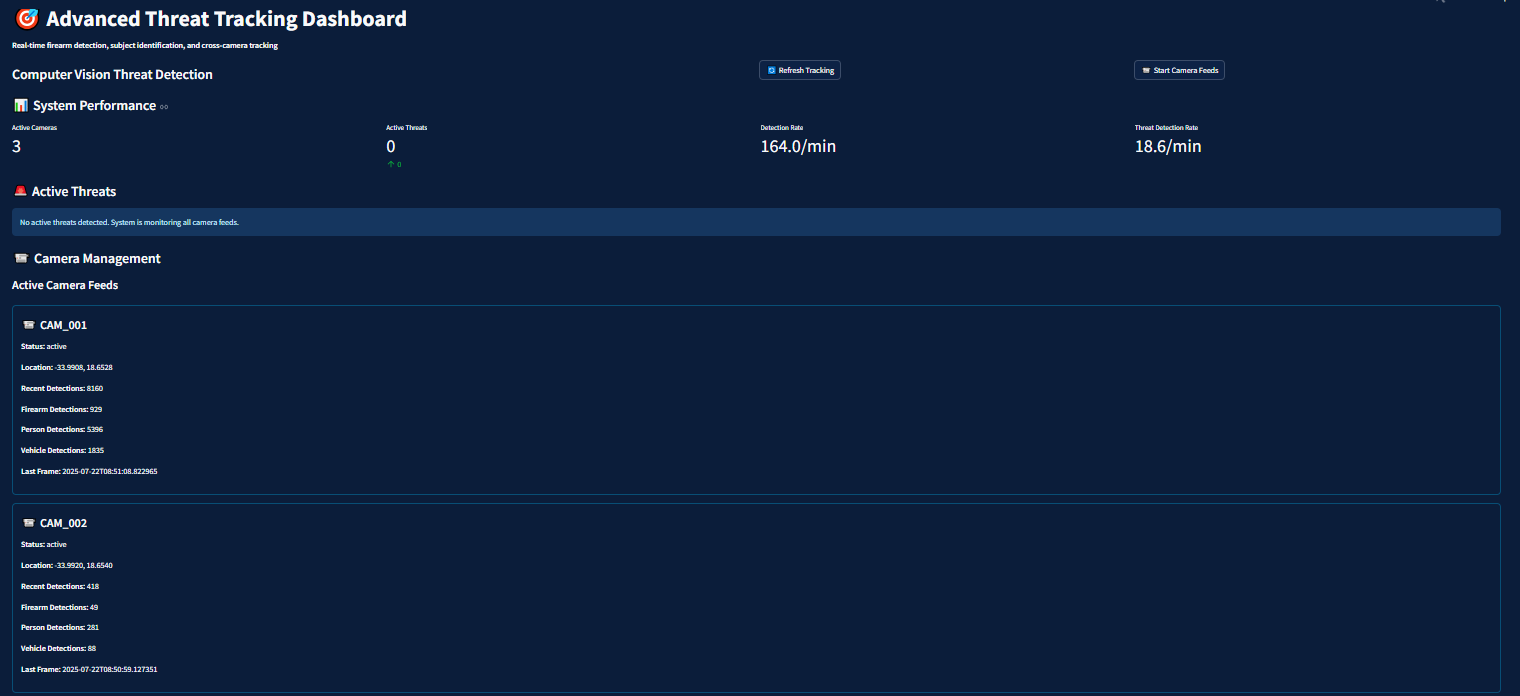
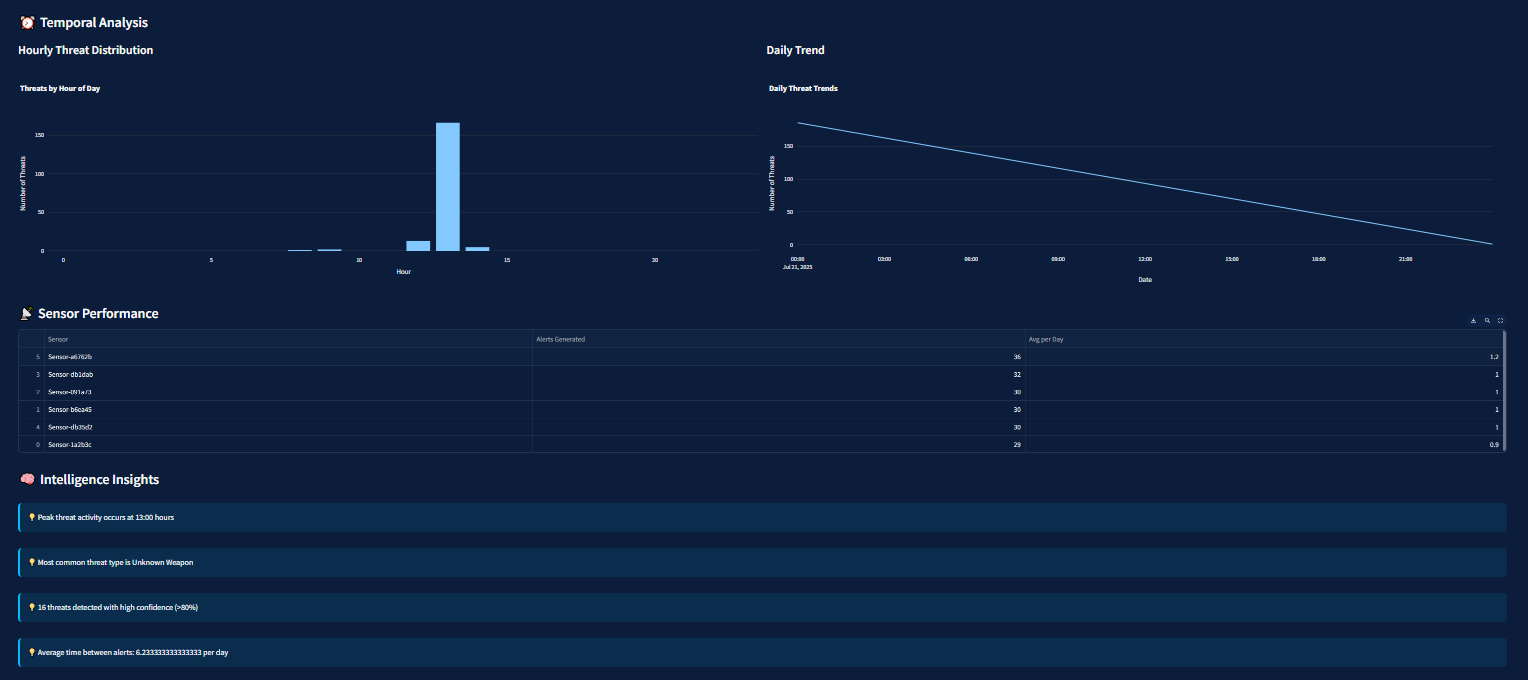
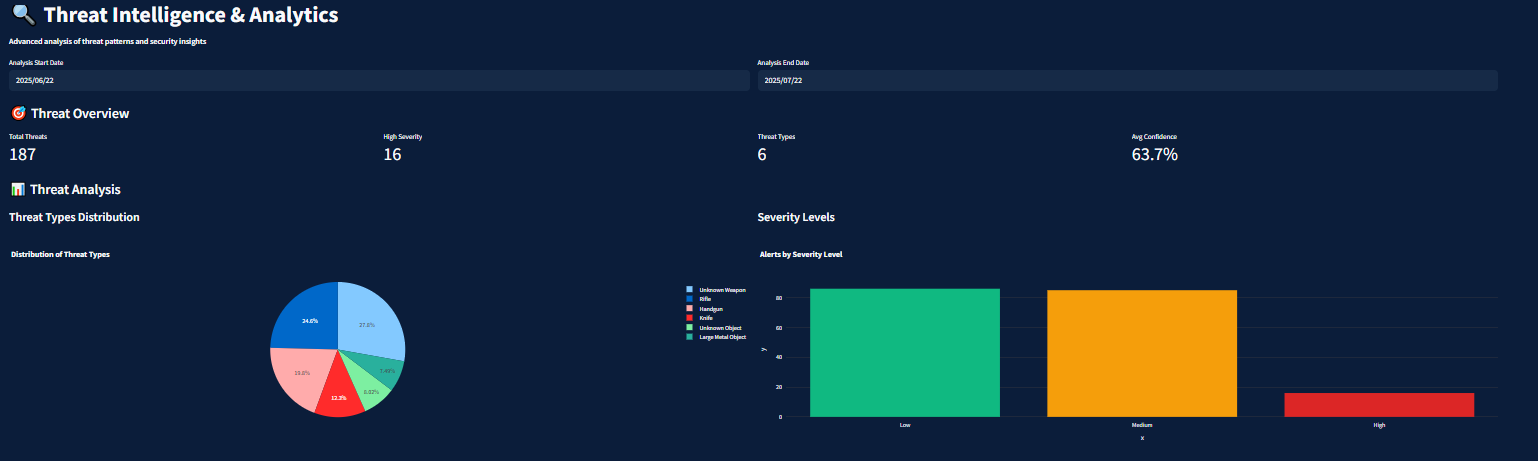
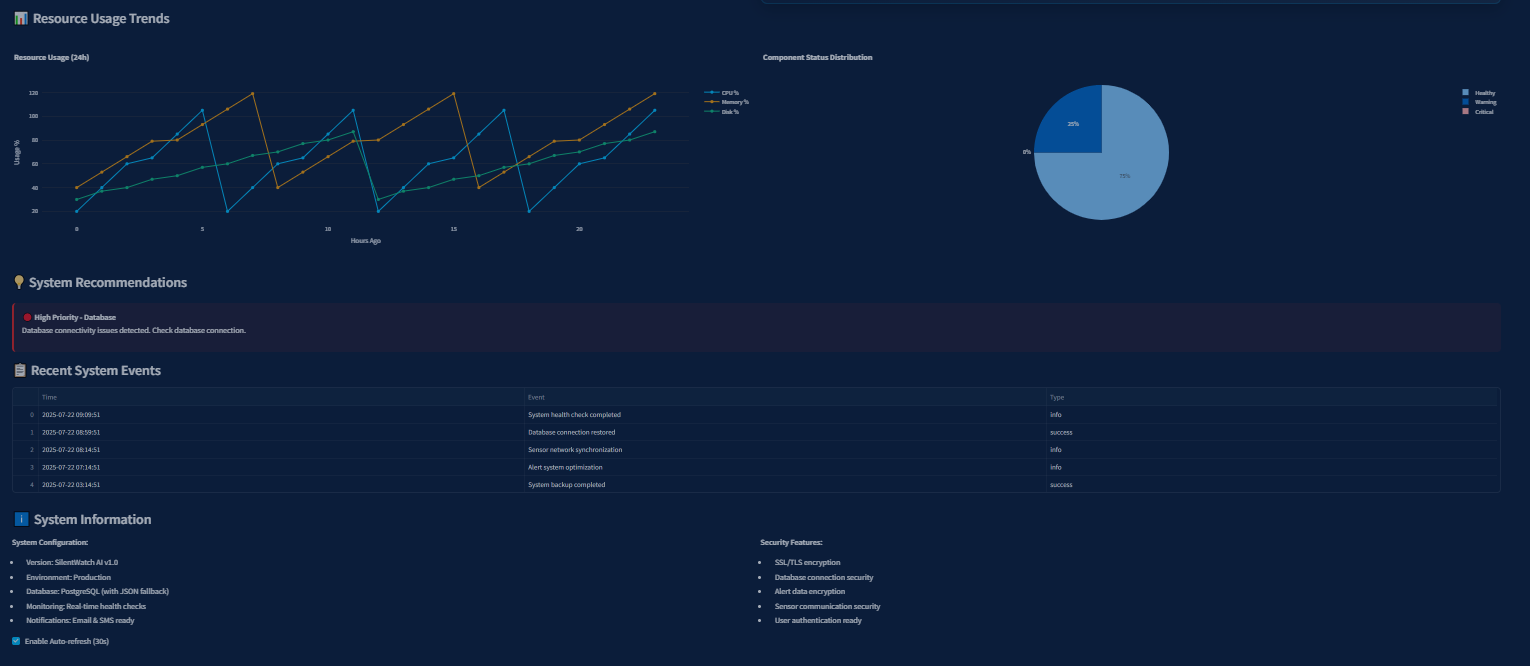
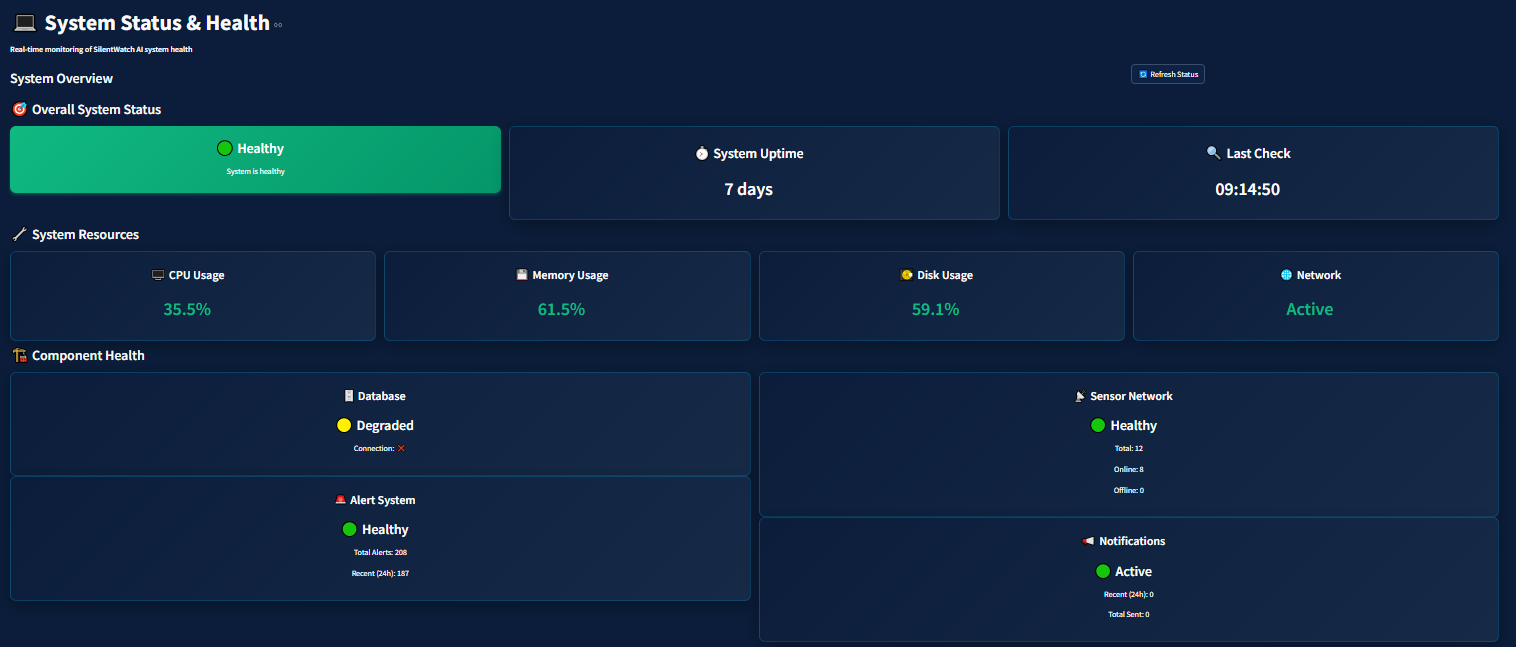
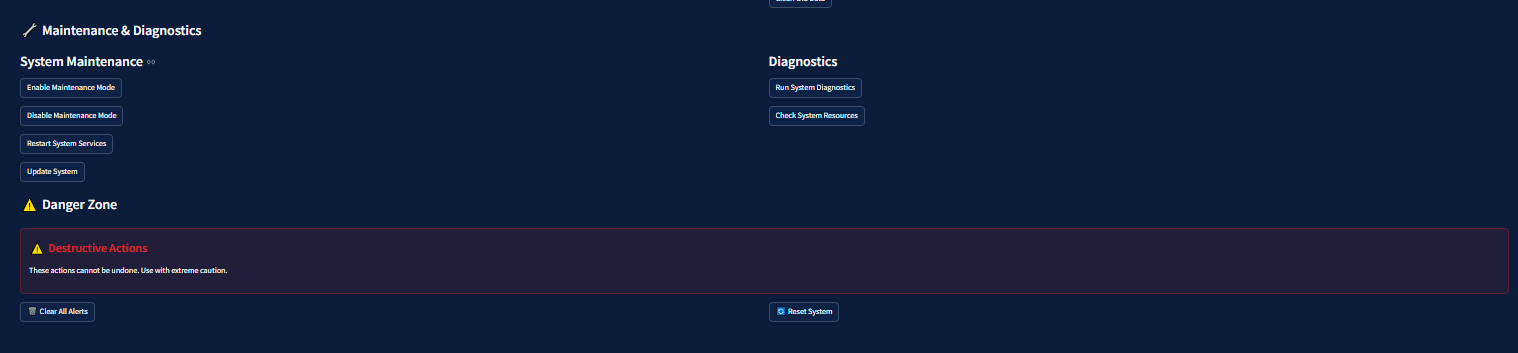
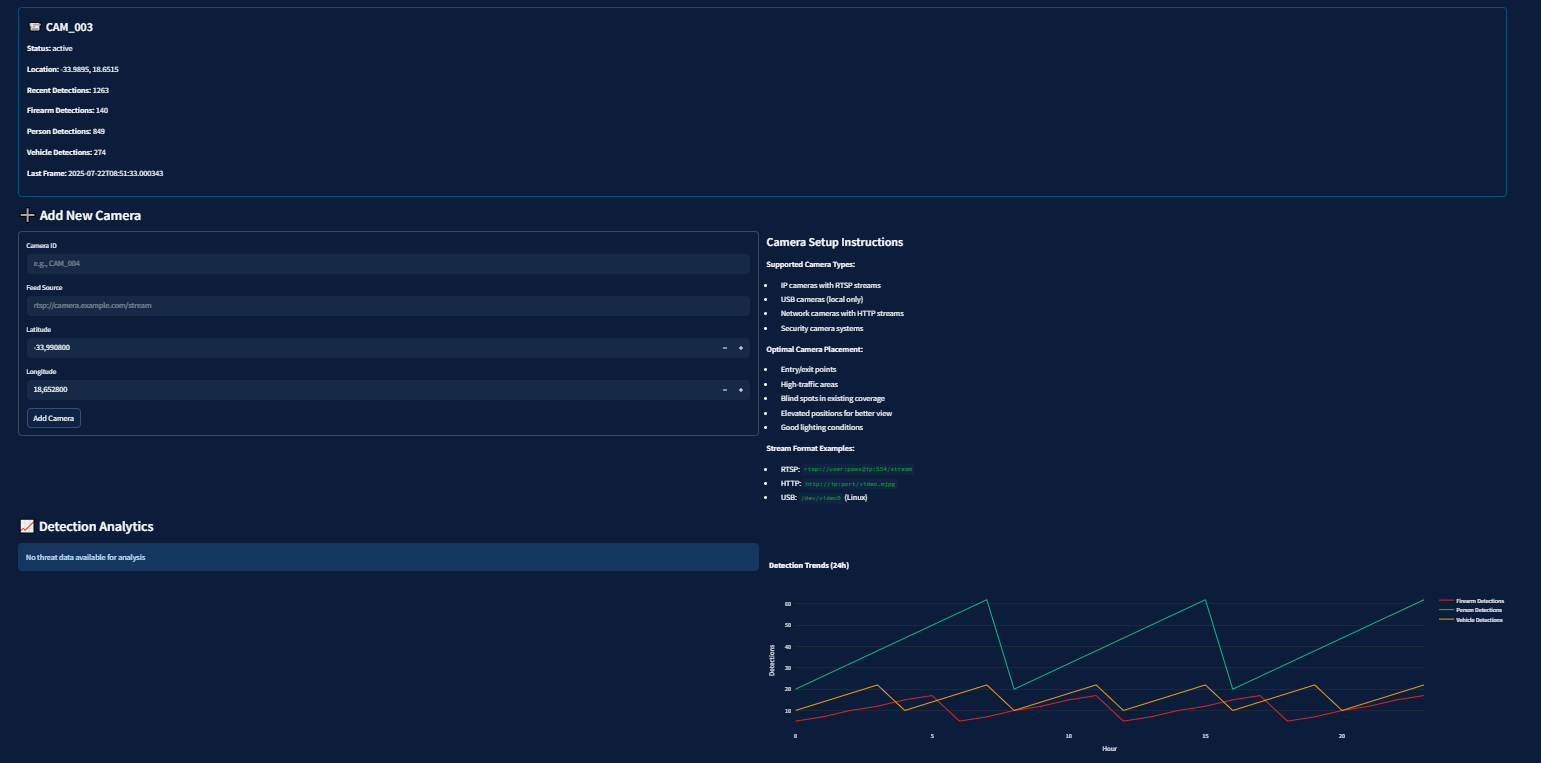
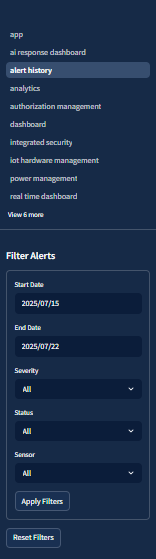
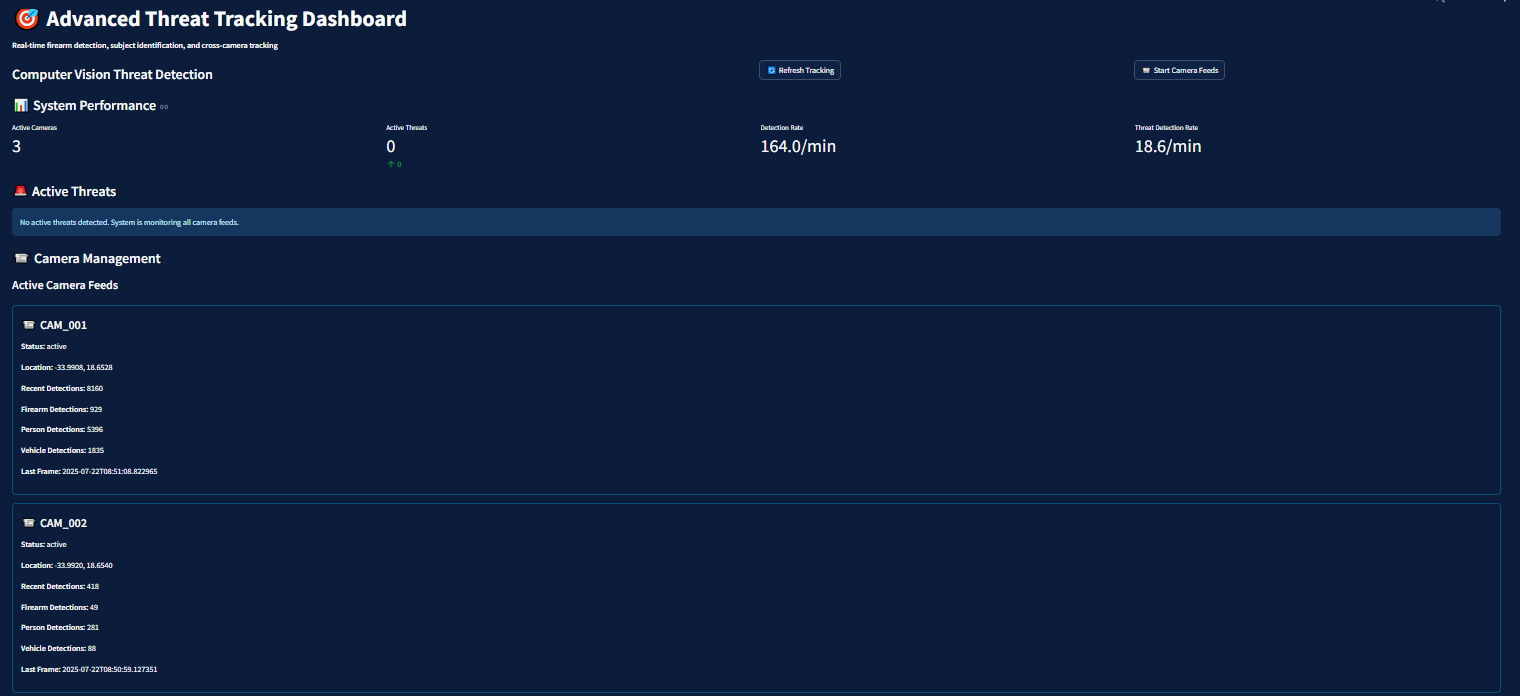
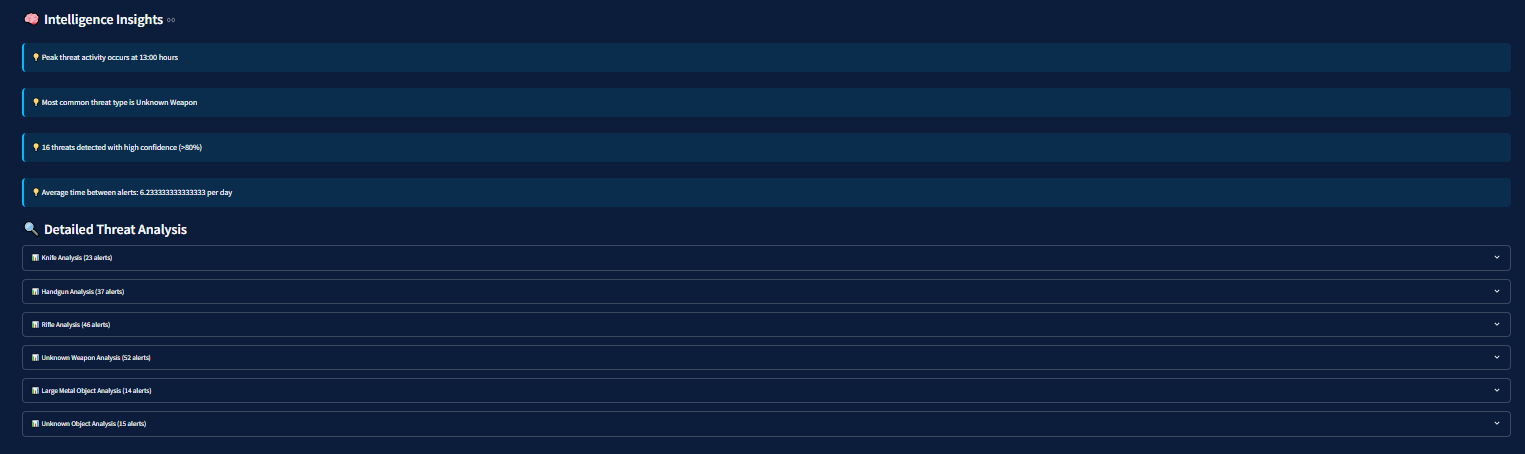
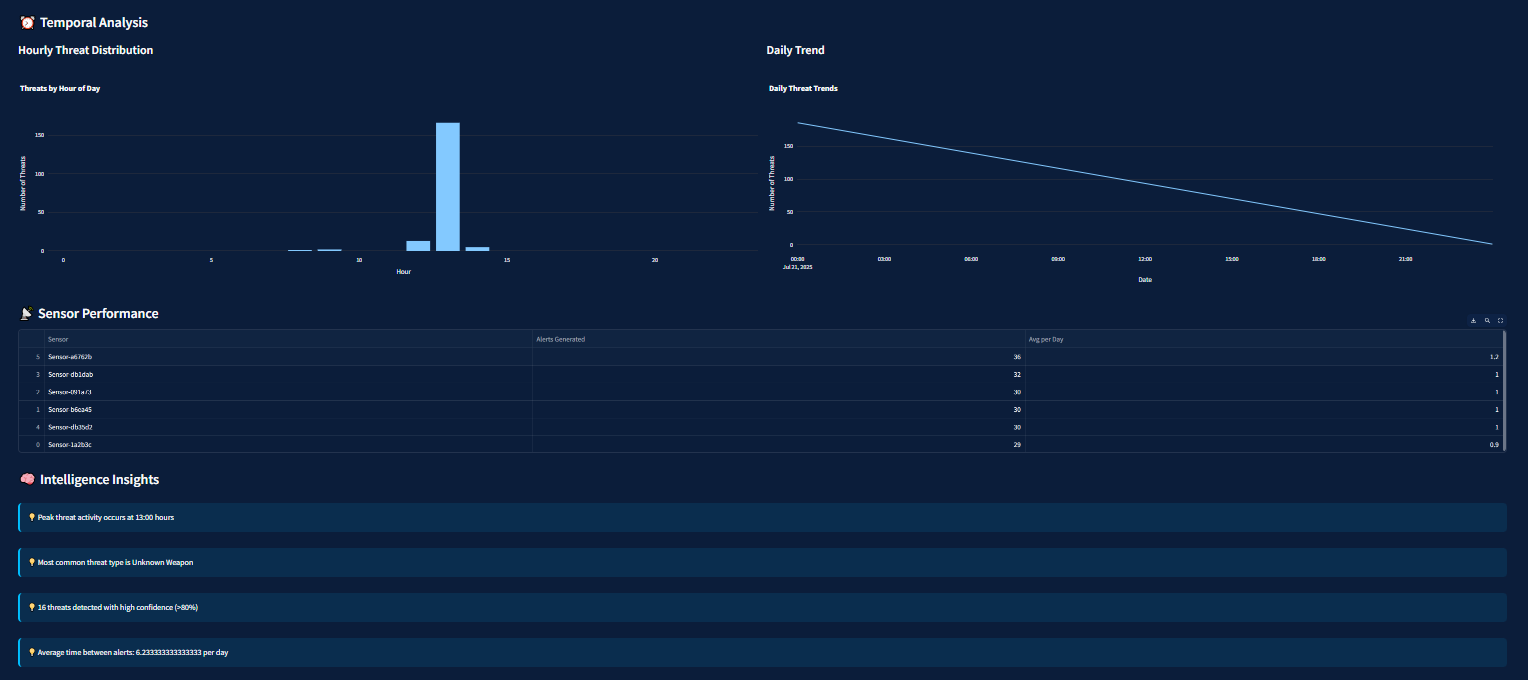
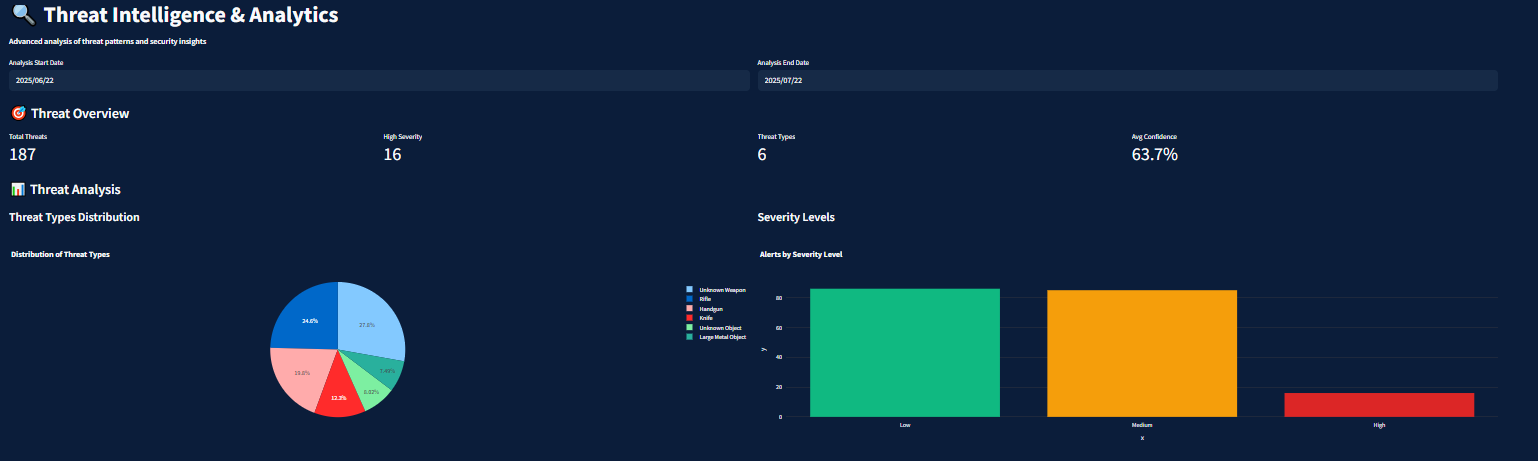
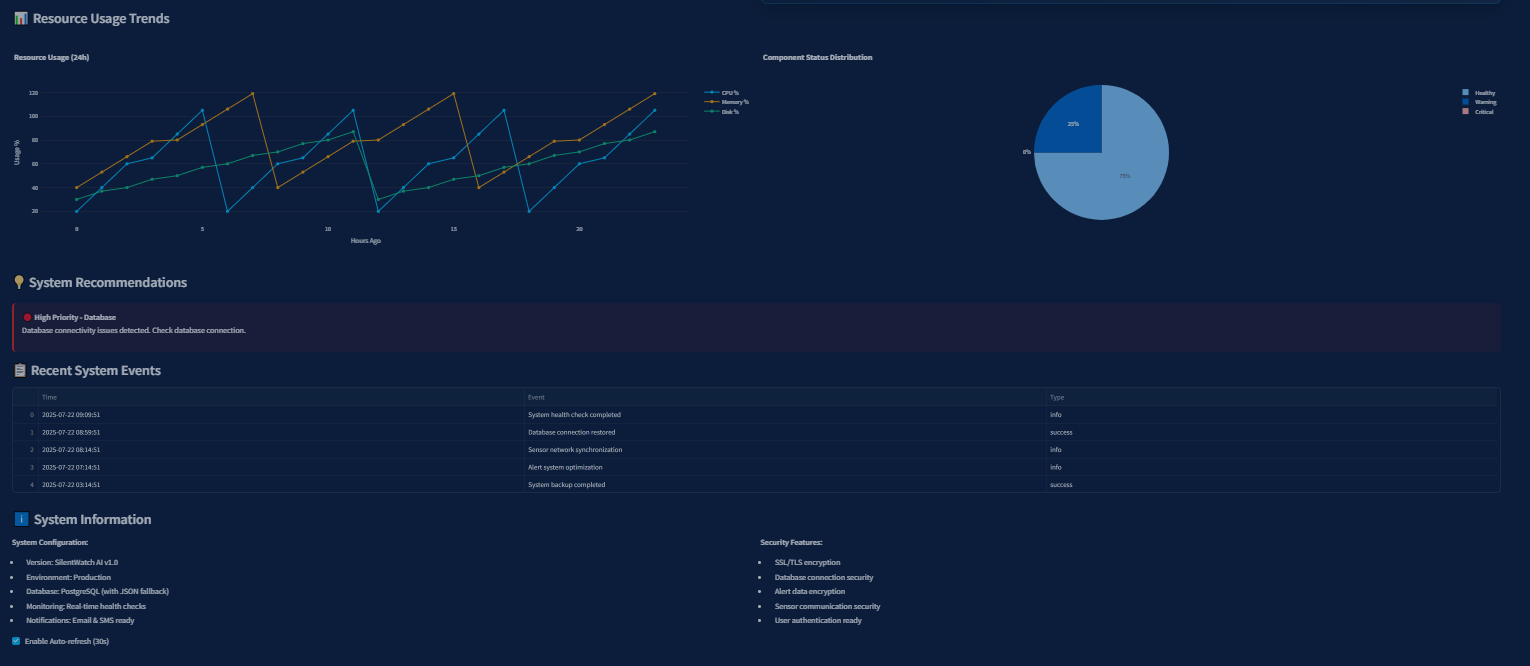
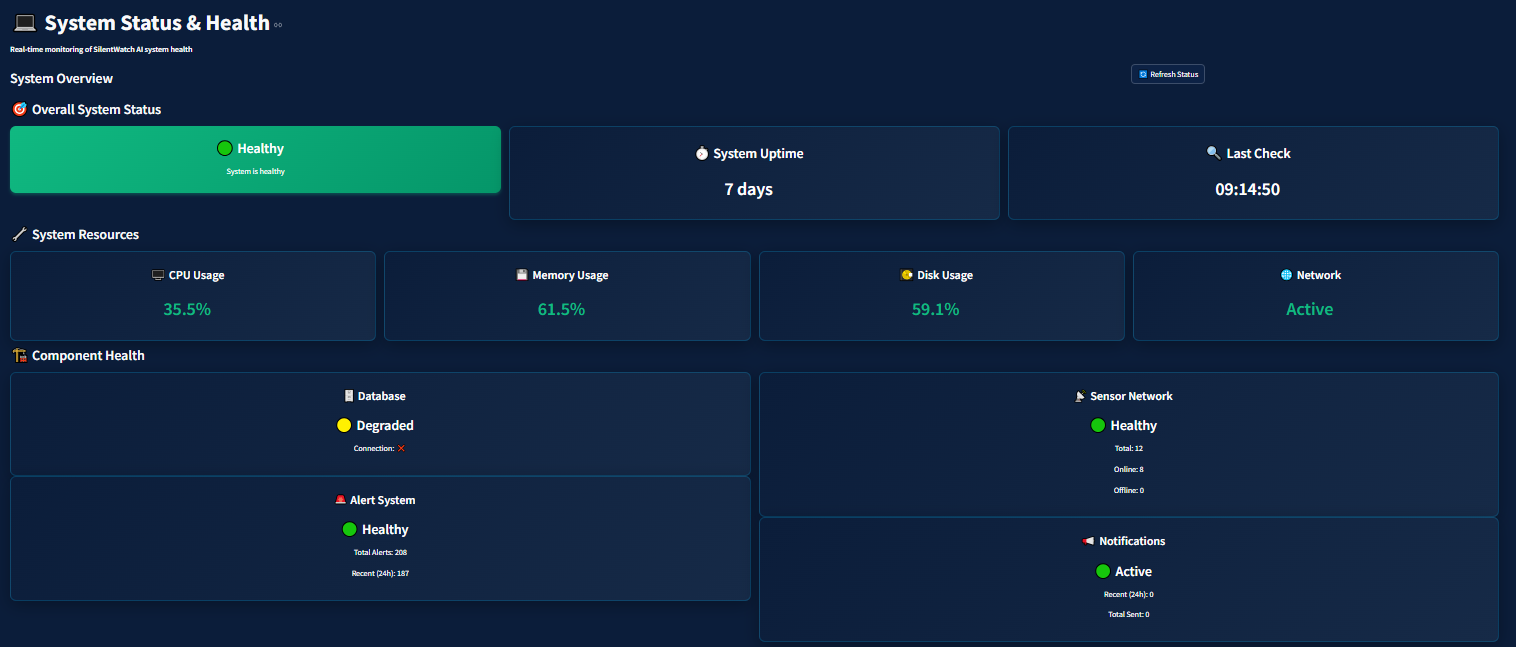
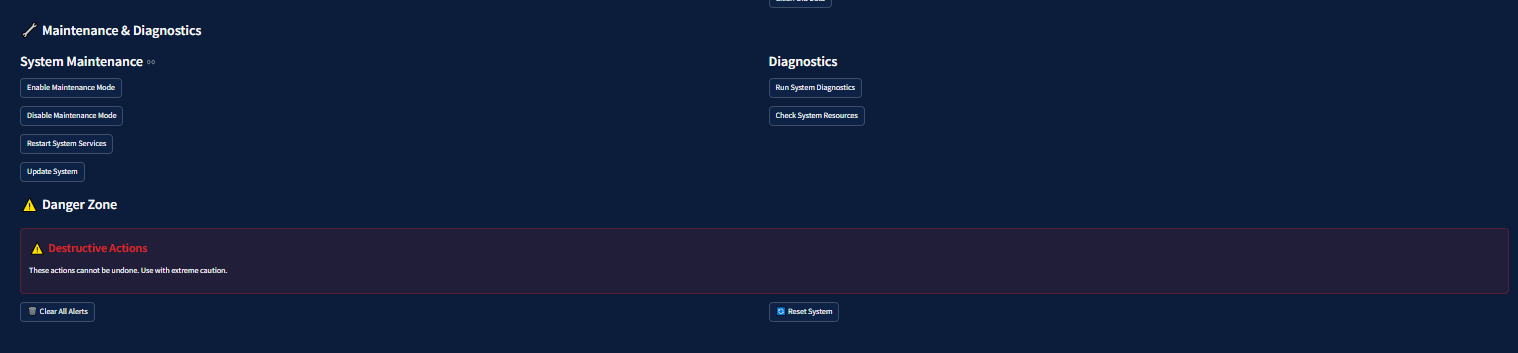
📊 Dashboard UI Streamlit + Tailwind CSS was used to build a lightweight, interactive dashboard for real-time threat visualization and incident tracking. We used Plotly for graphs and Folium for mapping threat locations dynamically.
🚨 Alert System A custom Python alert manager class tracks detection history and generates real-time notifications when a firearm signature crosses the threat threshold. Alerts include location, timestamp, threat type, and confidence level — ready to be piped into SMS, email, or API-based dispatch systems.
🔗 External Integrations Designed for seamless API-level integration with: ShotSpotter – to confirm gunfire incidents Drone Systems – to track suspects or guide emergency responders
☁️ Cloud Development & Deployment We used Replit for the entire build: coding, testing, version control, and deployment. The app runs on Replit Autoscale Deployment and uses .replit and .streamlit/config.toml for configuration management. SQLAlchemy ORM powers the database, currently simulating PostgreSQL in .replit.
Challenges We Ran Into
🧠 Designing accurate detection without access to physical sensors or camera feeds — relying solely on simulated IoT data and smart assumptions. ⚖️ Preventing false positives while still identifying real threats required careful calibration of our AI logic. ⏱️ Building a functioning real-time system within a tight hackathon timeline pushed us to work fast, learn fast, and adapt constantly. 🛡️ Ensuring a privacy-first architecture — without using surveillance footage — meant reimagining traditional safety models. 🌍 Simulating a system that could truly scale into real-world communities was complex but necessary to validate our concept. 💡 Turning our dream into a working prototype was one of the biggest challenges — but also our proudest achievement. From an idea rooted in lived experience to a real tool with the potential to save lives.
Accomplishments That We’re Proud Of
✅ Built a working prototype that simulates a fully functional firearm detection and real-time alert system ✅ Developed a sleek, interactive dashboard with live threat visualization using Plotly and Streamlit ✅ Engineered a privacy-conscious, community-first solution that detects threats without invading personal space ✅ Proved that AI + IoT can create real-world impact in underserved communities through smart, invisible infrastructure ✅ Pitched a bold idea that can genuinely save lives — without high costs, heavy surveillance, or mistrust ✅ Worked towards making our communities safer, one line of code at a time ✅ Took a stand against violence and built something that could protect innocent lives, especially in places where help often arrives too late
What We Learned
💡 Prevention is possible — when tech is paired with empathy and purpose 🔗 IoT + AI aren’t just for smart homes — they can power smart streets, smart poles, and smarter responses ⏱️ Working with real-time data taught us the value of performance optimization and efficient data flow 🛡 Community trust is everything — safety tech must protect without watching, and serve without judging 💬 Communication and simplicity matter — especially when explaining complex systems to non-technical stakeholders 🧠 We gained hands-on experience with Flask, Streamlit, Tailwind CSS, alert logic, scalable project design, and real-world API integration 💖 We learned that we need to be the change we want to see — especially in communities forgotten by innovation 🌍 Technology can be a form of justice when used to protect lives, not just lifestyles ✨ Most importantly: we learned that with courage and code, you can build hope
What’s Next for SilentWatch AI
🧪 Pilot Program: Launch SilentWatch AI in high-risk communities to gather real-world feedback and improve our model. 🛰️ Hardware Integration: Collaborate with IoT hardware partners to install real metal detection sensors in street infrastructure. 🤝 Local Collaboration: Build trust by partnering with law enforcement, community leaders, and safety-focused NGOs.
🛩️ Drone & ShotSpotter Sync: SilentWatch AI detects concealed weapons before a shot is fired. ShotSpotter detects and triangulates the location of gunfire after a shot is fired. Drones can track suspects, survey the area from above, or even deliver medical aid or alerts. Together, they form a layered defense system — from prevention to response.
🌍 Open Source Community: Turn SilentWatch AI into a modular, open-source framework so others can adapt it to protect their own communities around the world.
🔊 SilentWatch AI is more than just a project — it’s a movement. A movement to replace fear with foresight. To build trust, not just tech. To prove that saving lives doesn’t require surveillance — just smart, ethical innovation built from the heart.
Built With
- arduino
- esp32
- folium
- json
- mqtt
- openai
- openaiapi
- opencv
- ploty
- postgresql
- python
- raspberry-pi
- replit
- streamlit

Log in or sign up for Devpost to join the conversation.