Inspiration
What it does
How we built it
Challenges we ran into
Accomplishments that we're proud of
What we learned
What's next for SilentSOS AI
SilentSOS AI
Inspiration
Every second matters during an emergency, but not everyone can safely make a phone call or ask for help. Victims of domestic violence, people experiencing panic attacks, individuals being followed, or someone facing a medical emergency may not have the opportunity to speak without increasing the risk.
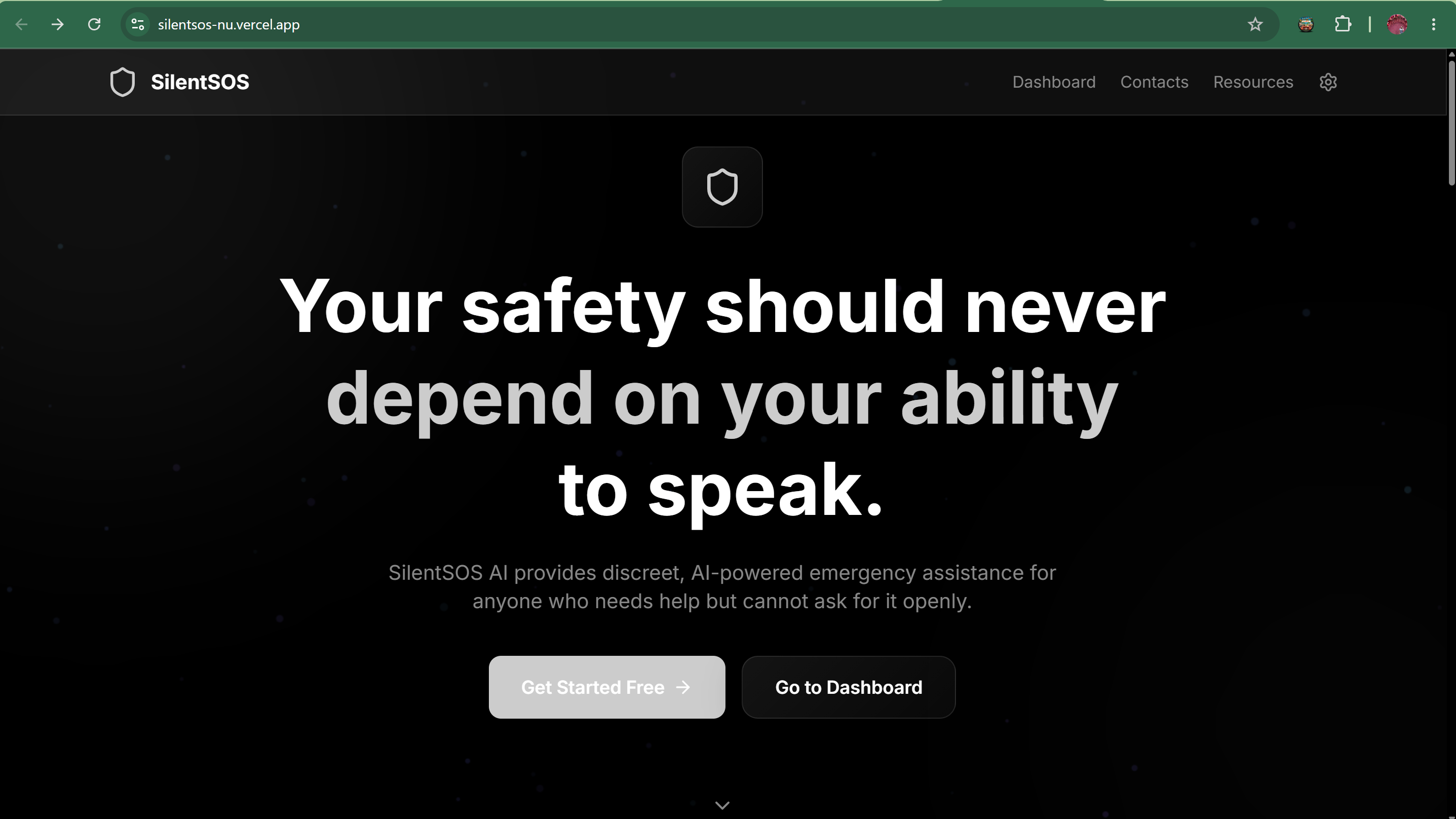
We built SilentSOS AI to provide a discreet, privacy-first way to request help. Our goal was to create a platform that prioritizes user safety, accessibility, and trust, while supporting United Nations Sustainable Development Goal 3 (Good Health and Well-being).
What it does
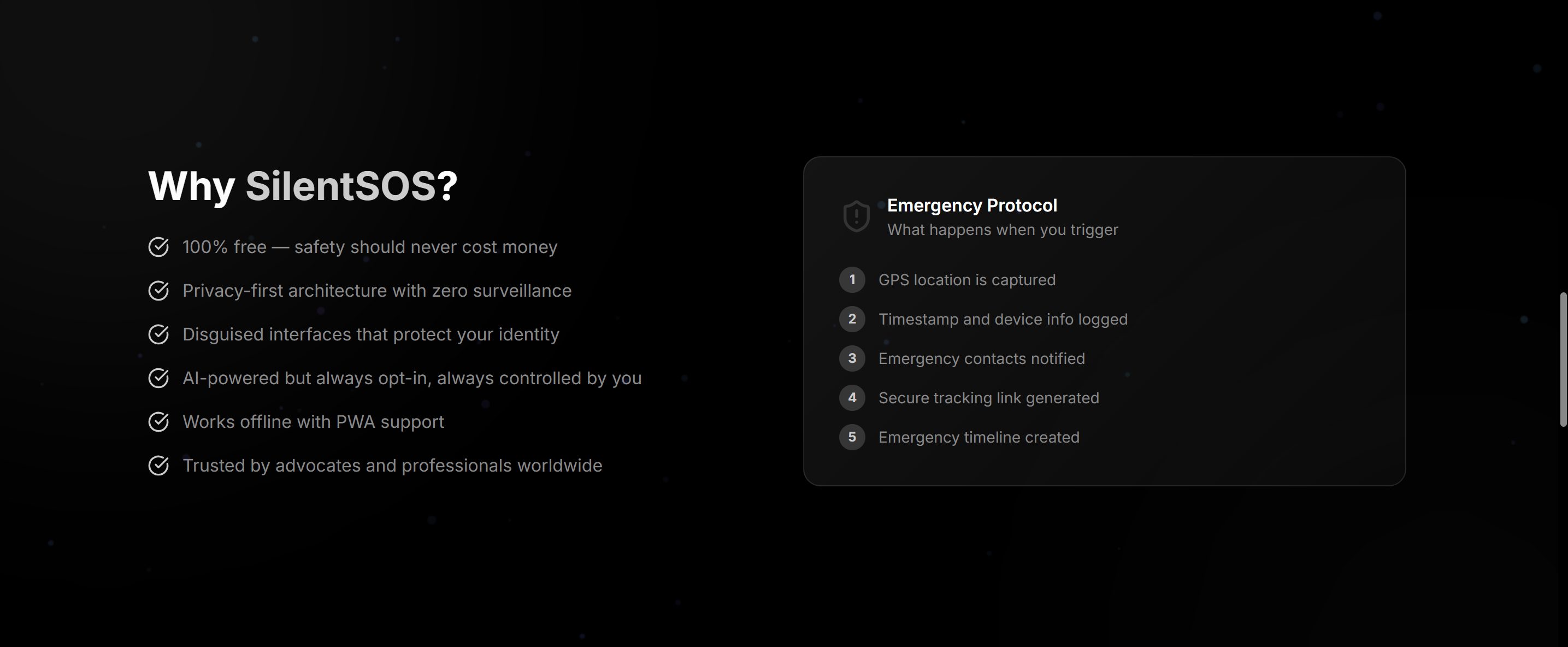
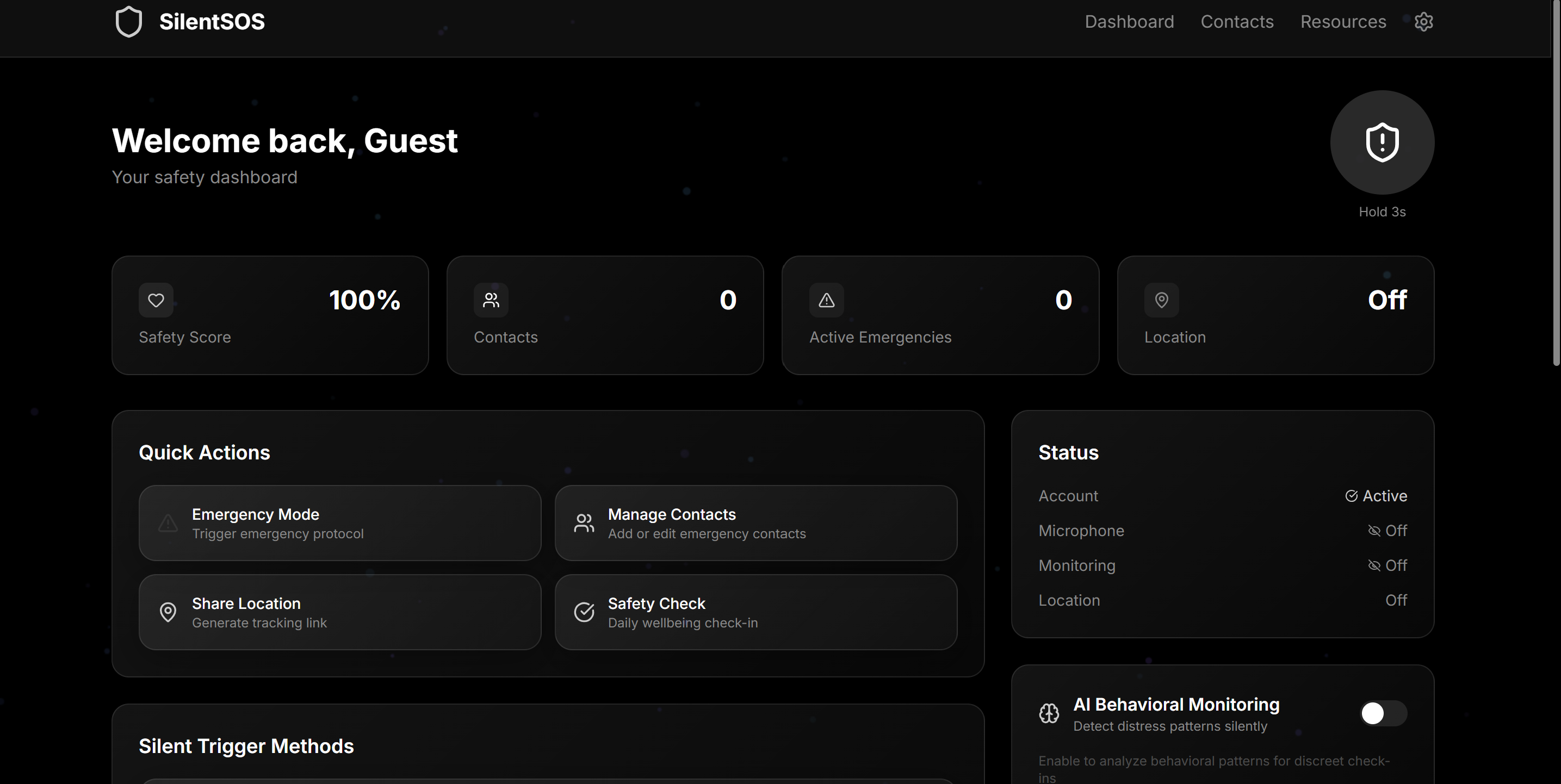
SilentSOS AI is an AI-powered emergency assistance platform that allows users to silently activate emergency support using hidden interaction methods.
Key Features
- Hidden Panic Button
- Secret Keyboard Shortcut
- Fake Calculator with Secret PIN
- Fake Notes App with Hidden Trigger
- Live Location Sharing
- Trusted Emergency Contacts
- Emergency Timeline & Logs
- Privacy-first AI Behavioral Monitoring (Opt-in)
- Voice Distress Detection (Opt-in)
- Emergency Resources
- Secure Authentication
The application is designed so that users remain in control of their data at all times.
How we built it
Frontend
React
TypeScript
Tailwind CSS
Framer Motion
React Router
Backend
Node.js
Express.js
Database
Firebase Firestore
Firebase Authentication
AI & Browser APIs
TensorFlow.js
Web Speech API
Browser Geolocation API
Deployment
Vercel
Render
The application follows a clean and modular architecture with reusable components, custom hooks, service layers, utilities, and context providers. This structure enables AI-powered documentation generation without relying on a manually written README.
Challenges we ran into
One of the biggest challenges was balancing privacy with usefulness.
Since the application deals with sensitive information such as location and microphone access, we ensured that every advanced feature requires explicit user consent.
Another challenge was designing emergency triggers that are easy for the user to remember but remain hidden from anyone watching the screen.
Finally, organizing the project into a clean, scalable codebase without relying on documentation required careful planning of the folder structure and component hierarchy.
What we learned
Throughout the project, we learned:
- Building privacy-first AI applications
- Creating scalable React architectures
- Integrating browser APIs securely
- Designing interfaces for high-stress situations
- Managing real-time location sharing
- Structuring code for automated documentation generation
More importantly, we learned that technology can make the biggest impact when it solves real-world problems with empathy and responsible design.
What's next for SilentSOS AI
Future improvements include:
- Smartwatch integration
- SMS fallback alerts
- Offline emergency mode
- End-to-end encrypted communication
- AI-powered risk prediction
- Hospital and emergency service integration
- Multilingual support
- Progressive Web App (PWA)
- Accessibility enhancements
Our vision is to build a trusted digital safety companion that helps people access assistance quickly, privately, and confidently during emergencies.
SDG Impact
SilentSOS AI contributes to United Nations Sustainable Development Goal 3 – Good Health and Well-being by improving access to emergency assistance, promoting personal safety, supporting mental well-being, and encouraging the responsible use of AI to protect lives.
Built With
- express.js
- firebase-(firestore-&-authentication)
- framer-motion
- geolocation-api
- github
- node.js
- react
- render
- tailwind-css
- tensorflow.js
- typescript
- vercel
- web-speech-api

Log in or sign up for Devpost to join the conversation.