-
-
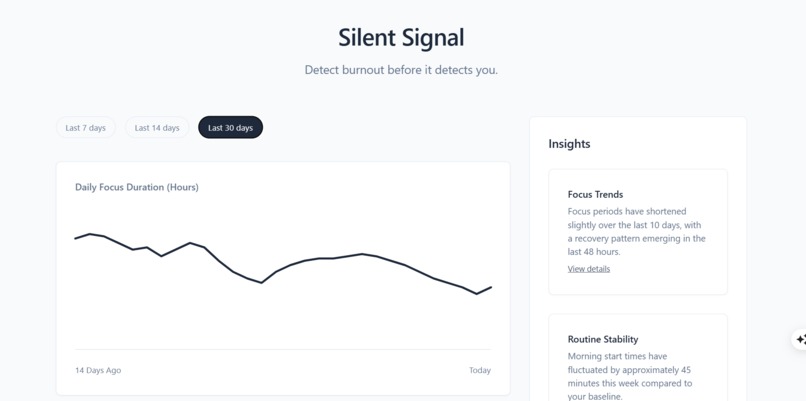
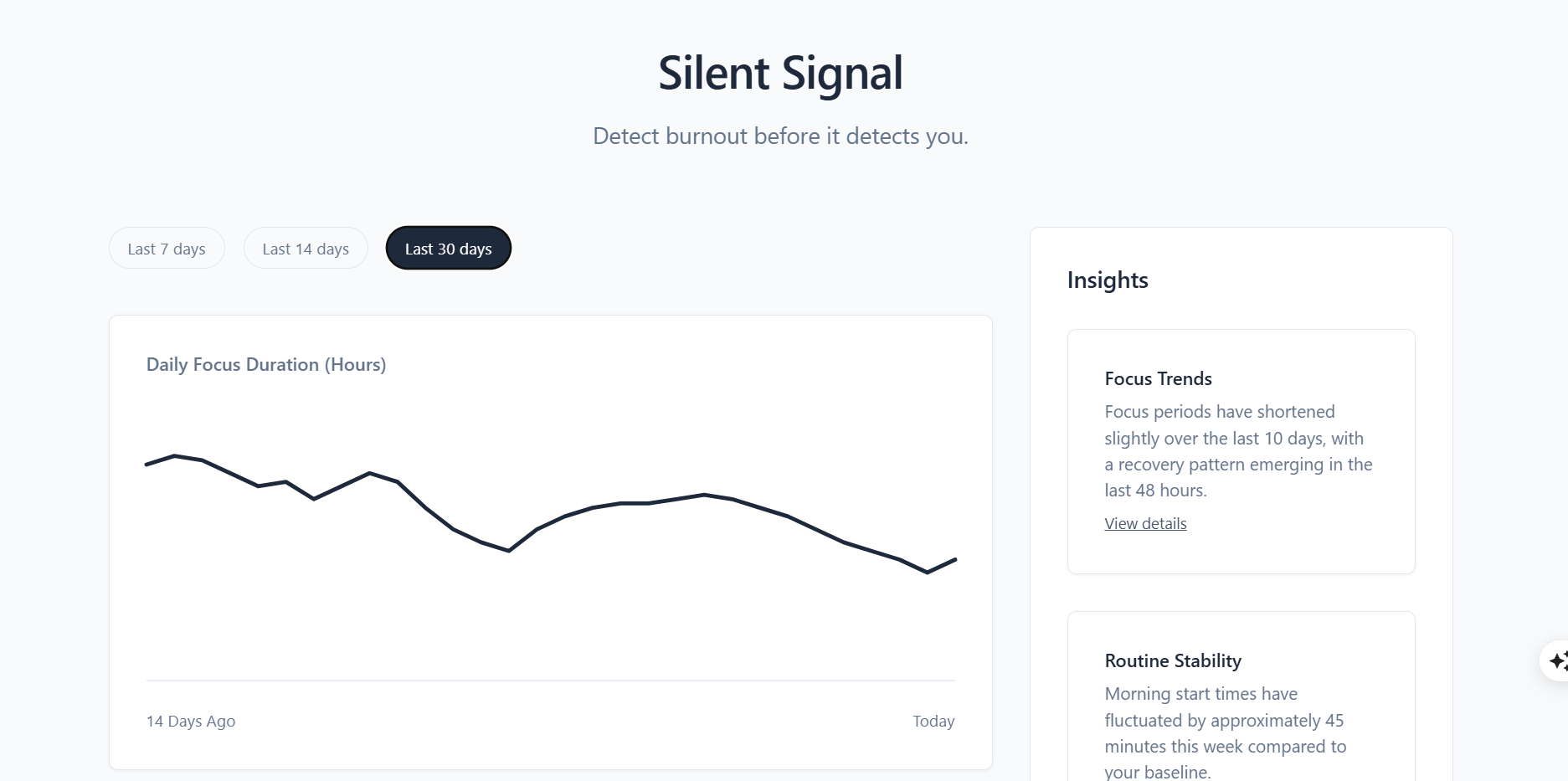
Calm, human-centered dashboard visualizing emotional trends over time.
About the Project - SilentSignal
Inspiration
Mental health struggles rarely announce themselves loudly. In everyday life, people continue working, studying, and interacting while silently carrying burnout, emotional fatigue, or distress. Most existing tools are reactive they respond only after someone explicitly asks for help or reaches a breaking point.
SilentSignal was inspired by this gap:
What if we could notice the subtle signals earlier gently, ethically, and without judgment?
The goal was to create a calm, non-clinical system that helps people become aware of emotional drift before it turns into burnout.
What SilentSignal Does
SilentSignal is an AI-powered early burnout and emotional distress detection web app. It analyzes short, voluntary daily text check-ins to identify emotional trends over time and surfaces gentle, actionable insights.
Rather than diagnosing or alarming users, SilentSignal focuses on:
Detecting patterns, not conditions
Offering awareness, not labels
Encouraging small supportive actions, not drastic interventions
How I Built It
SilentSignal was built as a solo project, with a strong focus on clarity, ethics, and real-world usability.
Tech Stack
Frontend: Next.js, Tailwind CSS, Chart.js, Framer Motion
Backend: Python (FastAPI)
AI / ML: HuggingFace NLP models for sentiment and emotion analysis
Database: Firebase / Supabase
Deployment: Vercel (frontend), cloud-hosted backend
AI Approach
Sentiment analysis to track emotional tone
Emotion classification to understand mood patterns
Trend analysis using rolling averages to detect gradual emotional drift
Importantly, the system does not predict illness or make medical claims. It simply translates behavioral signals into understandable insights.
Challenges Faced
One of the biggest challenges was balancing sensitivity with responsibility.
Overly aggressive detection could feel invasive or alarming
Under-detection could make insights meaningless
Finding the right language, thresholds, and UI tone was critical. Every insight was carefully worded to remain supportive, neutral, and optional.
Another challenge was designing an interface that felt safe and calming, especially for a topic as sensitive as mental health. Minimal visuals, soft colors, and gentle microcopy were chosen deliberately.
What I Learned
Building SilentSignal reinforced the importance of:
Ethical AI design
Human-centered UX
Clear communication over technical complexity
I learned that impactful projects aren’t about adding more features, but about solving the right problem with intention and care.
# Looking Ahead
Future improvements include:
Voice tone analysis (opt-in)
Multilingual support
Therapist or counselor integrations
Privacy-first on-device analysis
SilentSignal is a step toward a future where technology listens quietly and helps early.


Log in or sign up for Devpost to join the conversation.