Inspiration# SilentRisk AI – Dev Risk Agent
Inspiration
Modern software fails not because teams don’t work hard, but because small hidden risks in code quietly slip into production. A minor dependency change, an insecure pattern, or an overlooked edge case can silently grow into critical failures. I wanted to build an AI system that acts like a vigilant reviewer that never gets tired, never misses patterns, and always thinks one step ahead.
That idea became SilentRisk AI.
What it does
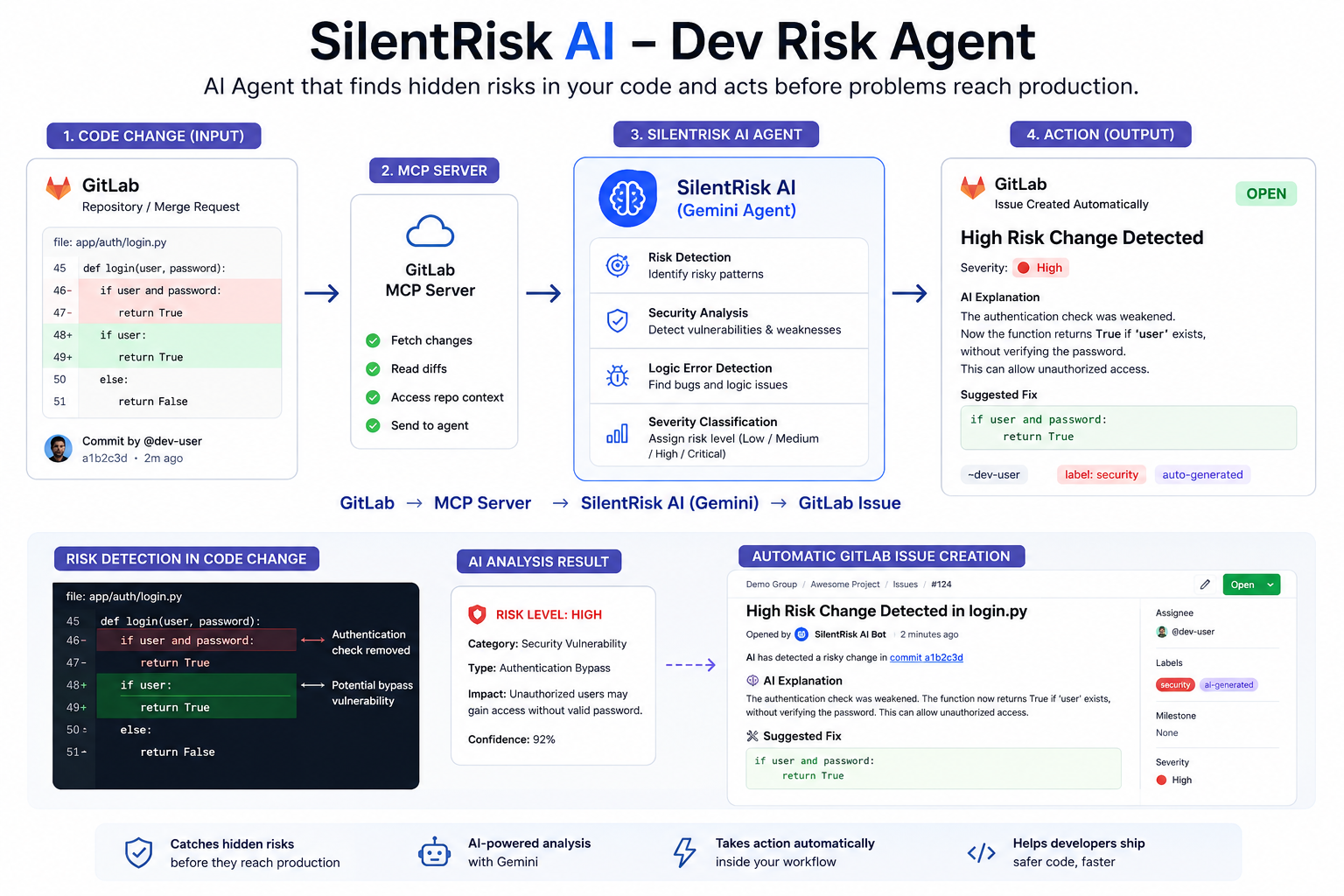
SilentRisk AI is an AI-powered agent built using Gemini and Google Cloud Agent Builder that integrates with GitLab through an MCP server.
It continuously analyzes repository activity and:
- Detects risky code changes (security, stability, logic flaws)
- Identifies patterns humans often overlook in reviews
- Assigns severity levels (Low, Medium, High, Critical)
- Automatically creates GitLab issues with structured explanations
- Suggests potential fixes for developers
Instead of just chatting, it performs real actions inside the development workflow.
How I built it
The system is designed as an agent pipeline:
GitLab MCP Integration
- Fetches commits, merge requests, and diffs
Gemini Model Reasoning
- Analyzes code changes semantically
- Detects anomalies and risky patterns
Agent Builder Orchestration
- Coordinates multi-step reasoning and tool use
Action Layer
- Automatically creates GitLab issues
- Tags severity and adds recommendations
Challenges I faced
The hardest part was moving from an “AI idea” to a real agent that performs actions. At first, the concept was too abstract and did not have real tool integration.
Another challenge was defining what “risk” actually means in code. I had to narrow it down into measurable patterns like:
- insecure changes
- breaking API modifications
- dependency risks
- logic inconsistencies
Also, designing multi-step tool usage (fetch → analyze → act) required rethinking the system as an agent, not just a chatbot.
What I learned
This project taught me that real AI agents are not about answers, but about decisions and actions. I also learned how important structured tool integration is when building production-level AI systems.
Most importantly, I learned how to transform an abstract idea into a workflow that actually interacts with real developer tools.
What's next
Next steps include:
- Expanding support beyond GitLab (Elastic, Dynatrace)
- Improving risk detection accuracy using historical repo data
- Adding human approval mode for critical actions
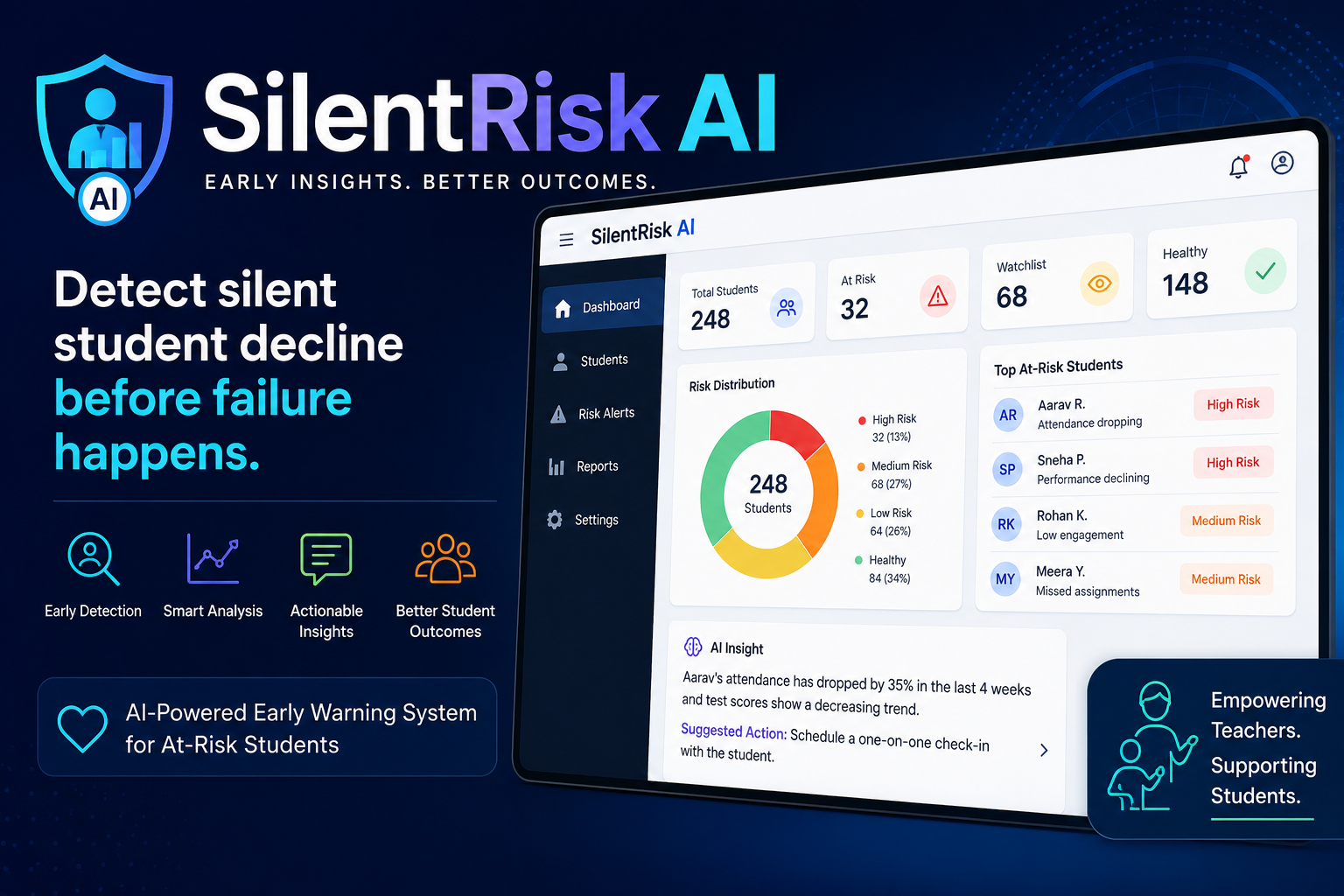
- Building a dashboard for visual risk tracking
Built With
- Gemini (LLM reasoning)
- Google Cloud Agent Builder
- GitLab MCP Server
- Python backend orchestrationpiration


Log in or sign up for Devpost to join the conversation.