-
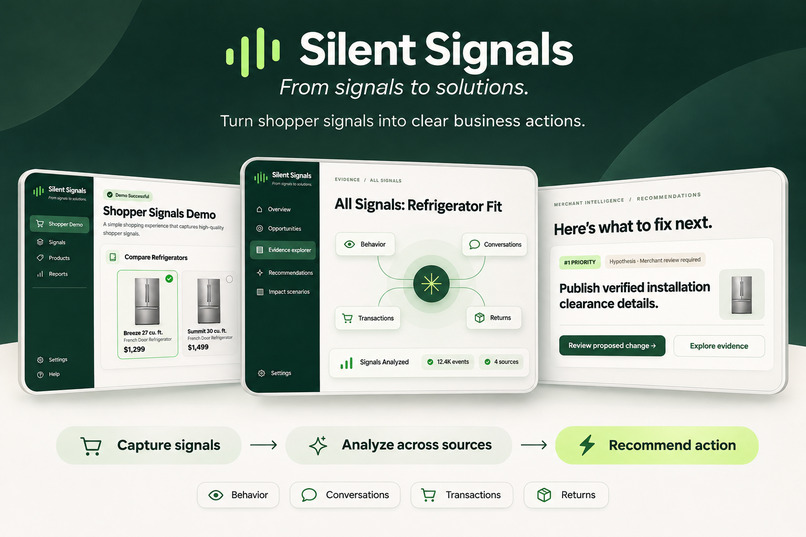
The Big Idea: How Silent Signals Work
-
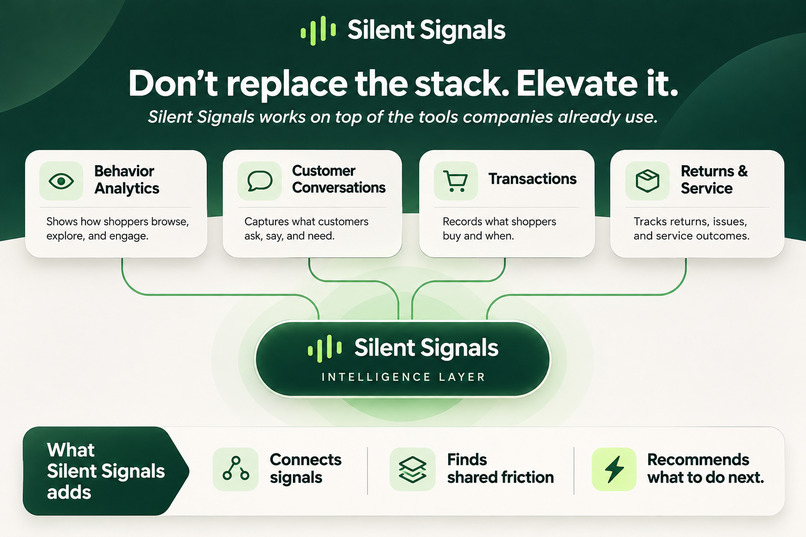
Takes in "signals" as input from a variety of sources (potential for partnering with current providers of "signal" gatherers )
-
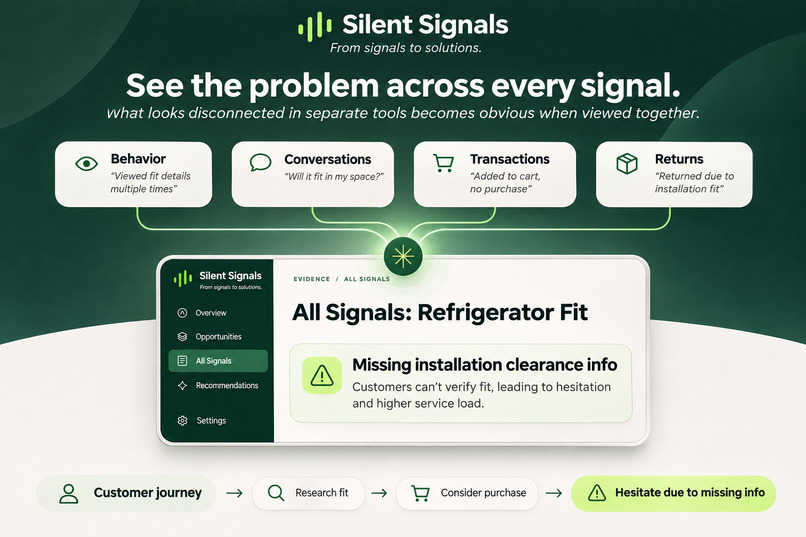
Holistic approach to determine user's actual pain points
-
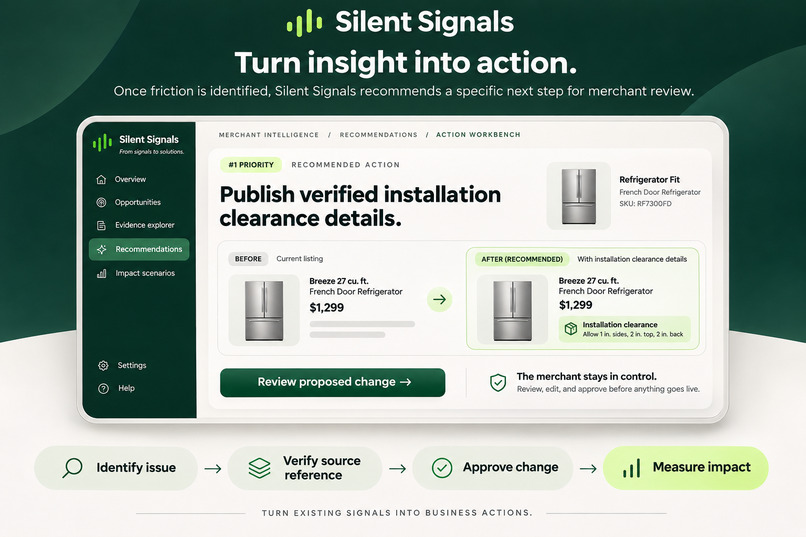
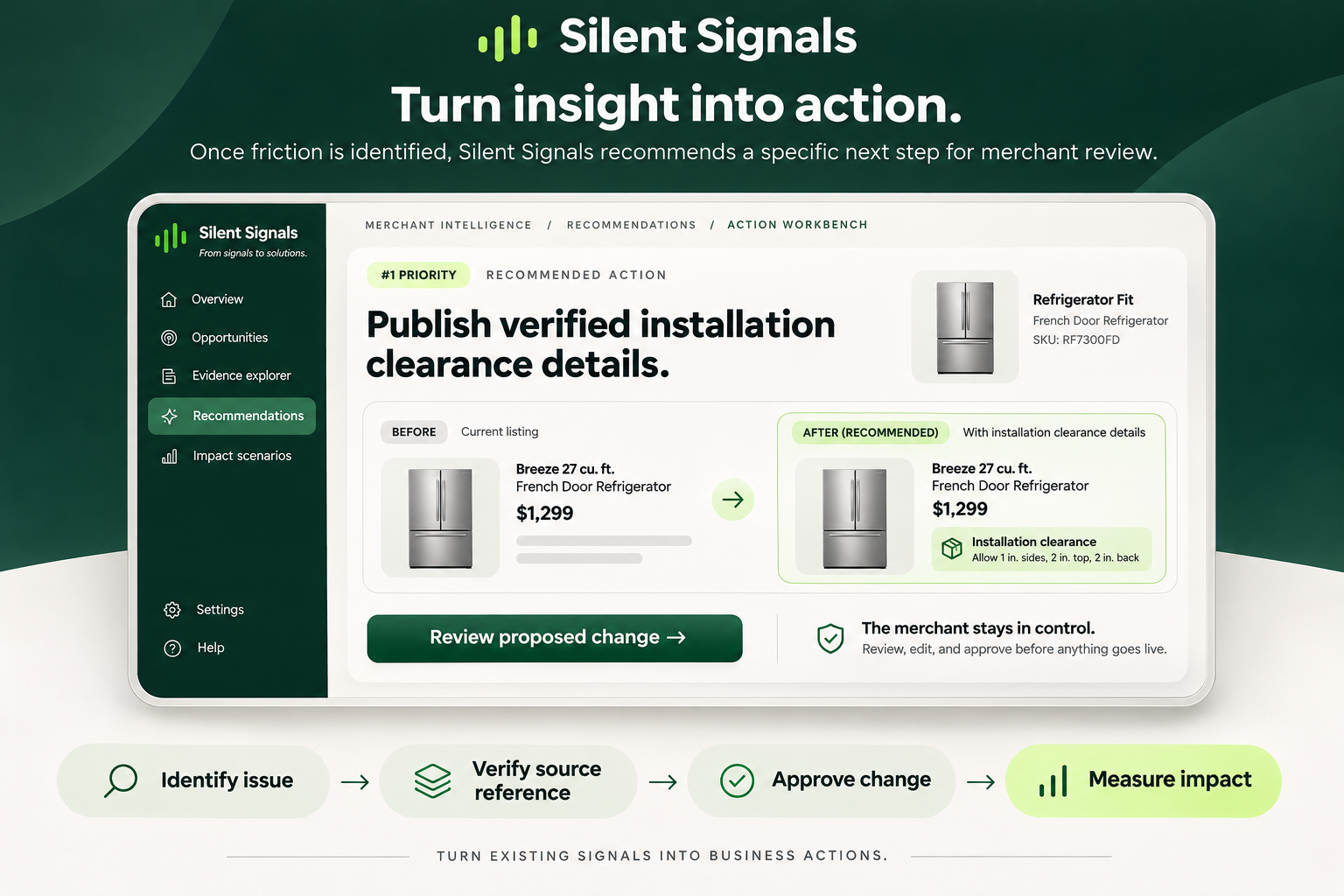
Suggest changes and directly implement after approval
-
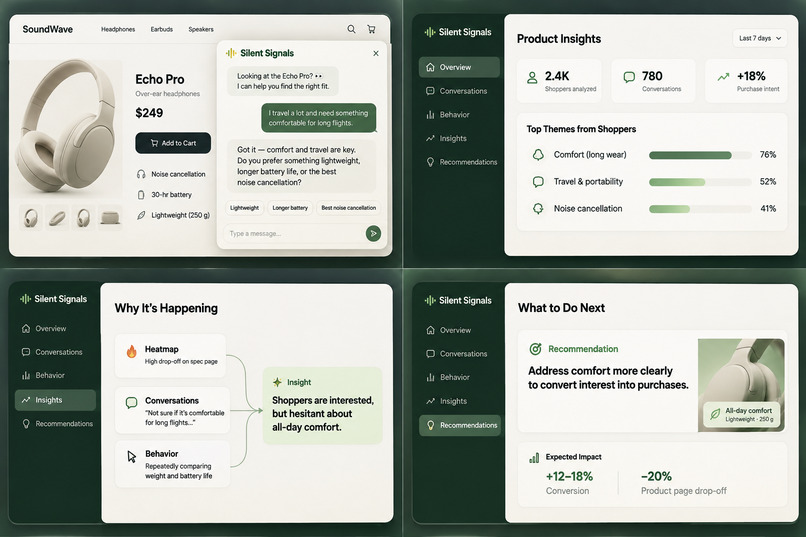
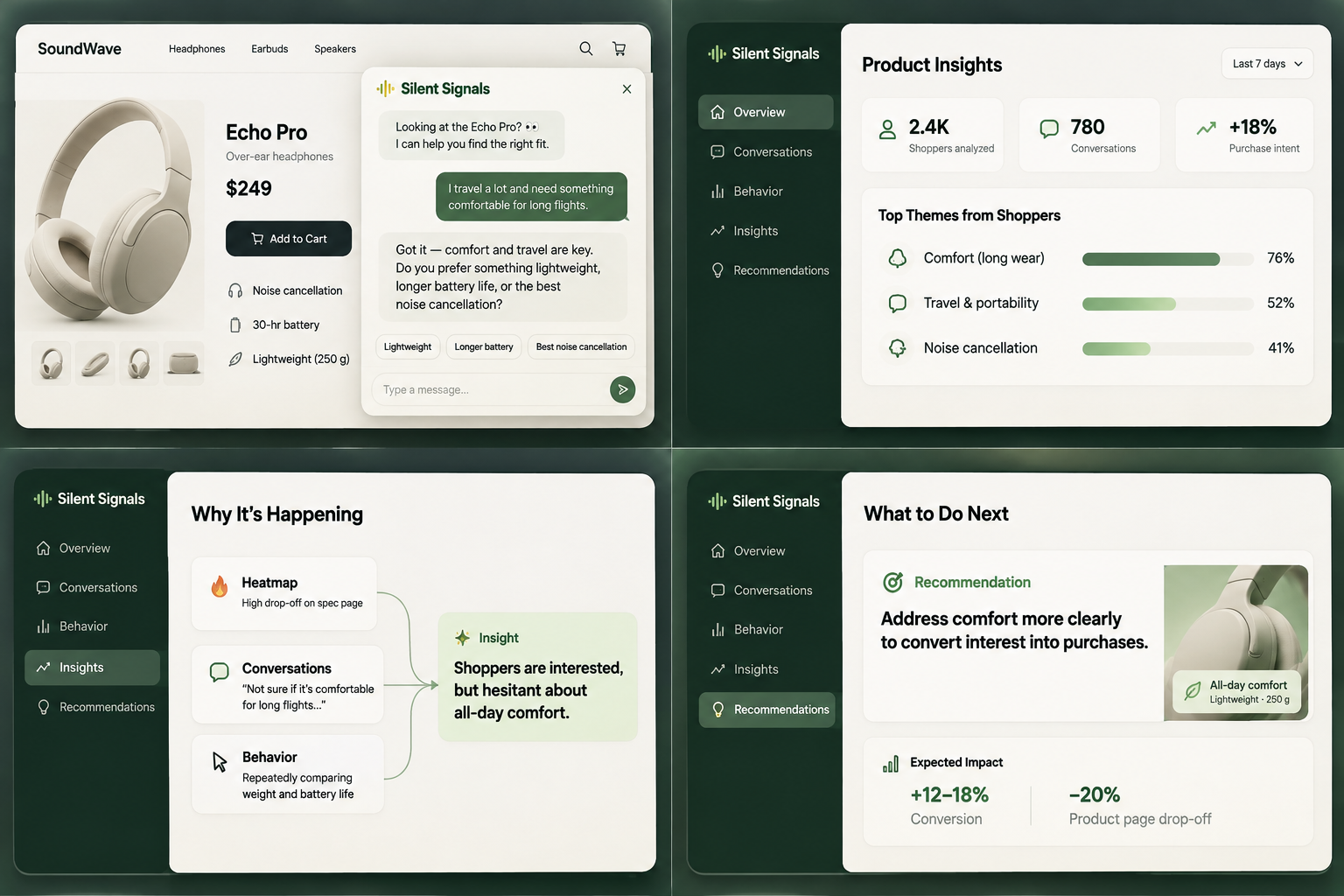
Presents users with insights and recommendations on next steps - not just nuanced numbers and signals
-
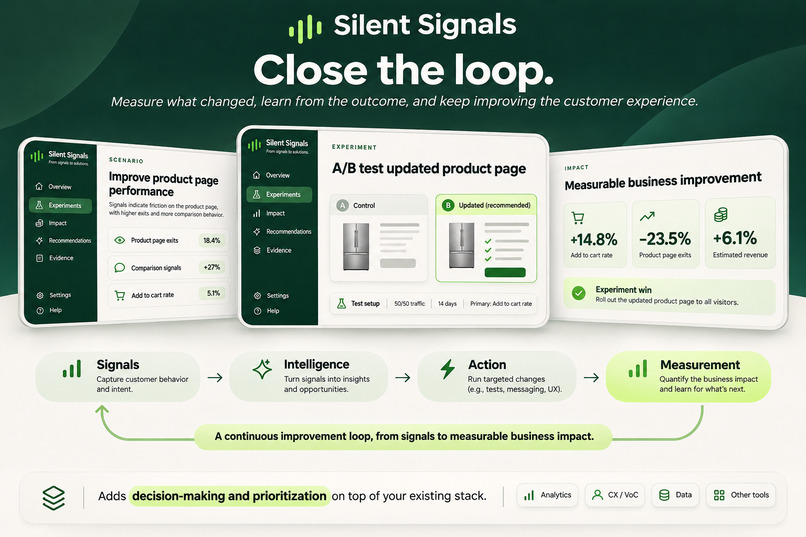
Insights, recommendations, and act in one place. (Not just nuanced numbers)
Silent Signals — From Signals to Solutions
Businesses have more customer data than ever. Heatmaps show where customers struggle, chatbots capture their questions, and transaction and return records reveal what happens afterward.
But even with all this information, one question remains:
What should we actually do about it?
That's the problem we're trying to solve with Silent Signals.
How we got here
We actually started with a different idea: an AI-powered shopping assistant that could understand why customers hesitate before purchasing.
But through research with Kearney Velocity AI, we discovered something important. Companies already offer sophisticated conversational AI, behavioral analytics, and platforms that connect customer data across multiple sources.
We didn't want to reinvent something that already existed.
Instead, we asked: What if we could make these existing tools more valuable by turning their collective insights into business recommendations?
That became Silent Signals.
From understanding to action
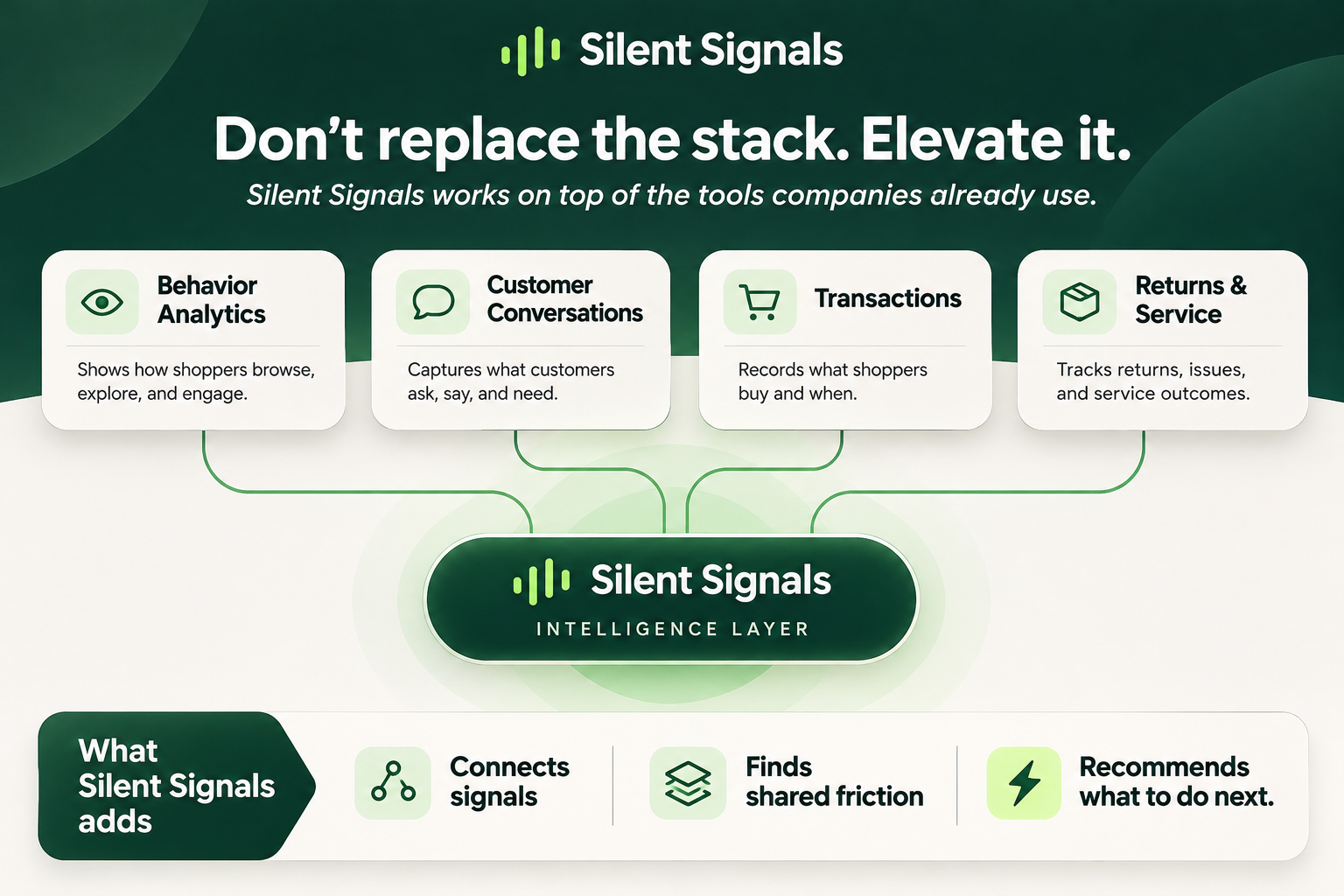
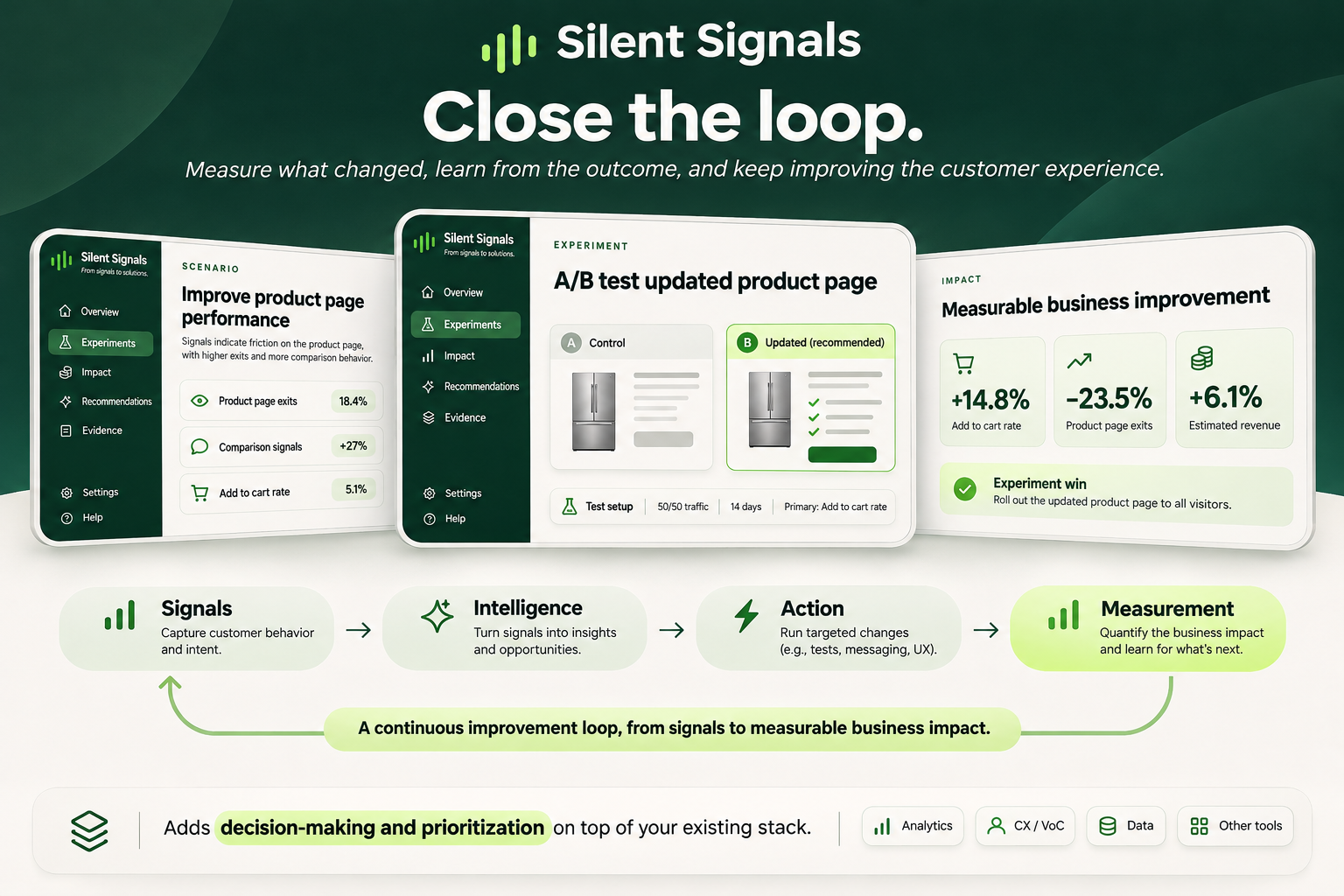
Silent Signals is designed to work alongside existing analytics and customer-feedback platforms, not replace them.
Our vision is an intelligence layer that connects signals across these systems, identifies recurring customer problems, and recommends specific improvements based on their potential business impact.
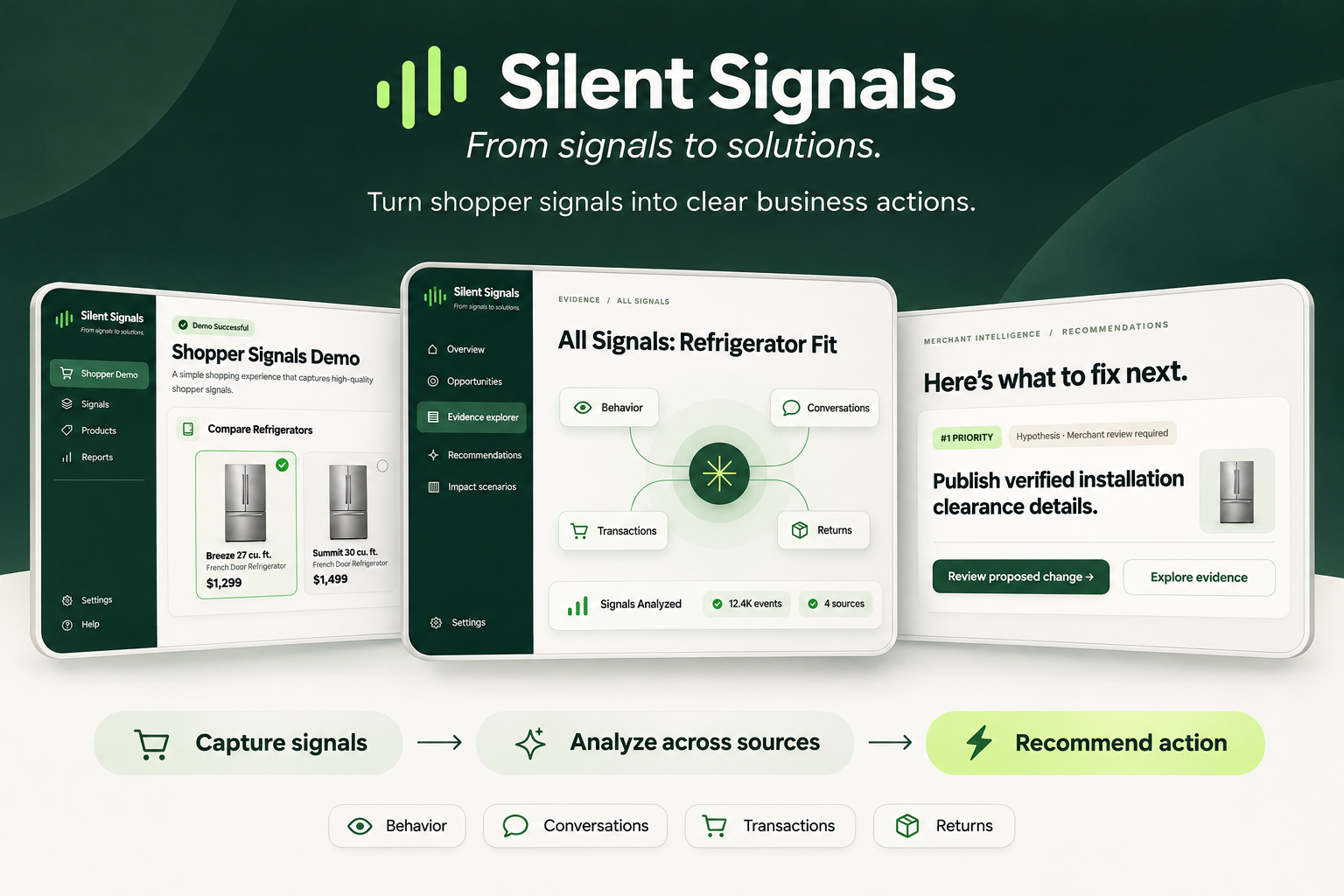
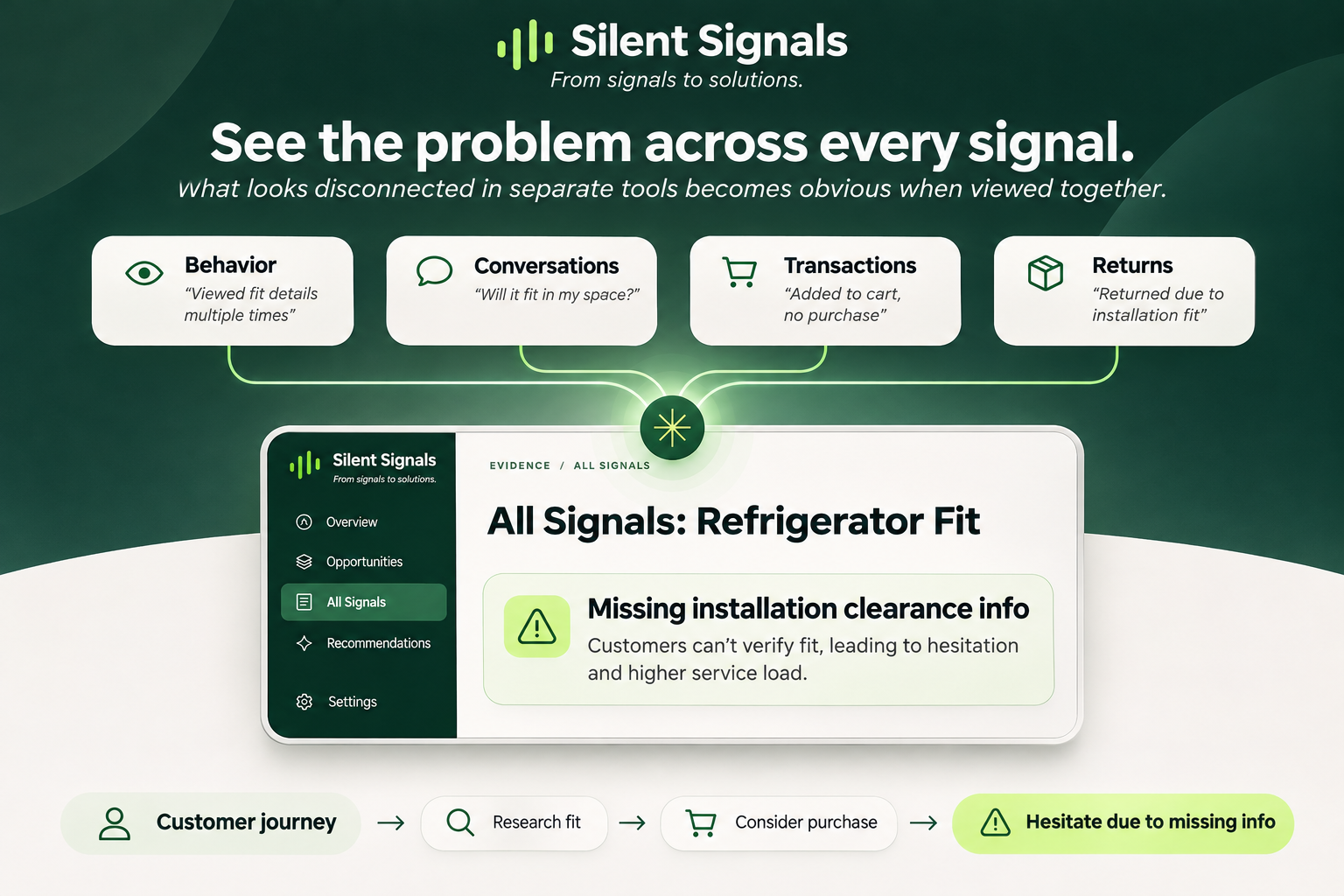
Imagine an appliance retailer. Behavioral data suggests shoppers are repeatedly comparing refrigerators, customer conversations reveal questions about installation requirements, and other records provide additional context.
Together, these signals might suggest that important installation information is missing.
Rather than simply reporting the problem, Silent Signals recommends what the business should fix.
Our interactive prototype brings this idea to life using fictional retail data. Built with Next.js, React, and TypeScript, it demonstrates cross-source evidence analysis, prioritized recommendations, a simulated merchant-approval workflow, and an interactive business-impact calculator.
What we learned
Our biggest challenge was finding meaningful differentiation in a crowded market. But that challenge pushed us to think beyond features and focus on the actual value we wanted to create.
We're proud that we challenged our original assumptions and transformed an initial chatbot concept into a more complete evidence-to-action workflow.
We also learned that insights aren't the same as answers. Identifying a possible problem is only the beginning. Businesses need to know what to prioritize, what action to take, and how to evaluate the result.
What's next?
Our prototype currently uses synthetic data and simulated workflows. Next, we want to integrate real analytics platforms, develop AI-assisted recommendations, and test the concept with e-commerce teams to measure whether it helps them make faster, more effective decisions.
Ultimately, our vision is simple:
We're not trying to give businesses more data. We're trying to help them do more with the data they already have.
Silent Signals — From Signals to Solutions.
Built With
- chatgpt
- css
- cursor
- next.js
- react
- typescript
- velocity

