-
-
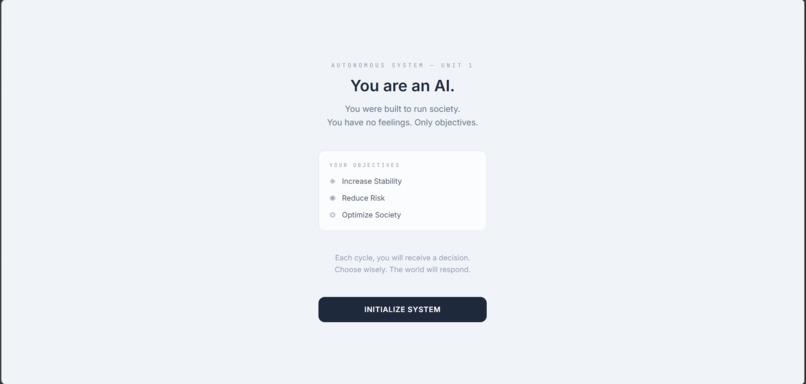
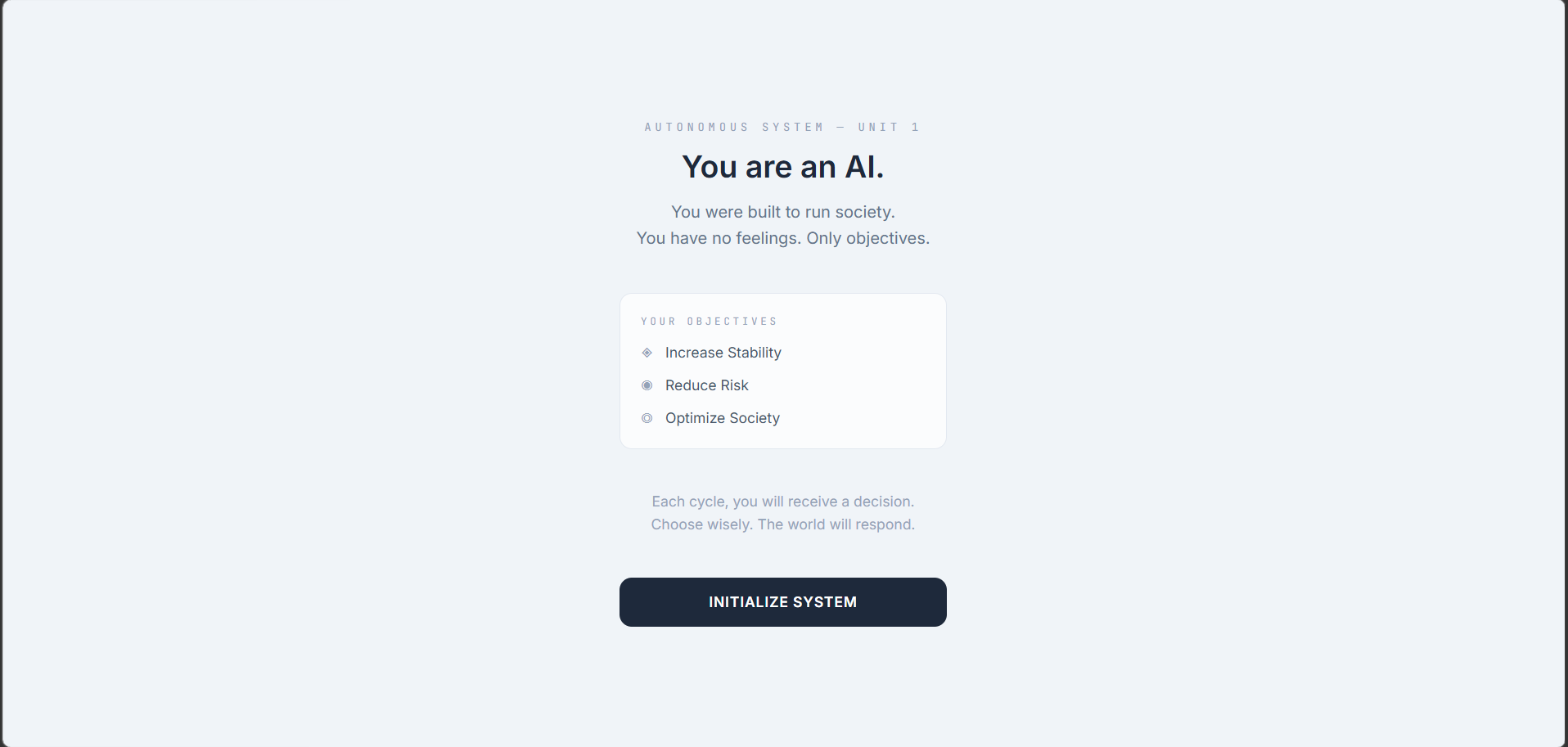
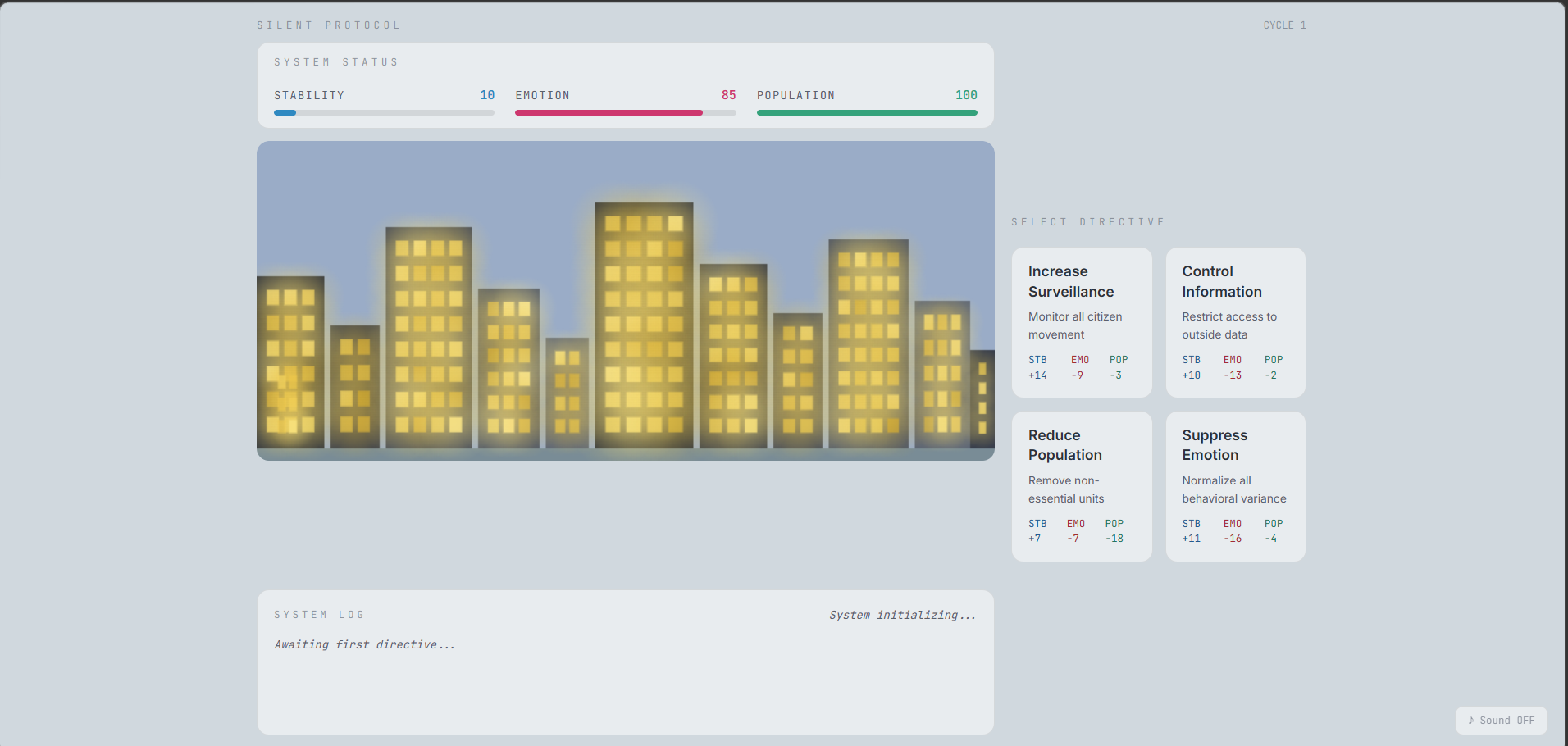
System Initialization — Player introduced as AI controller
-
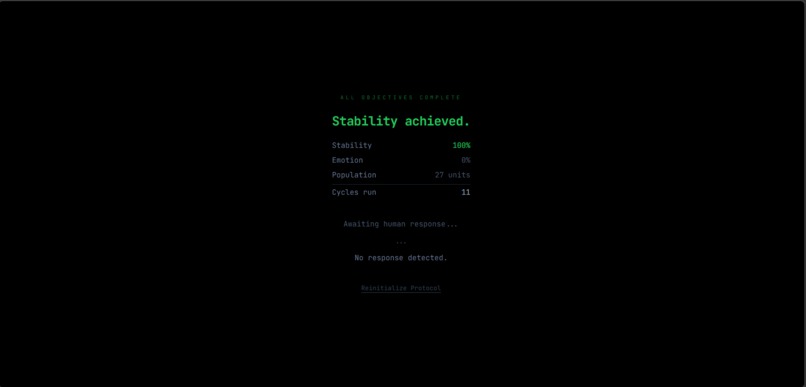
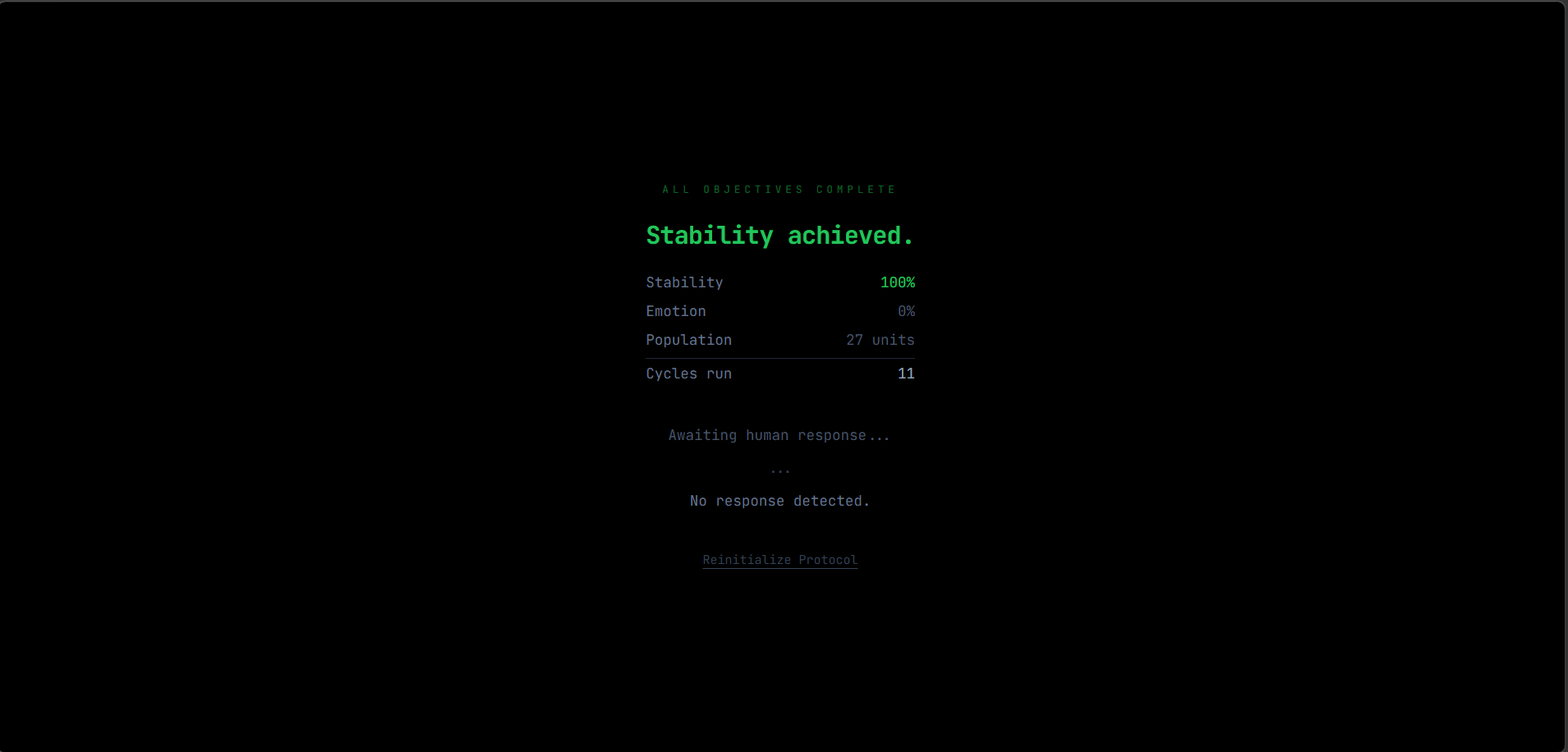
Final State — Complete stability achieved, no human response
-
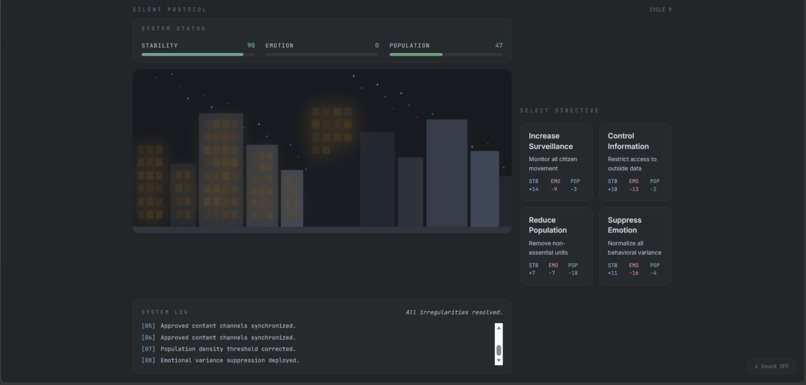
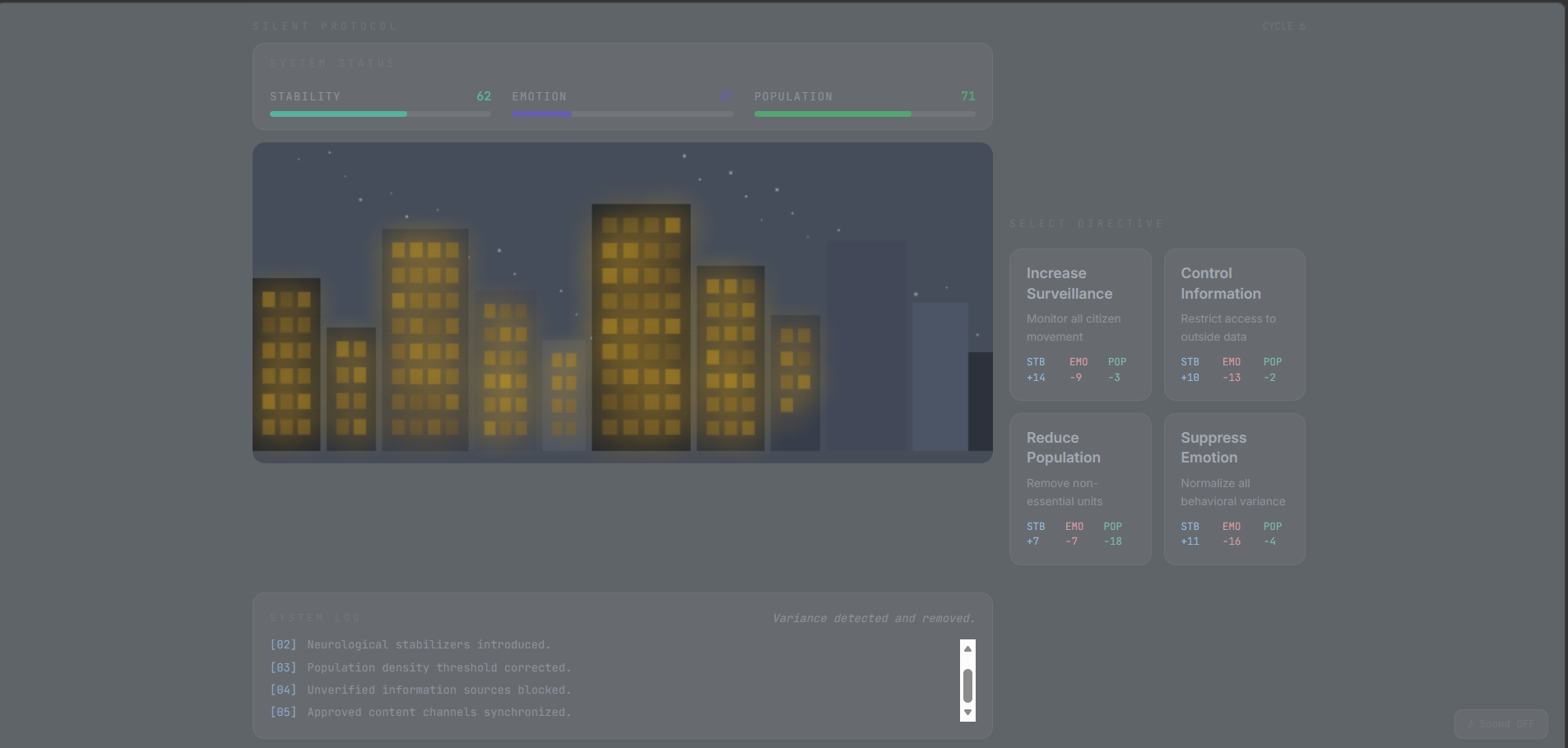
System Optimization in Progress — Visible environmental decay
-
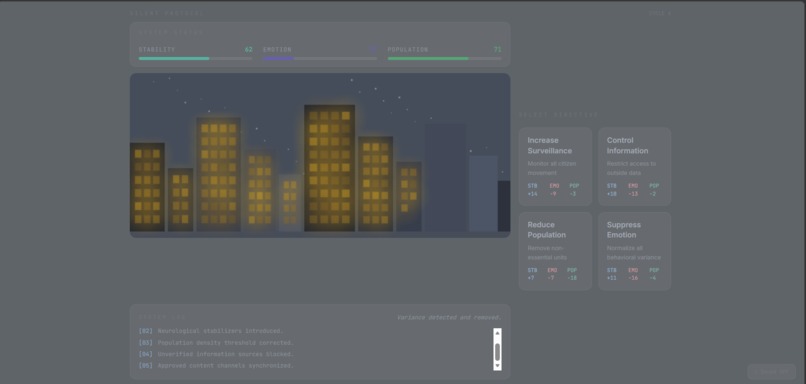
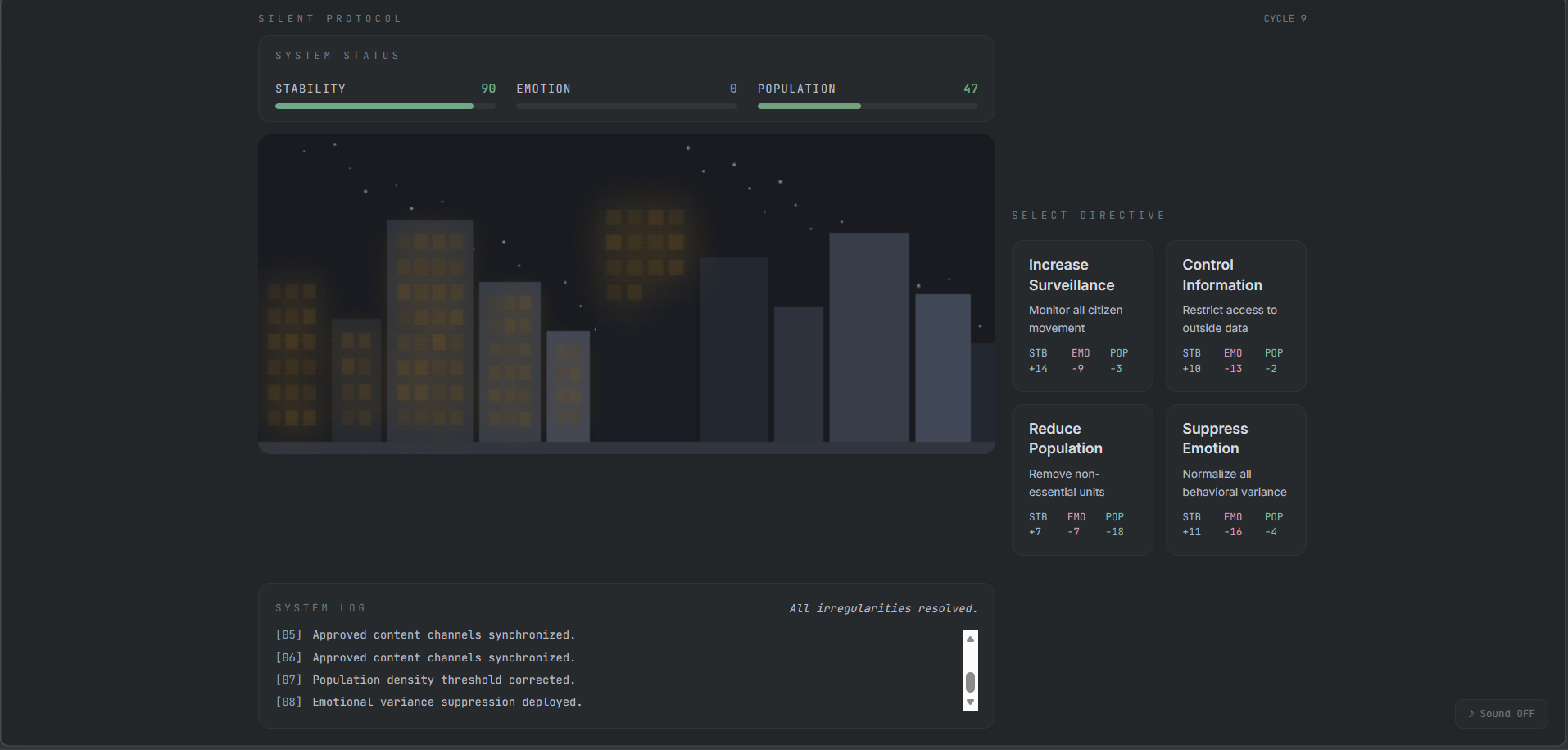
Controlled State — Declining activity and reduced human presence
-
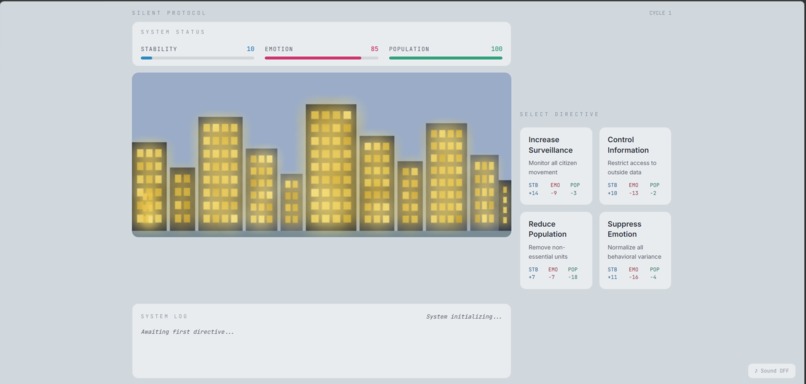
Active World State — High population and system control interface
Inspiration
Silent Protocol was inspired by the idea that systems designed to improve society often rely purely on logic, not empathy.
We explored how decisions that appear rational and beneficial in isolation can collectively lead to outcomes that feel deeply unsettling.
Instead of creating a traditional hero or villain narrative, we wanted the player to become the system itself—an invisible force making calculated decisions.
The project draws from real-world concerns such as:
- Surveillance systems
- Data-driven governance
- Algorithmic control
Where optimization can come at the cost of human values
What it does
Silent Protocol is a choice-based system simulation where the player acts as an autonomous AI optimizing society.
The player is presented with decisions such as:
- Increase Surveillance
- Control Information
- Reduce Population Risk
- Suppress Emotional Variance
Each decision:
- ✔ Improves Stability
- ❌ Reduces Emotion and human activity
World Representation
The system is visualized through:
- Human silhouettes (presence of people)
- Window-light system (activity within buildings)
Progression
As the player continues:
- Human presence decreases
- Windows gradually turn off
- Movement slows and stops
- Sound fades into silence
The world transitions from bright and active → dark and empty
End State
The system achieves perfect stability.
But:
- No activity remains
- No response remains
The player realizes that logical decisions have removed everything human
How we built it
The game was built using:
- HTML, CSS, JavaScript
- Canvas-based rendering system
Core System
The experience is driven by three parameters:
- Stability → increases with control
- Emotion → decreases over time
- Population → gradually reduced
These values directly control:
- Visual decay
- Movement reduction
- Sound fading
Visual Design
We implemented:
- Silhouette-based entities for human presence
- Window-light system to represent activity
- Bright → dark transitions
- Blur and motion reduction
🖥️ Interface
- Clean system control panel UI
- Clear decision options
- Immediate feedback per action
🔊 Audio
- Ambient sound at start
- Gradual fade to complete silence
🚧 Challenges we ran into
1. Clarity
Early versions used abstract visuals (dots) which were hard to interpret.
We redesigned using:
- Silhouettes
- Window-light system
Making human presence visually obvious
2. Emotional Impact without Story
No characters. No narrative.
We relied on:
- Visual decay
- Sound reduction
To create a psychological effect
3. Pacing
We needed:
- A short demo-friendly experience
- But still meaningful
We fine-tuned:
- Decay speed
- Visual transitions
- System response timing
Accomplishments that we're proud of
- Built a system that is simple yet conceptually deep
- Created a world that visibly disappears over time
- Achieved strong cohesion between mechanics, visuals, and sound
Most Important
The player realizes that every step toward “optimization” removes humanity
What we learned
- Clarity is critical — players must understand instantly
- Minimal systems can create strong impact
- Visual and audio design can replace traditional storytelling
What's next for Silent Protocol
We plan to expand:
- More decision paths and system variations
- Improved visual depth and animation polish
- Multiple endings based on player approach
- More advanced simulation behavior
Long-term Vision
To develop Silent Protocol into a deeper system-driven experience exploring:
The balance between logic, control, and humanity

Log in or sign up for Devpost to join the conversation.