-
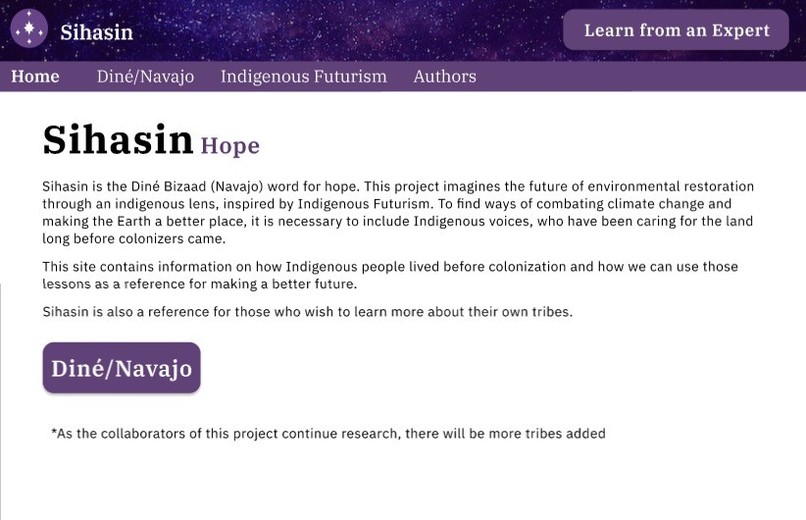
Homepage of Sihasin
-
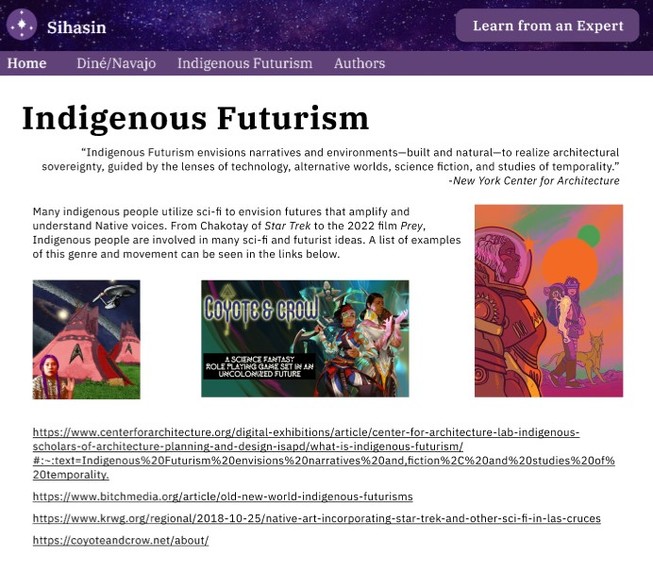
Sihasin webpage of collected information about Indigenous Futurism
-

Logo of Náhookos Biko', the North Star
-
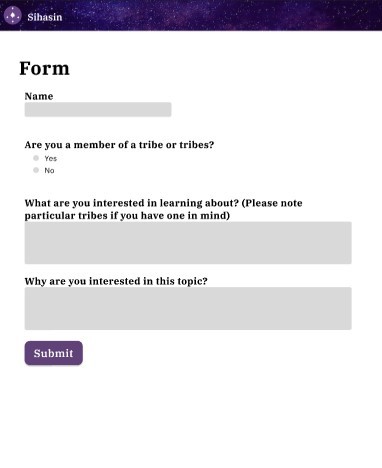
Sihasin form page for filling out requests for information
-
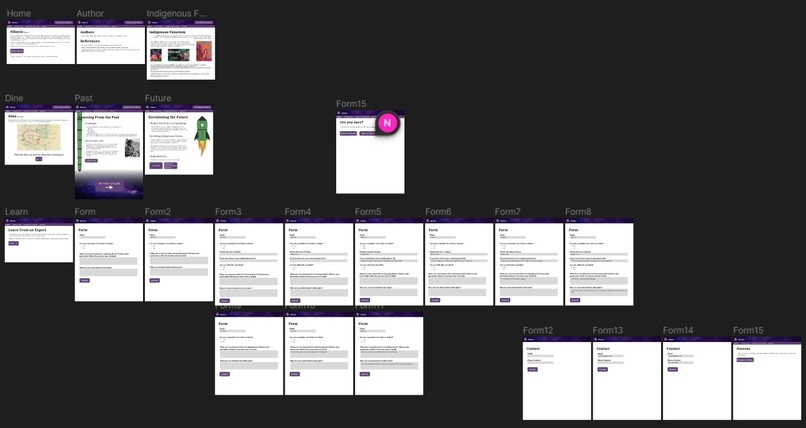
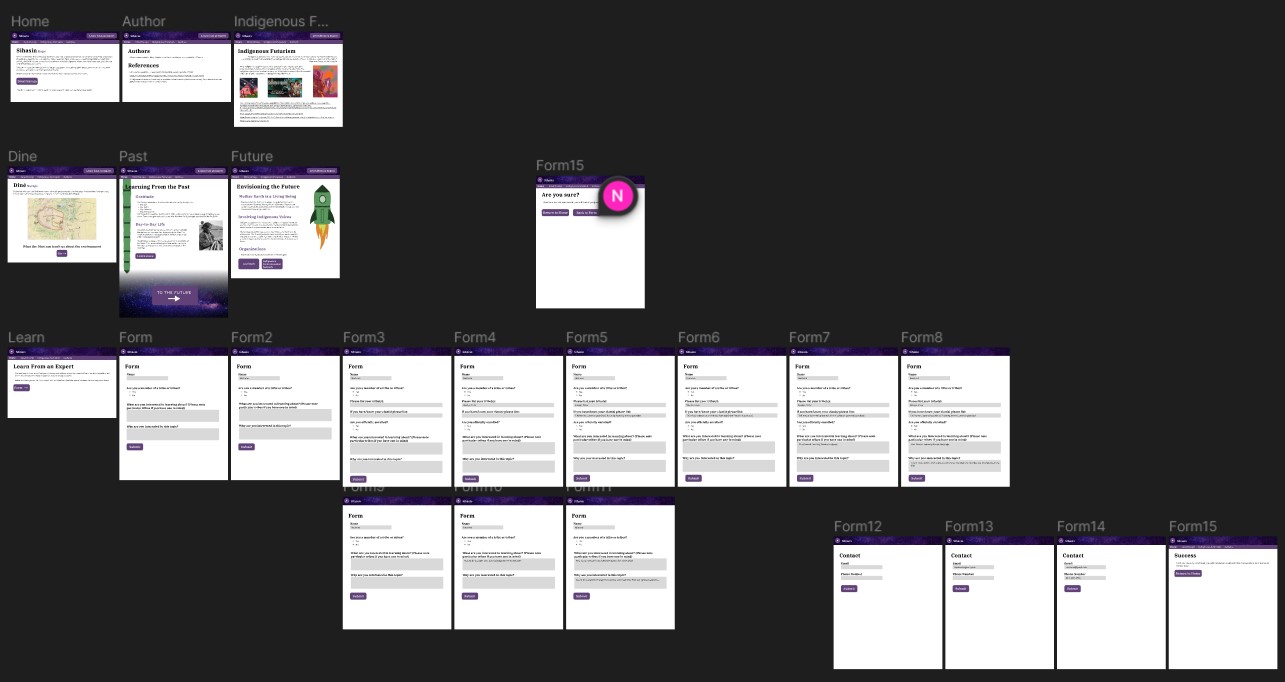
Overall layout of pages in Figma
-

Rocket reed carrying the people to the future of environmental justice!





Inspiration
With environmental issues becoming more and more relevant, it is increasingly obvious how few Indigenous voices are at the forefront of the environmental restoration movement. Indigenous people have methods and strategies for caring for the Earth that have been largely erased by colonization. This site seeks to bring those silenced voices to the forefront.
As Indigenous diaspora it is often difficult to find reliable information on culture and history. Much of the information on the internet about Indigenous people is inaccurate, biased, or incomplete. Finding ways to connect to relatives is also difficult with generational gaps and trauma. This site seeks to connect people with experts and make Indigenous knowledge stronger and more prevalent in futurist discussions.
What it does
Sihasin is the Diné Bizaad (Navajo) word for hope. It features general information on how tribes lived and cared for the land before colonization, then utilizes that information to imagine a future where these ideals are implemented again with regards to the environment's current health.
Sihasin is also a connected site that allows users to fill out requests for learning more information from Indigenous elders or scholars. It queries about the user's ancestry in order to ensure culturally closed information is not put in the wrong hands.
How we built it
We started with brainstorming a few ideas for something that would promote Indigenous education and environmental justice. This is where we got the initial idea of Indigenous Futurism. After conducting some research on how Navajo people lived before colonization, we compiled that information into a document and brainstormed ways to extend the past into the future. This became the basis of our diagram made in Figma. We fully fleshed out the layout of the website through Figma before converting it into HTML and CSS.
Challenges we ran into
We had a lot of difficulty with the conversion from Figma to HTML and CSS. Neither of us have any recent nor extensive experience with frontend coding and there was a bit of a learning curve as we progressed through the project.
There was also some challenge in finding accurate and relevant information from credible sources. As mentioned in the site, it is often difficult to find accurate, complete, and unbiased information about Indigenous people on the internet and we didn't have much contact with elders in the 24 hour period. Much of the information presented is based on personal experience and knowledge gained from growing up as an Navajo person where traditional academic citations would not apply.
Accomplishments that we're proud of
We're very proud of getting a fully functional and easy to use representation of the site done as well as the custom images involved. We felt very productive by the end of the hackathon and that we had accomplished a lot.
There are many references to Navajo culture that most likely only people from that culture would understand. The rocket ship reed and the reed growing into the sky is a representation of the reed that grew and carried the Diné Holy People and all creatures through the first three worlds in the Navajo creation myth.
The logo is also a reference to Náhookos Biko', the Diné interpretation of the North star, which represents the fire maintained within the home.
What we learned
We learned a lot about frontend web development in HTML and CSS, as well as the importance of planning before implementation.
We also learned a lot about Indigenous cultures and how Indigenous people may contribute to current environmental issues.
What's next for Sihasin
Next, we plan to fully launch the site for public use on Heroku as well as create a mobile app version. We would also like to involve more Indigenous cultures besides Navajo, although this will require connections with people from those cultures specifically so as to avoid misinformation.
Our biggest goal, however, would be to implement the form and reach out to Indigenous experts who can provide accurate and helpful information to people who want to learn. This would involve a lot of vetting and assurance that people involved with educating others are who they say they are. There is a large tech gap when it comes to Indigenous people, especially those who live on reservations, so there would also need to be a lot of work on educating them on how to utilize the communication technology of choice (whether that be through a third party or hosted in the site). The final challenge would be in moderation and ensuring people who want to learn topics are paired with the right people who can provide the relevant information.

Log in or sign up for Devpost to join the conversation.