-
-
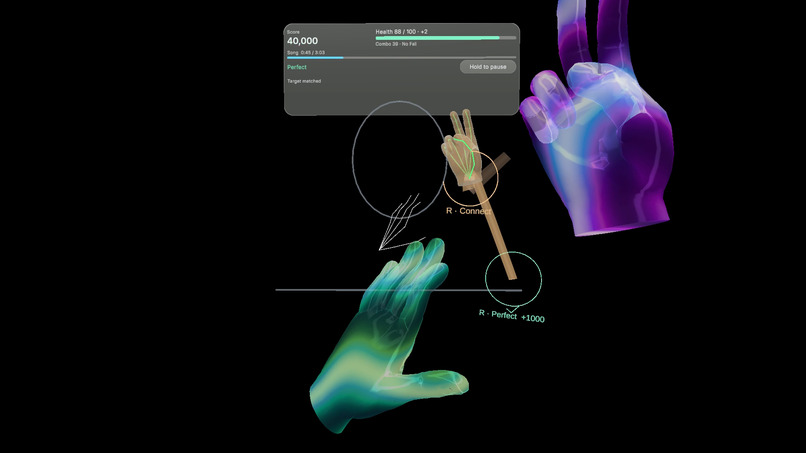
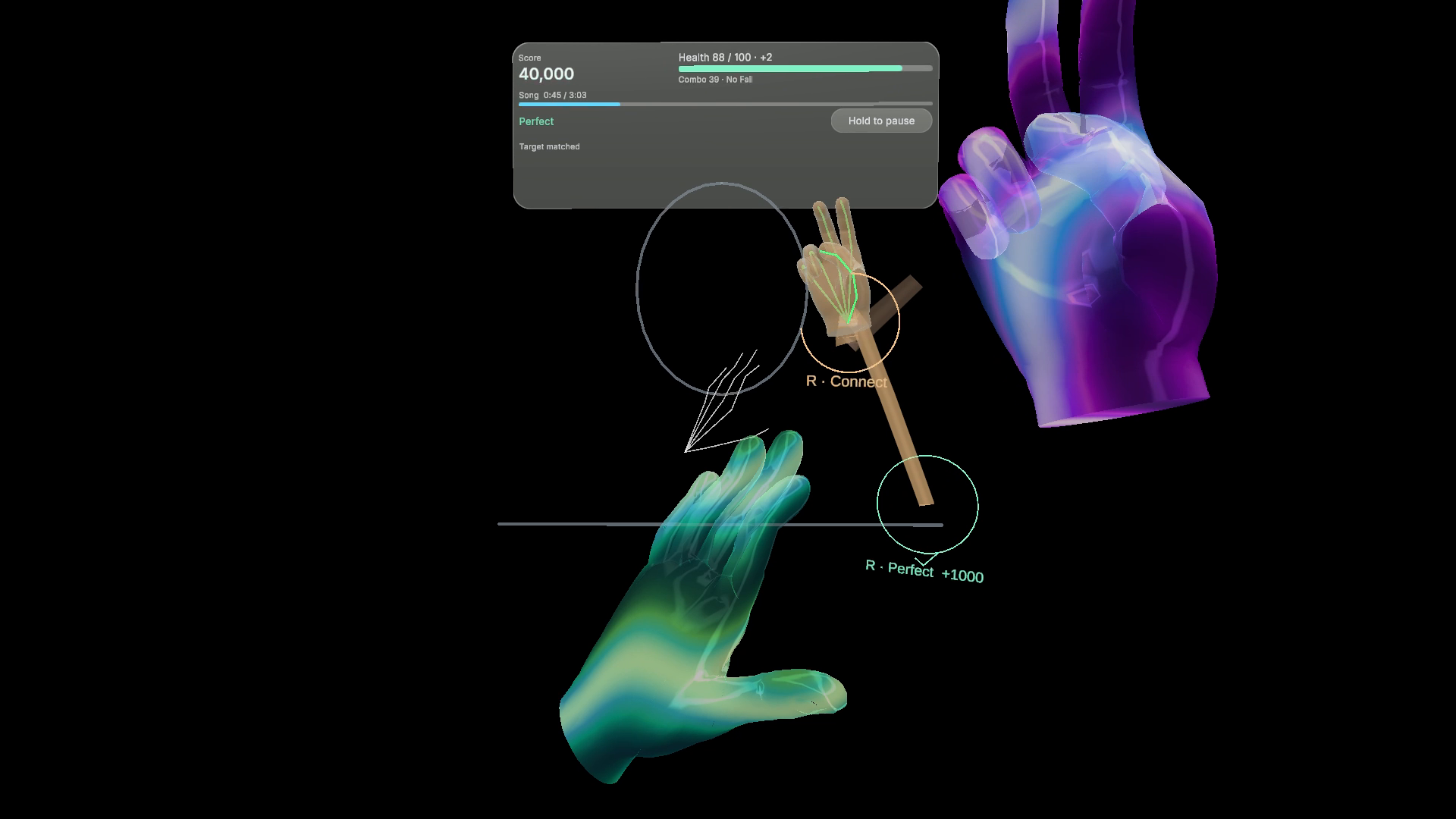
Gameplay (MR)
-
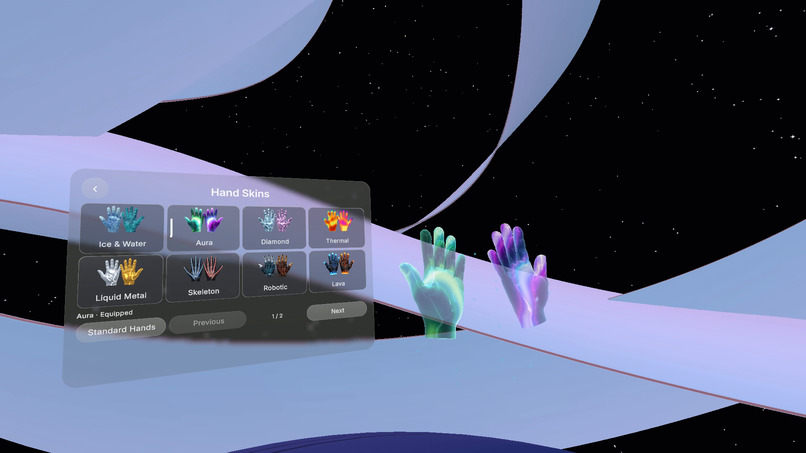
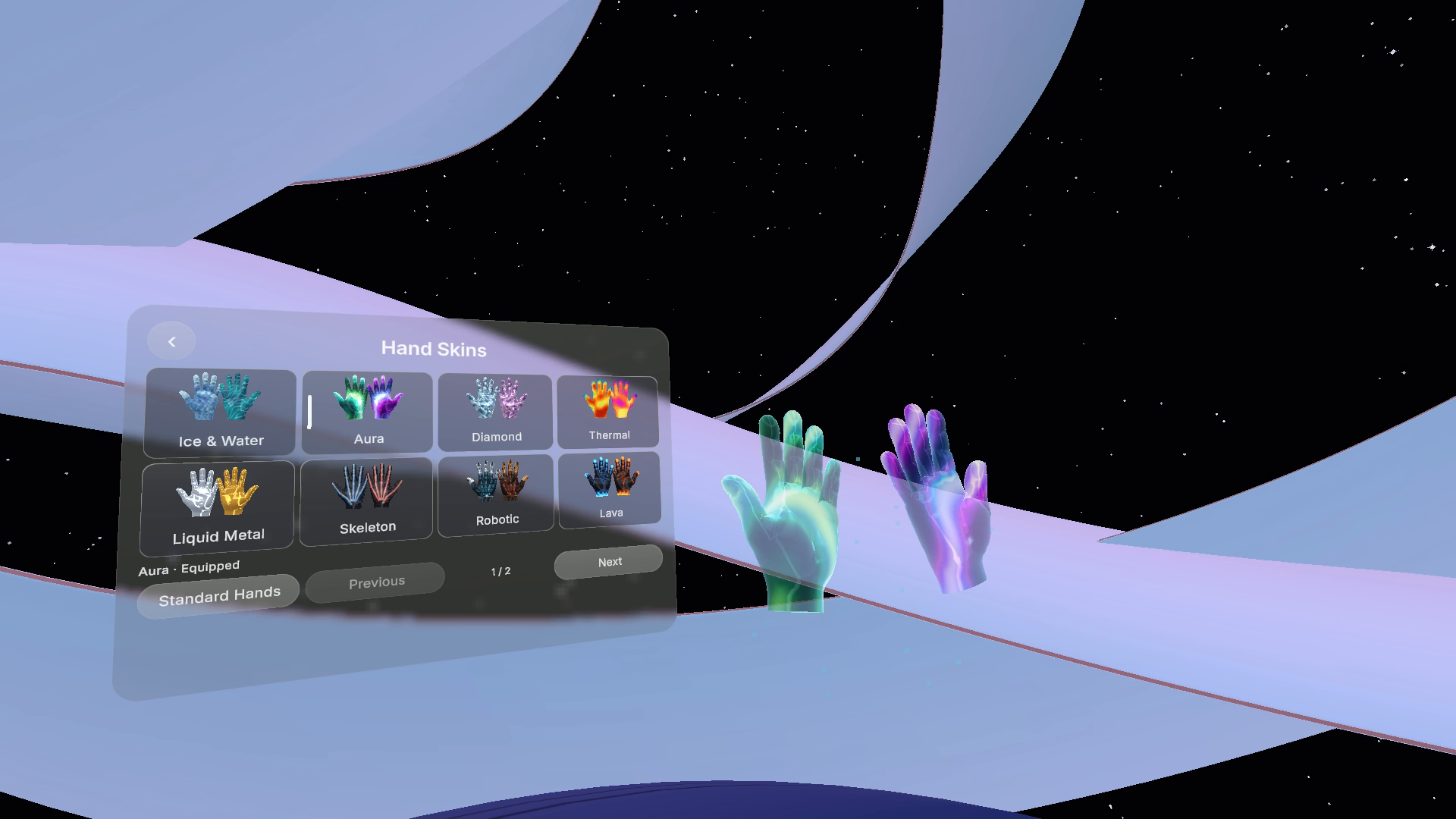
Cosmetics
-
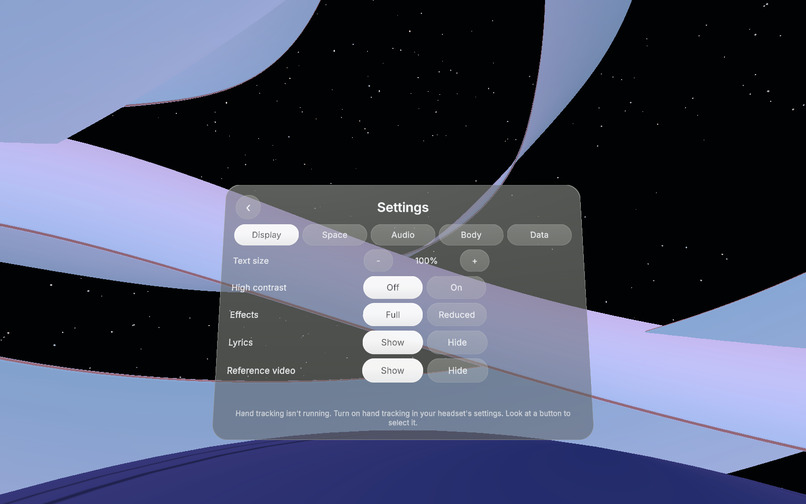
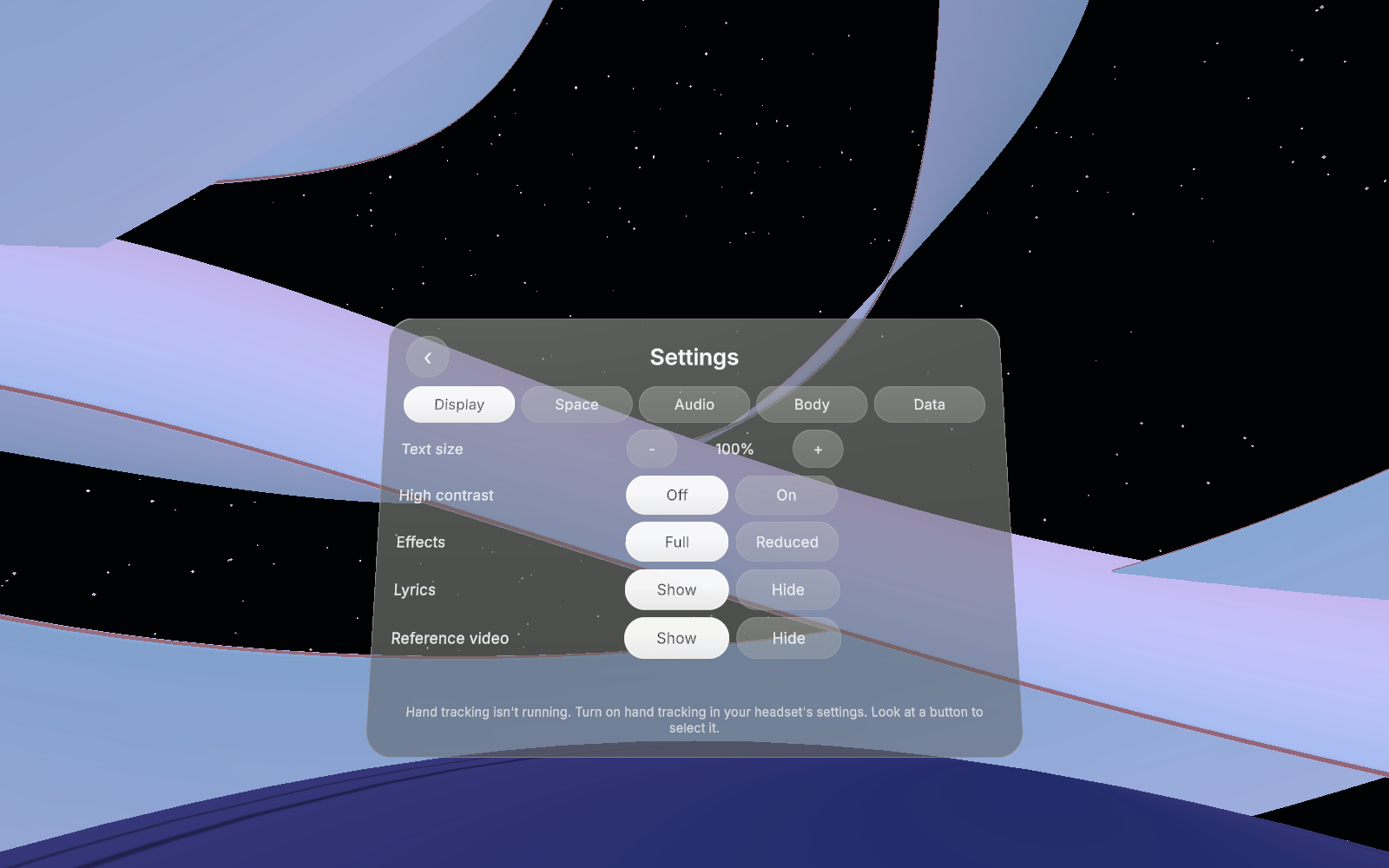
Settings
-
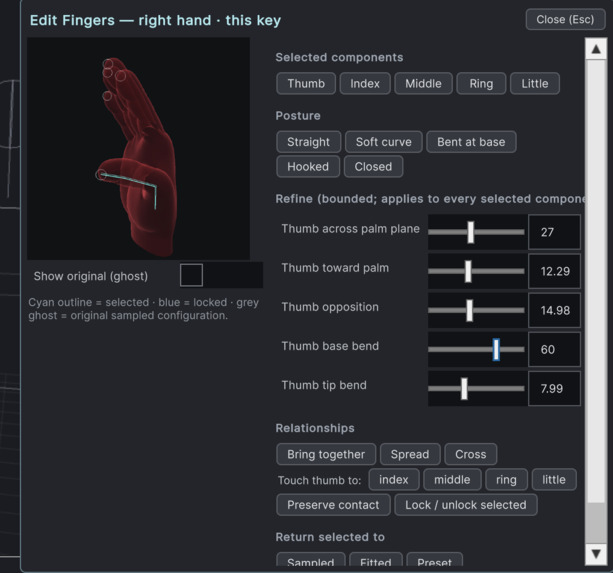
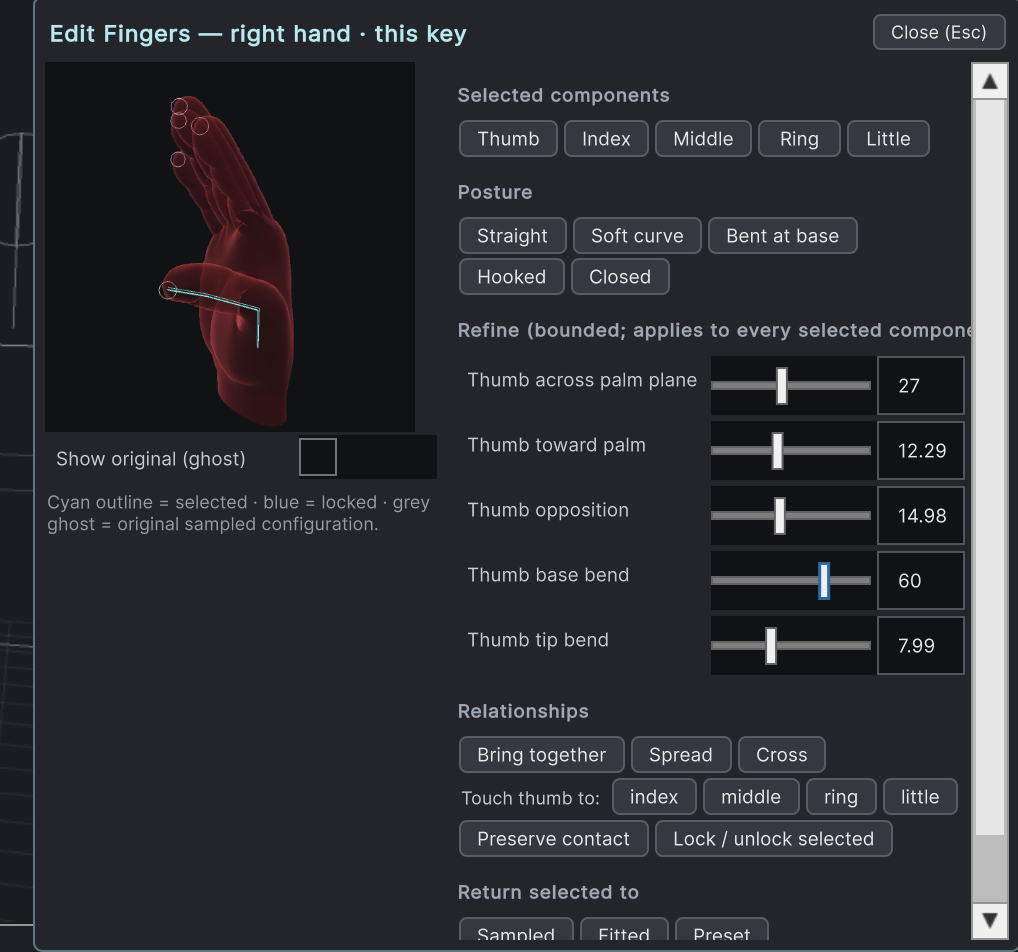
Developer Tool: Hand position adjustments
-
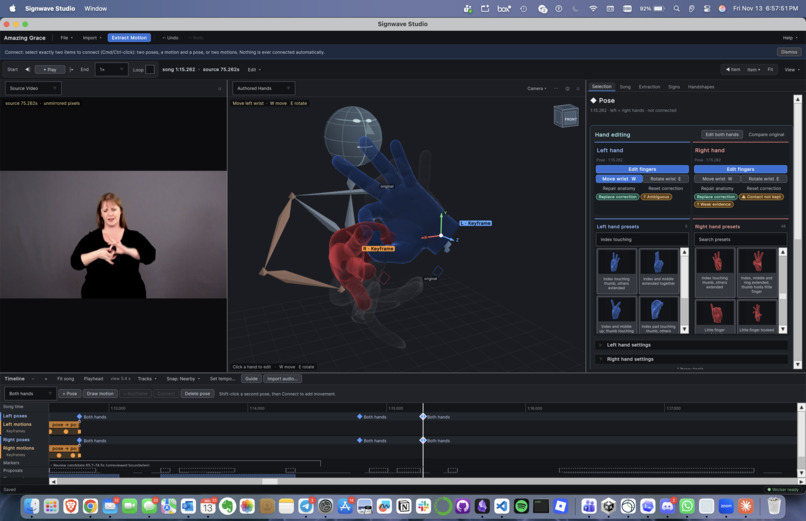
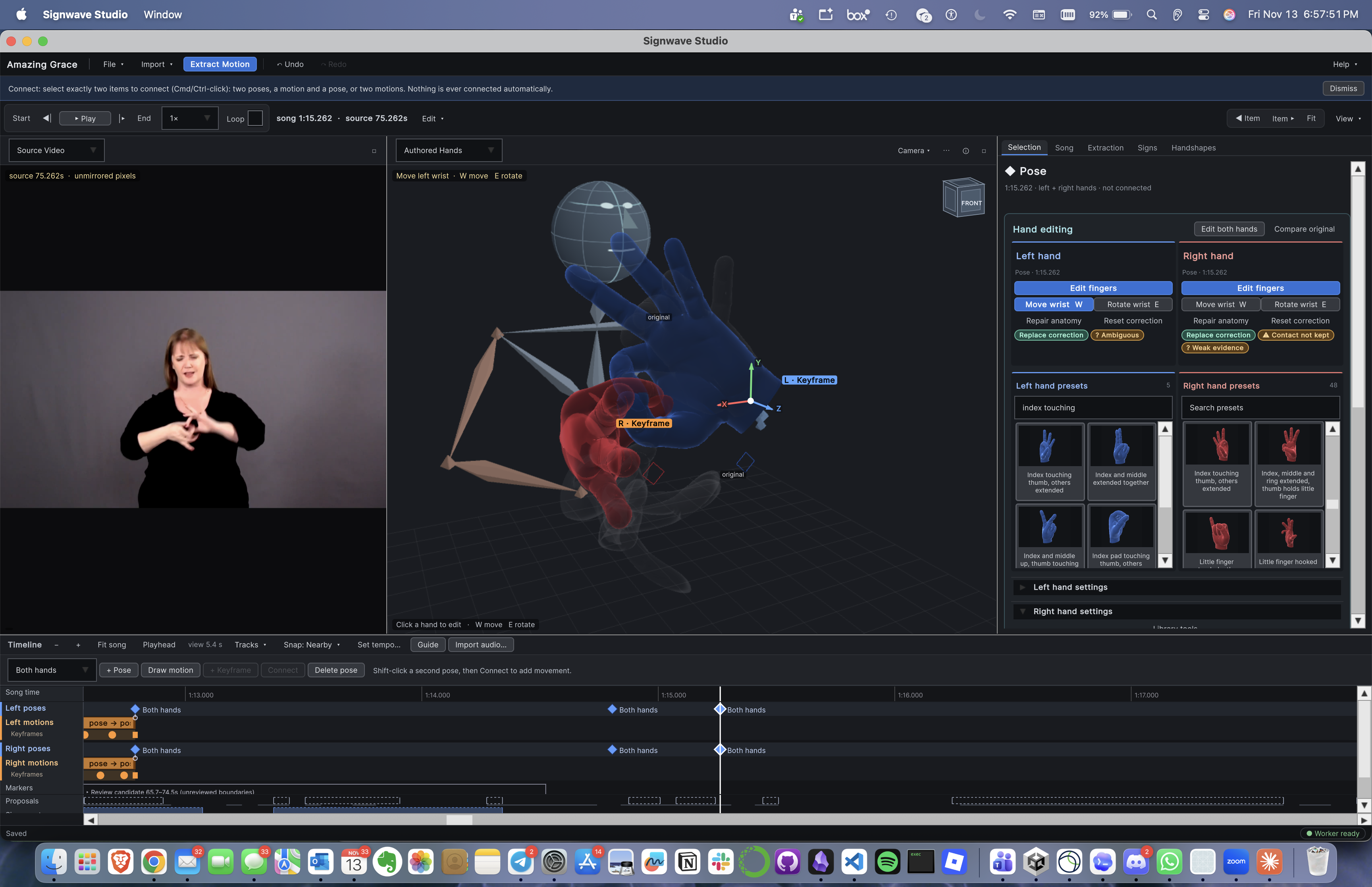
Developer Tool: In app workflow for Amazing Grace
-
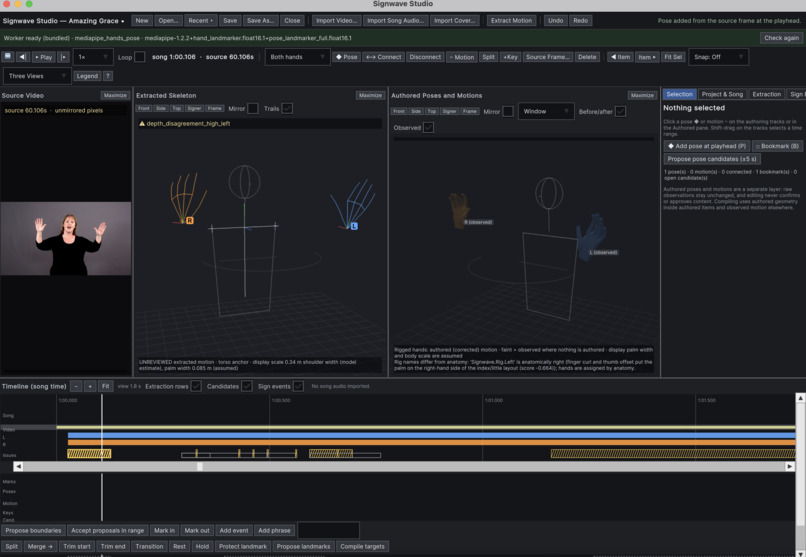
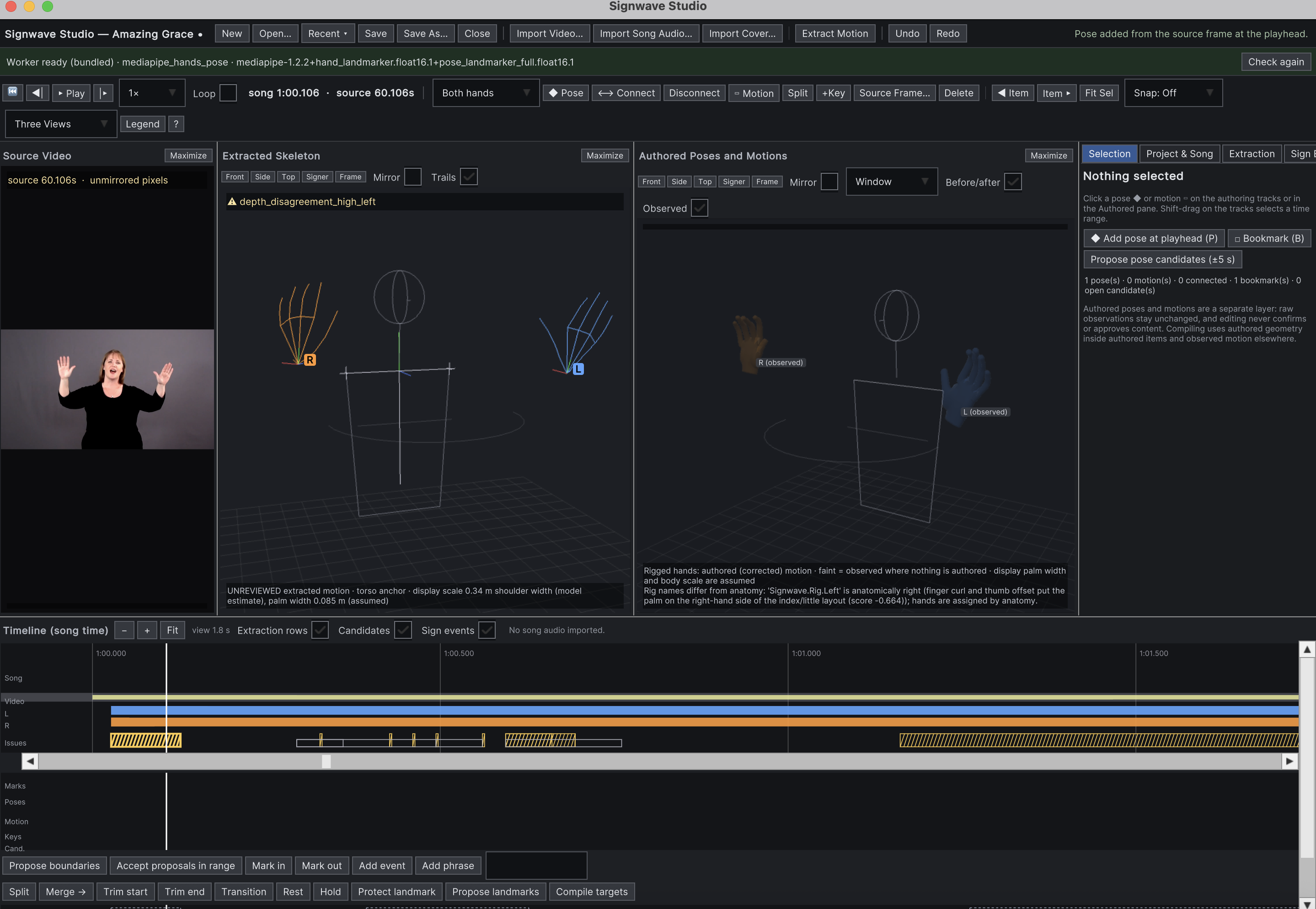
Developer Tool: Early version of Signwave Studio, which initially only extracted the skeletons from reference videos.
Inspiration
Learning a sign from a video means figuring out how someone else’s hands translate to your own. We wanted to close that gap: put the demonstration in front of you, let you try it, and give you a reason to try again. Music makes that repetition feel like play.
What it does
Signwave brings signing practice into your space. Follow ghost hands, match movements to music, and get feedback on hand position, shape, and timing.
Slow down a song, repeat a phrase, or start with the alphabet tutorial. Your hands do everything—from choosing a song to playing it. No controllers required.
How we built it
We built a Quest app in Unity using Meta hand tracking, hand interactions, and passthrough.
We also built Signwave Studio, a desktop tool that turns reference footage into editable hand movements. Creators can correct poses, align them with music, and bring them into the game.
Challenges we ran into
Signing and menu controls use the same hands. We had to make sure a sign wouldn’t accidentally press a button.
Tracking also gets uncertain when fingers overlap or hands leave view. Our scoring distinguishes missing tracking from an observed mistake. Fair feedback matters more than a confident-looking score.
Probably the biggest challenge was getting the hand tracking extracted. I build a custom developer tool that extracts hand skeletons from videos, and allows for adjustments to alignment, position, rotation, and hand shape. Often extracted skeletons could be horribly incorrect and would require heavy amounts of supervision to fix.
Accomplishments that we're proud of
- A working Quest prototype played entirely with your hands.
- Musical gameplay, phrase practice, and a self-paced alphabet tutorial.
- A companion authoring tool that takes editable motion into offline headset play. ## What we learned A convincing hand animation isn’t automatically correct ASL. Motion technology needs language expertise, and clear demonstrations matter as much as scoring.
We also learned that hand tracking changes the whole design: your hands are simultaneously the controls, the performance, and what you’re learning to use.
What's next for Signwave
Work with Deaf signers and ASL educators to review the prototype content, test with learners, and expand the library with licensed music and reviewed lessons.
We’ll keep improving tracking and feedback. Signwave practices hand movements and rhythm; it doesn’t grade facial grammar or certify fluency.


