-
-
-
-
-
-
-
-
SigniFy logo


Inspiration
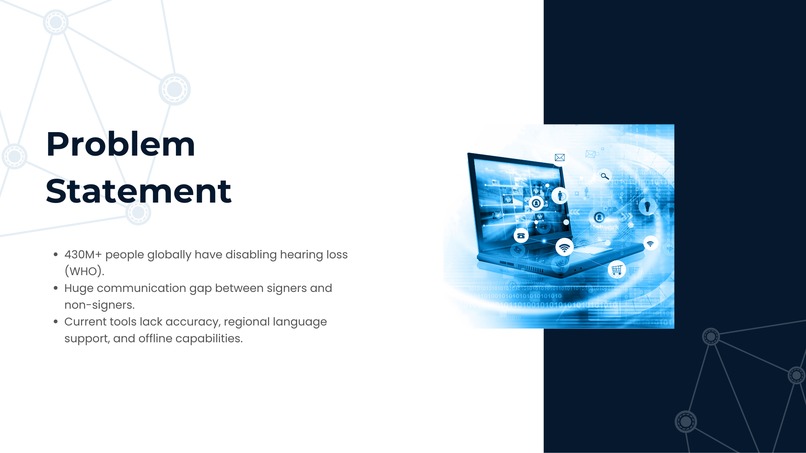
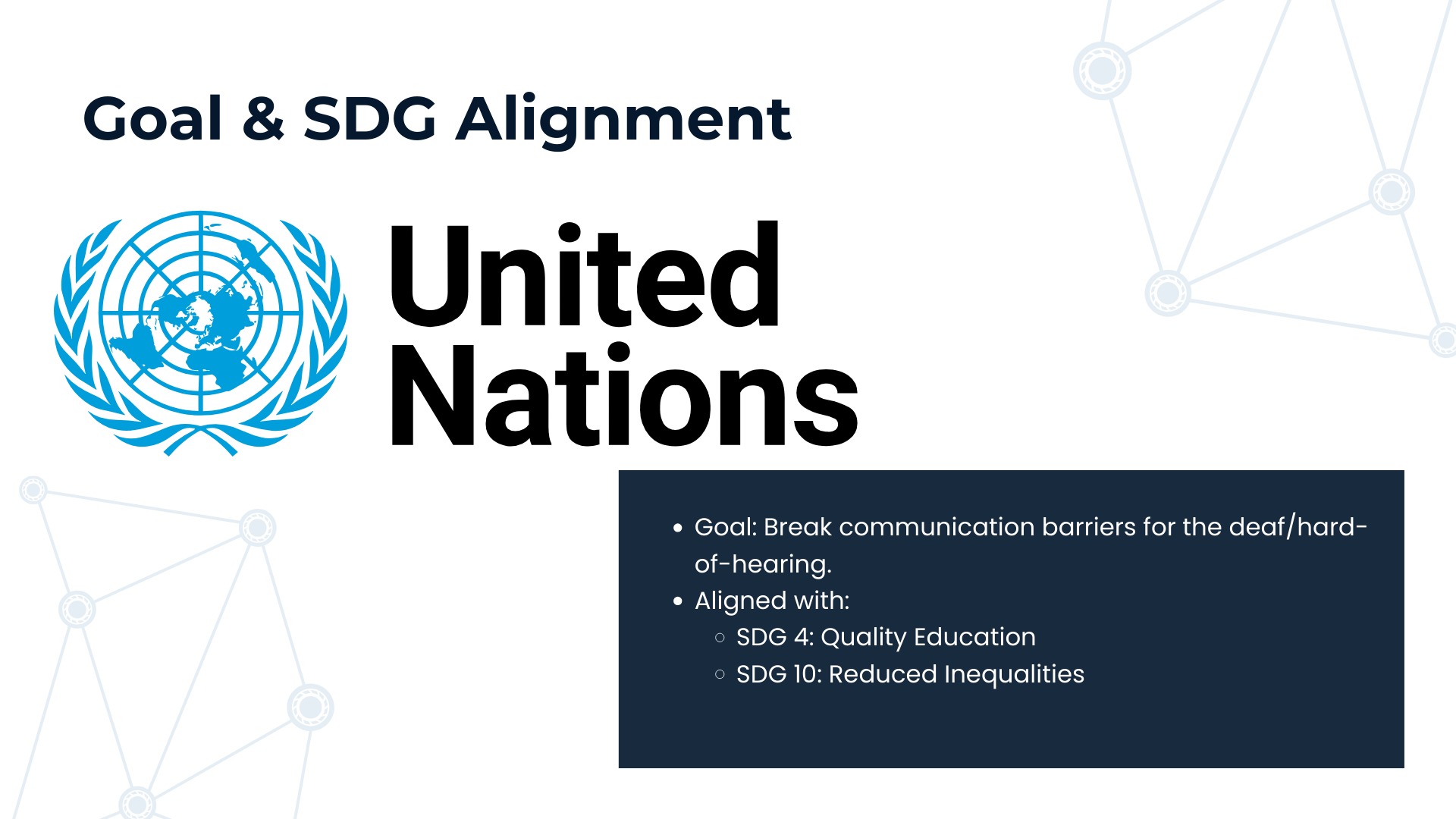
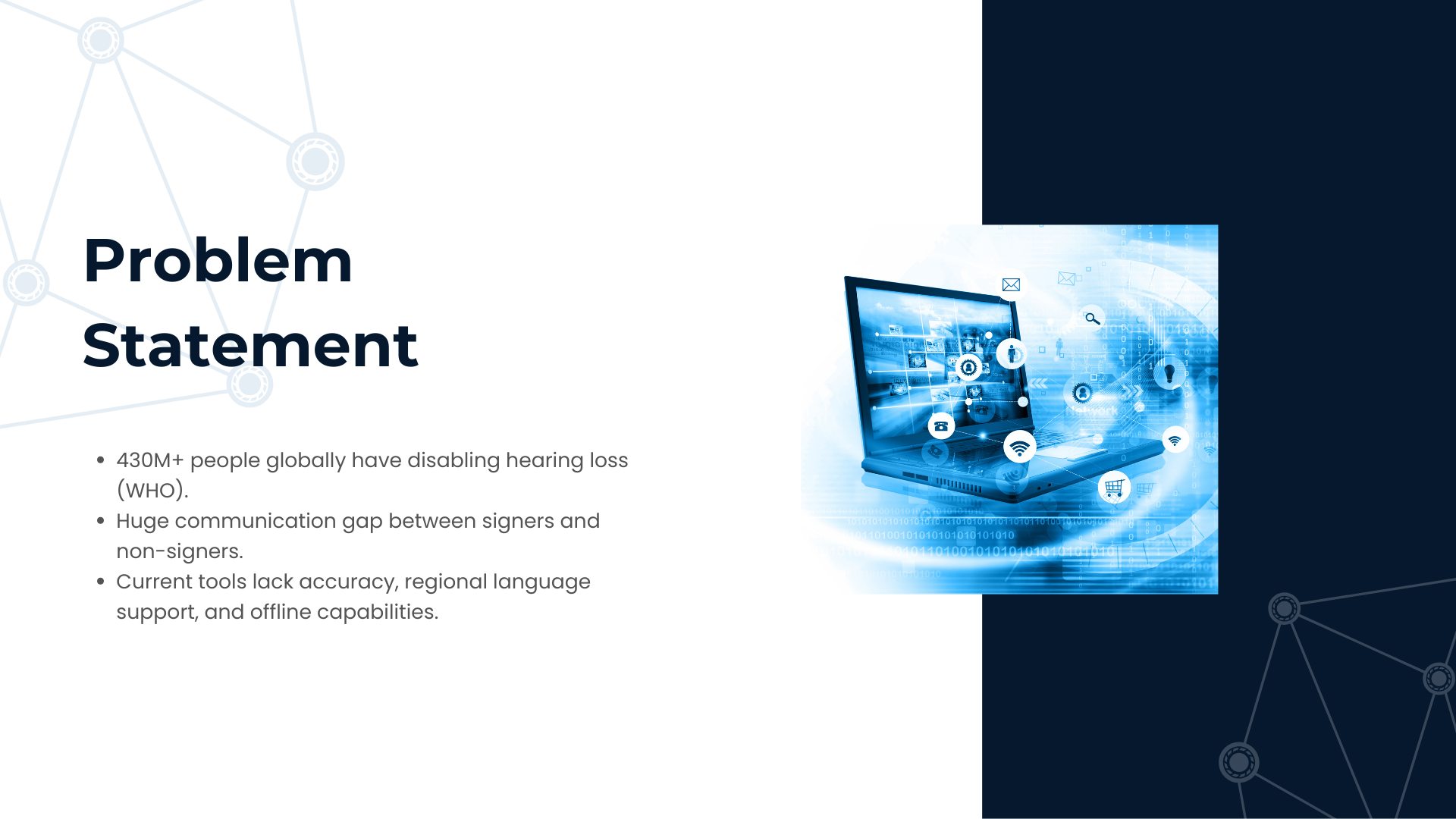
We were inspired by the 430 million people worldwide who experience disabling hearing loss. Communication between signers and non-signers remains a major barrier, and current solutions often lack offline support, regional flexibility, and real-time speed. We built SigniFy to bridge that gap using computer vision and machine learning, supporting SDG 4 (Quality Education) and SDG 10 (Reduced Inequalities).
What it does
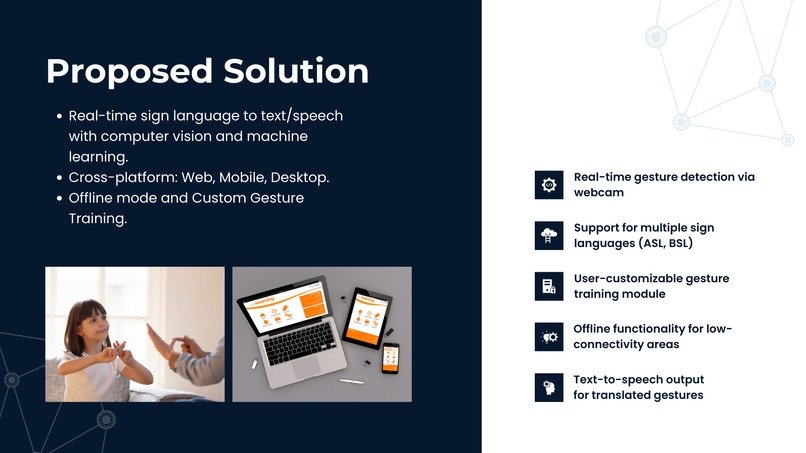
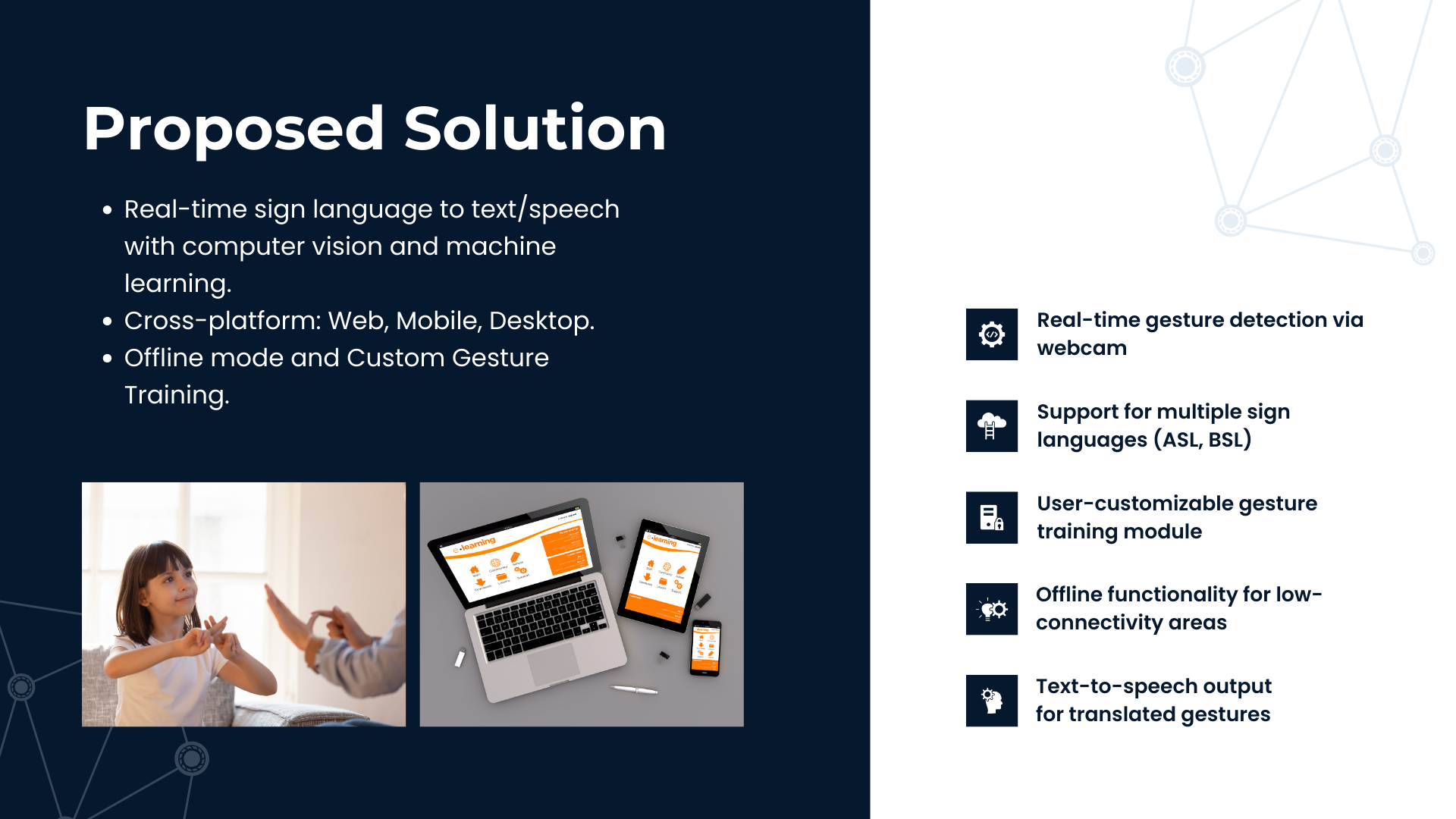
SigniFy captures hand gestures through a webcam, recognizes signs in real time, and translates them into text and speech output. It supports American Sign Language, allows users to create custom gestures, and works offline for accessibility anywhere.
How we built it
This app runs on Flask and was built with Python, HTML, CSS, and Javascript. As for APIs, we utilized Google Gemini.
Challenges we ran into
At various points during the hackathon, we lost connection to the Internet. Not only did this challenge our ability to work collaboratively, but it made us wait patiently for our resources to install.
Accomplishments that we're proud of
Honestly, we’re just happy that our app works.
What we learned
We learned basic gestures in ASL in order to test our app. Our more inexperienced members became more familiar with Python, whereas our team leader learned how to use OpenCV with nodes.
What's next for SigniFy
First and foremost, we want to support other sign languages across the world in addition to ASL. We also aim to add facial expression recognition, and perhaps even integrate an ASL-learning aspect into the app. As for a long-term goal, we’d like for those knowledgeable of sign language to upload media of them signing in order to build a growing database of signs, helping to train more accurate machine learning models for the future..

Log in or sign up for Devpost to join the conversation.