

Inspiration
Sign language is expressive, spatial, and deeply human. But when learning a new handshape from a flat image or video, it can be difficult to see exactly where a finger or thumb sits. Small differences can matter, and a single viewing angle does not always make those differences clear.
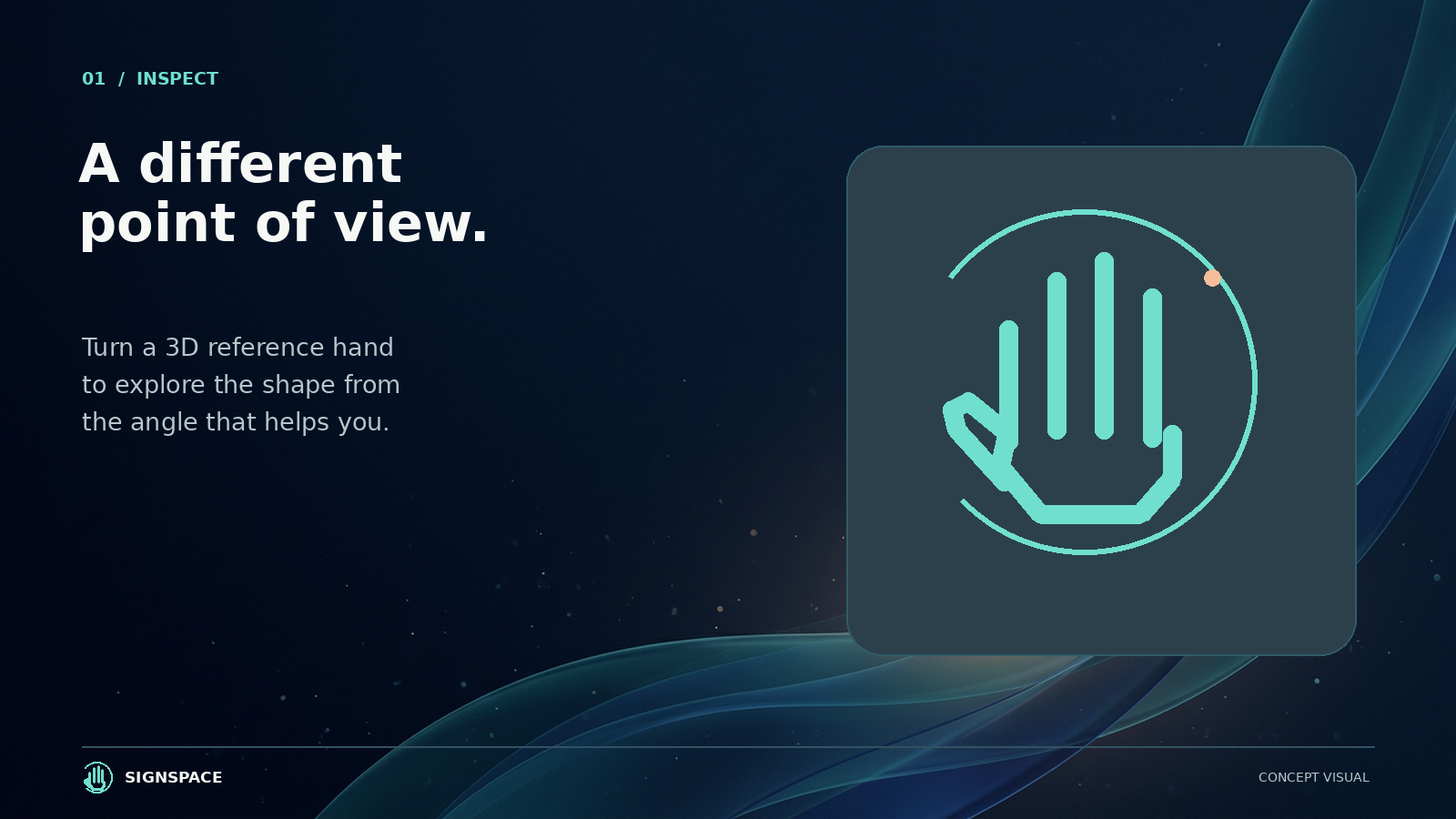
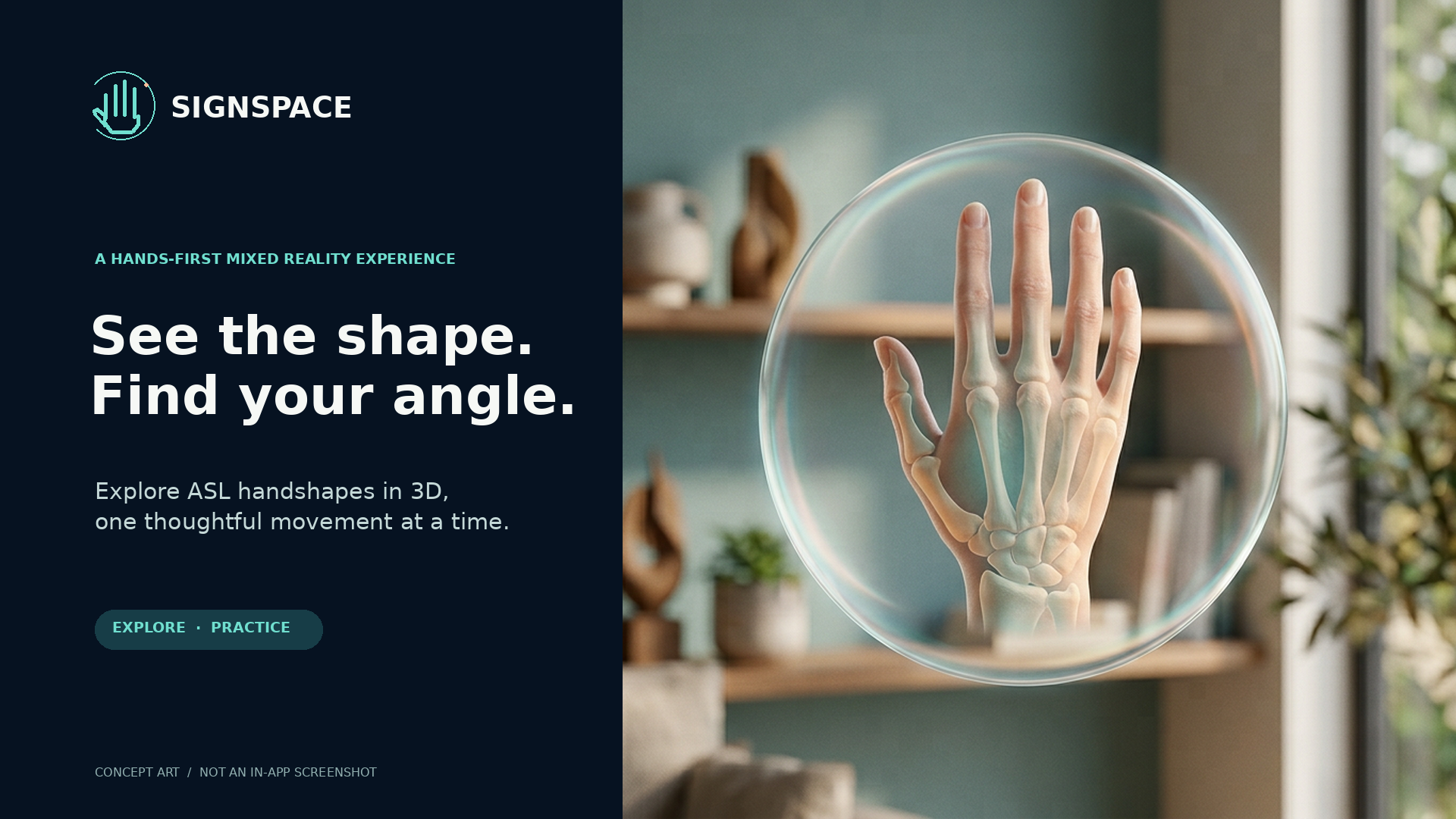
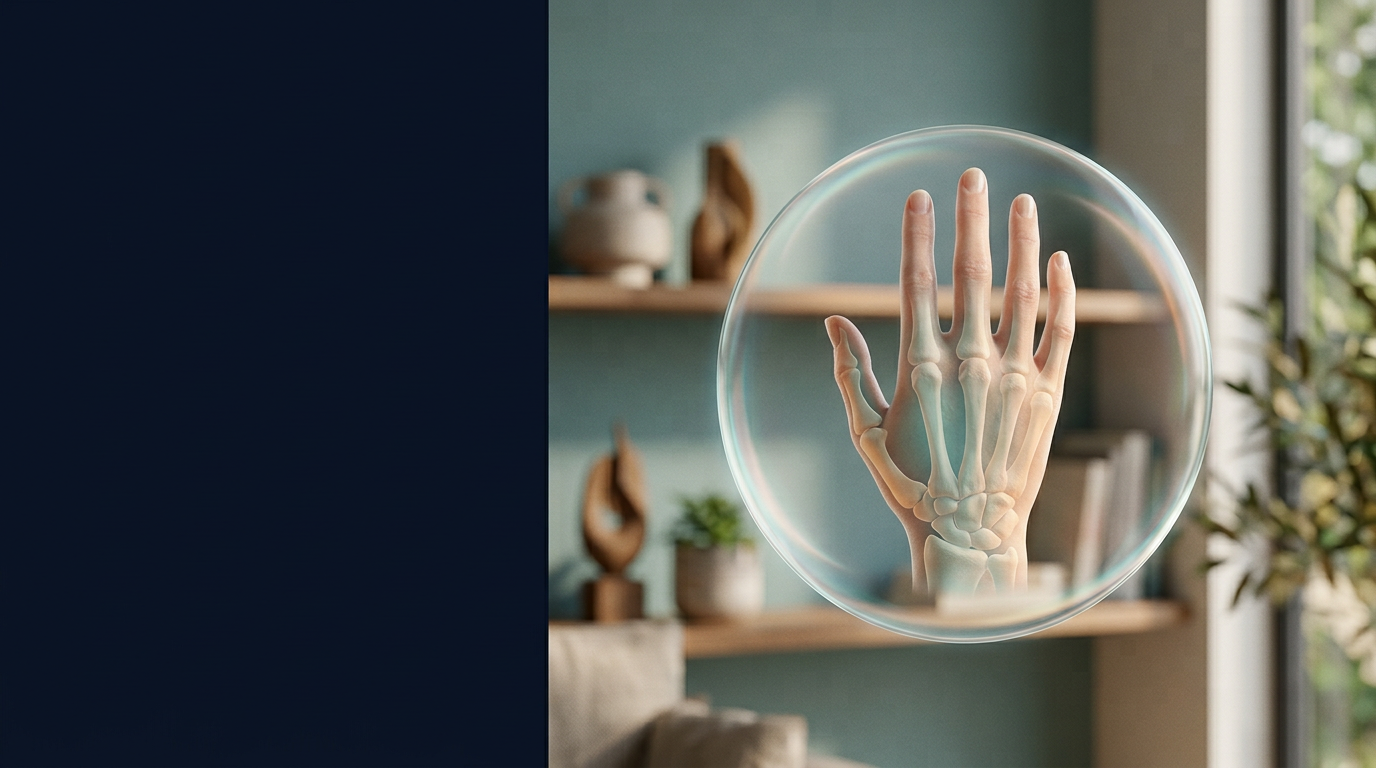
SIGNSPACE began with a simple question: What if learners could turn a reference hand in 3D and explore a handshape from their own point of view?
We wanted to use mixed reality for more than displaying information. We wanted to create a calm, interactive space where learners could explore, practice, and build confidence at their own pace.
What it does
SIGNSPACE is a hands-first mixed reality experience for practicing American Sign Language handshapes.
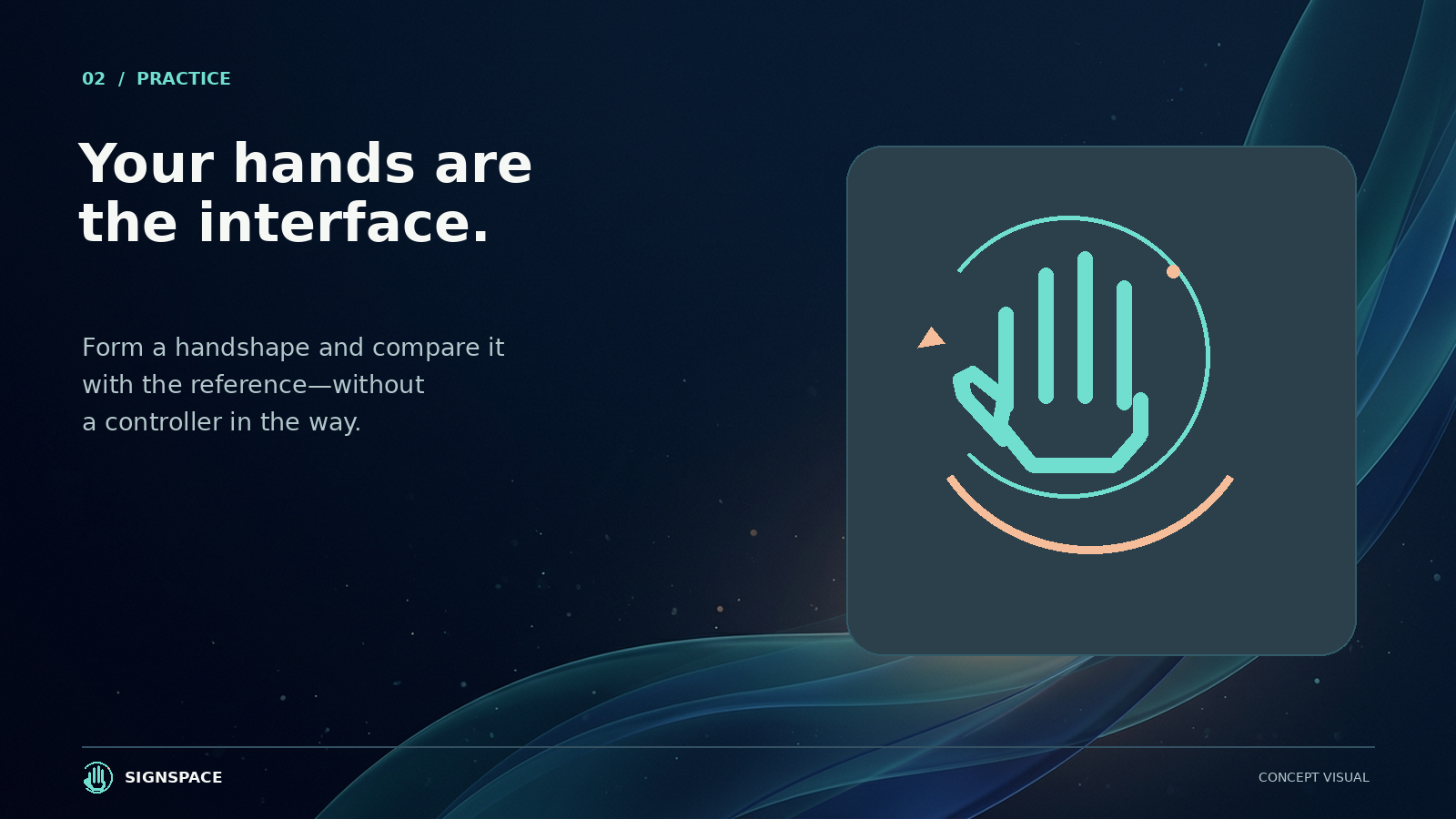
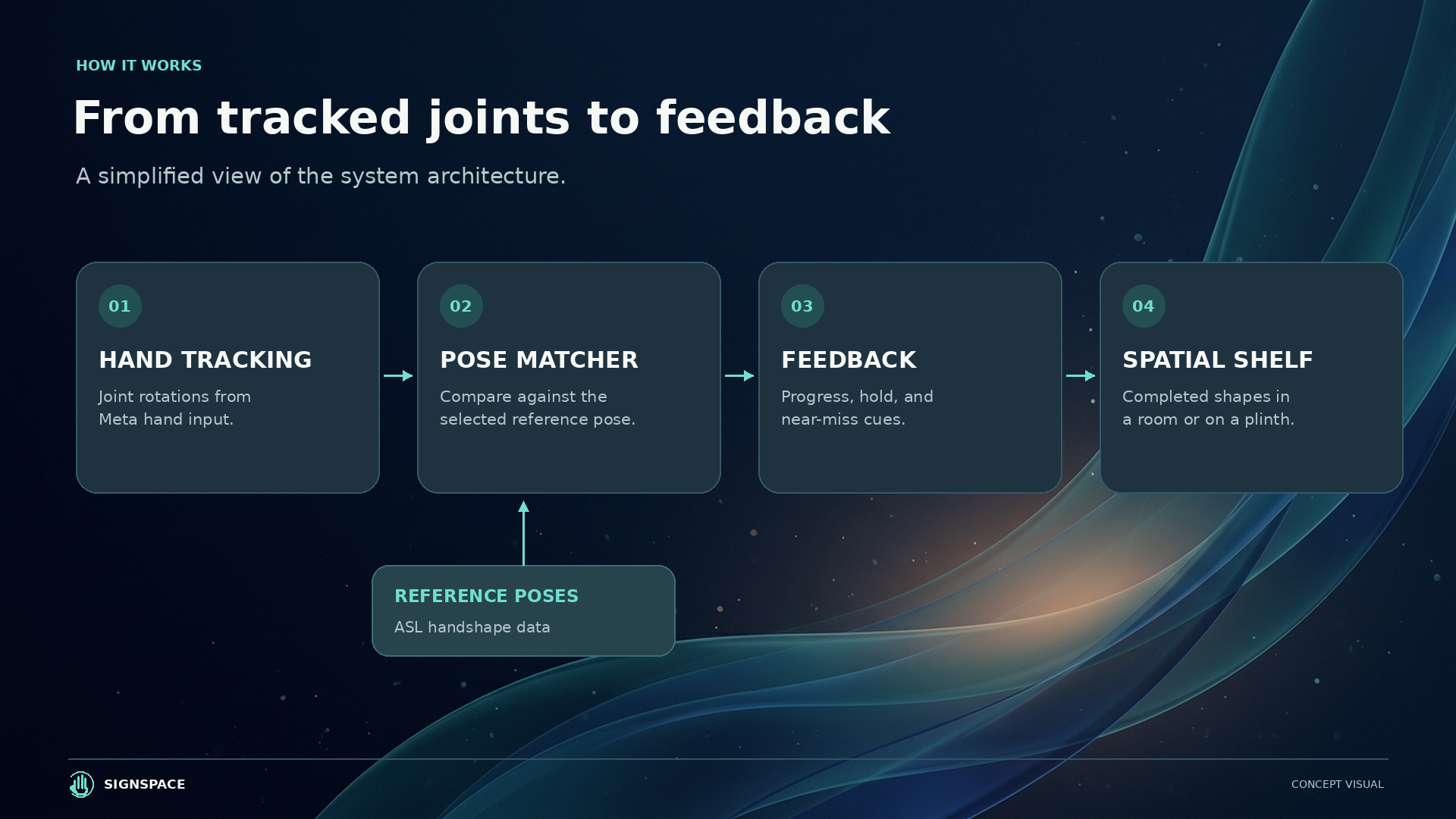
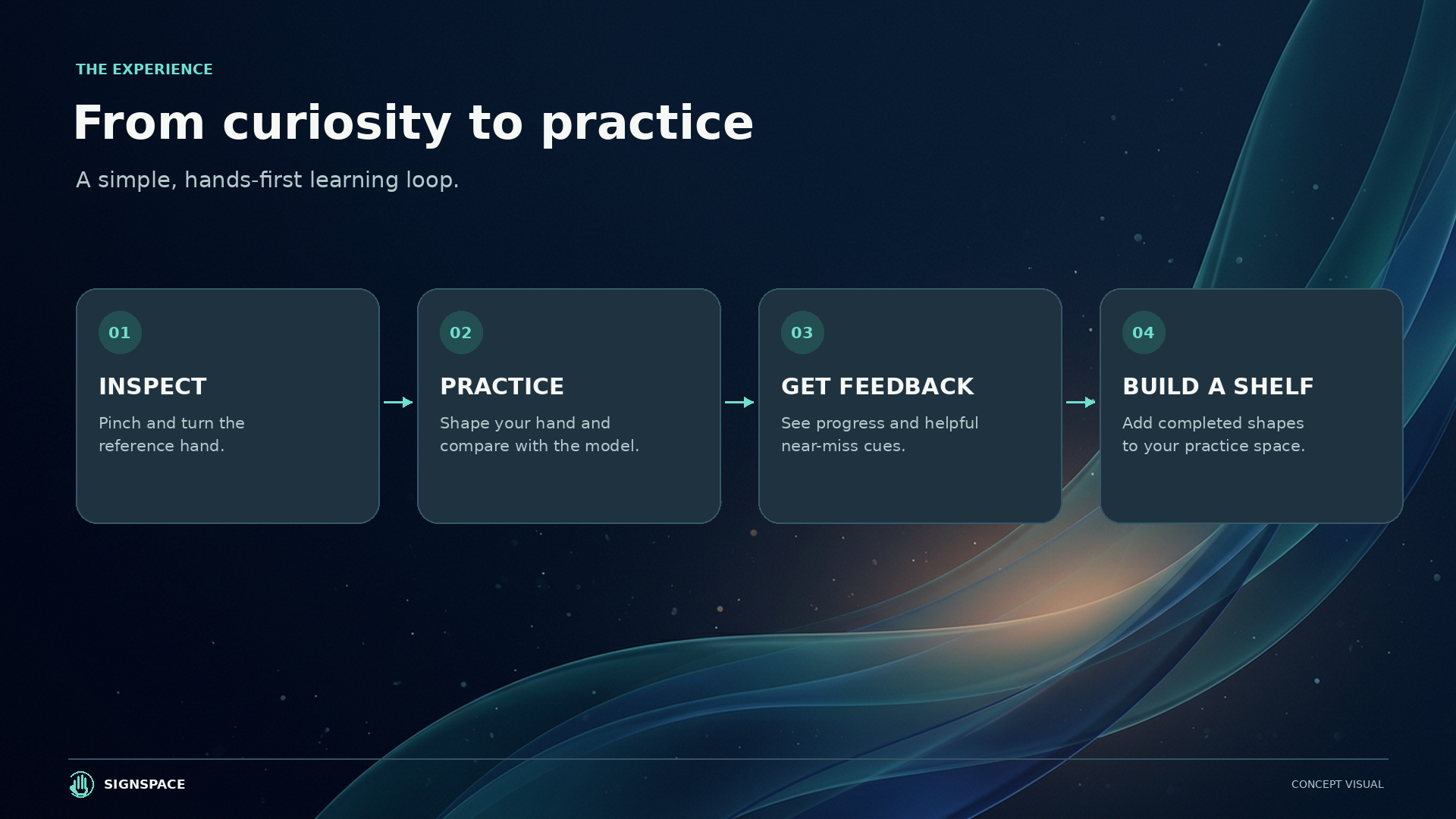
A learner can pinch and rotate a 3D reference hand to inspect it from different angles, then form the handshape with their own hand. The experience compares tracked hand joints with the reference pose and provides feedback as the learner gets closer.
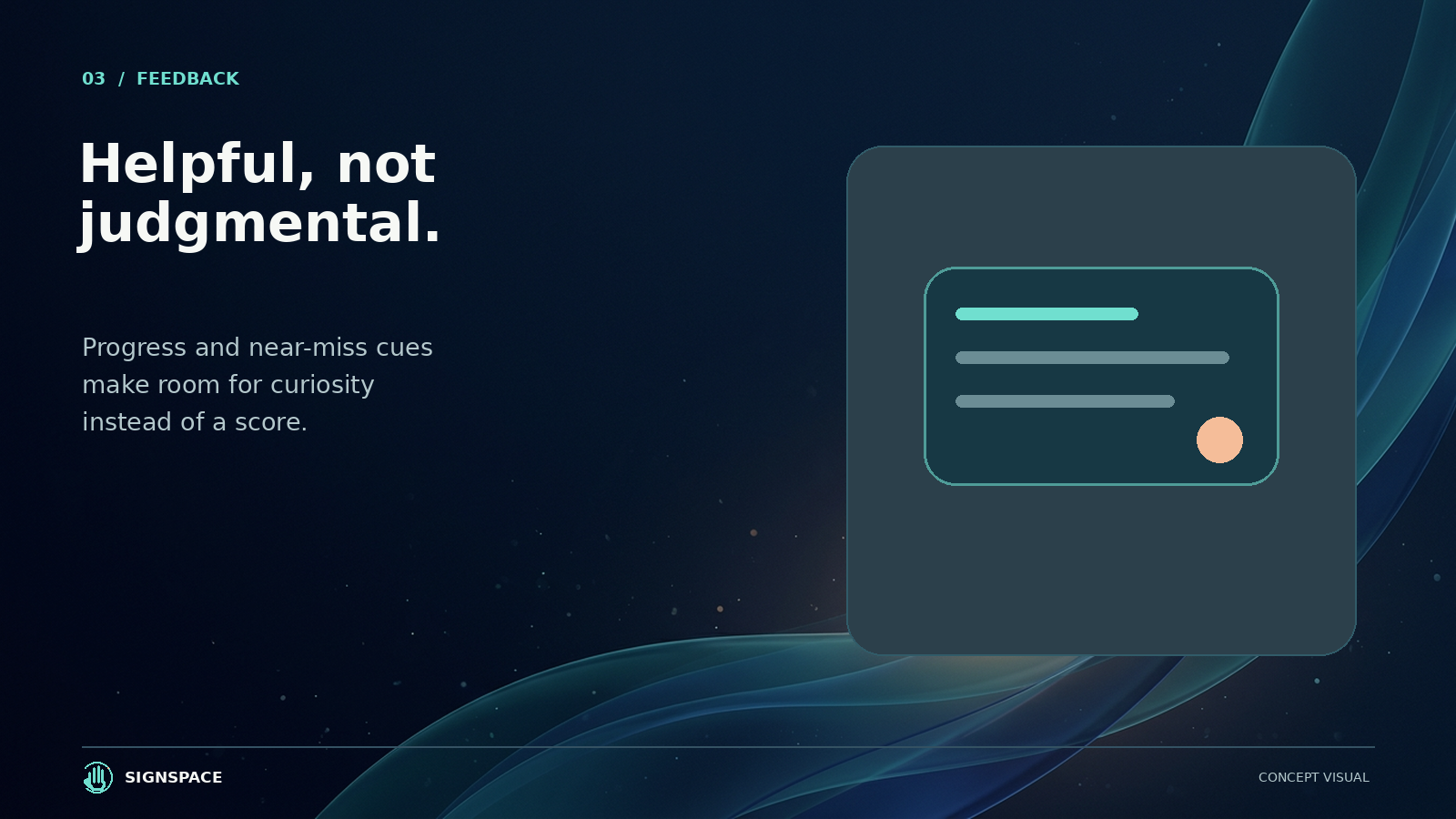
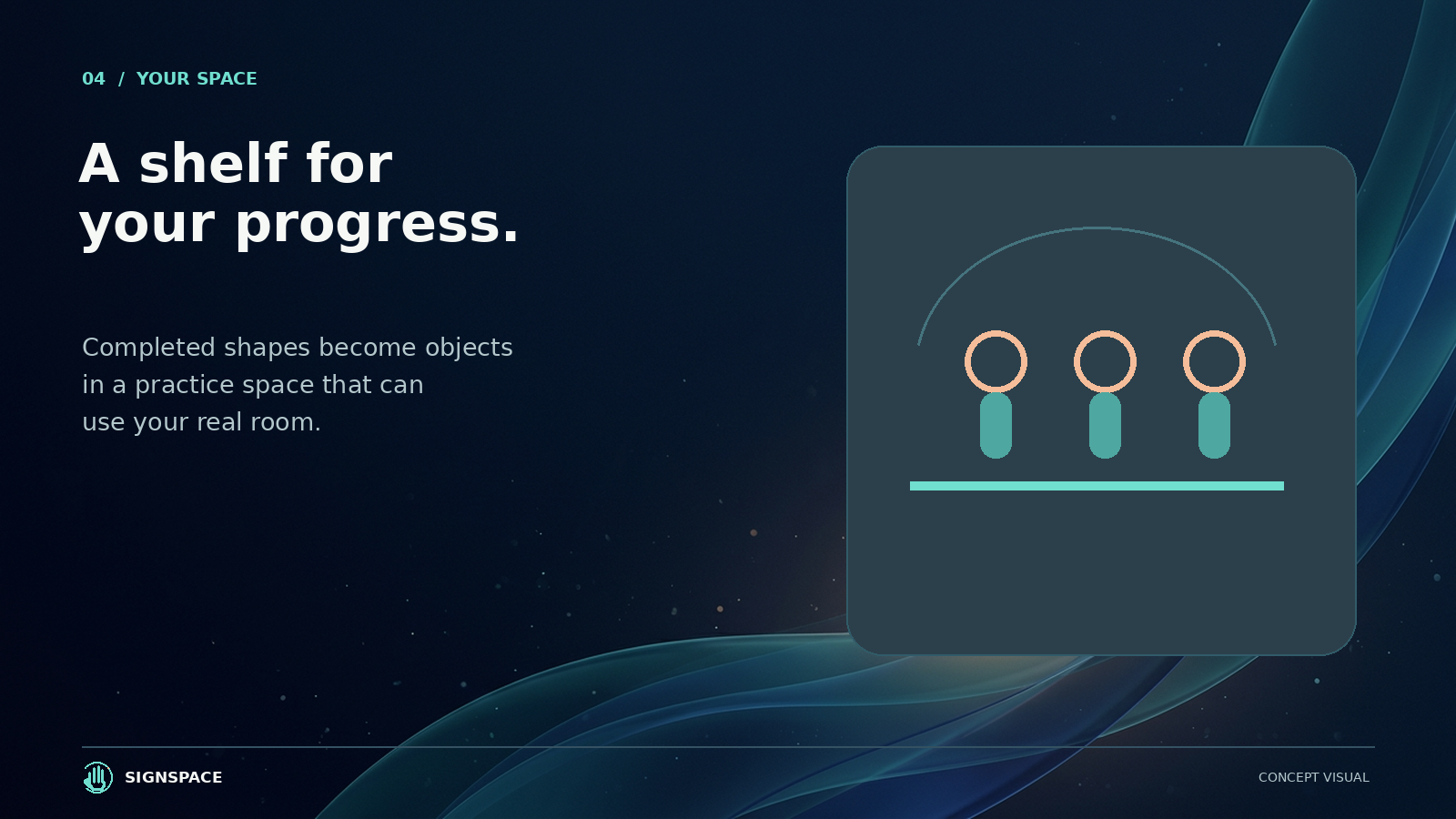
When a handshape resembles another shape in the set, SIGNSPACE can offer a helpful near-miss cue rather than simply saying “wrong.” As learners practice, completed shapes become objects on a virtual vocabulary shelf. When a suitable real-world surface is available, the shelf can be placed in the room; otherwise, the experience uses a virtual plinth.
The repository’s current practice set contains six handshapes: B, U, V, W, C, and O.
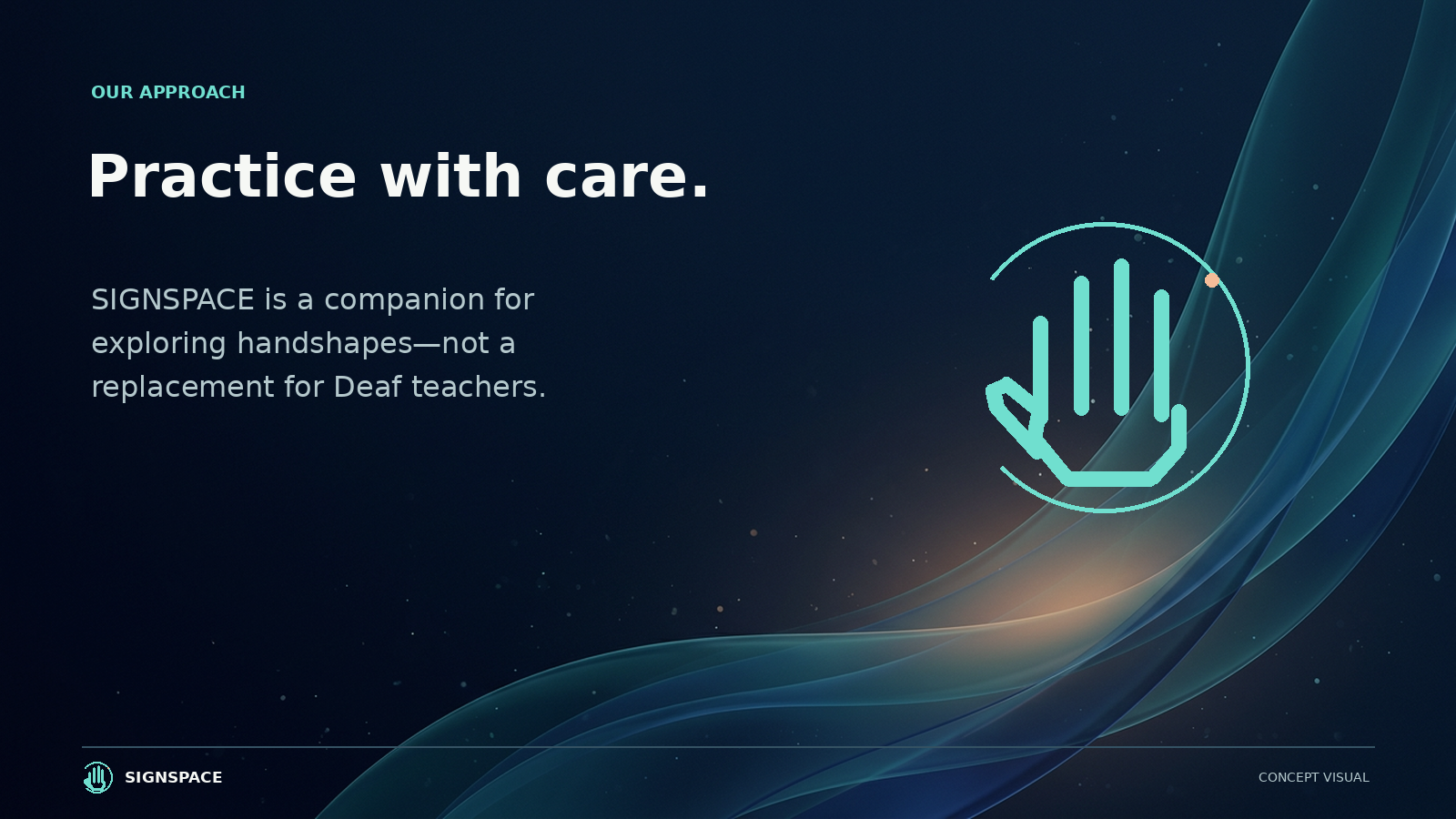
SIGNSPACE is a handshape practice companion—not a replacement for learning from Deaf teachers or for the broader language, movement, and facial expression involved in ASL.
How we built it
We built SIGNSPACE in Unity using C#, the Meta XR SDK, and OpenXR.
Meta Quest hand tracking supplies the joint data used to interact with the reference hand and practice a shape. We designed the matching system to compare relative hand poses, allowing the experience to respond to a learner’s handshape rather than relying on a controller input.
We used the Meta XR Mixed Reality Utility Kit (MRUK) to work with room surfaces and support the spatial vocabulary shelf. The project also includes a virtual fallback for spaces where a suitable surface is unavailable.
The handshape data is stored separately from the matching logic. This makes it easier to review and update the practice content without rebuilding the core interaction system.
Challenges we ran into
The biggest challenge was turning tracked hand data into feedback that feels useful rather than judgmental. Hands vary, tracking can be imperfect, and similar handshapes may differ in subtle ways. We had to think carefully about matching thresholds, how long a shape should be held, and when a near-miss message is more helpful than a generic response.
Another challenge was designing for real rooms. A mixed reality experience cannot assume that every user has a scanned space or a suitable surface nearby, so we designed a virtual plinth as a fallback.
We also learned to be careful about what the technology can honestly claim. A pose matching a reference is not the same as proving ASL proficiency, and sensor limitations should not be mistaken for a learner’s mistake.
Accomplishments that we’re proud of
We’re proud of bringing the reference hand, handshape matching, feedback, and spatial shelf together around one idea: learning by exploring and practicing with your own hands.
We’re also proud of making the experience’s limitations visible. The checked-in reference poses were authored against published ASL references, and the project treats Deaf signer review and appropriate credit as important parts of responsible content development.
What we learned
Building SIGNSPACE showed us that effective spatial design is not just about placing a 3D object in a room. It is about giving people a reason to interact with it, making feedback understandable, and designing for moments when tracking or the environment does not behave as expected.
We also learned that accessibility and cultural responsibility need to be considered throughout development—not added at the end.
What’s next for SIGNSPACE
Next, we want to continue refining the experience with Deaf signers and ASL educators, expand the handshape library responsibly, and improve support for different hands and tracking conditions.
We also want to test the experience with more learners, improve the clarity of feedback, and continue developing the spatial shelf and accessibility options based on real-world use.
Our goal is to make SIGNSPACE a thoughtful companion for practice: one that helps learners explore handshapes while respecting the people and language at the heart of the experience.
