Inspiration
Every day, people sign digital contracts without actually reading them — whether that’s a Terms & Conditions pop-up, a privacy policy, or even a lease agreement. These documents are often written in dense, confusing legalese designed more to protect corporations than to inform individuals. Our team realized that this creates a massive gap between what people think they’re agreeing to and what they’re actually signing away. We wanted to close that gap by making the process of reading and understanding long documents as effortless as possible. The inspiration came from our own frustration of skipping past terms because they’re “too long; didn’t read,” and knowing that millions of others face the same issue daily.
What it does
SignSmarter is a Chrome extension that automatically:
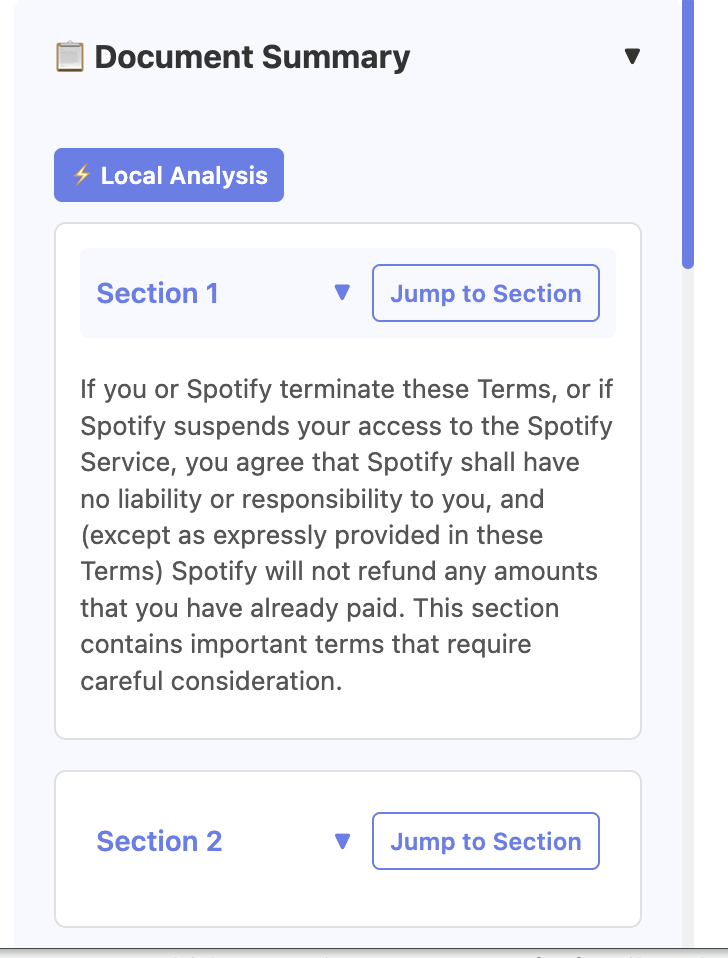
- Reads and summarizes overwhelming lengthy documents into concise, actionable insights.
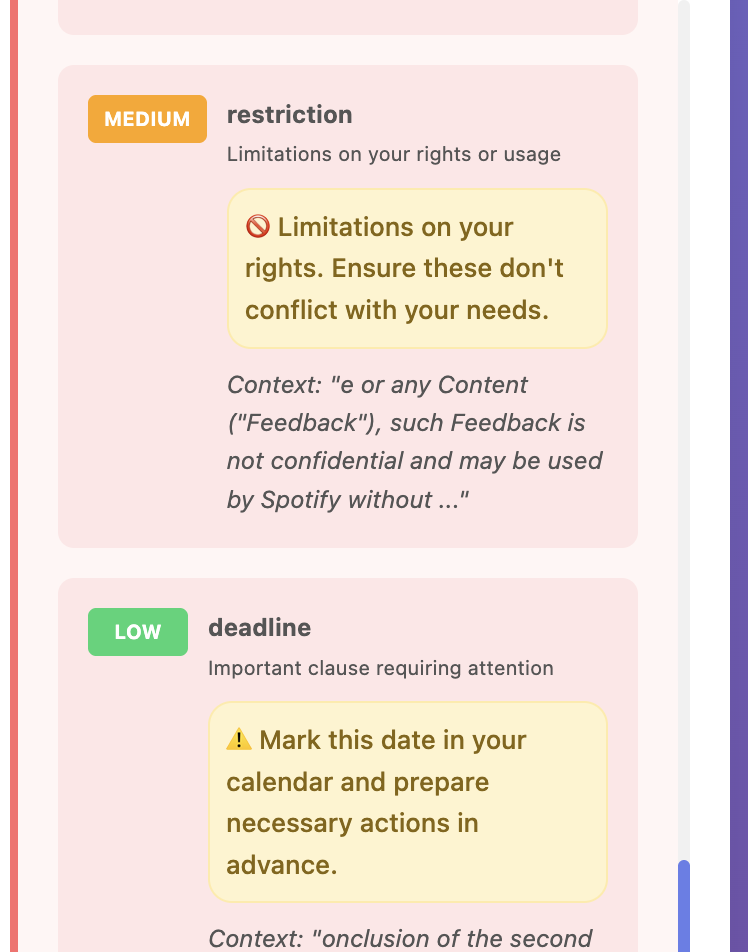
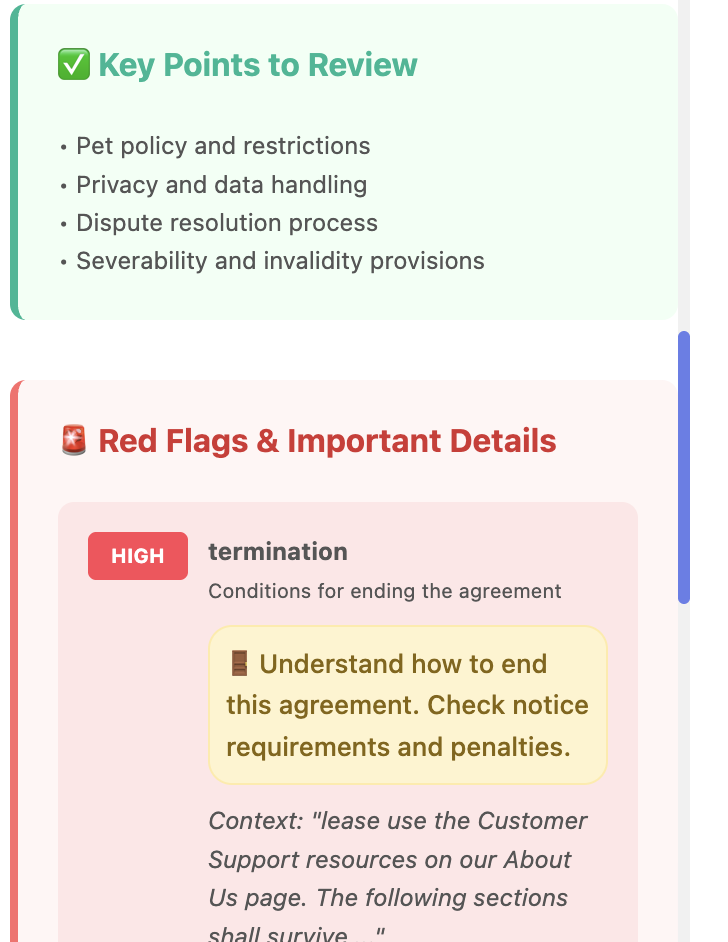
- Flags critical “red flag” sections (like penalties, automatic renewals, or termination clauses).
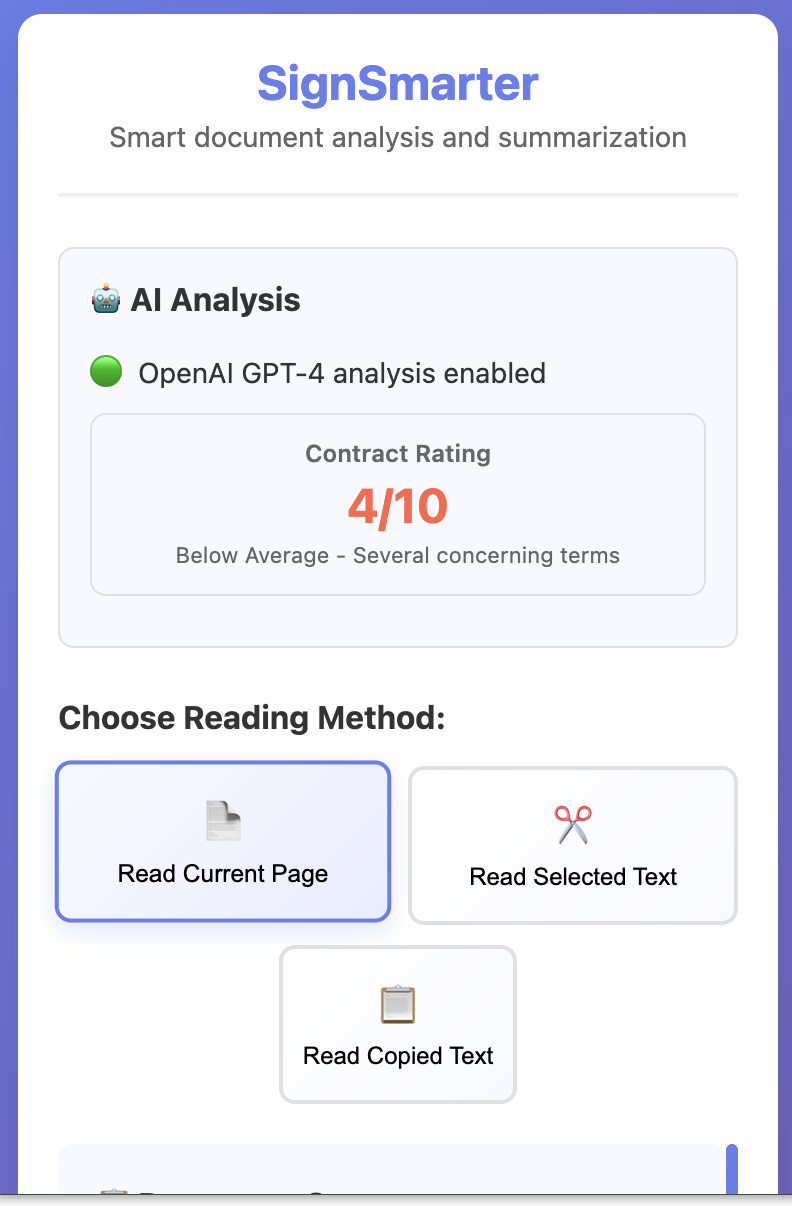
- Lets users choose how to provide text—by reading the page, highlighting text, copying from the clipboard.
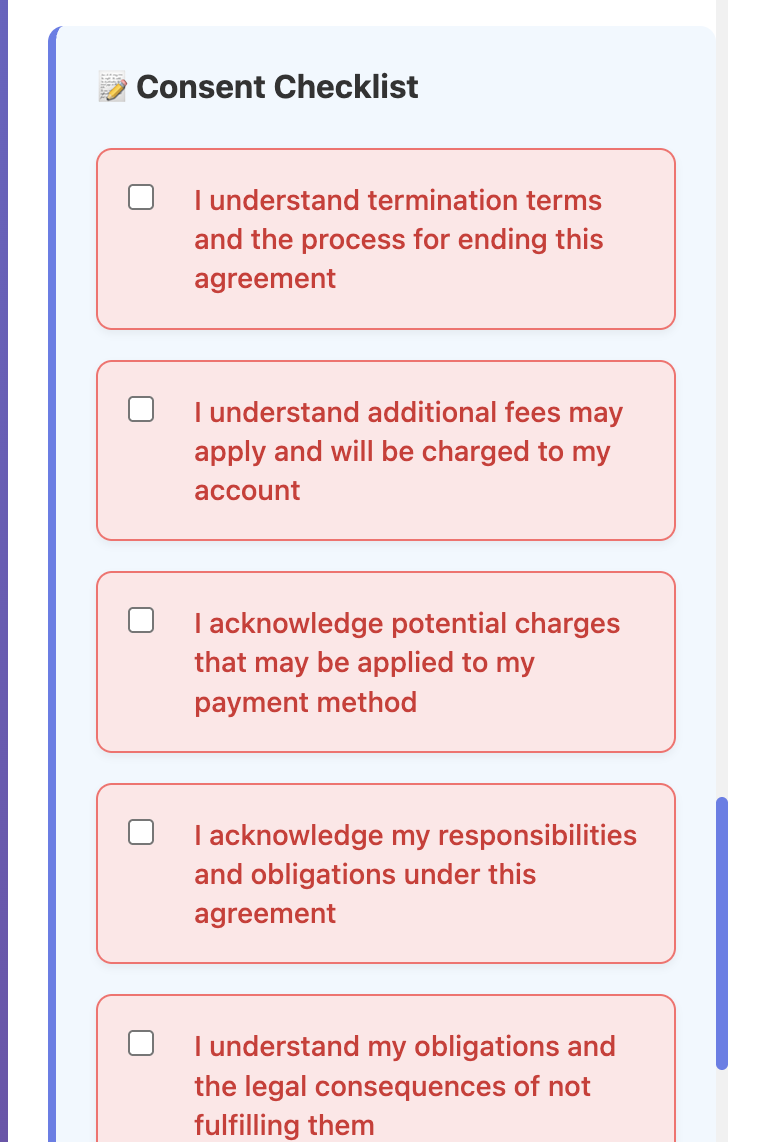
- Trust score that tells you at a glance how safe or risky the agreement looks Consent checkmarks guide users step-by-step through what they are truly agreeing to
How we built it
We built SignSmarter as a Chrome extension using Manifest V3, with a JS-based frontend for smooth in-browser interaction. Under the hood, we leveraged natural language processing (NLP) and large language models to break down complex clauses into understandable language. We trained a lightweight clause classification system that detects whether text is risky (red flag), neutral, or beneficial (green flag). To make the tool interactive, we engineered a system to dynamically generate hyperlinked references so users can immediately verify where each summary point originated. This combination of AI, UX design, and browser engineering made SignSmarter both powerful and easy to use.
Challenges we faced
- Ensuring accurate extraction of text from different formats (webpages, PDFs, images).
- Balancing concise summaries with enough detail so users don’t miss context.
- Designing the “red flag” detection logic so it catches the right risks without overwhelming the user with false alarms.
- Making hyperlink navigation seamless between the summarized points and the original document. Tackling JavaScript, HTML, and CSS
Accomplishments we’re proud of
- Built a working prototype that can summarize and flag important clauses across multiple document sources.
- Created a clean and intuitive UI for quick understanding.
- Designed flexible text-access options (page read, highlight, clipboard, upload) to cover diverse user needs.
- Successfully integrated AI summarization with real-time browser extension functionality.
What we learned
We learned just how difficult it is to make legal text user-friendly without losing accuracy. Working with NLP taught us the importance of prompt engineering, context management, and evaluation to ensure the summaries were clear but not misleading. We also discovered how challenging it is to align AI outputs with user trust — people won’t rely on a tool if it feels random or unexplainable, so we invested heavily in transparency features like linked references. On the technical side, we gained valuable experience building a full Chrome extension pipeline, integrating AI models efficiently, and optimizing for real-world usage. Most importantly, we learned that even in a short hackathon, it’s possible to build something that feels genuinely useful and socially impactful.
What’s next for SignSmarter?
We see SignSmarter growing into a universal digital agreement assistant. In the near future, we’d like to support multiple languages, add a mobile app, and integrate with PDF uploads so it works beyond just web pages. We would also love to expand the compatibility to Safari and Firefox, improve red flag detection with fine tuned models and even partner with DocuSign. We also want to expand our risk detection to cover hidden fees, auto-renewal traps, and data-sharing practices, and even introduce crowdsourced trust ratings so users can see how others rate the same agreement.
Built With
- css
- html
- javascript
- json
- openai


Log in or sign up for Devpost to join the conversation.