-
-
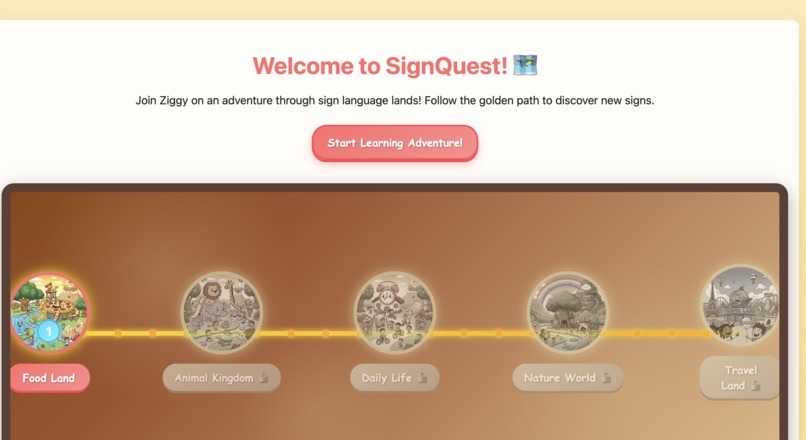
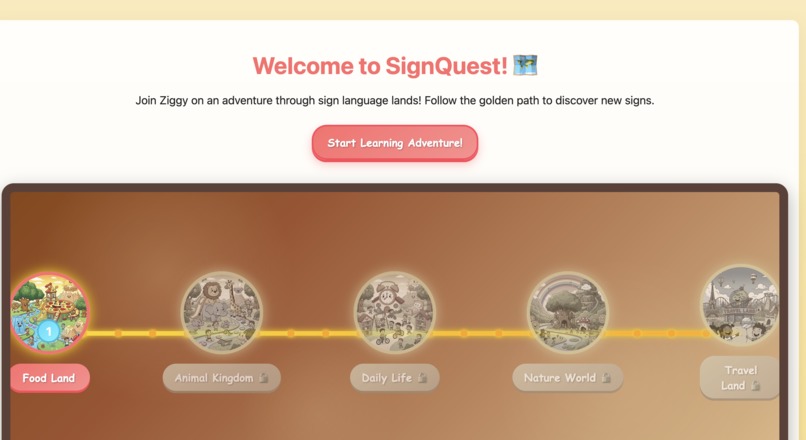
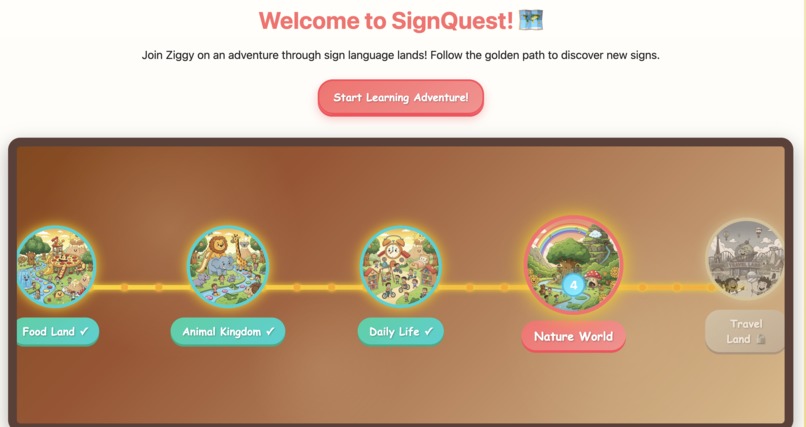
Home Base of Adventures:Discover all the magical worlds waiting for you.
-
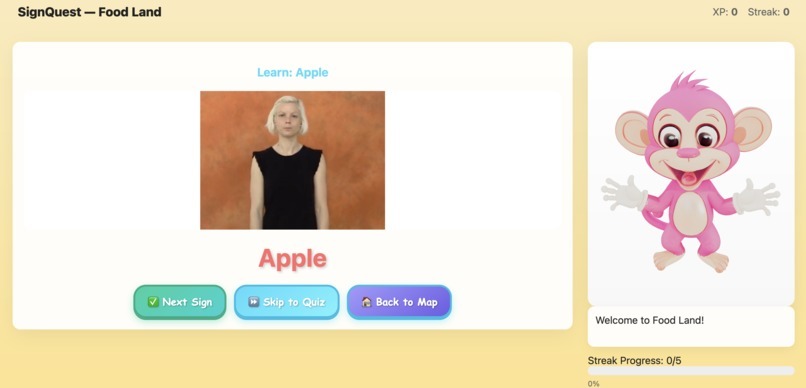
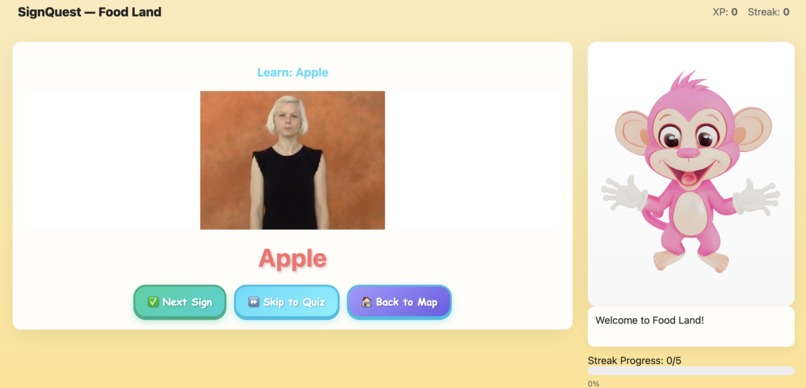
Learn with Ziggy : Start with the basics — Ziggy, your mentor, is here to guide you.
-
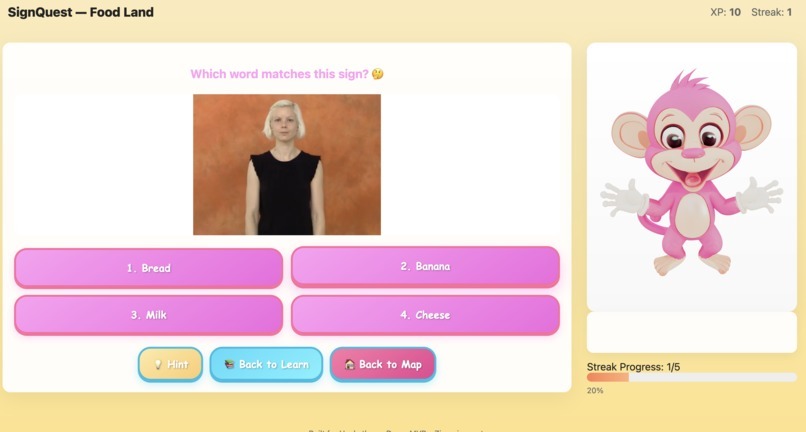
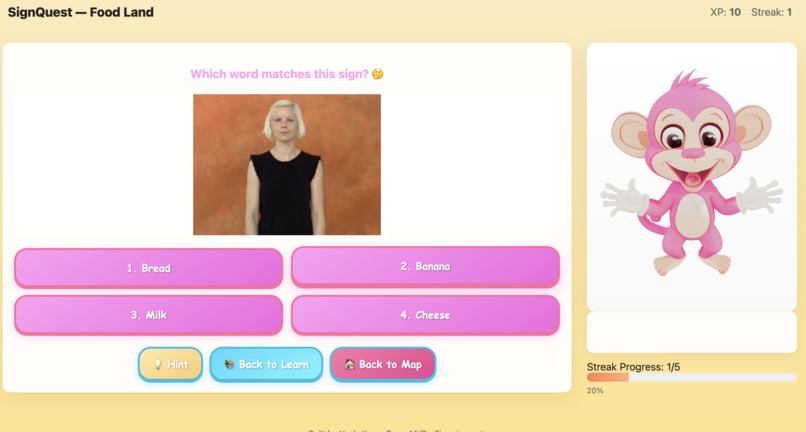
Quiz Without Pressure : Test your skills with no timers. Ziggy reacts to every move you make!
-
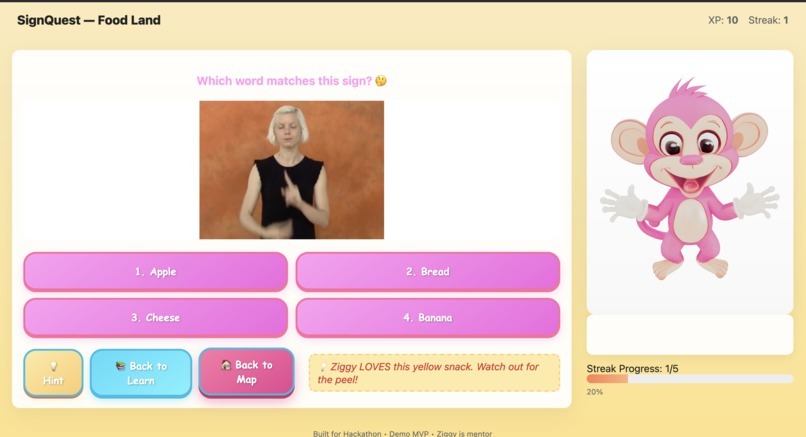
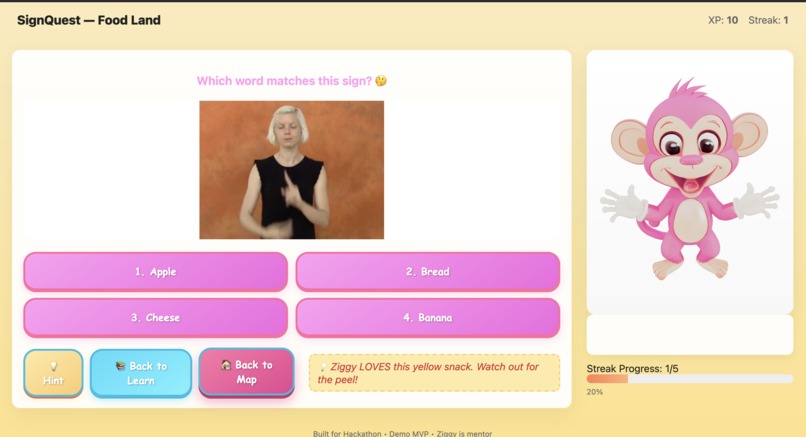
Hints & Choices Stuck? : Get a hint, revisit learning, or jump back home anytime.
-
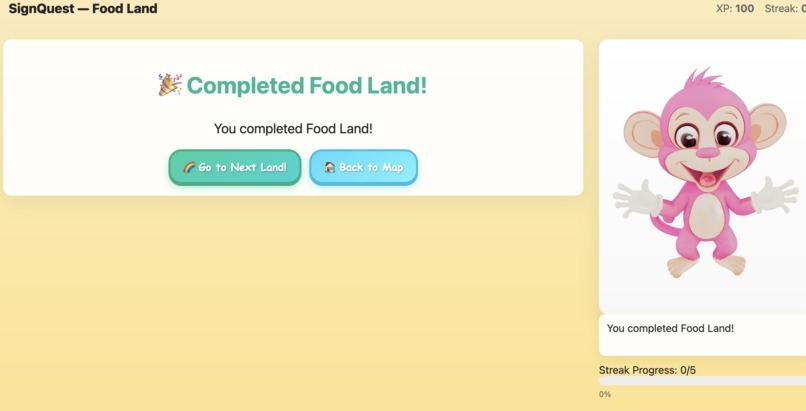
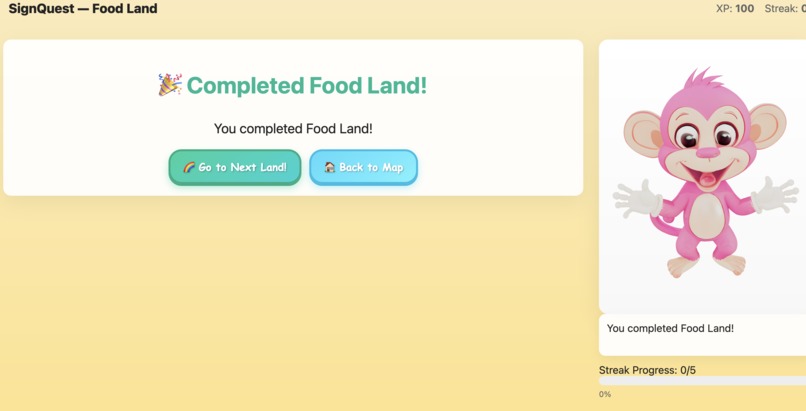
Level Up Your Journey : Conquer a quiz and unlock the next land — your adventure continues!
-
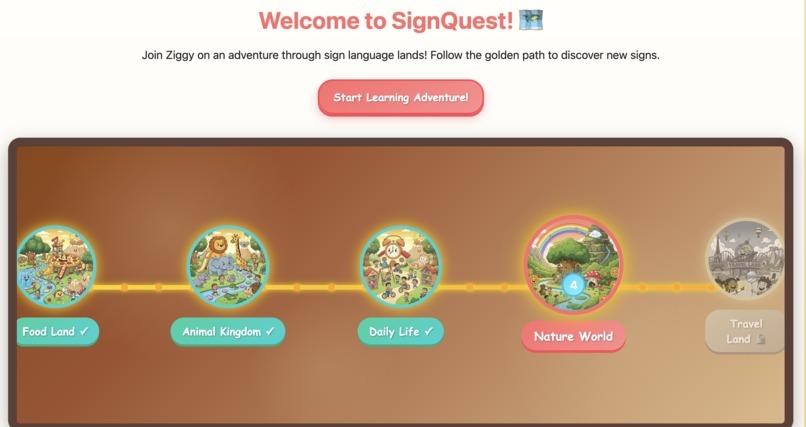
Unlock New Lands : Complete a land’s challenge to open the next one!
Inspiration
Growing up, I often wondered what it would feel like to not be understood. Imagine sitting in a classroom, wanting to answer, wanting to laugh, wanting to connect — but no one understands your language. For millions in the deaf and hard-of-hearing community, this isn’t imagination — it’s reality.
When I met a child who communicated only through sign language, I saw both the beauty and the struggle. The beauty of expression without words, and the struggle of isolation when the world isn’t listening. That moment inspired me to create SignQuest — a tool that turns learning sign language into an adventure.
Because learning a language of love and connection should never feel like a burden.
What it does
SignQuest makes learning sign language fun, interactive, and accessible. Learners travel across a gamified map, unlocking “lands” filled with signs to learn. Ziggy, our animated mentor, guides players with encouragement and hints. Users practice signs through videos, quizzes, and interactive challenges. A progress tracker and streak system keeps learners motivated. SignQuest transforms what could feel like a textbook exercise into an engaging journey of discovery.
How I built it
- Built with React + TailwindCSS for a responsive, playful UI.
- Designed a gamified map system where each “land” represents a new learning milestone.
- Added animations (Framer Motion) to make interactions feel alive.
- Structured sign data (words, videos, hints) into an easy-to-extend format.
- Focused on accessibility-first design, ensuring that the app is welcoming for learners of all ages.
Challenges I ran into
- Balancing fun vs. learning: making sure SignQuest was entertaining without losing educational depth.
- Designing a UI that feels inclusive — not childish, not overly technical, but inviting to everyone.
- Managing state and animations while keeping performance smooth.
- Most importantly: translating a human challenge into a technical solution without losing empathy.
Accomplishments that I am proud of
- Creating an educational tool that feels like a game.
- Bringing Ziggy to life — our cheerful, bouncing mentor.
- Turning a complex idea (learning sign language) into a journey anyone can take part in.
- Seeing people smile while learning — because that’s the moment technology does its job.
What I learned
- That building with empathy is as important as building with code.
- Accessibility isn’t a “feature” — it’s a responsibility.
- Gamification works best when it’s not about points, but about sparking joy in learning.
- Sometimes, the hardest part isn’t coding — it’s remembering why you’re coding in the first place.
What's next for SignQuest
- Expanding learning modes: right now, learners practice through MCQs. In the future, we’ll add fill-in- the-blanks, matching activities, and drag-and-drop challenges to make learning richer.
- Interactive Ziggy: instead of only videos, Ziggy will soon demonstrate signs directly — learners can watch, mimic, and learn from Ziggy’s actions in real time.
- Larger library: adding more signs, categories, and multiple sign languages to grow inclusivity.
- Mobile-first version: bringing SignQuest to phones and tablets for on-the-go learning.
- AI-powered practice: integrating speech-to-sign and sign recognition to create two-way conversations.
- Community partnerships: collaborating with schools and accessibility programs to bring SignQuest into classrooms. Because this isn’t just a project — it’s a mission: To make sure every voice is heard, even when it speaks through hands.
Built With
- framer-motion
- javascript
- node.js
- react.js
- tailwind-css
- vite

Log in or sign up for Devpost to join the conversation.