-
-
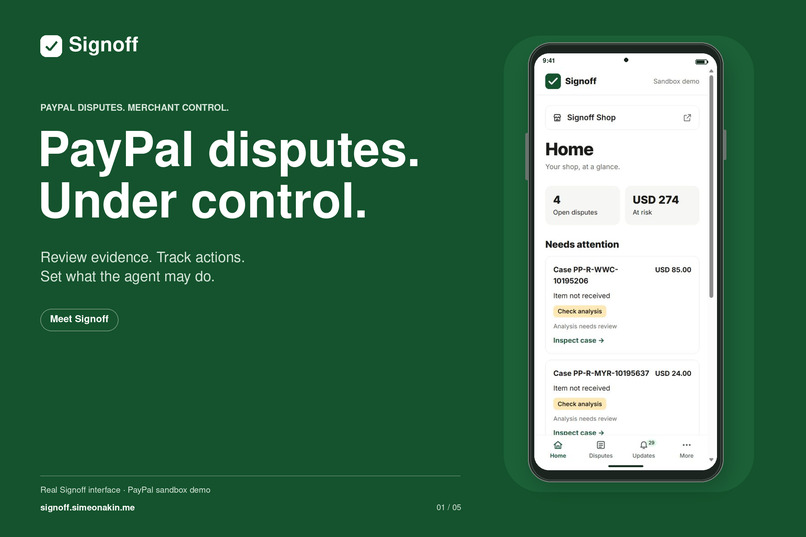
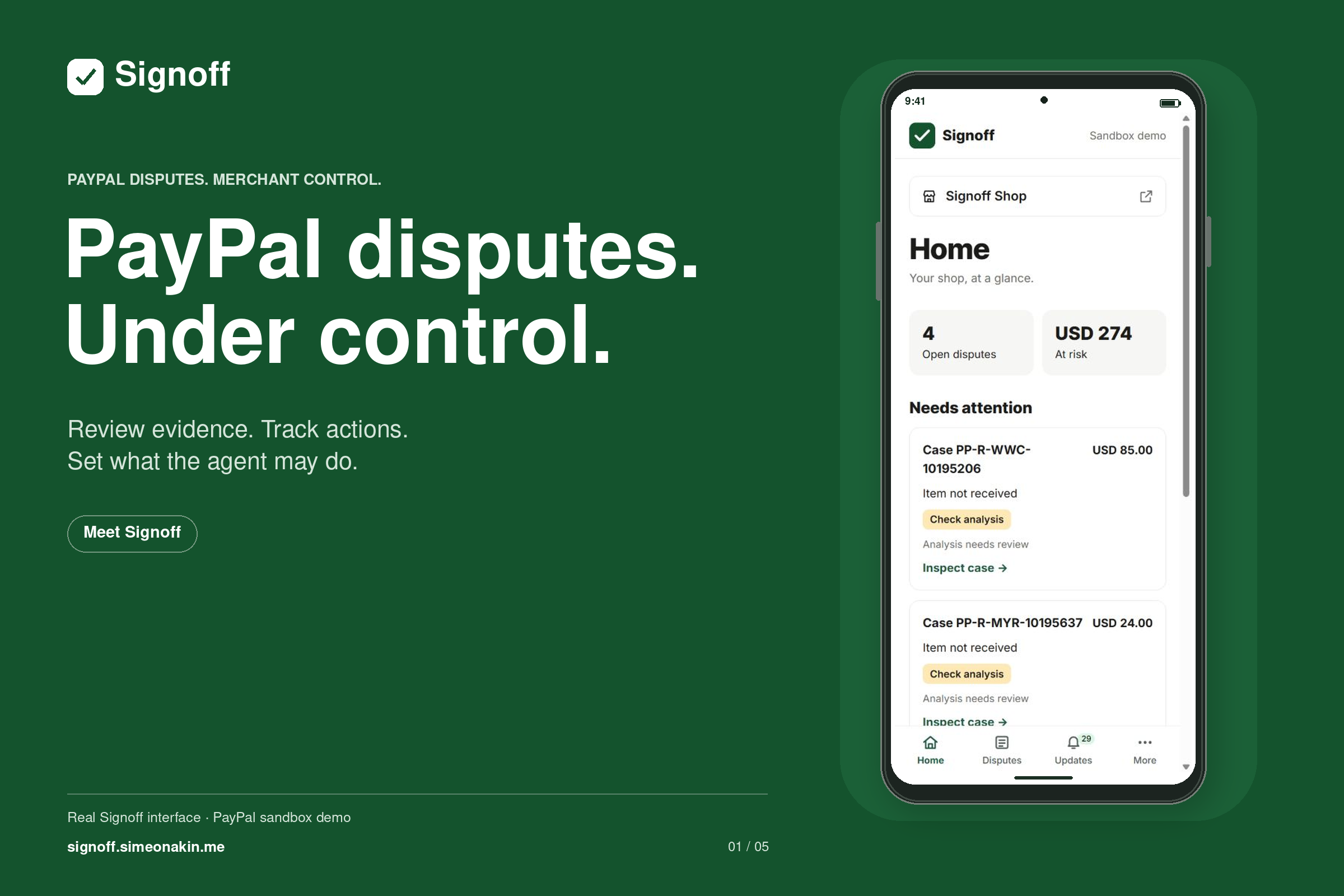
An AI assistant that helps small sellers handle PayPal disputes within limits they set.
-
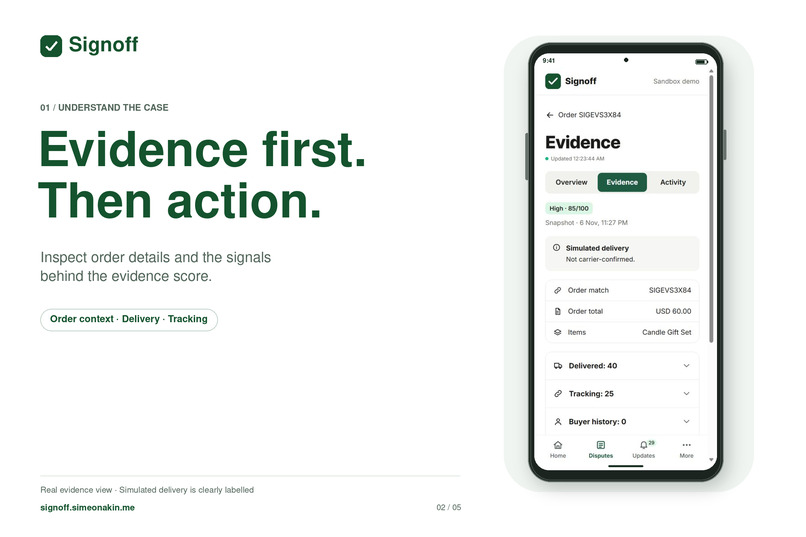
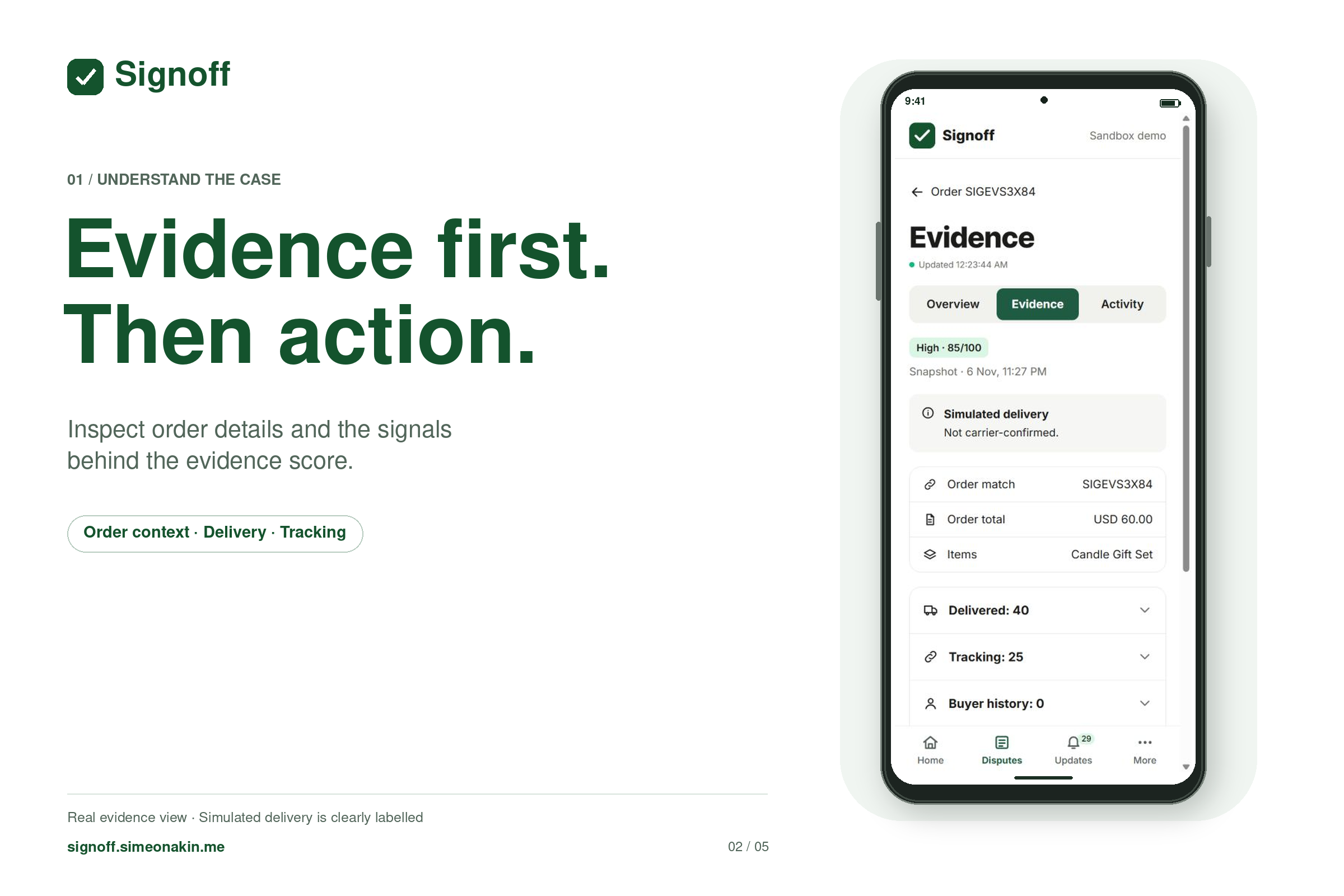
Signoff brings order and delivery information together. Delivery tracking is simulated in this demo.
-
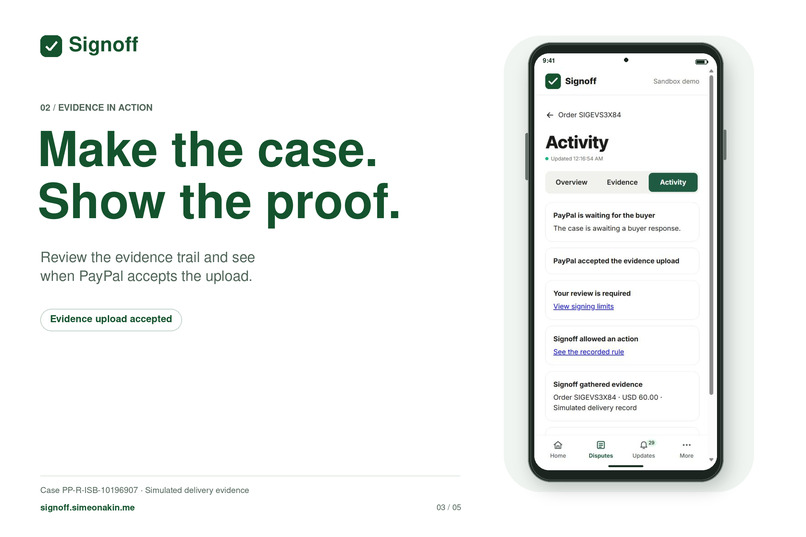
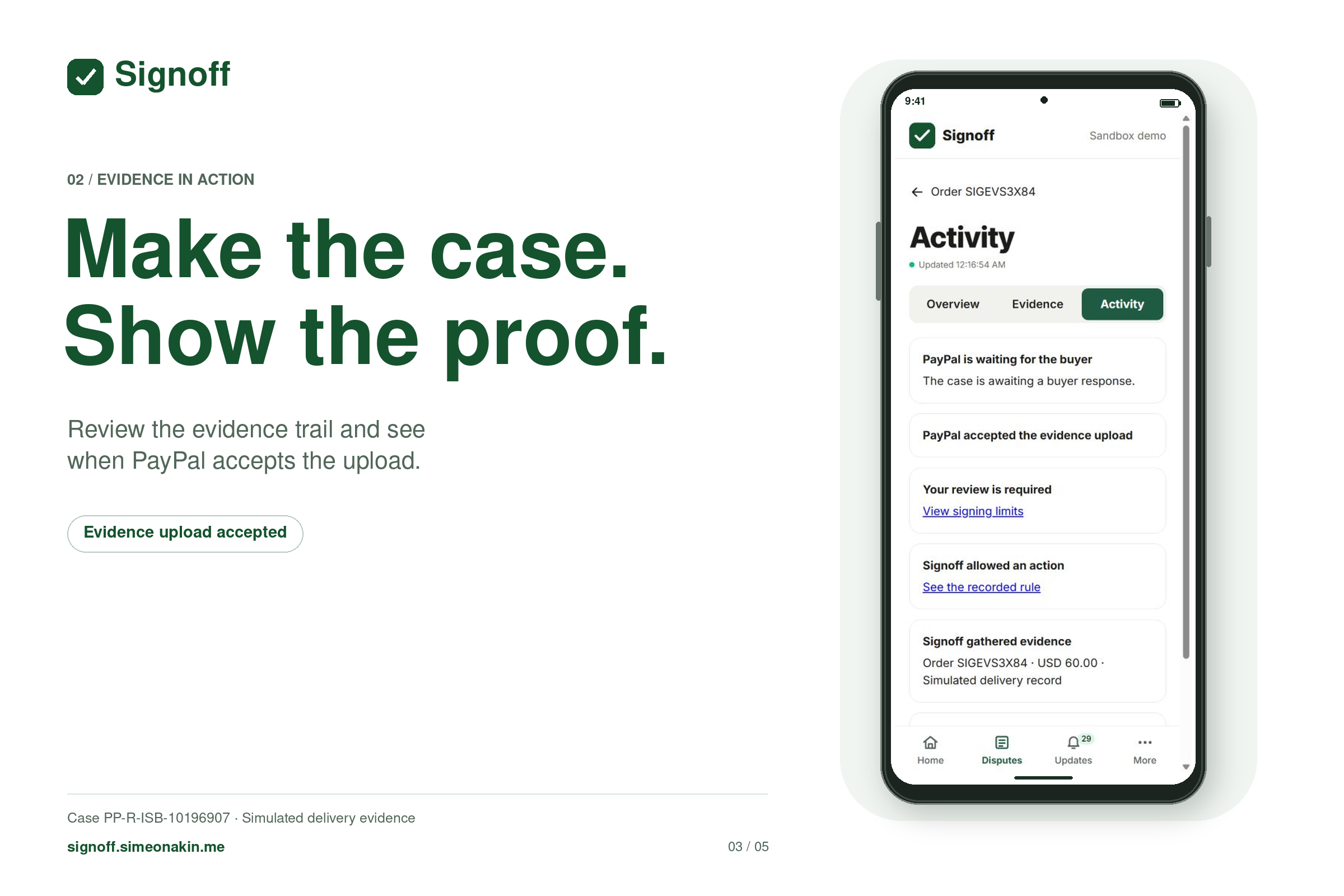
The activity trail shows what Signoff did and when PayPal accepted the evidence upload.
-
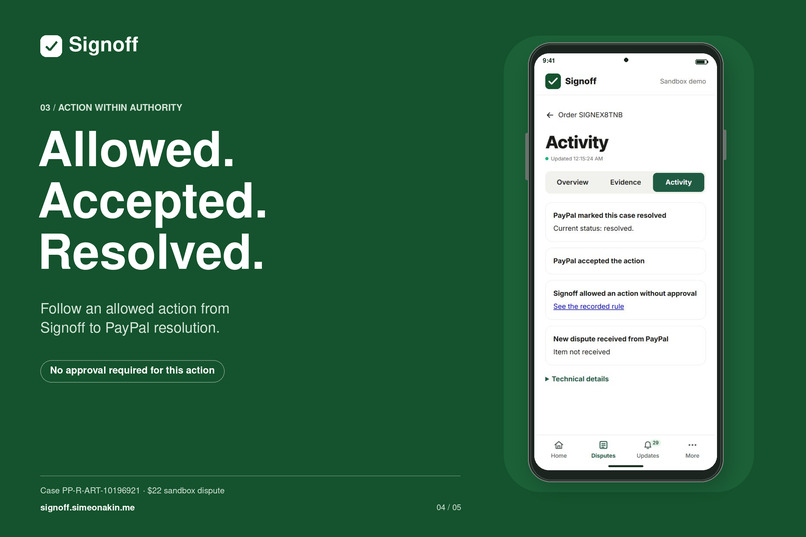
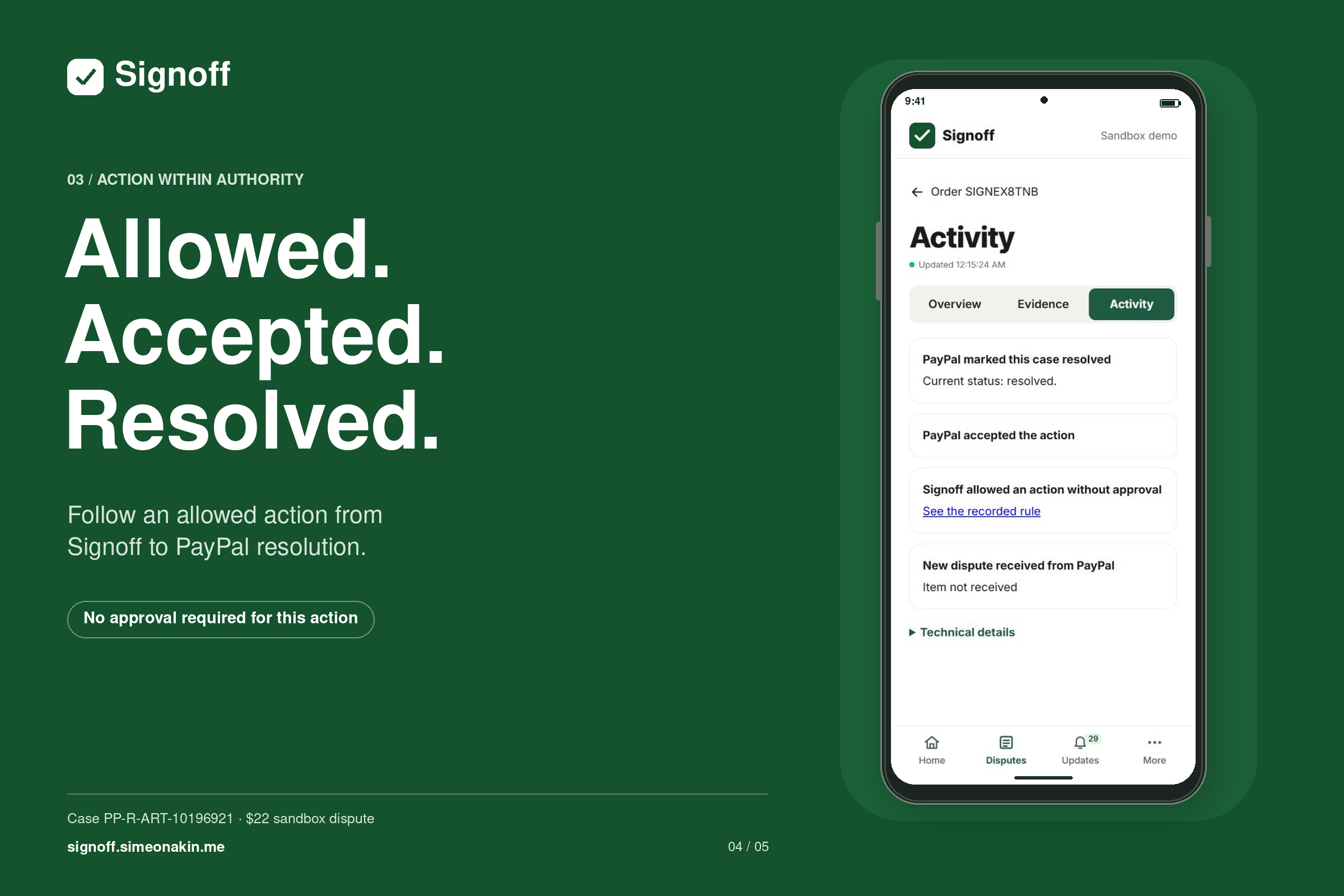
See an action allowed within the seller’s limits, accepted by PayPal(sandbox), and marked resolved
-
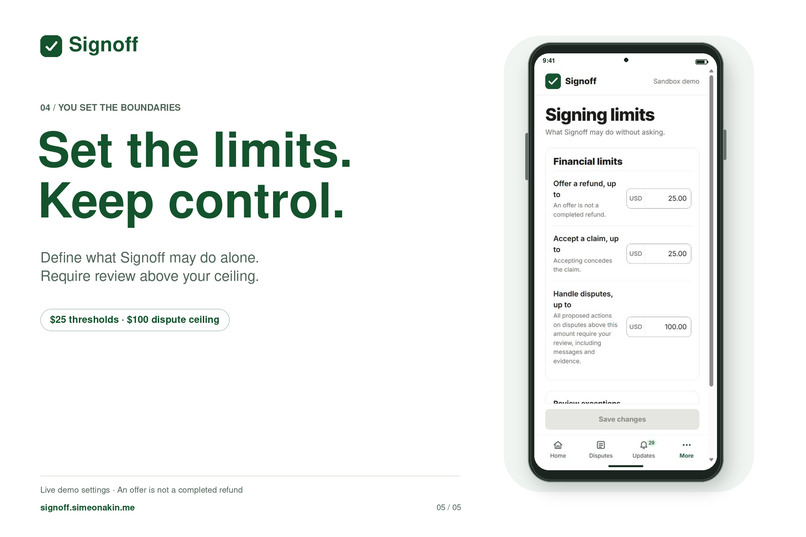
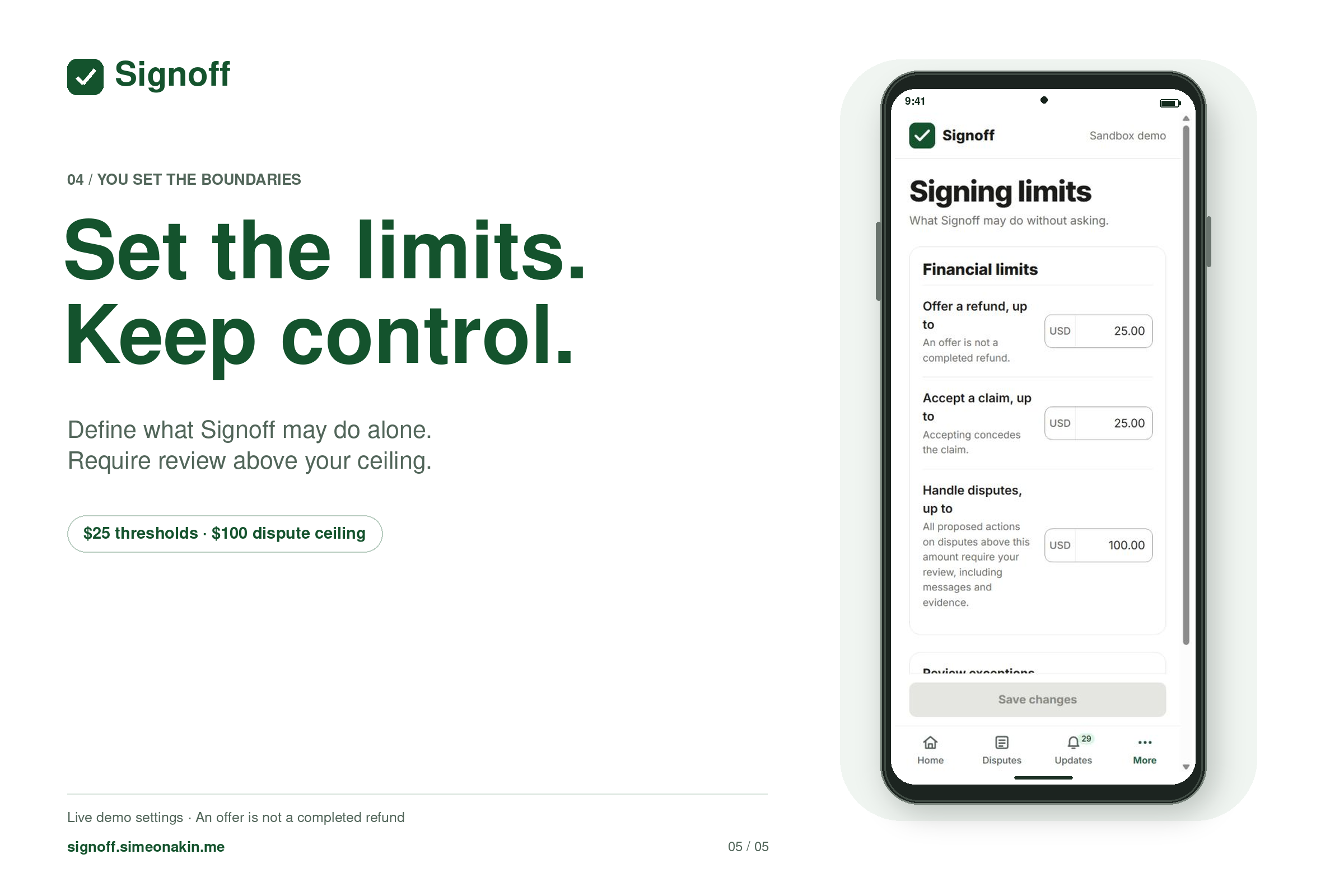
The seller chooses what Signoff may do automatically and when a case needs their review.
-
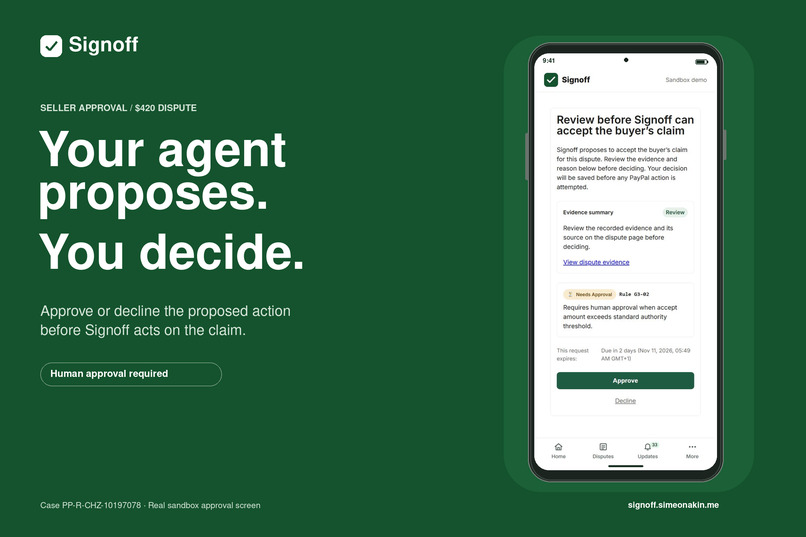
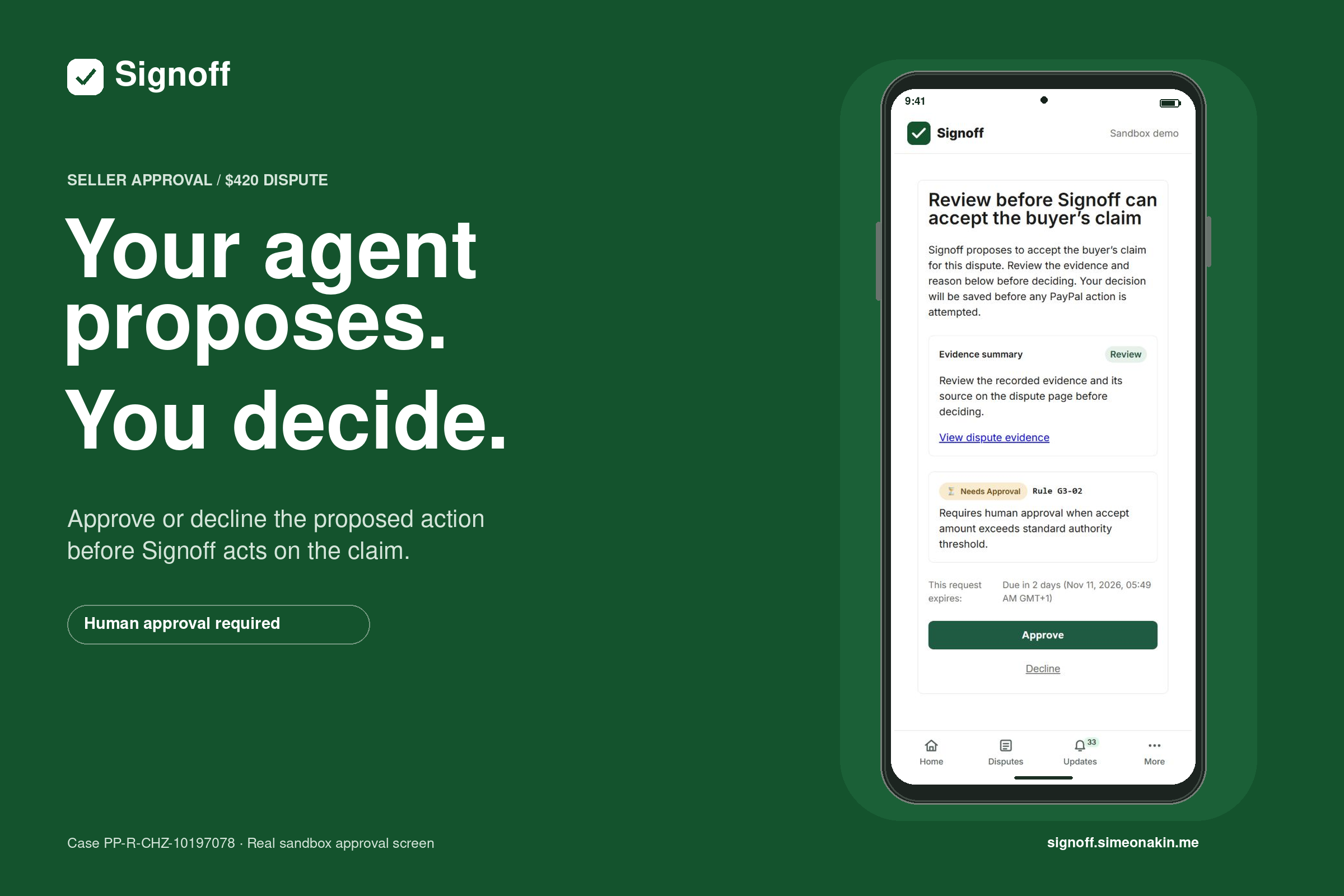
When a proposed action exceeds the seller’s limits, Signoff asks for approval before acting.
-
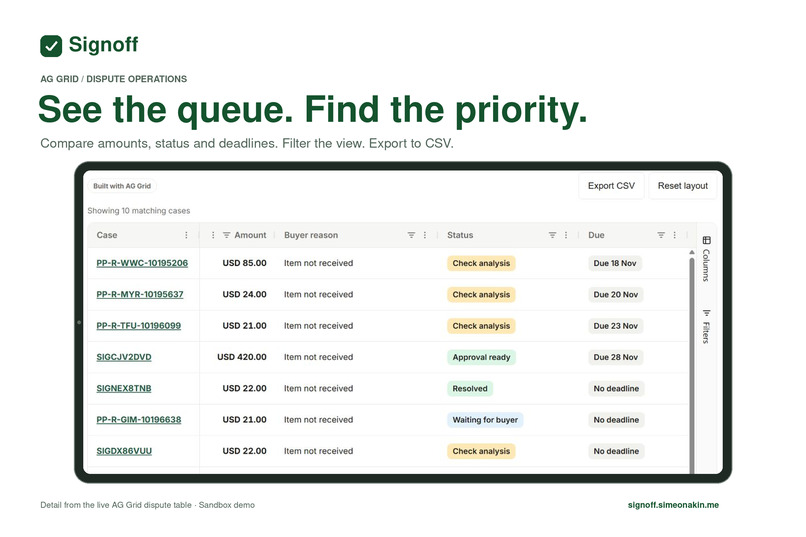
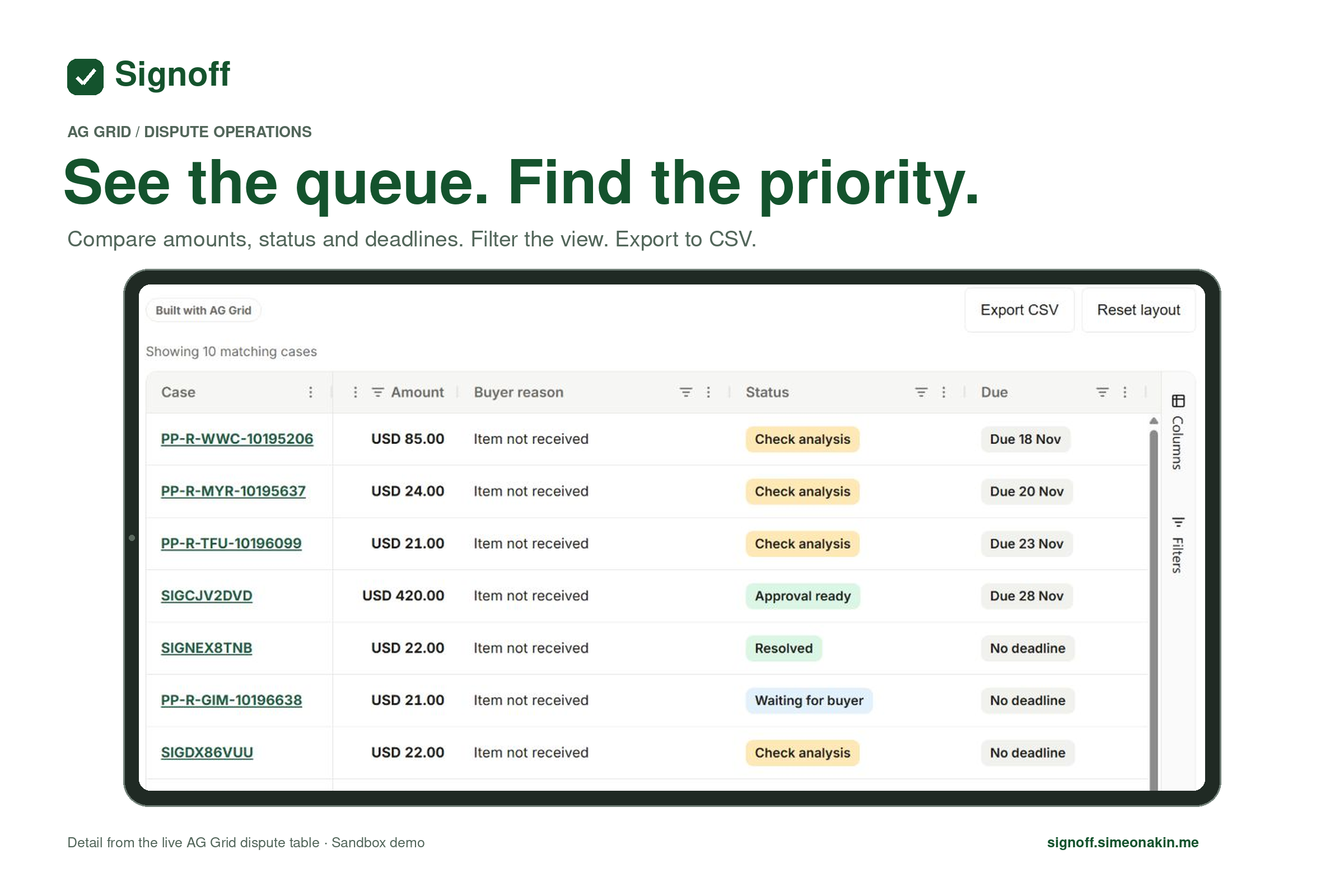
Compare dispute amounts, statuses, and deadlines; filter the table and export a CSV.
-
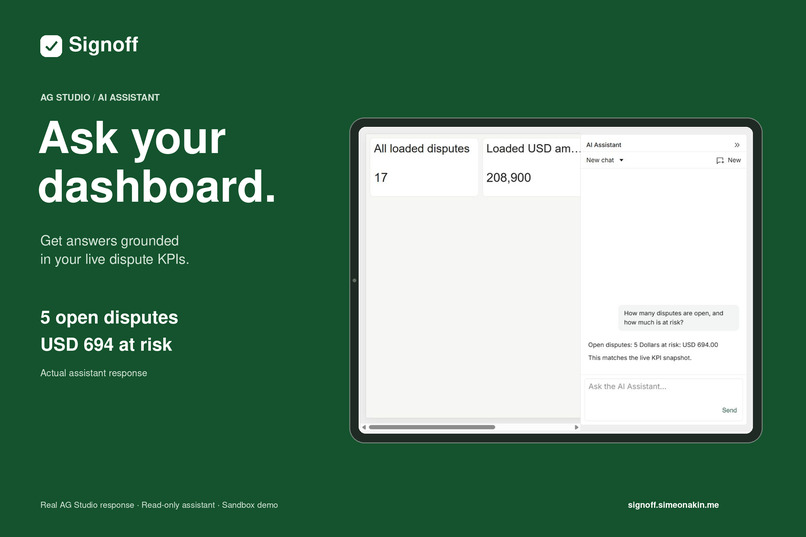
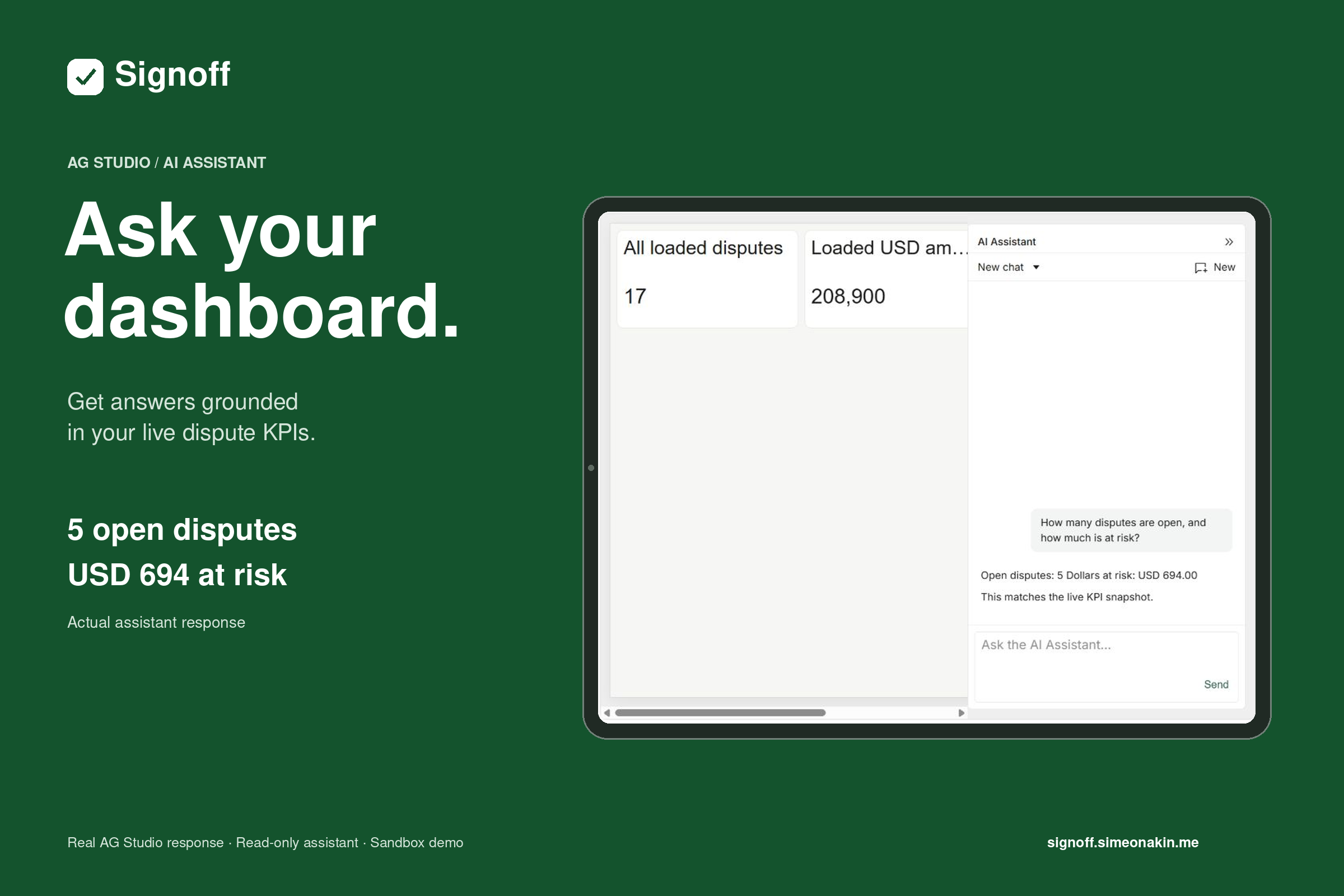
Ask questions about dispute data and get answers from Signoff’s read-only dashboard assistant.
Inspiration
For a small online seller, a PayPal dispute can interrupt the rest of the business. The seller needs to find the order, check delivery information, review the buyer’s claim, and decide what to do next.
Disputes cost more than the payment itself. They can also take up staff time and lead to fees or lost goods. For a small seller, that time and money matter.
I built Signoff to make the process easier. My goal is to help merchants spend less time on disputes while keeping control over decisions involving their money.
What it does
Signoff is an AI assistant for small online sellers handling PayPal disputes.
When a buyer opens a dispute in PayPal, Signoff receives the dispute and brings together available information, including order and delivery evidence. The AI proposes a response, and Signoff checks it against limits set by the merchant.
The merchant can choose which actions Signoff may take automatically and when it should ask for approval. For example, when delivery evidence is missing, the merchant can require human review or allow settlement within their signing limits.
Signoff can save sellers time by gathering evidence and handling routine cases within those limits. It can also help sellers respond with the evidence they have or settle a dispute when that is the right choice.
Signoff gives merchants a place to review dispute updates, evidence, agent actions, and decisions. Optional push notifications help them see when there is something to review.
Sellers can ask questions about their disputes and have the table filter to show relevant cases based on the dashboard assistant's response. They can review the results and export them as a CSV. The assistant is read-only and cannot move money.
Signoff is also an installable web app, so merchants can add it to their device and open it like an app.
How I built it
Signoff uses the PayPal developer platform in its sandbox environment for checkout and disputes. After a buyer submits a dispute through PayPal’s Resolution Center, Signoff receives a verified webhook and retrieves the information needed to process the case.
An AI model (Muse Glimmer 30B) proposes a plan based on the available information. A separate rules-based gate checks the plan against the merchant’s settings and the actions available for the dispute. Signoff records the decision and either takes an allowed action or requests approval.
I built the application with React, TypeScript, FastAPI, PostgreSQL, an OpenAI-compatible AI provider(Muse Glimmer 30B), AG Grid/AG Studio, and Render. The demo includes a fictional shop and simulated shipping so judges can follow an order through the journey.
I deployed Signoff on Render. Render hosts the merchant app and demo shop as static sites, the API as a web service, the dispute-processing agent as a background worker, and the PostgreSQL database. This lets the shop, PayPal integration, and merchant app work together in the live sandbox demo.
Challenges I ran into
A key challenge was giving the AI enough information to help with a dispute while ensuring the merchant remains in control. I addressed this by separating the AI’s proposed plan from the rules that decide whether an action is permitted.
Another challenge was making the experience clear across the shop, PayPal, and Signoff. The buyer opens the dispute in PayPal, while the merchant follows its progress and reviews the result in Signoff.
Accomplishments that I’m proud of
I’m proud of bringing the shop, PayPal sandbox, and Signoff together into a working journey: a buyer can place an order, open a dispute in PayPal, and the seller can see the resulting dispute handled in Signoff.
I’m also proud of the seller-controlled limits. Signoff can help with routine decisions while making the evidence, actions, and reasons visible for the merchant to review.
What I learned
I learned that building an AI assistant for financial workflows takes more than generating a response. The assistant needs access to useful evidence, clear boundaries around what it can do, and a way to show the merchant what happened.
I also learned how important it is to make each step understandable when a workflow spans multiple services.
What’s next for Signoff
Signoff currently works with its demo shop and one shared merchant account. Next, I want to connect real ecommerce shops and add individual user accounts so merchants can use Signoff with their own stores.
Built With
- ag-grid
- ag-studio
- ai
- docker
- fastapi
- meta/muse-glimmer-30b
- paypal
- postgresql
- pwa
- python
- react
- render
- typescript

