-
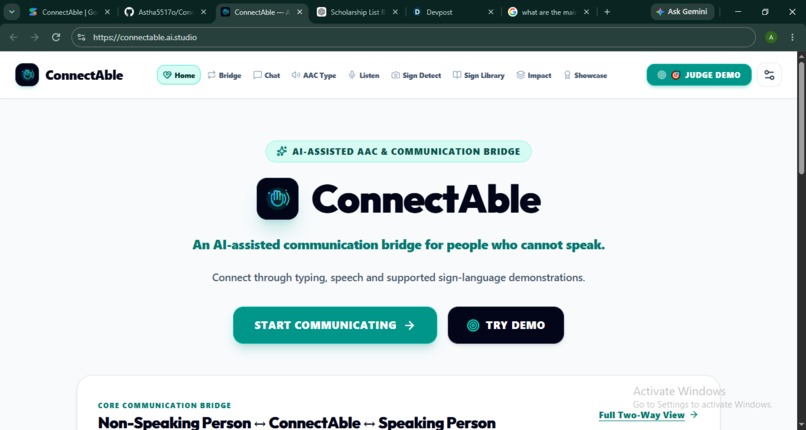
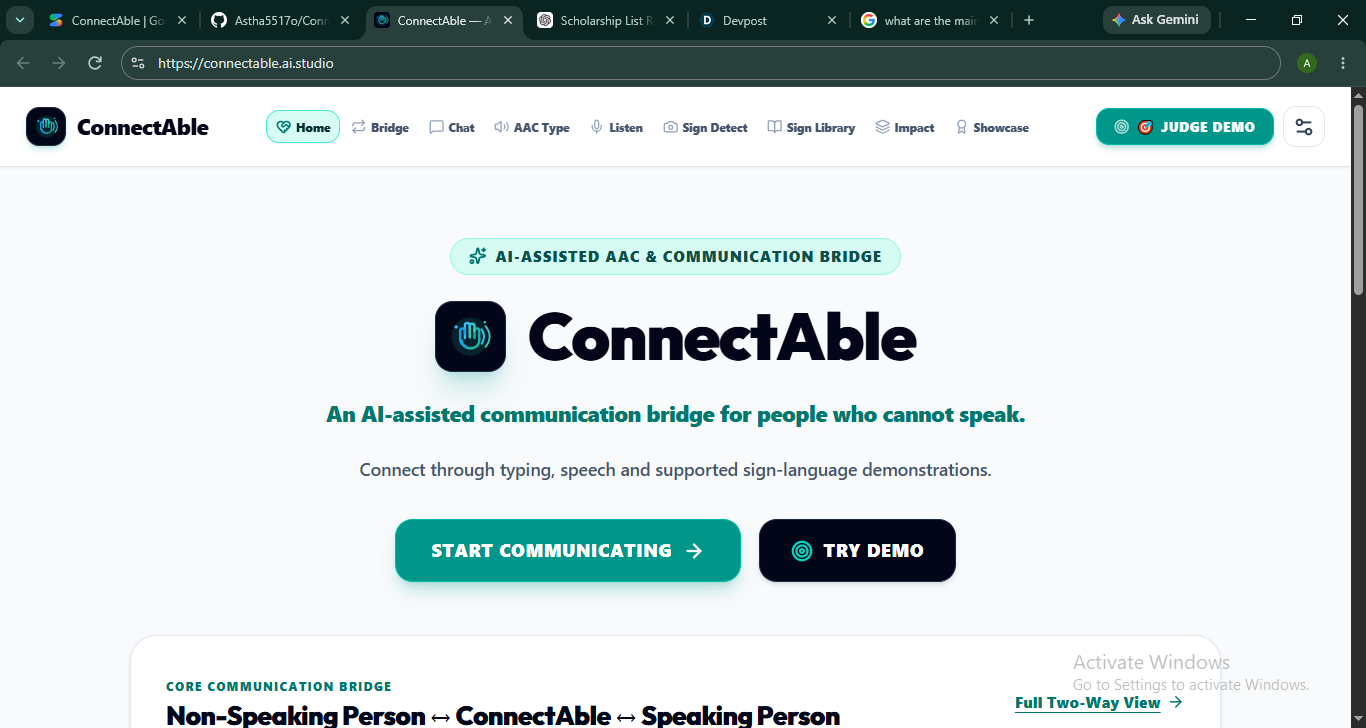
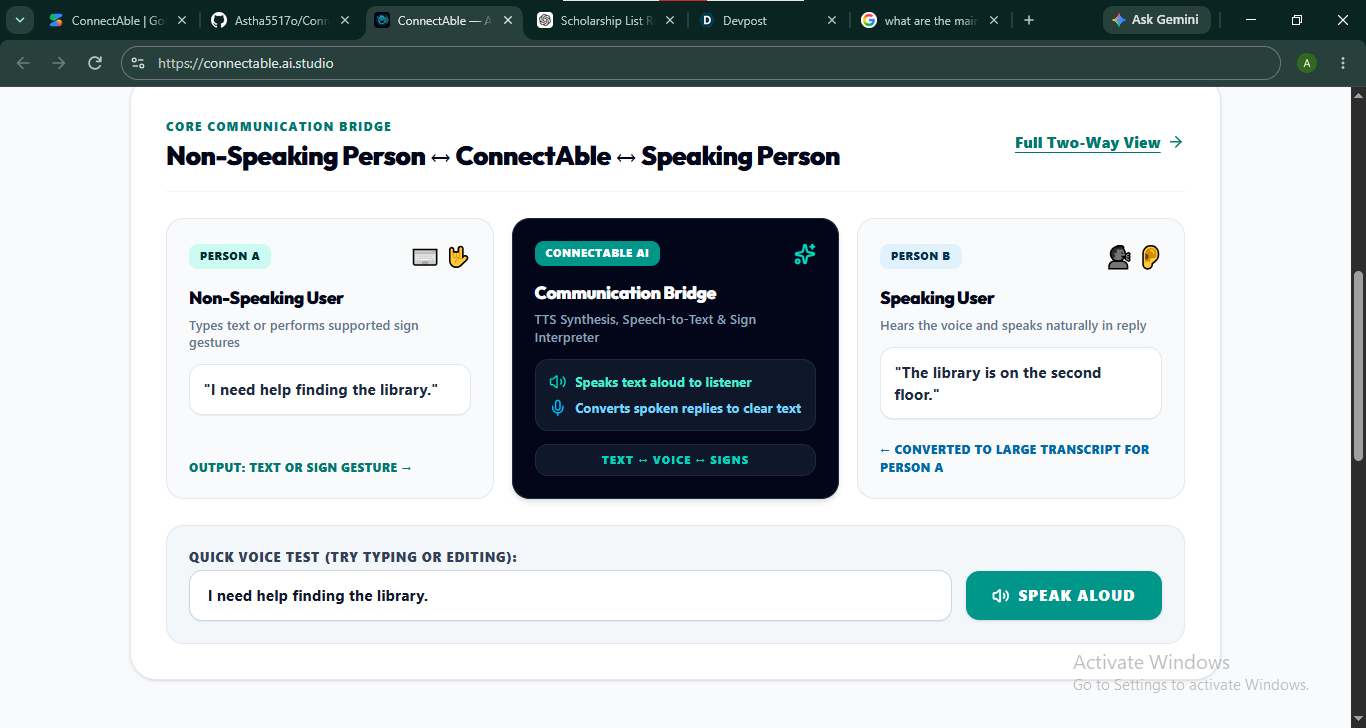
Home Screen of the Project
-
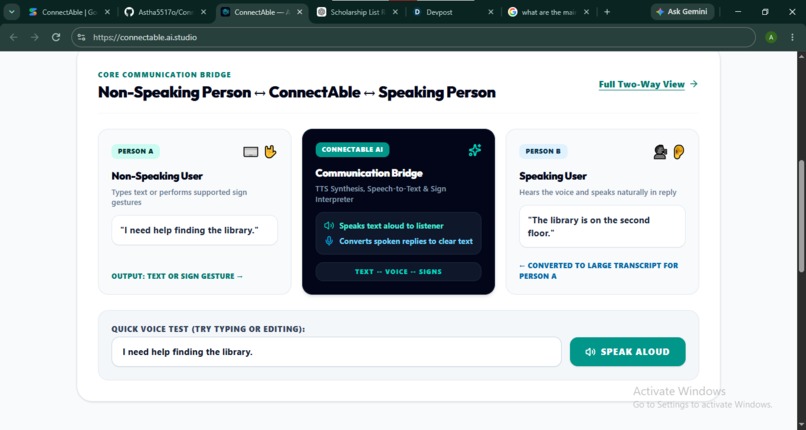
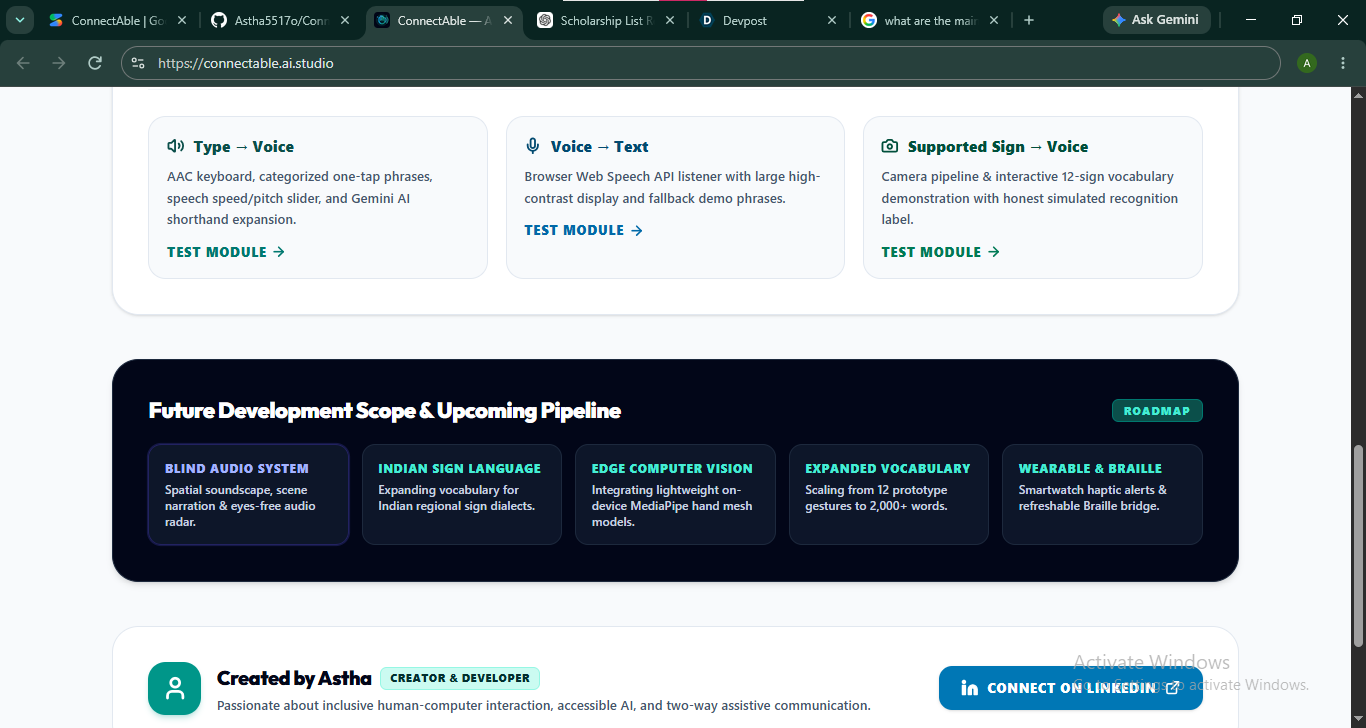
Features or Functions available now
-
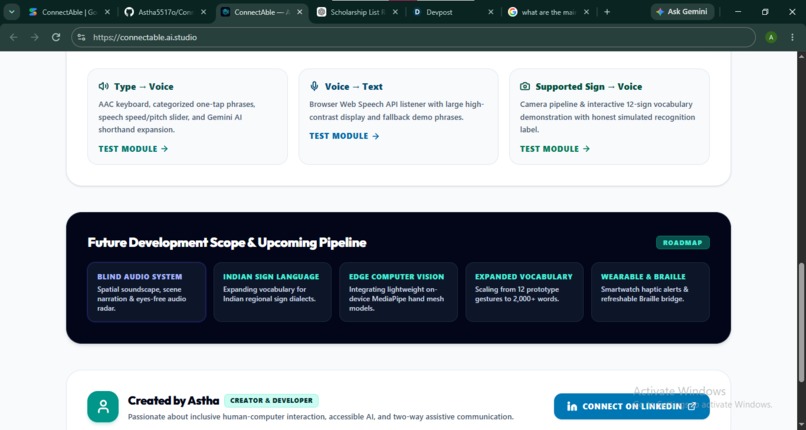
About and showcase section
The Problem
Communication should never depend on whether someone can speak, hear, see, or type.
Many assistive communication tools solve only one direction of the problem. A person who cannot speak may be able to convert text into speech, but their conversation partner may still communicate through speech with no accessible visual response. This creates an unnecessary communication barrier.
Our Solution
ConnectAble is a multimodal, two-way communication bridge designed to connect people with different communication needs.
Instead of treating accessibility as a collection of separate tools, ConnectAble brings multiple communication modes together in one interface:
- Type → Speak: typed messages can be converted into speech.
- Listen → Read: spoken communication can be converted into text.
- Sign → Speak: camera-based gesture/sign interaction can be used as an input pathway.
- Text → Sign: visual sign references help users communicate through sign language.
- AI assistance: AI can help users express or complete conversational phrases.
- Accessibility controls: contrast, font and interaction settings make the interface easier to use.
The central idea is a shared conversational canvas, where communication can move between different modalities instead of forcing everyone to communicate in the same way.
How I Built It
I built ConnectAble as a web application using React, TypeScript and Tailwind CSS. Browser speech APIs provide speech synthesis and recognition, while camera input supports the computer-vision interaction layer. A Node.js/Express backend provides the application gateway, and Google's Gemini API is integrated for contextual AI assistance.
I also designed a guided demo mode so that someone evaluating the project can experience its major capabilities quickly.
What I Learned
Building ConnectAble taught me that accessibility is not simply about adding more features. The real challenge is designing the interaction around the person.
I learned how different input and output modalities can be combined into one communication system, how browser APIs can make assistive technology more accessible, and how AI can support communication without becoming the entire product.
Challenges
One of the biggest challenges was bringing multiple communication modes into a single interface without making it confusing. I had to think about conversational flow, accessibility, responsiveness, and how a user could switch between modalities naturally.
Another challenge was designing the project so that it could work with ordinary devices rather than requiring expensive specialized hardware.
Why ConnectAble Matters
ConnectAble is built around a simple belief:
Technology should adapt to the way people communicate — people shouldn't have to adapt themselves to technology.
My goal is to make communication more inclusive, affordable, and natural by turning everyday devices into a bridge between different ways of communicating.
Built With
- accessibility
- api
- canvas
- computer
- css
- express.js
- gemini
- genai
- html5
- mediadevices
- motion
- node.js
- react
- recognition
- speech
- synthesis
- tailwind
- typescript
- vision
- web

Log in or sign up for Devpost to join the conversation.