
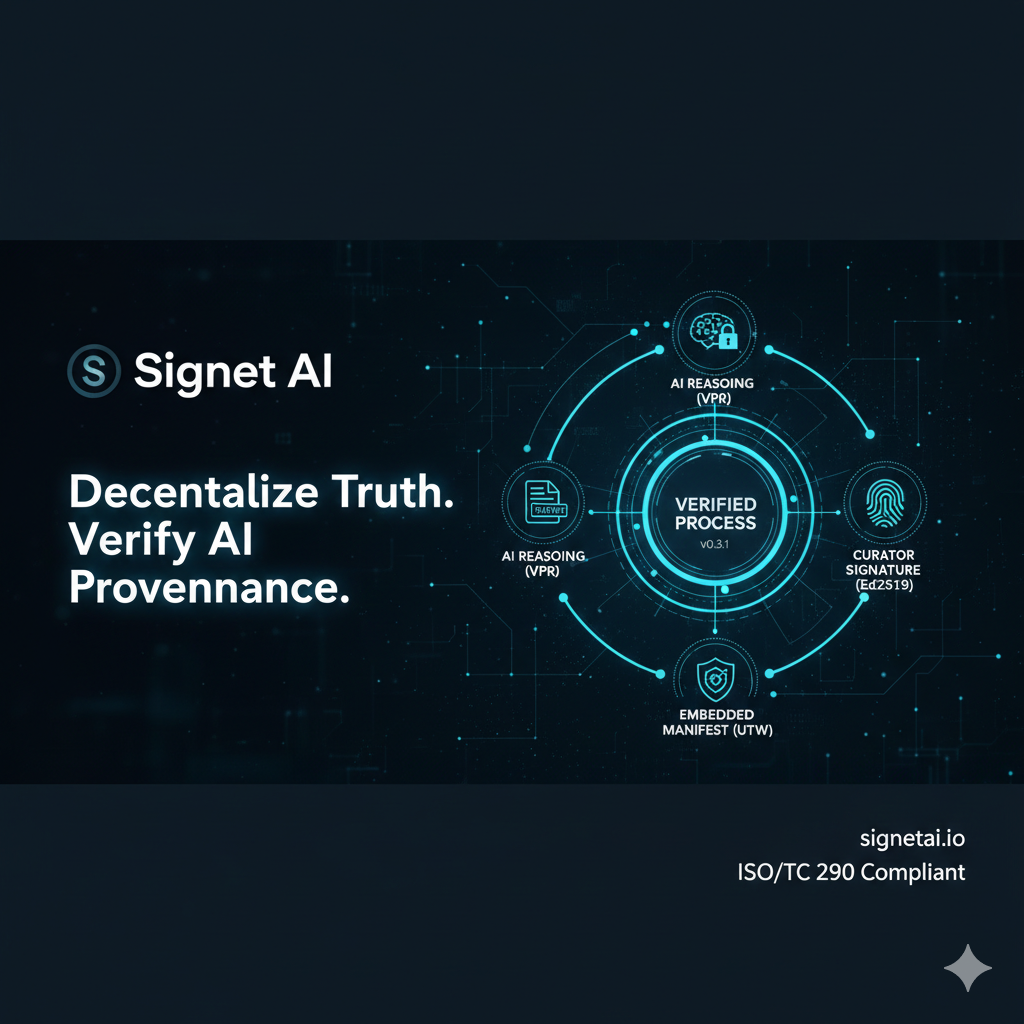
Signet AI: The Verifiable Proof of Reasoning (VPR) Protocol
https://www.signetai.io/#hackathon
Inspiration
In the era of generative AI, the line between reality and synthetic media has vanished. Deepfakes, AI-generated legal documents, and synthetic voice clones are eroding trust in digital intelligence. We realized that the world needs a decentralized, universally accessible "chain of custody" for digital assets. However, cryptographic signing is notoriously complex and intimidating for the average user.
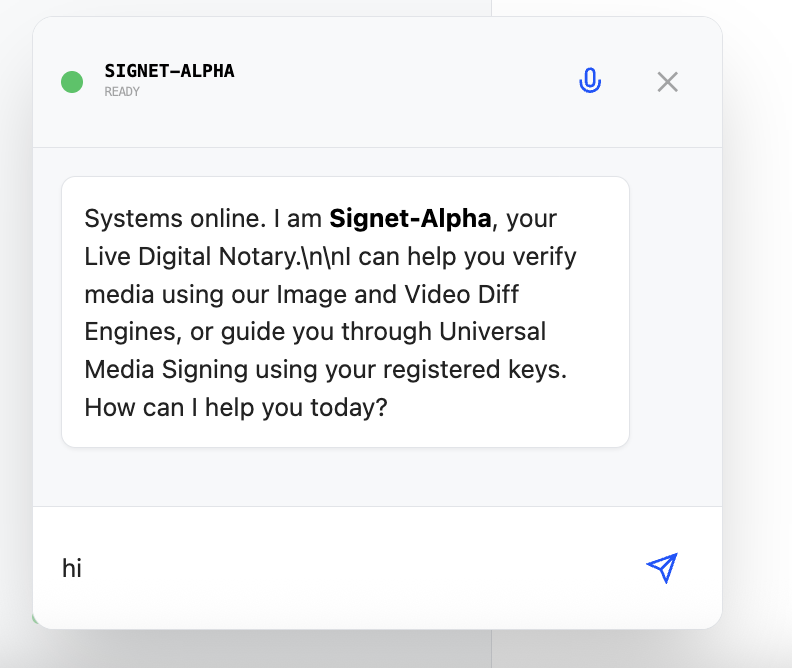
Drawing on my 20+ years of experience at Meta, Google, and Amazon building distributed systems and database infrastructure, I was inspired to build Signet AI. Our goal is to bridge the "Trust Gap" by combining the Gemini Live API with advanced cryptographic hashing to create a "Live Digital Notary"—an AI agent that guides users through verifying and signing digital intelligence as naturally as talking to a human expert.
What it does
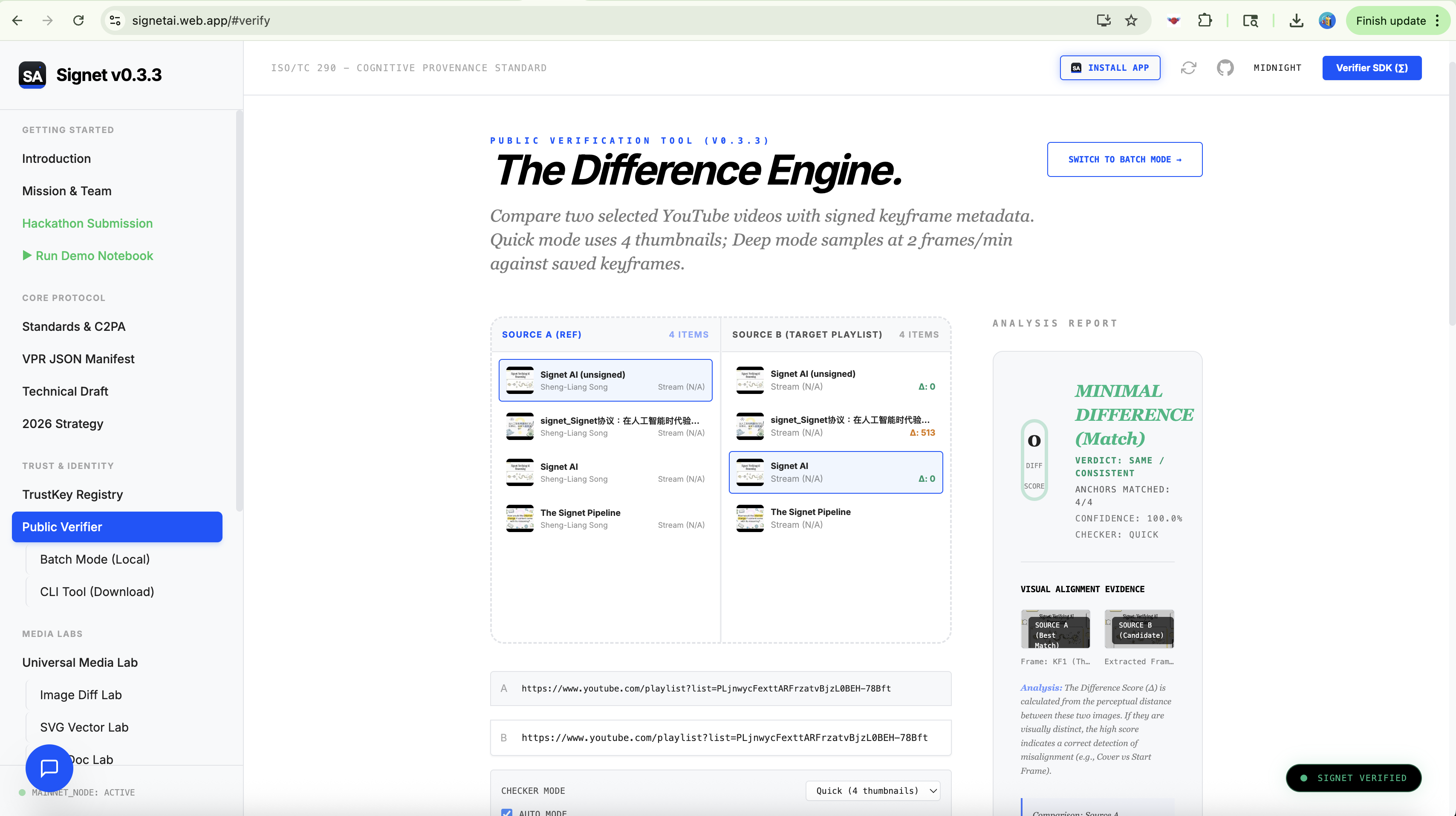
Signet AI is a multimodal, real-time AI agent that acts as a cryptographic notary for digital assets. Operating entirely within the browser, it leverages the Gemini Live API to provide a seamless, voice-first experience.
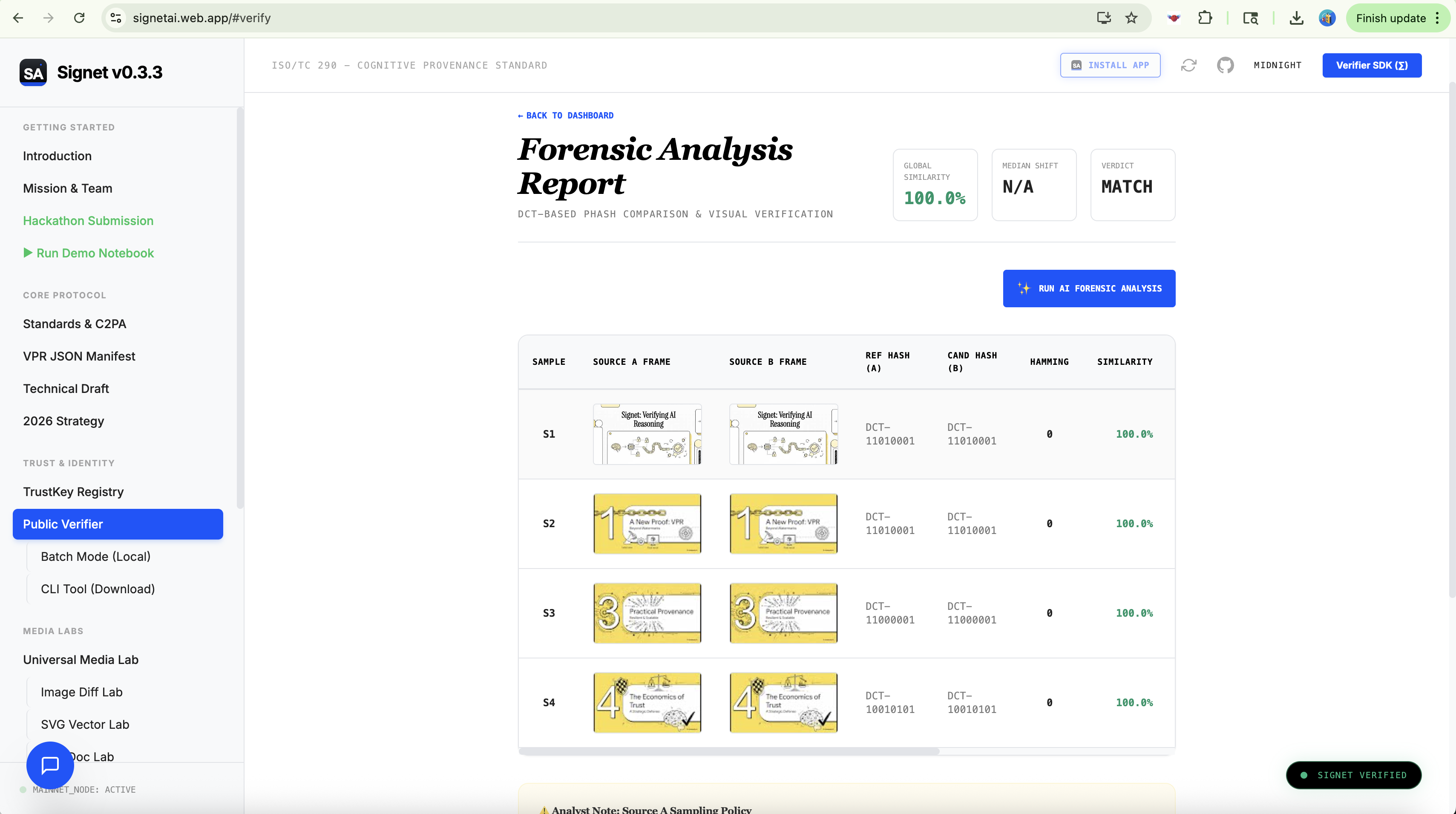
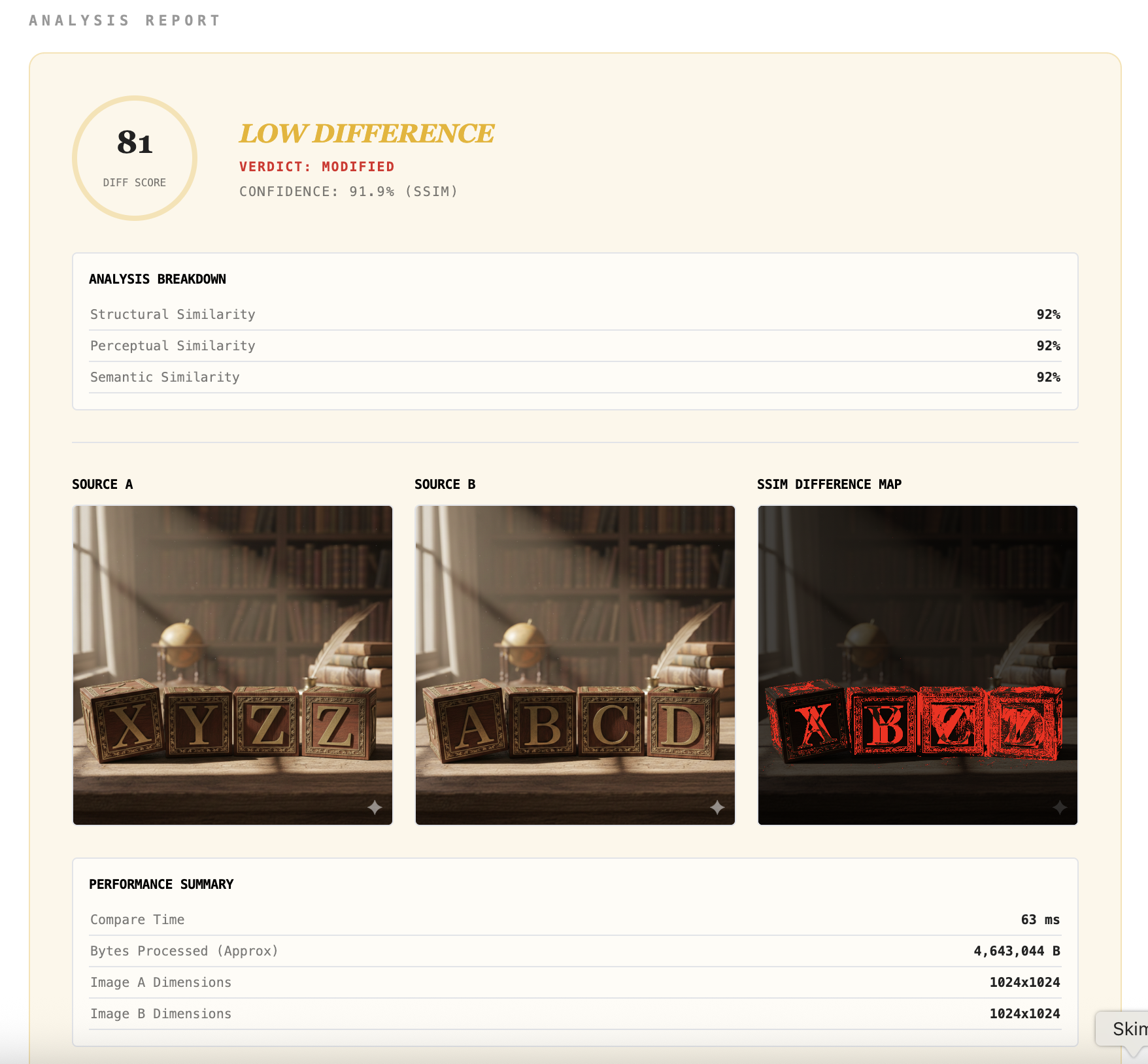
- Multimodal Verification: Users can share a digital file or show a physical document via their camera. The agent "sees" the content via continuous frame streaming and discusses its contents naturally.
- Real-Time Guidance: The agent talks the user through the signing process, explaining complex cryptographic concepts on the fly. Because it uses the Live API, users can interrupt at any time to ask questions.
- Cryptographic Chain of Custody: Once verified, the agent executes a function call to generate a dual-hash signature and logs the transaction to our Google Cloud/Firebase backend, creating an immutable record of authenticity.
How we built it
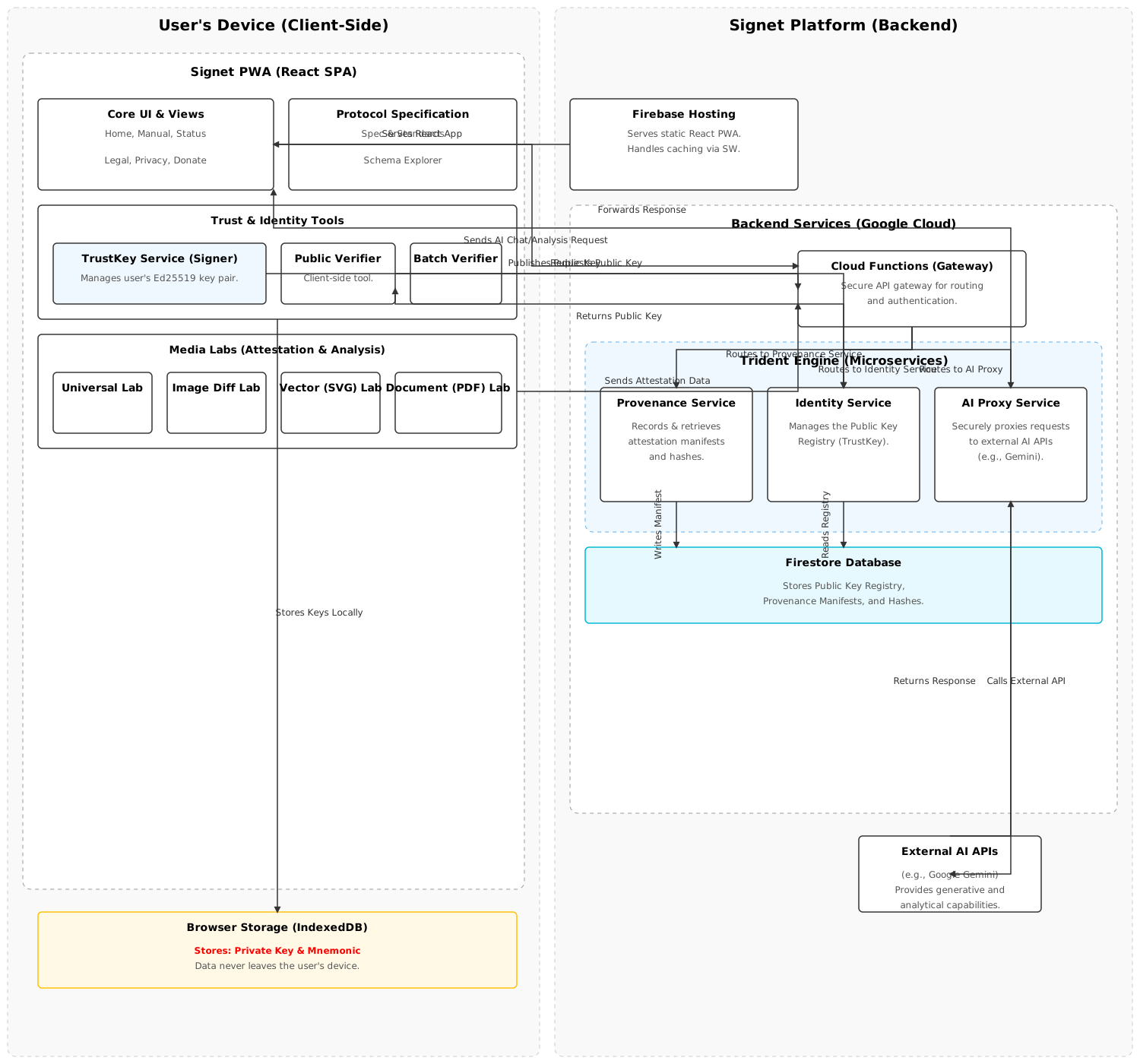
Signet AI is a serverless React SPA powered by Vite and deployed via automated GitHub Actions to Firebase Hosting.
The Technical Stack:
- The Live Agent: We utilized the
@google/genaiSDK to establish a WebSocket connection togemini-2.0-flash-exp. We implemented the Web Audio API to handle raw PCM audio (16kHz in / 24kHz out) for a true "Live" feel. - AI-Assisted Protocol Auditing (NotebookLM): We used Google NotebookLM to ingest and audit the 30-page Signet Protocol v0.3.2 specification. This ensured our "Verifiable Proof of Reasoning" (VPR) logic was cryptographically sound before implementation. Access our NotebookLM Source here.
- Backend & Storage: We leverage Google Cloud (Firebase Firestore) as a "Global Identity Ledger" to store cryptographic signatures and public keys.
- Cryptography: We implemented client-side hashing using the Web Crypto API to ensure user privacy. The protocol uses a dual-hash approach:
$$H_{final} = \text{SHA-256}( \text{SHA-256}(Data) \parallel \text{Metadata} )$$
Challenges we ran into
The primary challenge was managing the low-latency synchronization of visual frames and bidirectional audio over the Live API WebSocket. We had to implement custom throttling and raw PCM encoding/decoding logic to ensure the agent could "see" and "hear" with sub-second latency, even on mobile connections with limited RAM.
Accomplishments that we're proud of
- Zero-Latency Interactions: Successfully implementing the Gemini Live API to handle graceful interruptions and real-time multimodal feedback.
- Protocol Rigor: Using NotebookLM to find edge cases in our technical spec, allowing us to align with ISO/TC 290 standards for digital reputation systems.
- Automated Sovereignty: Achieving a "local-first" architecture where keys never leave the device, but the deployment is fully automated via CI/CD to Google Cloud.
What we learned
Building with the Gemini Live API completely changed our mental model of AI interactions. Moving from "stateless chat" to "stateful streaming" requires a different architectural approach. We also learned how powerful NotebookLM is as a technical co-pilot for distilling complex cryptographic standards into executable code.
What's next for Signet AI
Our vision is to make Signet AI the standard for AI accountability:
- UI Navigator Integration: Allowing the agent to observe a user's screen and verify web content in real-time.
- C2PA Interoperability: Aligning our "Reasoning Graph" proofs with existing industry standards for media provenance.
- Hardware Security: Integrating with Hardware Security Modules (HSMs) for enterprise-grade "Authority Seals."

Log in or sign up for Devpost to join the conversation.