Inspira# SignBridge Science — Making Science Accessible for Everyone
Inspiration 💡
Education should not have barriers. While exploring challenges in learning, we noticed that many deaf and hard-of-hearing students face difficulties understanding science concepts because traditional learning resources are often focused on text and audio explanations.
Science is a subject that requires visualization, experiments, and conceptual understanding. This inspired us to build SignBridge Science — a platform that makes science learning more inclusive by combining visual learning, sign-language support, interactive activities, and AI-based personalized guidance.
Our goal is to create a learning environment where every student can explore science concepts independently and confidently.
What We Built 🚀
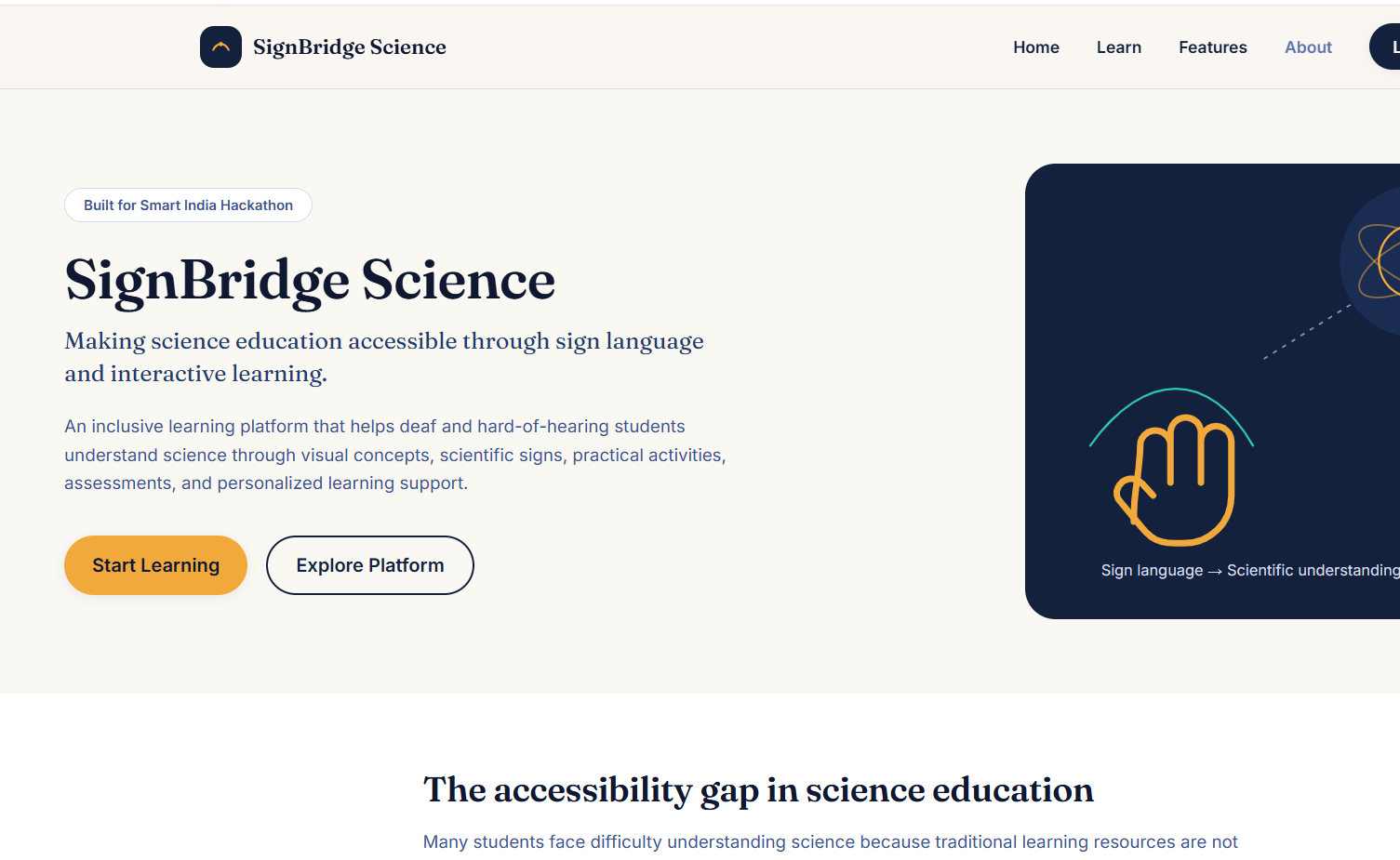
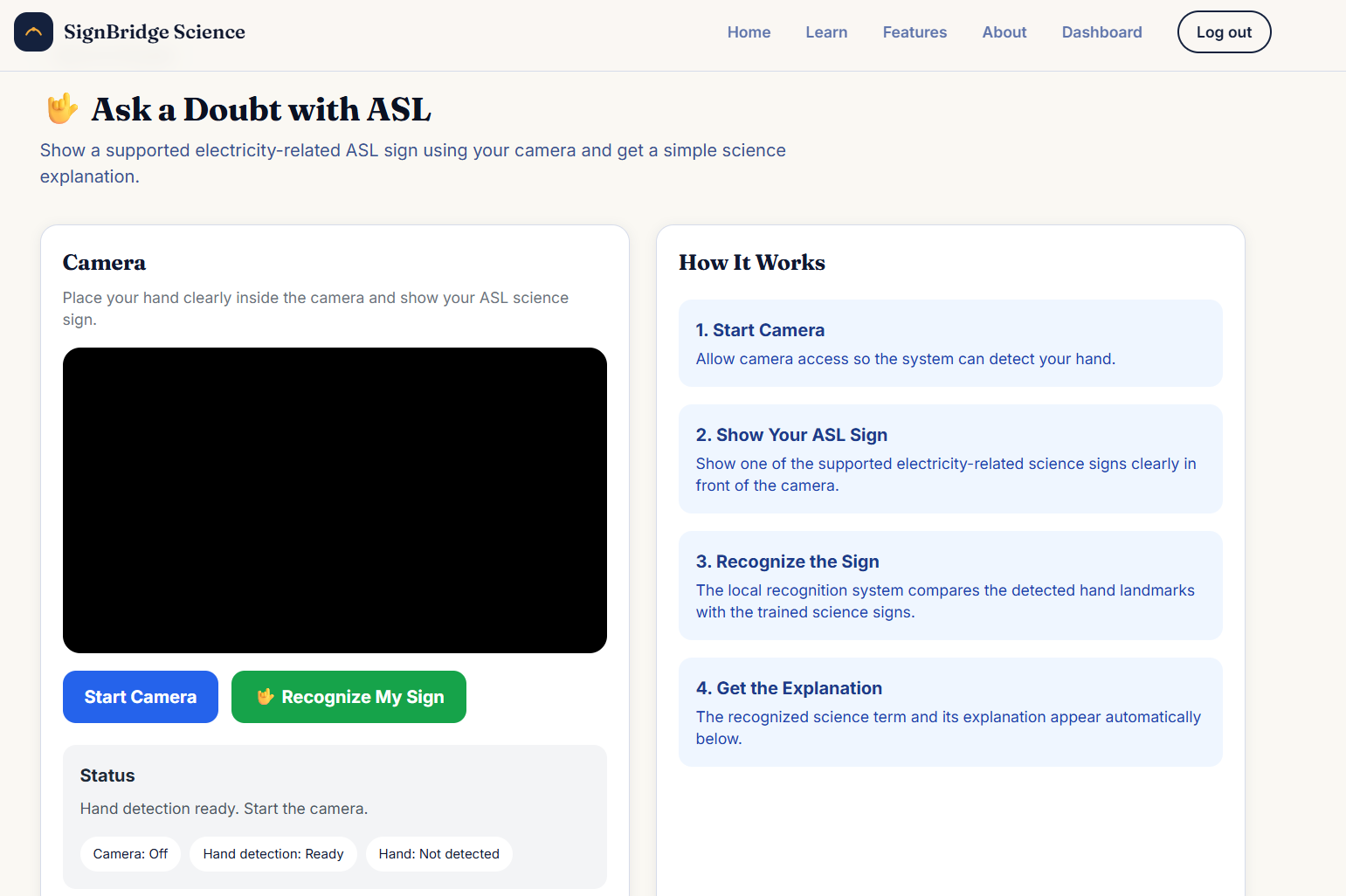
SignBridge Science is an AI-powered accessible science education platform designed for deaf and hard-of-hearing learners.
The platform provides:
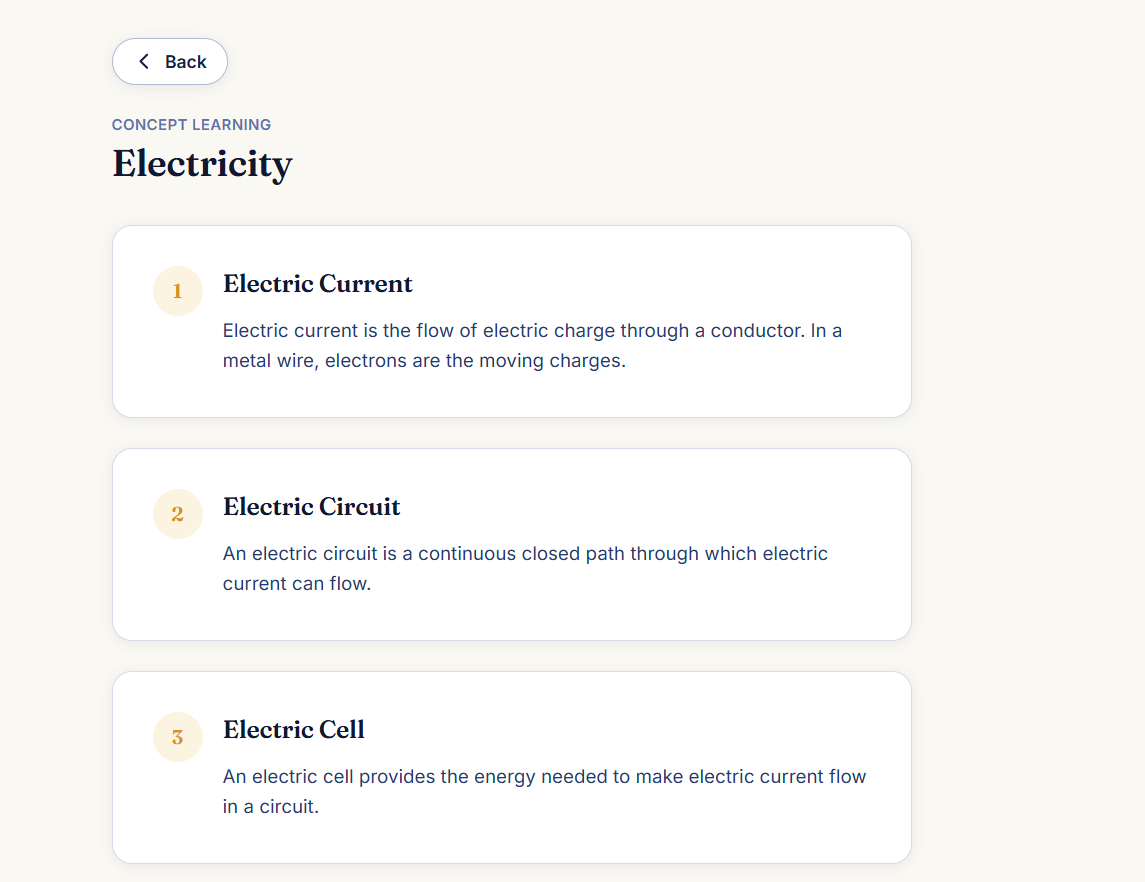
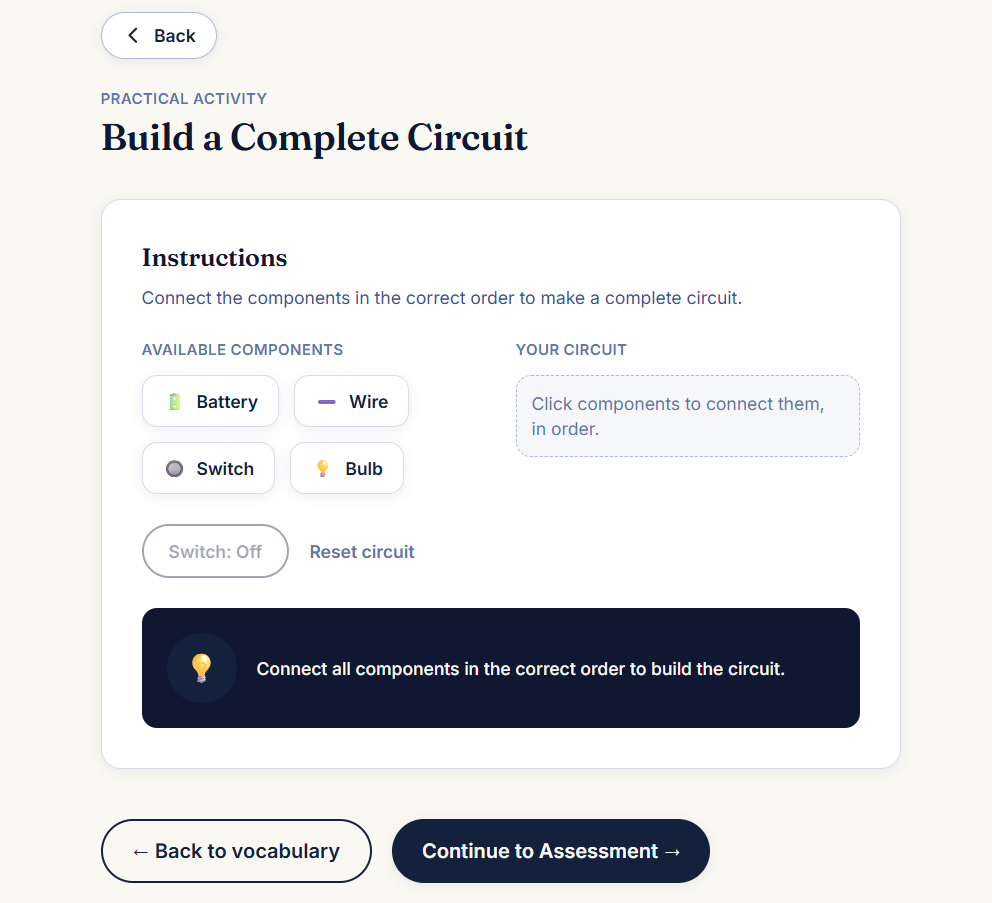
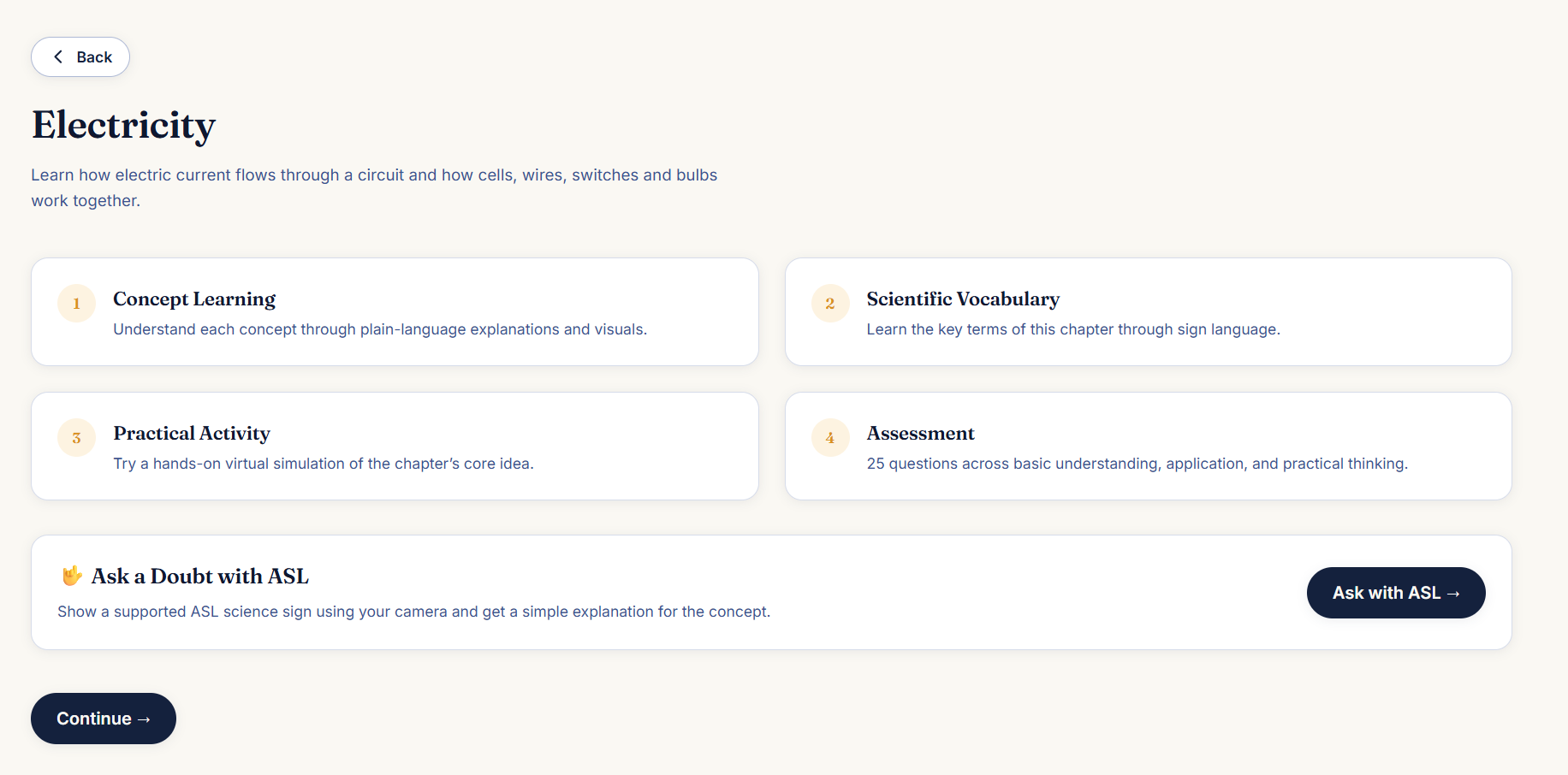
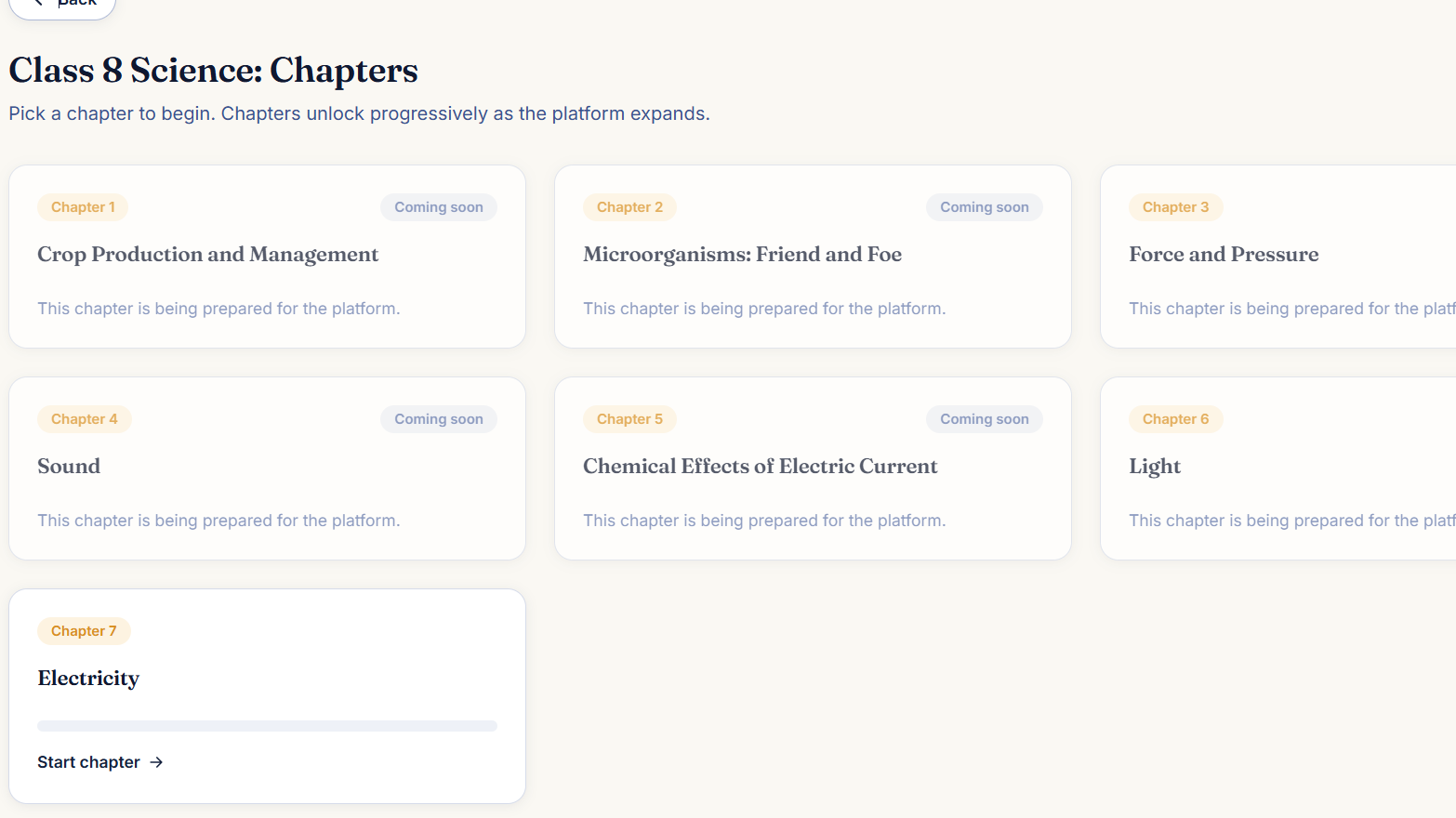
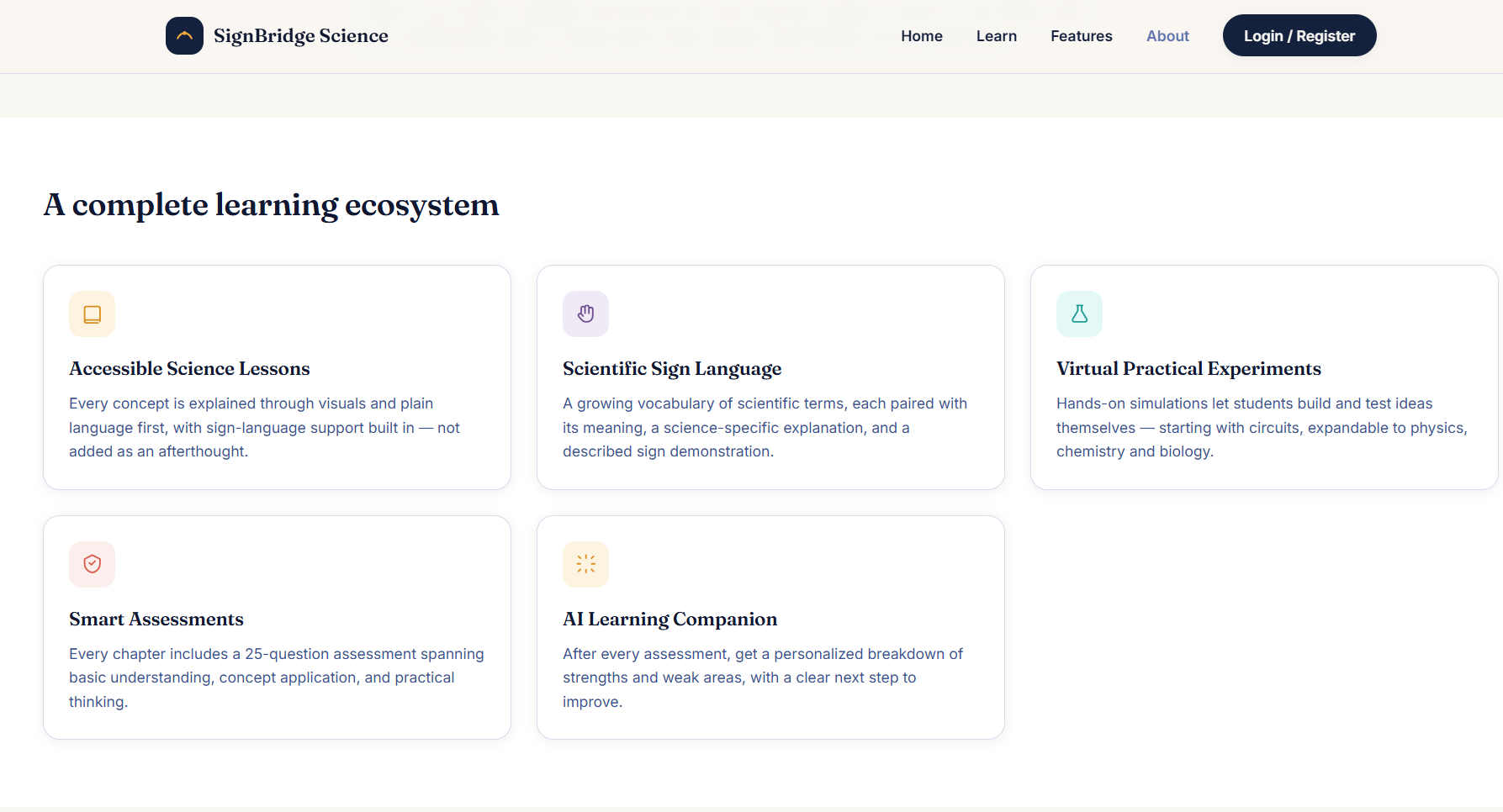
- 📚 Interactive science lessons with simplified explanations
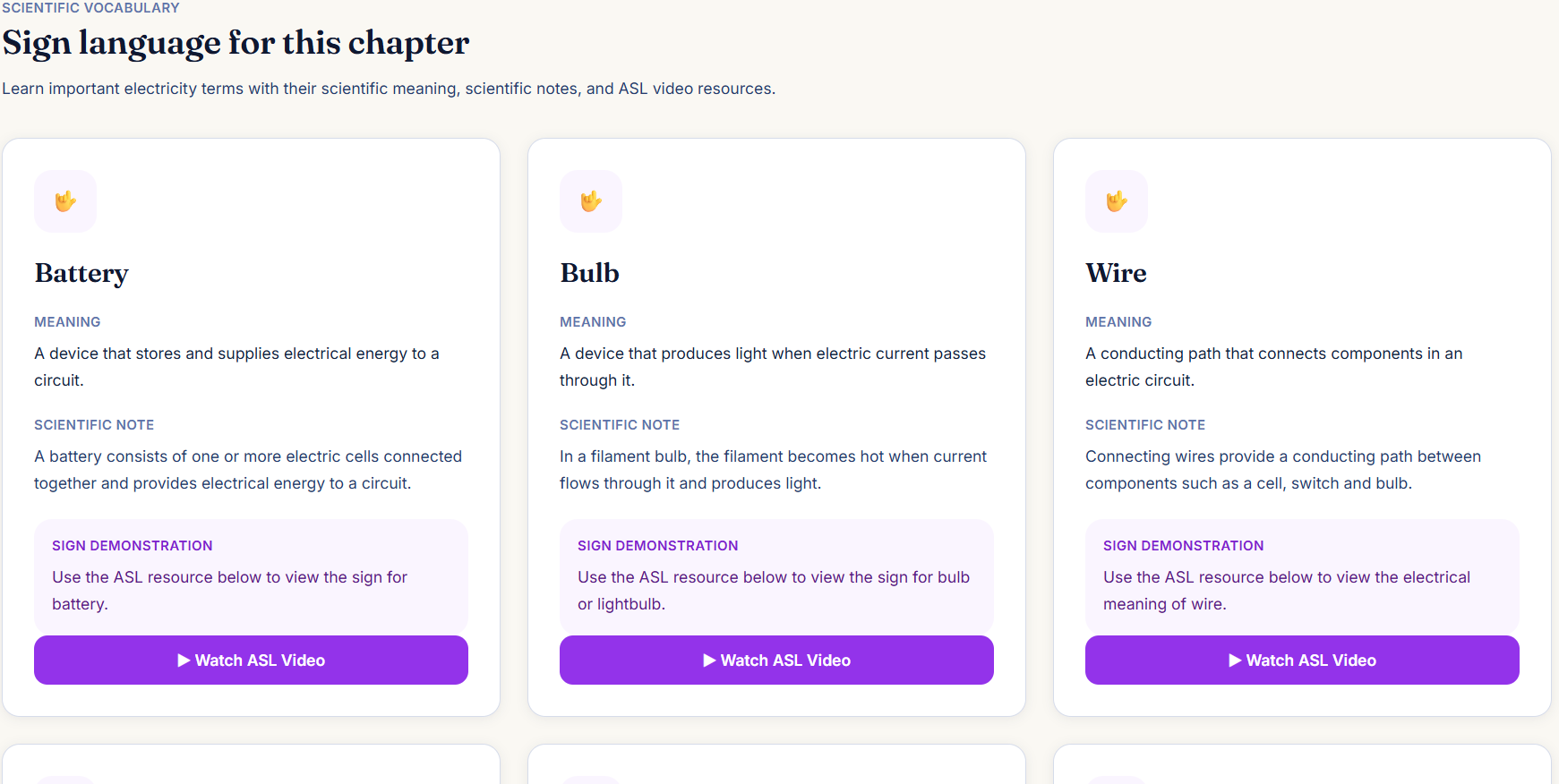
- 🤟 Sign-language-supported vocabulary resources
- 🔬 Virtual practical learning experiences
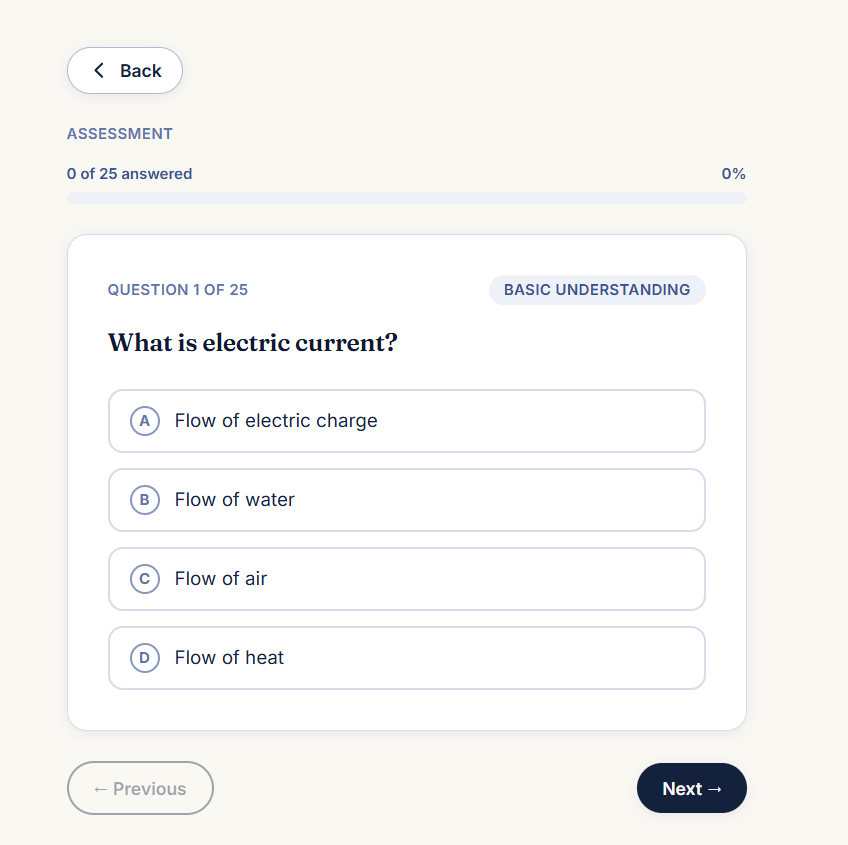
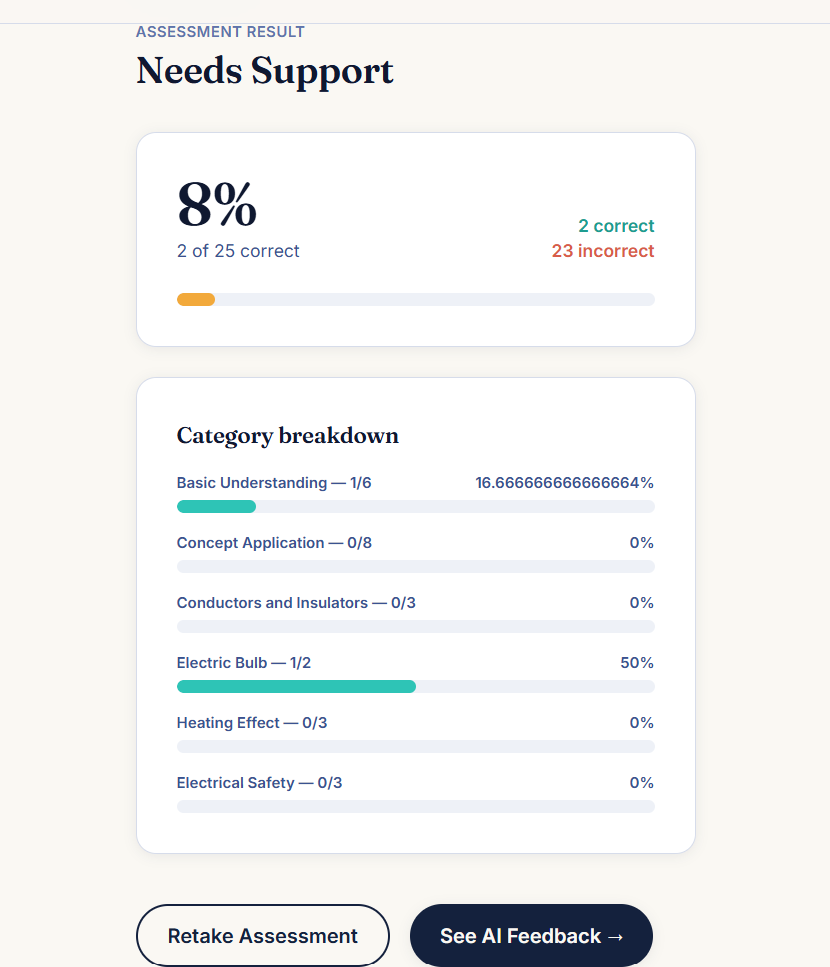
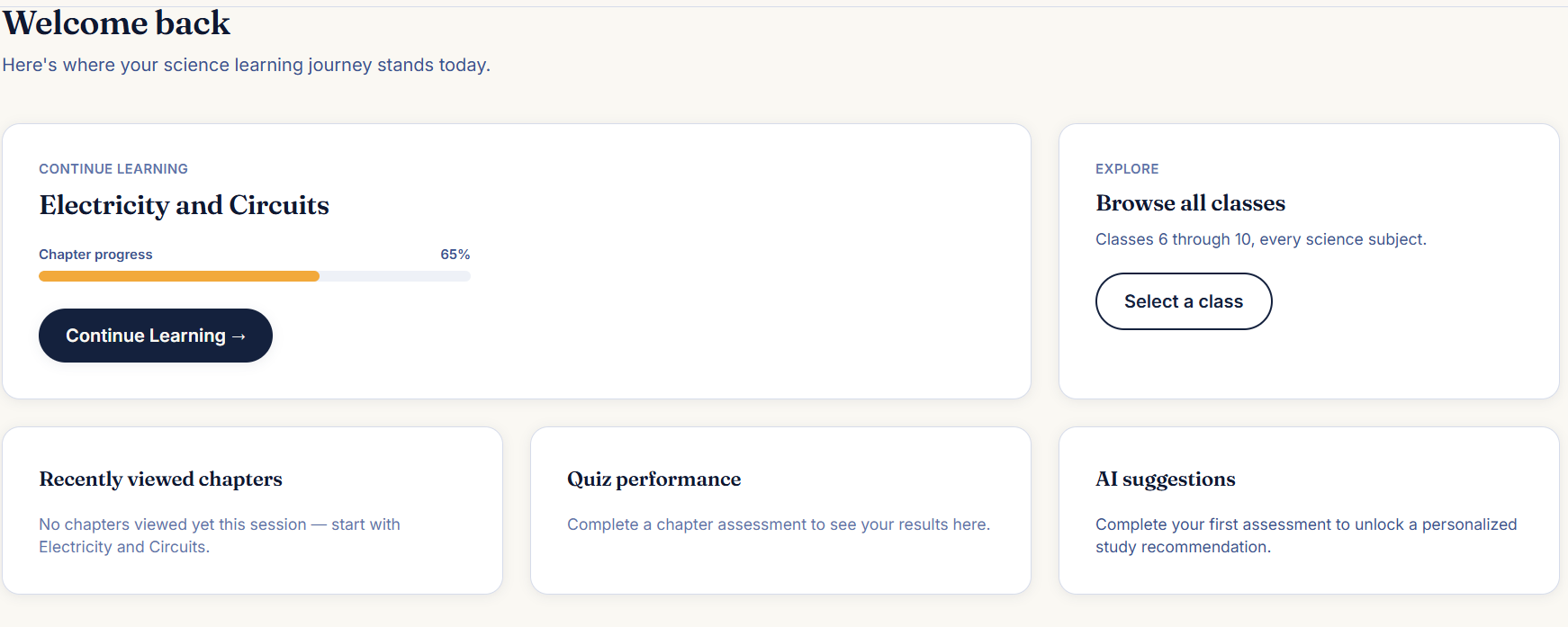
- 📝 Assessments to understand student progress
- 🤖 AI-based personalized feedback and recommendations
Instead of only reading information, students can learn through a combination of concepts, visuals, activities, and adaptive feedback.
How We Built It 🛠️
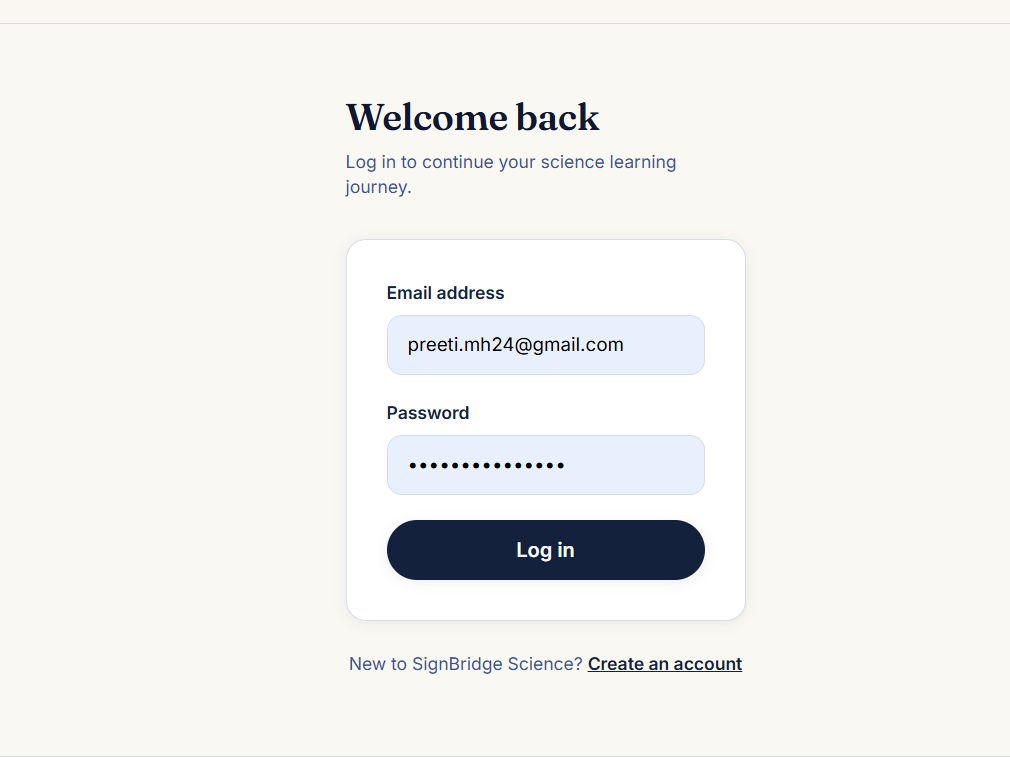
We developed SignBridge Science as a full-stack web application.
Frontend:
- React.js
- Tailwind CSS
- React Router
Backend:
- FastAPI
- Python
- REST APIs
Database:
- SQLite
- SQLAlchemy
AI Learning System:
- Performance analysis based on quiz results
- Personalized recommendations based on strengths and improvement areas
The platform architecture allows lessons, quizzes, signs, and learning progress to be managed dynamically.
Challenges We Faced ⚡
Building an accessibility-focused education platform came with several challenges:
1. Designing for Inclusive Learning
We had to think beyond traditional educational websites and focus on how concepts could be understood visually and interactively.
2. Creating Meaningful Learning Experiences
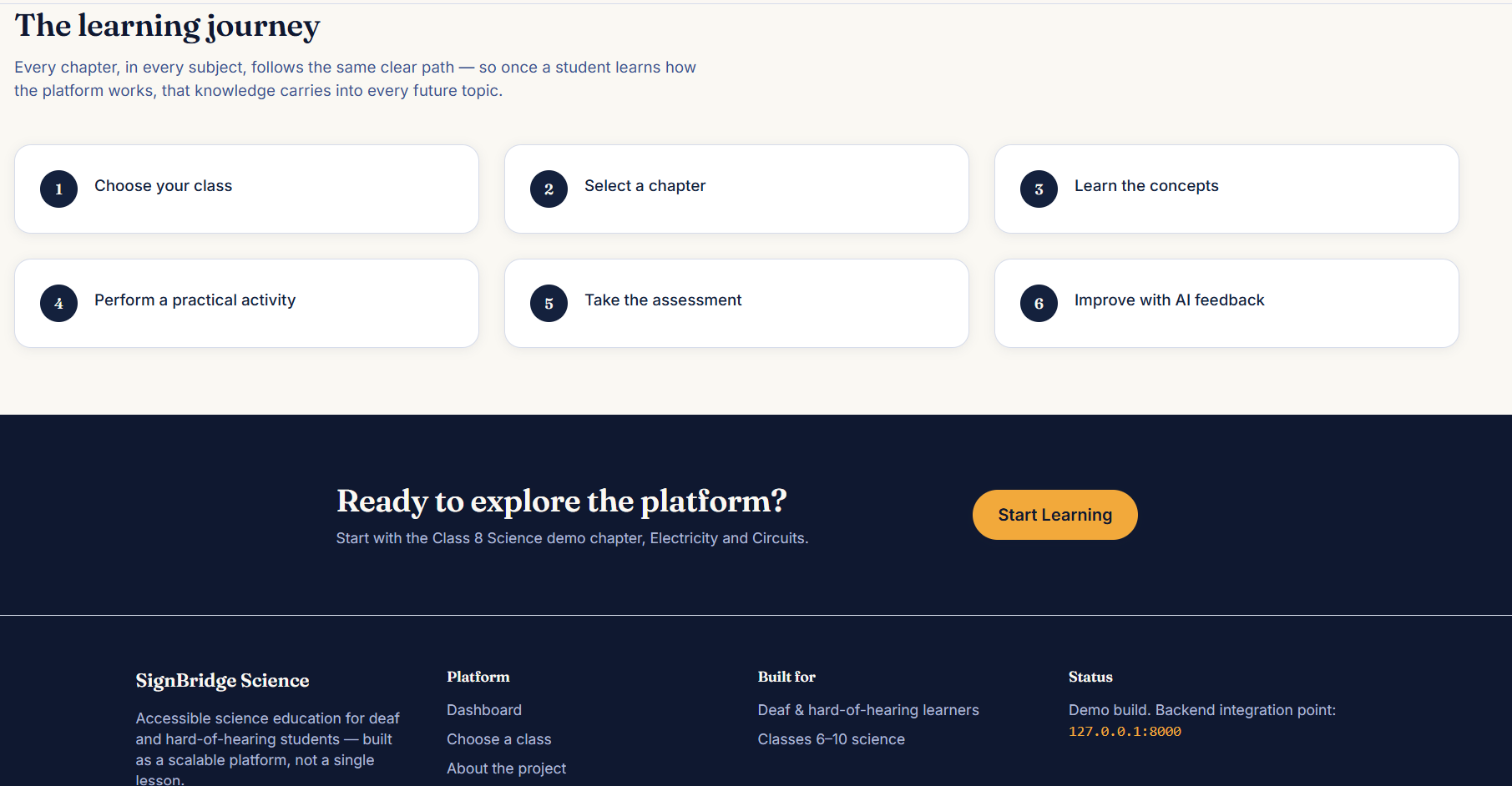
A major challenge was avoiding a simple content library. We wanted to build a complete learning journey combining concepts, practical activities, assessments, and feedback.
3. Developing AI-Based Personalization
Creating a system that analyzes student performance and provides useful recommendations required designing logic that connects assessment results with learning support.
4. Building Within Limited Resources
As students, we worked with open-source technologies and free resources while learning and developing the platform simultaneously.
What We Learned 📚
Through this project, we learned:
- How technology can be used to solve real-world accessibility problems
- Full-stack web development using modern frameworks
- Designing user experiences for different learning needs
- Building APIs and connecting frontend with backend systems
- The importance of empathy-driven innovation
Impact 🌍
SignBridge Science supports UN Sustainable Development Goal 4: Quality Education by working towards more inclusive and equitable learning opportunities.
We believe that education should adapt to learners, not the other way around. Through technology, we aim to make science learning more accessible, engaging, and empowering for every student.tion
What it does
How we built it
Challenges we ran into
Accomplishments that we're proud of
What we learned
What's next for signbridge_science
Built With
- accessibility
- ai
- api
- artificial
- backend
- css
- edtech
- education
- fastapi
- frontend
- intelligence
- javascript
- language
- learning
- machine
- python
- react.js
- rest
- sign
- sqlalchemy
- sqlite
- tailwind
- technology

Log in or sign up for Devpost to join the conversation.