-
-
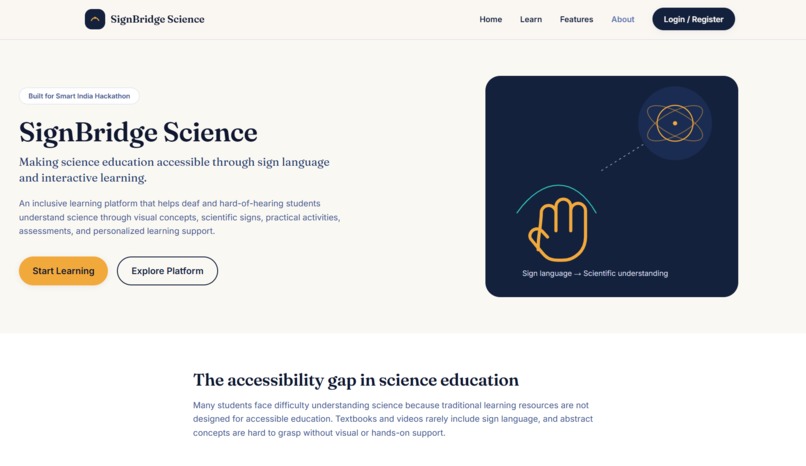
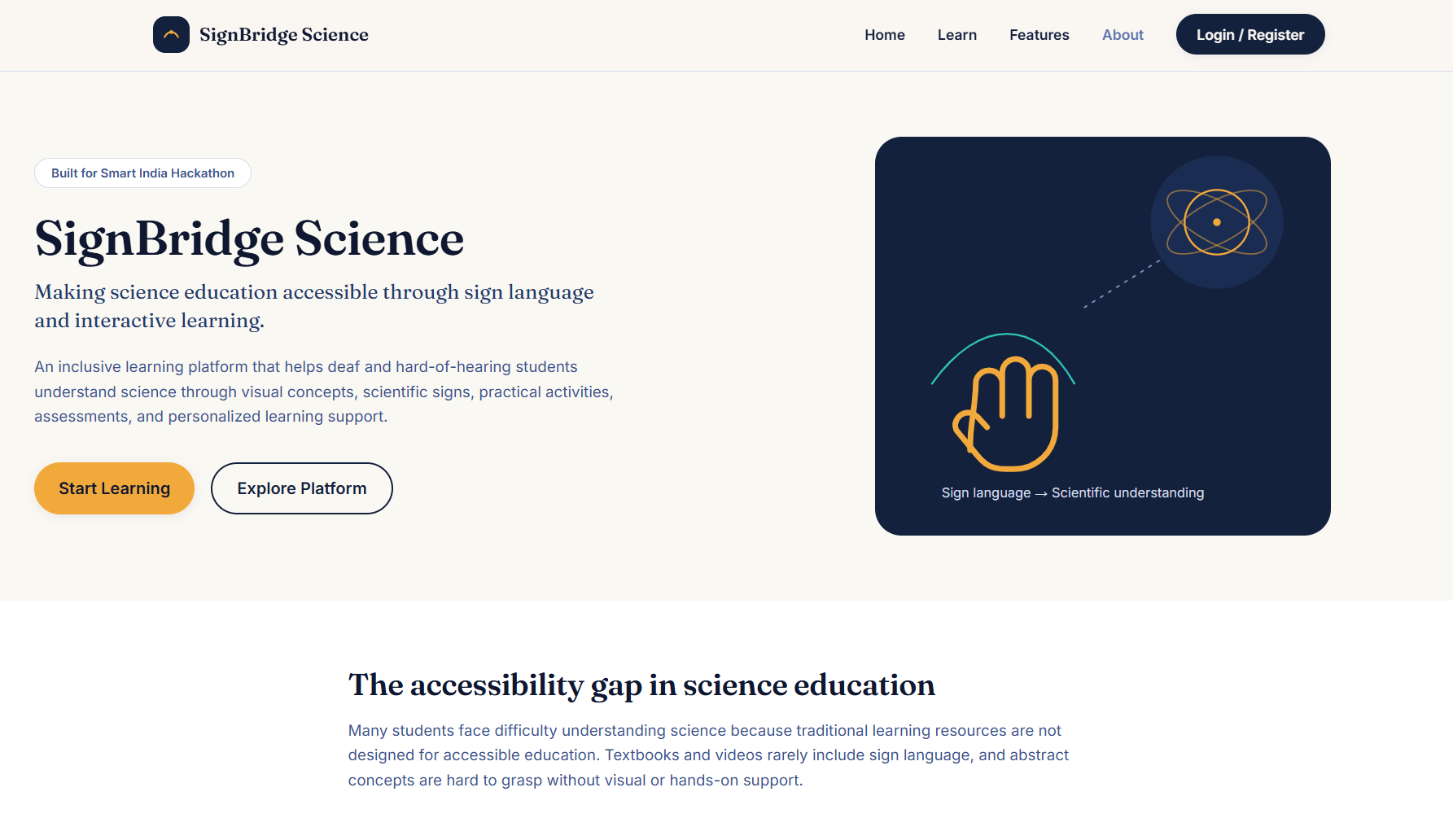
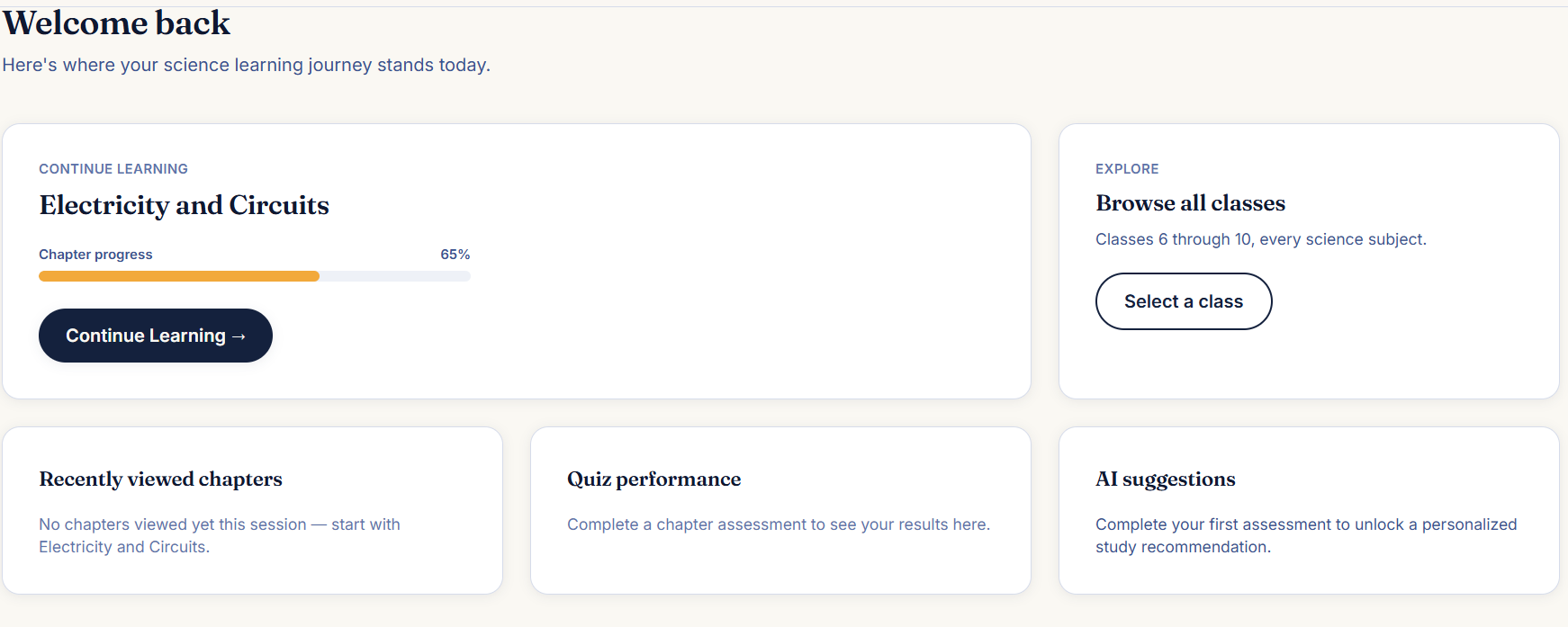
frontpage
-
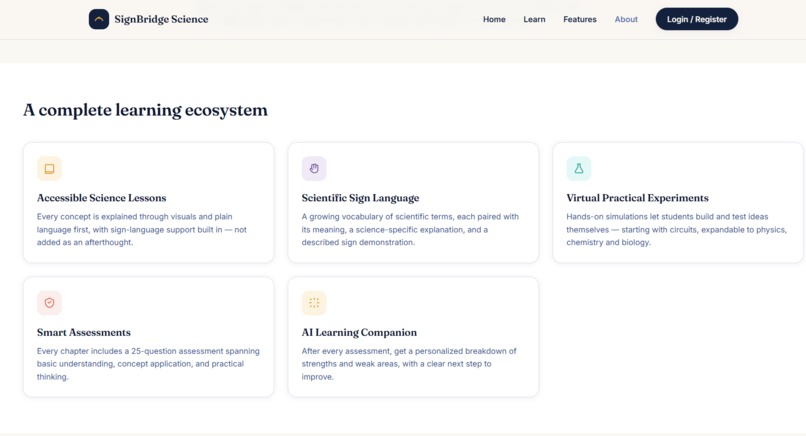
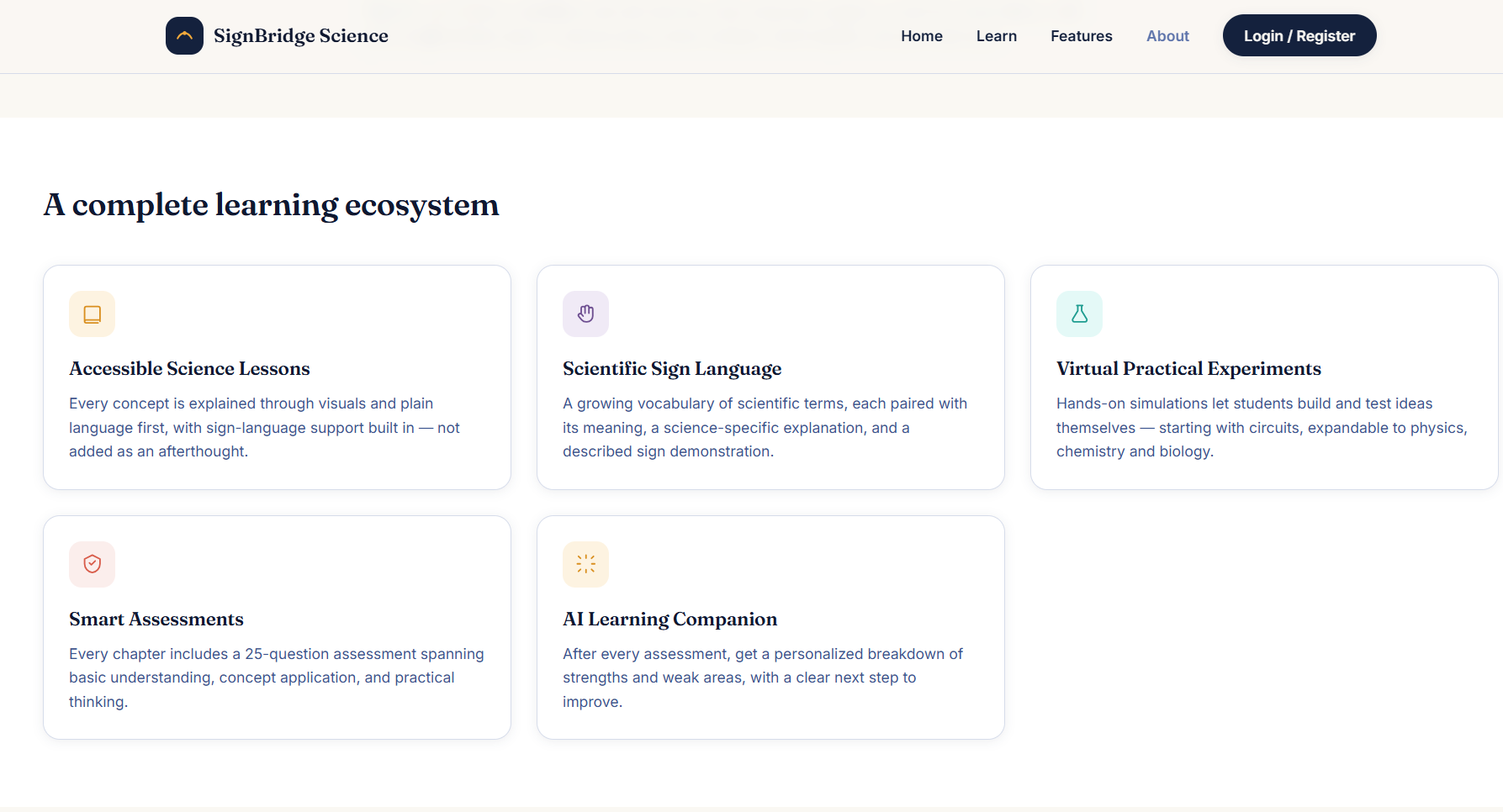
frontpage
-
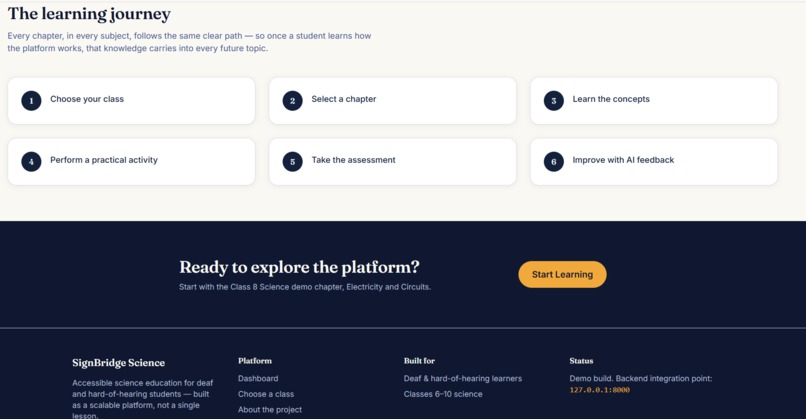
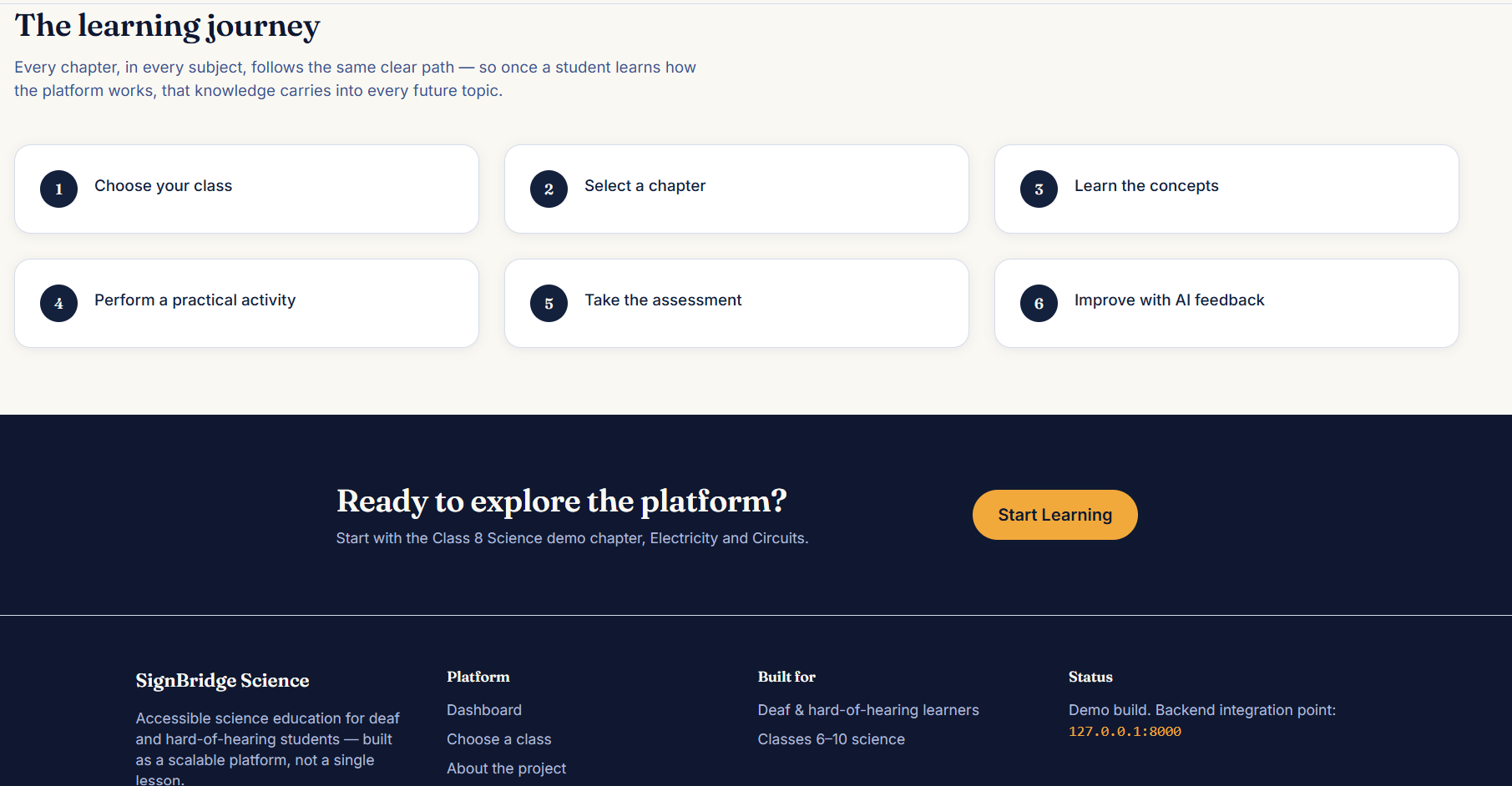
footer
-
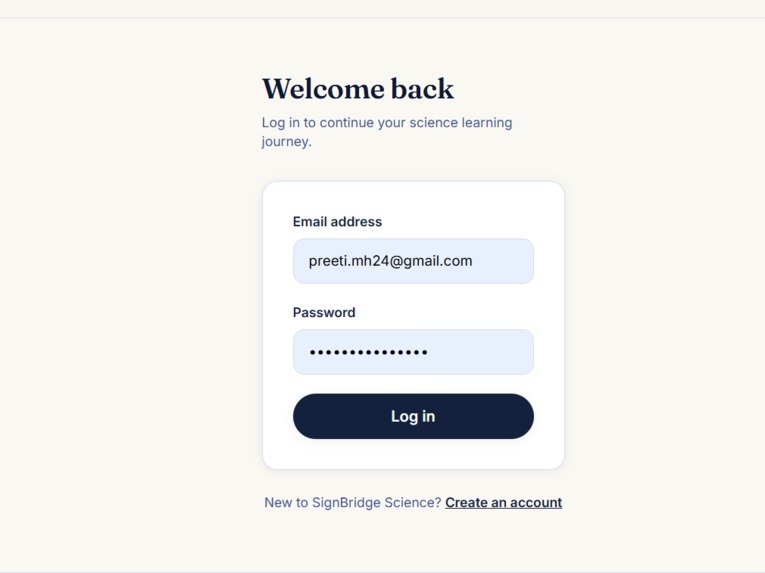
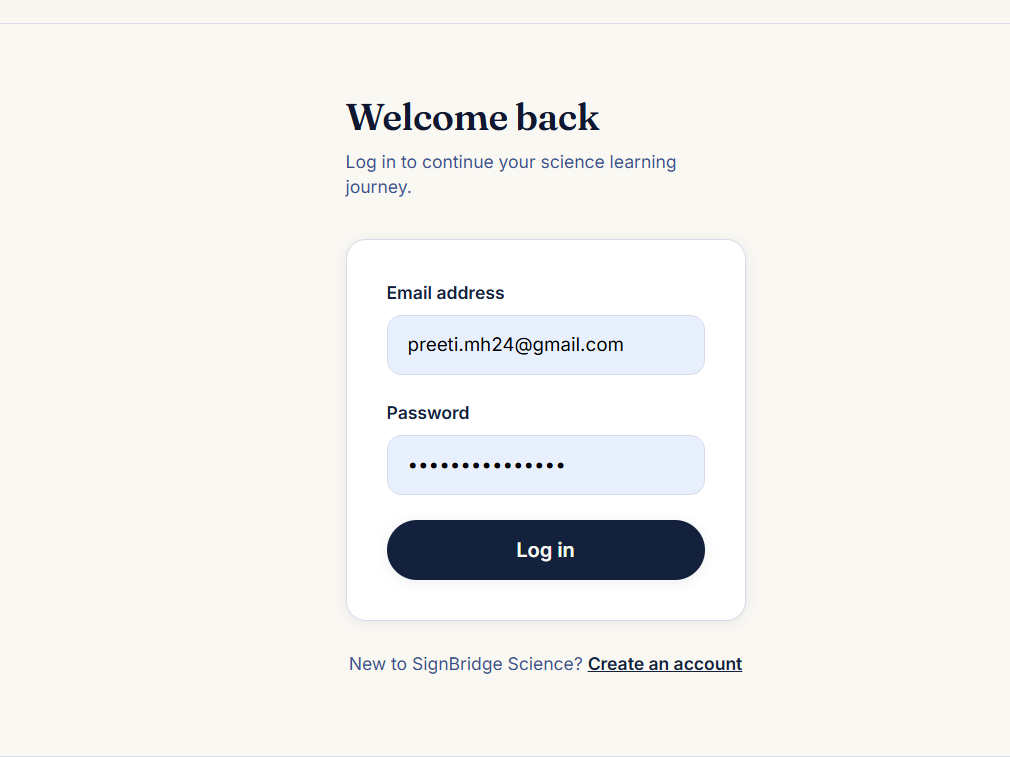
loginpage
-
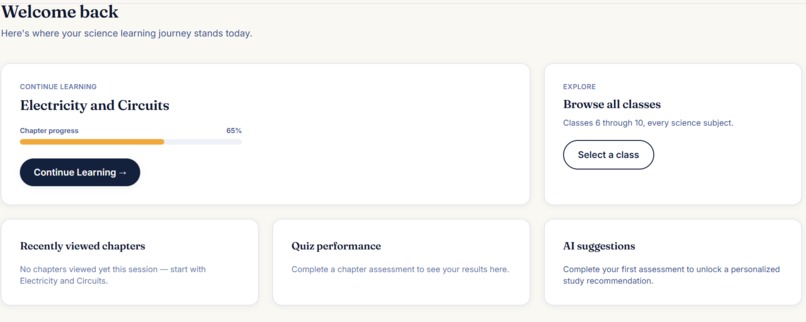
-
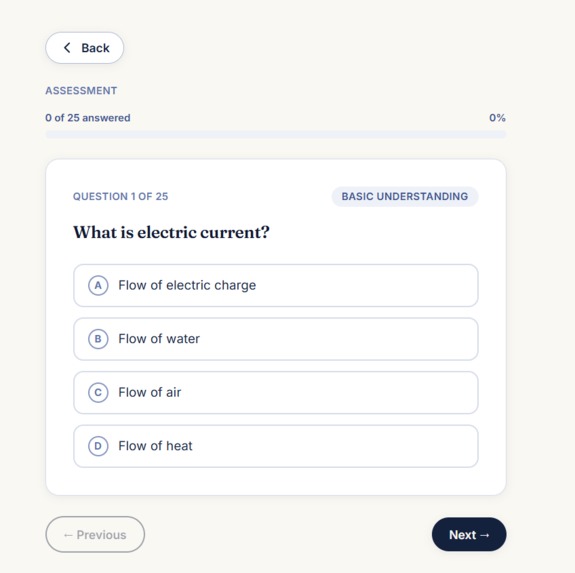
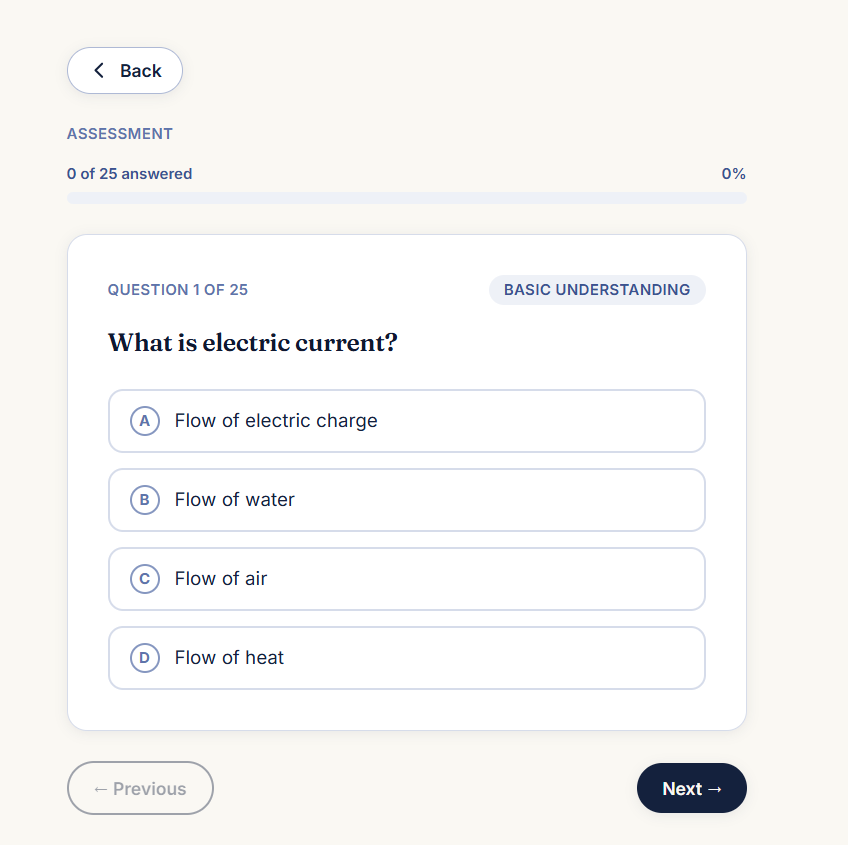
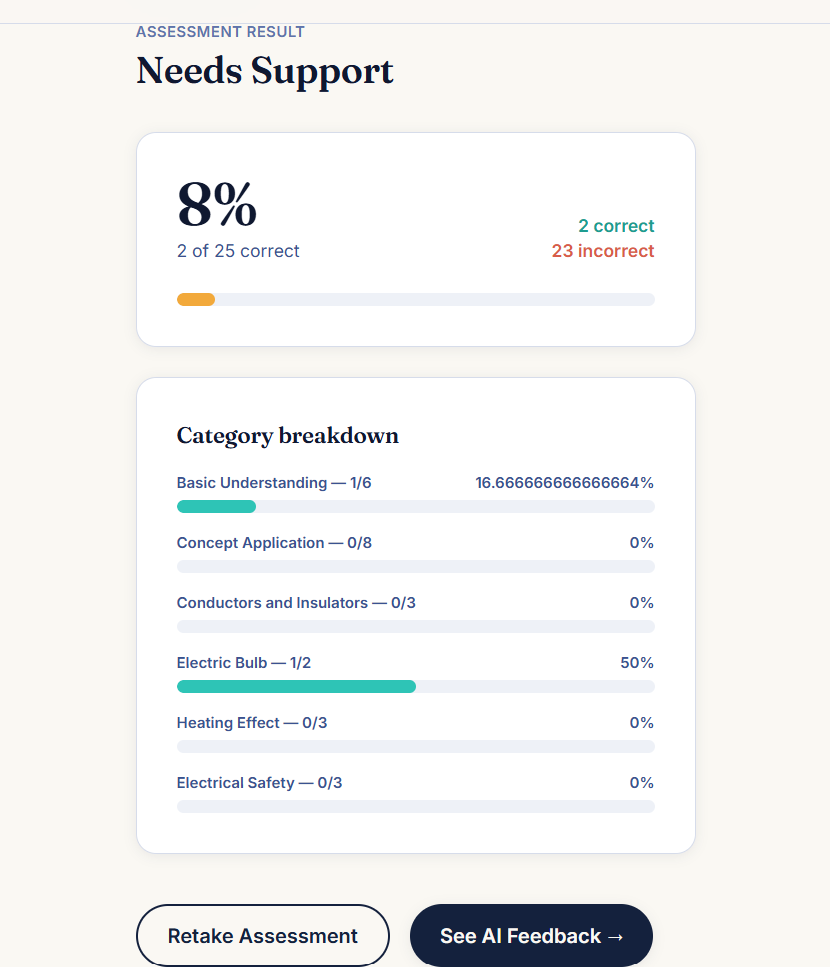
quiz
-
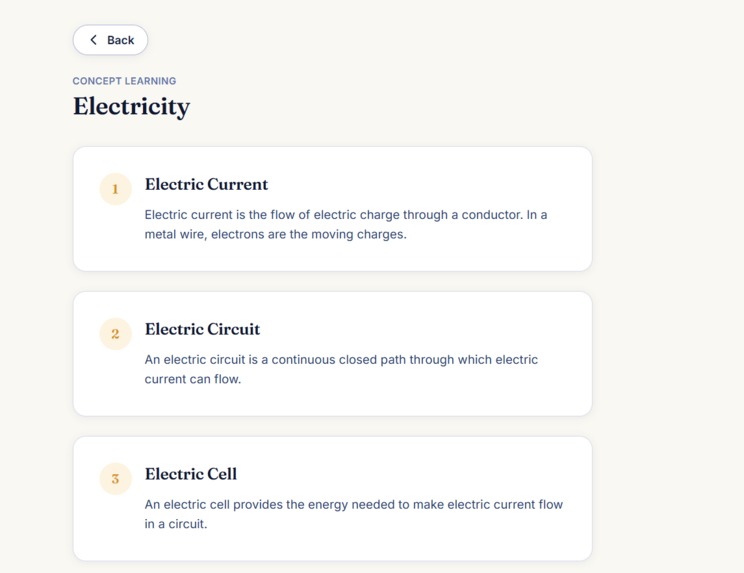
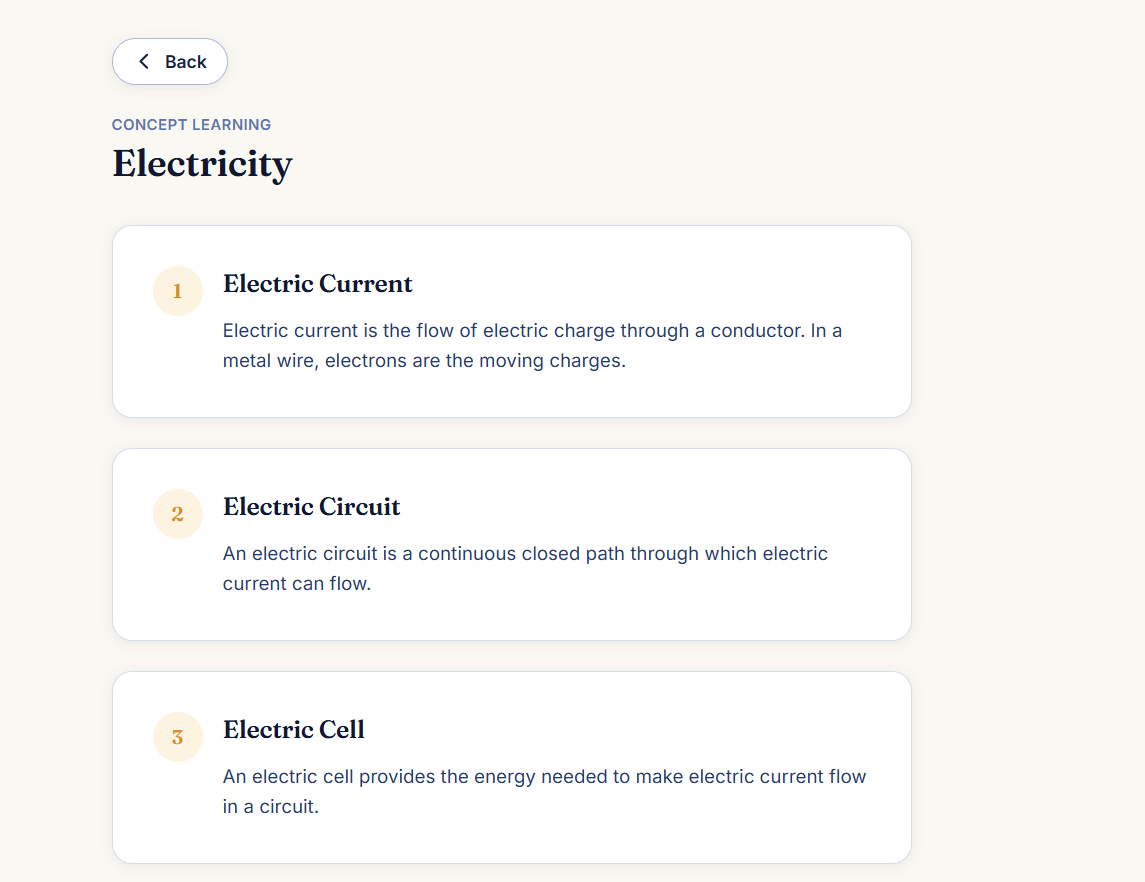
concept leaning
-
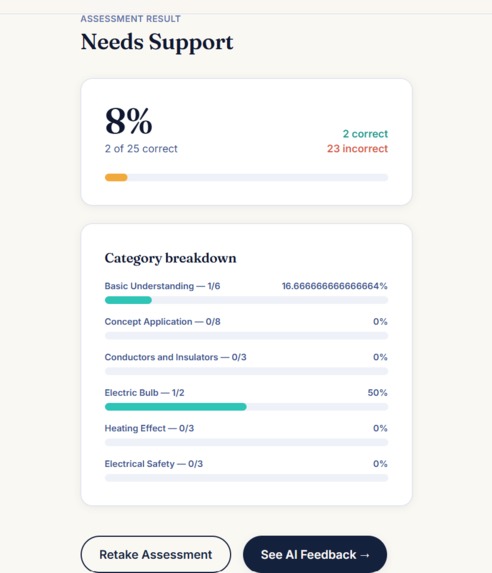
ai recomendation after quiz
-
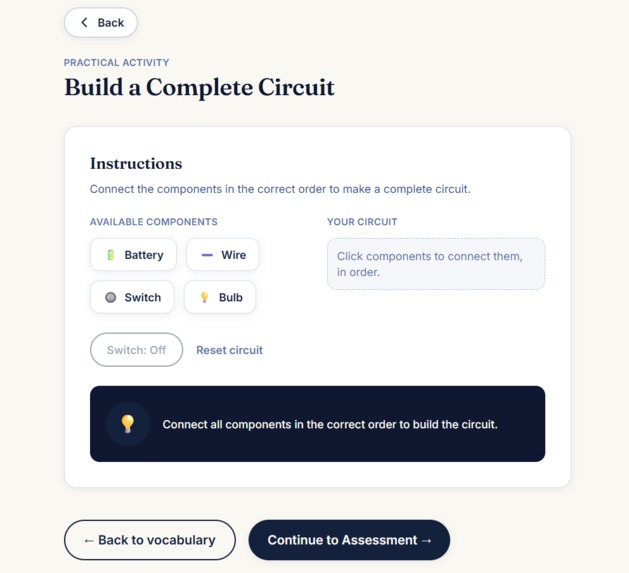
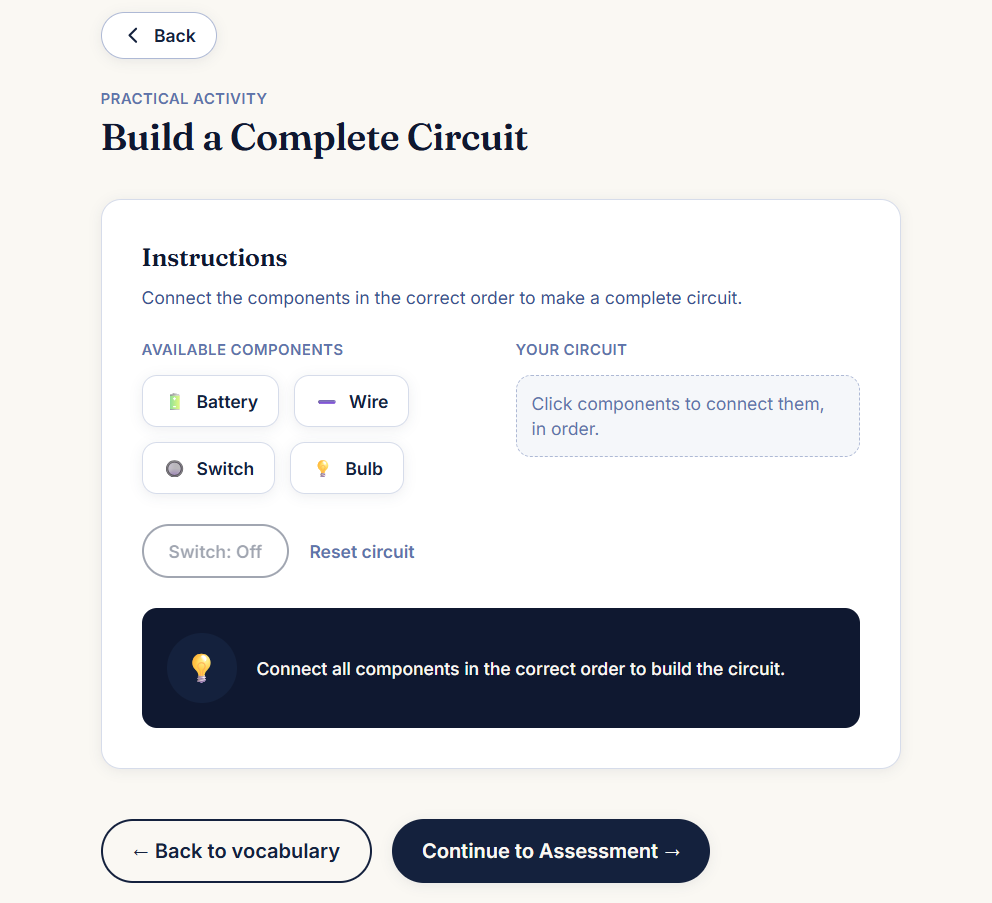
practical leaning
-
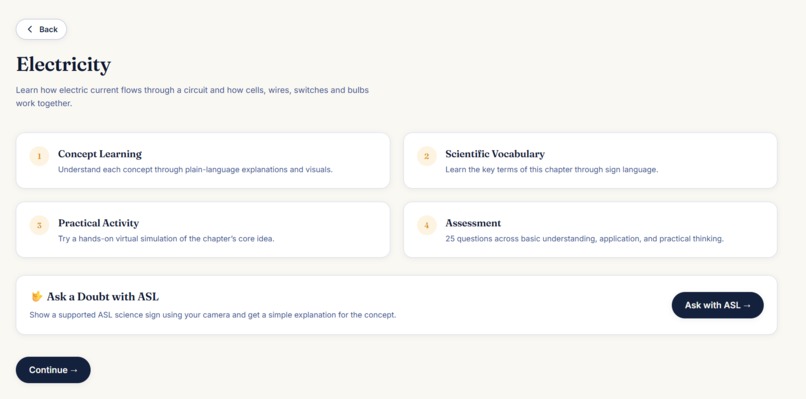
-
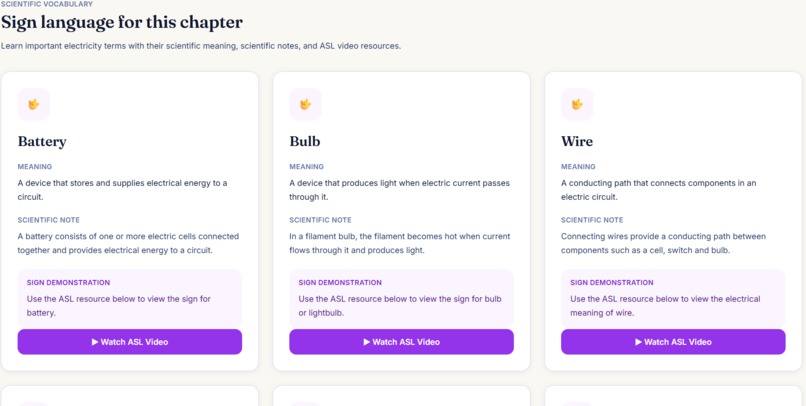
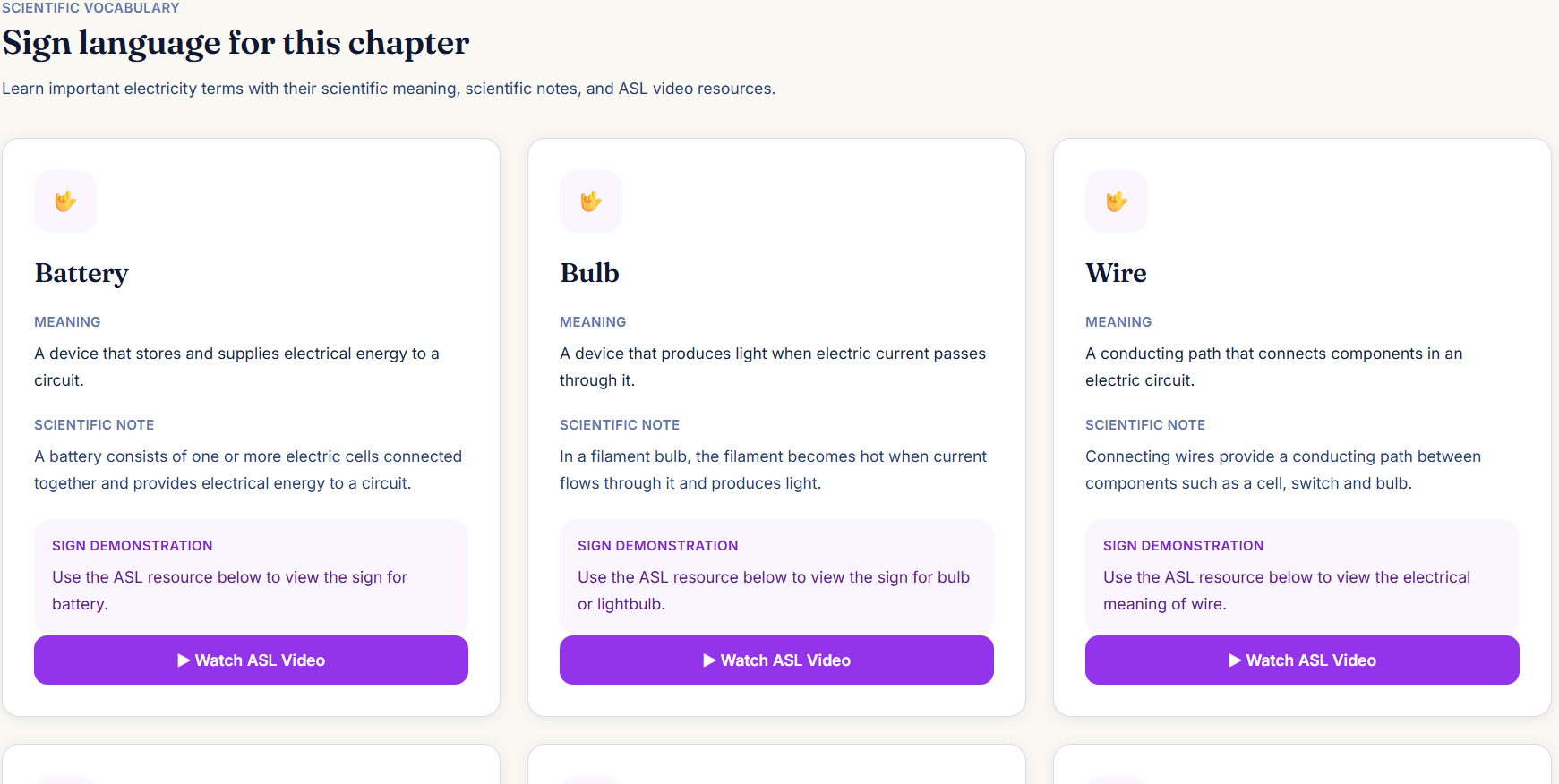
sign learning
-
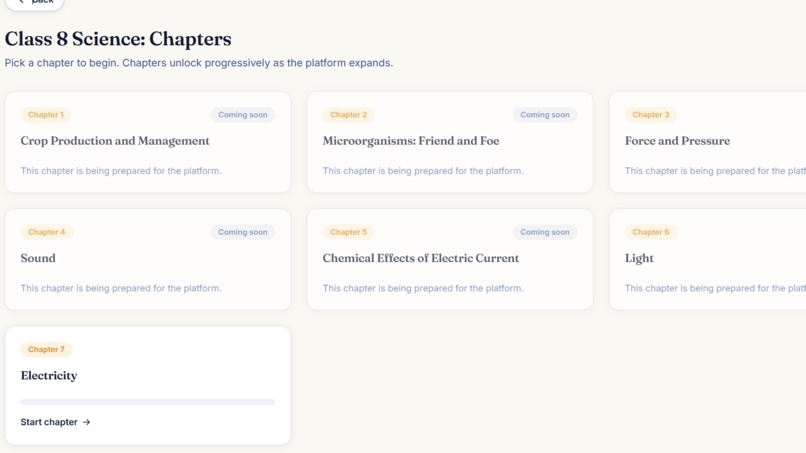
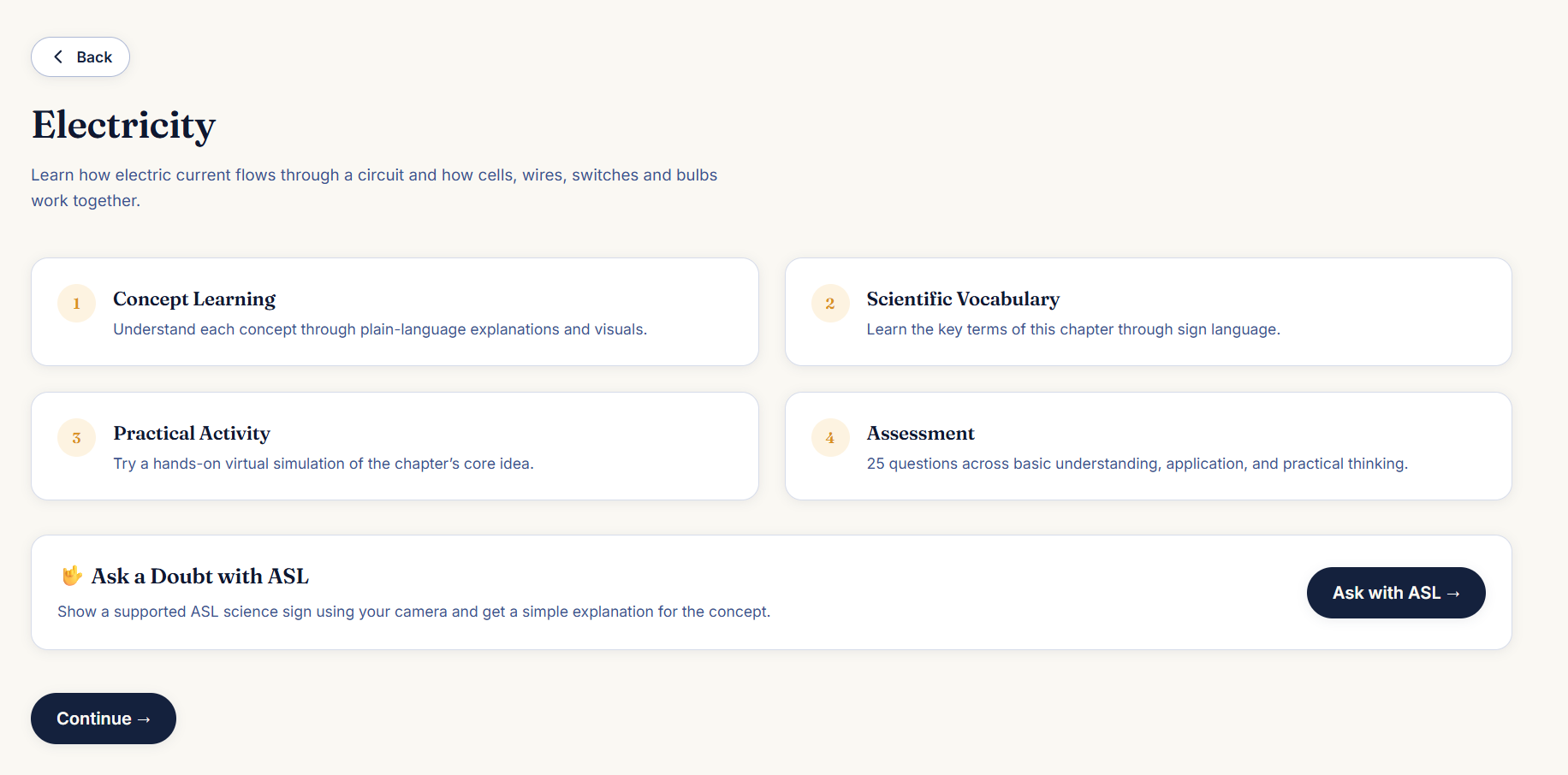
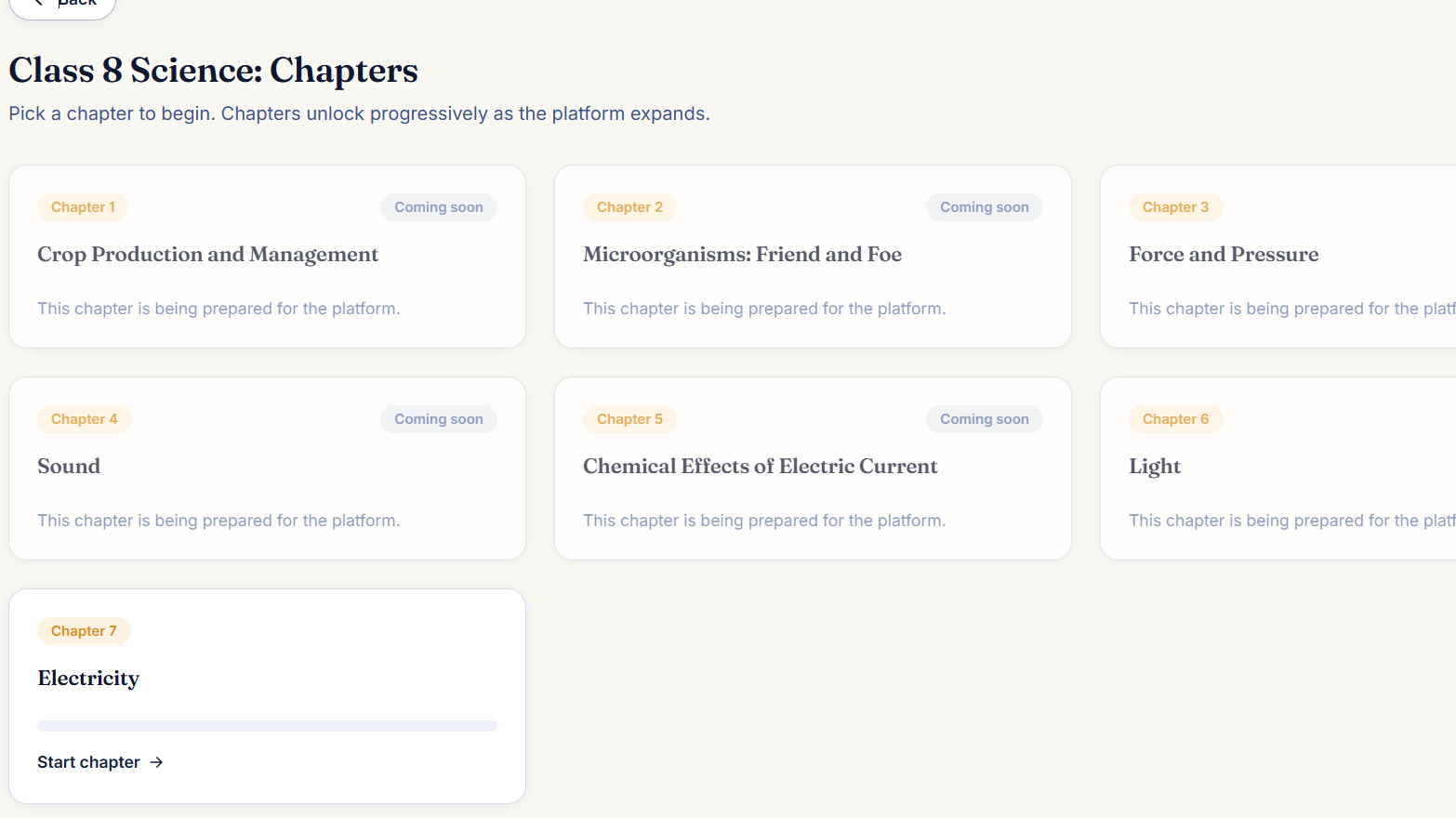
selection of chapter
-
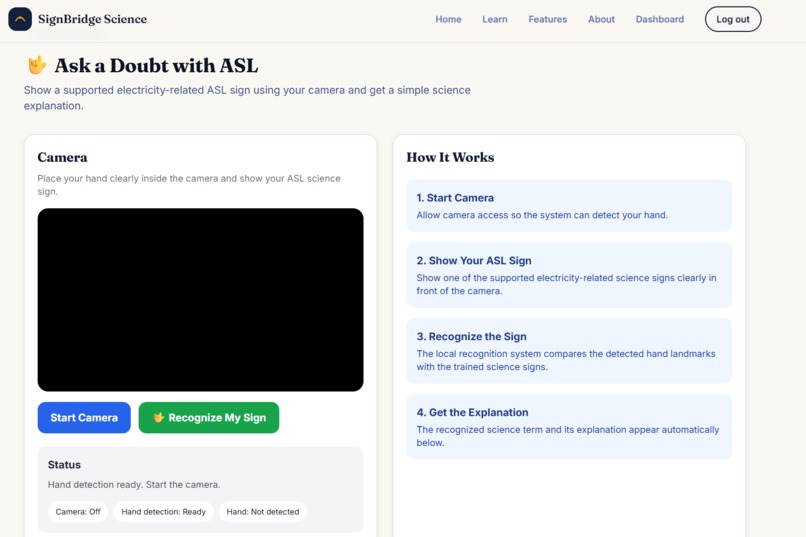
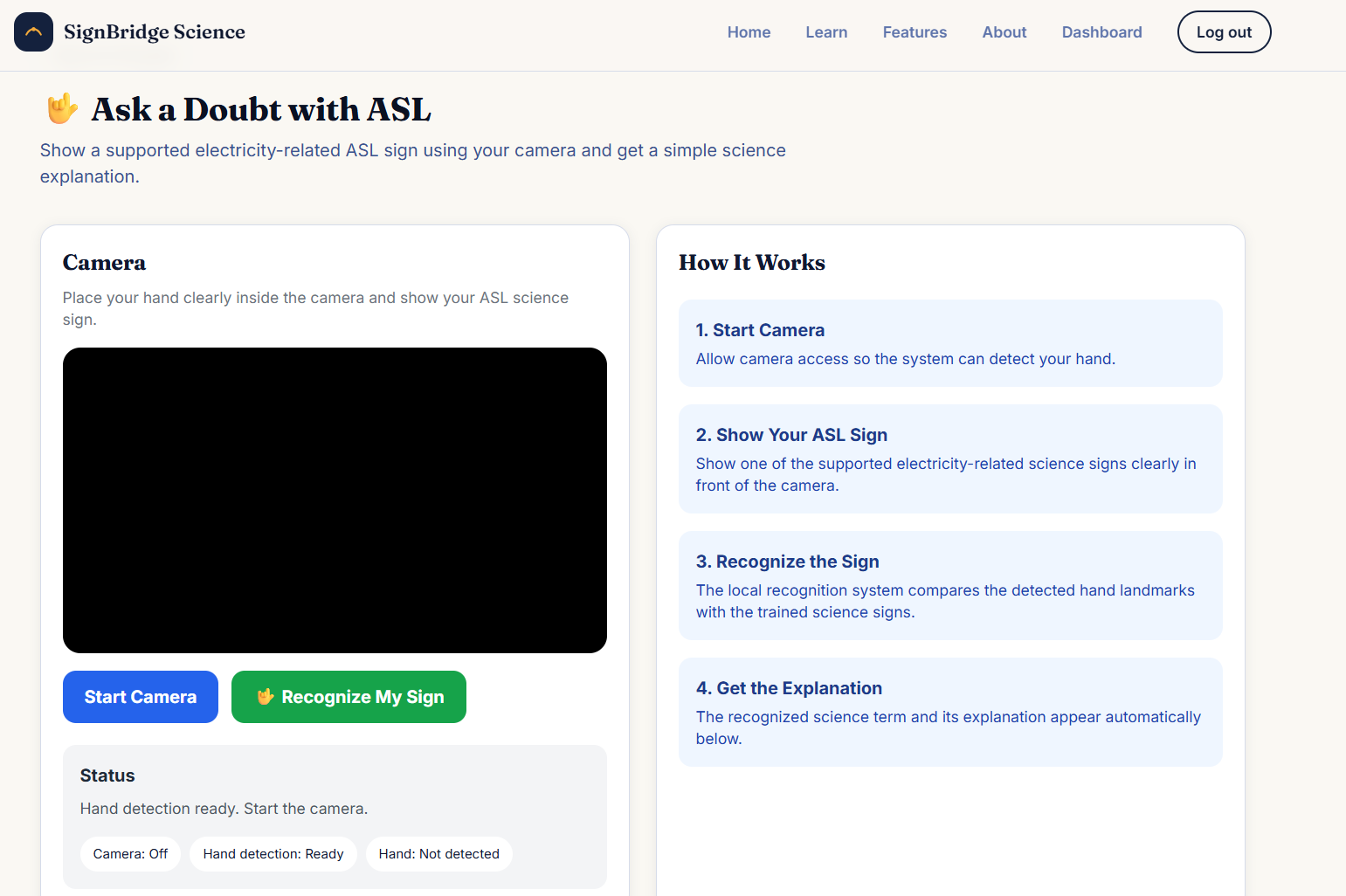
doubt asking
Inspiration# Project Story
Inspiration
Education should be accessible to every learner, but many deaf and hard-of-hearing students face difficulties understanding complex science concepts because traditional teaching methods depend heavily on audio explanations and text-based learning.
We were inspired to build SignBridge Science after realizing that science is not just about reading definitions — it is about visualizing concepts, performing experiments, and understanding how things work in the real world. We wanted to create a learning experience where students can explore science in a more inclusive and engaging way.
What We Built
SignBridge Science is an AI-powered science learning platform designed to make science education more accessible for deaf and hard-of-hearing students.
The platform combines:
- Sign language-supported explanations
- Interactive science simulations
- Visual learning materials
- AI-powered personalized learning recommendations
- Accessible lesson experiences
For our prototype, we focused on the chapter "Electricity and Circuits" and created an interactive learning journey called "Power the Lab", where students learn concepts like batteries, bulbs, wires, switches, and complete circuits through an engaging mission-based approach.
How We Built It
We developed SignBridge Science as a web application with a focus on accessibility and AI integration.
Technology Stack:
- Frontend: HTML/CSS/JavaScript (interactive user interface)
- Backend: FastAPI (Python)
- Database: SQLite
- AI/ML: AI-based personalization and learning assistance
- Version Control: GitHub
The backend manages lessons, user interactions, and learning data, while the frontend provides an intuitive experience for students.
Challenges We Faced
One of the biggest challenges was designing an AI-powered learning system that is both technically feasible and genuinely useful for students.
Some challenges included:
- Finding the right balance between AI features and accessibility needs
- Designing science lessons that are interactive rather than just text-based
- Structuring learning content in a simple and understandable way
- Building a complete working prototype within limited time
Through this process, we learned how technology can be used not only to solve technical problems but also to create meaningful social impact.
What We Learned
Building SignBridge Science helped us understand the importance of user-centered design, especially when creating solutions for accessibility.
We learned:
- How AI can enhance personalized education
- How backend systems connect with real-world applications
- How to convert an idea into a functional prototype
- The importance of designing technology around the user's needs
Future Scope
In the future, SignBridge Science can be expanded with:
- Real-time sign language recognition
- More science subjects and chapters
- AI tutors for personalized doubt solving
- Progress tracking and adaptive learning paths
- Support for multiple sign languages
Our goal is to bridge the gap between technology and inclusive education, ensuring that every student gets the opportunity to learn science effectively.
What it does
How we built it
Challenges we ran into
Accomplishments that we're proud of
What we learned
What's next for signbridge_science
Built With
- ai
- artificial
- assistant
- computer
- css
- development
- education
- fastapi
- generative
- html
- intelligence
- interactive
- javascript
- language
- learning
- machine
- natural
- python
- sqlalchemy
- sqlite
- technology
- vision

Log in or sign up for Devpost to join the conversation.