-
-
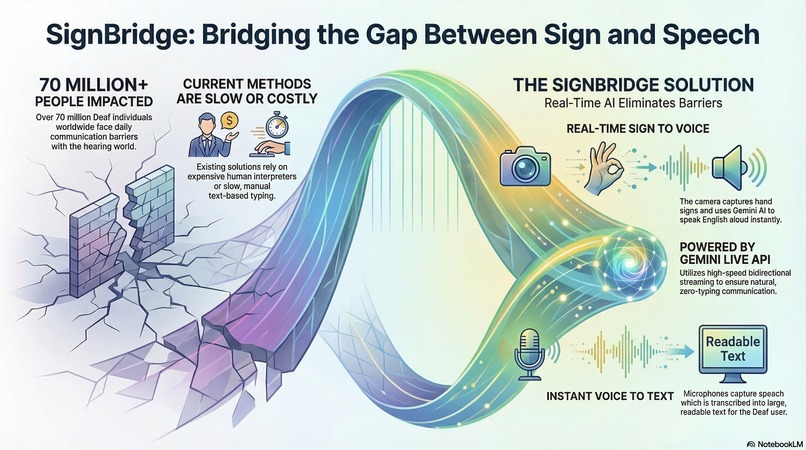
signbridge overview
Inspiration
Communication barriers between the deaf and hearing communities inspired us to create SignBridge. We wanted to leverage AI to make real-time, inclusive conversations possible for everyone, regardless of their preferred communication method.
What it does
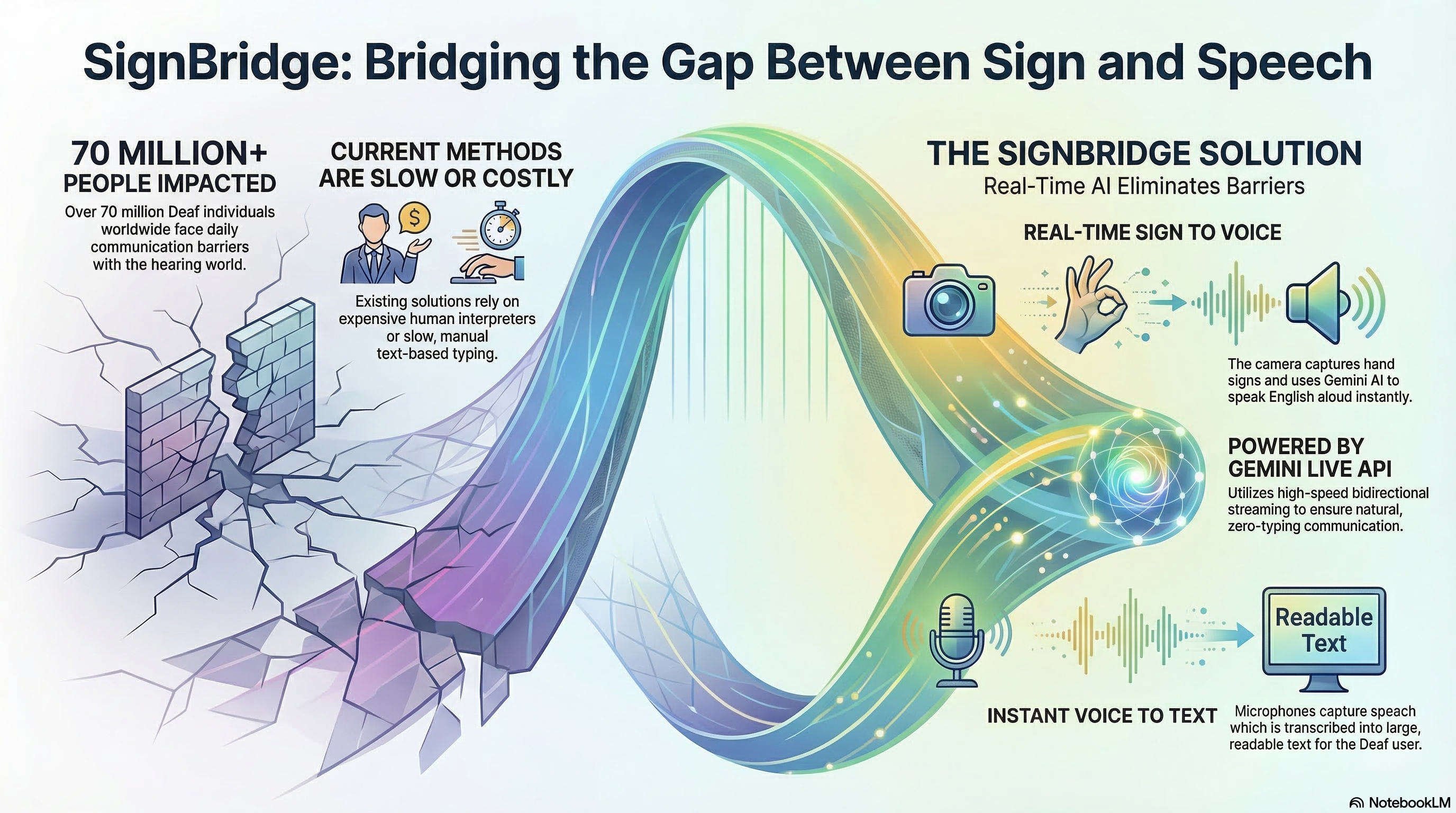
SignBridge is a real-time platform that translates between American Sign Language (ASL) and spoken English. It uses AI to recognize sign language gestures from video and transcribes spoken words, enabling seamless two-way communication.
How we built it
We built SignBridge with a Python backend for AI inference and a Next.js frontend for a user-friendly interface. The backend uses machine learning models for gesture recognition and speech-to-text, while the frontend provides live video, audio capture, and real-time translation via WebSockets.
Challenges we ran into
Key challenges included training accurate gesture recognition models, ensuring low-latency real-time translation, and creating an intuitive user experience. Integrating video and audio streams smoothly was also technically demanding.
Accomplishments that we're proud of
We’re proud of achieving real-time translation with high accuracy and building a platform that genuinely bridges communication gaps. The seamless integration of AI and web technologies is a major milestone.
What we learned
We learned about the complexities of sign language recognition, the importance of accessibility, and the technical hurdles of real-time communication systems. Collaboration and user feedback were crucial to our progress.
What's next for SignBridge - Real-Time ASL Interpreter
Next, we plan to support more sign languages, improve model accuracy, and add features like group conversations and mobile support. We aim to make SignBridge a universal tool for accessible communication.
Built With
- apis:
- javascript
- languages:-python
- typescript

Log in or sign up for Devpost to join the conversation.