-
-
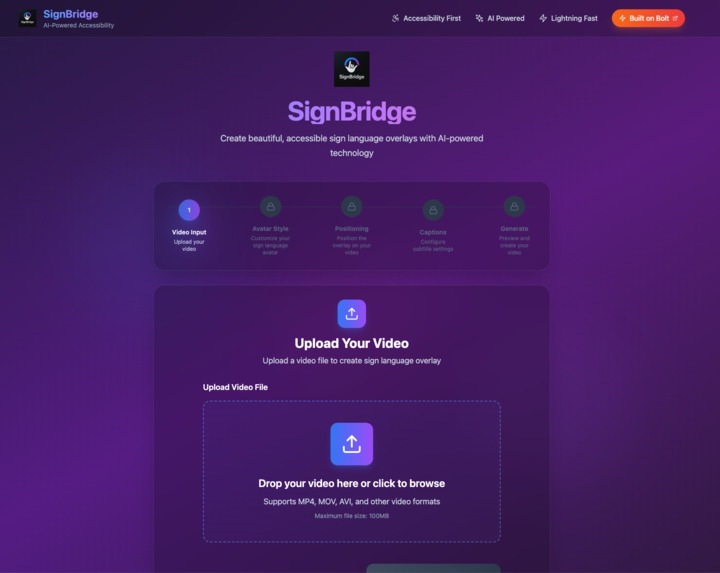
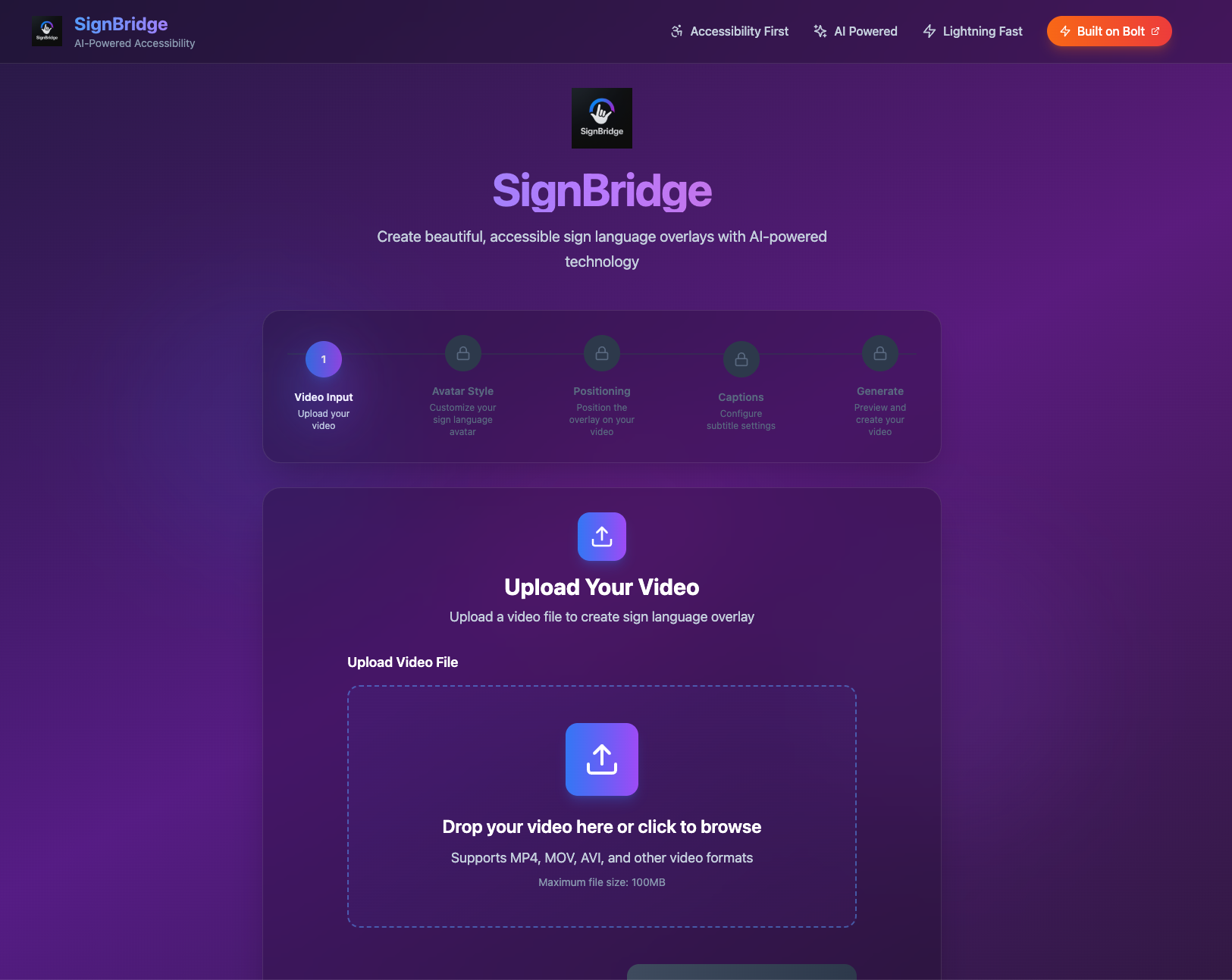
Upload Video
-
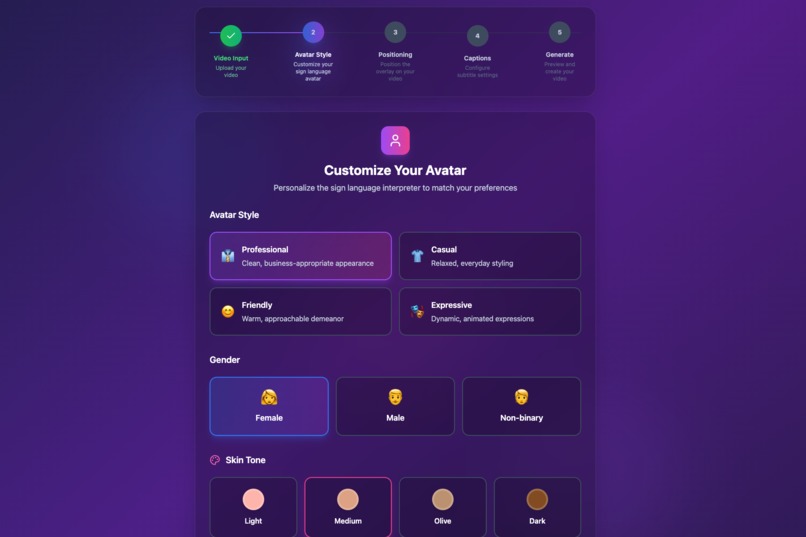
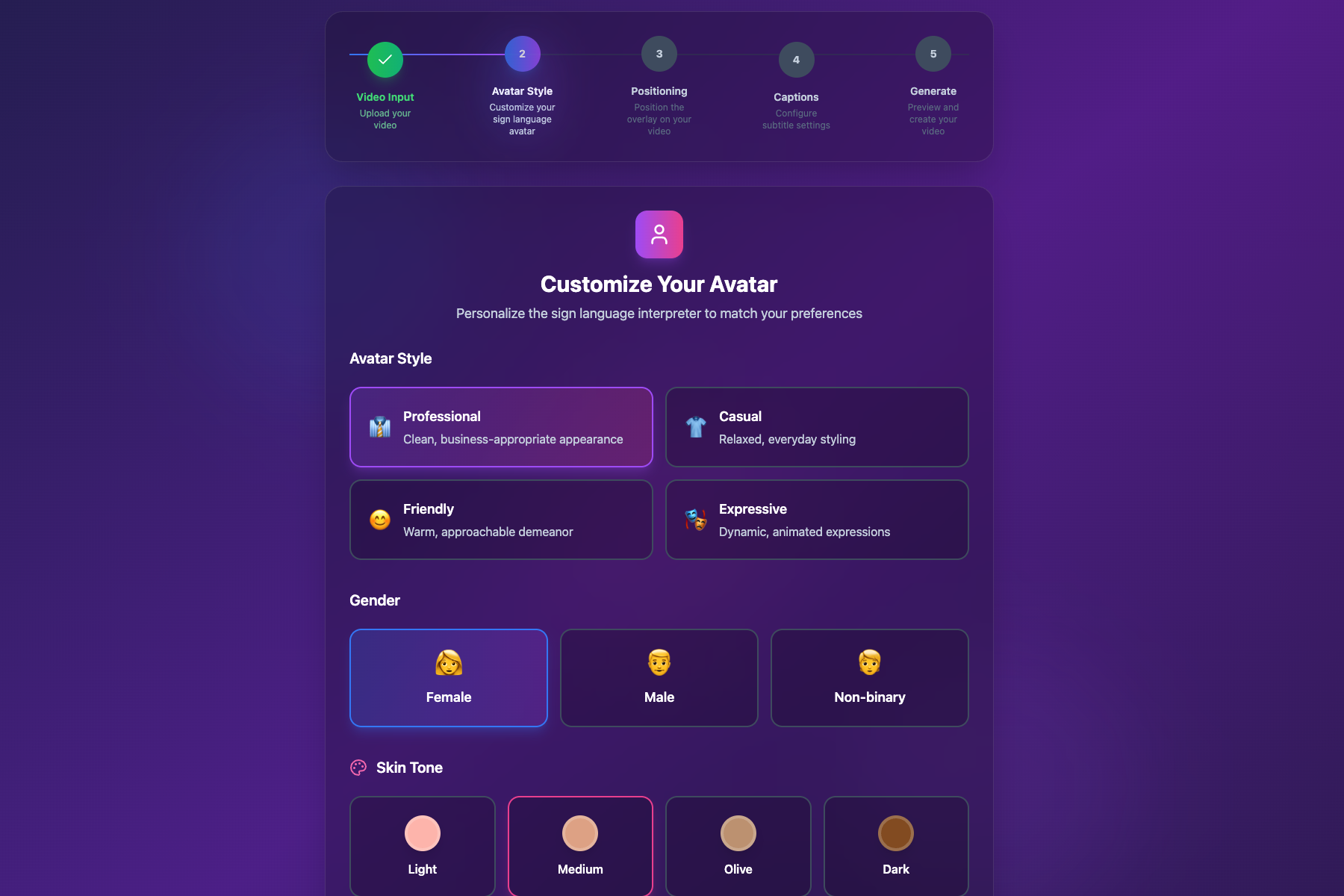
Custom Avatar
-
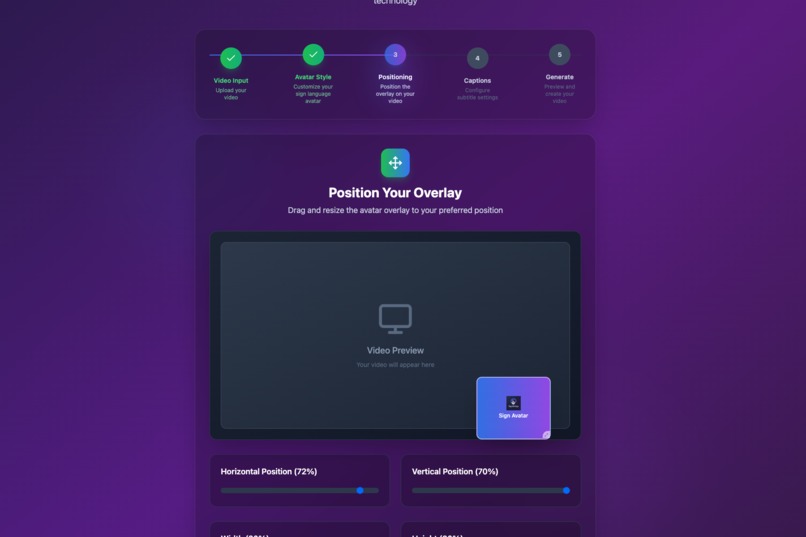
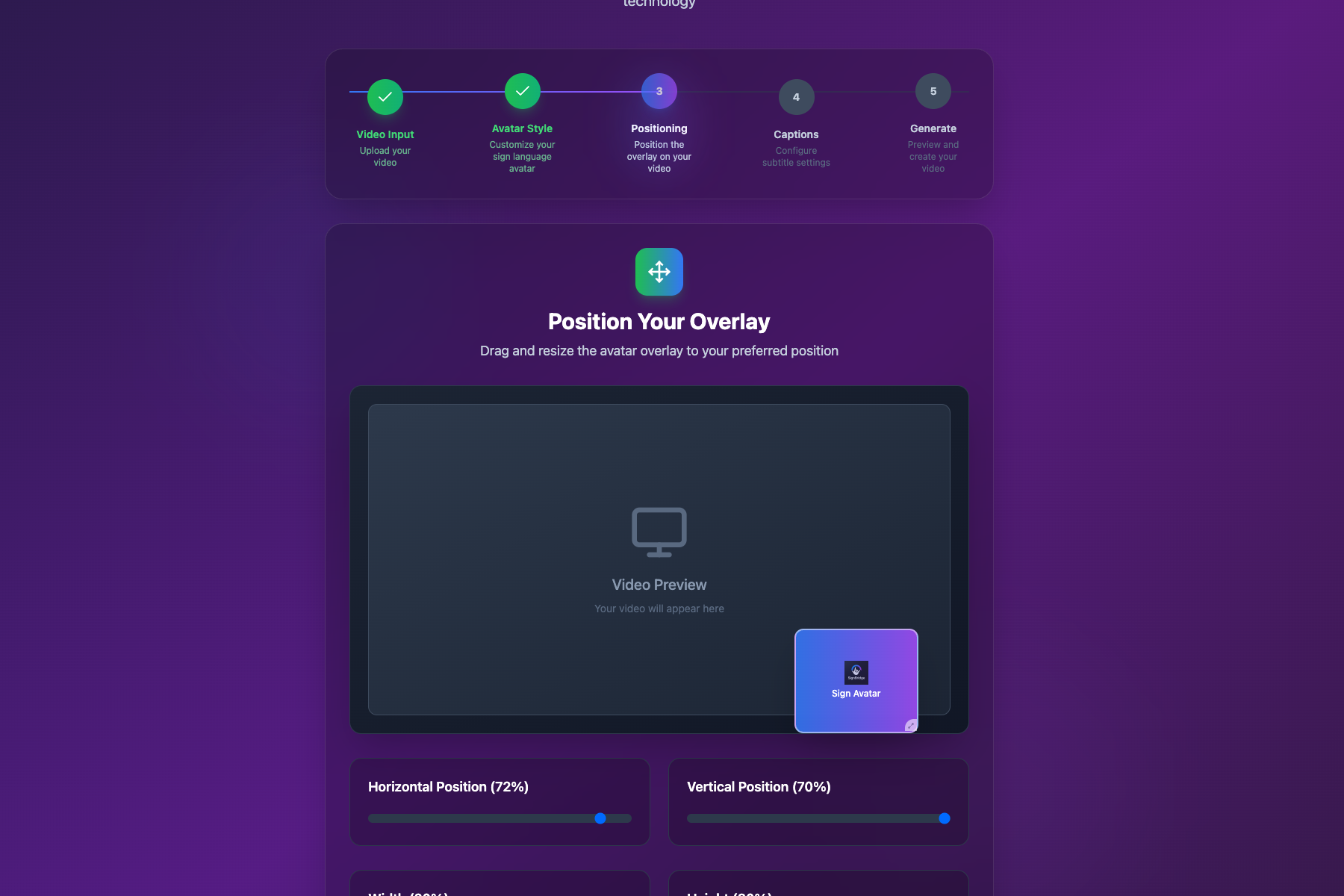
Position Sign Overlay
-
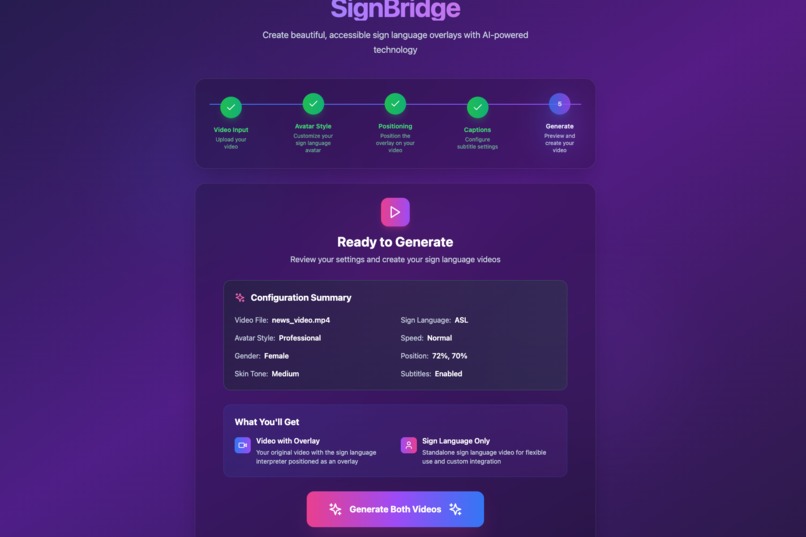
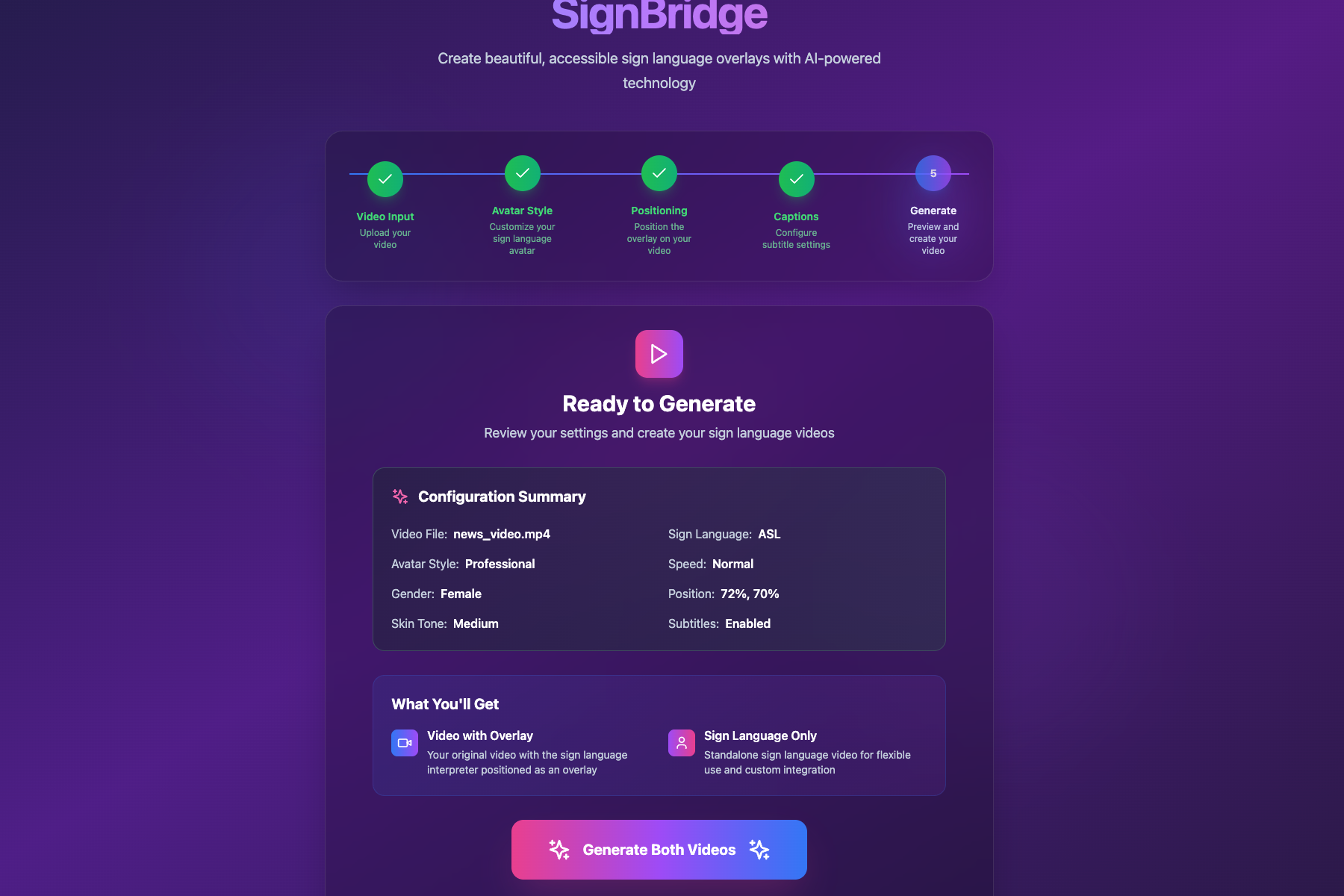
Ready to Generate (confirm details)
-
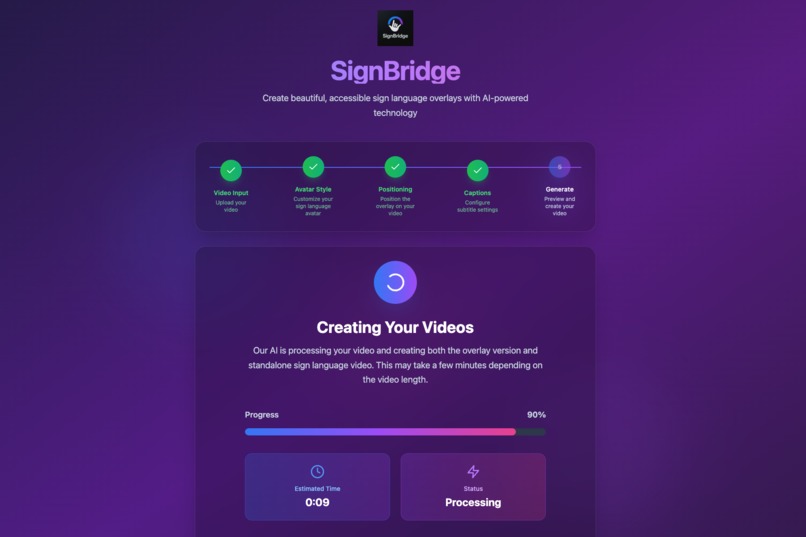
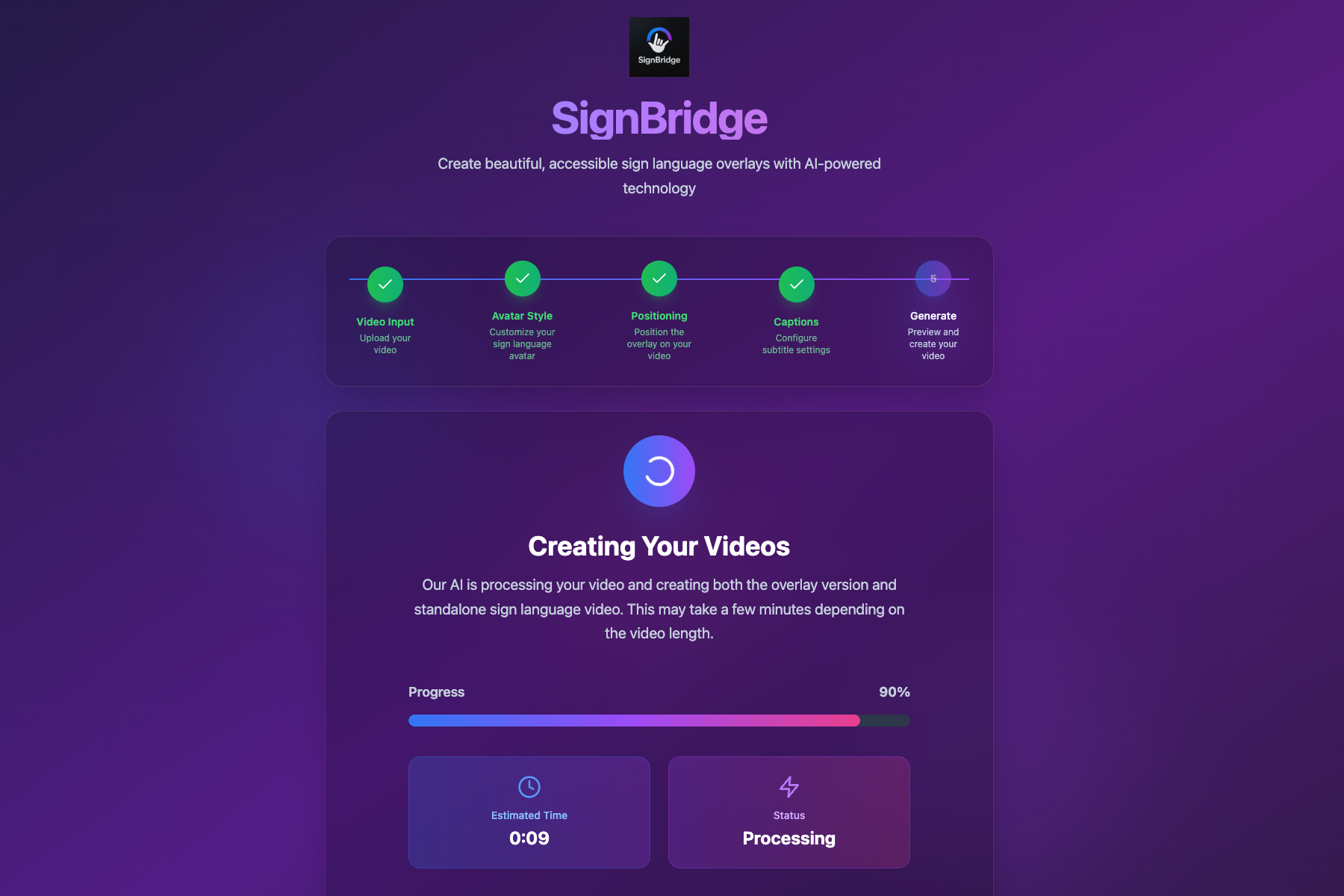
Generating Video with Sign language overlay
-
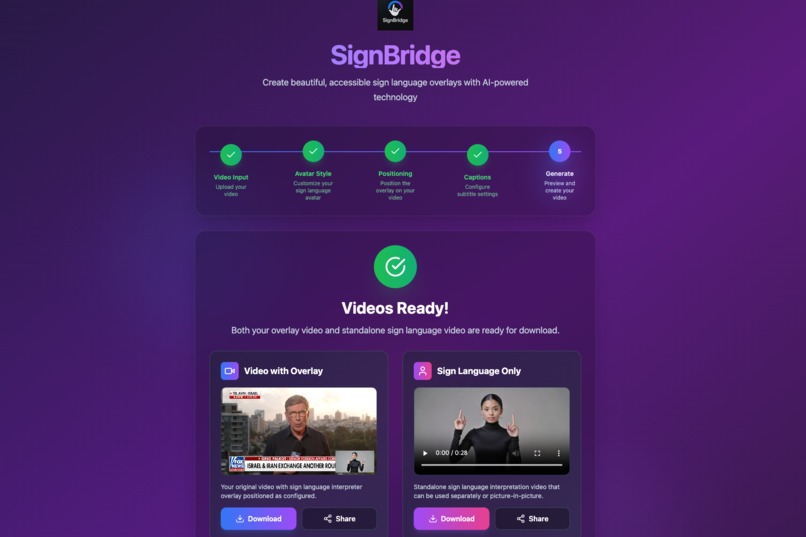
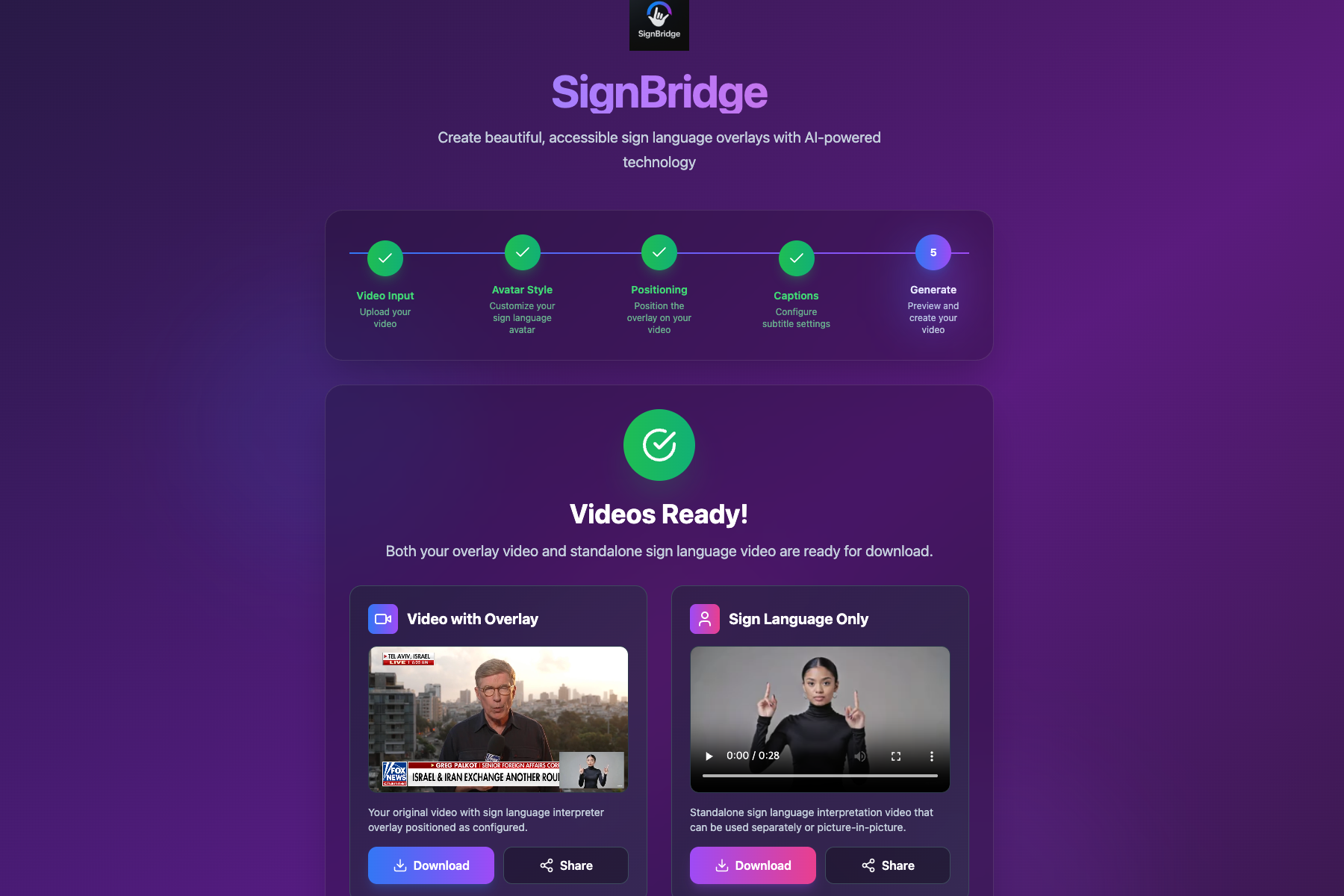
Sign Language overlay video generated
✨ Inspiration
“Did you know? There are over 70 million Deaf and hard-of-hearing individuals worldwide —
and for many of them, sign language is not a preference, it’s their primary language.
Yet, most video content on the internet is completely inaccessible.
I built SignBridge to change that —
an AI-powered service that adds sign language overlays to videos, making them inclusive, expressive, and truly accessible.”
🎥 What it does
SignBridge allows users to:
- Upload a video or paste a YouTube link
- Customize a 3D avatar for sign language generation (style, skin tone, gender, signing speed, language type)
- Position the sign overlay and optionally enable captions
- Automatically generate and preview a final video with the avatar signing
- Download the result for distribution
- 🔧 AI/Backend also developed and fully integrated — ready for immediate use
🎯 The goal is inclusion: to make video content understandable for Deaf users in their own language.
🛠 How we built it
- Frontend: Built entirely using Bolt.new with a step-by-step flow, customized theme, responsive design, and logo
- Backend: Created with FastAPI, taking input parameters like avatar options, sign language type, and video source, then returning a downloadable sign overlayed video
- Domain: Registered via Bolt’s Starter Pack and linked through Netlify
All of this was done without traditional frontend coding. Bolt handled everything through natural language prompting.
🧩 Challenges we ran into
CORS configuration:
While integrating my custom backend, I ran into cross-origin issues. Thankfully, Bolt's support helped resolve it quickly.Realistic AI sign motion generation:
Current open-source models for generating sign language avatars are limited in accuracy and expression. Getting a natural-looking, semantically correct motion that matches the video’s content and tone remains a challenge.Syncing avatar with video tempo:
Making sure the generated sign language overlay matches the pacing and rhythm of the original spoken content (especially in fast-paced videos) was technically difficult. Even small mismatches can cause confusion for viewers relying on the sign content.
🏆 Accomplishments that we're proud of
- ✅ Built an accessibility-focused, AI-powered product from scratch within days
- ✅ Designed and launched a full frontend without writing a single line of HTML/CSS
- ✅ Delivered a fully responsive UI with custom avatars, positioning logic, and download functionality
- ✅ Used Bolt’s ecosystem effectively—domain, hosting, design, and deployment
📚 What we learned
- Accessibility must be designed in from the start, not added later
- Tools like Bolt reduce the gap between idea and implementation
- Anyone, regardless of design background, can build beautiful, inclusive products using the right platforms
- AI is no longer the barrier—execution is
🚀 What's next for SignBridge
- Integrate real AI avatar signing models (e.g., OpenVSLR, SignAll)
- Enable real-time translation from microphone input to live signing
- Allow batch translation for educational content at scale
- Partner with Deaf organizations to improve avatar expression and language accuracy
- Launch a public API for content creators to make their videos accessible automatically
- Pursue our mission to make technology more accessible — with Bolt as our creative engine
Built With
- bolt.new
- fastapi
- ffmpeg
- genai
- netlify


Log in or sign up for Devpost to join the conversation.