-
-
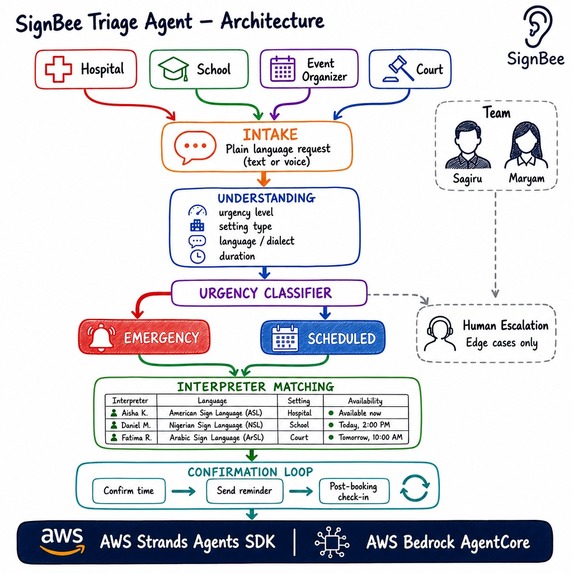
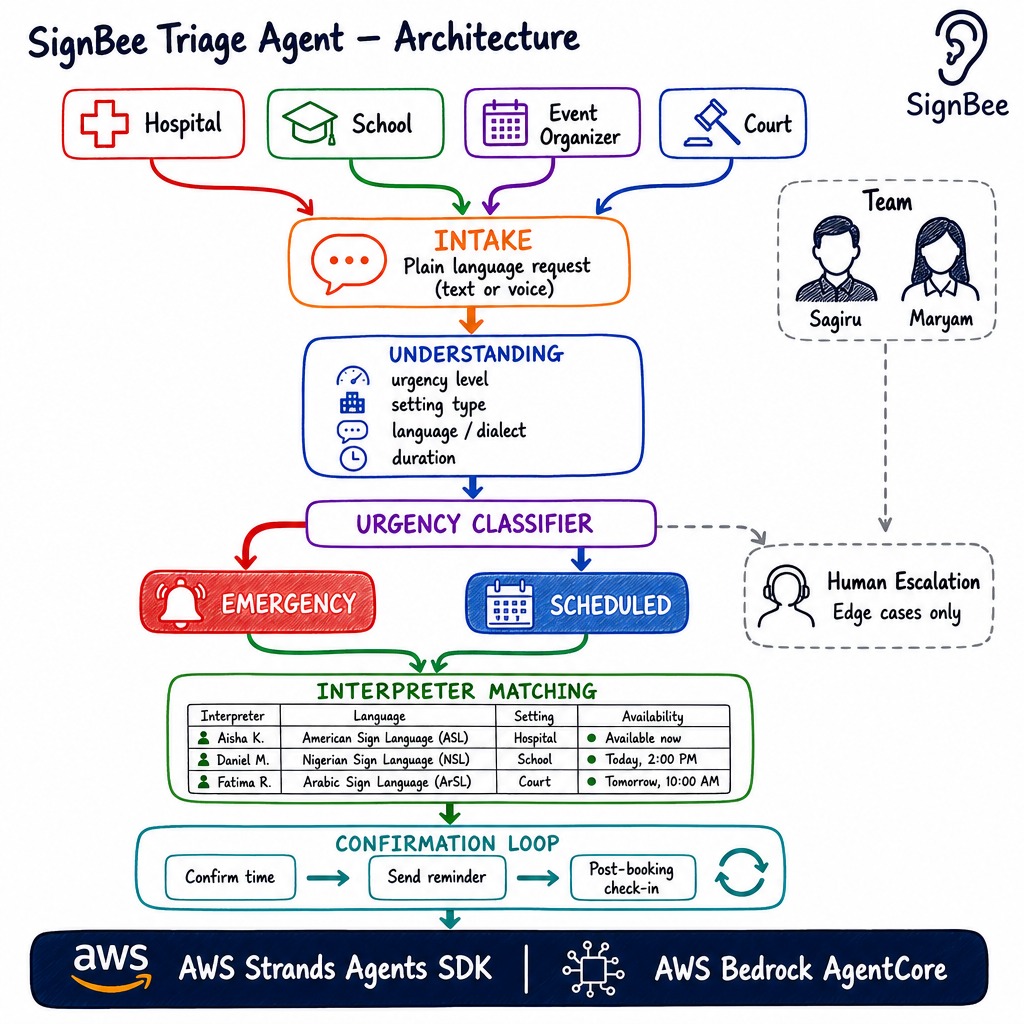
SignBee Triage Agent Architecture Diagram
-
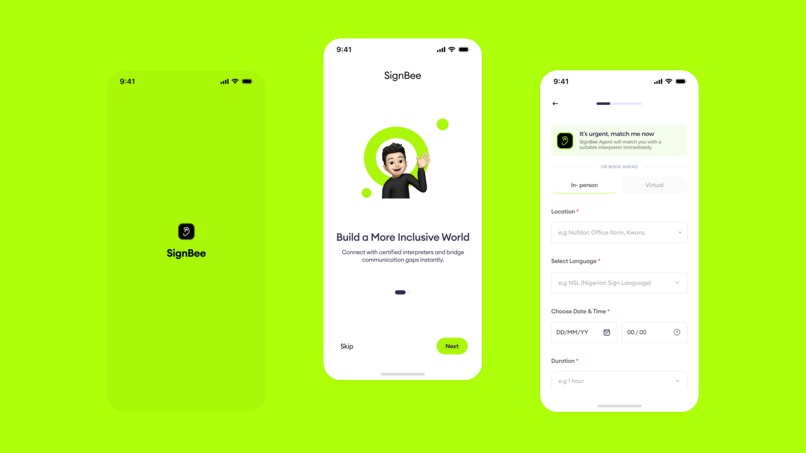
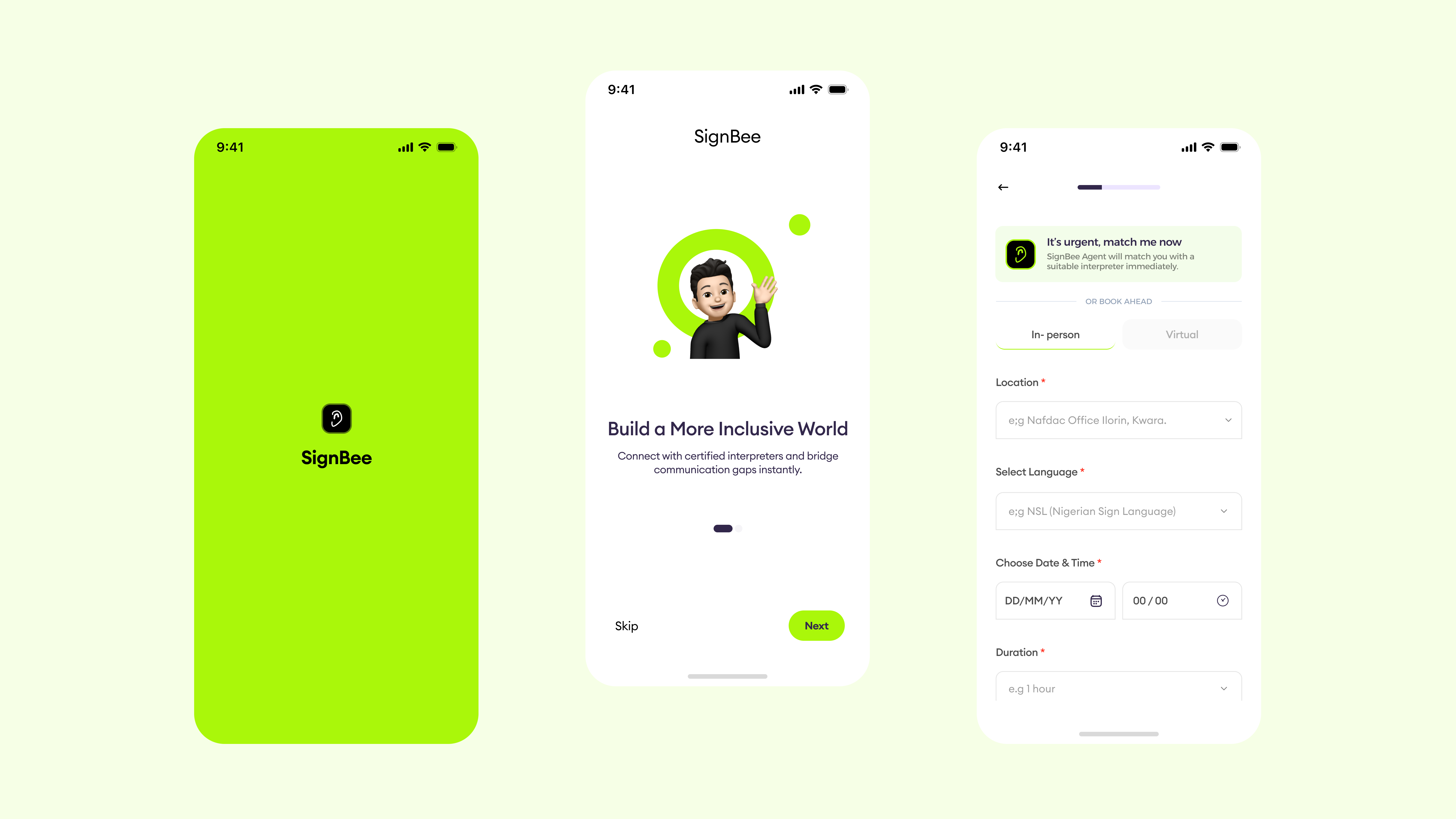
SignBee Booking flow
-
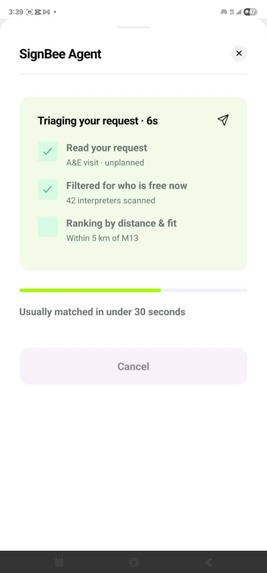
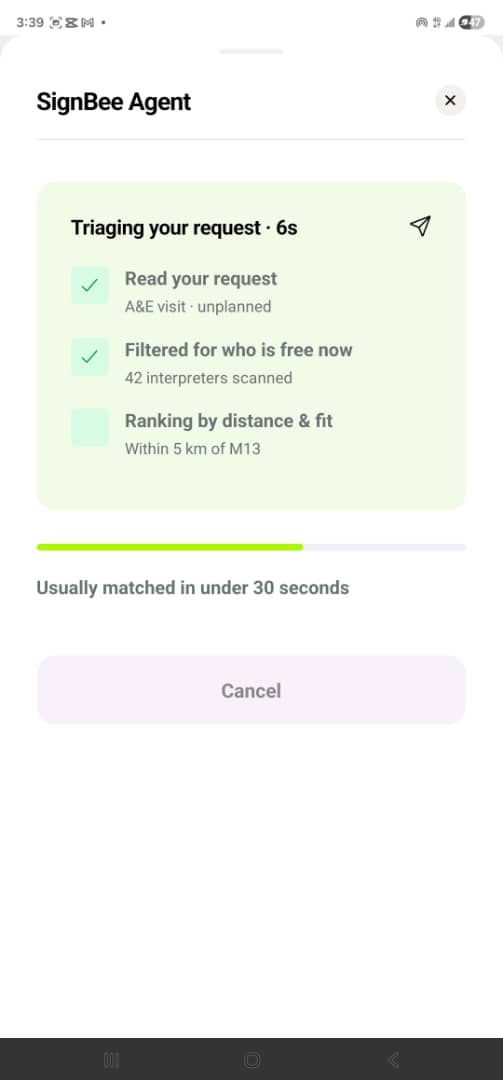
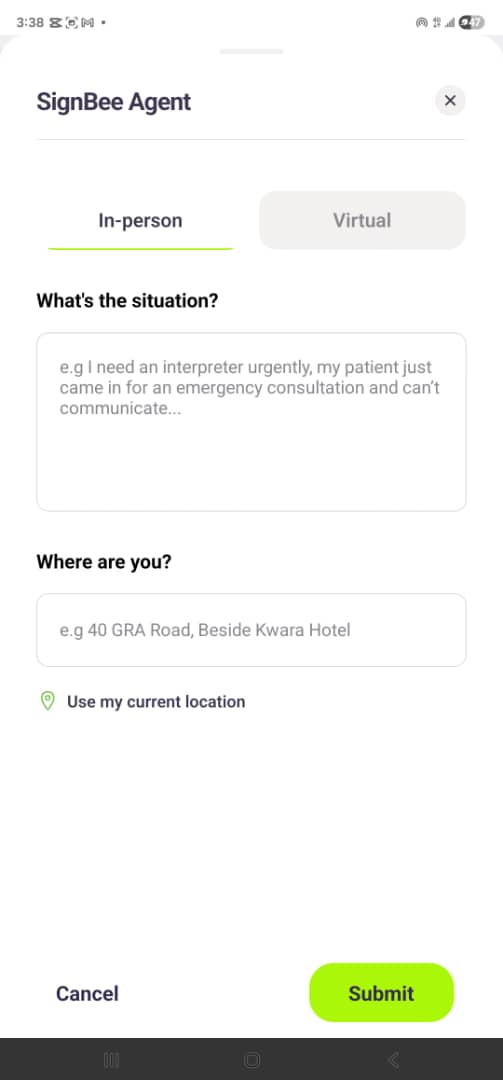
SgnBee Triage Agent Request
-
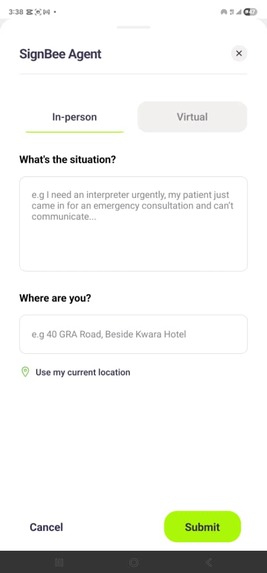
Booking (In-person & Virtual)
The Problem
Sign language interpreter access in Nigeria is inconsistent and slow to arrange. Institution, hospitals, courts, schools, event organizers, often don't know what to ask for, how urgent their need is, or which interpreter is qualified for their context.
That triage work is entirely manual today. A hospital needs an interpreter in an emergency and someone has to make calls, send messages, and wait. SignBee exists to fix interpreter access but the intake and triage layer still requires a human to manage every request.
What We Built
The SignBee Interpreter Triage Agent is an autonomous agent that sits in front of SignBee's interpreter booking process. It understands what an institution actually needs, handles the back-and-forth triage that currently requires a human, and only surfaces a decision when a real judgment call is needed.
The agent does five things:
- Intake: A requester (hospital, event organizer, court, school) describes their need in plain language via text or voice.
- Understanding: The agent extracts urgency level, setting (medical, legal, educational, event), language/dialect needs, and duration.
- Triage logic: It classifies urgency (emergency vs. scheduled), flags anything it can't confidently handle, and only escalates to a human when a real judgment call is required.
- Matching: It checks interpreter availability and relevant experience against the request and proposes a shortlist.
- Confirmation loop: It handles routine follow-up autonomously: confirming time, sending reminders, checking in post-booking.
Why It Fits the "Agents for Humans" Brief
This is not another app to babysit. It runs quietly in the background, only surfacing a human when actually needed. The contrast between an emergency hospital request and a scheduled school event request shows exactly why human-in-the-loop judgment matters and where it doesn't.
Tech Stack
1.AWS Strands Agents SDK the core agent loop: understand intent, decide when to act vs. escalate, call tools, follow up
- AWS Bedrock (AgentCore for the demo deployment)
- Python agent implementation and tool integrations
- Mock interpreter dataset 5–10 sample profiles covering language, availability, and setting experience
- Text-based intake (voice input as stretch goal)
- Typecsript
Track Professional Agents: the primary user is an institution or event organizer booking an interpreter: someone doing skilled, high-stakes coordination work.
Impact
This is a real accessibility gap in an underserved market. Sign language interpreter access in Nigeria affects hospitals, courts, police stations, schools, and emergency services. The agent built here is a genuine prototype that plugs into SignBee's real product after the hackathon.
Built With
- amazon-bedrock-agentcore
- github
- html
- javascript
- python
- typescript


Log in or sign up for Devpost to join the conversation.