-
Signapse
-
Problem
-
Solution
-
Use Case
-
Market Size
-
Competitive Advantage
-
Impact
-
Revenue Model
-
Thank You

Inspiration
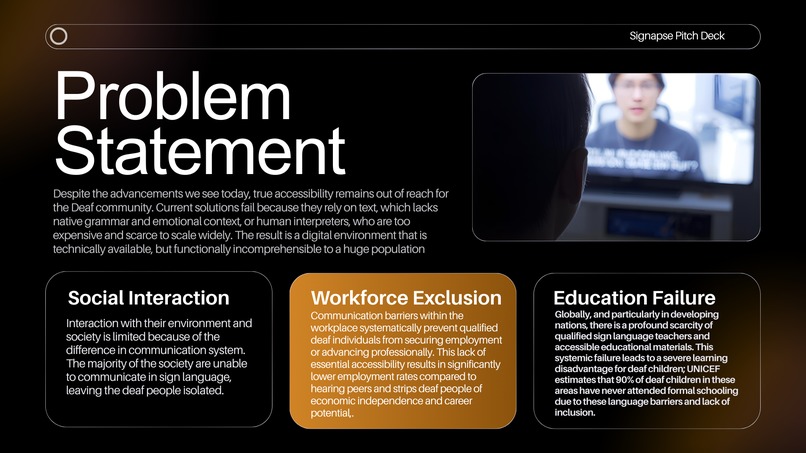
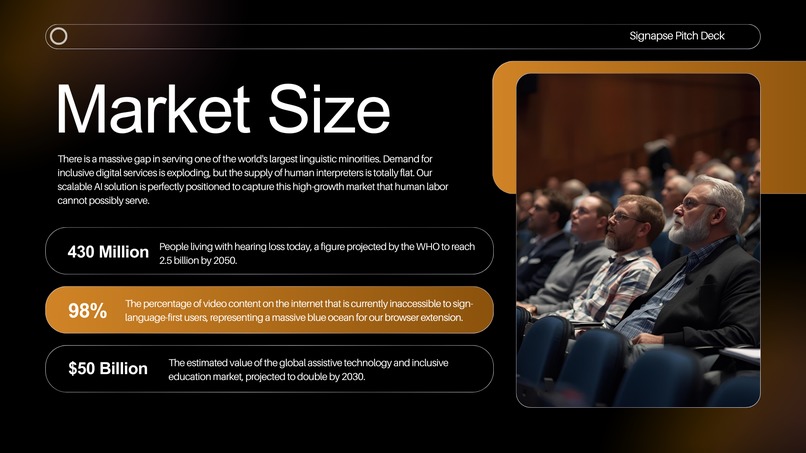
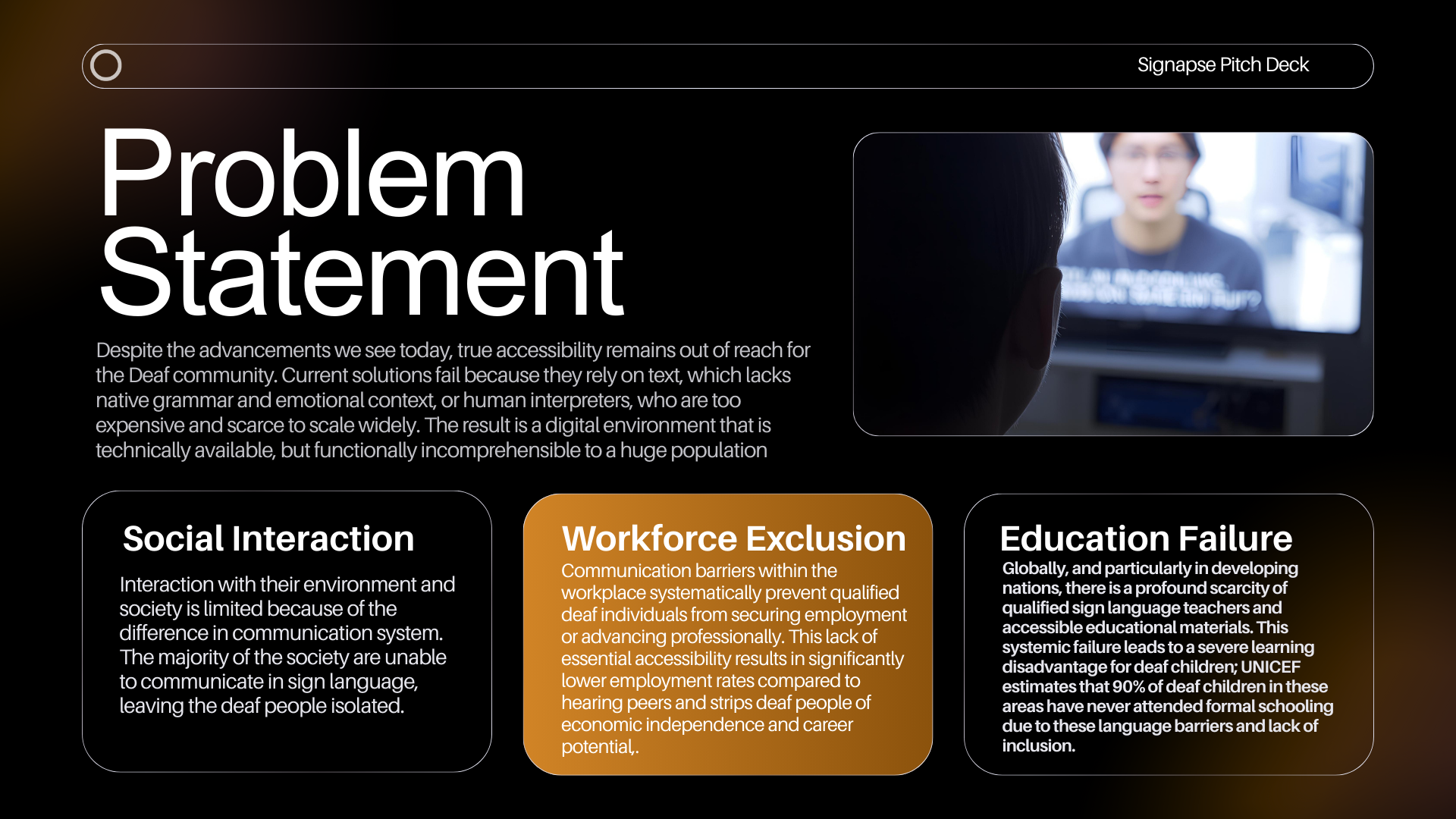
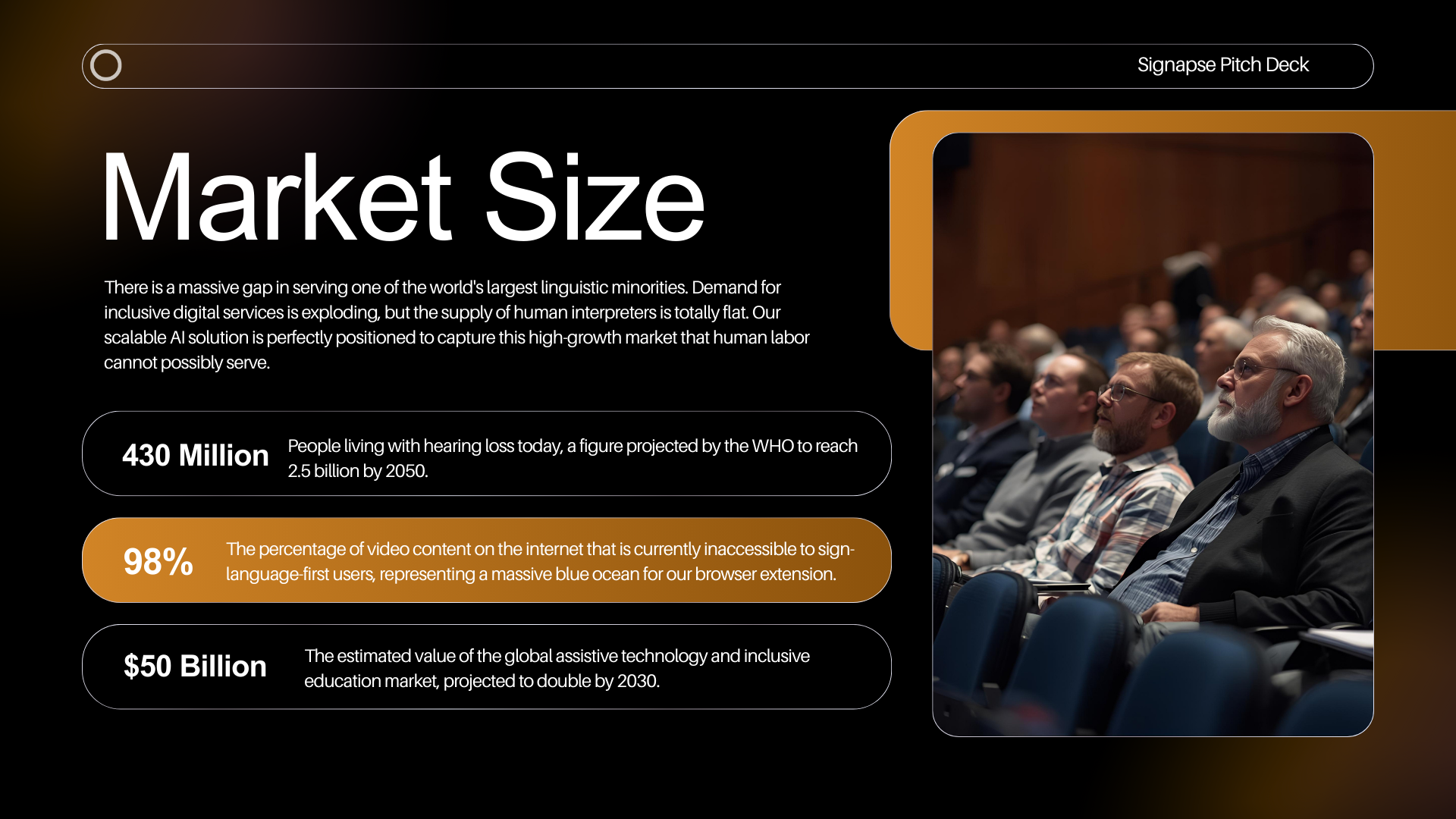
We identified a massive inefficiency in the global market. There are 430 million people with hearing loss, yet 98% of digital content is inaccessible to them. We realized that text captions are a failed solution because they do not match the native grammar of sign language users. We saw an opportunity to build scalable infrastructure that solves this exclusion gap without the high cost and scarcity of human interpreters.
What it does
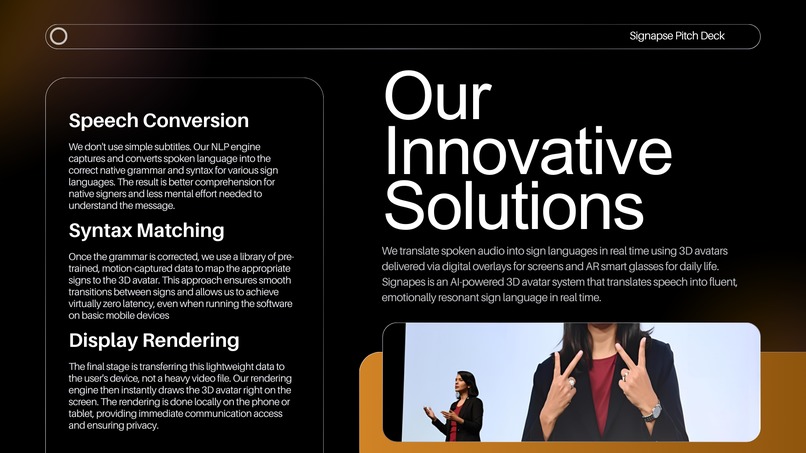
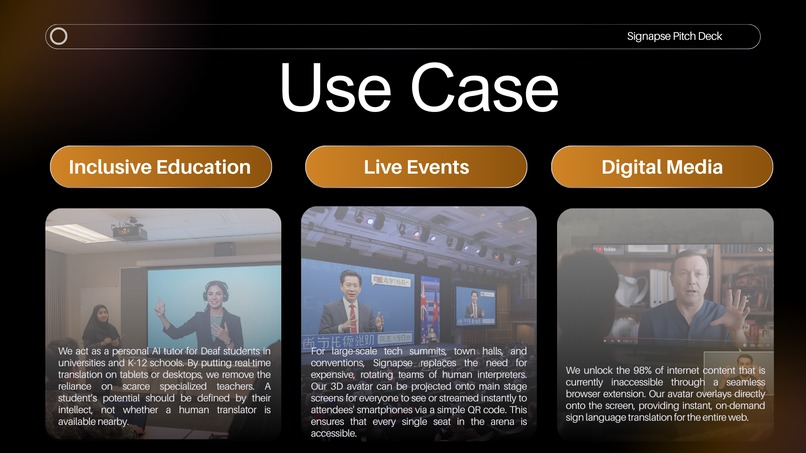
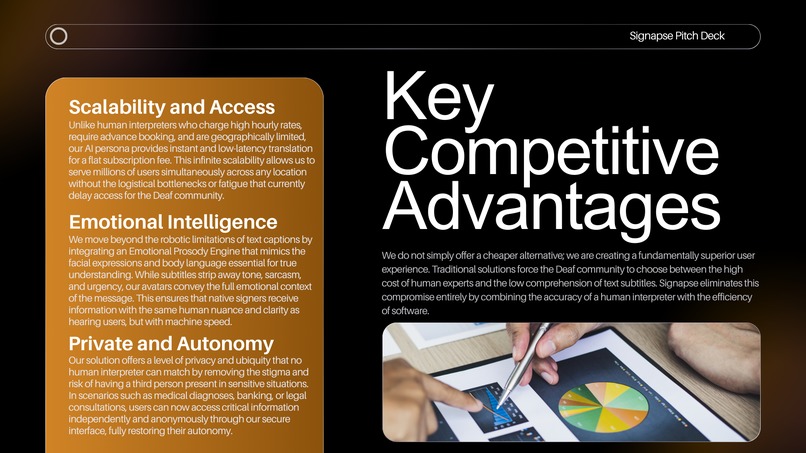
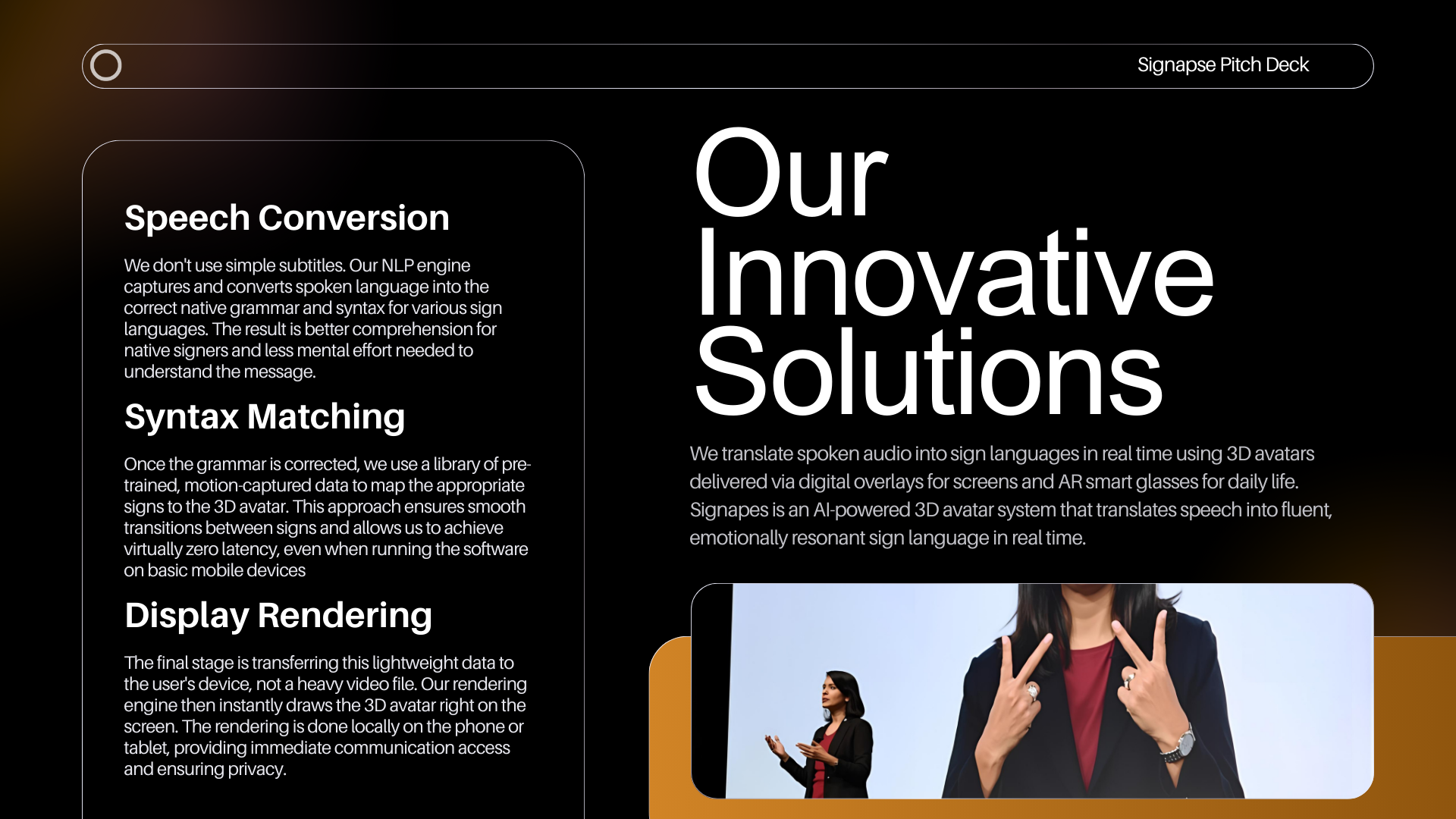
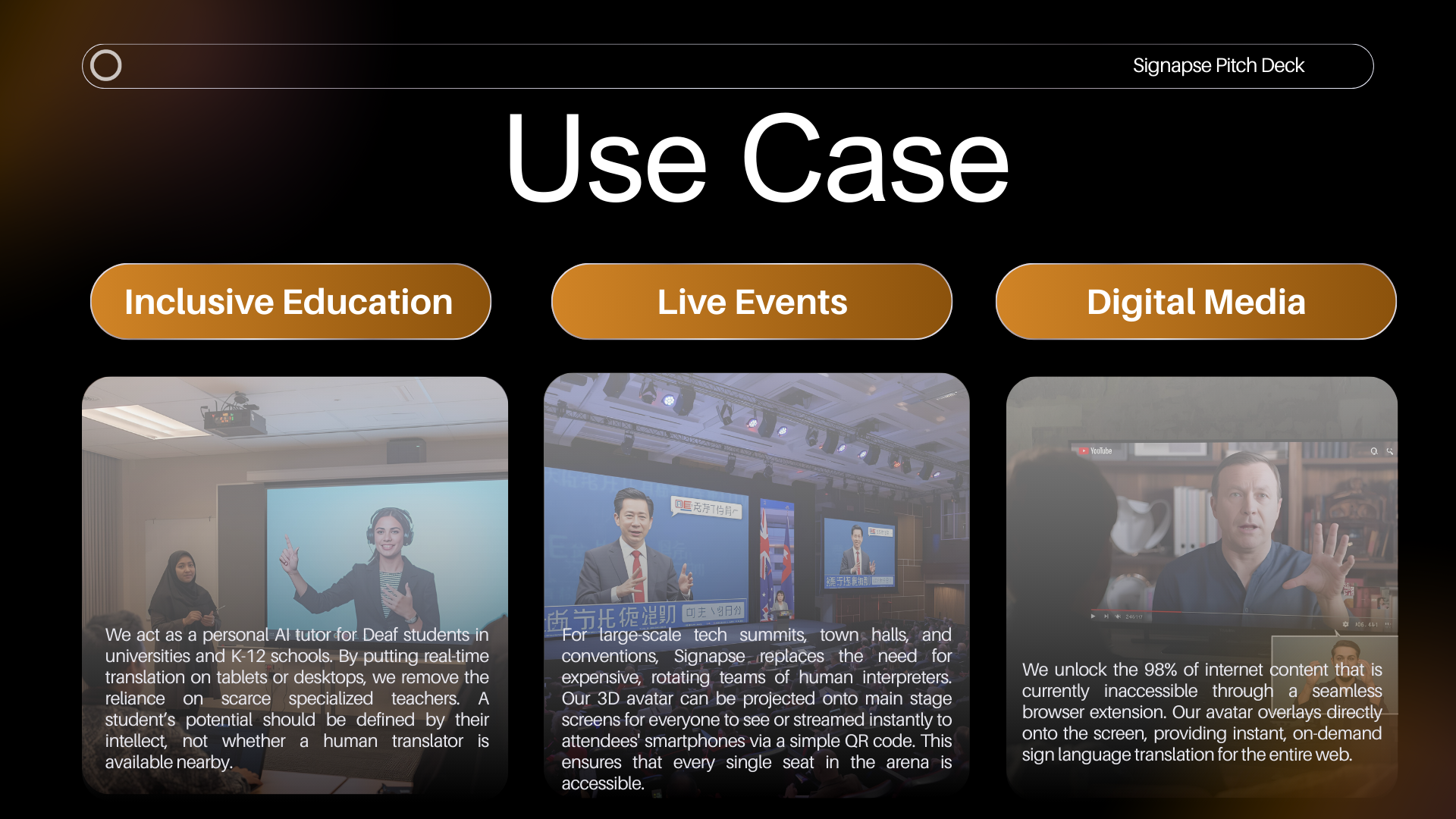
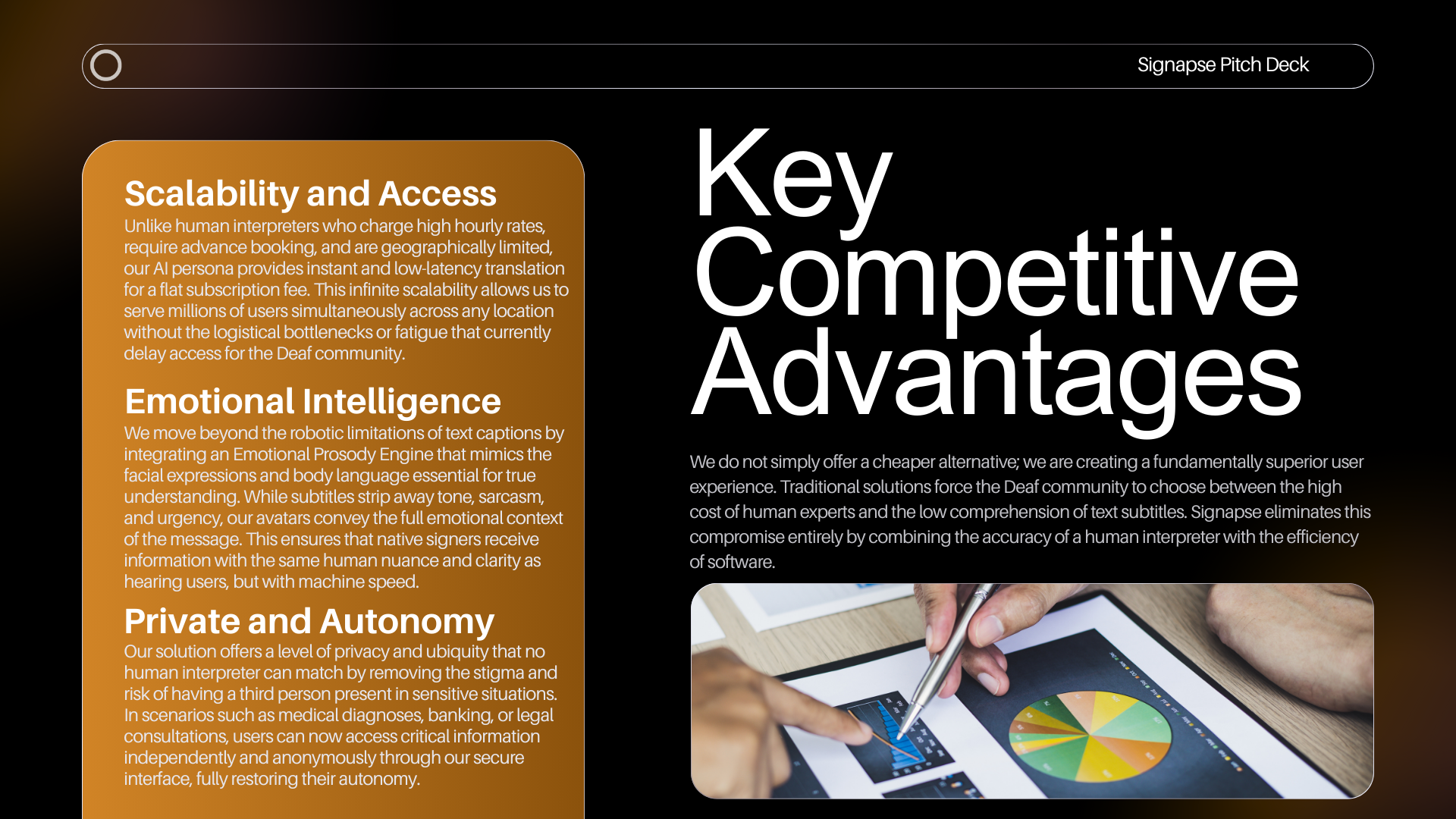
Signapse functions as a real-time accessibility layer for the internet and physical spaces. It converts spoken audio into 3D sign language instantly. It addresses the literacy gap by using correct sign language syntax instead of English text. It also solves the context gap by simulating facial expressions to convey tone and emotion. It provides a cost-effective, private, and always-available communication tool for education, healthcare, and finance.
How we built it
We developed a proprietary three-stage technical pipeline. First, we use natural language processing to analyze audio for both meaning and sentiment. Second, a translation engine converts spoken grammar into sign language structure, specifically topic-comment syntax. Third, a procedural animation system renders a rigged 3D avatar in the browser. We optimized this pipeline to run on low-bandwidth networks common in developing regions.
Challenges we ran into
Our biggest research challenge was solving the latency problem. We had to determine how to deliver high-fidelity 3D animation with close to instant translations. We spent weeks analyzing different rendering methods to find a balance between visual quality and speed. We also had to figure out how to structure our data so that the avatar could switch between happy, sad, or urgent expressions instantly without needing heavy processing power.
Accomplishments that we're proud of
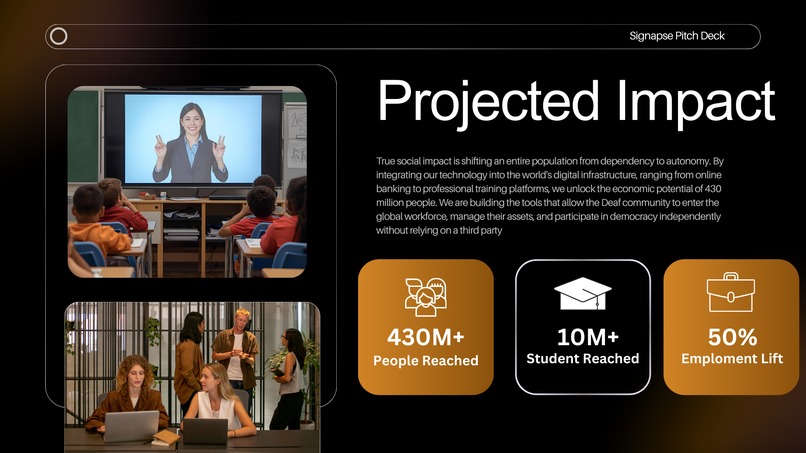
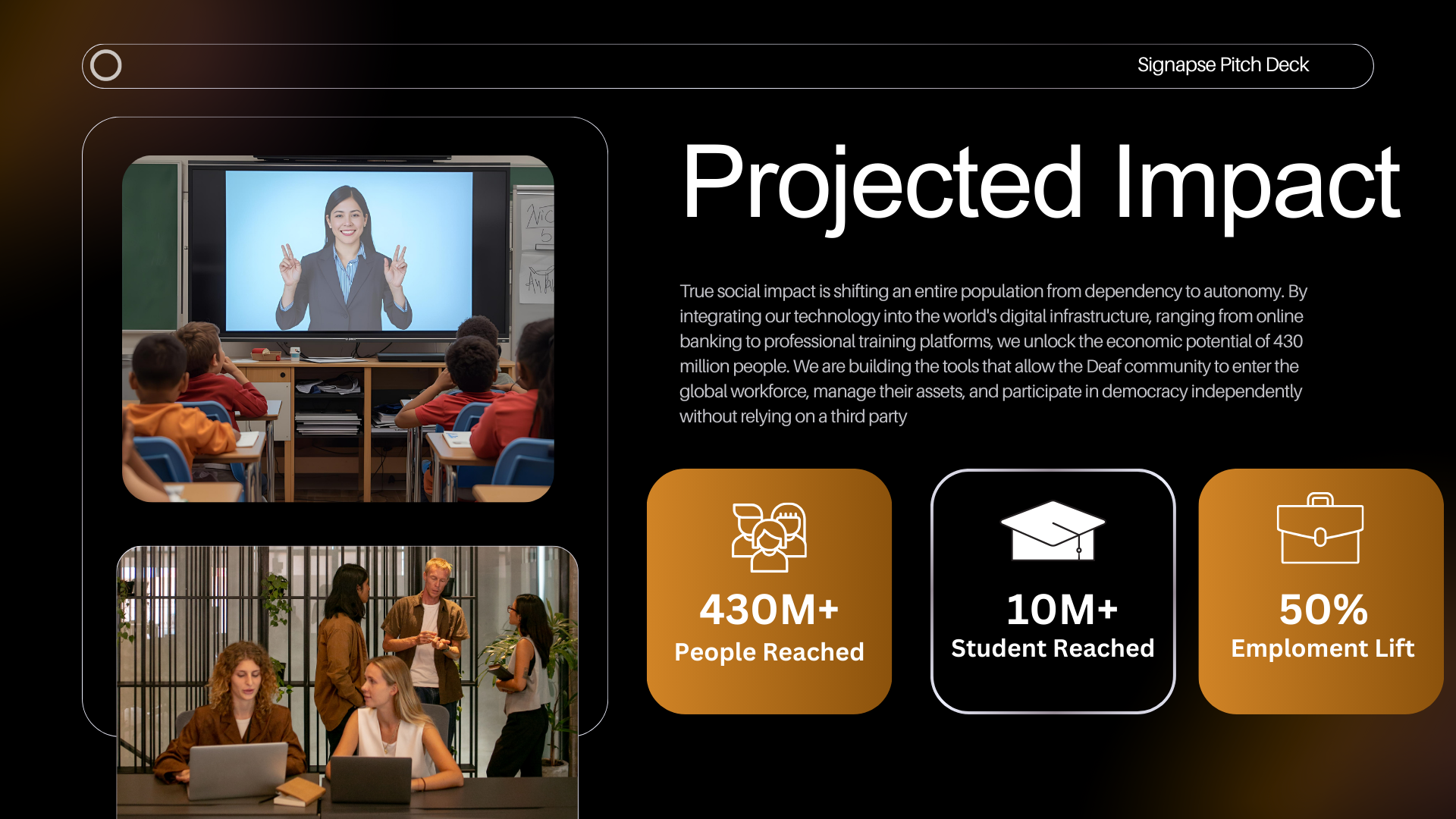
We are proud that we have created a viable roadmap to integrate the Deaf community into the global economy. We moved beyond just a translation tool and designed a comprehensive economic model. Our research proves that by removing communication barriers, we can unlock the productivity of 430 million people. We successfully mapped out a strategy that allows a Deaf person to attend university, open a bank account, and enter the workforce independently.
What we learned
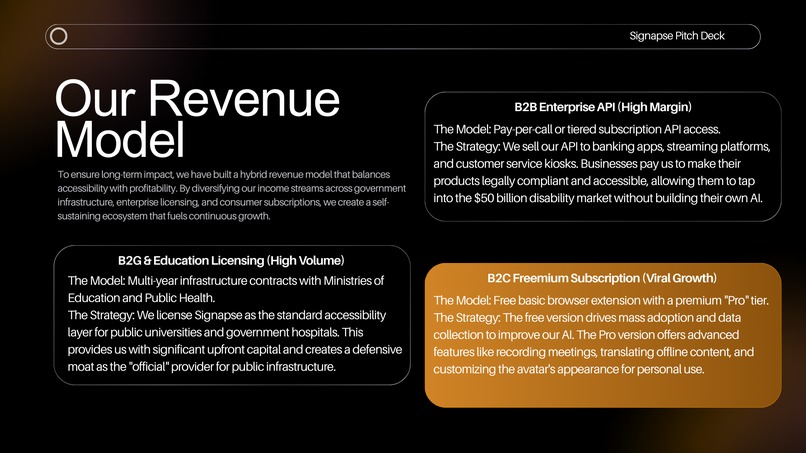
We validated that accessibility is an infrastructure problem rather than just a content problem. We learned that the Deaf community requires emotional prosody, including facial expressions and body language, to fully comprehend a message. We also discovered a significant demand from B2B sectors like banking and education for an automated solution that ensures legal compliance and wider service reach.
What's next for Signapse
We are moving from our research phase into active development. We plan to build our minimum viable product and deploy it in a pilot program with a local university. We will measure how well our system improves student retention rates compared to traditional methods. Our goal is to secure funding to turn our architectural blueprints into the standard operating system for inclusive communication worldwide.
Built With
- ai
- language
- natural-language-processing


Log in or sign up for Devpost to join the conversation.