
Inspiration
Sales dashboards are good at telling teams what happened: revenue went down, an outlet underperformed, or a product stopped selling.
But knowing that sales dropped is only the beginning of an investigation. The harder question is why.
We built SignalTrace around this problem. Instead of asking AI to simply summarize a dataset and guess a cause, we wanted to create an investigation workflow where deterministic analytics establish what the data actually shows, and AI reasons over that evidence to determine what is supported, what is only possible, and what remains unknown.
Our goal was simple: help analysts move from anomaly detection to evidence-backed investigation faster.
What it does
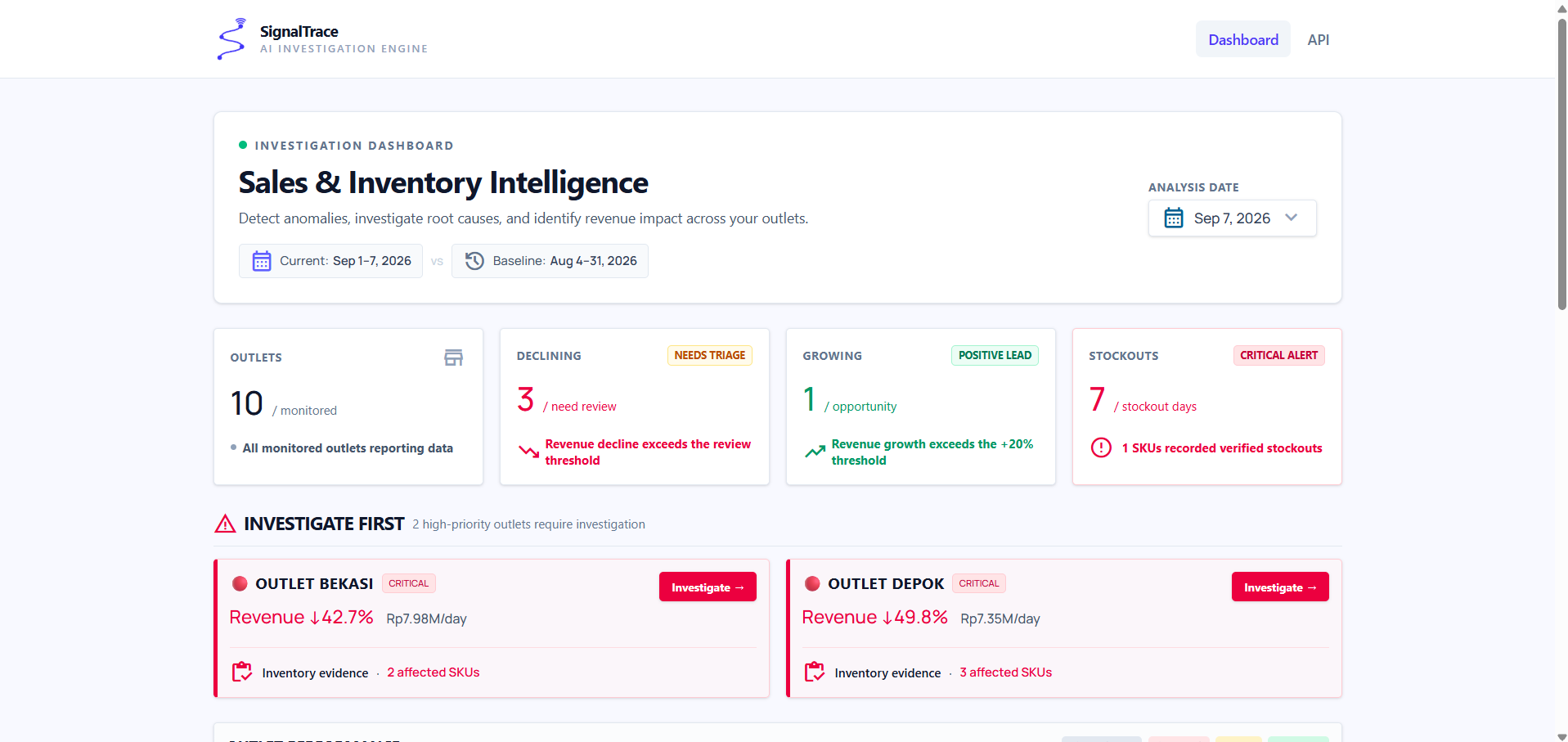
SignalTrace is an AI-powered sales investigation system for sales and inventory data.
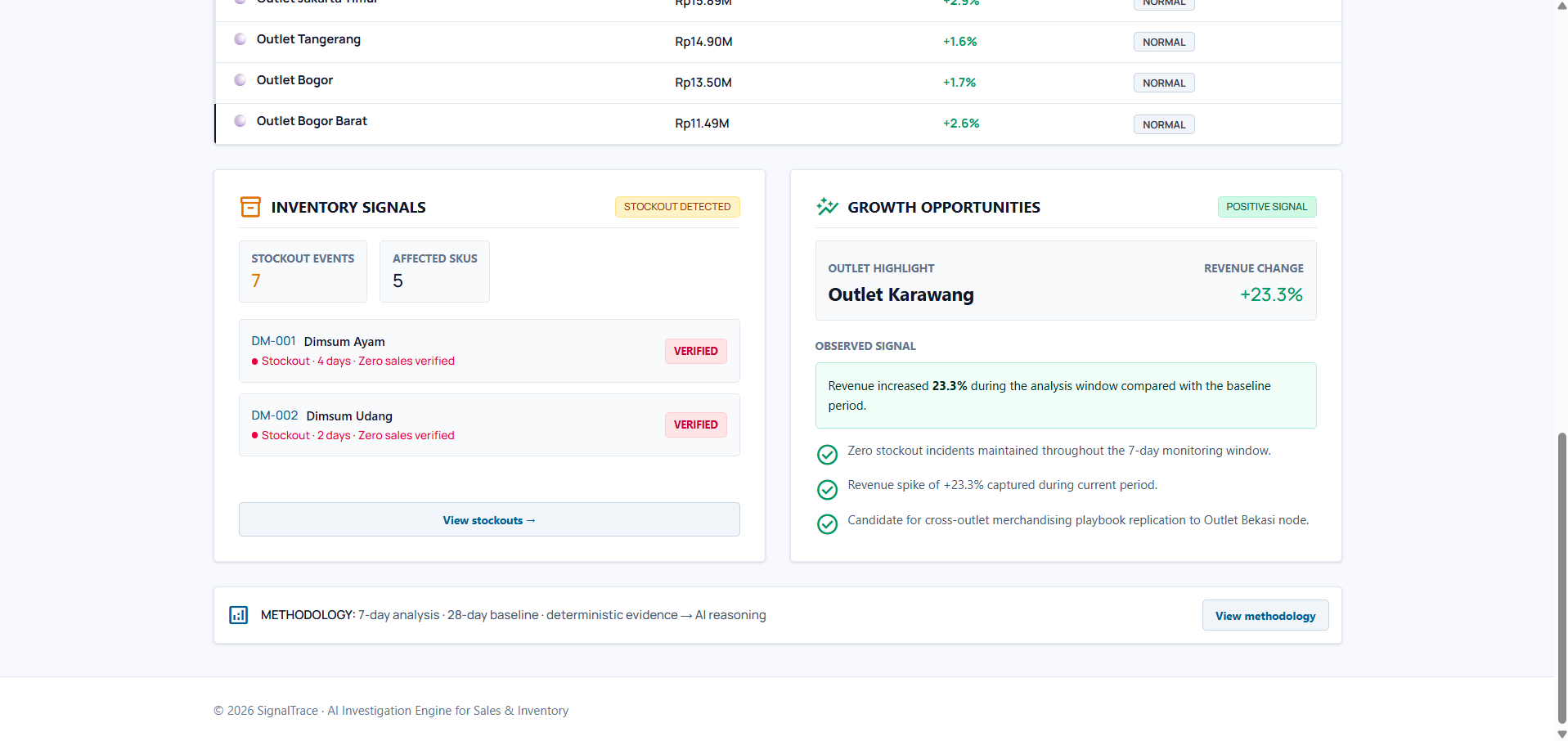
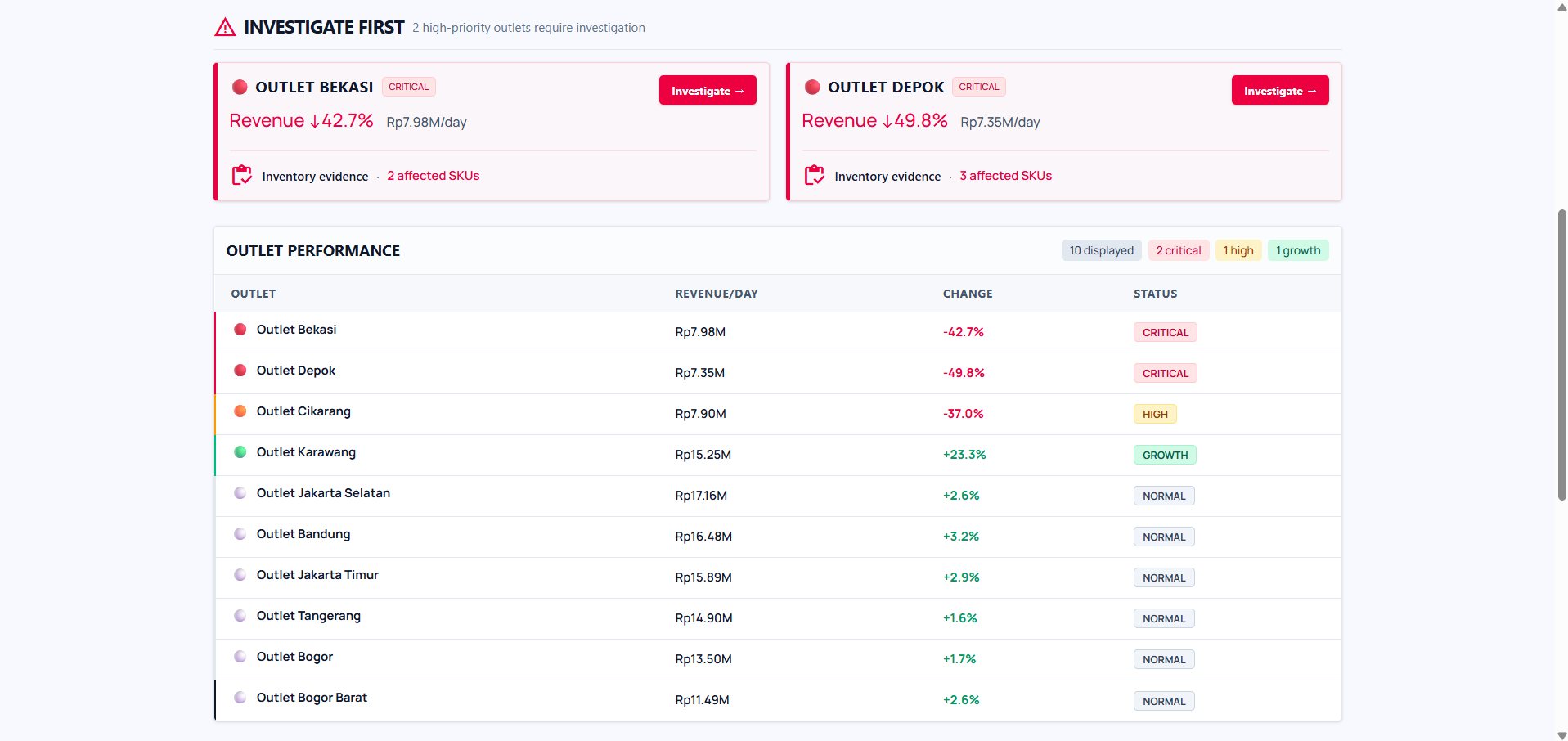
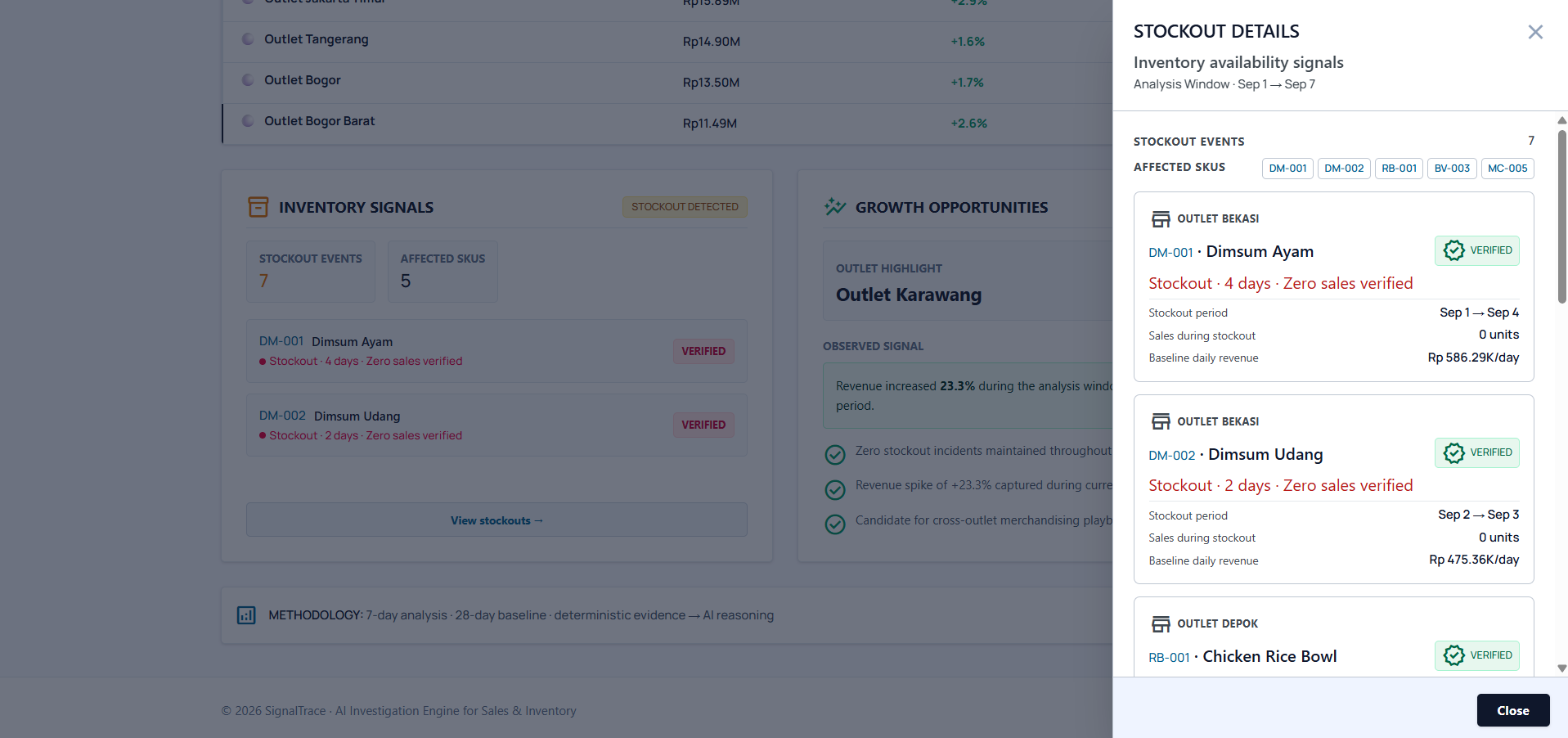
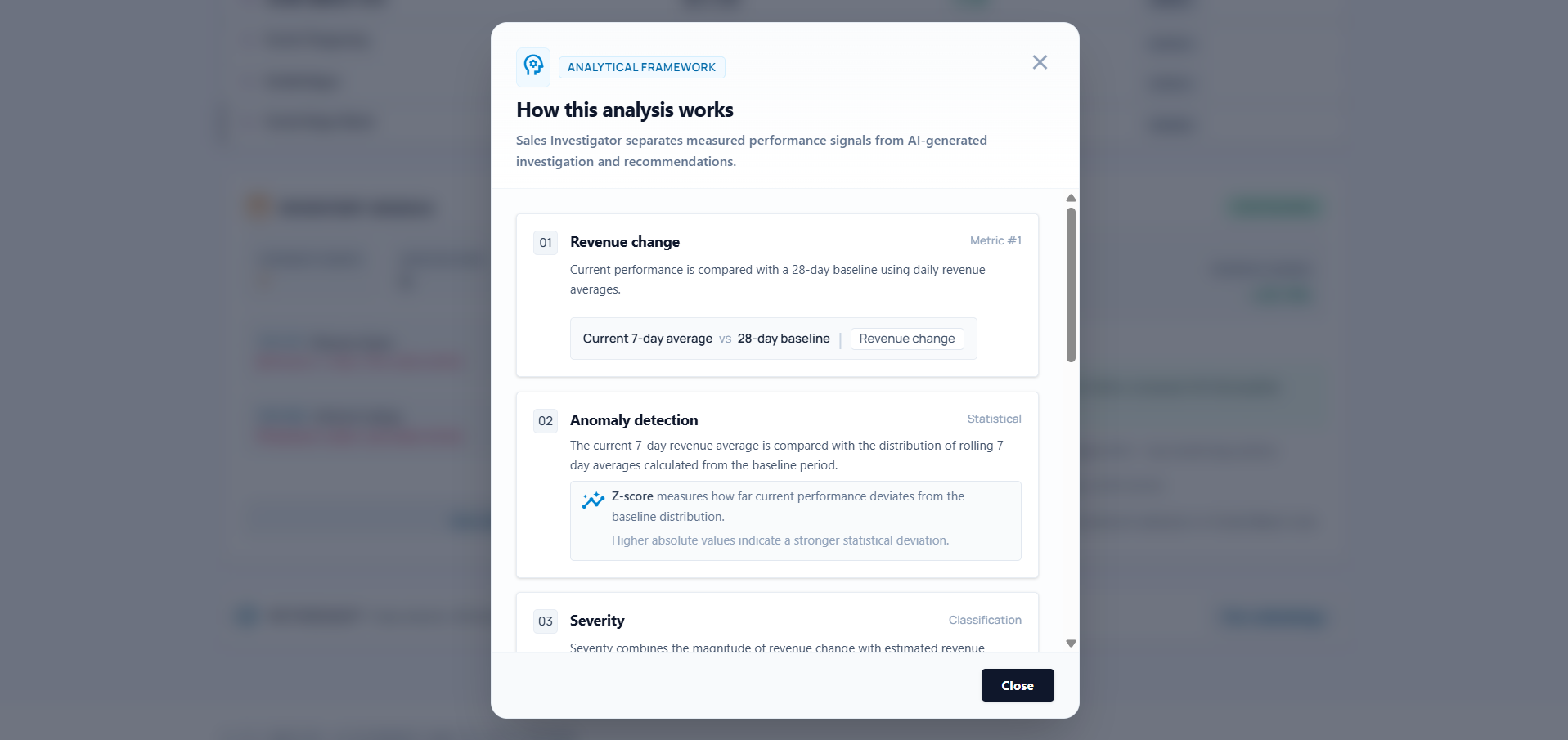
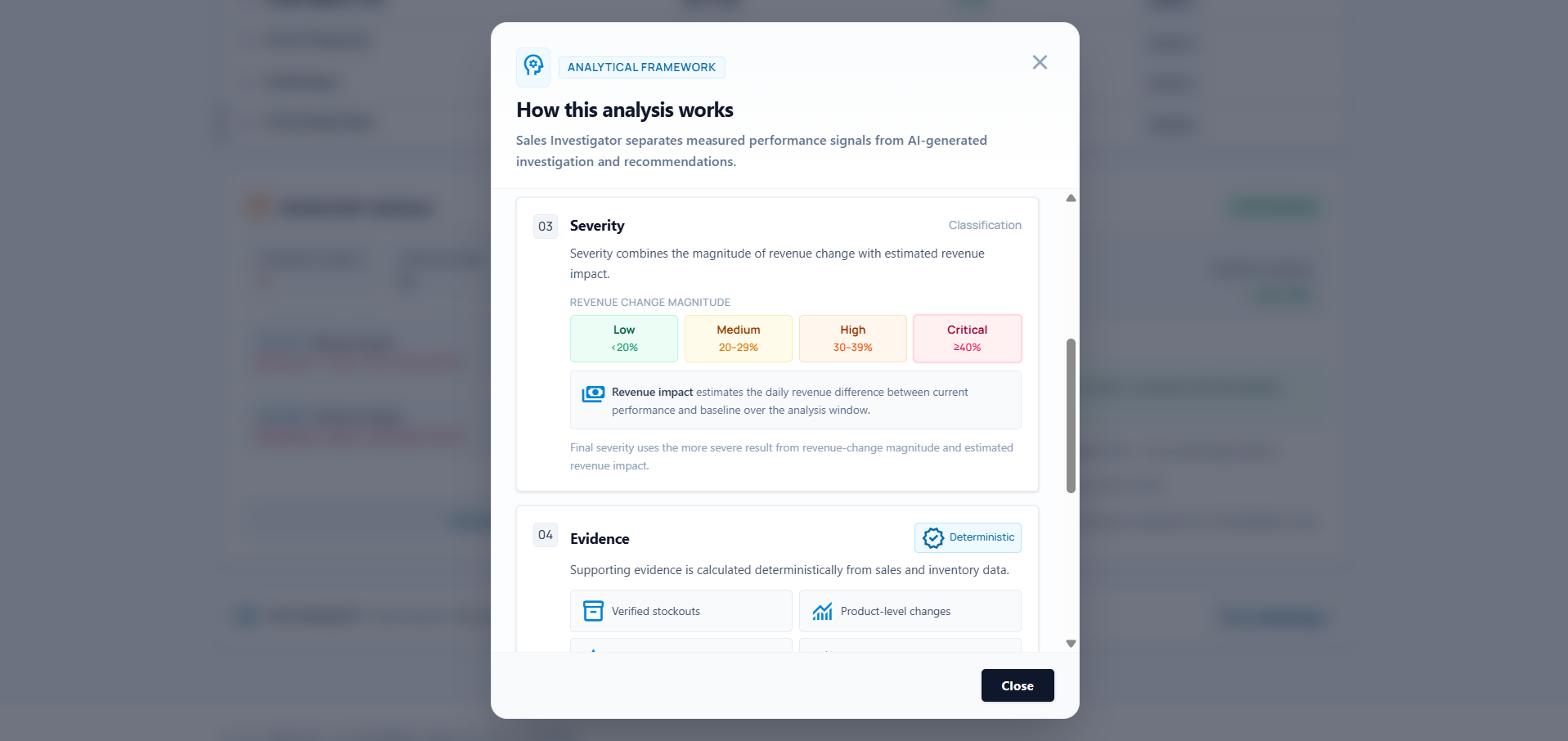
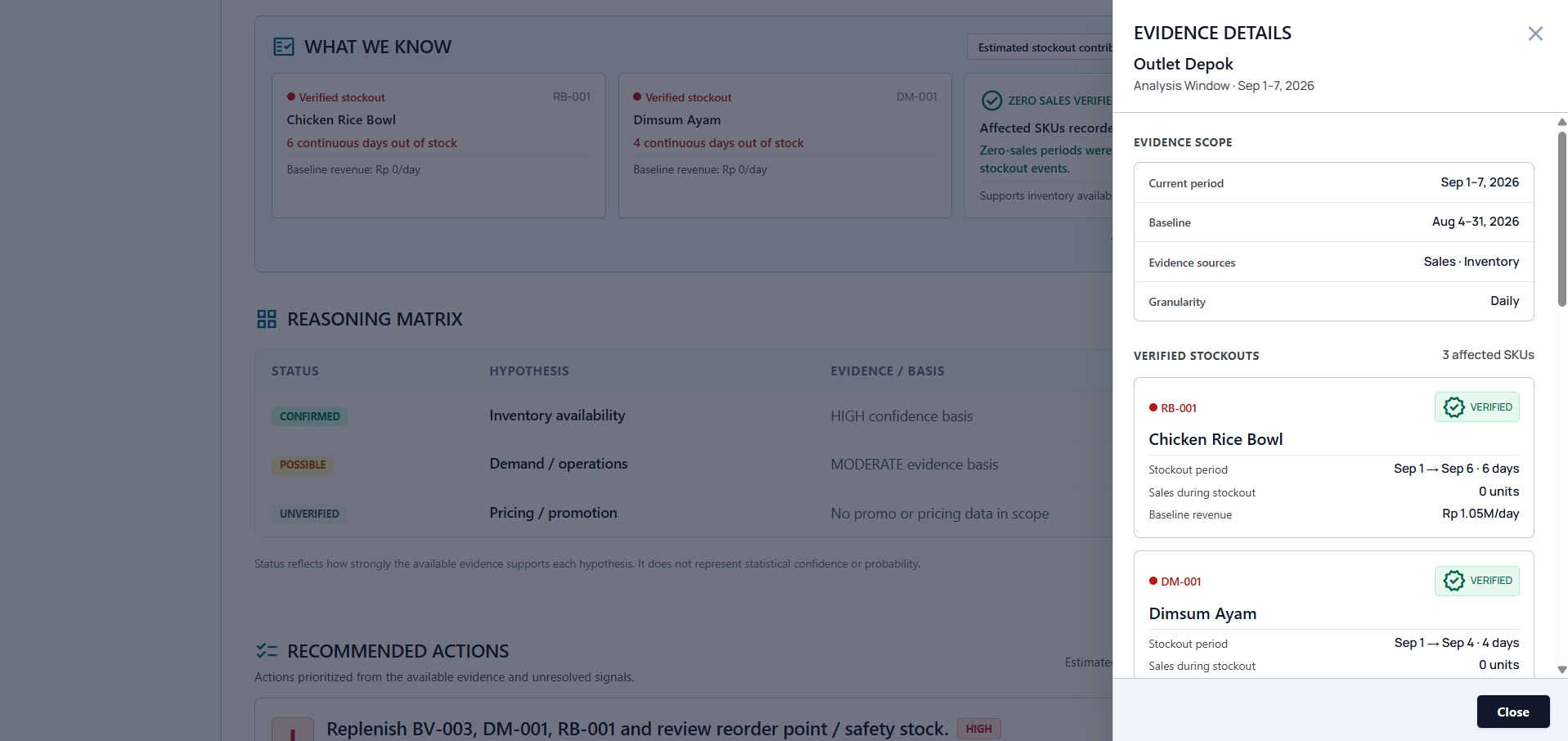
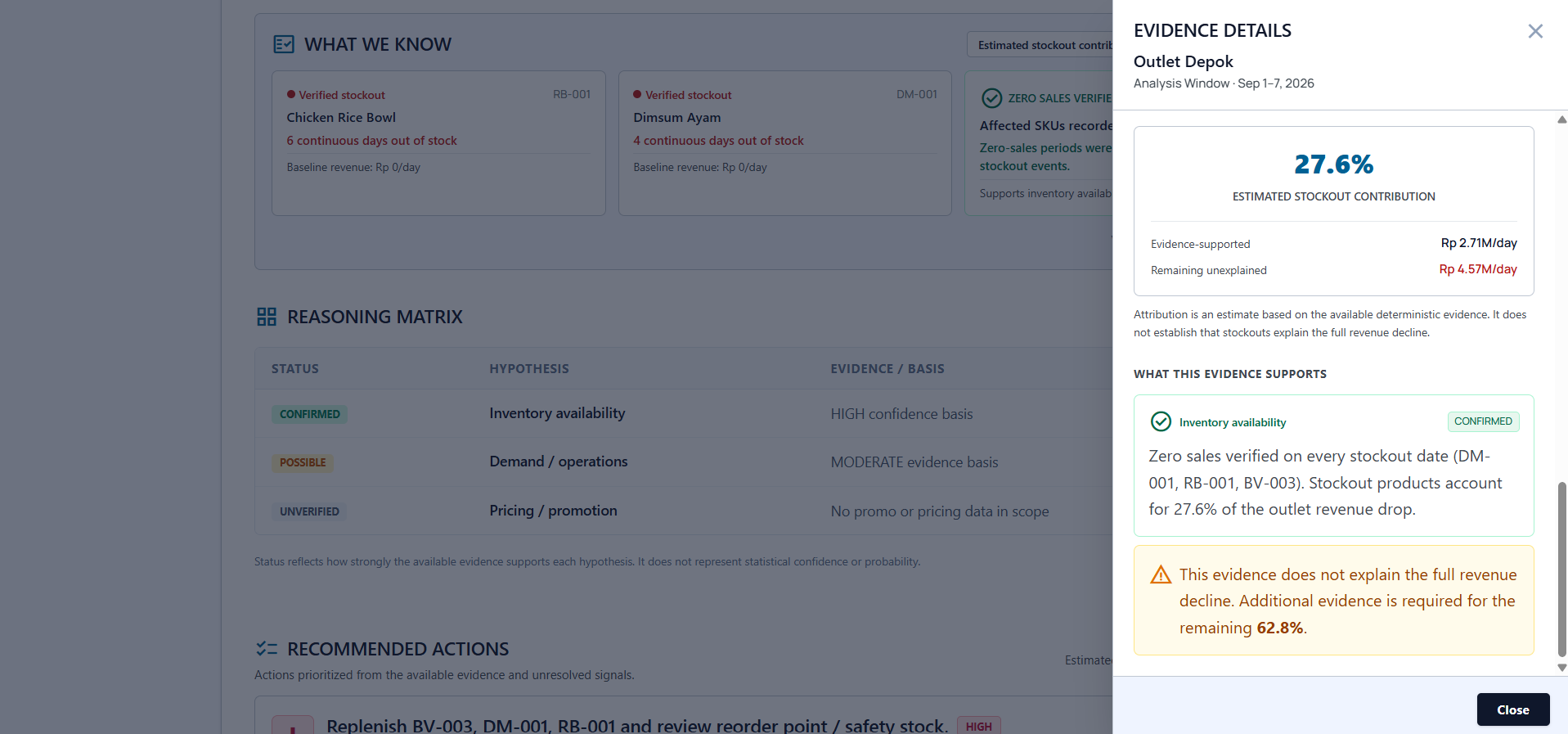
It first measures sales performance against a baseline and detects significant anomalies across outlets and products. It then looks for deterministic evidence that may contribute to those anomalies, such as verified stockouts, zero-sales periods, product-level declines, and revenue impact.
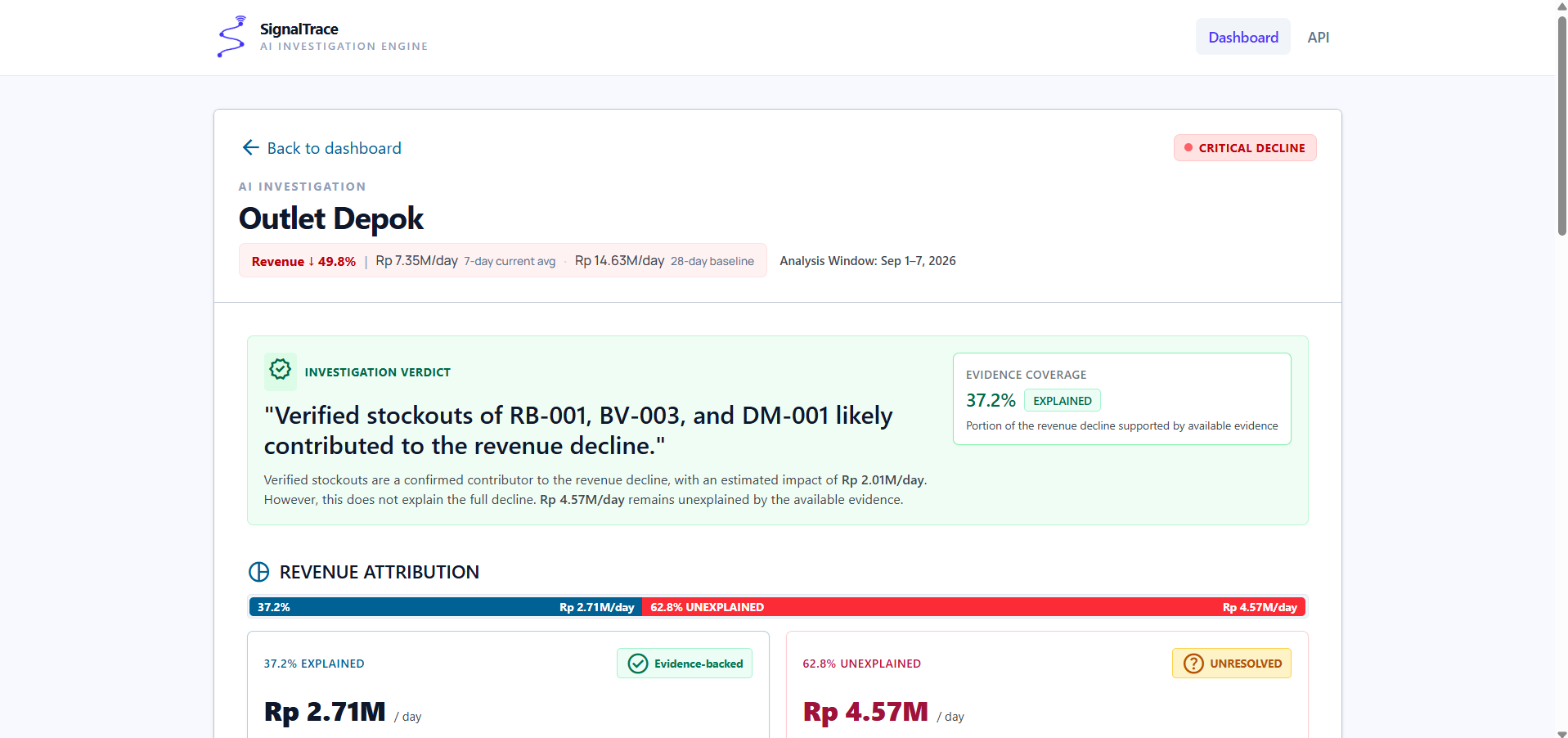
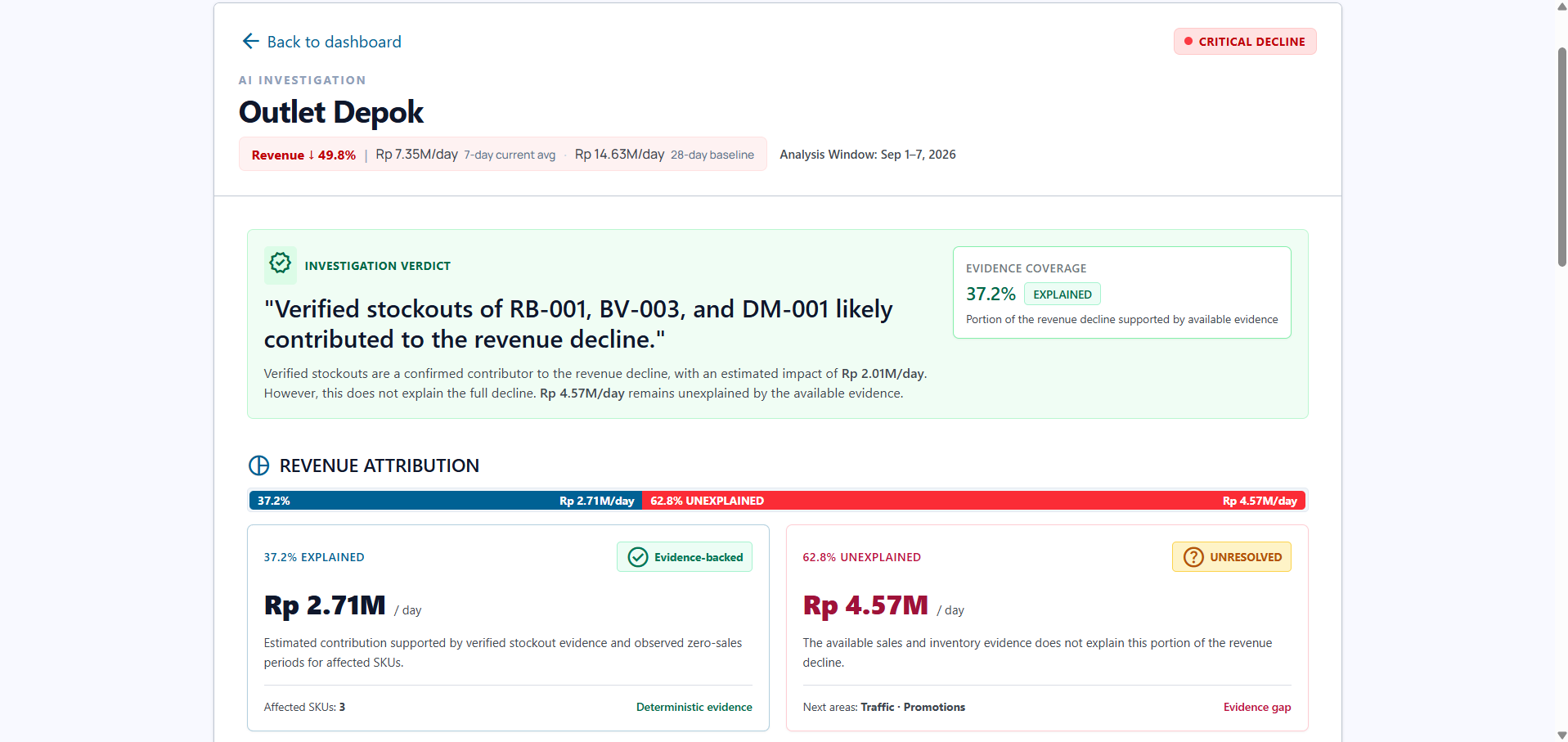
When an outlet requires investigation, SignalTrace generates an investigation dossier that includes:
- Revenue anomaly and severity
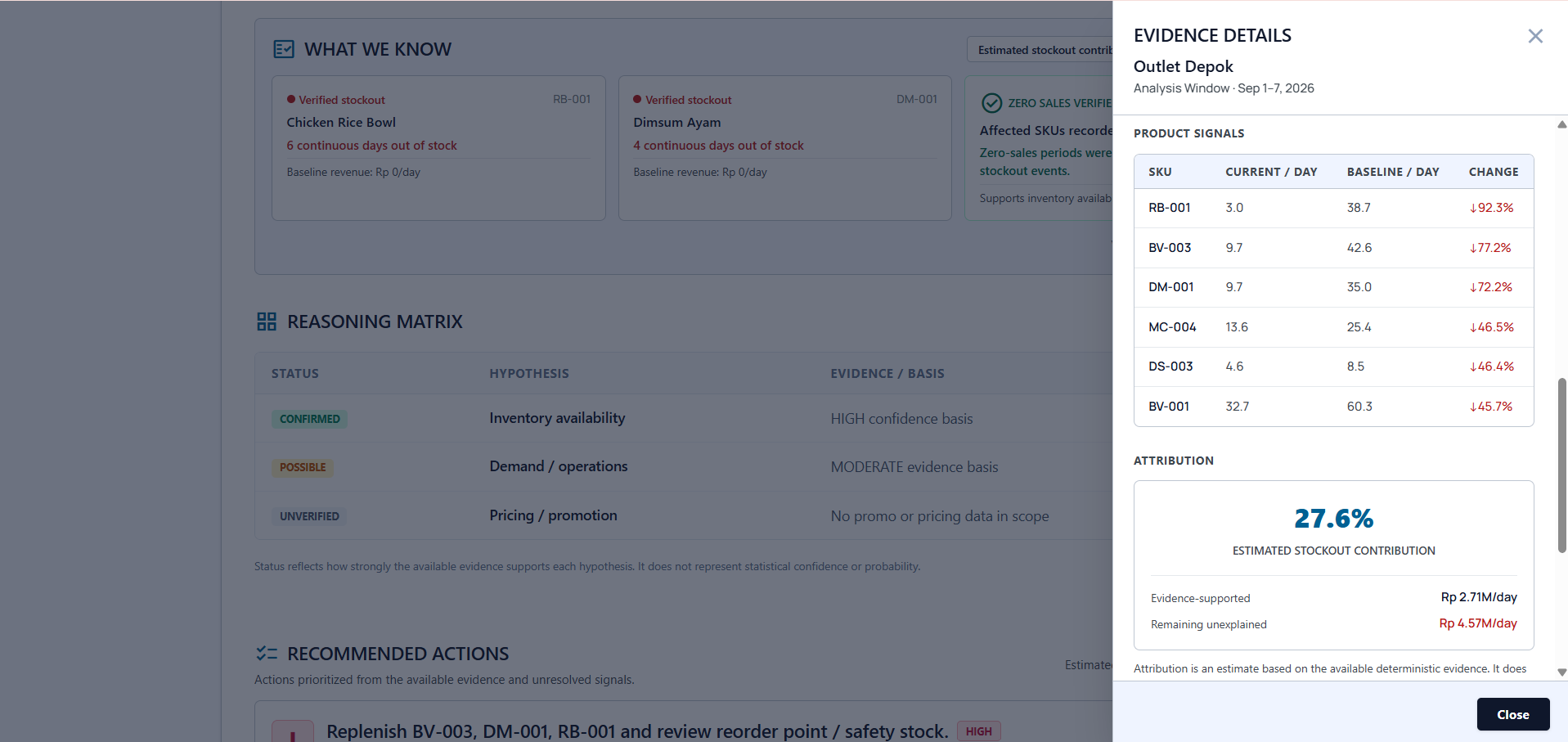
- Evidence-backed revenue attribution
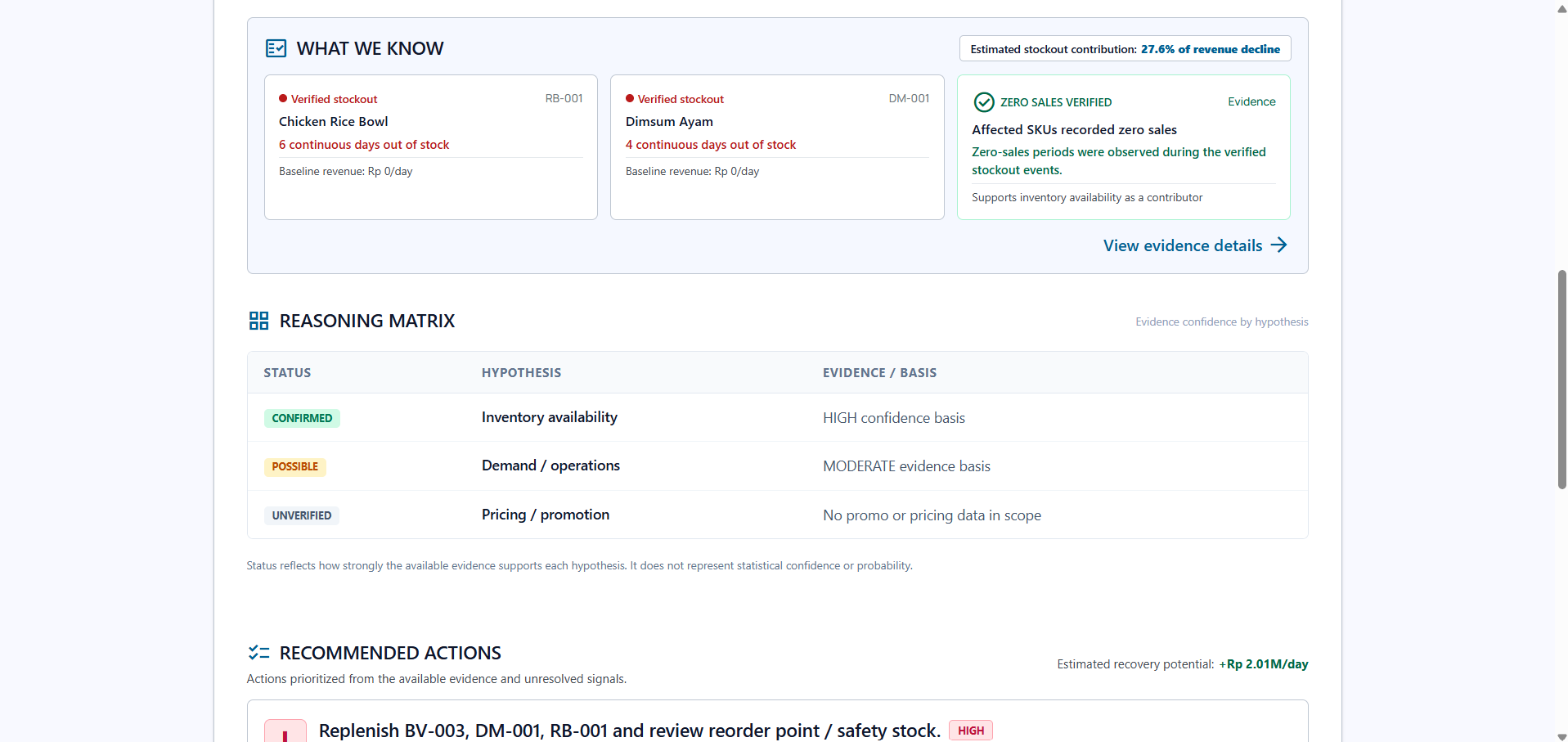
- Verified inventory signals
- Product-level evidence
- AI investigation verdict
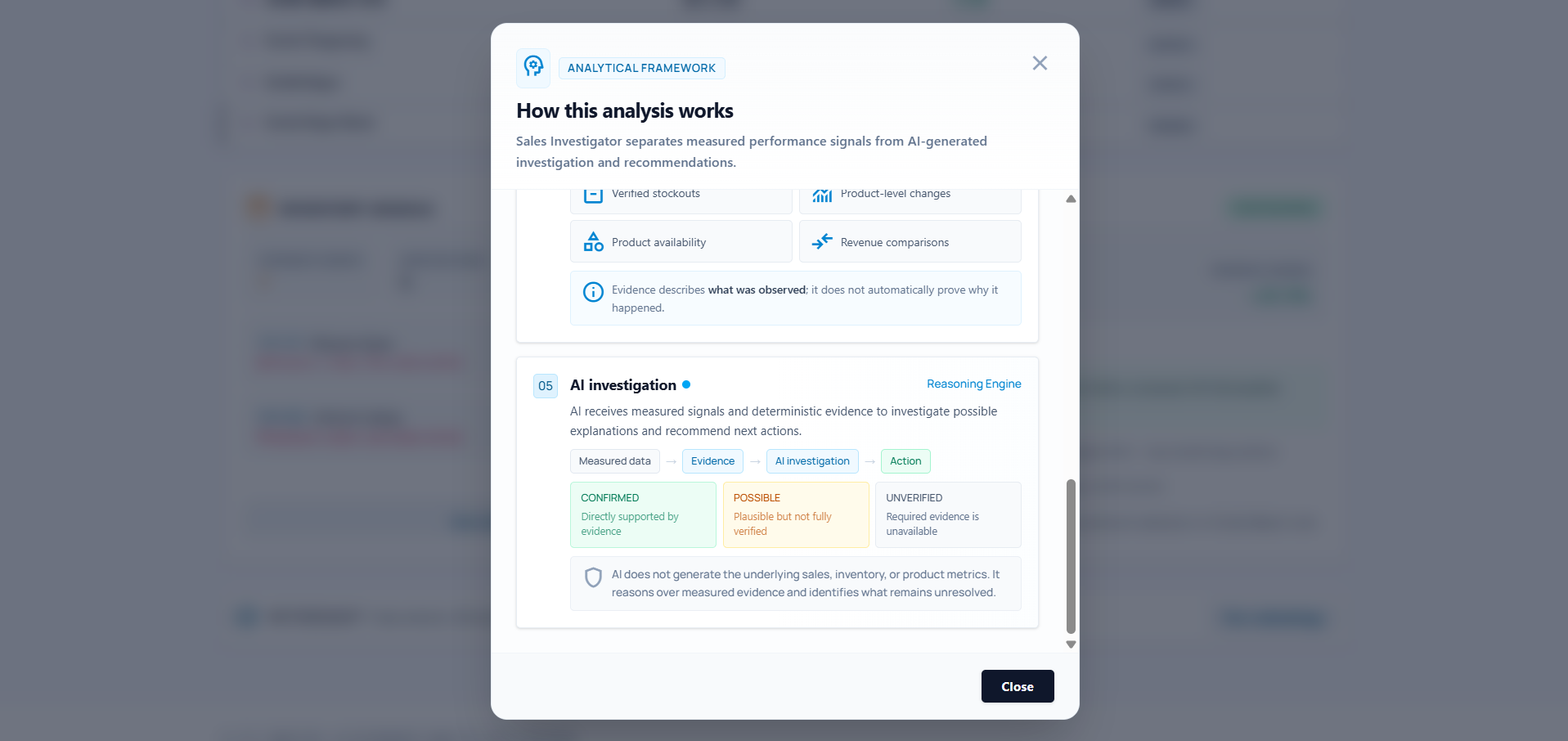
- Confidence states: Confirmed, Possible, and Unverified
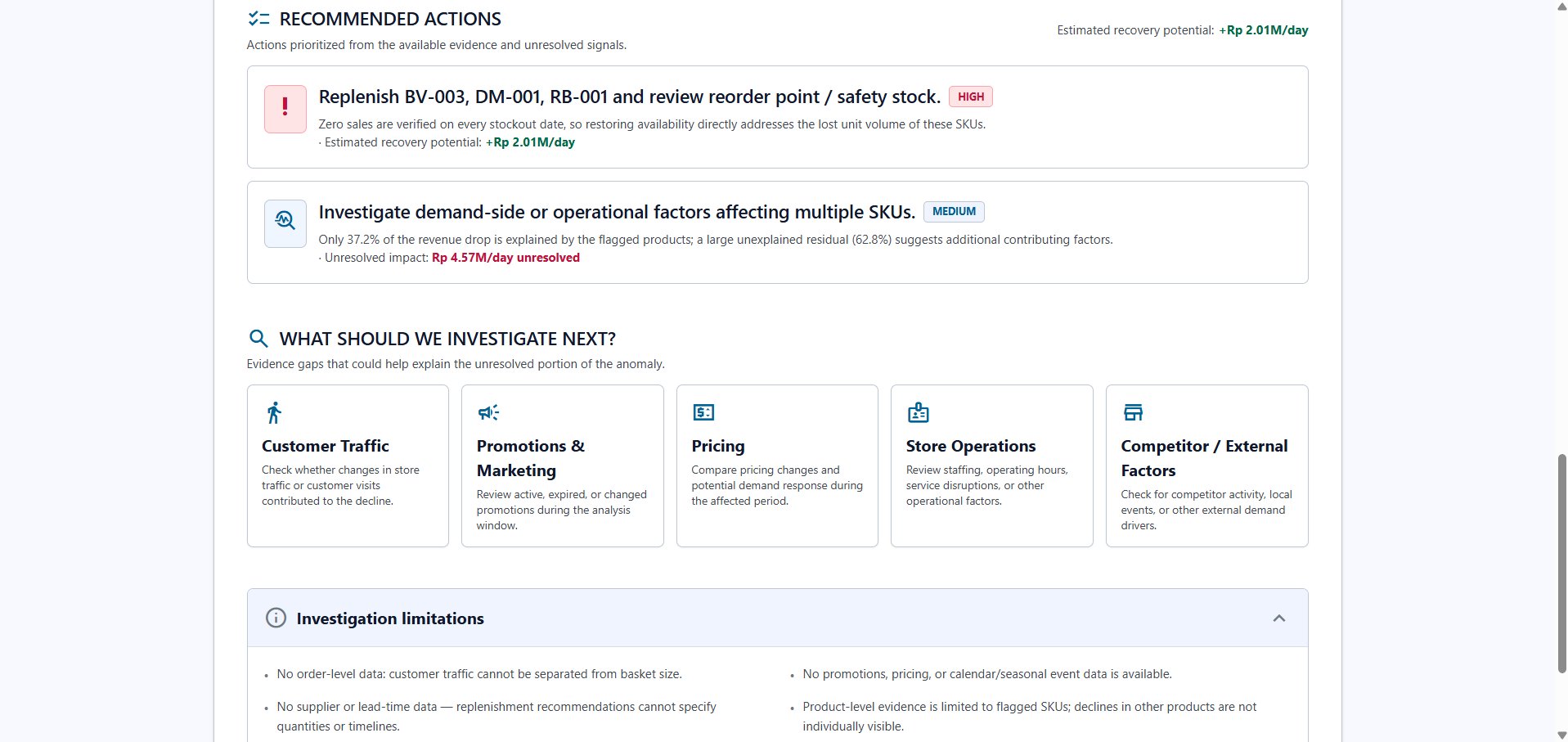
- Recommended actions
- The next evidence that should be investigated
A key principle is that AI does not generate the underlying metrics. SignalTrace separates measured evidence from AI reasoning so users can understand what the data proves and where uncertainty remains.
How we built it
SignalTrace uses a two-stage architecture: deterministic analysis first, AI reasoning second.
The deterministic layer calculates revenue changes, baseline comparisons, anomaly severity, product signals, stockout periods, and evidence-backed attribution.
The resulting signals and evidence are then passed to an AI investigation layer. Instead of asking the model to analyze raw data without constraints, we provide it with structured evidence and ask it to reason about possible causes, confidence, unresolved impact, and recommended next investigations.
The application was built with Next.js, React, TypeScript, Tailwind CSS, and Prisma, with an OpenAI-compatible AI gateway for the investigation layer.
The interface was designed around an investigation workflow rather than a conventional analytics dashboard:
Signal → Evidence → Investigation → Action → Next Evidence
Challenges we ran into
The biggest challenge was preventing the AI from becoming a generic "answer generator."
A sales decline can have many possible causes, but our dataset does not necessarily contain evidence for all of them. We therefore had to design the system so that the AI could explicitly acknowledge uncertainty instead of presenting assumptions as facts.
Another challenge was revenue attribution. We needed to distinguish between the portion of a decline that could be supported by deterministic evidence and the portion that remained unexplained.
We also had to balance analytical depth with a simple user experience. An investigation can contain many signals, but the user should quickly understand what happened, what is supported, and what to investigate next.
Accomplishments that we're proud of
We are proud that SignalTrace is more than an AI-generated sales summary.
The system creates a clear boundary between deterministic evidence and AI reasoning.
For example, when verified stockouts are detected, SignalTrace can identify them as a confirmed contributor while still recognizing that they may not explain the entire revenue decline. The remaining impact is explicitly marked as unresolved instead of being assigned to an unsupported cause.
We are also proud of the investigation dossier and reasoning matrix, which make AI uncertainty visible to the user rather than hiding it behind a single confidence score or generated explanation.
What we learned
We learned that adding AI to analytics is not necessarily about giving the model more data.
It is about giving the model the right evidence and the right boundaries.
Deterministic analysis is valuable for establishing facts, while AI is valuable for reasoning across those facts, identifying hypotheses, explaining uncertainty, and deciding what should be investigated next.
This led us to an important design principle:
Let deterministic systems establish what happened. Let AI help investigate why.
What's next for SignalTrace
The current version focuses on sales and inventory evidence. The next step is to connect additional evidence sources that can explain the unresolved portion of revenue impact.
Potential integrations include:
- Customer traffic and footfall
- Promotions and marketing campaigns
- Pricing and discount history
- Store operations
- Competitor and external market signals
We also want to make investigations more interactive, allowing analysts to ask follow-up questions, compare evidence across outlets, and continue an investigation as new evidence becomes available.
Ultimately, SignalTrace aims to become an AI investigation layer for business analytics — helping teams move from "sales are down" to "here is what the data proves, here is what it does not, and here is what we should investigate next."
Built With
- css
- next.js
- openai
- prisma
- react
- tailwind
- typescript
