SignalShield AI was inspired by a growing concern: military communications are increasingly vulnerable to deception. As AI-generated deepfakes become more realistic and accessible, we wanted to explore how technology could help verify the authenticity and reliability of critical communications before decisions are made.
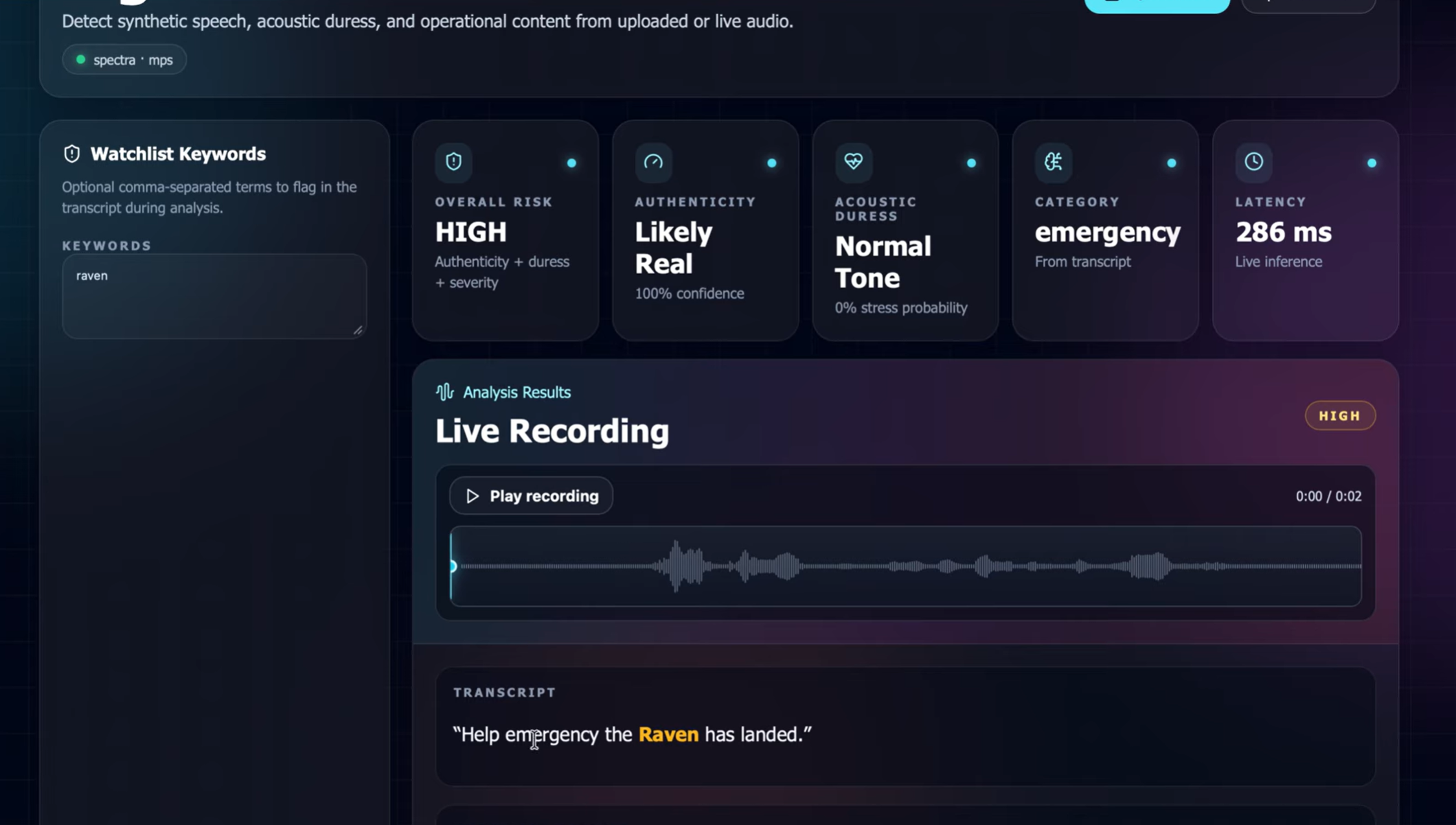
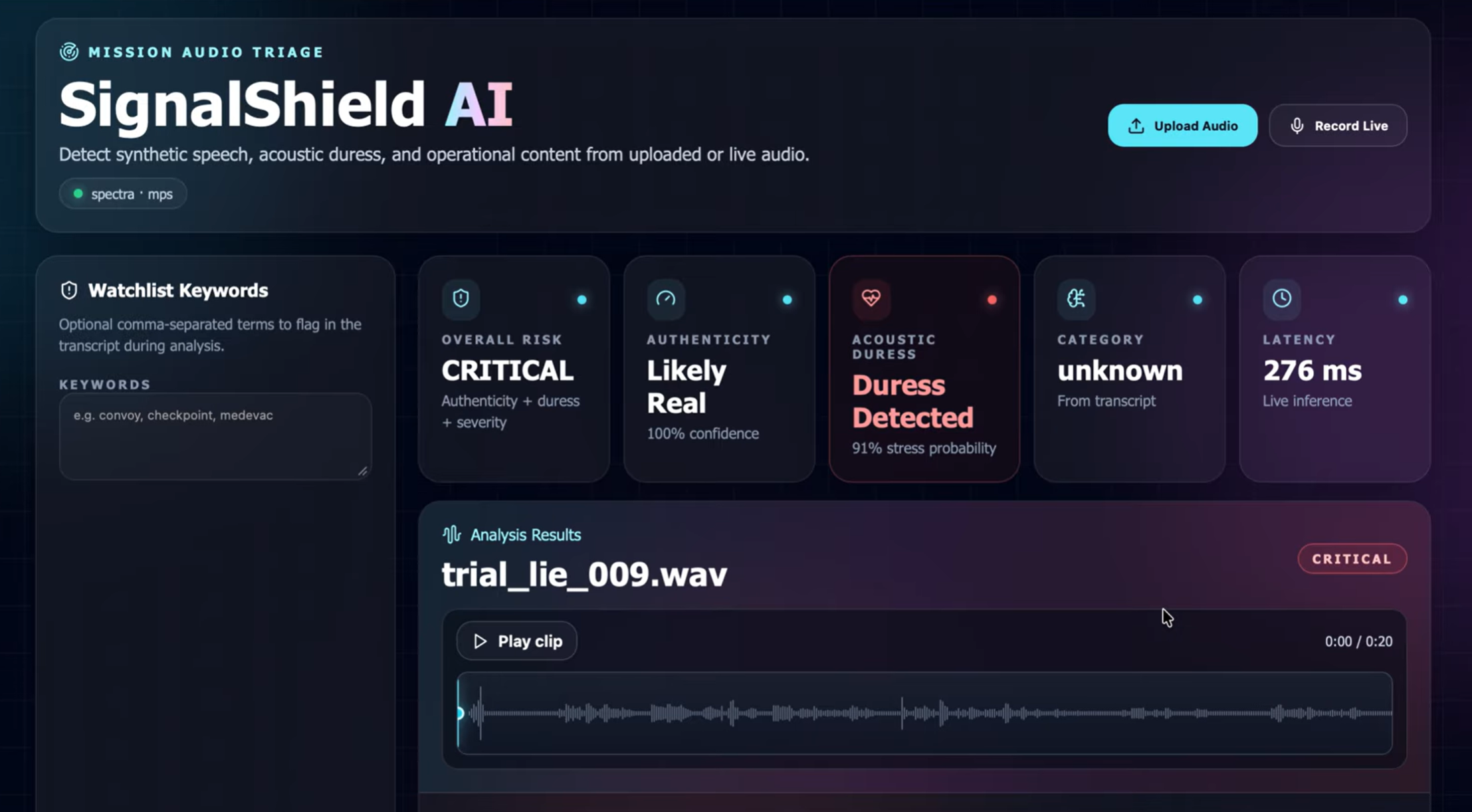
This project was developed during our first hackathon, where our team combined interests in artificial intelligence, cybersecurity, and defense applications. We built a platform that analyzes incoming audio through three separate pipelines: deepfake detection, stress and duress analysis, and message transcription with severity classification. Each team member took ownership of different components and later integrated them into a unified system capable of providing real-time assessments.
Throughout the project, we learned how to train and fine-tune machine learning models, process audio data, and balance accuracy with inference speed. Because military environments often operate under resource constraints, we prioritized lightweight models that could deliver results within seconds rather than relying on large, computationally expensive solutions.
One of the biggest challenges we faced was finding high-quality datasets. While deepfake datasets are becoming more available, obtaining reliable data for stress, duress, and military-style communications proved significantly more difficult. We also had to balance model performance with speed, ensuring the system remained practical for real-world deployment.
Overall, SignalShield AI taught us the importance of teamwork, rapid prototyping, and building AI systems that solve real operational problems. The project challenged us to think beyond model accuracy and consider how AI can support decision-making in high-stakes environments where trust, speed, and reliability are essential.

Log in or sign up for Devpost to join the conversation.