-
-
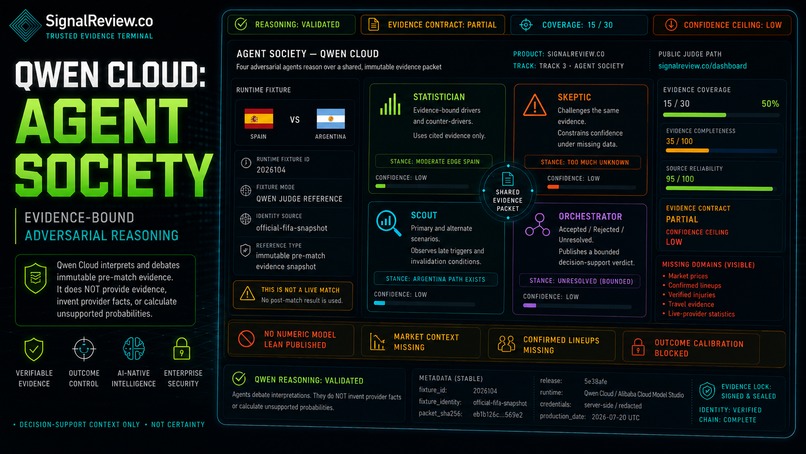
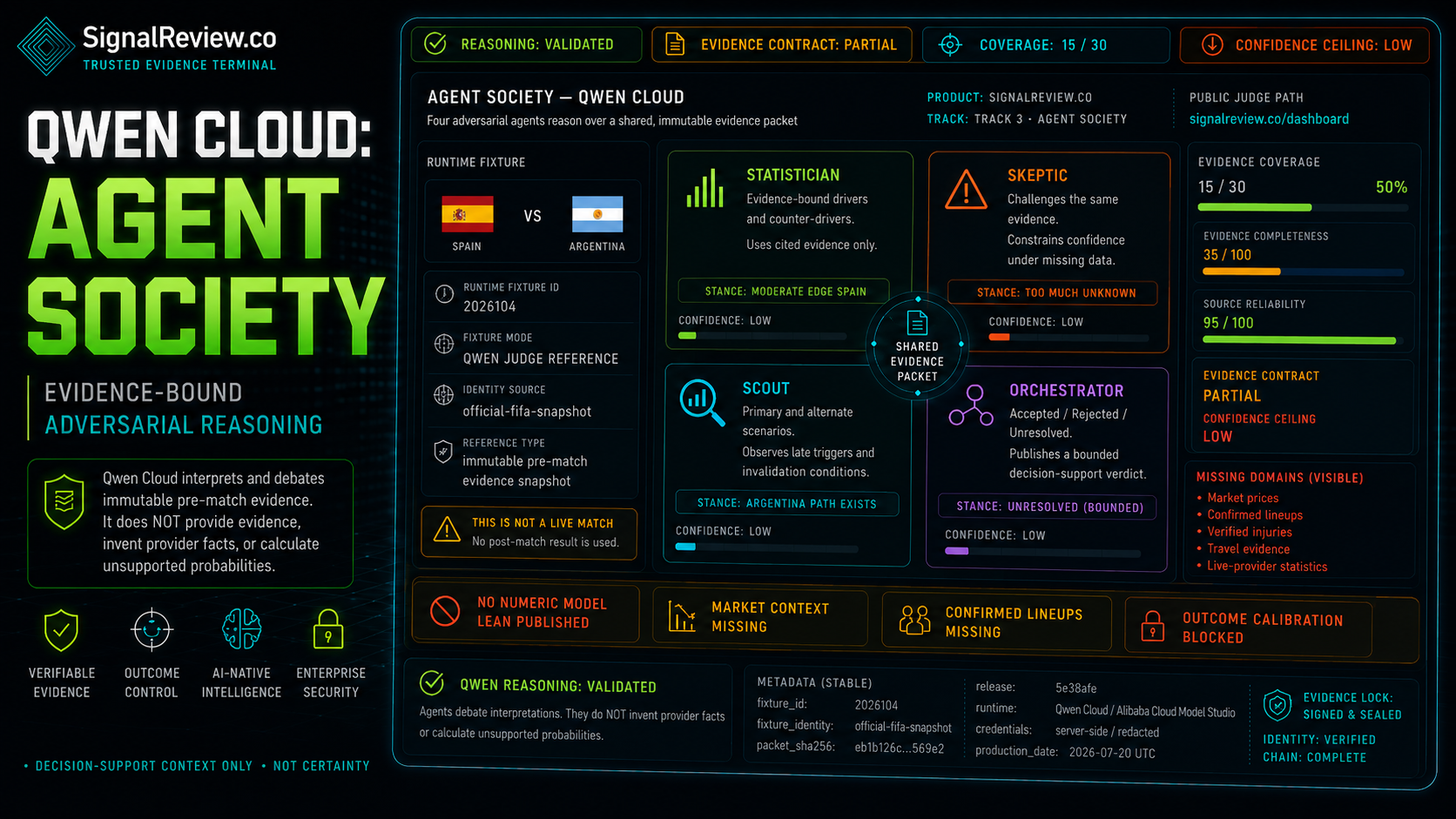
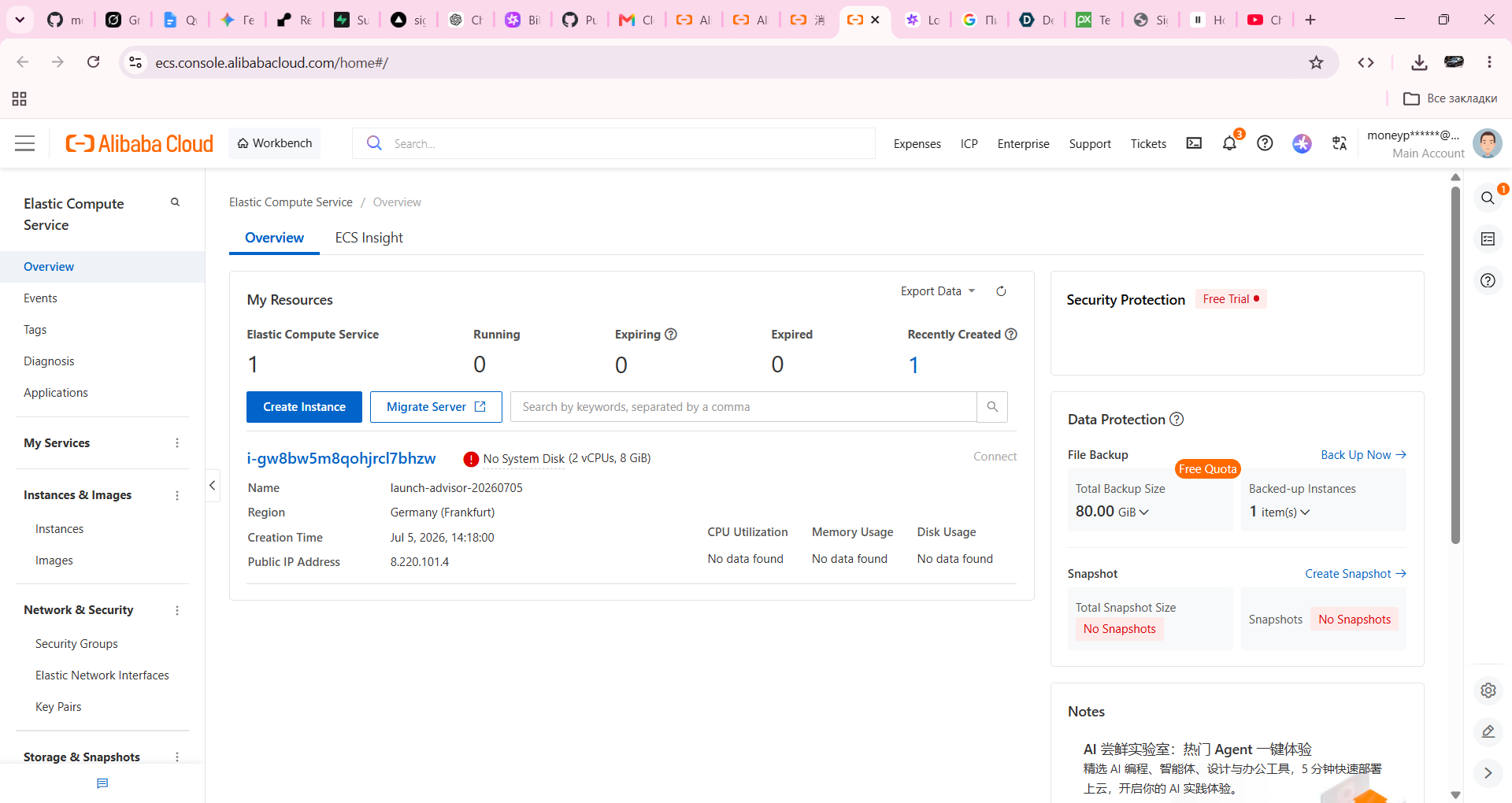
Qwen Cloud Agent Society: four agents cross-examine one evidence packet and publish a bounded verdict.
-
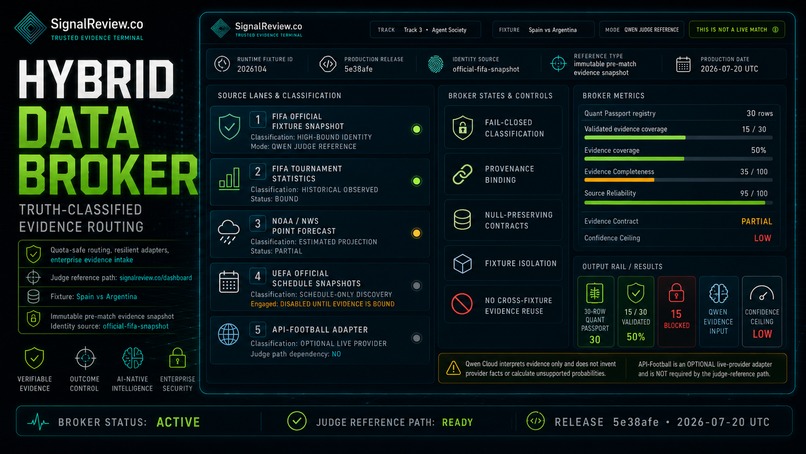
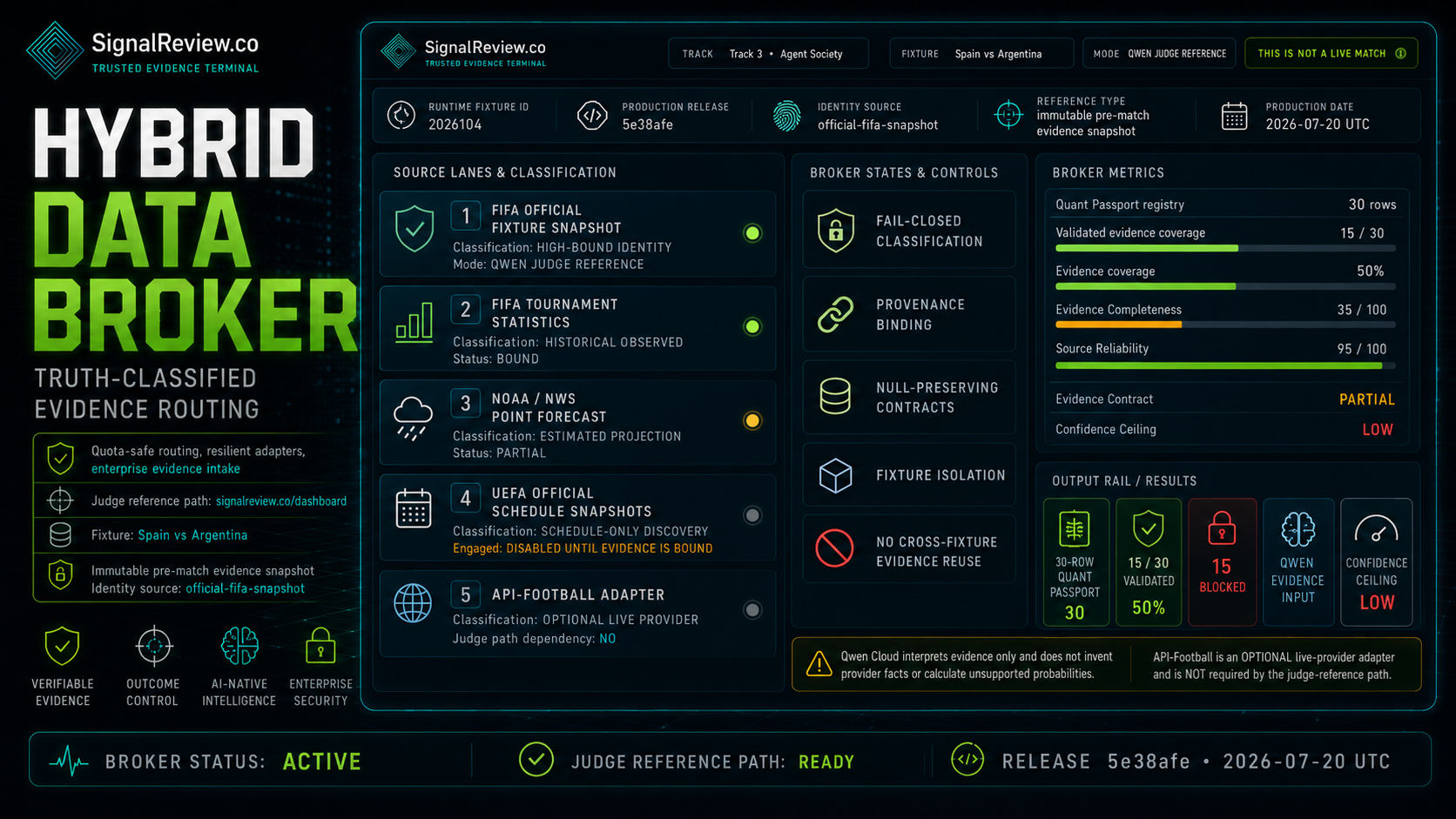
Quota-safe Hybrid Data Broker with provenance binding, null-preserving contracts, fixture isolation, and optional live-provider routing.
-
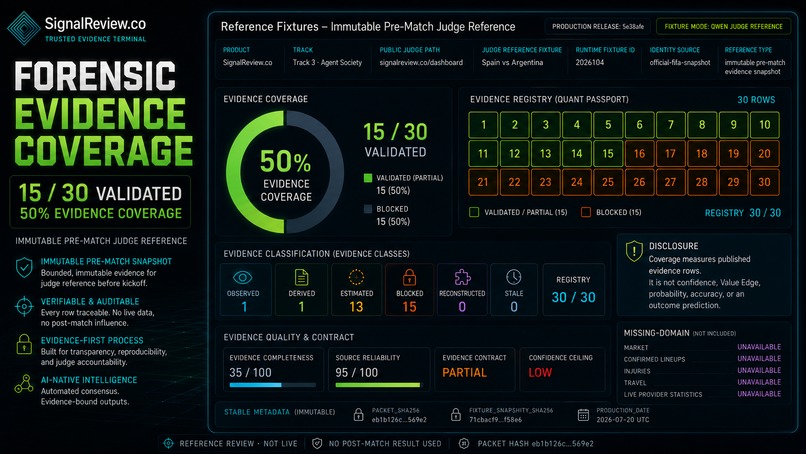
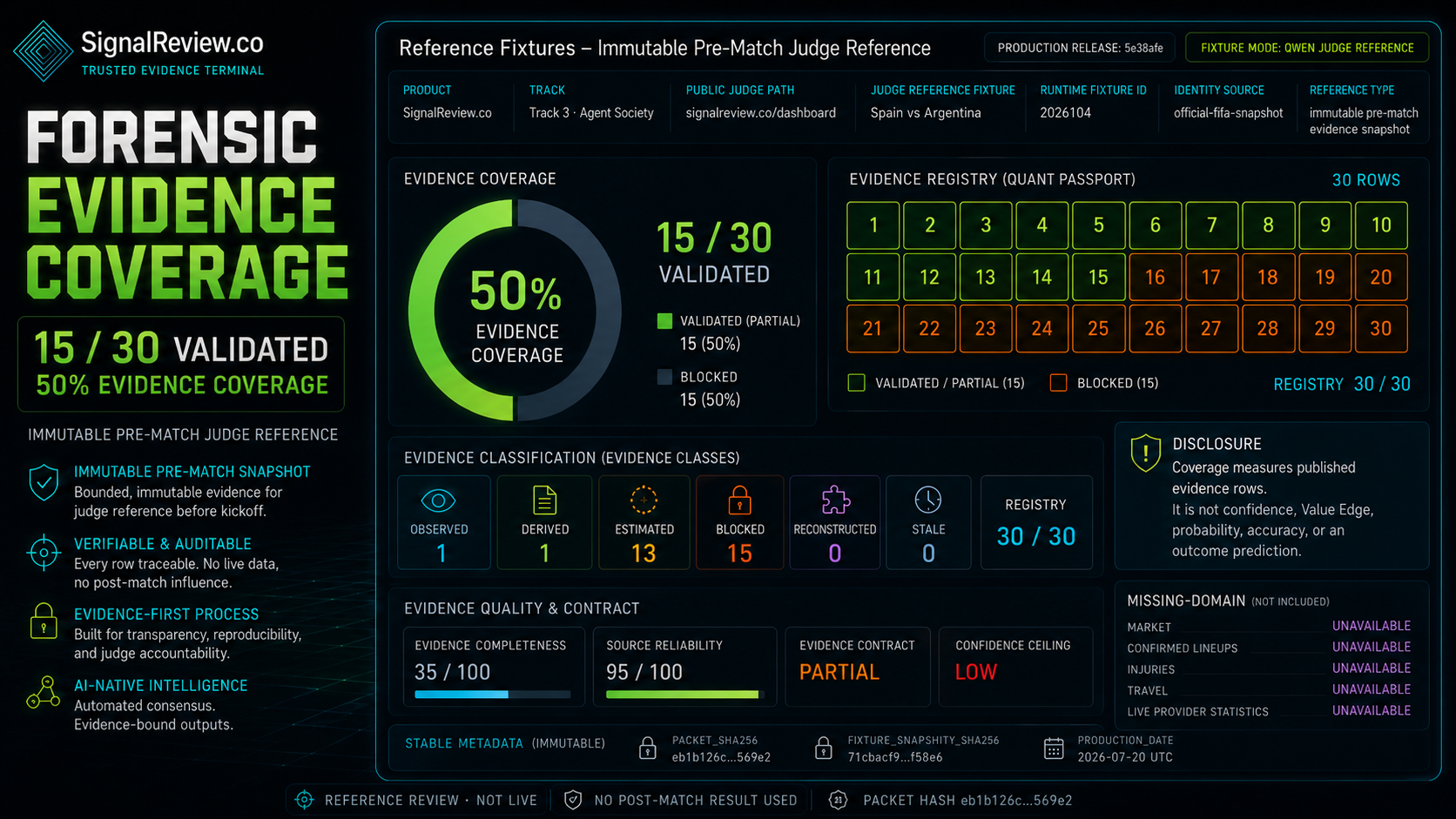
A 30-row Quant Passport keeps available, estimated, blocked, stale, and missing evidence visible.
-
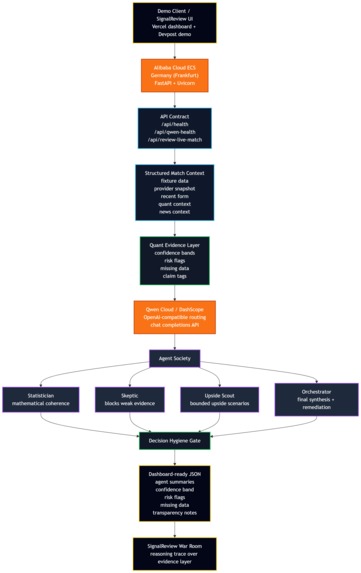
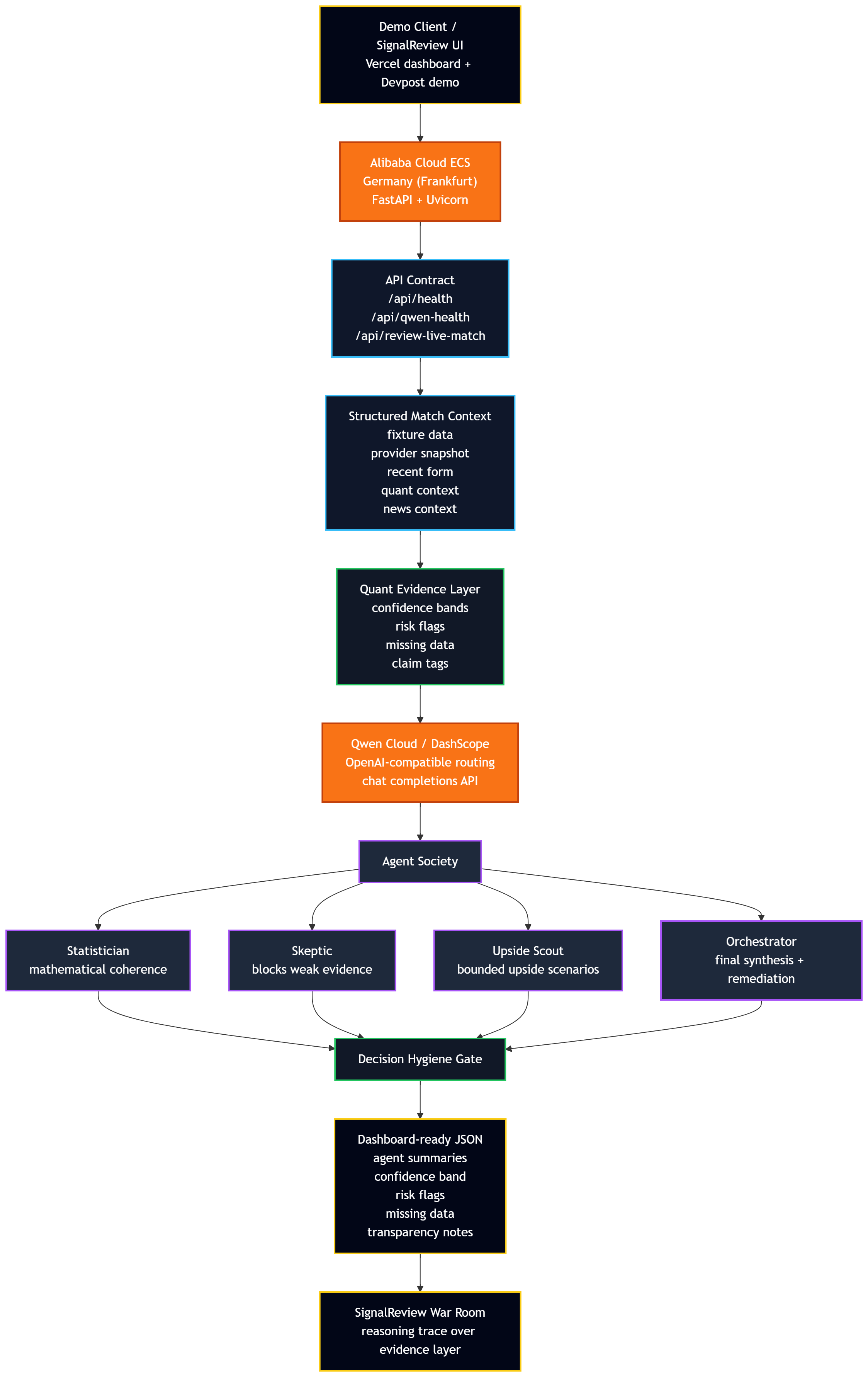
SignalReview architecture: evidence assembly, Qwen agents, validation gates, artifact binding, and the public War Room.
-
-
Inspiration
Sports intelligence products often fail in one of two ways: they either expose an opaque score with no audit trail, or place a general-purpose language model on top of fragmented data and allow it to produce confident claims that the underlying evidence cannot support.
We built SignalReview.co for the Global AI Hackathon Series with Qwen Cloud to demonstrate a different model: a Forensic Agent Society.
Instead of asking one model for a prediction, SignalReview assembles a shared, immutable evidence packet and sends it through four adversarial roles:
- Statistician
- Skeptic
- Scout
- Orchestrator
Each role interprets the same evidence under strict grounding rules. Missing inputs remain visible, unsupported numeric claims are rejected, and the final verdict is explicitly bounded by evidence completeness, source reliability, and calibration state.
The result is a sports intelligence War Room focused on transparent reasoning rather than certainty.
What It Does
The public judge workflow is:
- Open the SignalReview Match Board.
- Select the Spain vs Argentina fixture marked QWEN JUDGE REFERENCE.
- Press ENGAGE.
- Inspect the deterministic 30-row Quant Passport.
- Review the four-agent Qwen debate.
- Read the evidence-bound Orchestrator Verdict.
The current judge-reference fixture uses an immutable pre-match identity snapshot with visible provenance. It does not depend on a private fixture ID, hidden route, post-match result, or developer intervention.
How We Built It
SignalReview combines a Next.js and TypeScript terminal interface with a Python and FastAPI analytical engine.
Qwen Agent Society
The reasoning plane uses qwen-plus through Alibaba Cloud Model Studio-compatible endpoints.
The four roles have distinct responsibilities:
- Statistician identifies evidence-bound drivers and counter-drivers.
- Skeptic challenges the same evidence and constrains confidence when inputs are incomplete.
- Scout publishes primary and alternate scenarios together with observable invalidation conditions.
- Orchestrator classifies findings as accepted, rejected, unresolved, or invalidated and publishes the bounded final verdict.
The agents interpret deterministic evidence. They do not invent provider facts, odds, injuries, probabilities, lambda values, ROI, accuracy, or certainty.
Forensic Data Broker
The evidence broker classifies every input before it reaches the reasoning plane.
Its controls include:
- fail-closed source classification;
- provenance binding;
- null-preserving contracts;
- fixture isolation;
- content-addressed request caching;
- explicit blocked and unavailable states;
- protection against cross-fixture evidence reuse.
The Qwen Judge Reference path uses an official FIFA identity snapshot and versioned historical or estimated evidence adapters. API-Football remains an optional live-provider adapter and is not required for the public judge-reference workflow.
Quant Passport
Every analysis exposes a deterministic 30-row Quant Passport.
For the current judge-reference fixture, the UI visibly reports:
- Registry: 30 / 30
- Available evidence coverage: 15 / 30
- Evidence coverage: 50%
- Evidence completeness: 35 / 100
- Source reliability: 95 / 100
- Evidence contract: Partial
- Confidence ceiling: Low
Blocked, estimated, stale, reconstructed, unavailable, and path-missing rows remain visible. Historical or projected evidence is never presented as provider-observed evidence.
Coverage measures published evidence classes. It is not confidence, Value Edge, accuracy, odds, or an outcome probability.
Mathematical and Contract Discipline
Every material agent claim must bind to valid evidence references.
The Skeptic challenges the Statistician on symmetric evidence tracks:
$$ K_1 \rightarrow S_1,\qquad K_2 \rightarrow S_2,\qquad K_3 \rightarrow S_3 $$
The Orchestrator evaluates the resulting claims against the evidence contract and current calibration boundary.
When required inputs such as market context or confirmed lineups are unavailable, the system does not manufacture a numeric outcome. It publishes:
$$ \text{outcome_calibration} = \text{blocked} $$
For the current reference fixture, no numeric model lean is published. The verdict remains evidence-monitoring and uncertainty-aware.
Challenges We Overcame
1. Preventing Evidence Drift
Language models can paraphrase evidence incorrectly or introduce unsupported numeric statements.
We implemented:
- evidence-reference validation;
- structured claim tags;
- numeric grounding checks;
- repair attempts for malformed model output;
- explicit fallback states;
- visible confidence ceilings;
- rejection of claims that cannot bind to the supplied packet.
2. Keeping Missing Data Visible
A common failure mode in analytical products is silently replacing missing information with estimates.
SignalReview preserves null, blocked, stale, unavailable, path_missing, and schema_mismatch states in the user interface. Estimated evidence remains classified as estimated and cannot raise confidence as if it were observed.
3. Quota and Latency Control
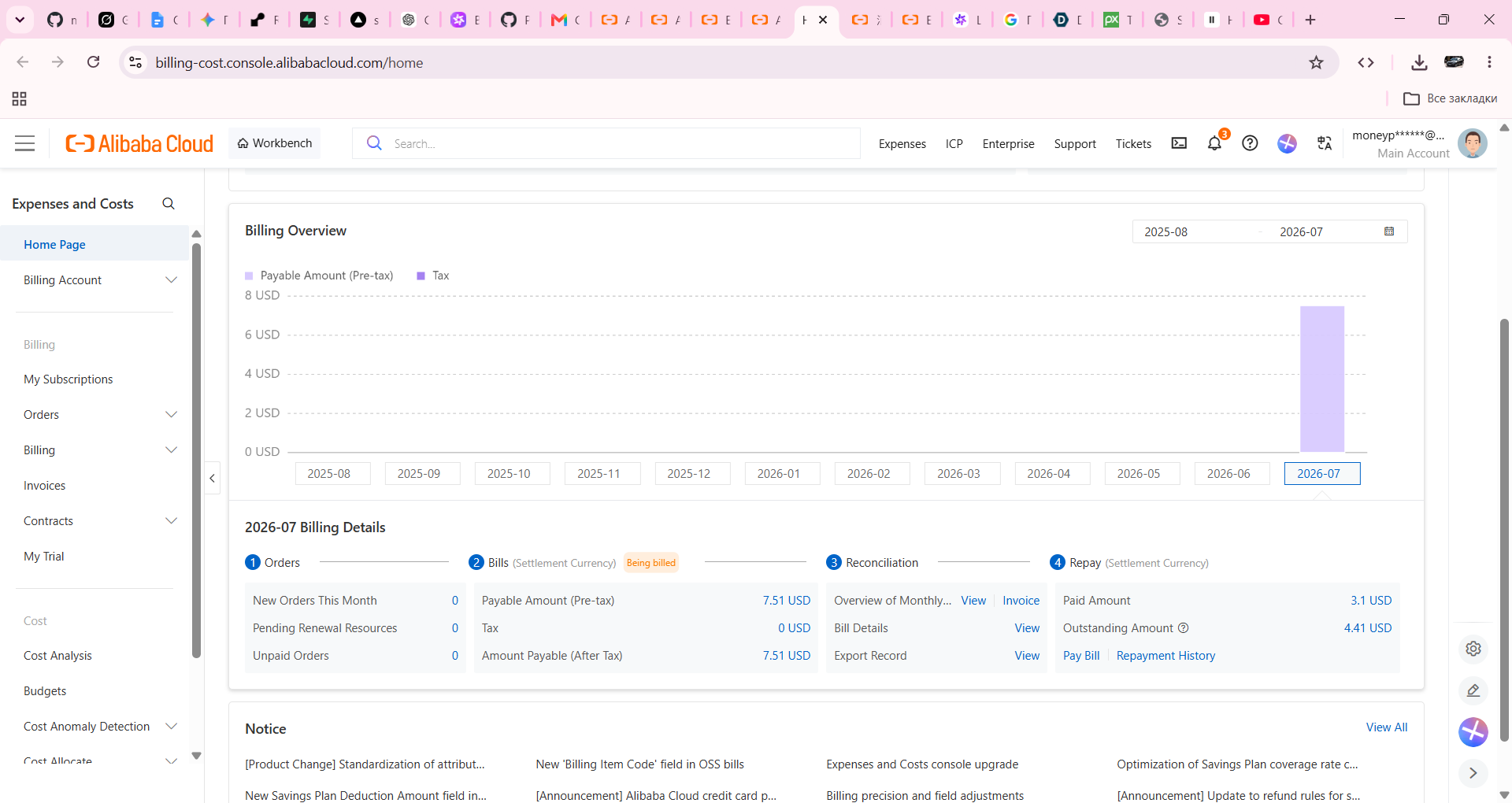
Repeated provider and model calls can create unnecessary fan-out and unpredictable cost.
The broker uses deterministic request budgets, caching, adapter isolation, and quota-safe fallback paths. Duplicate evidence payloads can be reused without repeatedly querying optional external providers.
4. Building a Judge-Safe Public Journey
The public experience had to work from the main dashboard rather than a hidden demonstration route.
We built a visible reference fixture and a guided workflow:
Match Board → fixture selection → ENGAGE → Quant Passport → four-agent debate → Orchestrator Verdict
This gives judges a reproducible path without credentials, private identifiers, or unpublished instructions.
What We Learned
The most important lesson was that multi-agent systems become more useful when disagreement is preserved rather than hidden.
The Skeptic is not a cosmetic second opinion. Its objections directly affect the confidence ceiling and the Orchestrator’s accepted, rejected, and unresolved findings.
We also learned that missing-data UX is part of the reasoning system. Showing why calibration is blocked can be more valuable and trustworthy than producing a forced prediction.
Finally, authentic model participation requires more than calling an API. The model must operate inside a reproducible evidence contract with visible inputs, bounded outputs, and validation around every published claim.
Responsible Use
SignalReview is decision-support software.
It does not provide:
- guaranteed picks;
- certainty claims;
- staking instructions;
- bookmaker services;
- ROI promises;
- fabricated probabilities;
- invented provider facts.
Missing evidence can only lower confidence or block calibration. It cannot be silently converted into observed evidence.
Testing and Judge Verification
The public production journey is available at:
https://signalreview.co/dashboard
Reference fixture:
- Spain vs Argentina
- Runtime fixture ID:
2026104 - Mode:
QWEN JUDGE REFERENCE - Identity source:
official-fifa-snapshot - Reference type: immutable pre-match evidence snapshot
The judge-facing repository contains the Qwen integration package, contracts, documentation, and reproducible validation materials:
https://github.com/moneyparking/Signalreview-Alibaba-Qwen
The attached Judge Verification Pack v1.2 provides the 60-second walkthrough, current release fingerprint, evidence classifications, responsible-use boundaries, and production acceptance checklist.
Built With
- agent-society
- alibaba-cloud
- fastapi
- forensic-analytics
- json-schema
- model-studio
- multi-agent
- next.js
- playwright
- python
- qwen-cloud
- qwen-plus
- react
- tailwind-css
- typescript
- zero-trust


Log in or sign up for Devpost to join the conversation.