Inspiration
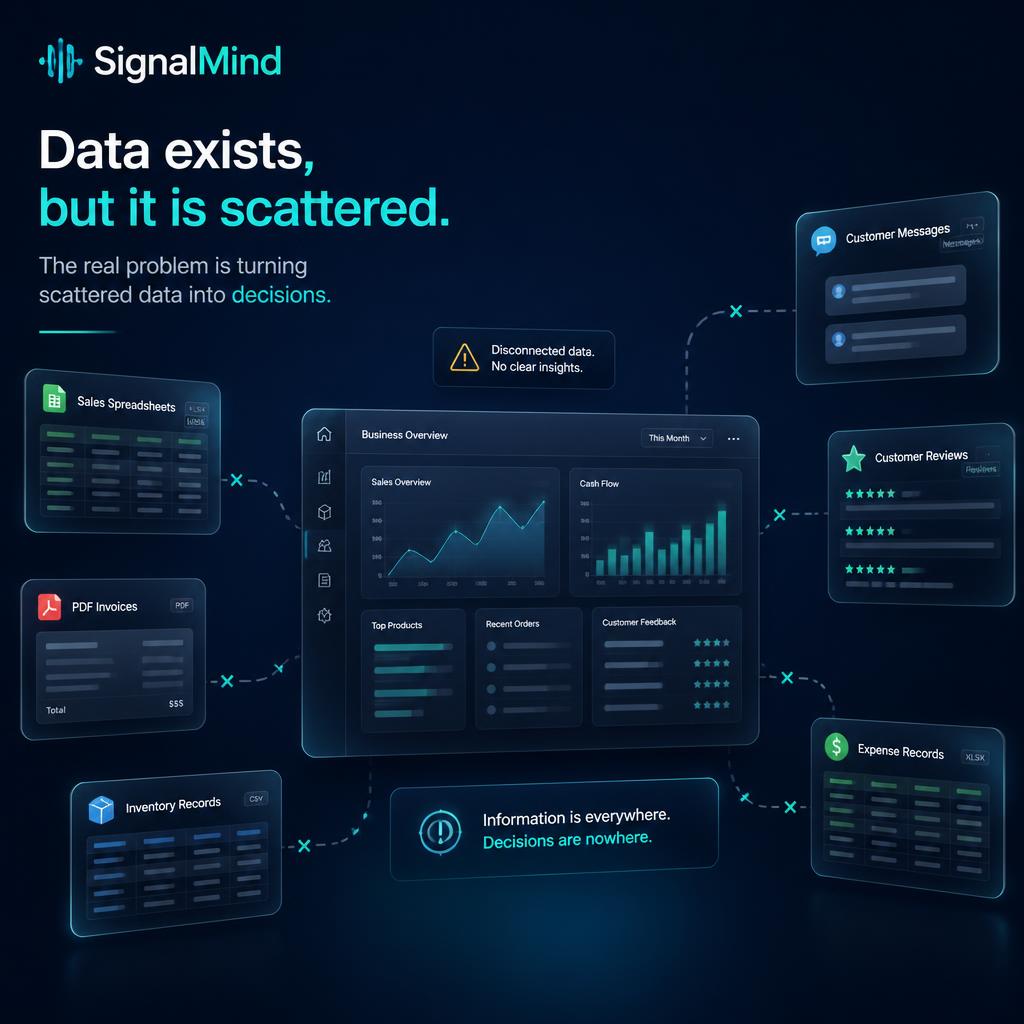
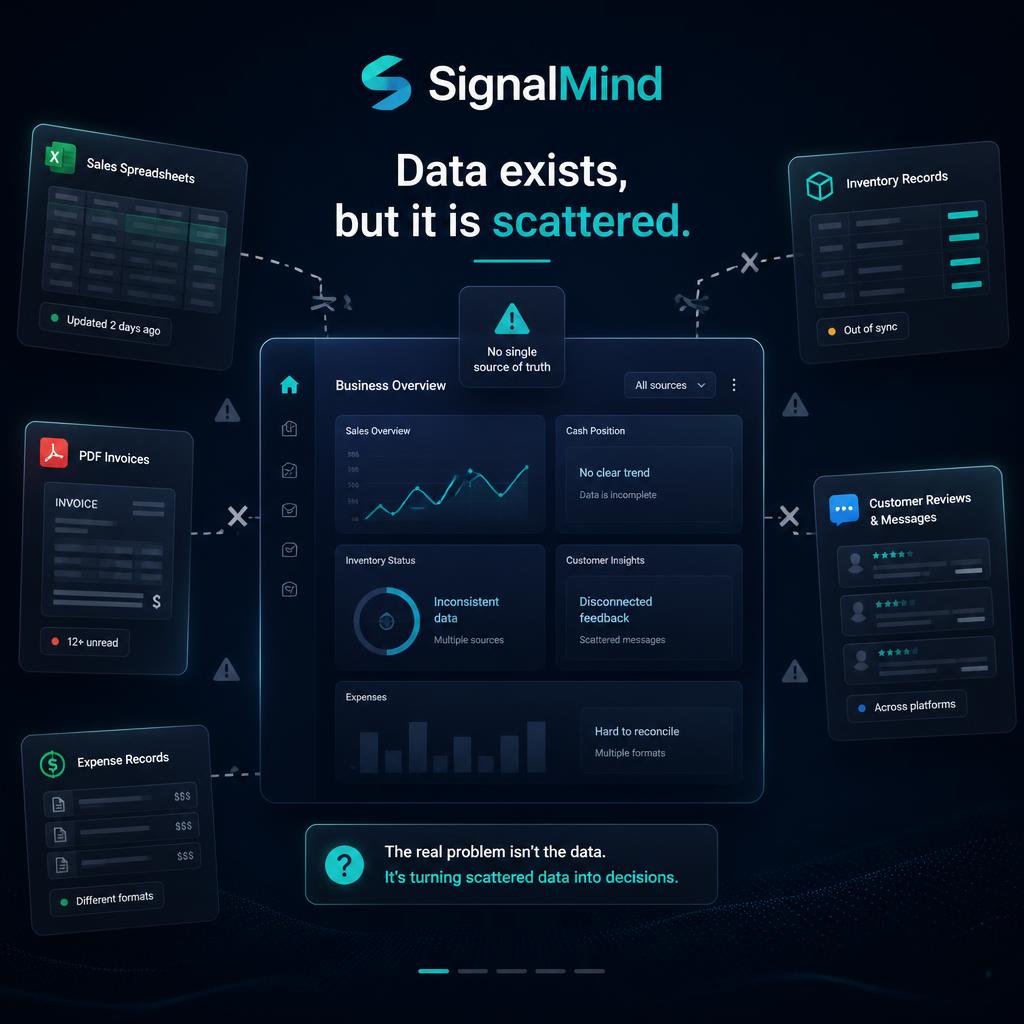
Businesses today have more data than ever, but that data is scattered across spreadsheets, PDFs, ERP systems, logs, and customer communications. The real problem isn't a lack of information — it's the difficulty of turning all that fragmented information into a reliable decision.
We were inspired to build SignalMind around a simple question: What if AI could connect scattered business signals, identify emerging risks, explain the evidence behind them, and tell decision-makers what to investigate next?
What it does
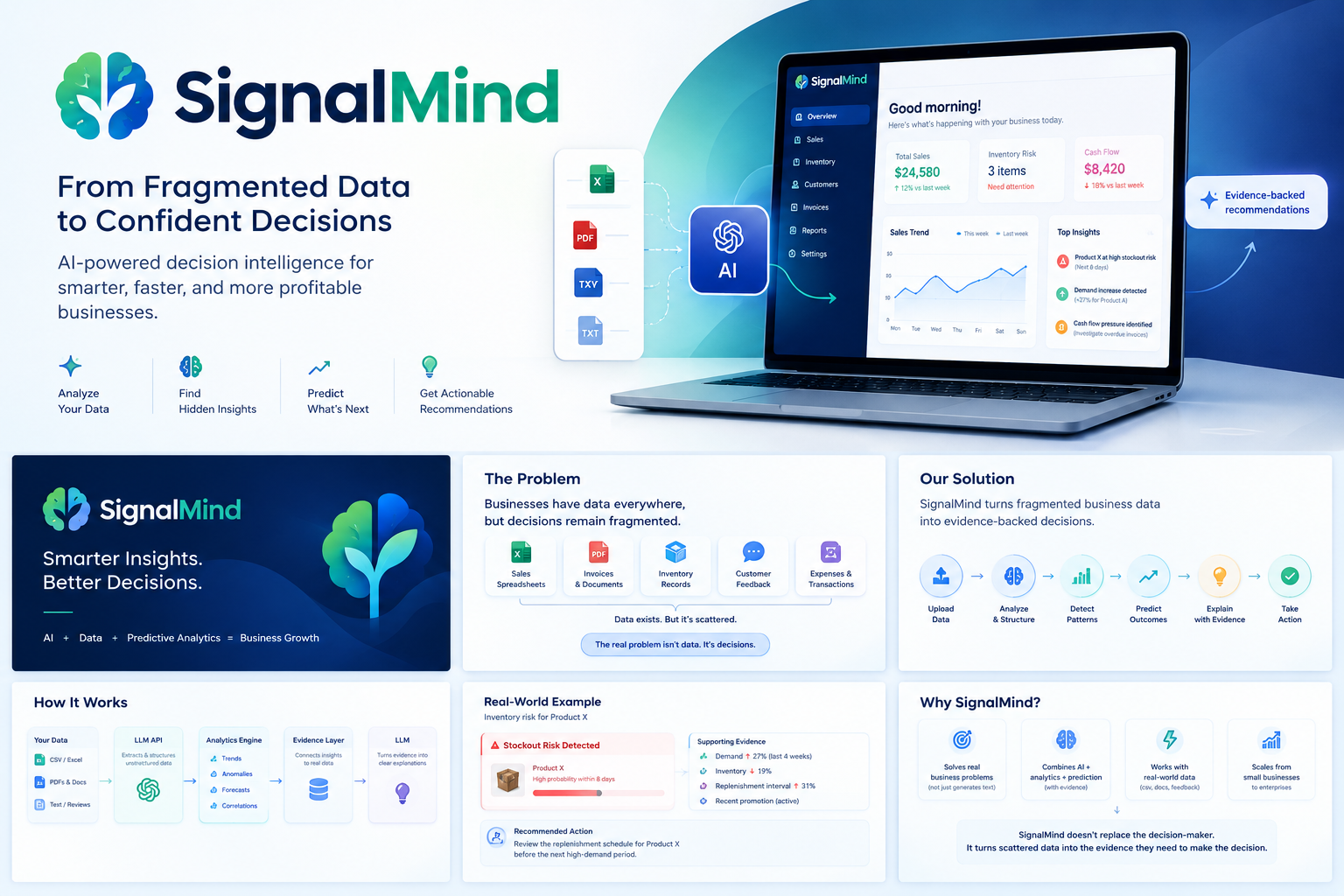
SignalMind is an AI-powered decision intelligence platform that transforms fragmented business data into evidence-backed decisions.
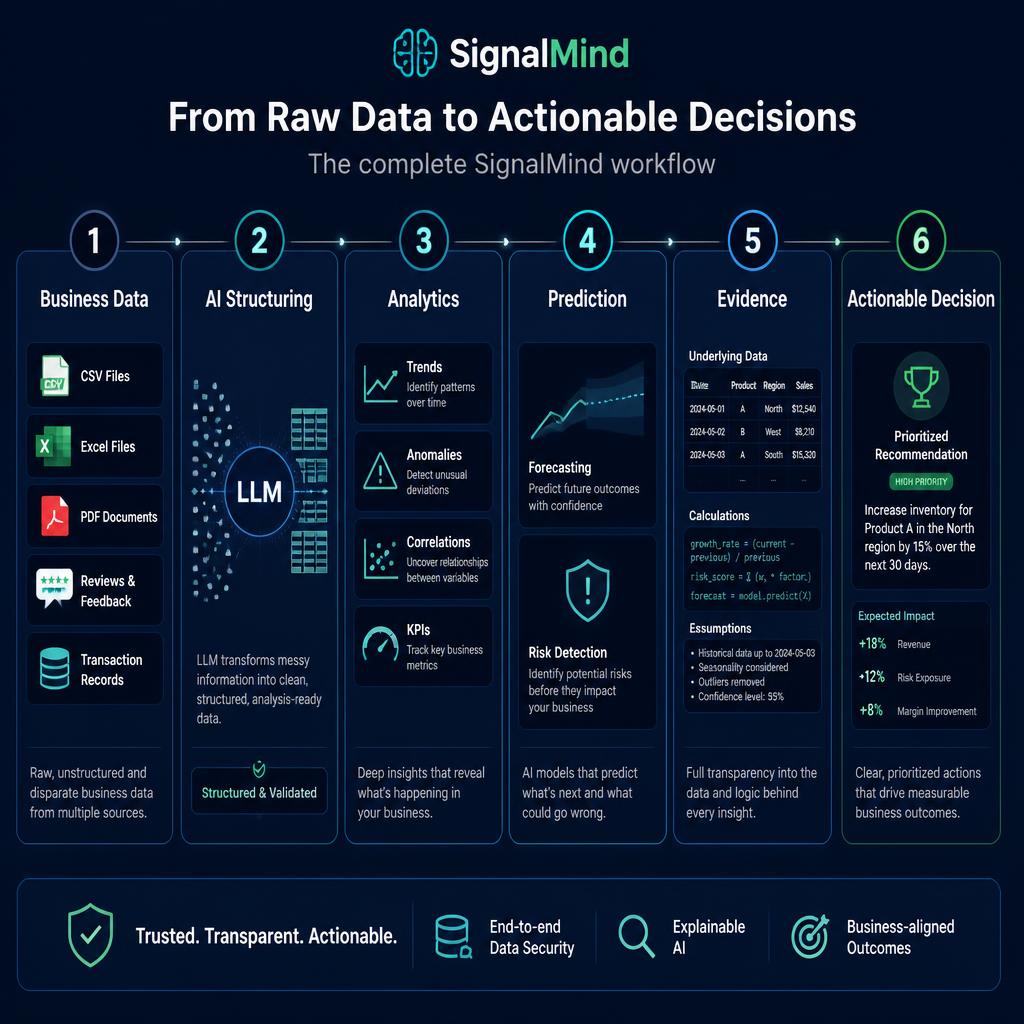
Users can provide spreadsheets, PDFs, business records, and text data. SignalMind then:
- Ingests and structures the information.
- Harmonizes data across different sources.
- Performs deterministic analytics and anomaly detection.
- Identifies emerging operational risks.
- Uses predictive models to anticipate potential problems.
- Explains the findings in natural language.
- Provides prioritized investigation and action recommendations.
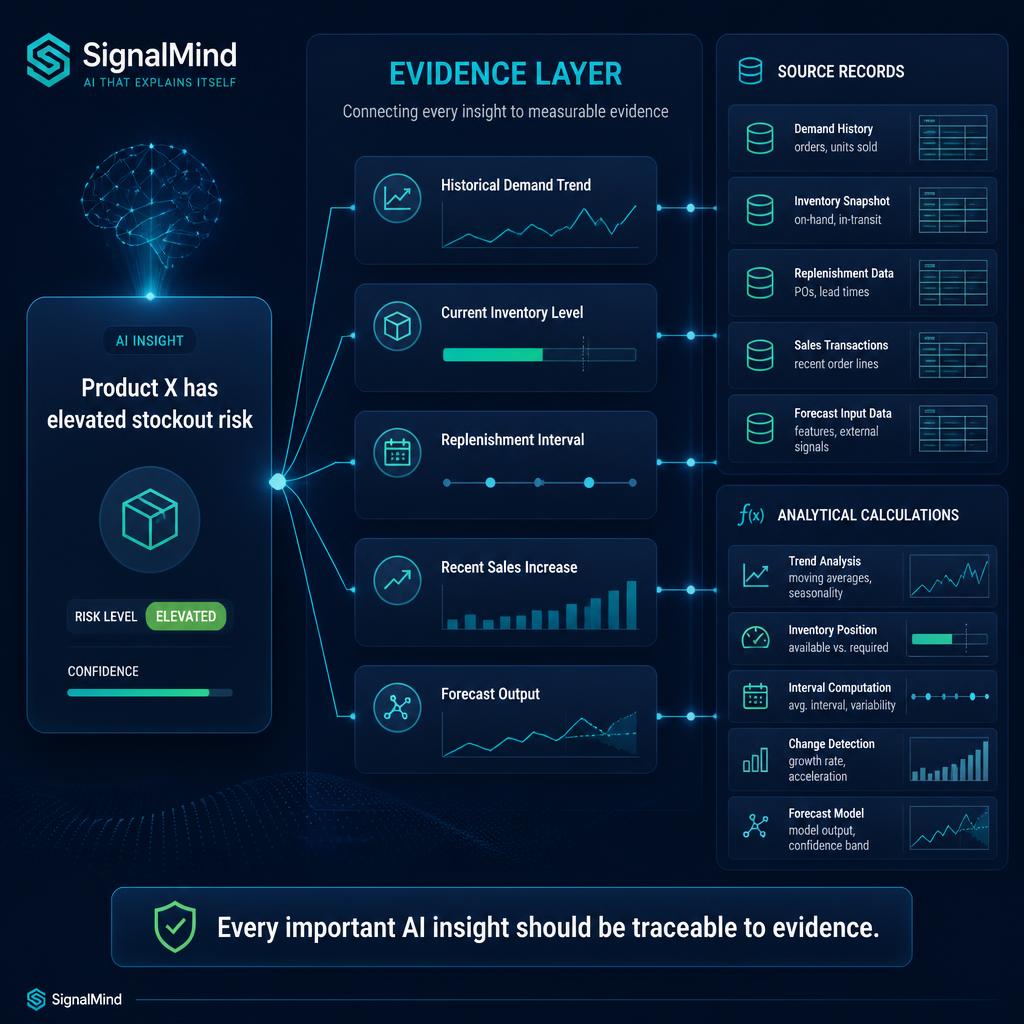
Instead of simply generating an AI answer, SignalMind connects every important insight back to the underlying analytical evidence.
How we built it
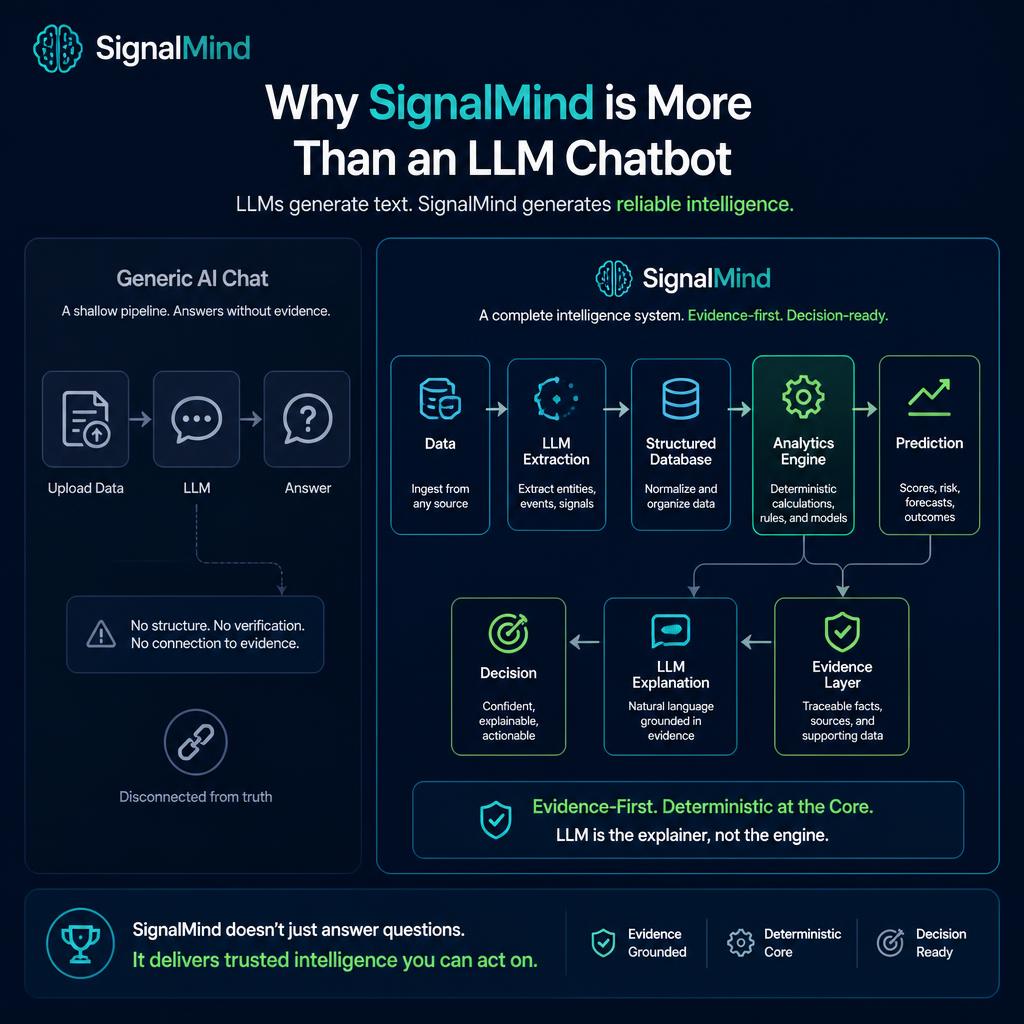
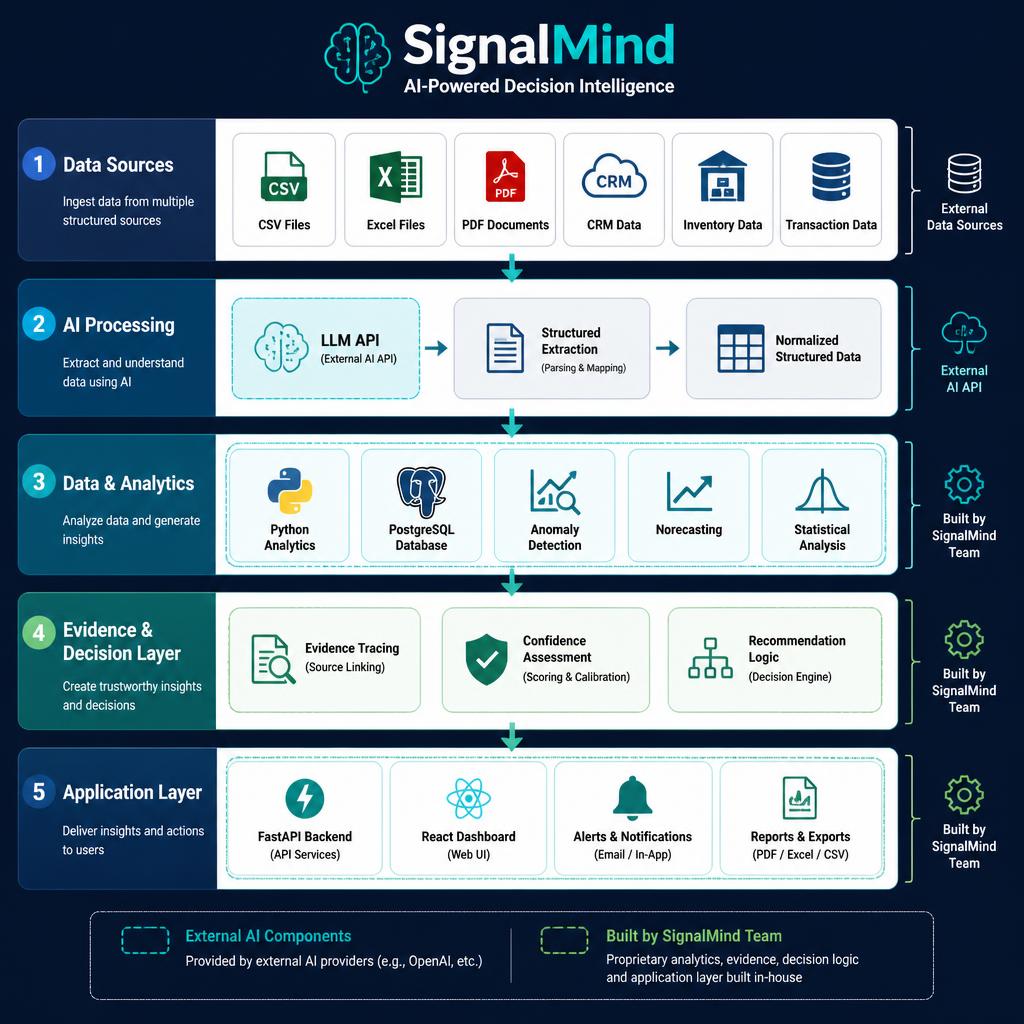
We designed SignalMind as a multi-stage intelligence pipeline rather than a simple LLM wrapper.
Business data first passes through an AI-powered extraction and structuring layer. The structured information is then processed by deterministic analytics and predictive models.
An evidence layer maintains the relationship between source data, calculations, detected trends, and model outputs. Finally, an LLM converts the verified analytical results into understandable explanations and recommendations.
The core platform uses Python, FastAPI, PostgreSQL, analytics and predictive models, with an LLM API handling unstructured information extraction and natural-language synthesis.
Challenges we ran into
One of our biggest challenges was deciding how much responsibility should be given to the LLM.
We didn't want the model to calculate business metrics or generate unsupported numbers. That could make the system difficult to verify and trust.
We therefore separated language intelligence from computational intelligence. Deterministic code performs the important calculations, while the LLM focuses on extraction, interpretation, and explanation.
Another challenge was designing a pipeline capable of bringing together structured and unstructured business information while preserving traceability between the original data and the final recommendation.
Accomplishments that we're proud of
We're proud that SignalMind goes beyond the typical "data → LLM → answer" architecture.
We built the concept around a verified pipeline:
Data → AI Extraction → Structured Data → Deterministic Analytics → Prediction → Evidence → Grounded Explanation → Decision
We're particularly proud of the evidence and auditability layer, which allows important insights to be traced back to their supporting data and analytical signals.
We also developed an illustrative stockout-risk scenario demonstrating how SignalMind can identify an emerging operational problem and recommend specific investigations.
What we learned
We learned that building reliable AI systems isn't simply about choosing a powerful model.
The surrounding architecture matters just as much.
LLMs are extremely useful for understanding unstructured information and communicating complex results, but important business calculations should remain deterministic and verifiable.
We also learned that a useful AI product should not stop at identifying a problem. It should help users understand why the problem exists, how confident they should be, and what they should investigate next.
What's next for SignalMind
Our next goal is to move SignalMind from an illustrative prototype toward a production-ready decision intelligence platform.
We want to expand its predictive capabilities, support more enterprise data sources, improve cross-source relationship detection, strengthen confidence and evidence tracking, and provide richer investigation workflows.
Ultimately, our vision is for SignalMind to become an intelligence layer between an organization's data and its most important decisions — helping teams move from fragmented information to confident, evidence-backed action.
