Inspiration
I’m Dr. Glenn. I’m a practicing surgeon, outcomes researcher, and physician-founder. I did not start this project with any coding or app-development background. I started with a problem I kept seeing in my practice.
People try wellness products, supplements, cannabinoids, routines, and lifestyle changes all the time. They may notice that something helped, made no difference, or created a tradeoff, but that information becomes scattered in memory and is ultimately lost. The learning loop that should lead to personalization is broken before meaningful insights can develop.
SignalArc started from that gap.
As a physician, I know how much context matters: what someone used, when they used it, why they used it, and what happened afterward. As a platform builder, I wanted to create a practical way for people to learn from their own wellness routines without turning the app into a diagnostic tool, treatment system, or source of medical instructions.
The goal is not to tell people what to do. It is to help them observe clearly enough to make better next decisions.
Personalization should not end with a recommendation. It should improve through experience.
What I built
SignalArc is a personalized wellness-learning app for everyday life. It is initially designed for people managing multiple supplements, botanical products, cannabinoid wellness products, routines, or lifestyle interventions who want a clearer record of what appears to help, under what conditions, and with what tradeoffs.
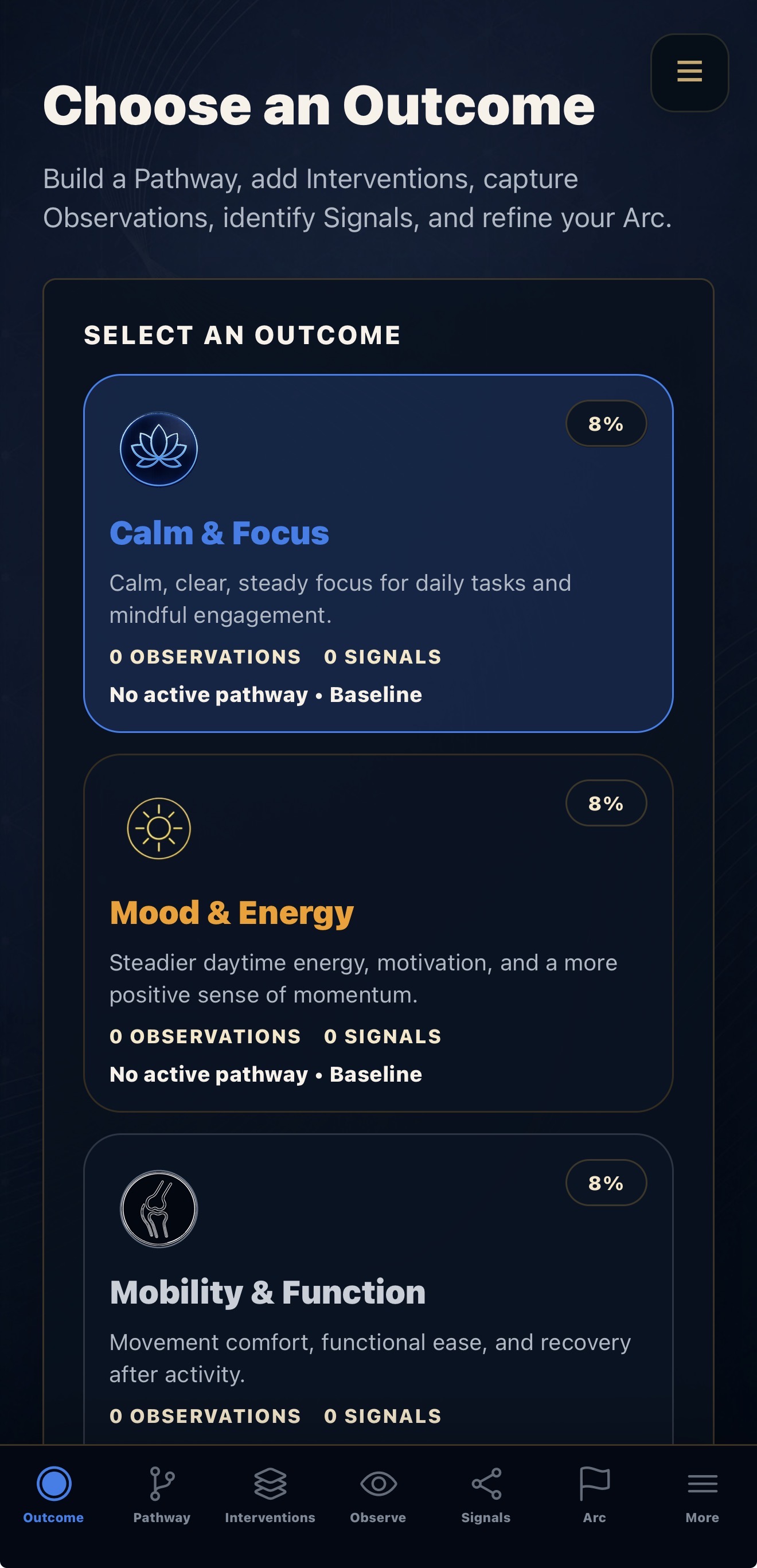
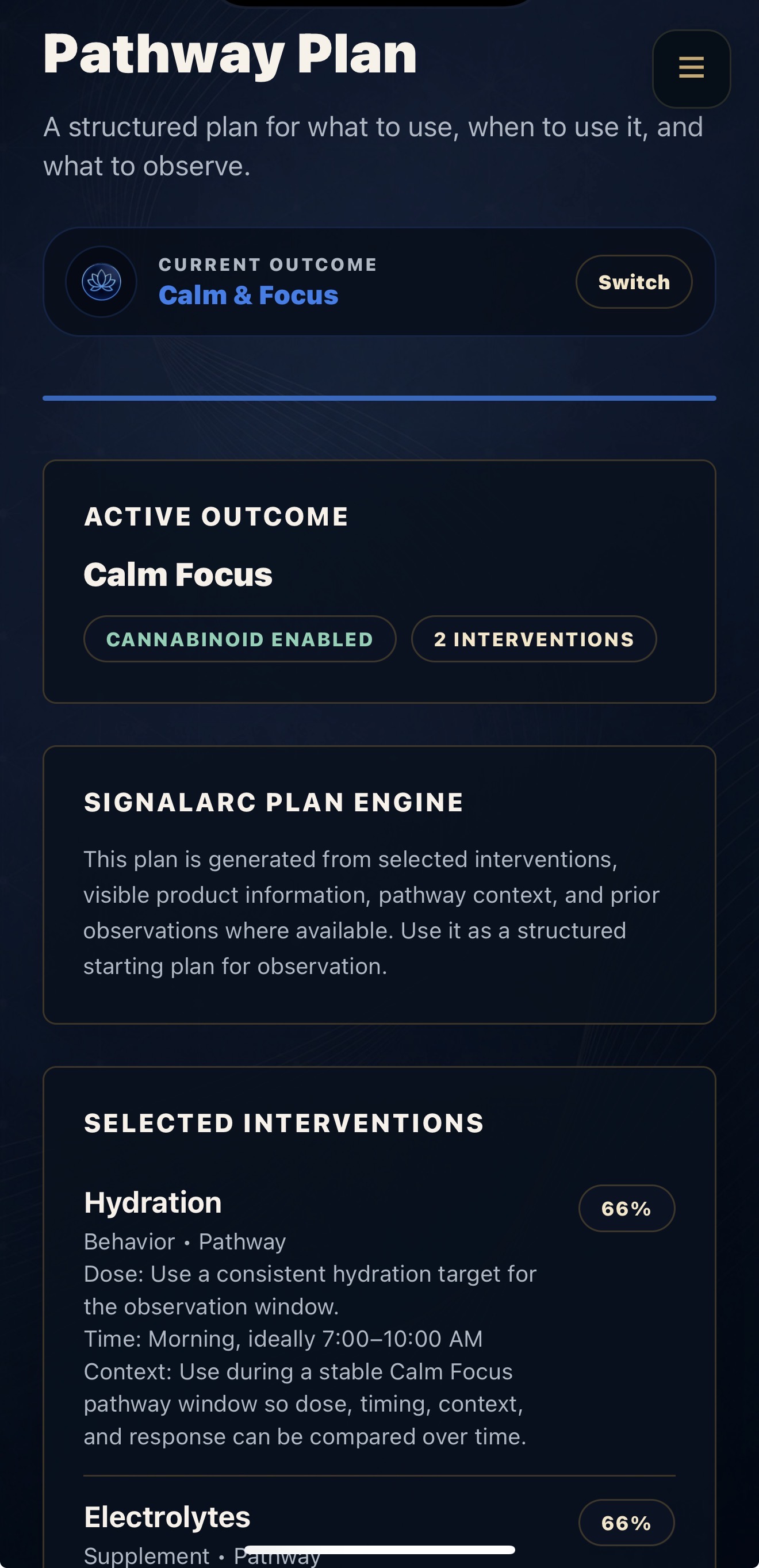
SignalArc helps a user choose a desired outcome, build a pathway, add products or routines, record what happened, and review patterns over time.
The core loop is:
Outcome → Pathway → Interventions → Observations → Signals → Arc → Better Decisions
That loop is the heart of the product.
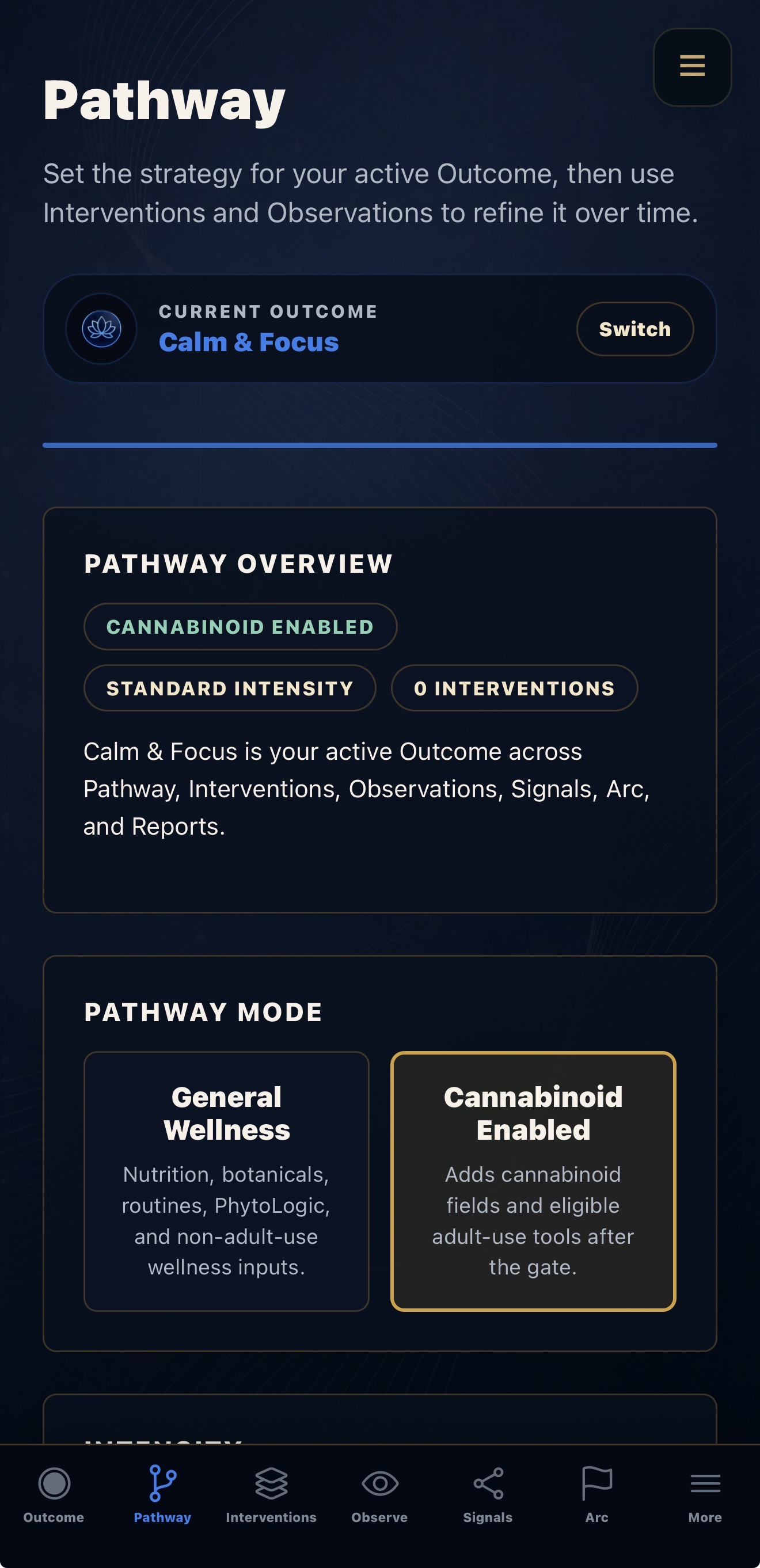
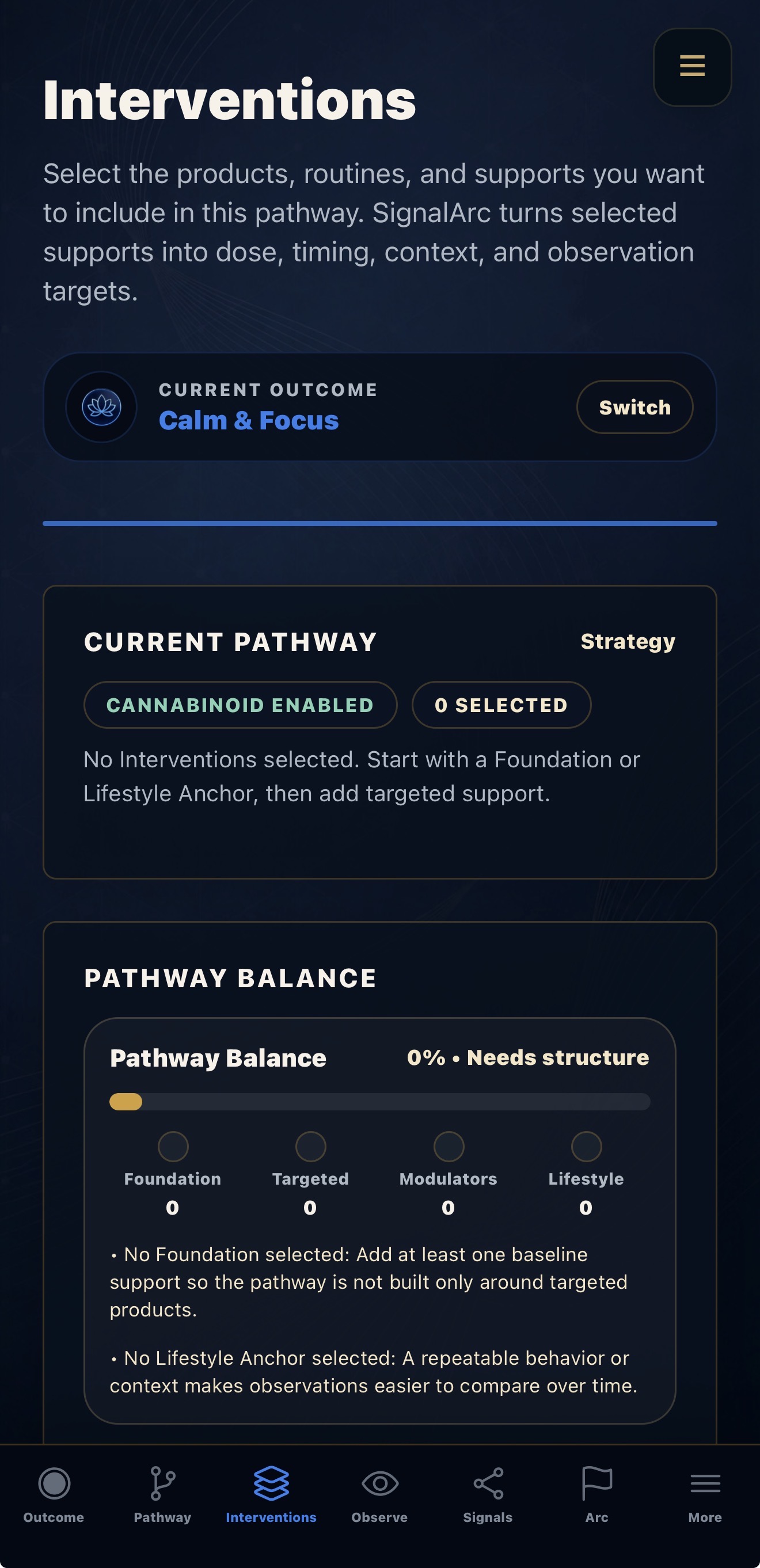
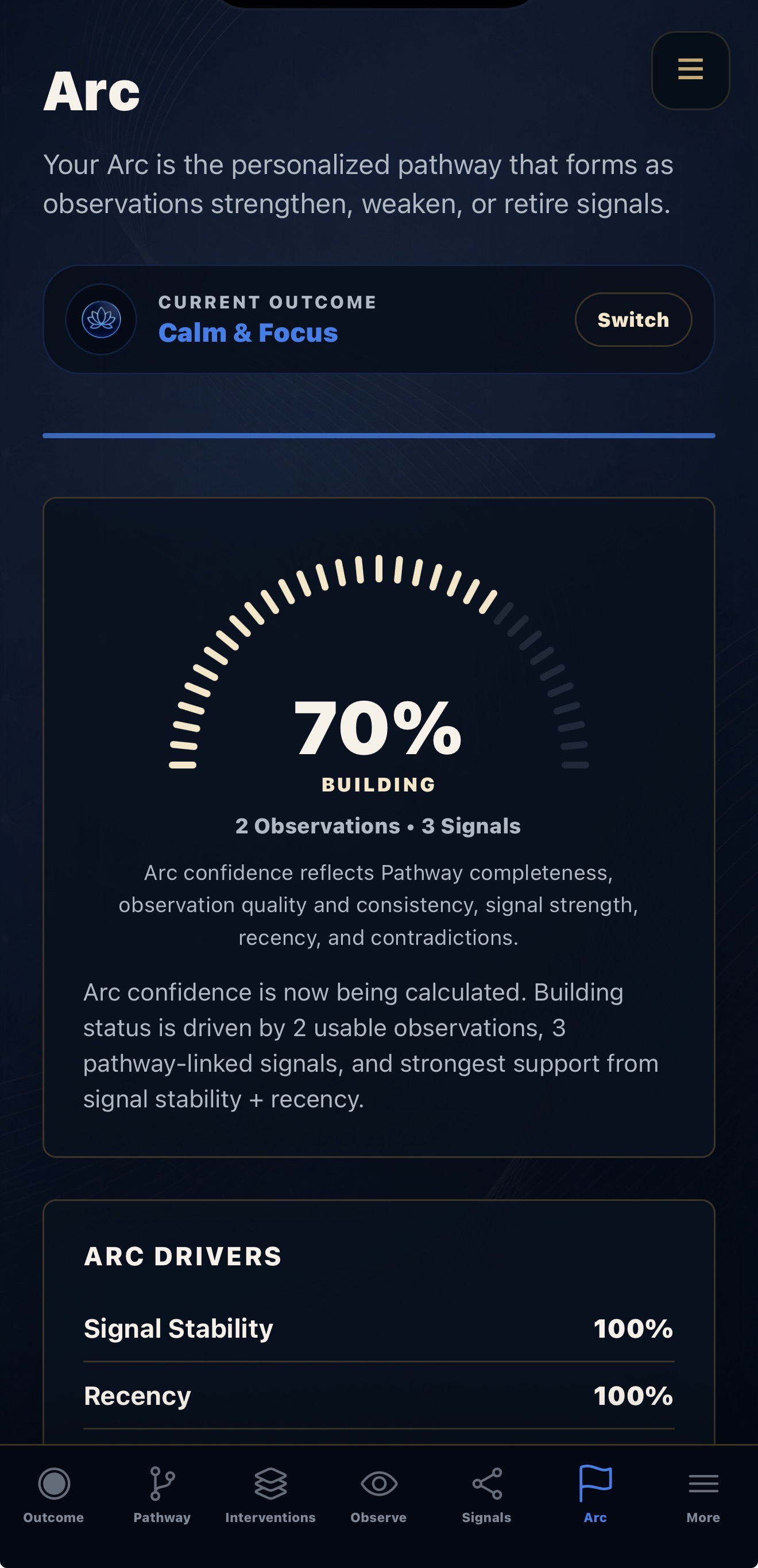
An Outcome is what the user wants to work on. A Pathway is the current plan. An Intervention is something intentionally added, such as a product, routine, behavior, or lifestyle support. An Observation records what happened afterward. A Signal is a repeated pattern, not a single event. An Arc is the user’s evolving picture of what appears to fit their life over time.
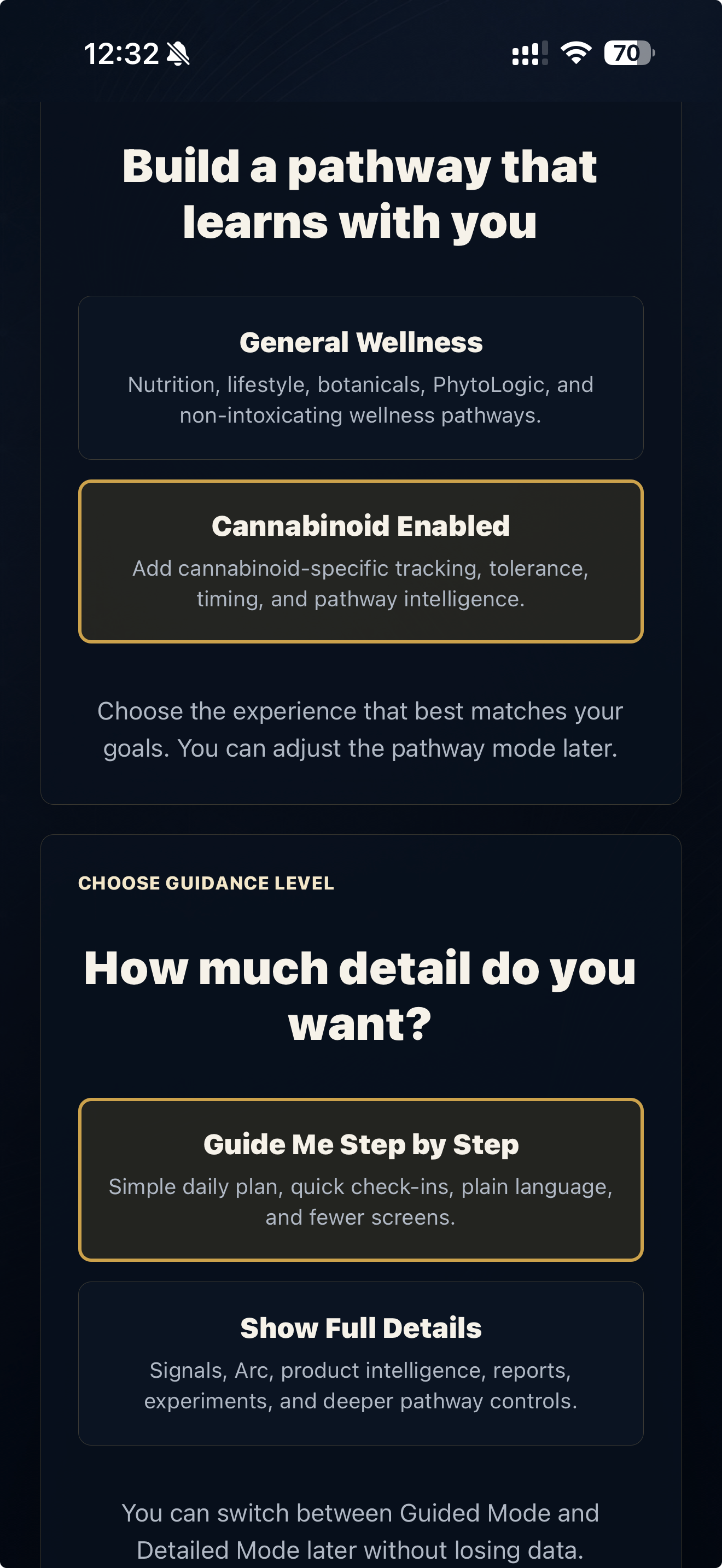
SignalArc supports both Guided Mode and Detailed Mode. Guided Mode makes the experience approachable for first use by reducing the number of visible decisions and providing a clearer next step. Detailed Mode exposes the fuller structure for users who want deeper product review, context capture, Signals, Arcs, Learning tools, and export.
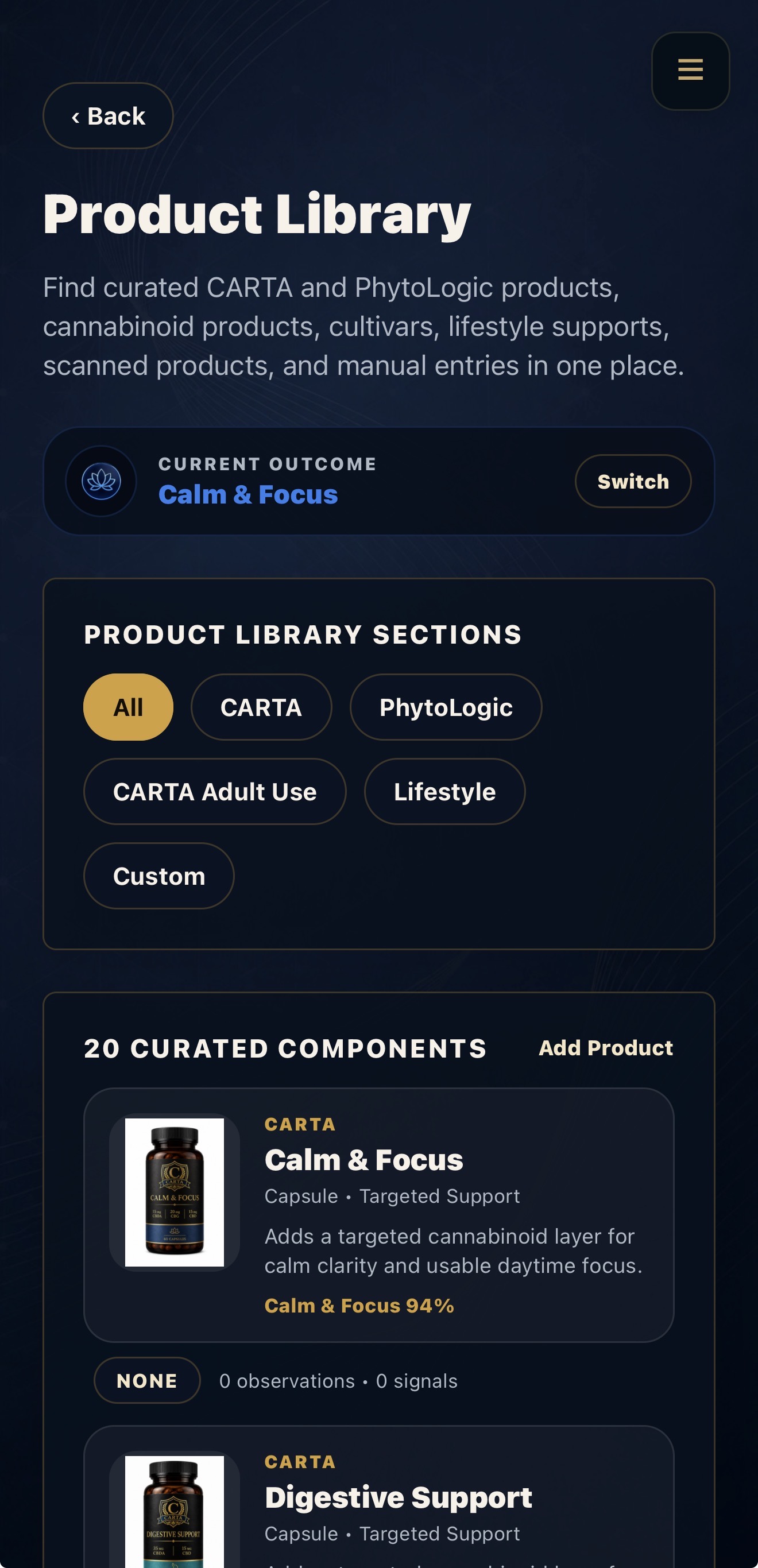
One of SignalArc’s first use cases is cannabinoid and cannabis-adjacent wellness, where product variability, dose, timing, format, setting, and individual response all matter. The broader architecture also supports supplements, botanicals, routines, lifestyle interventions, and foundational wellness behaviors.
For cannabinoid users, SignalArc can function as a structured cannabinoid product and response journal: helping users document products, observe response over time, and distinguish isolated experiences from emerging patterns.
What I built during OpenAI Build Week
SignalArc existed as an early mobile beta before Build Week. During the July 13–21 submission period, I used Codex and GPT-5.6 to meaningfully extend that foundation into a more complete, testable, and judgeable product experience.
The Build Week work focused on the parts that make SignalArc more than a tracker:
- refining Guided and Detailed experience modes;
- strengthening the Outcome → Pathway → Observation → Signal → Arc workflow;
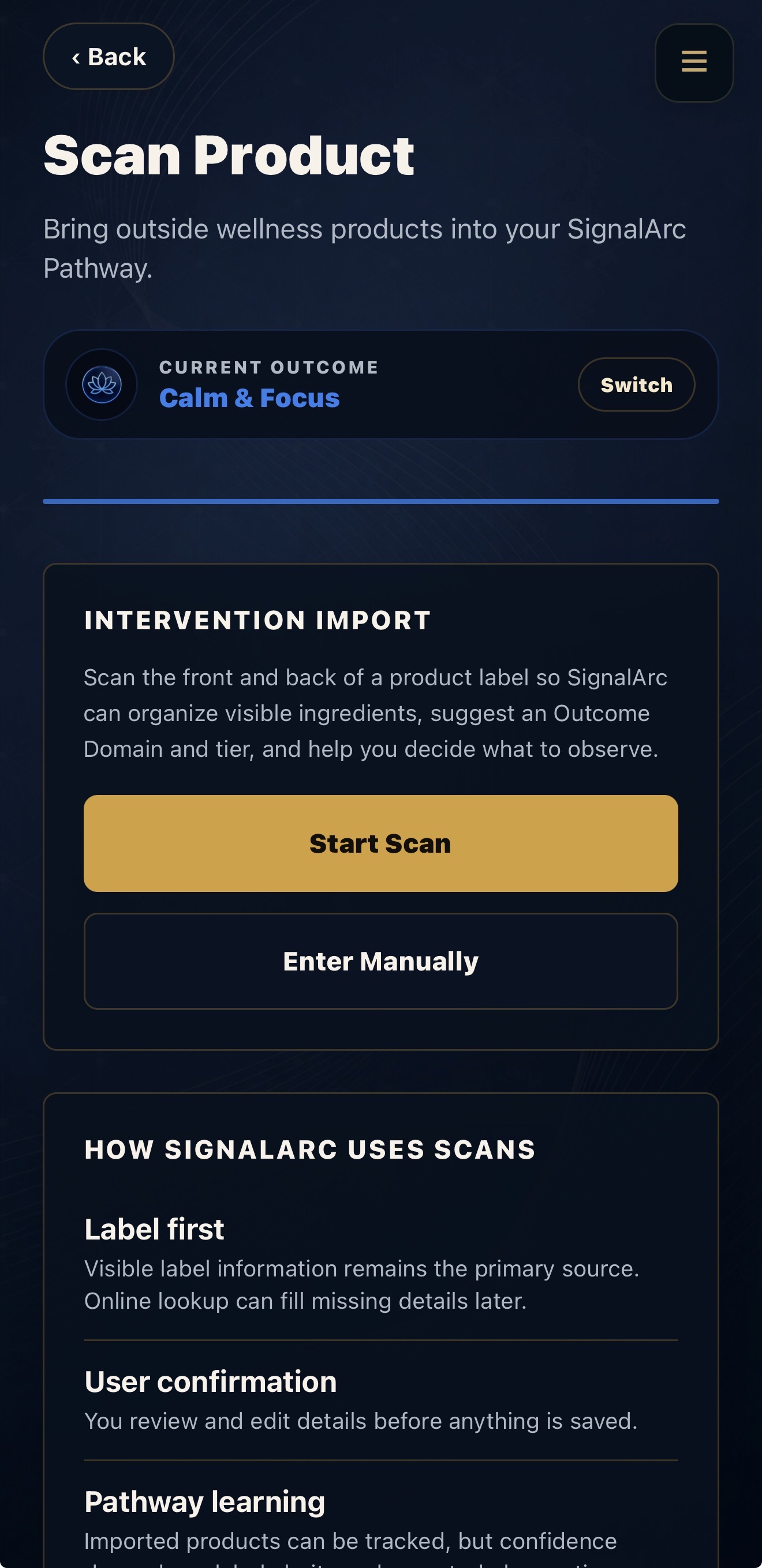
- improving product scanning and Product Intelligence review;
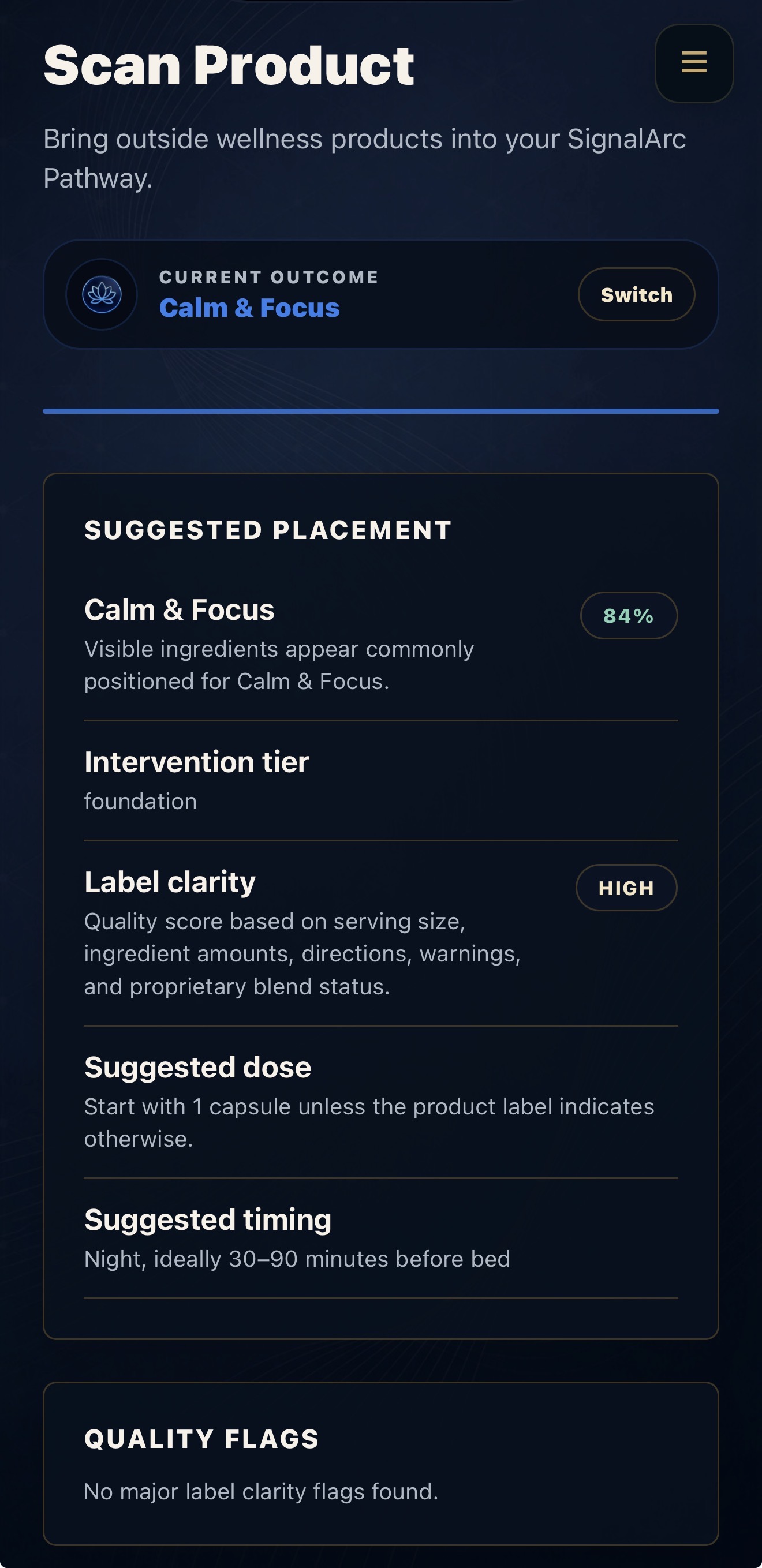
- adding structured, editable extraction results with confidence and quality indicators;
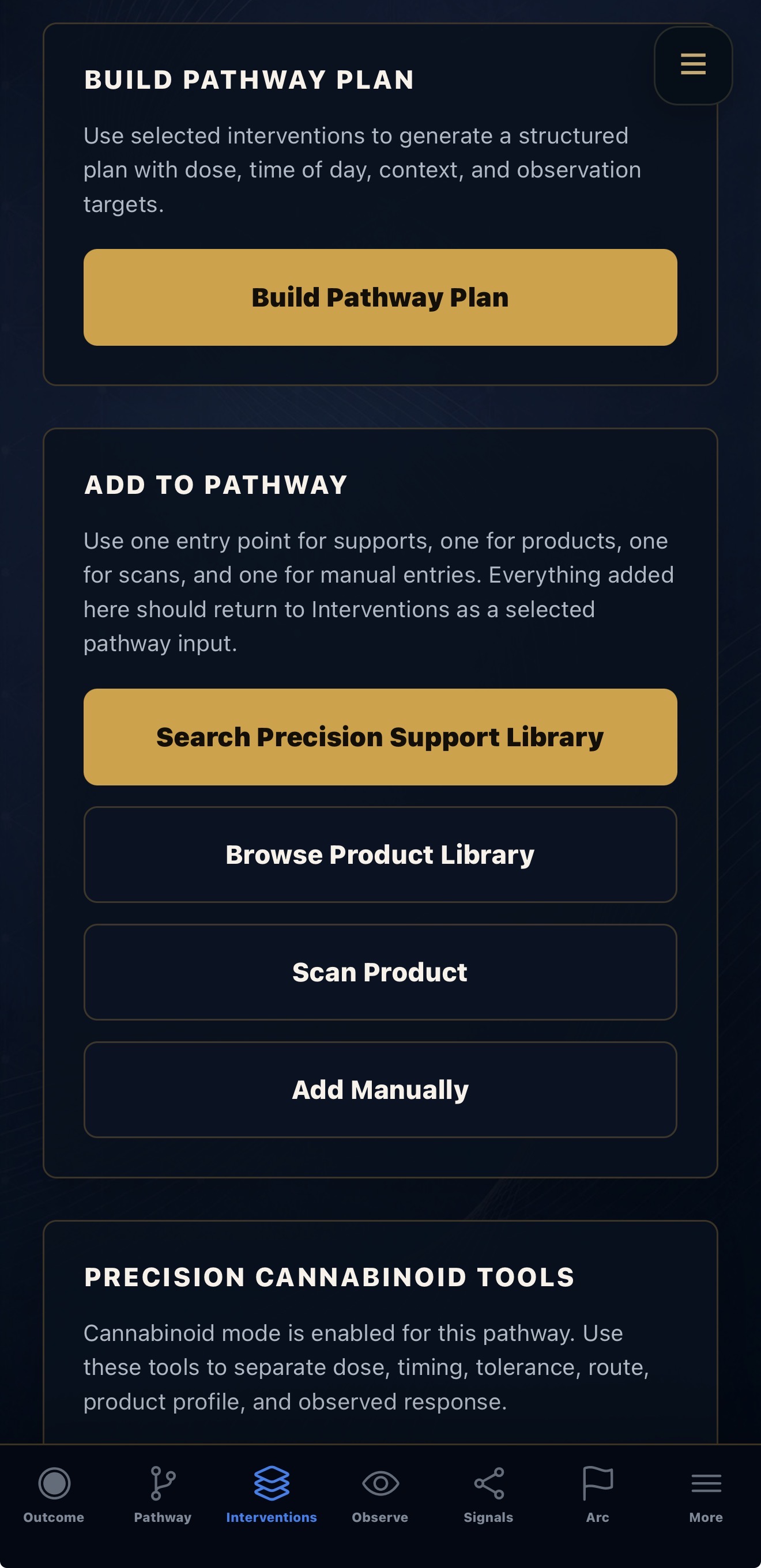
- improving product-to-Pathway handoff;
- tightening fallback behavior when AI or network services are unavailable; and
- improving backend health, synchronization, and rollout-readiness behavior.
SignalArc is now a working mobile beta with a Vercel backend, Supabase-supported infrastructure, public TestFlight access for judges, and a private source repository documenting the Build Week work.
How I used Codex and GPT-5.6
Codex was my engineering implementation and debugging partner inside the React Native and TypeScript codebase.
During Build Week, I used Codex to:
- inspect and reason through the existing architecture;
- refine Guided and Detailed Mode;
- strengthen the scan-to-product-to-Pathway flow;
- repair navigation and Intervention-selection regressions;
- improve product normalization and persistence;
- connect Observation, Signal, Learning, and Arc behavior more consistently;
- debug cross-screen and cross-platform issues; and
- harden backend, synchronization, health-check, and fallback behavior.
I made the product decisions, medical and safety boundary decisions, user-experience decisions, and acceptance criteria. Codex helped translate those decisions into working code, investigate failures across interconnected files, and accelerate repeated implementation and testing cycles.
GPT-5.6 was used meaningfully during Build Week through Codex and ChatGPT for the highest-leverage reasoning work behind the product and implementation.
That included:
- defining the structured Product Intelligence output;
- determining what information should be extracted from variable product labels;
- designing confidence and quality-flag behavior;
- preserving the distinction between one Observation and an emerging Signal;
- reasoning through how longitudinal Signal confidence should mature;
- refining how individualized Arcs should evolve through repeated evidence; and
- maintaining clear wellness language without overstating certainty or making medical claims.
The deployed product-scan endpoint uses OpenAI’s Responses API through a secure Vercel server-side runtime. Model selection is configurable through environment variables, and the current production default is gpt-4.1-mini when no model-specific variable is set. The submission therefore claims GPT-5.6 as a core Build Week development and reasoning tool, not as the production endpoint’s default runtime model.
How OpenAI is used in the app
OpenAI reduces friction in product entry and product review. For product scanning, SignalArc sends captured label images or QR and certificate-of-analysis references to the Vercel backend. The backend uses OpenAI to return structured product information such as:
- brand;
- product name;
- product type;
- ingredients;
- serving information;
- cannabinoid or terpene details when visible;
- suggested Outcome fit;
- suggested Intervention role;
- confidence; and
- quality flags.
The AI result is not saved silently. SignalArc presents the result as a draft for the user to review, correct, and confirm. That matters in wellness. The app should not pretend to know more than the available evidence supports. AI helps organize messy information, but the user stays in control.
Why SignalArc is different
SignalArc is not a generic wellness chatbot, static tracker, or one-time recommendation engine. Most tools either recommend something once or record isolated events. SignalArc is built around the learning process between those two points.
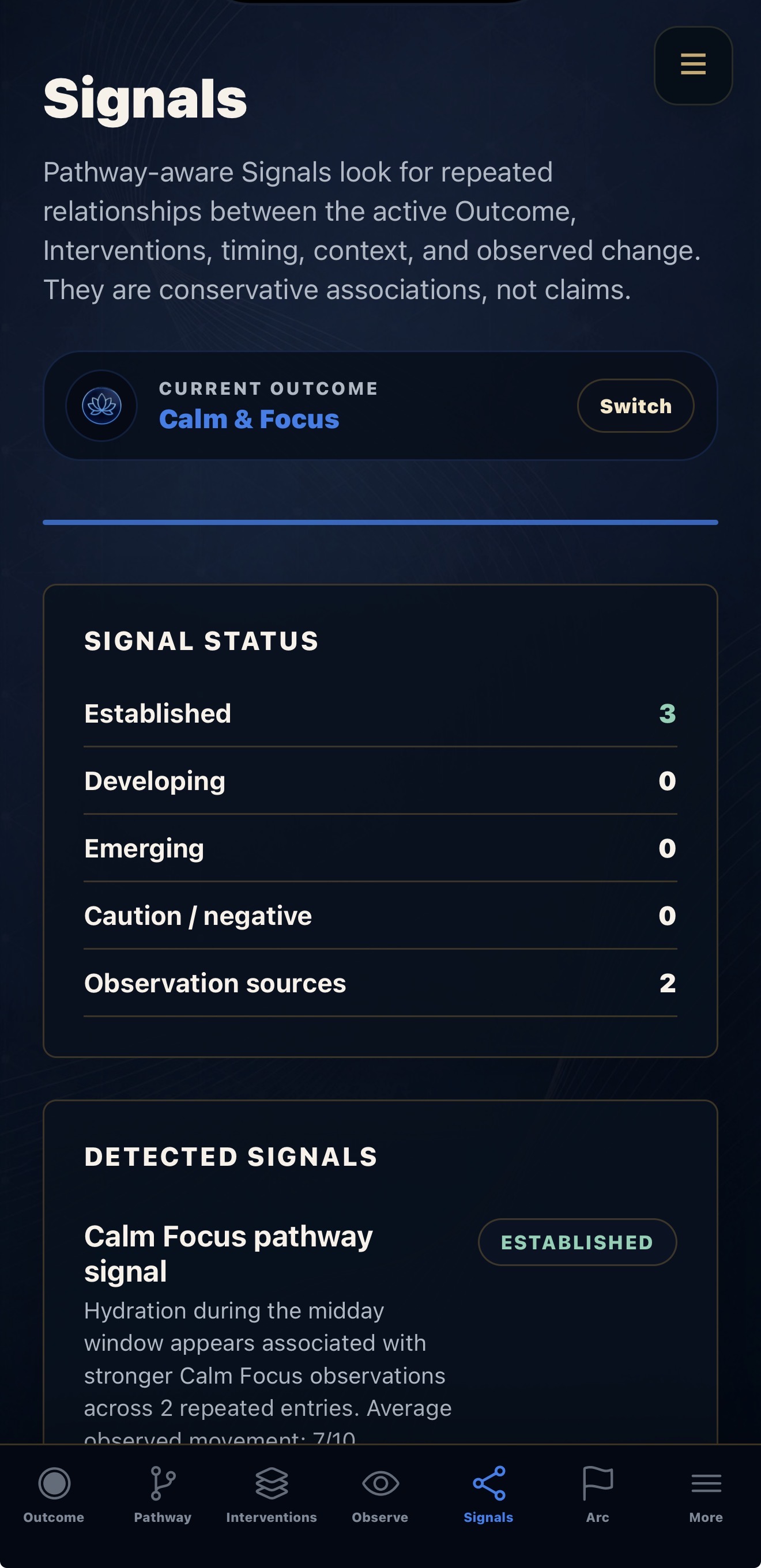
A Pathway is treated as a structured starting point, not a prescription. One Observation is not treated as proof. Repeated comparable Observations may become Signals. Signals accumulate into an Arc that helps the user understand what appears to work, what may not work, and what still needs more observation.
That is the central difference:
SignalArc turns everyday wellness experience into something structured, reviewable, explainable, and useful for the next decision.
How I built it
SignalArc is a cross-platform mobile application built with React Native, Expo, and TypeScript. The mobile app connects to a Vercel backend for server-side OpenAI calls and supporting backend services. Supabase supports cohort, feedback, synchronization, analytics, and rollout-readiness infrastructure.
The app currently includes:
- iOS TestFlight beta access;
- Guided and Detailed modes;
- eight Outcome Domains;
- Pathway creation;
- Foundation and Targeted Intervention organization;
- a product library and manual product entry;
- camera-based product-label capture;
- QR and certificate-of-analysis product-reference handling;
- structured and editable Product Intelligence results;
- confidence and quality indicators;
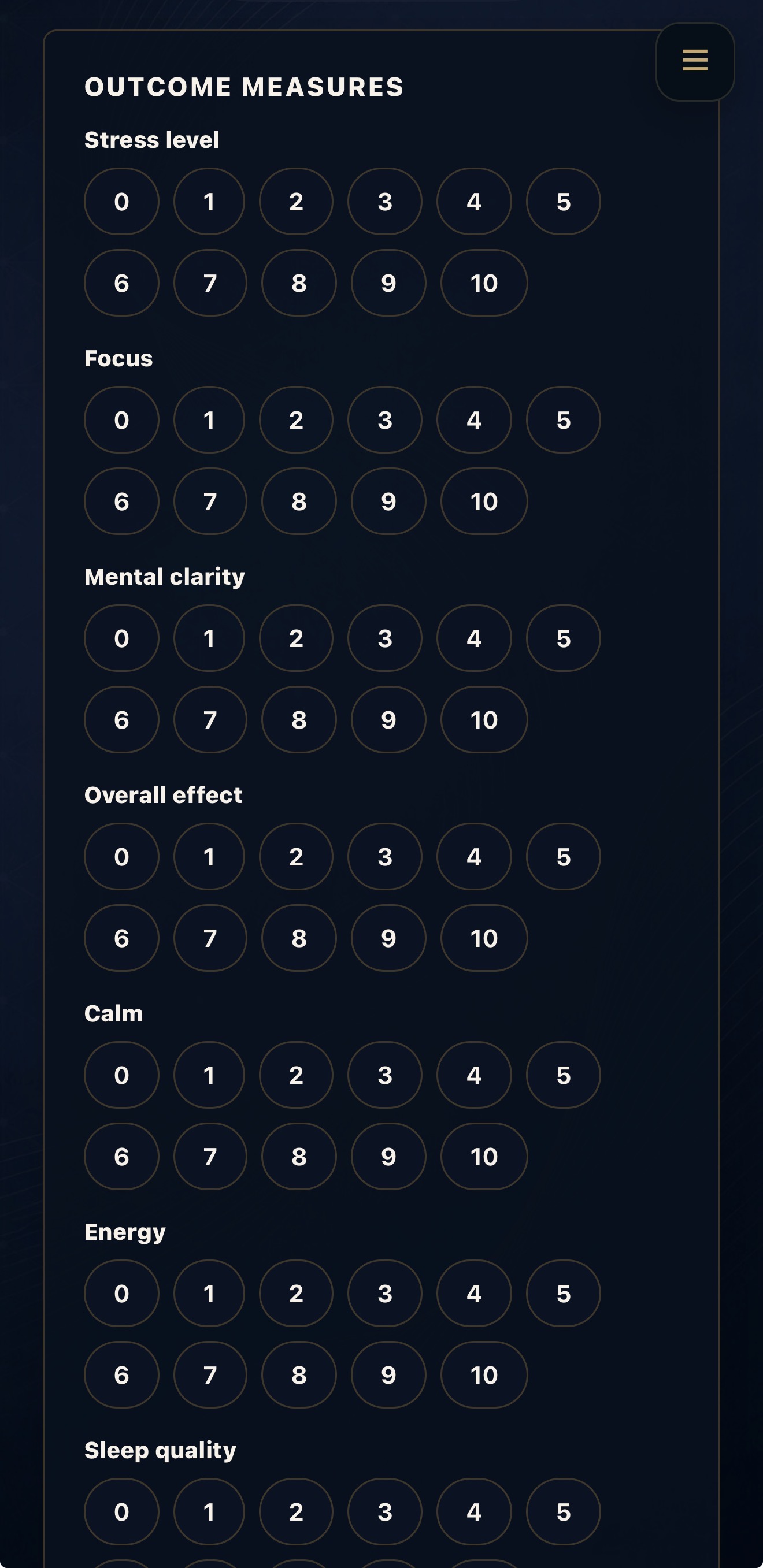
- structured Observations;
- Signal and Arc views;
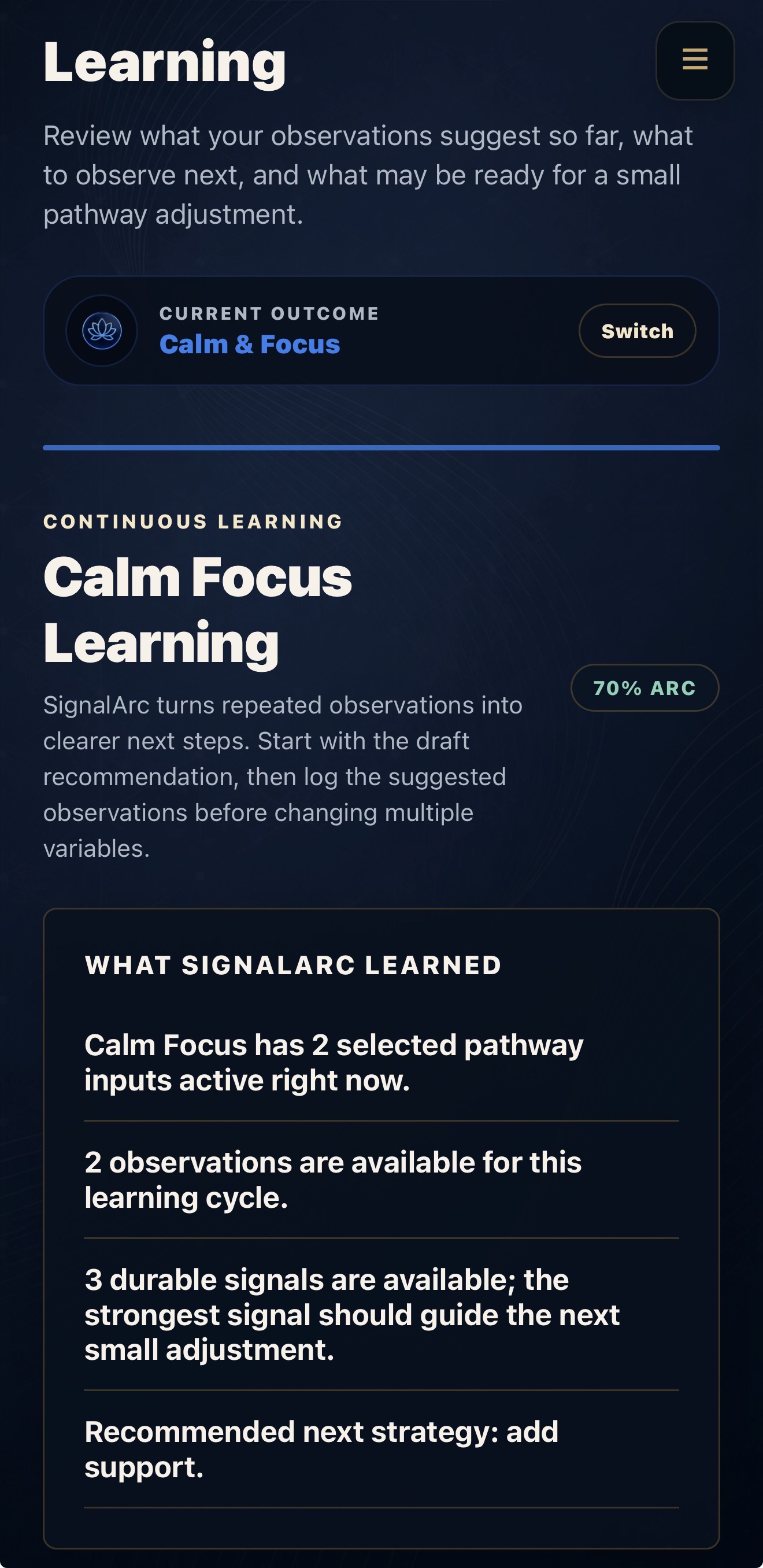
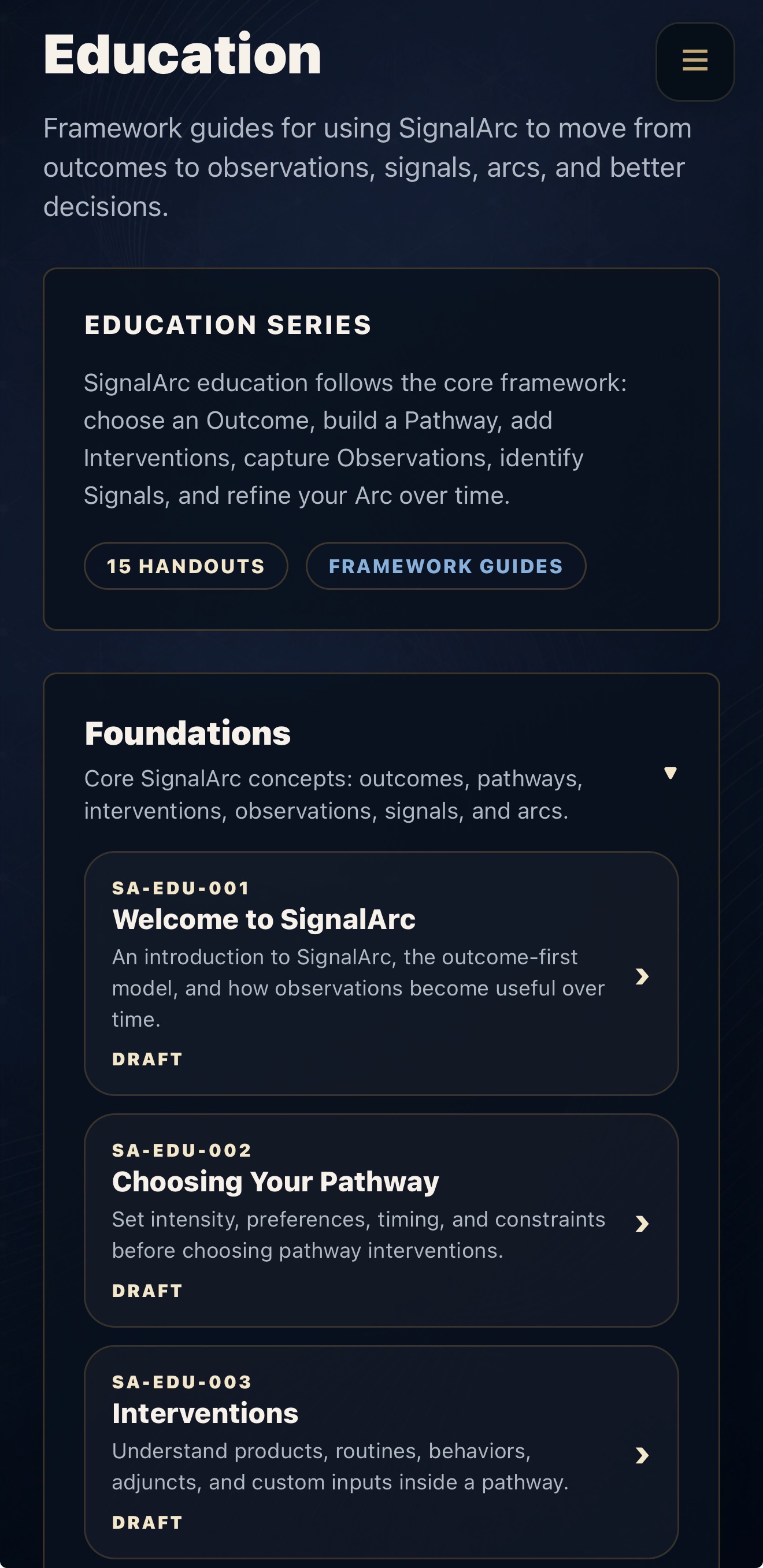
- Learning and education screens;
- guided coaching prompts;
- cannabinoid and cultivar tools;
- summary and export tools;
- private-beta feedback flows;
- backend health checks; and
- admin and cohort tools previewed without exposing private user data.
The mobile app keeps OpenAI credentials off the device. Product-label images are sent to the server-side endpoint, which makes the OpenAI request and returns structured data to the application.
If the live extraction service is unavailable, SignalArc can provide a clearly labeled local review so the user does not lose captured work. The fallback remains editable and does not pretend to be equivalent to the live AI result.
Note: The app is SignalArc. Some internal package and folder names still reference CARTA because the project began as a narrower product pathway before expanding into the broader SignalArc system.
Challenges I ran into
The biggest challenge was turning highly variable wellness experiences into useful structure without making medical claims or creating a false sense of certainty.
Product labels vary widely. Some are clear, while others are incomplete or inconsistently formatted. They may include cannabinoids, terpenes, supplements, serving instructions, warnings, or QR codes.
AI extraction therefore could not be treated as an invisible black box. The scanner needed:
- structured outputs;
- confidence indicators;
- quality flags;
- fallback behavior; and
- a review step that keeps the user in control.
Another challenge was usability. The app needs enough detail to discover meaningful patterns, but it cannot make every Observation feel like a long questionnaire. Guided Mode and Detailed Mode were built to address that tension.
I also had to protect API credentials, keep OpenAI calls on the backend, maintain cross-platform behavior, preserve user work when services are unavailable, and make the project understandable to judges who may only spend a few minutes with it.
A final challenge was representing longitudinal learning honestly. SignalArc cannot treat one positive experience as proof. Signal confidence and Arc development need repeated, comparable Observations and must remain visibly uncertain when the evidence is limited.
Accomplishments that I am proud of
I am proud that SignalArc is a real working beta, not just a concept.
The app connects the full learning loop:
- choosing an Outcome;
- building a Pathway;
- adding a product or routine;
- recording an experience;
- reviewing emerging Signals; and
- developing an individualized Arc over time.
I am also proud of the restraint built into the product. SignalArc does not use AI to replace judgment. It uses AI to convert messy product information into reviewable structure, communicate uncertainty, and allow the user to decide what should be saved.
Personally, I am proud that I was able to build this without coming from a software background. Codex and ChatGPT helped me turn a product thesis into working code, a backend, a TestFlight beta, and a complete cross-platform product experience.
What I learned
I learned that useful personalization requires more than a profile or a one-time recommendation.
It requires:
- repeated Observations;
- relevant context;
- transparency;
- uncertainty;
- and a way to update understanding as new information accumulates.
I also learned that AI is most useful in this setting when it behaves like a structured assistant. Confidence, traceability, and user review matter just as much as extraction accuracy.
Most importantly, the value is not simply in collecting more data. The value is helping people understand what their experience may mean for the next decision.
What’s next for SignalArc
SignalArc is moving into founding-cohort and broader beta testing.
Next steps include:
- expanding the Product Intelligence library;
- improving label extraction and normalization;
- strengthening longitudinal Signal detection;
- refining Guided Mode onboarding;
- improving privacy-conscious cohort learning;
- developing partner-facing analytics;
- preparing for App Store submission; and
- continuing to refine SignalArc as a comprehensive cannabinoid and wellness-learning assistant.
The long-term goal is to build the learning infrastructure that connects wellness products, routines, context, and real-world experience to increasingly personalized and explainable decisions.
Built With
- android
- codex
- expo.io
- gpt-5.6
- ios
- node.js
- openai
- openai-api
- openai-vision
- react-native
- structured-outputs
- supabase
- typescript
- vercel

Log in or sign up for Devpost to join the conversation.