Inspiration
I'm a product manager. Every Monday I face the same wall: hundreds of pieces of user feedback scattered across app store reviews, support tickets, and NPS surveys and somewhere in that noise are the three things that actually matter. I've spent entire days copy-pasting feedback into spreadsheets, manually tagging themes, and trying to defend prioritization calls with anecdotes instead of evidence.
I also have a Computer Science degree (first class honours) that I hadn't seriously used since moving into product design and product management. This hackathon was a double dare to myself: build the tool I've always wanted, and prove my technical foundations were dormant, not dead.
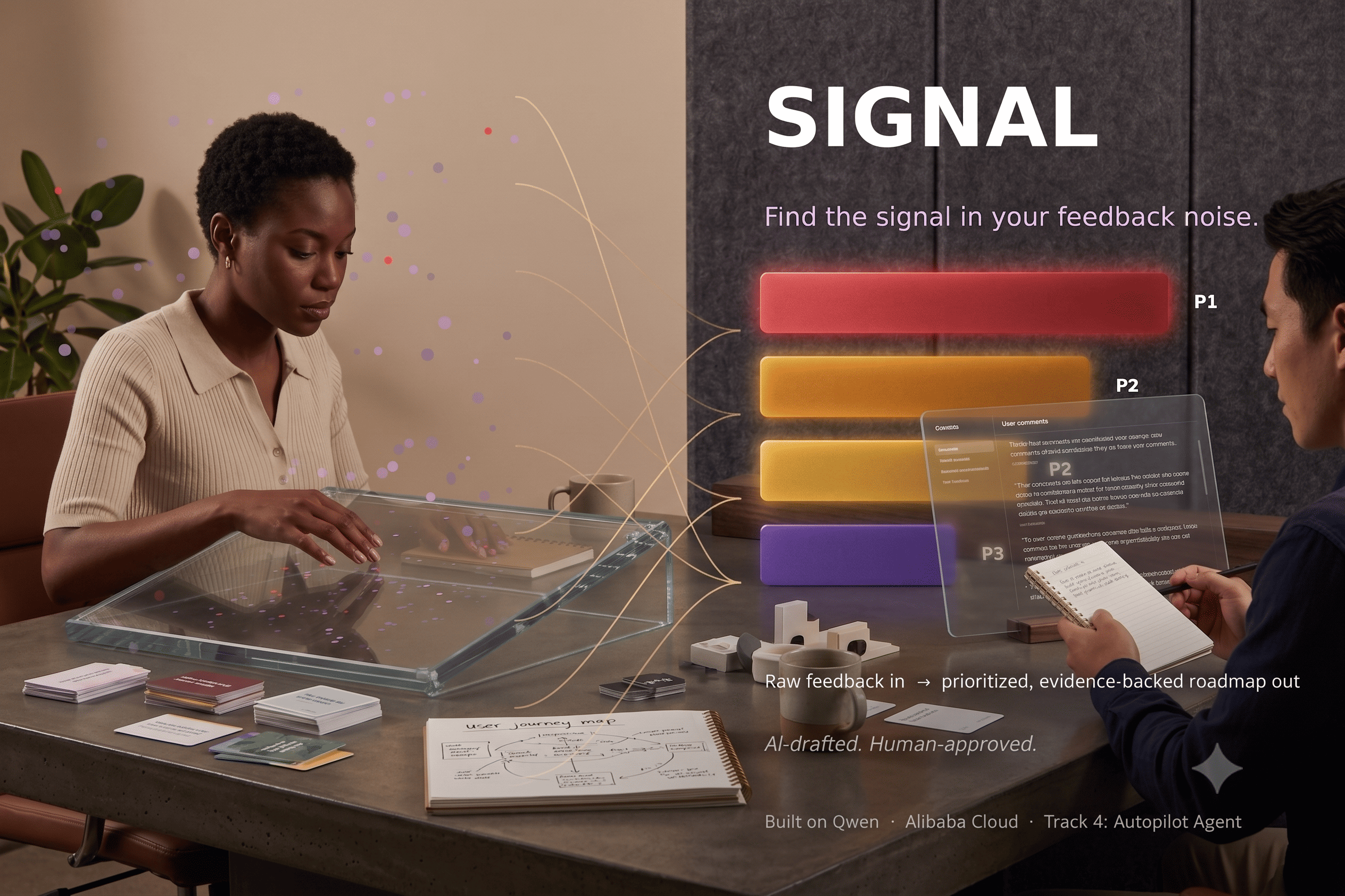
Signal is the result : an autonomous agent that turns feedback chaos into a prioritized, evidence-backed roadmap, with a human PM holding the final say.
What it does
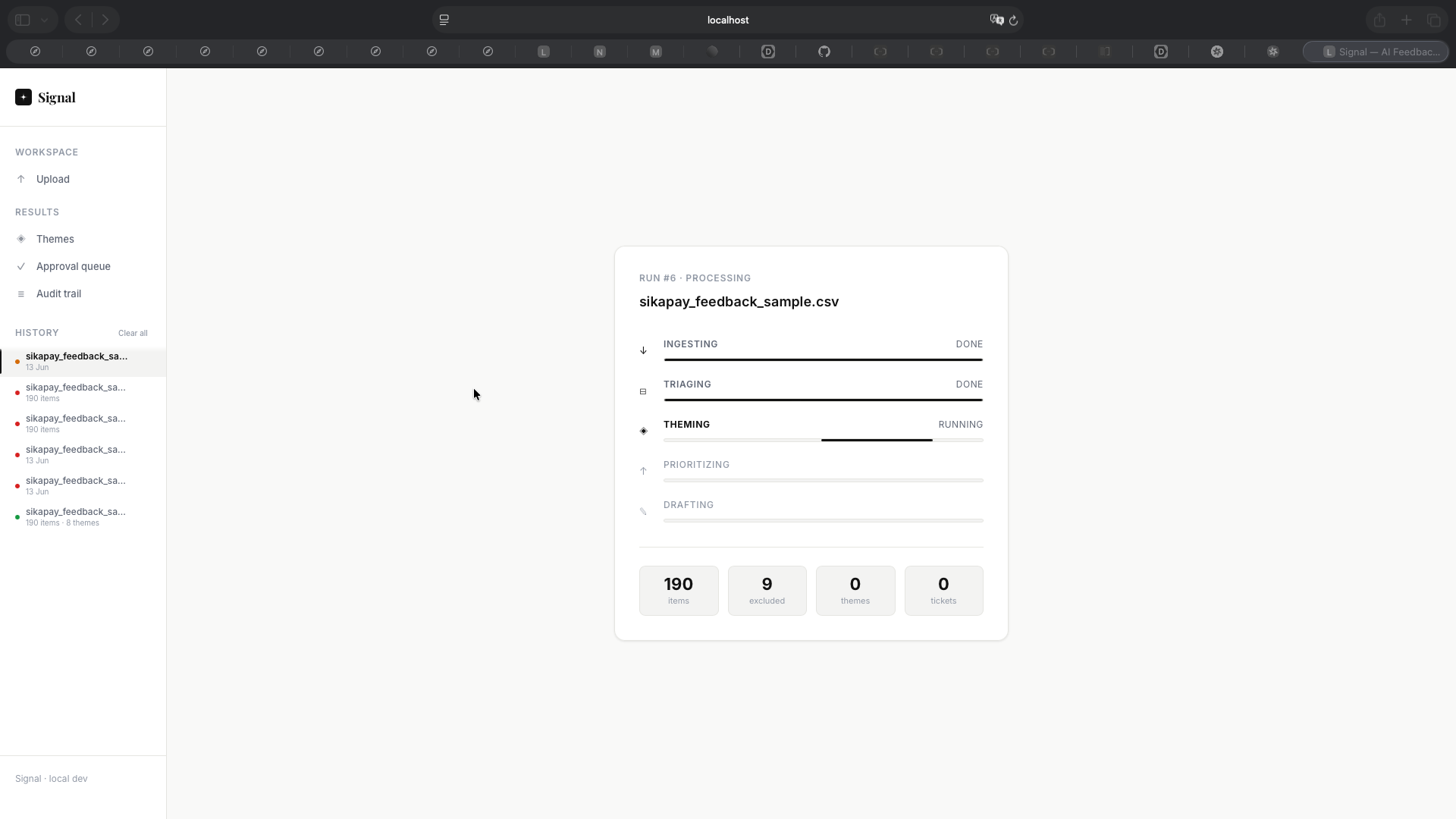
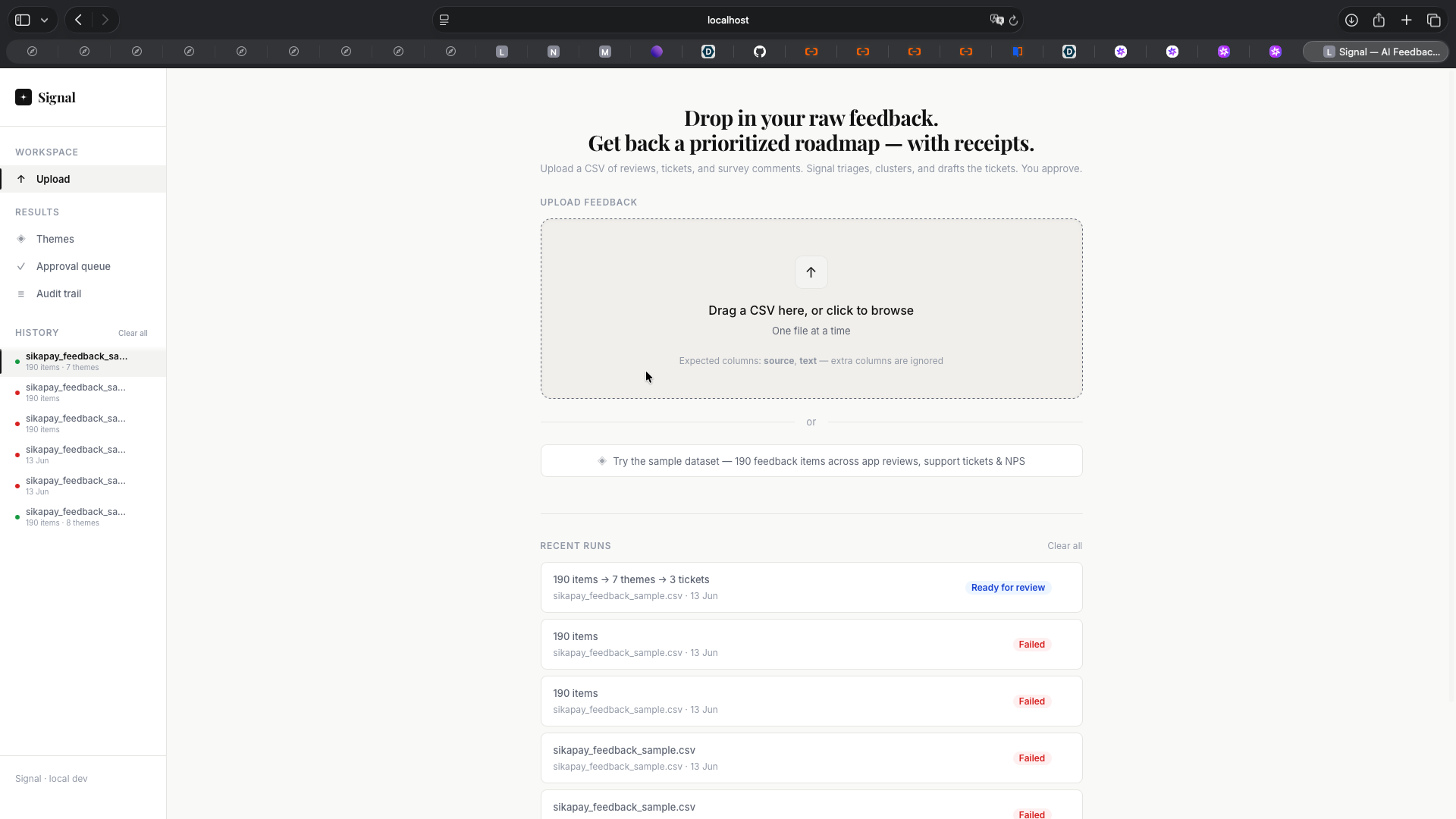
Signal ingests raw, messy feedback in bulk and runs an autonomous pipeline:
- Triage : classifies every item (bug, feature request, complaint, praise, noise) using Qwen-Turbo, filtering duplicates and even detecting sarcasm
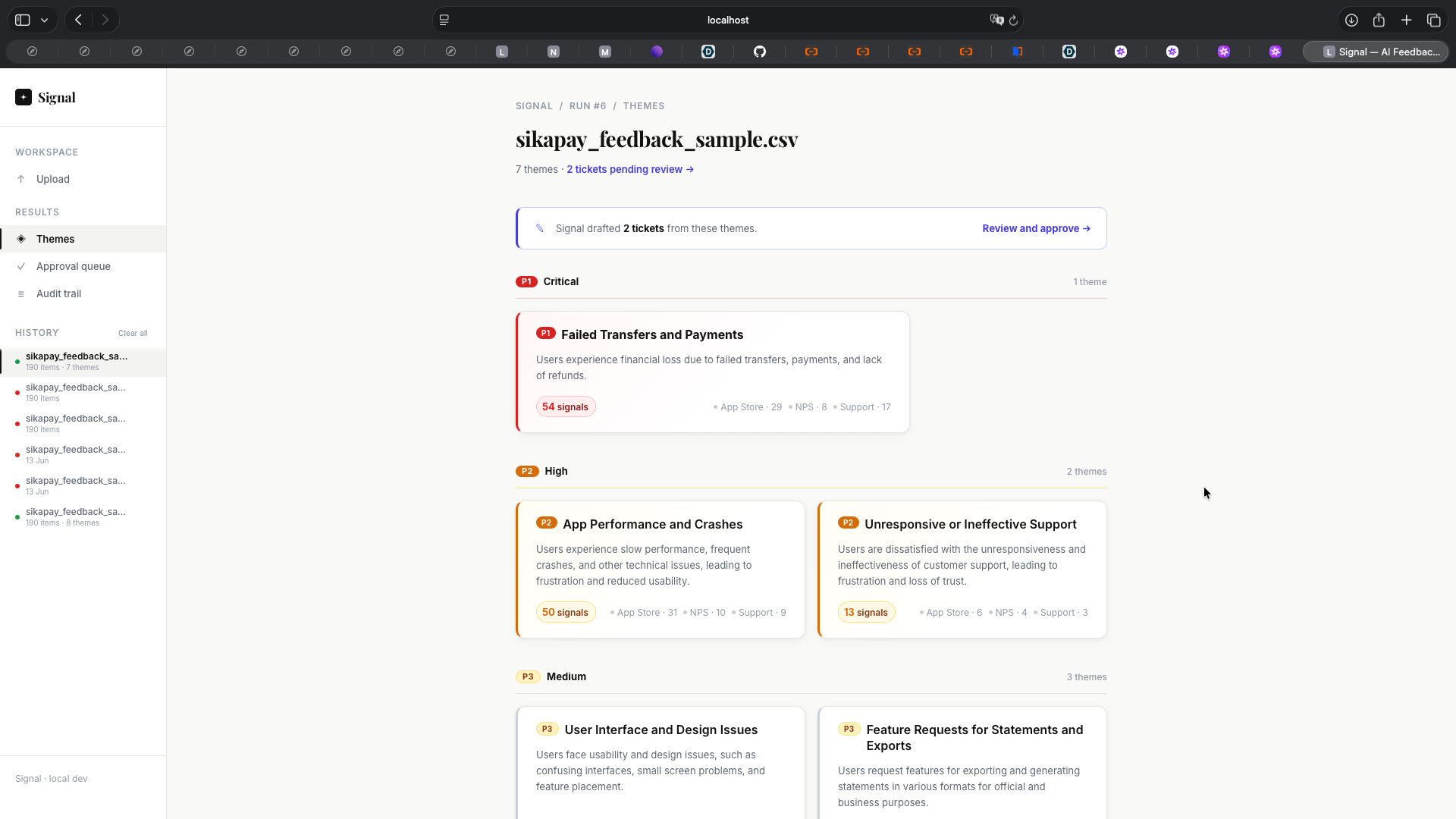
- Theme synthesis : Qwen-Max clusters related items into themes, merging complaints that are phrased differently but describe the same problem
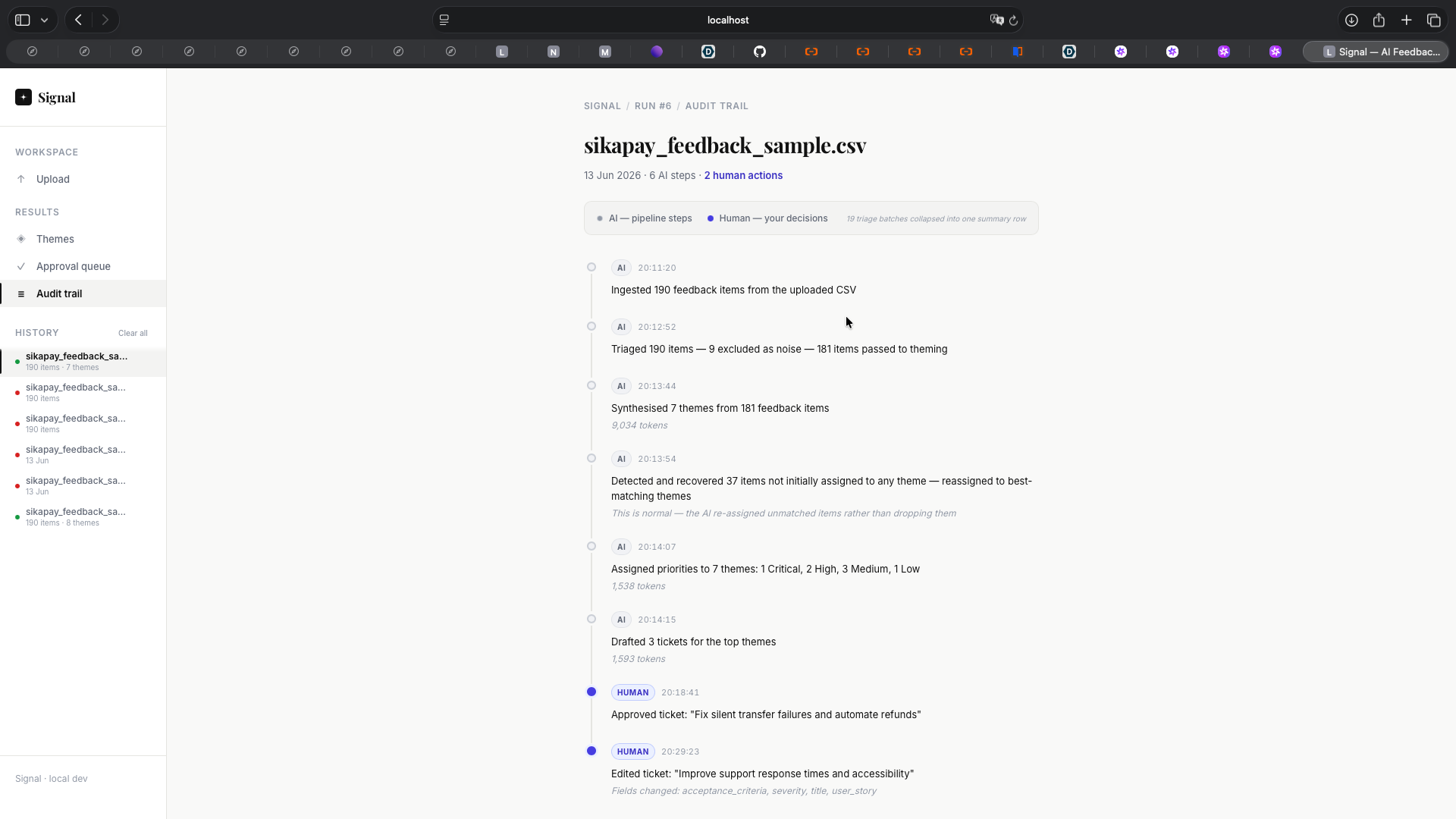
- Prioritization with receipts : every theme gets a P1–P4 score and a written rationale citing exact evidence ("raised by 14 users across 3 sources")
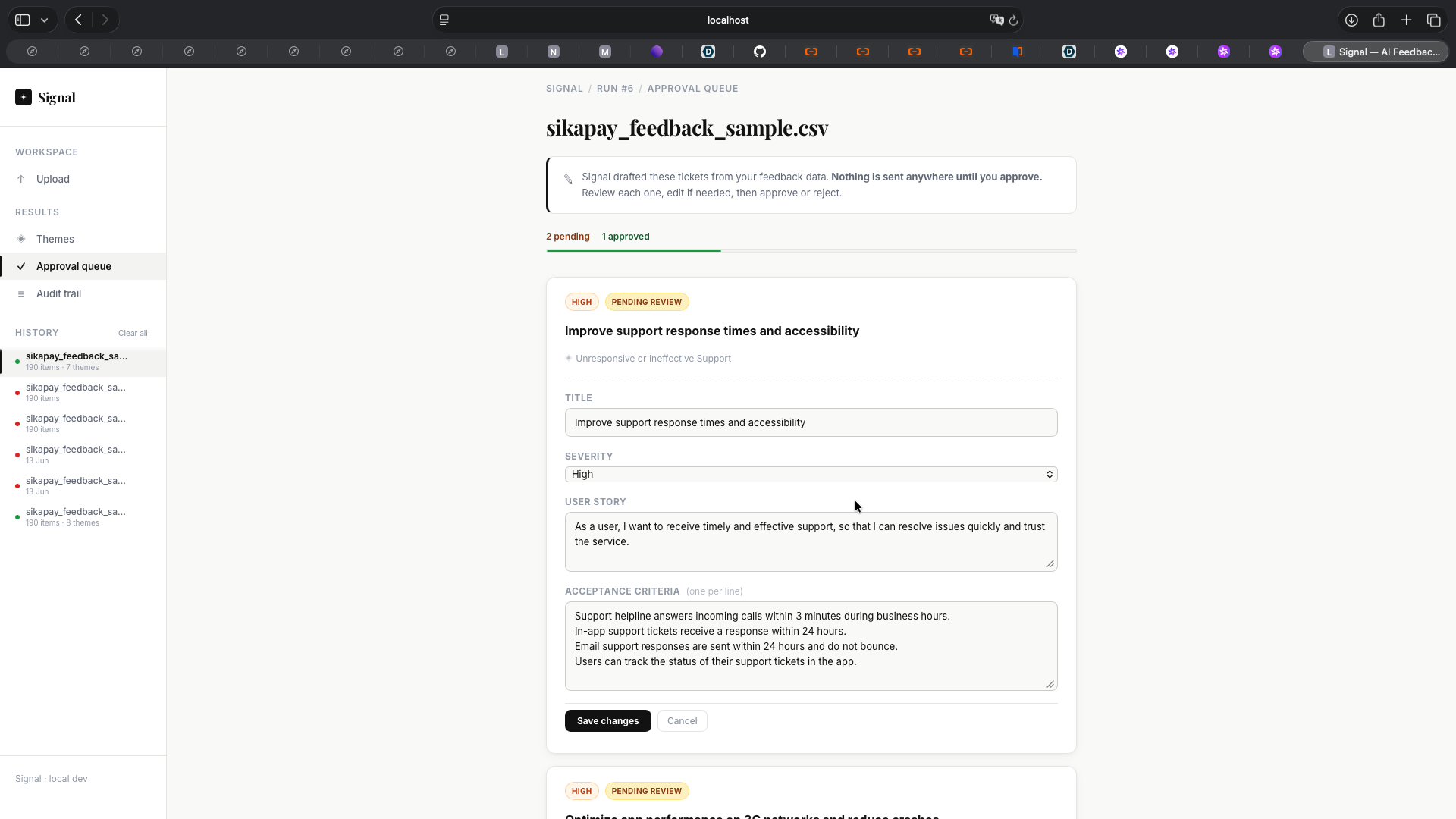
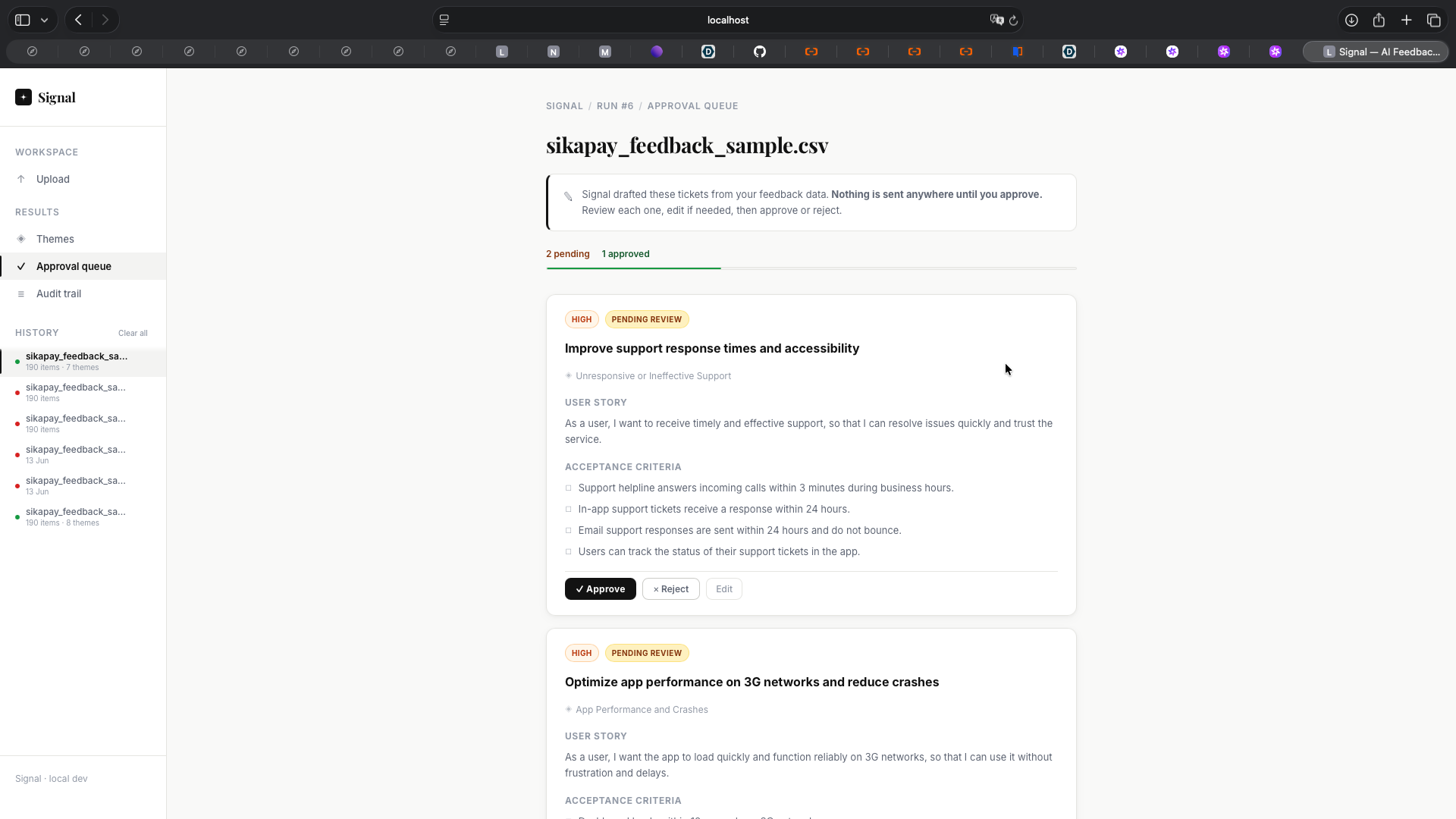
- Ticket drafting :top themes become sprint-ready tickets: user story, acceptance criteria, severity
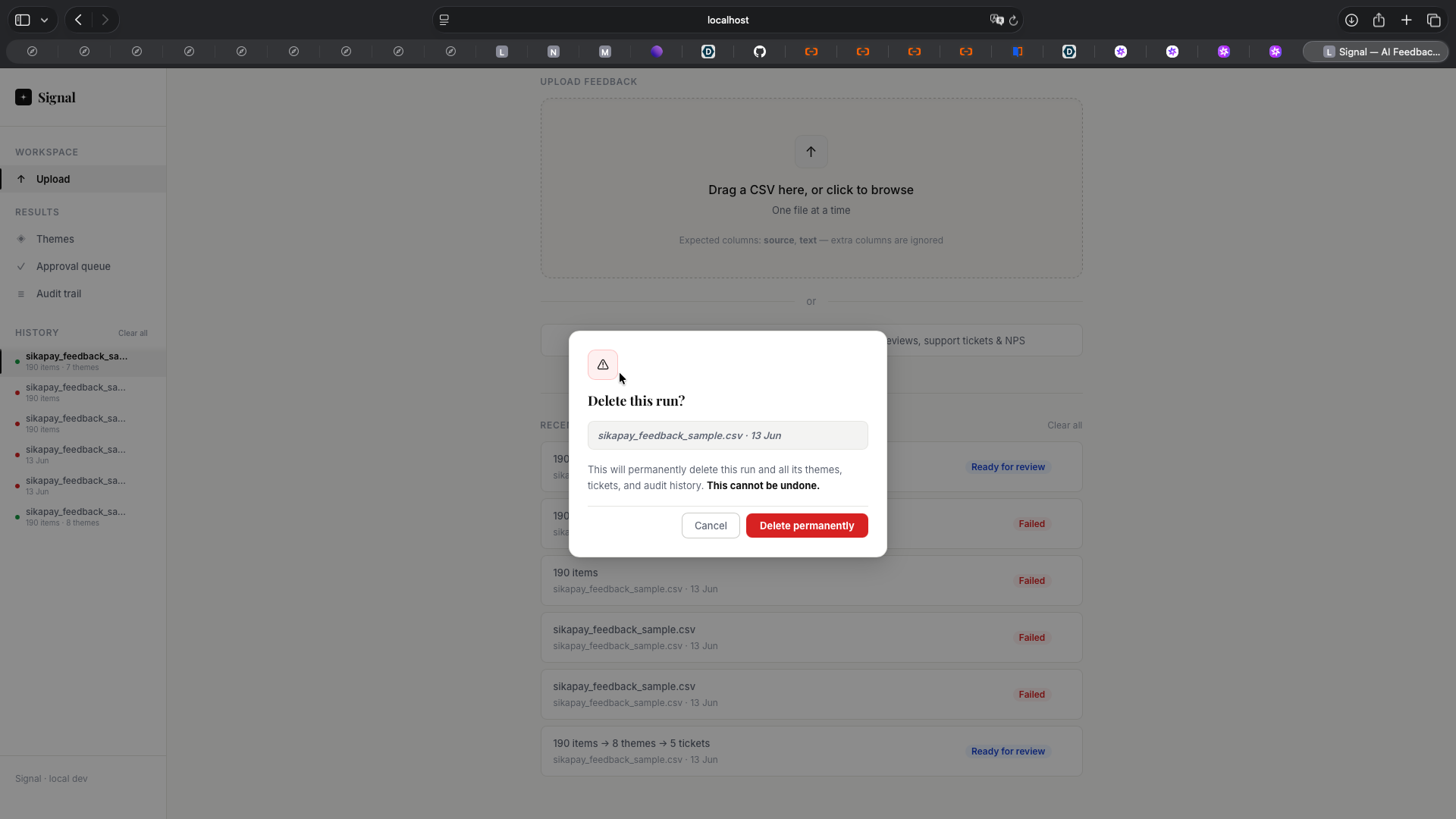
- The checkpoint : nothing reaches the backlog until I review, edit, and approve it. Approved tickets are created via the Jira API, and every agent decision is logged in a full audit trail
The design principle throughout: the agent drafts and justifies; the human decides. As a PM, I wouldn't trust an agent that skips that gate : so I refused to build one.
How I built it
- Backend: [language] agent orchestrator on Alibaba Function Compute
- AI: Qwen-Turbo for high-volume classification, Qwen-Max for reasoning-heavy synthesis and drafting : right-sized models per pipeline step
- Storage: [RDS/Tablestore] for feedback, themes, and the audit log; OSS for uploads
- Frontend: [React/Next.js] dashboard feedback inbox, theme explorer with evidence trails, approval queue
- Workflow: I directed an AI coding agent that wrote most of the code, while I owned the architecture, specs, prompt design, review, testing, and deployment. Building an agent with an agent : with me as the human-in-the-loop both times turned out to be the most fitting part of the whole project.
Challenges I ran into
- The Alibaba deployment hurdle on Day 2 and how you got through it
- A prompt that kept hallucinating themes and how many rewrites it took to fix
- The moment reviewing AI-written code stopped feeling slow and started feeling natural
Accomplishments that im proud of
first deployed Qwen call, the sarcasm test passing, the evidence chain working end-to-end, shipping solo
What I learned
prompt design is real engineering; PM skills (specs, acceptance criteria, scope discipline) transfer directly to directing AI agents; rust comes off faster than expected]
What's next for Signal
Live integrations with support inboxes and app store APIs, multi-project support, and a "challenge the agent" mode where the PM interrogates a priority ranking and the agent defends or revises it. These lived in FUTURE.md during the build scope discipline was rule one.


Log in or sign up for Devpost to join the conversation.