-
-

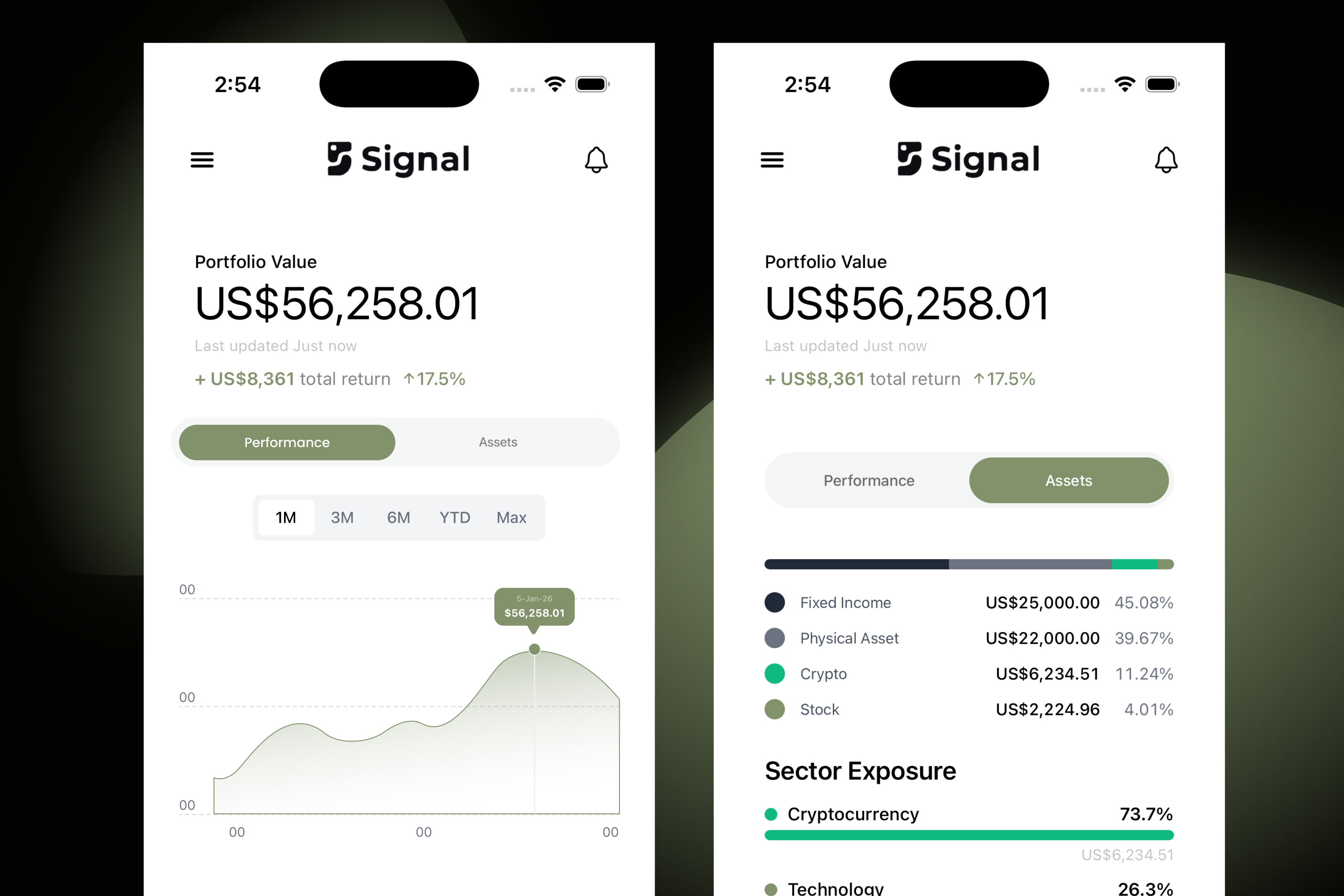
Unified portfolio view across stocks, bonds, crypto, real estate, and private assets, all in one place.
-
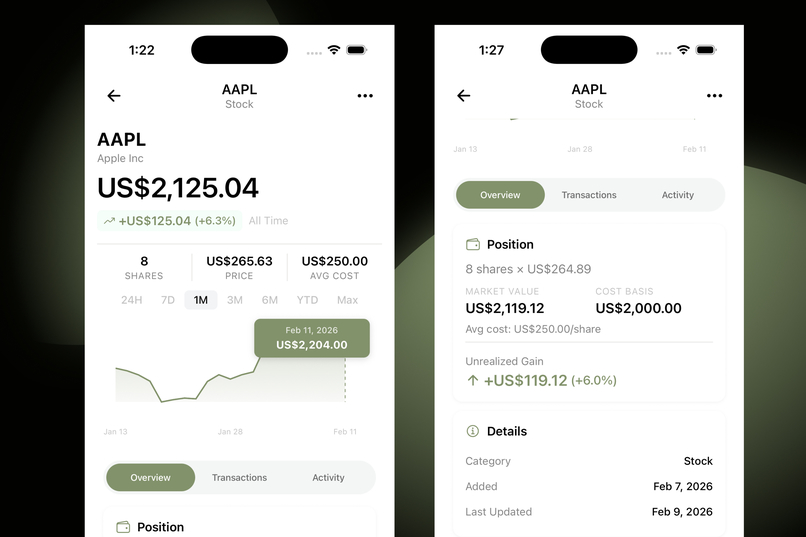
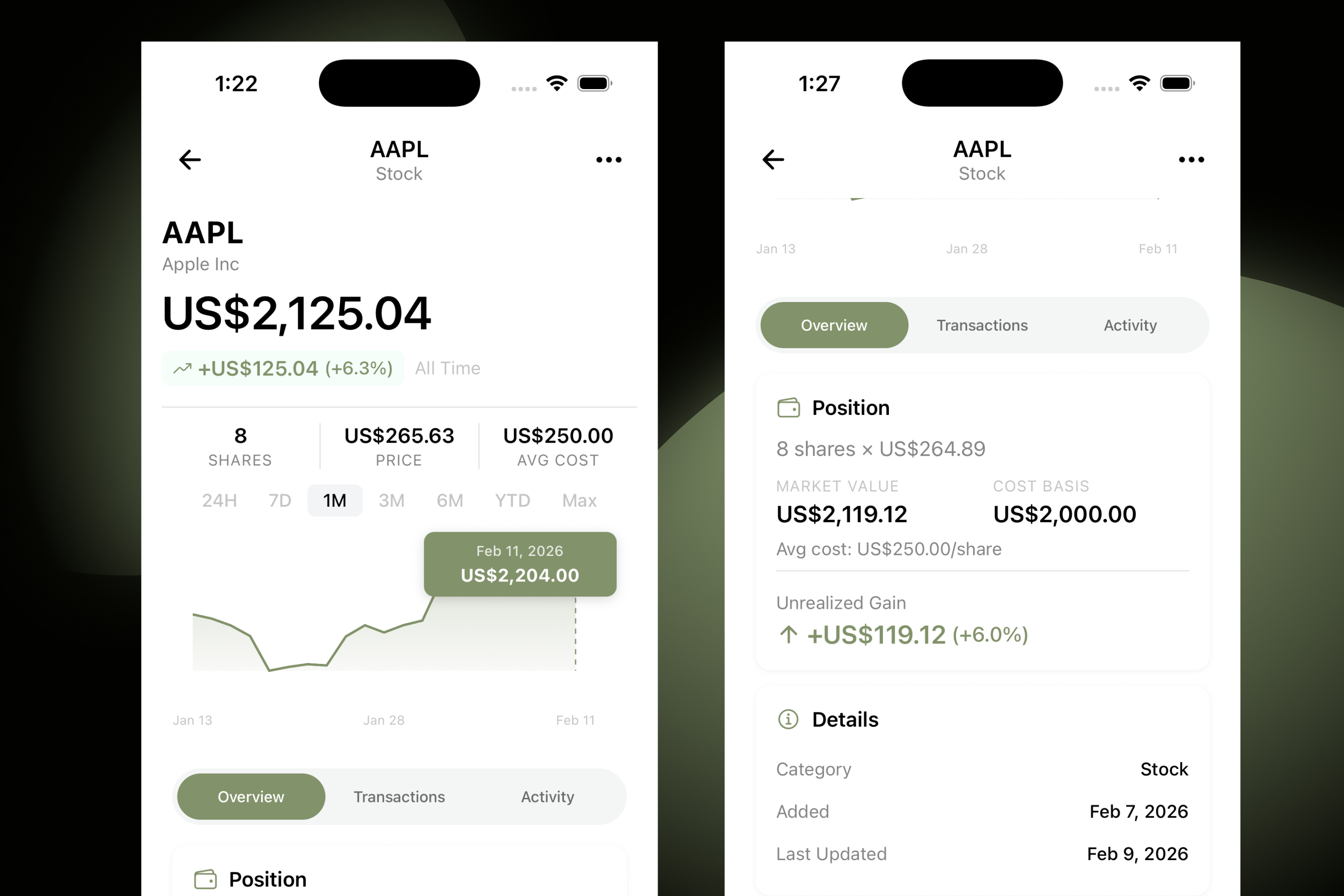
Track performance, allocation impact, and historical data for each stock in your portfolio.
-
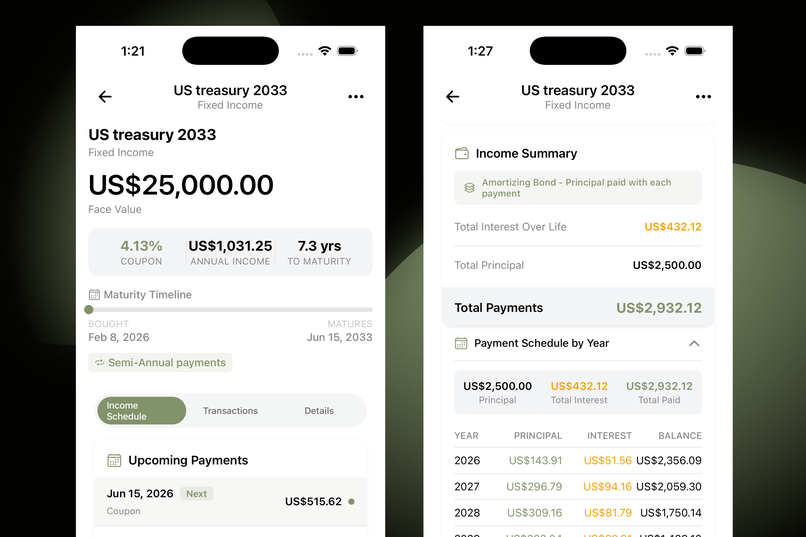
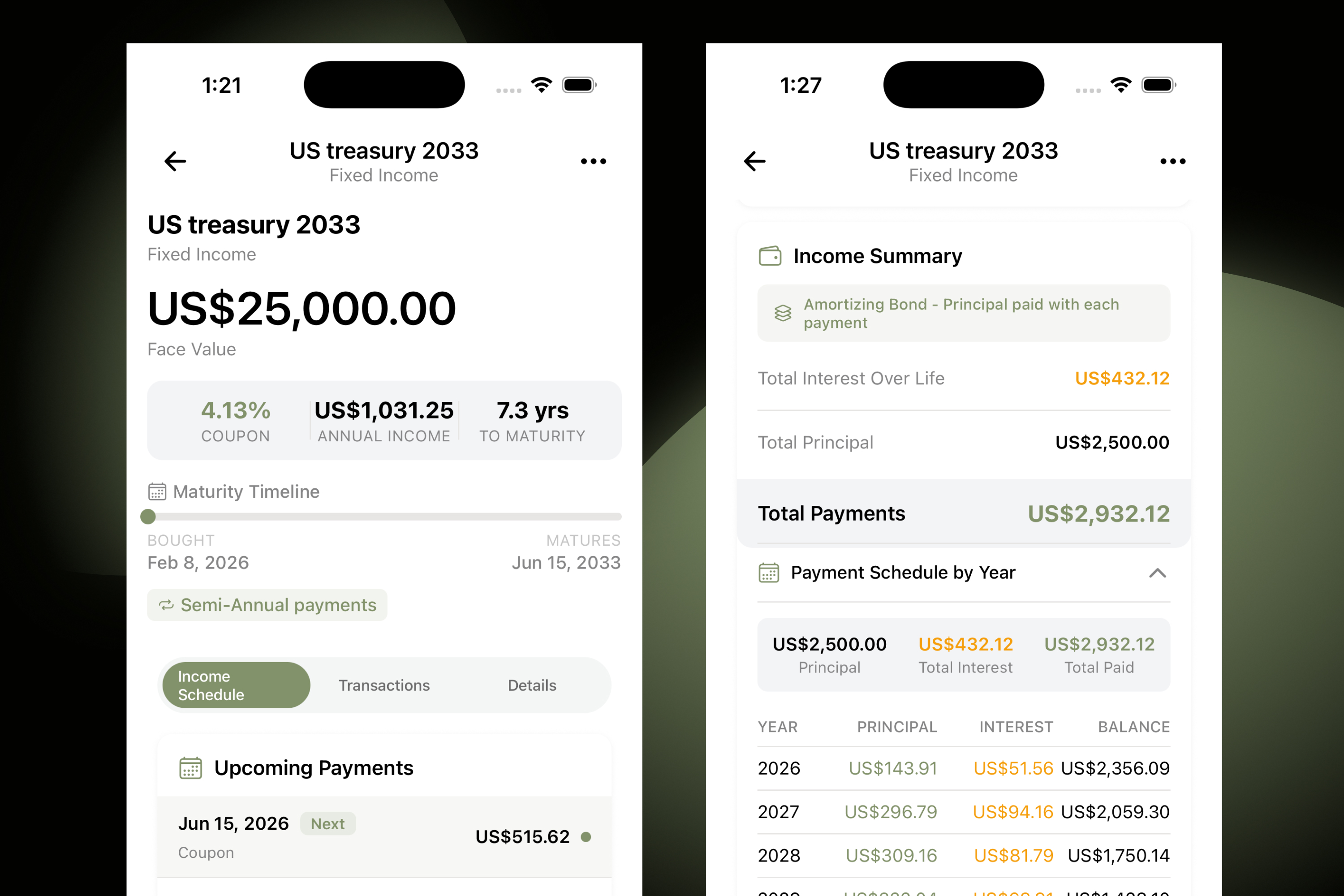
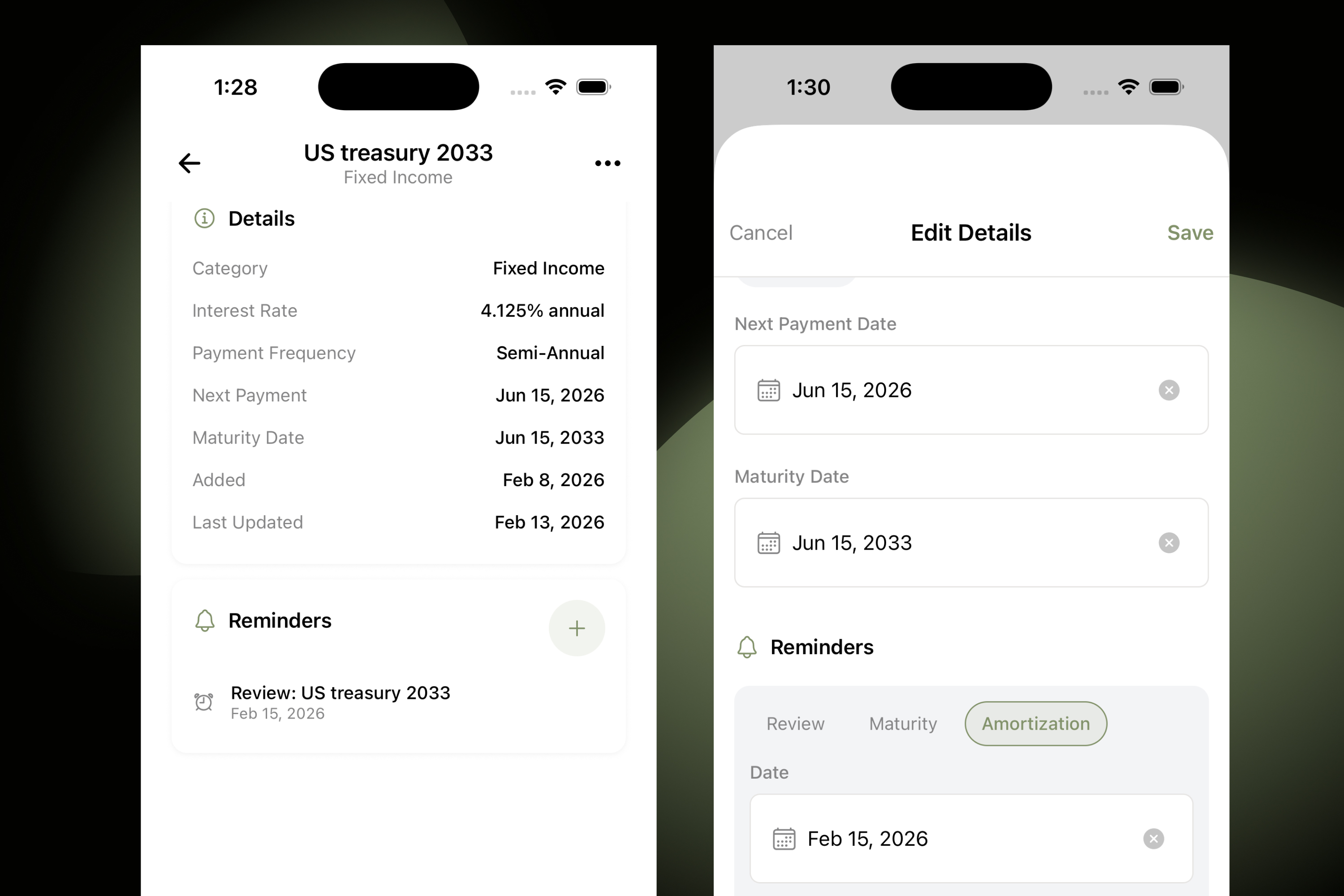
Bond analytics including yield and risk metrics, fully integrated into your portfolio view.
-
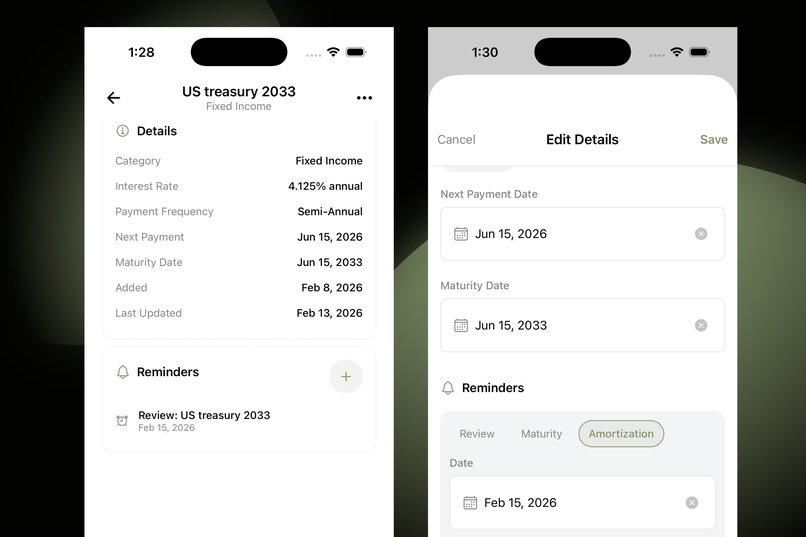
Smart reminders for private investments and key portfolio events.
-
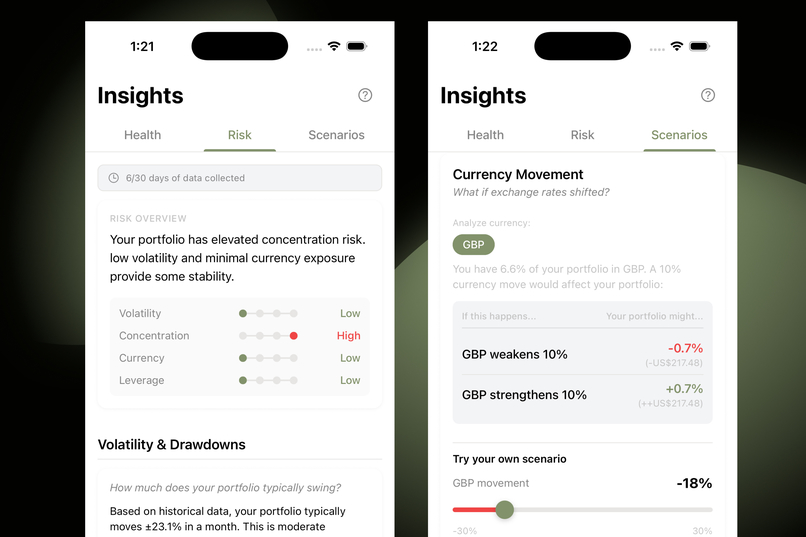
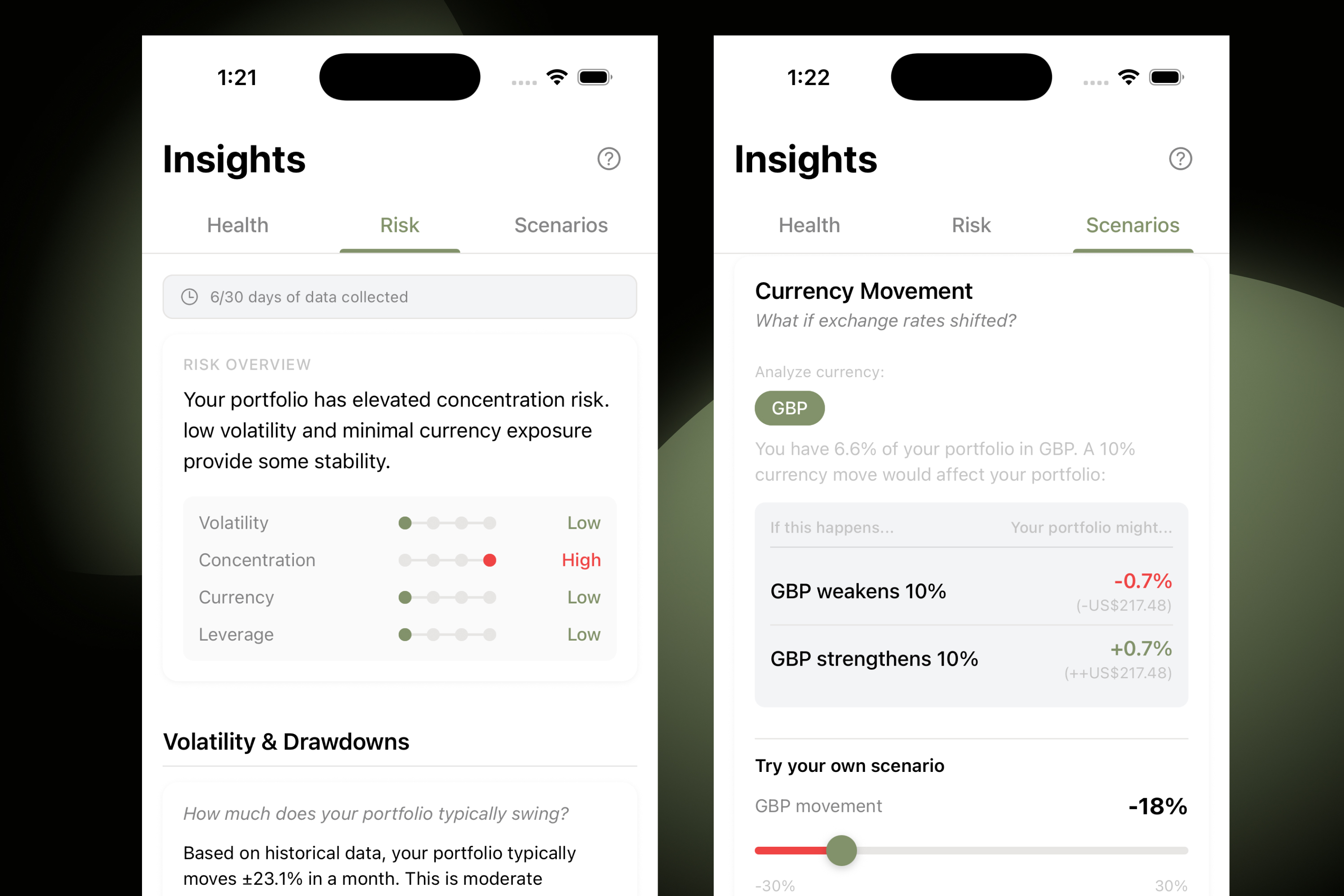
Analyze allocation, risk exposure, and scenario outcomes across your entire portfolio.
-
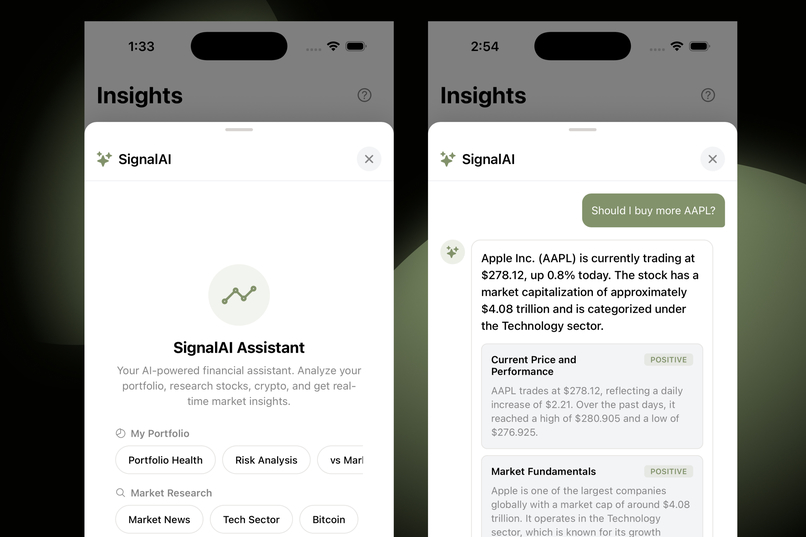
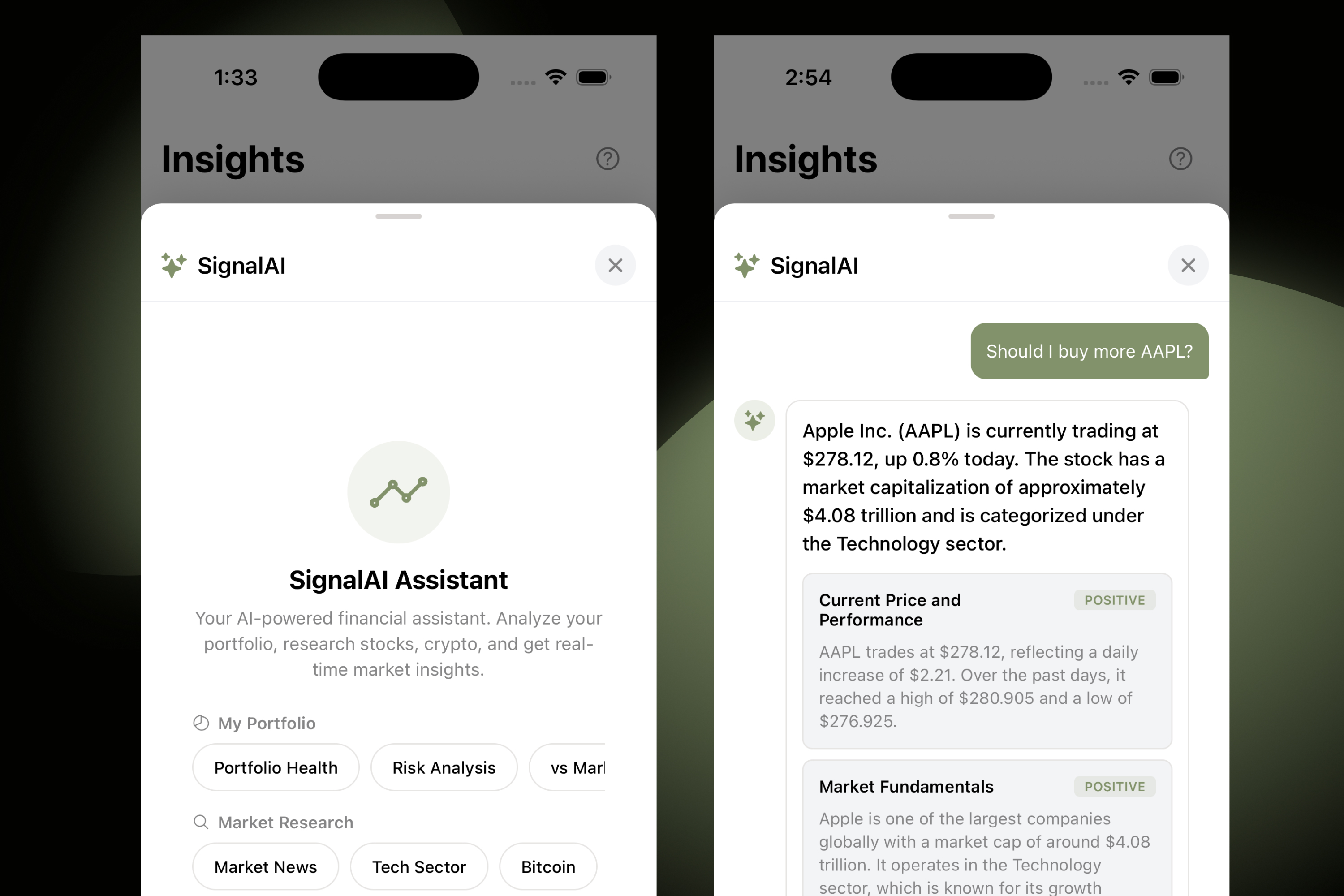
AI-powered chatbot informed with portfolio insights and market data to help DIY investors make more informed decisions.
Inspiration
As DIY investors, we’ve seen how quickly portfolios become fragmented. Stocks live in one broker, gold in another platform, fixed income products elsewhere, plus real estate, physical assets, and cash accounts. Monitoring everything turns into spreadsheets, notes, and guesswork.
The inspiration for Signal came from this frustration: despite having more ways to invest than ever, it’s surprisingly hard to get a clear, unified view of performance and risk. We wanted to build a single app that cuts through that noise and helps investors focus on what actually matters.
What it does
Signal is a mobile investment tracking app designed for DIY investors with diversified portfolios, focusing on portfolio monitoring, clarity, and long-term decision-making.
It allows users to:
- Track listed investments (stocks, ETFs, funds, gold) with real-time price updates
- Track unlisted investments (fixed income, real estate, physical assets) via manual entries
- Receive reminders for maturities, amortizations, or periodic reviews
- View a unified portfolio dashboard showing total value and allocation
- Unlock premium diversification and risk insights, including exposure by asset class, country, and sector
How we built it
Signal is built as a native mobile app using React Native, allowing it to run on real devices via TestFlight.
Key technical components include:
- RevenueCat SDK to power subscriptions and manage premium entitlements
- Third-party pricing APIs for real-time prices of listed assets
- Local-first storage, so the app remains usable even with intermittent connectivity
- Native notifications to schedule reminders for unlisted investments
- A clean separation between listed and unlisted assets to support different update models
The architecture was intentionally kept simple and readable to support a reliable MVP.
Challenges we ran into
One of the biggest challenges was designing a model flexible enough to support very different asset types - real-time traded securities and completely manual investments - without overcomplicating the user experience.
Another challenge was balancing scope: delivering meaningful diversification insights without building overly complex financial models. We focused on explainable heuristics (like exposure percentages) rather than advanced math, prioritizing clarity over sophistication.
Finally, integrating monetization via RevenueCat in a way that felt natural - valuable, but not intrusive - required careful UX decisions.
Accomplishments that we're proud of
- Shipping a working native mobile app within the hackathon timeframe
- Successfully integrating RevenueCat with a clear free vs premium feature split
- Supporting both real-time and manual assets in one coherent system
- Implementing reminders for non-listed investments, a feature often overlooked
- Delivering a clean, focused product with intuitive user experience for DIY investors
What we learned
We learned how important it is to clearly define non-goals early - avoiding feature creep made it possible to ship something cohesive.
On the technical side, we gained hands-on experience integrating RevenueCat, managing entitlements, and designing monetization around real user value rather than artificial limits.
Most importantly, we learned that investors don’t necessarily want more data - they want better signal.
What's next for Signal
Beyond the hackathon, Signal could evolve with:
- Cloud sync across devices
- Shared or household portfolios
- Goal-based tracking (e.g. retirement or FI targets)
- Deeper analytics and historical insights
- Optional integrations with external investment platforms
The long-term vision is to make Signal a trusted companion for investors who want clarity, not complexity.
Built With
- coingecko
- eod
- etfs
- expo.io
- finnhub
- react-native
- revenuecat
- typescript

Log in or sign up for Devpost to join the conversation.