-
Select Screen
-
Inspiration
Our team has played Gartic phone and scribble.io a lot, and we wanted a different way to test people's communication skills so we decided to use emojis. The e-virus was really just the emoji virus, corrupting everyone's communications and turning them into emojis.
So we created Signal Emojis to help prepare everyone's communication skills during this time of great trouble.
What it does
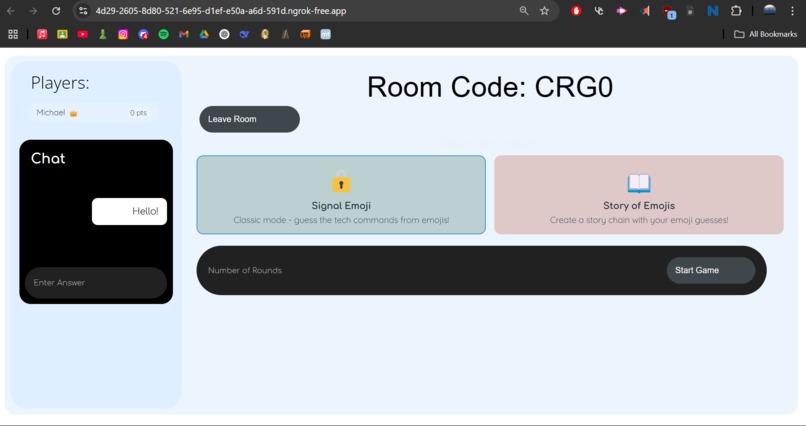
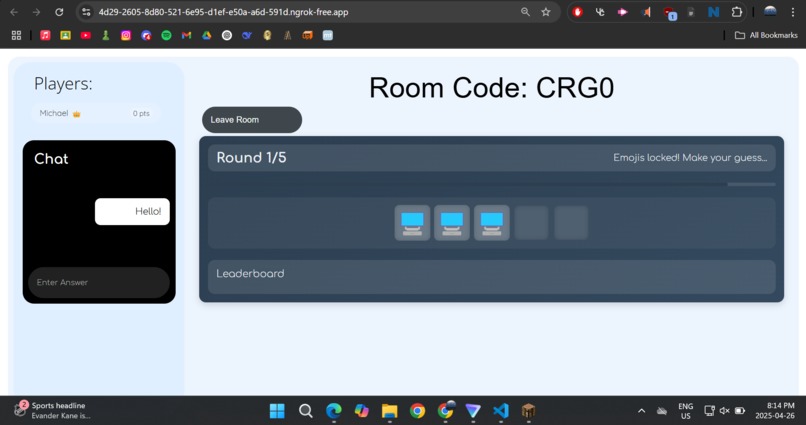
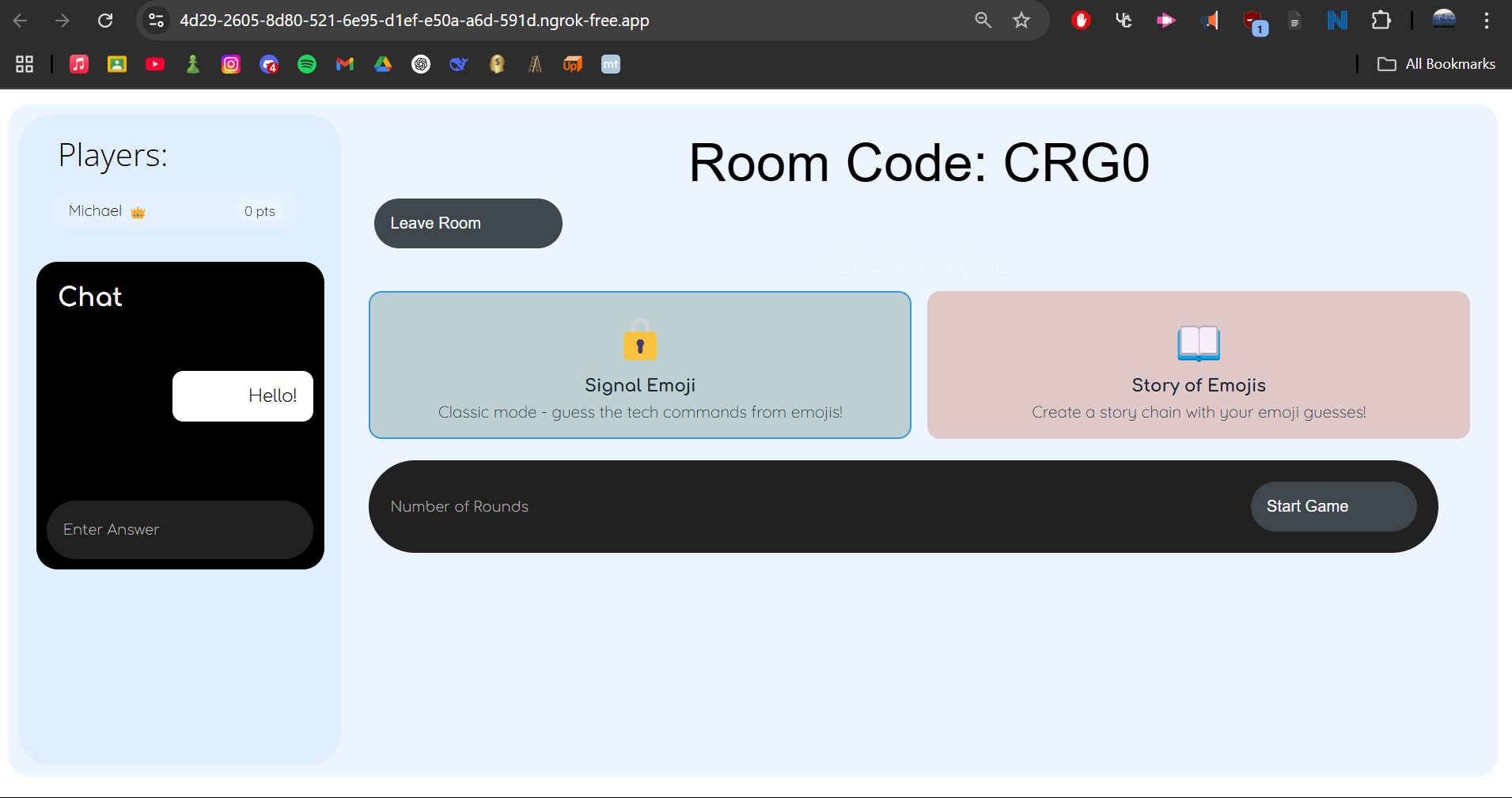
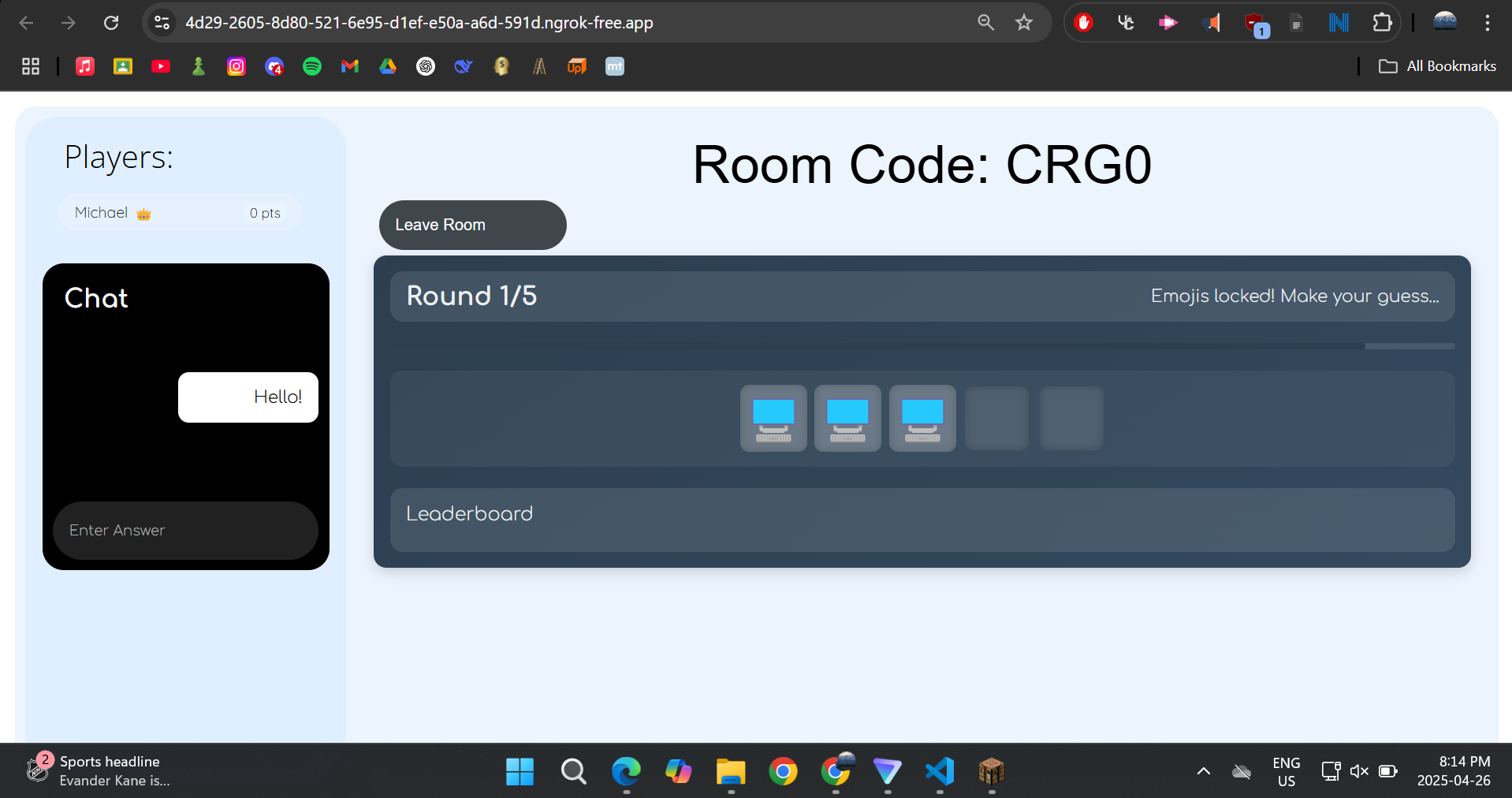
In Signal Emoji, we use the web-sockets API to create multiplayer functionality where people can join room. Users can create a game, where they can choose between 2 game modes; signal emoji and story of emojis. Signal emoji involves guessing the words associated to the emojis in a secret sentence, while story of emoji allows for users to interpret a message multiple times to see how badly it gets messed up.
Challenges we ran into
Creating the emoji keyboard to insert them required the use of a lot of different libraries. The front end and back end both created a lot of problems because we had trouble syncing our code, and there were a lot of confusing bugs like delays and random shutdowns.
Accomplishments that we're proud of
As the theme is Lockdown, users are supposedly locked in their homes, not being able to go outside. We implemented a weather data related to the location so if people were to play from different locations, they would show off their different weather emojis next to their names.
What we learned
We learned to quickly push our code to GitHub, as the team was working on the project and we all ended up with different versions, which lead us to waste time in merging as some of the functionality was lost. Using a live share, we were all able to simultaneously work on the project, removing the wasted time of merging our code.
What's next for Signal Emoji
Signal emoji will include new modes and more customizability, including user selected prompts, a permanently online .io game version, and compatibility for more languages.

Log in or sign up for Devpost to join the conversation.