Inspiration
What it does
How we built it
Challenges we ran into
Accomplishments that we're proud of
What we learned
What's next for Signal Ark
Inspiration
Most disaster tools assume the network is available. Signal Ark starts from the worse case: the internet is down, devices are separated, and people still need to preserve urgent requests without losing trust.
What it does
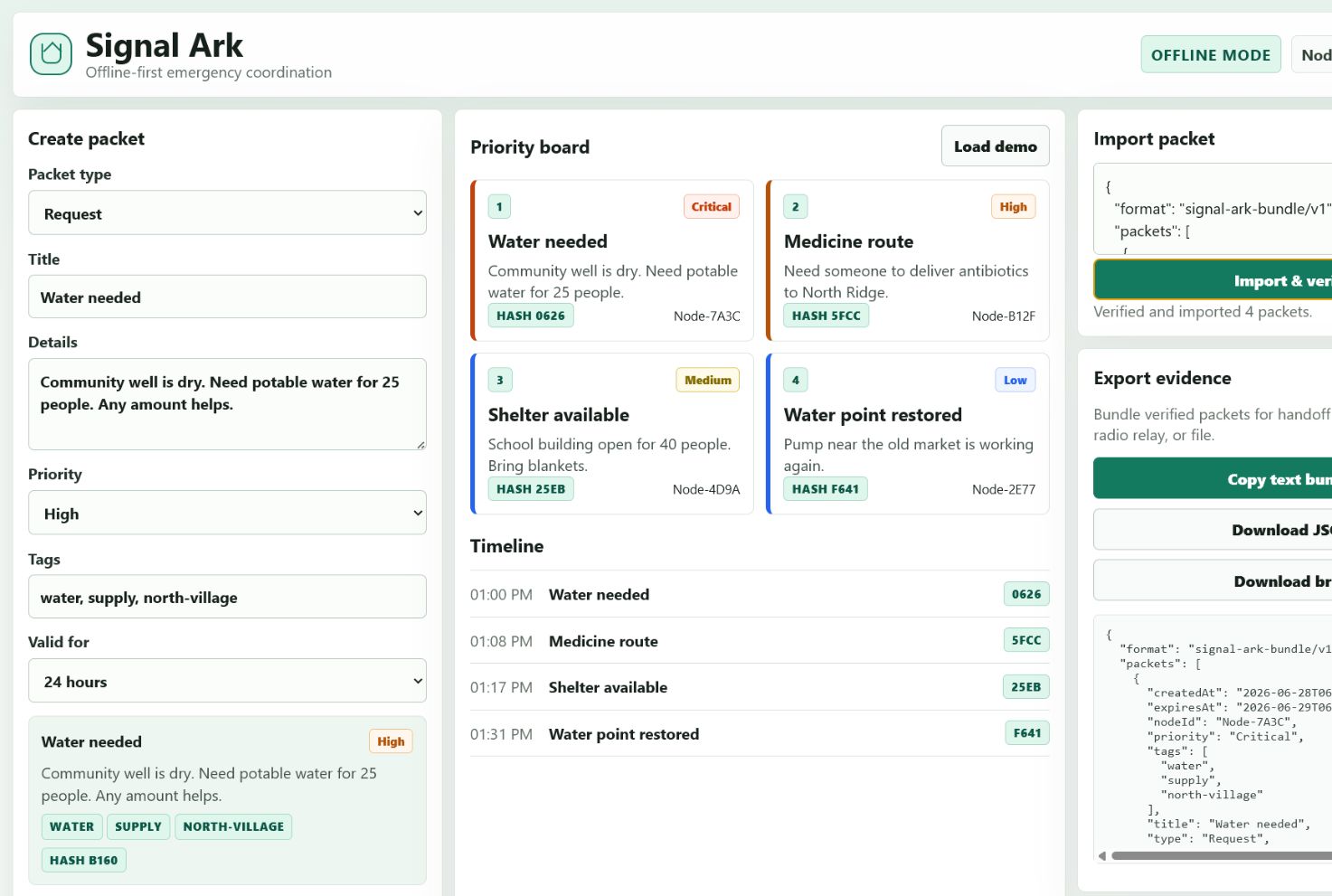
Signal Ark lets a community create signed emergency packets for urgent needs, import packets from other devices, merge duplicates by hash, sort by priority, and export an evidence bundle.
How I built it
The project is a static web app built with HTML, CSS, and vanilla JavaScript. It uses browser Web Crypto to hash a canonical packet body, localStorage for local persistence, and a service worker for offline caching after first load.
Challenges I ran into
The hardest part was keeping the project useful without adding a fake backend or pretending to solve every disaster response problem. I kept the first version focused on one workflow: create, verify, merge, and hand off emergency packets.
Accomplishments
- Works offline after first load
- Verifies imported packets before merging
- Keeps duplicate packets from cluttering the board
- Exports both machine-readable JSON and a readable Markdown brief
- Has a focused UI that works on desktop and mobile
What I learned
I learned that resilience can come from simple data formats, not only from large platforms. A small signed text packet can be easier to move across broken infrastructure than a full app account or cloud sync system.
What's next
- QR export for packet handoff
- Optional peer-to-peer sync on a local network
- Expiry warnings and conflict notes
- Field testing with real emergency coordinators
Built solo as a first-year information technology student. Contact: [email protected]
Links
Built With
- css
- emergency-response
- html
- javascript
- localstorage
- offline-first
- service-worker
- web-crypto

Log in or sign up for Devpost to join the conversation.