-
-
Cover
-
Companion App
-
Hardware
Inspiration
Distractions pull your attention before you even notice. You start a task and your mind drifts. You check your phone, open another tab, or follow a random thought.
All of this starts with tiny signals you cannot see. How your eyes dart back and forth, the pauses you take, a switch in posture. Through these super subtle micro-interactions.
Signal makes those early signs visible, helping you notice distractions before they take over and stay intentional with your attention.
What it does
Signal is a wearable system with a companion app.
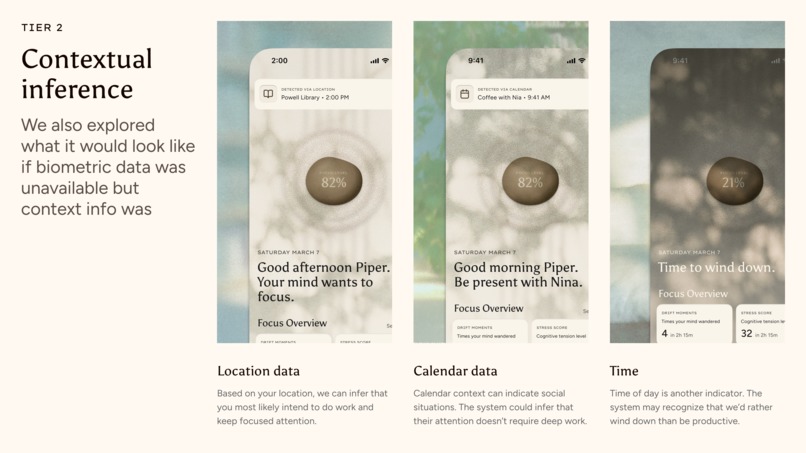
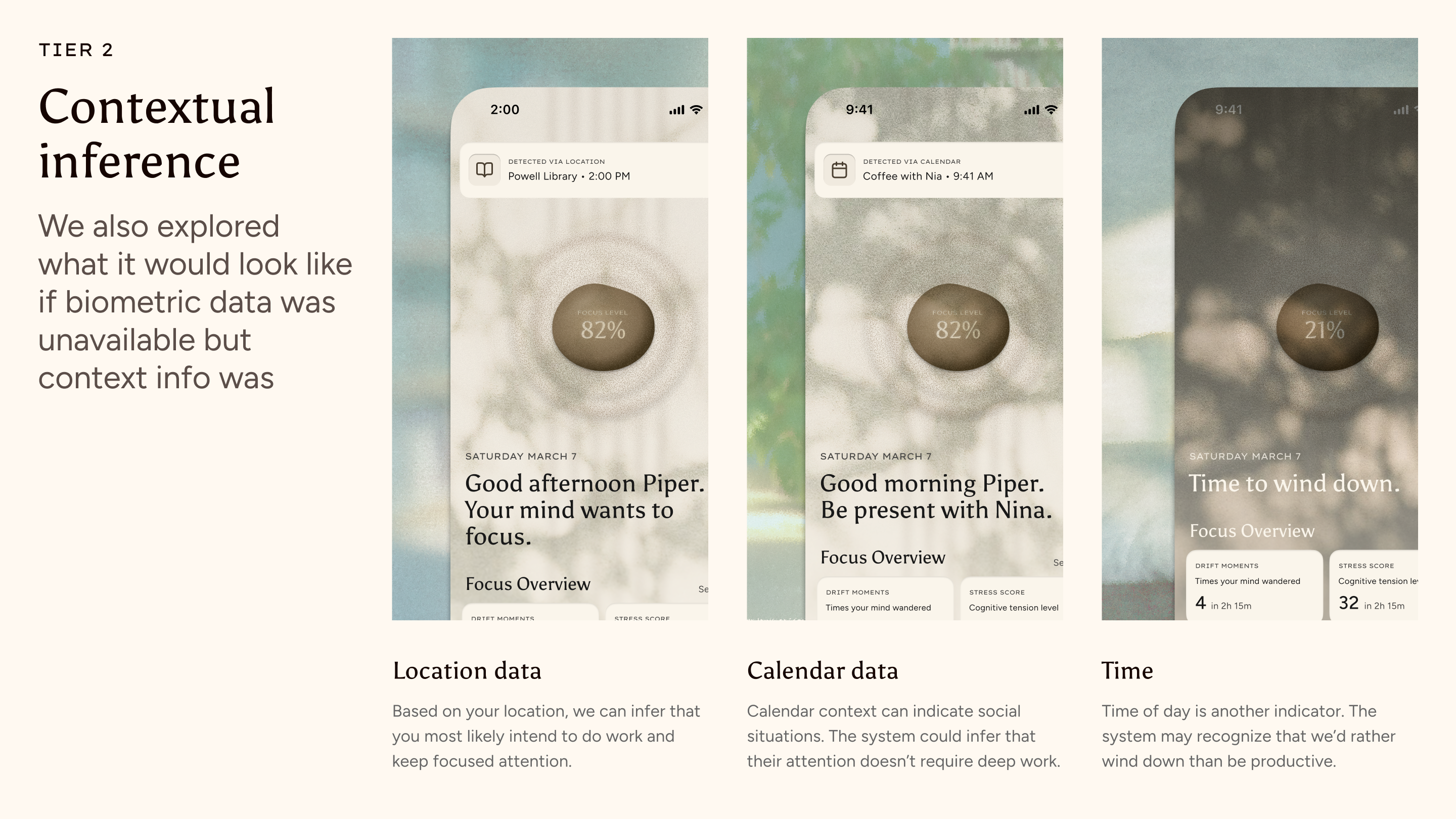
By detecting subtle signals like gaze patterns, posture changes, and contextual cues such as location or time of day, the system identifies moments when focus begins to shift. Instead of interrupting users with notifications, Signal provides gentle nudges that help them return to what they intended to do. The goal is not to force productivity, but to help users stay more aware and intentional with their attention.
How we built it
We started by identifying a gap in current "sensorial" technologies, asking what human experiences are still difficult to detect or quantify. Attention emerged as a key opportunity space. Through research, we found that micro-interactions often signal intention earlier than overt actions, and are really great indicators for focus.
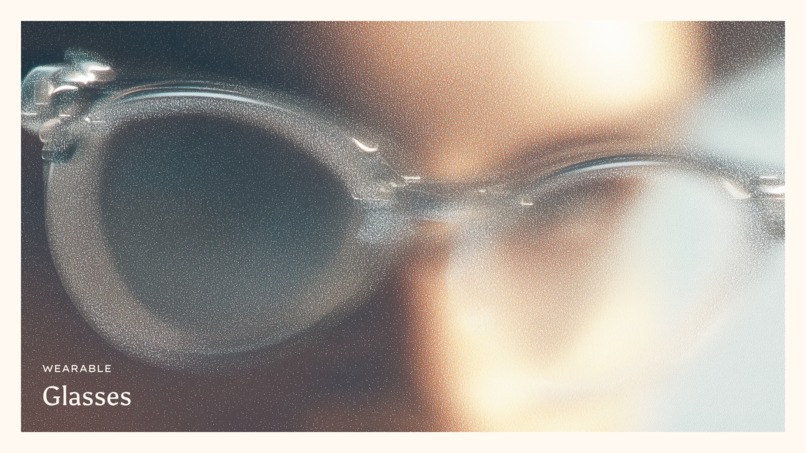
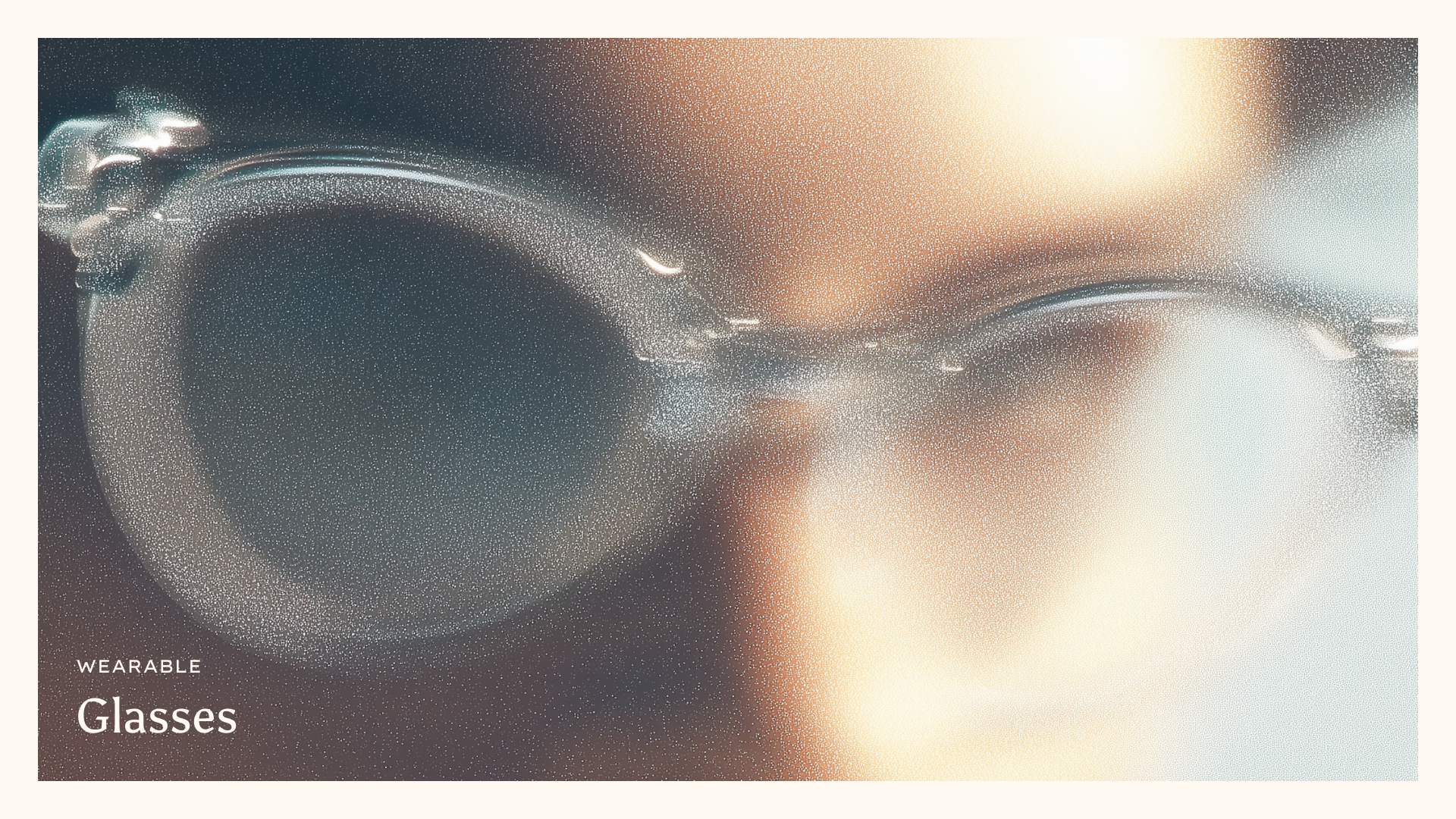
We explored multiple wearable form factors, like watches, pins, and glasses and evaluated sensing capabilities, feasibility, and hardware constraints like battery life and sensor integration. We ultimately chose glasses because emerging smart-glasses platforms already embed cameras and sensors, making them well-positioned to capture attention-related signals and detect behavioral patterns.
From there, we moved into rapid design and prototyping, using Figma and Figma Make to develop interactive product flows. We leveraged AI image generation tools like Midjourney for hardware visualization and concept exploration.
Finally, we conducted quick user feedback loops and iterative testing, rapidly iterating on our prototypes based on usability tests.
Challenges we ran into
One major challenge was working within the limits of current technology. Many of the signals we were interested in detecting, like predicting intention before action, are still an active area of research, so we had to carefully think about what could realistically be sensed today.
Privacy was another important challenge. Because attention signals are deeply personal, we had to think about who owns that data and how the system could protect user privacy.
We also decided not to rely on AR or VR interfaces. While those technologies could display information directly in the user’s view, they also risk becoming another source of distraction. Instead, we focused on subtle, minimal feedback that supports focus rather than interrupting it.
Accomplishments that we're proud of
This was our first time experimenting with several AI tools, including Figma Make, and we pushed ourselves to learn/adapt quickly while building out the concept.
Our team moved through many rapid design iterations and were able to explore different wearable formats and interaction models before landing on the final concept. We had strong product discussions about tradeoffs, feasibility, and user experience. Those conversations helped us refine the mechanics of the system and shape a clearer product vision.
What we learned
3 main things. Collaboration in fast-paced environments, rapid iteration to communicate and align, structured decision-making during high pressure.
This project taught us a lot about working together in a fast-paced environment. Because of time constraints, we relied heavily on asynchronous updates and collaboration to keep the project moving forward.
We also learned the value of rapid iteration. Our process involved exploring many ideas, diverging widely, and then narrowing down to the strongest direction.
Most importantly, we learned how to maintain clear thinking and structured decision-making even in a high-pressure environment. Turning a broad idea into a coherent product concept required constant communication, prioritization, and teamwork.
What's next for Signal
With initial usability testing complete, we’re focusing on refining attention detection and optimizing subtle nudges to guide users without distraction.
We also plan to explore adaptive personalization, where the system learns individual attention patterns over time, and through that, is able to help users build healthier focus habits (while retaining their privacy) in the long term.
Built With
- figma
- midjourney
- react


Log in or sign up for Devpost to join the conversation.