-
-
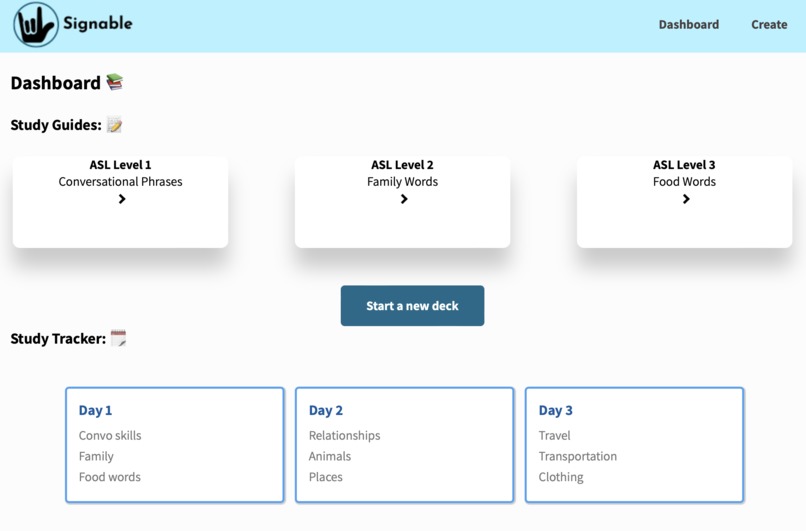
Dashboard
-
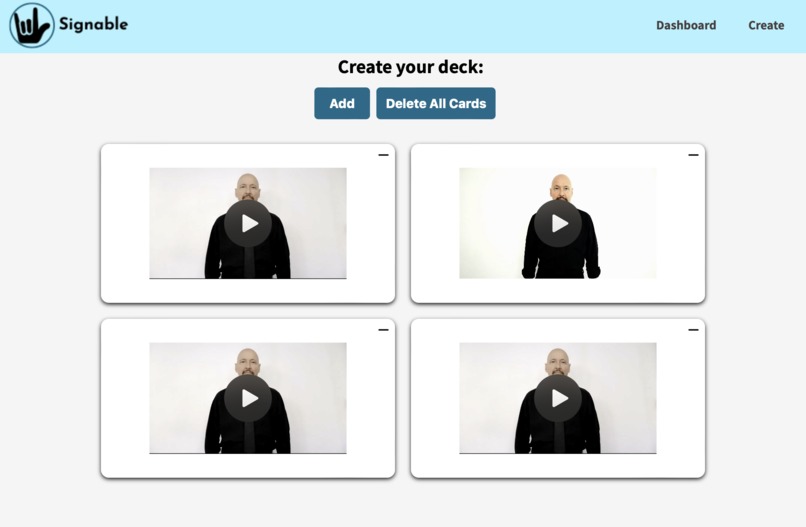
Flashcards
-
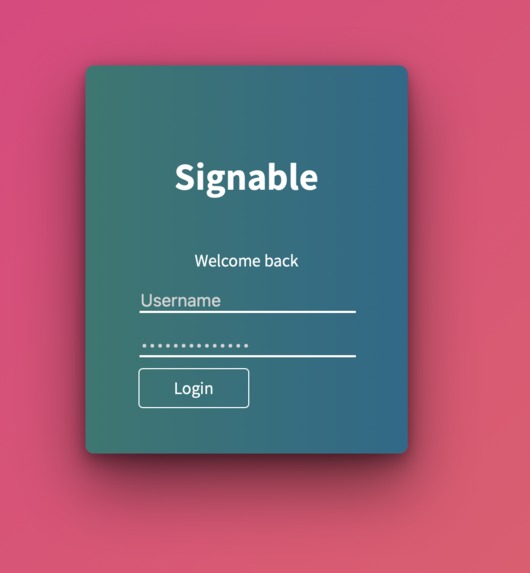
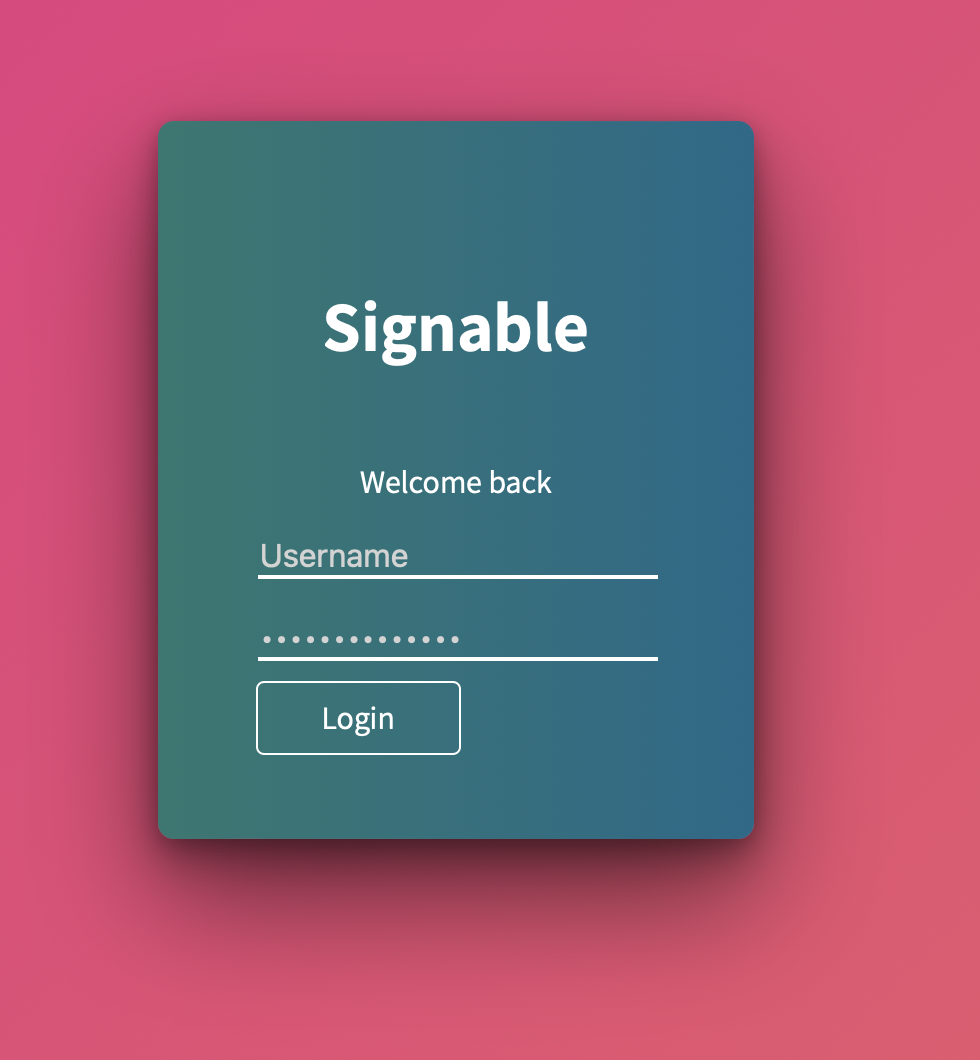
Login Page
For the best video quality on our pitch, watch in 720 or 1080 HD.
Inspiration 💡
More than 72 million people in the world communicate through sign language. Yet, unlike other global languages, there are not many tools to learn how to sign.
This became apparent when I took my first ASL class and had to study for a test, and I found myself lost. The only methods of learning were through interaction with classmates and professors. The traditional sign language flashcards that you can find online prompt users to learn the language through images, which disregard facial expressions and other nonverbal cues that make each sign unique. For many signs in ASL, the hand movements are the same, causing the specific meaning of the sign to be displayed solely through these cues. By using flashcards with images, these important aspects of a sign are lost. We sought to fill this void through the creation of Signable.
What it does 💻
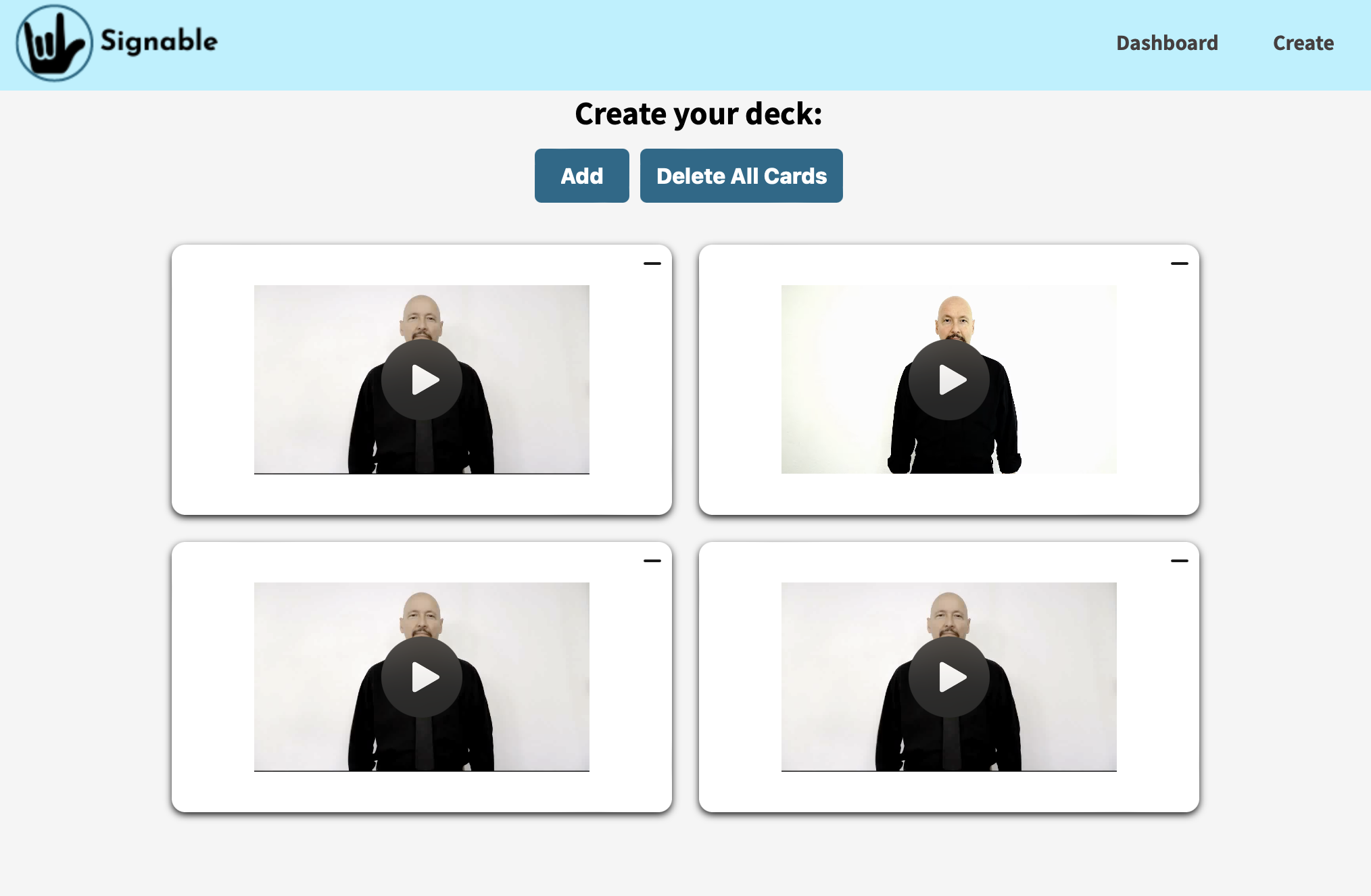
Signable allows users to create personable video flashcards. Users can upload videos of ASL signing tutorials provided by their teacher onto one side of the flashcard and the translation onto the other side. Users can edit, save, and view these flashcard sets. They also can track their language learning goals on the dashboard through a check-off system.
How we built it 🔨
We built Signable inside of VS Code using HTML and CSS for the front-end and JS for the back-end. We are proud that we were able to integrate our front-end with our back-end. Our final project can actually be accessed and is not a mock-up on Figma.
Challenges we ran into 😥
- Formatting the buttons and pages
- Creating a way for users to flip and toggle through the flashcards
- Adding the videos to the flashcards and having them save when the card was flipped proved to be a challenge, but we were able to overcome it.
What's next for Signable 🌇
Signable could benefit from users being able to collaborate and share flashcard sets amongst themselves to further study. In addition, Signable can be used by people who prefer visual based learning, whether they are using it for ASL purposes or not.


Log in or sign up for Devpost to join the conversation.