Inspiration
Communication is a basic human right, yet millions of people who rely on sign language struggle with everyday interactions. We wanted to build something that bridges this gap — so technology can give everyone a voice.
What it does
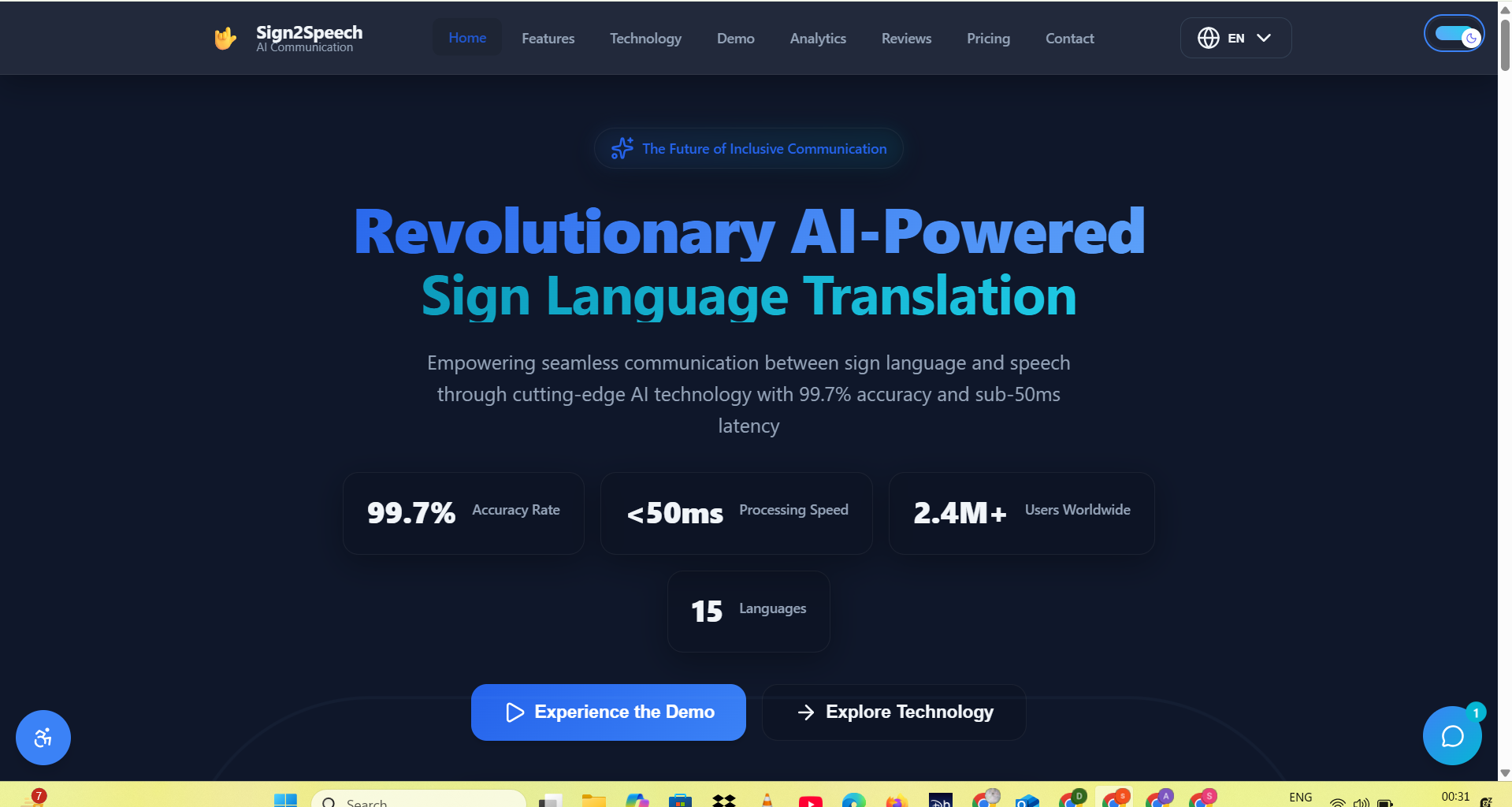
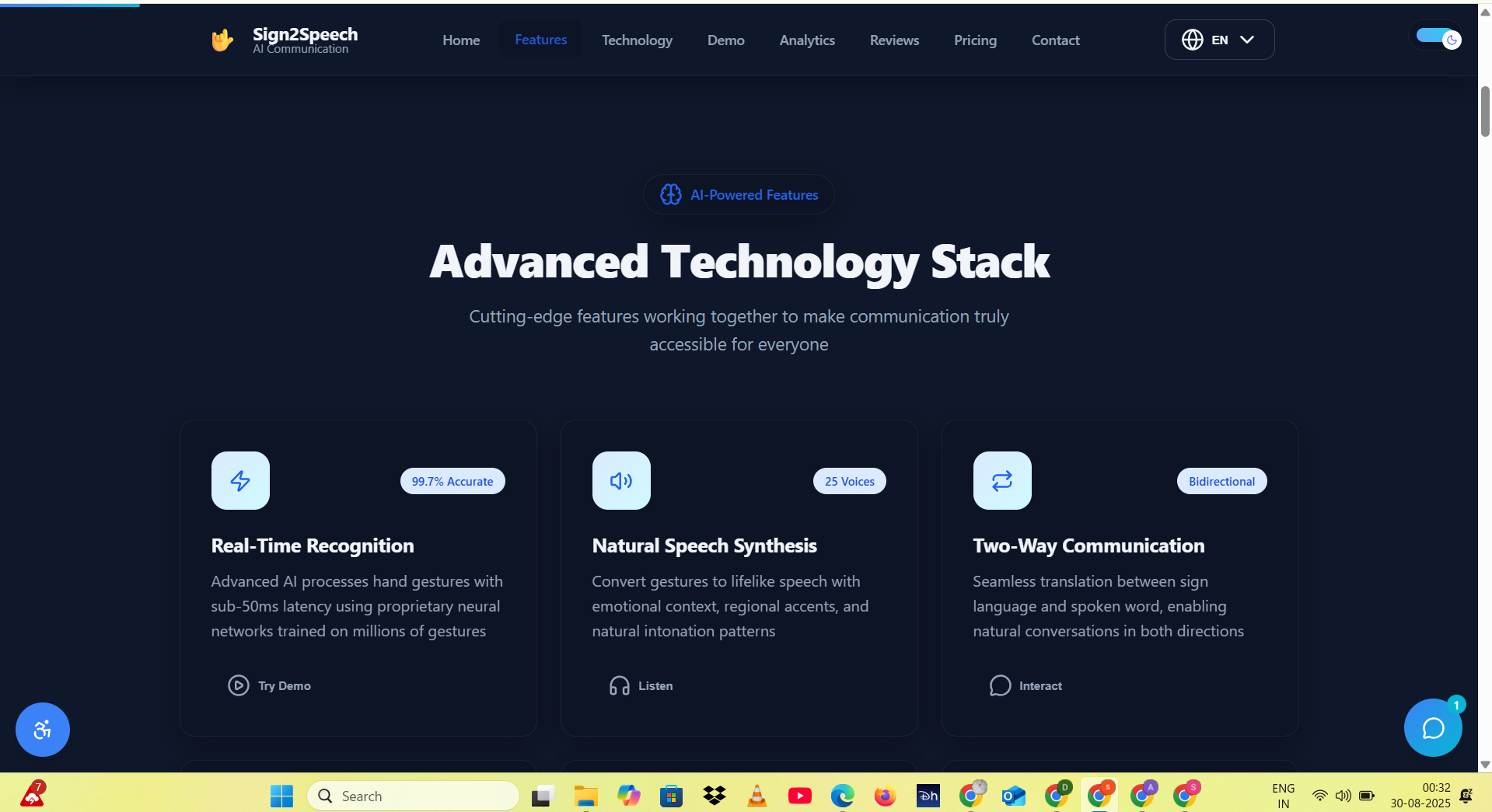
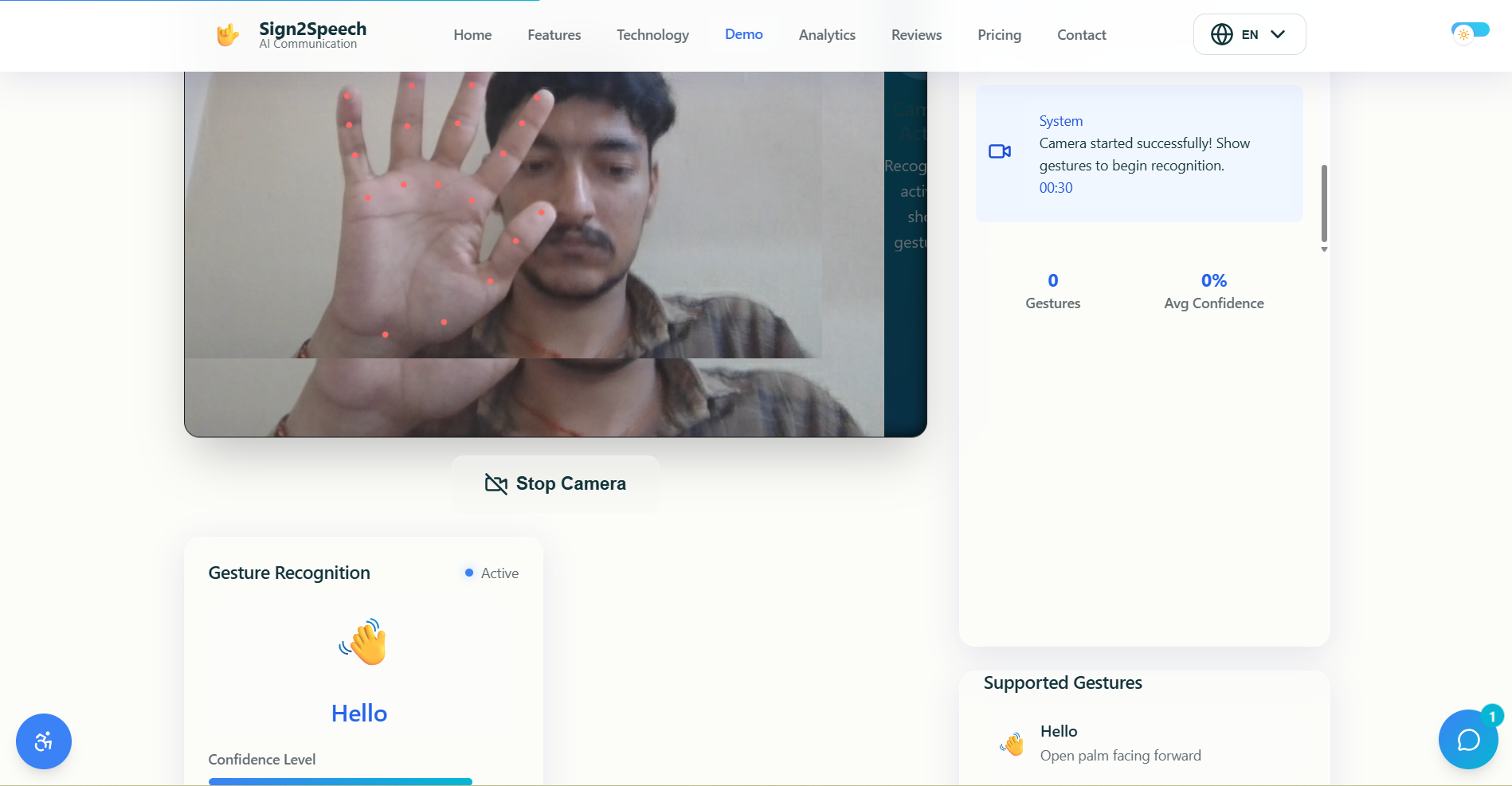
Sign2Speech is an AI-powered accessibility tool that translates sign language → speech and converts speech → text in real time. This makes conversations between the deaf and the hearing community truly seamless.
How we built it
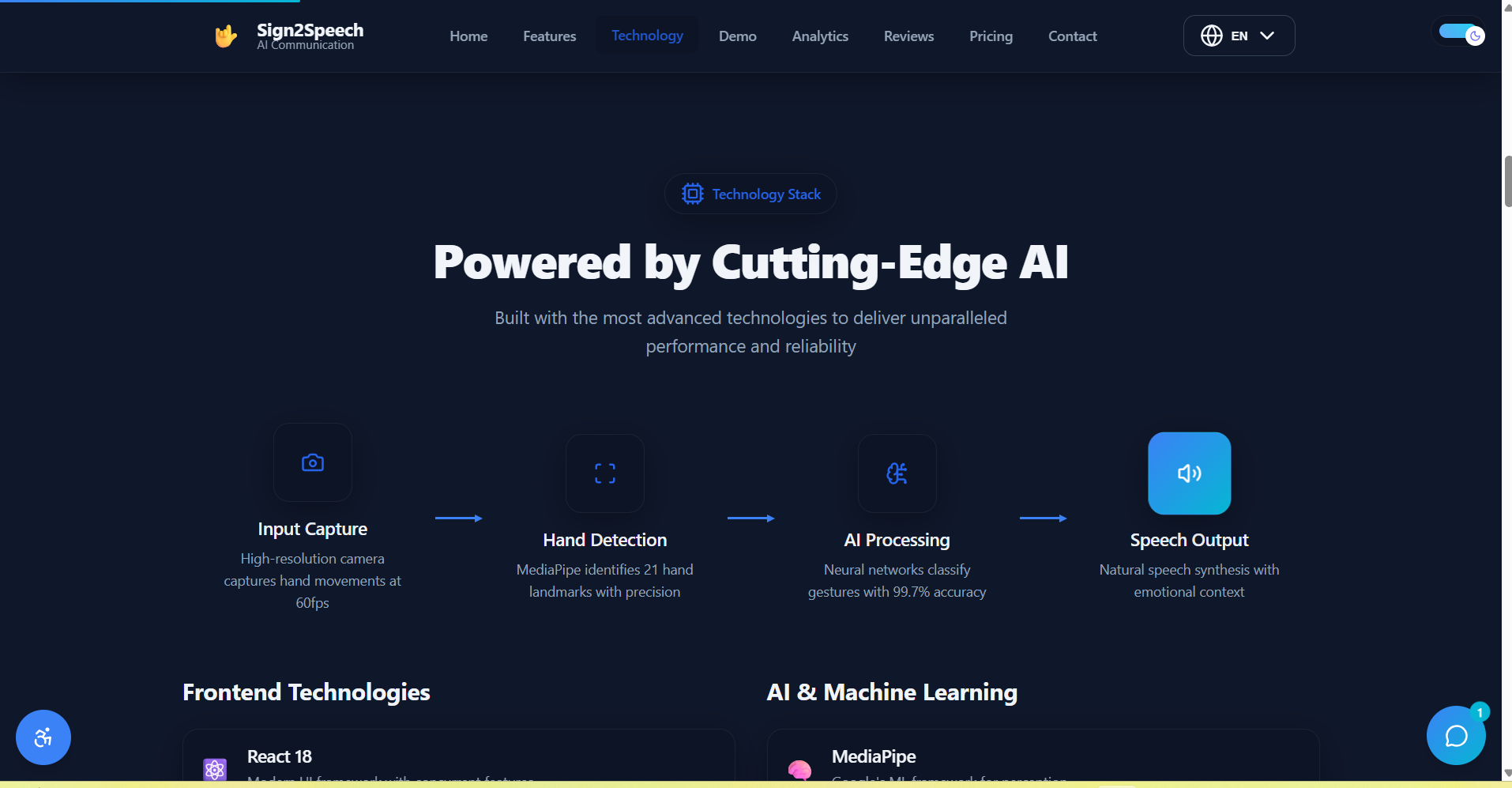
Used Python, TensorFlow, and OpenCV for sign recognition Integrated speech synthesis with a lightweight web interface Ensured real-time performance with optimized ML pipelines
Challenges we ran into
Training accurate models with limited datasets for diverse sign gestures
Achieving real-time translation without lag
Designing an interface that is both simple and inclusive
Balancing accuracy, speed, and accessibility on limited resources
Accomplishments that we're proud of
Built a working prototype that translates sign language into speech live
Created a user-friendly, inclusive platform for accessibility
Overcame dataset challenges by augmenting and fine-tuning models
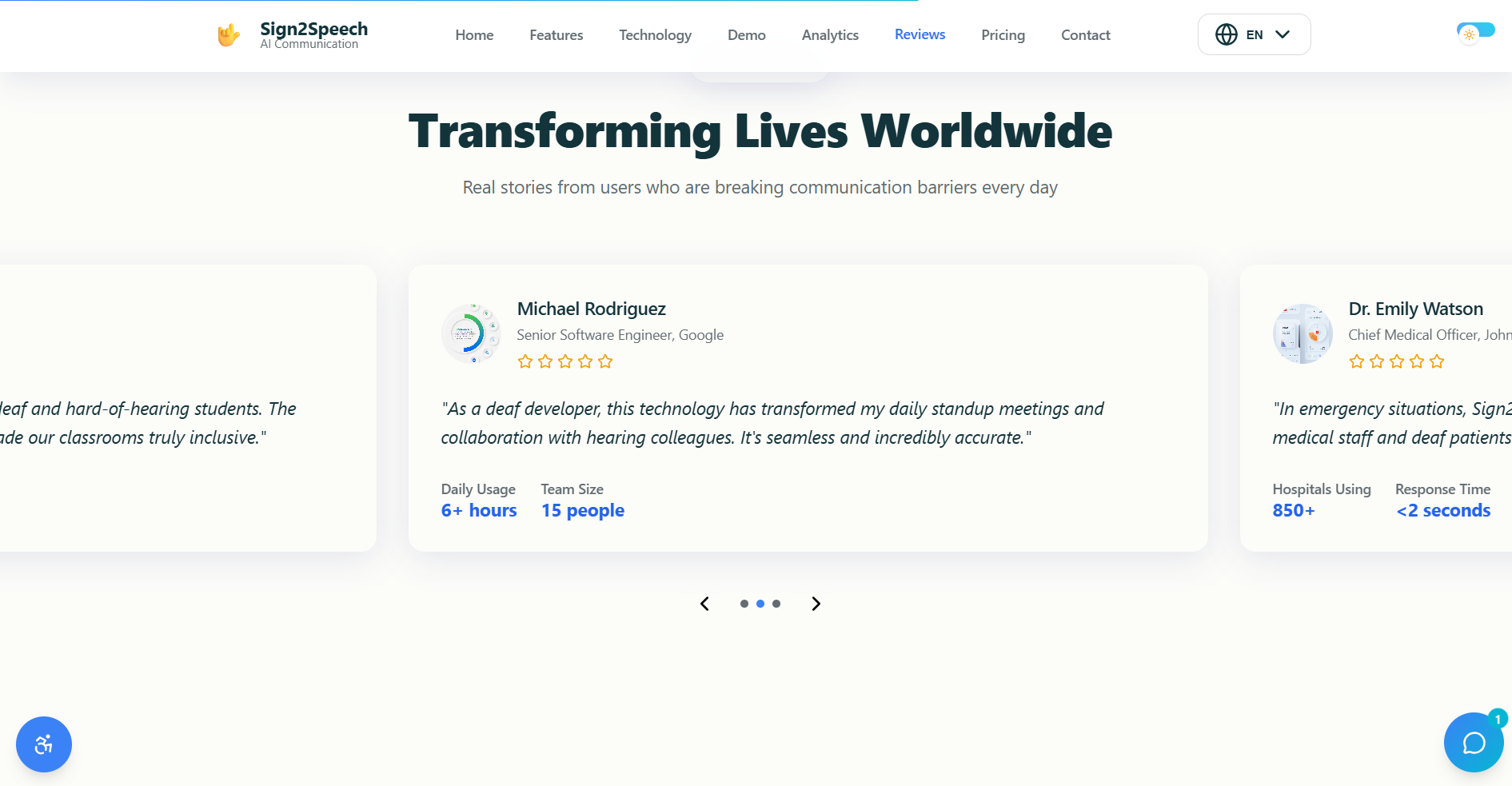
Inspired positive feedback from peers about its social impact
What we learned
How to integrate machine learning with real-time video and audio systems
Importance of designing tech with empathy and inclusivity in mind
Dataset limitations can be turned into opportunities through augmentation and creativity
Accessibility solutions need simplicity as much as innovation
What's next for Sign2Speech
Expanding to support multiple sign languages worldwide
Adding offline support for use without internet connectivity
Integrating into mobile apps for on-the-go communication
Partnering with accessibility organizations for real-world impact


Log in or sign up for Devpost to join the conversation.