Inspiration
Millions of deaf and hard-of-hearing individuals face communication barriers every day. We wanted to create a solution that enables seamless interaction between deaf and hearing people without requiring a human interpreter. Our inspiration was to use AI to make communication more inclusive, accessible, and natural for everyone.
What it does
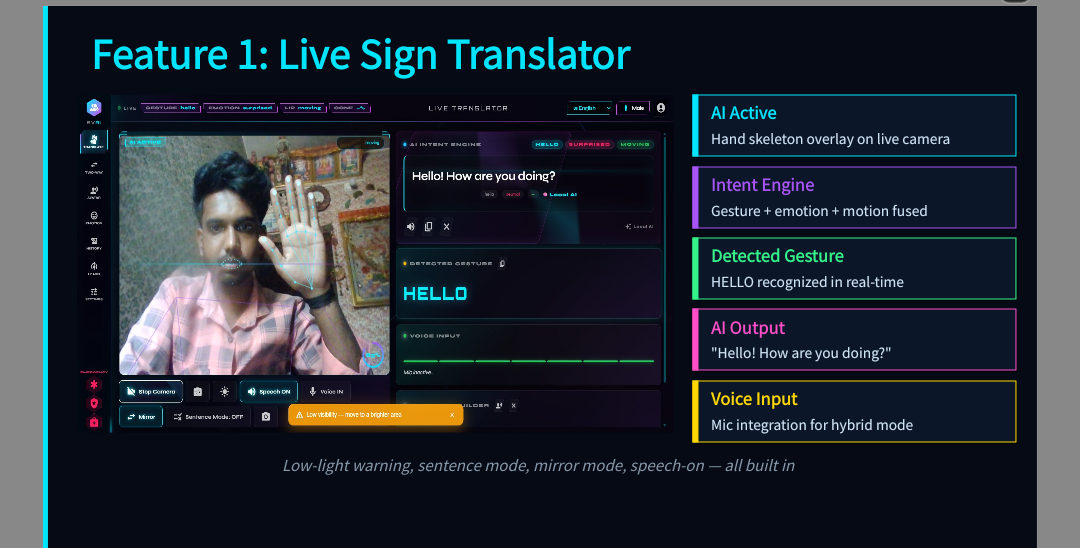
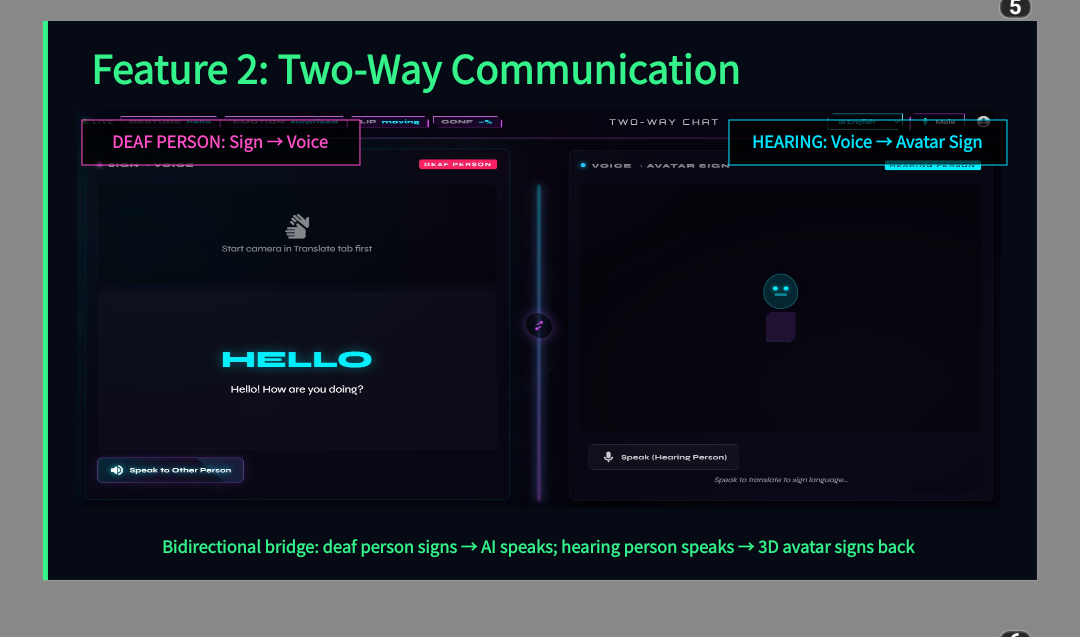
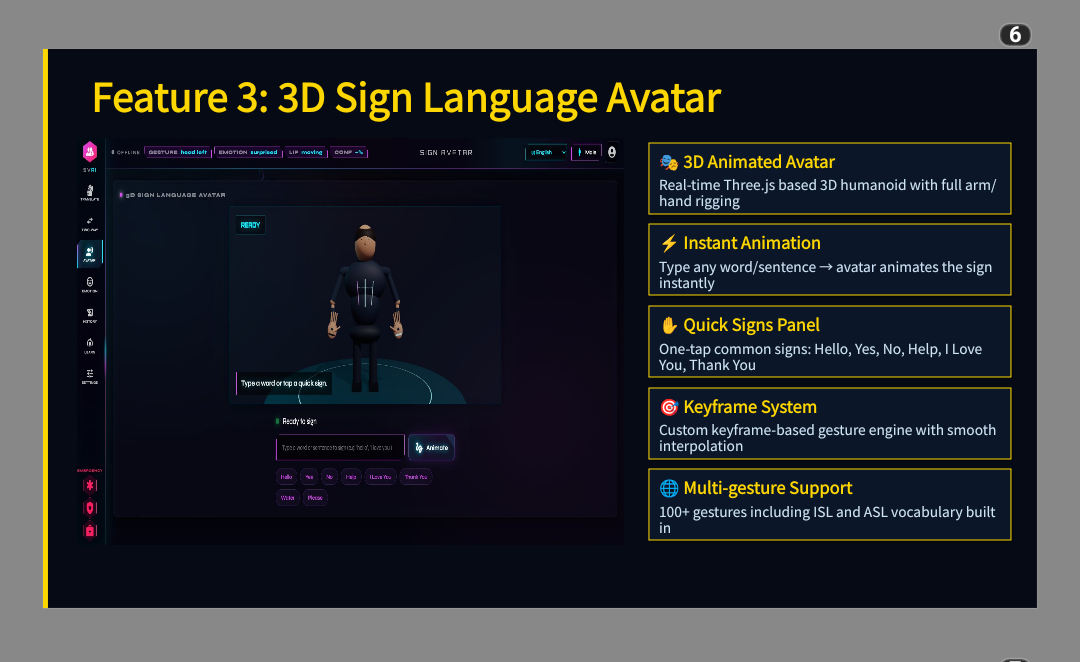
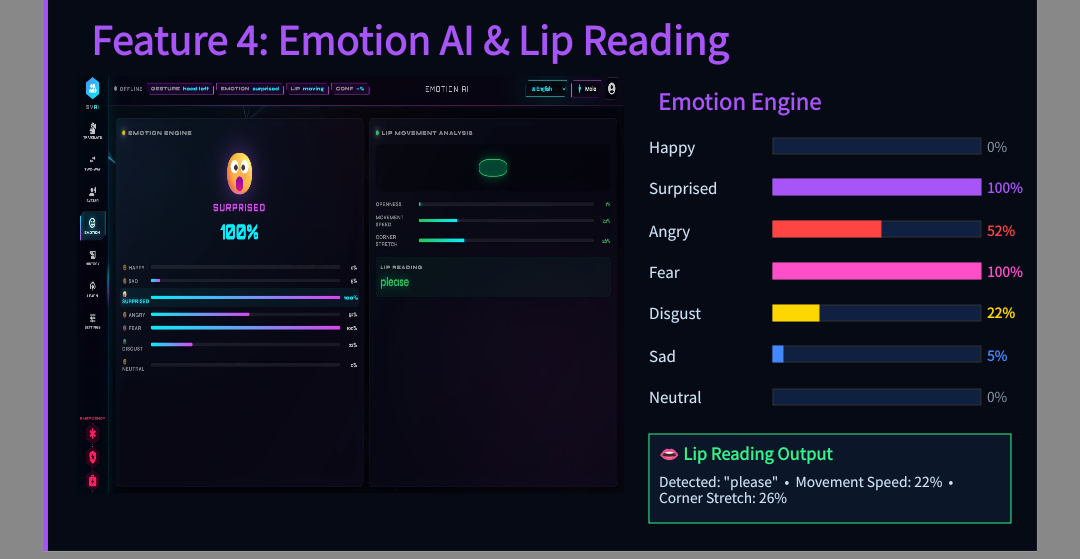
SignVerse AI is a real-time sign language communication platform that translates sign language into text and speech while also converting spoken language into sign language through a 3D animated avatar. It combines gesture recognition, emotion detection, lip reading, and AI-powered language understanding to enable two-way communication between deaf and hearing users.
How we built it
We built SignVerse AI using MediaPipe for hand and facial landmark detection, PyTorch-based BiLSTM models for gesture recognition, OpenAI GPT for contextual sentence generation, and FastAPI for backend services. Three.js powers the real-time 3D sign language avatar, while Web Speech API enables speech-to-text and text-to-speech functionality. The entire system communicates through WebSockets for low-latency interaction.
Challenges we ran into
- Achieving accurate real-time sign recognition with different signing styles.
- Combining gesture, emotion, and lip-reading data into a single meaningful output.
- Maintaining low latency while processing multiple AI models simultaneously.
- Creating smooth and realistic 3D sign language avatar animations.
- Supporting multilingual communication and future scalability.
Accomplishments that we're proud of
- Built a real-time Sign ↔ Voice communication system.
- Integrated gesture recognition, emotion AI, and lip reading into one platform.
- Developed a 3D animated sign language avatar for natural communication.
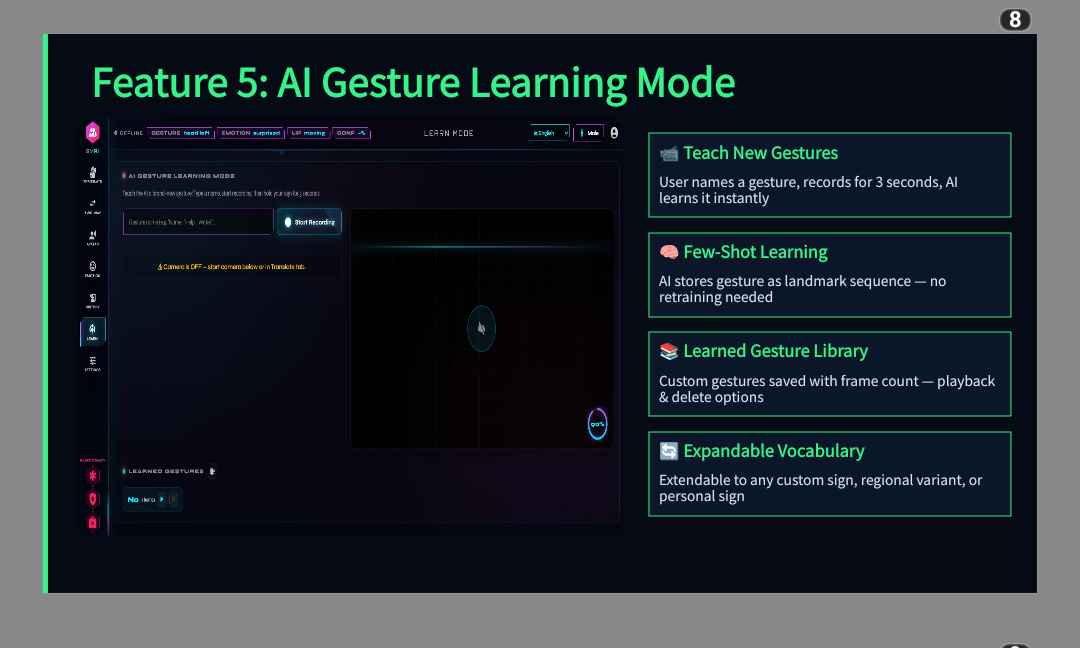
- Enabled multilingual support and custom gesture learning capabilities.
- Created an accessibility-focused solution with real-world impact in healthcare, education, workplaces, and public services.
What we learned
Through this project, we gained hands-on experience in computer vision, deep learning, natural language processing, real-time system design, and 3D graphics. More importantly, we learned how technology can be used to create meaningful social impact and improve accessibility for underserved communities.
What's next for SignVerse AI
Our vision is to make SignVerse AI the world's most accessible and intelligent sign language communication platform.
🚀 Future Roadmap
- Expand support to multiple sign languages, including ISL, ASL, and regional sign dialects.
- Increase the gesture vocabulary from 100+ signs to thousands of real-world signs.
- Launch Android and iOS mobile applications for on-the-go accessibility.
- Improve AI accuracy using larger sign language datasets and advanced transformer-based models.
- Enable real-time video call translation between deaf and hearing users.
- Integrate with platforms such as Zoom, Google Meet, and Microsoft Teams.
- Enhance the 3D avatar with more natural facial expressions and full-body sign animations.
- Add offline AI capabilities for areas with limited internet connectivity.
- Partner with schools, hospitals, workplaces, and government organizations to improve accessibility.
- Develop emergency communication features for faster assistance during critical situations.
🌍 Long-Term Vision
We aim to create a future where language is never a barrier and every deaf individual can communicate freely, confidently, and independently using AI-powered technology.

Log in or sign up for Devpost to join the conversation.