-
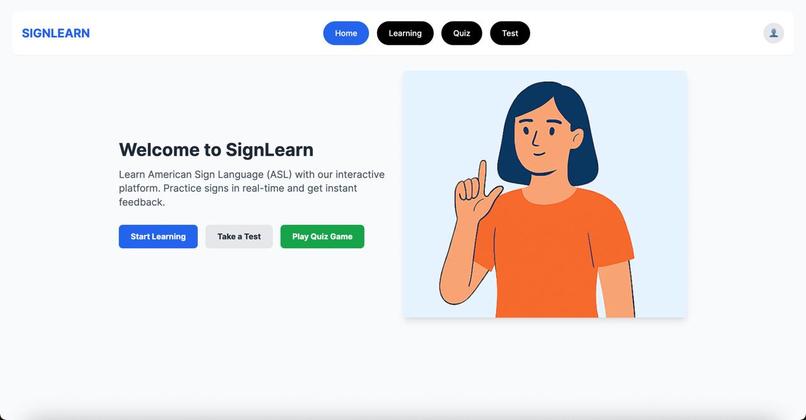
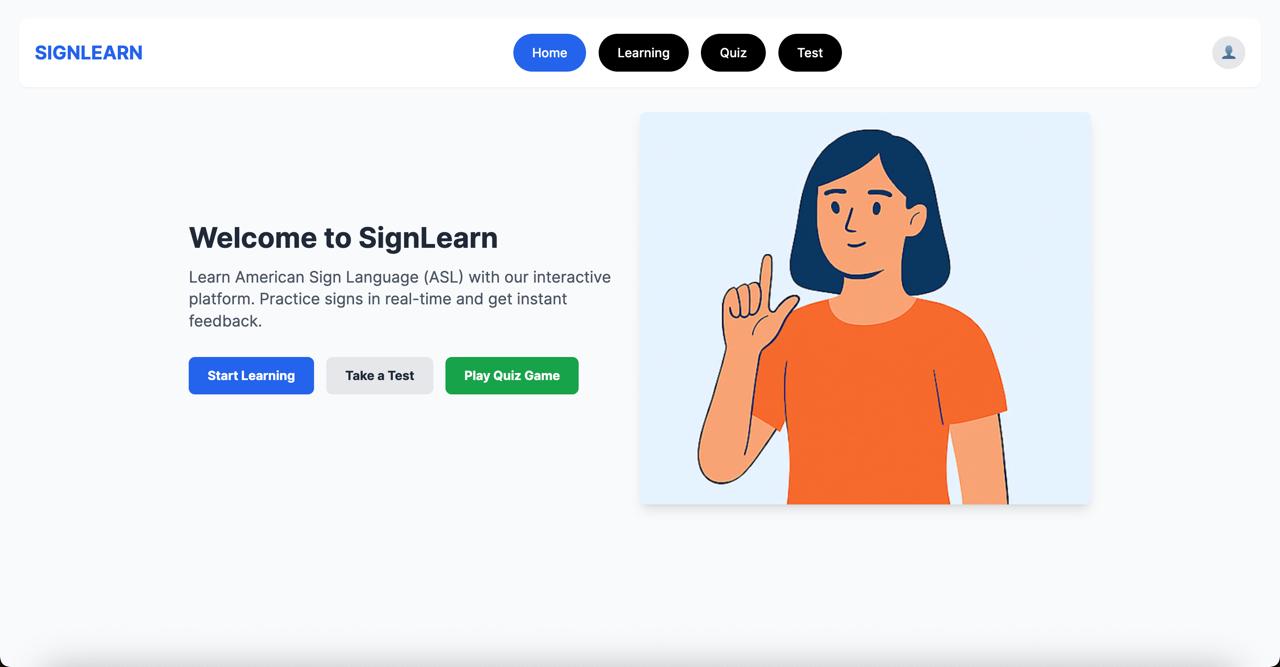
Welcome Page
-
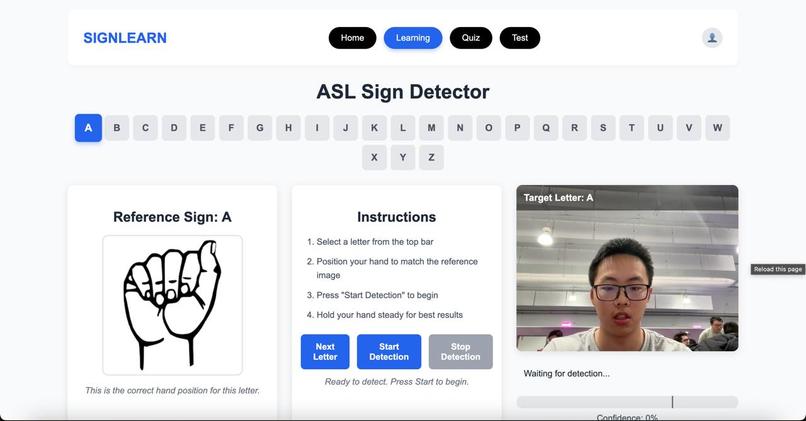
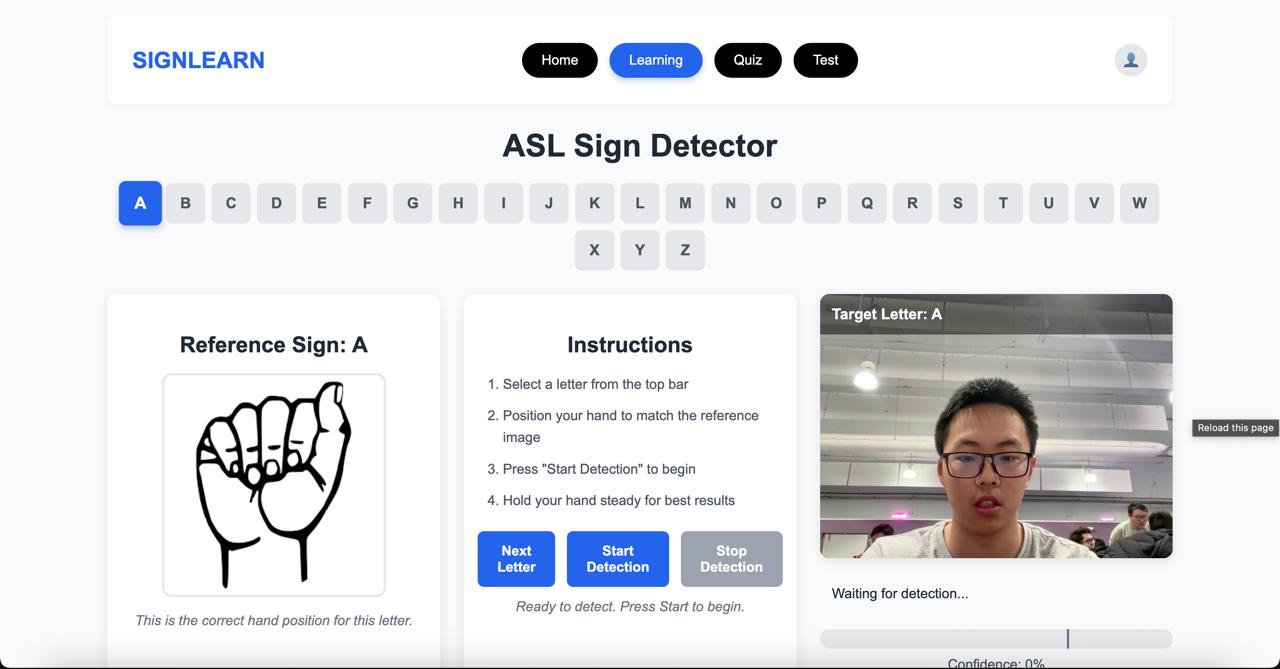
Learning Page
-
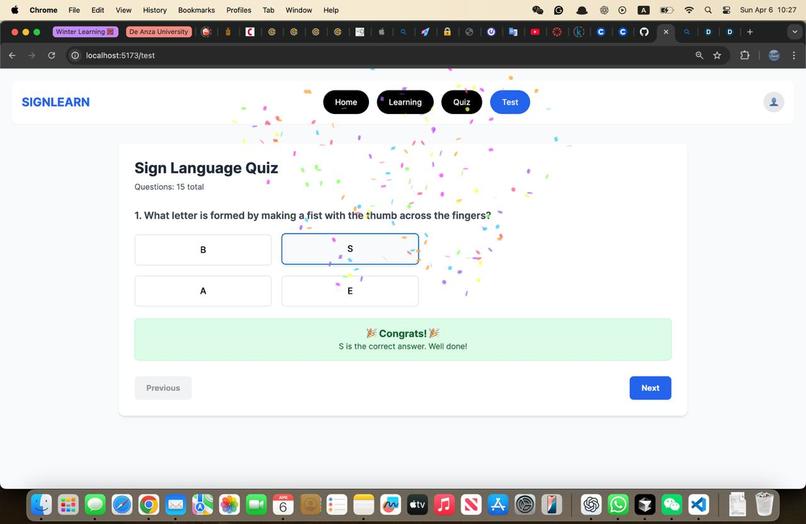
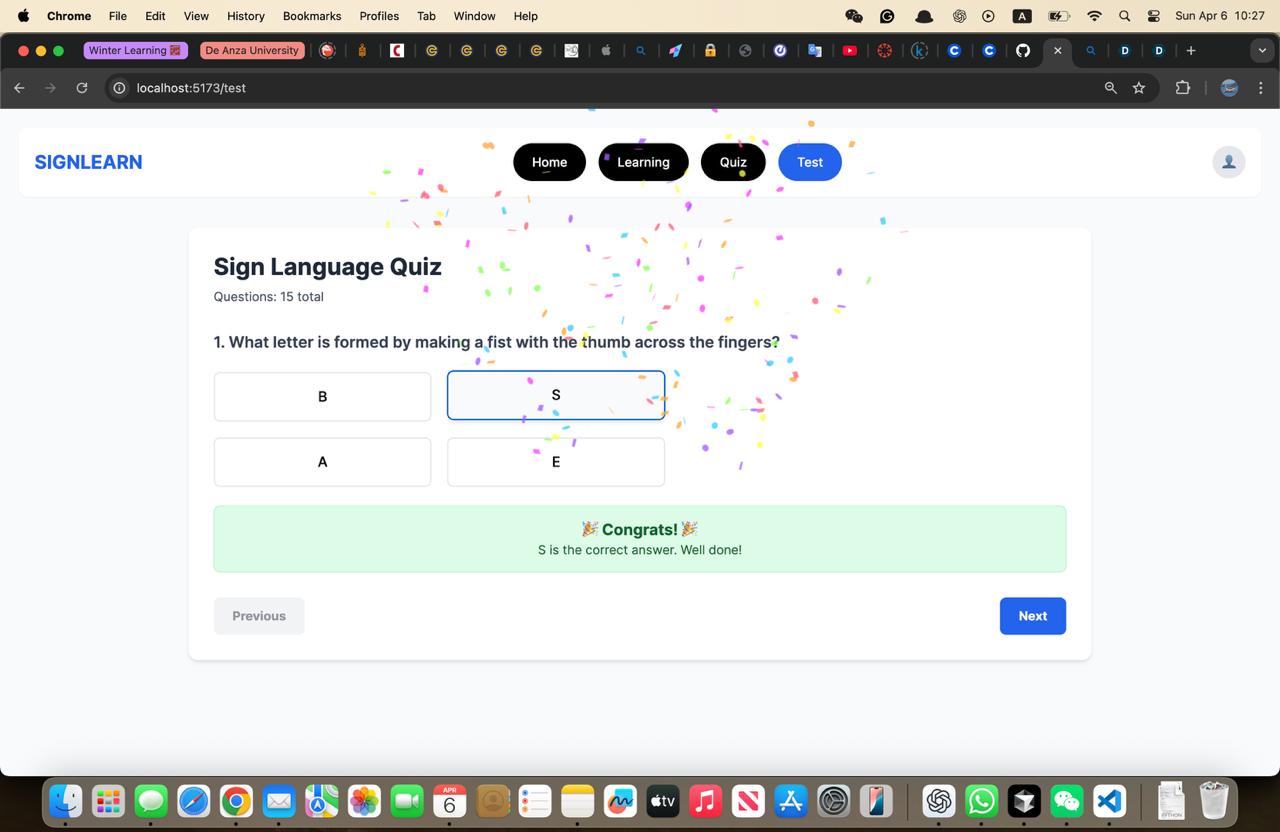
Test Page
-
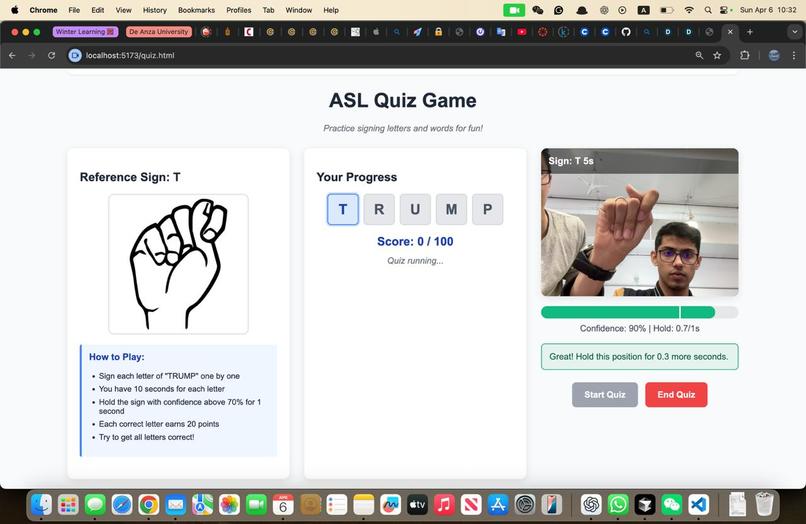
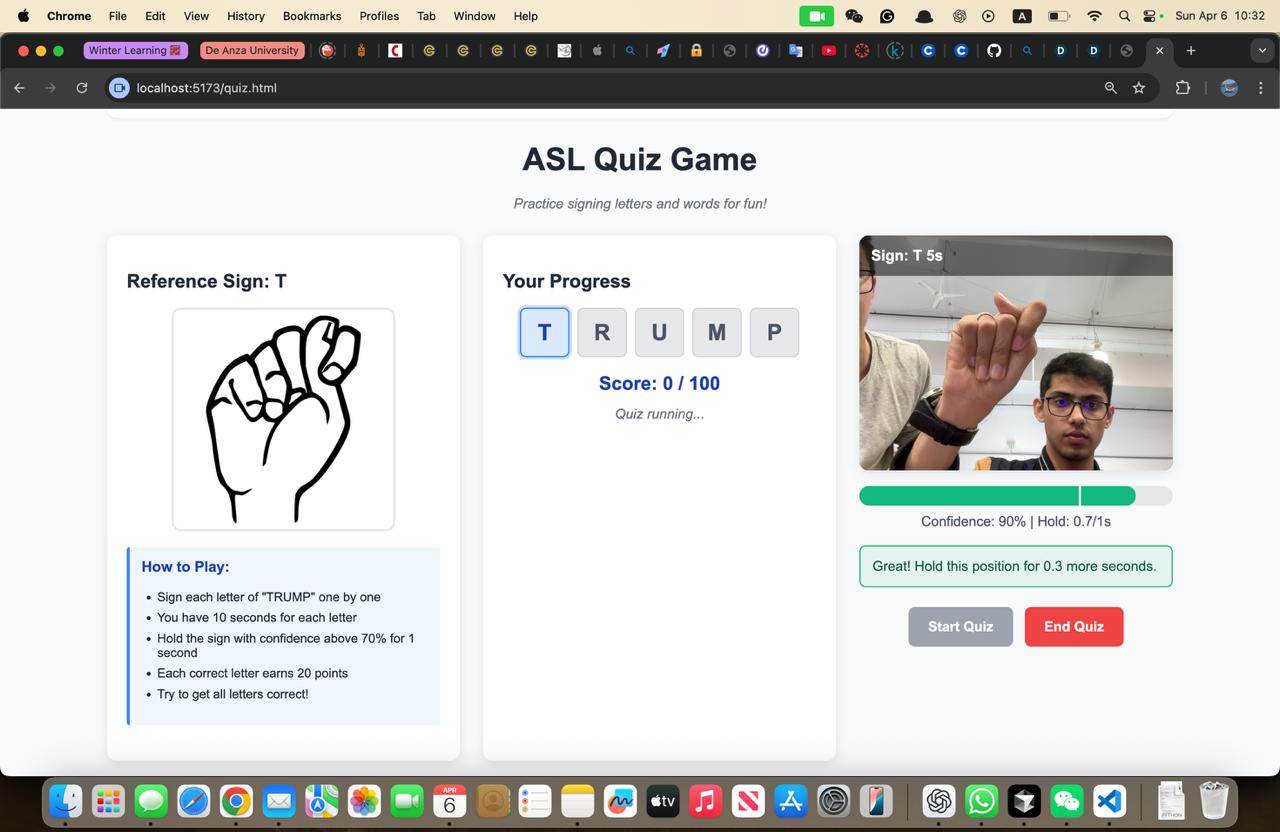
Quiz Game Part 1
-
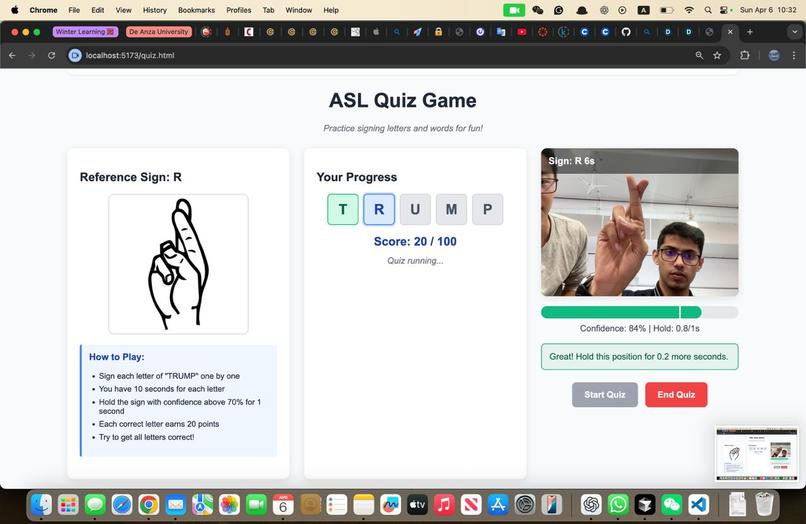
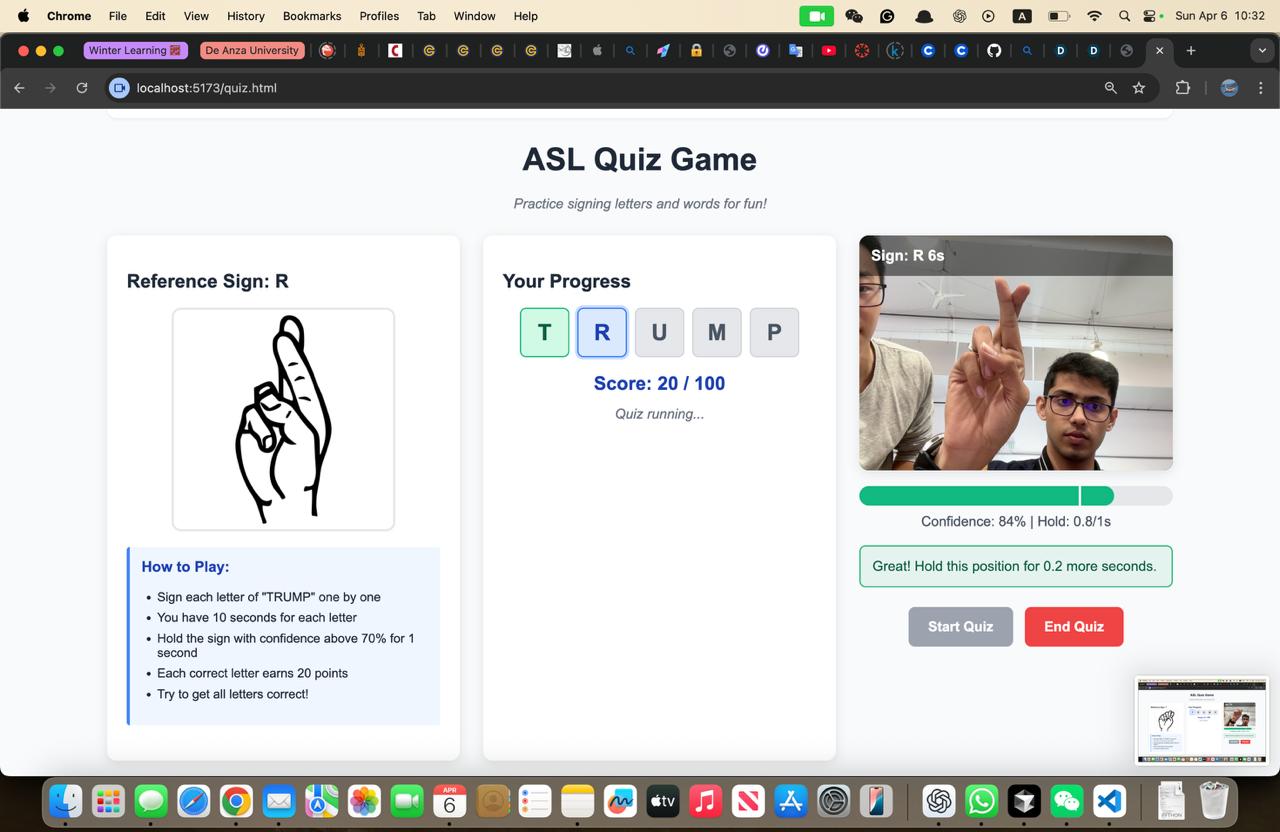
Quiz Game Part 2
-
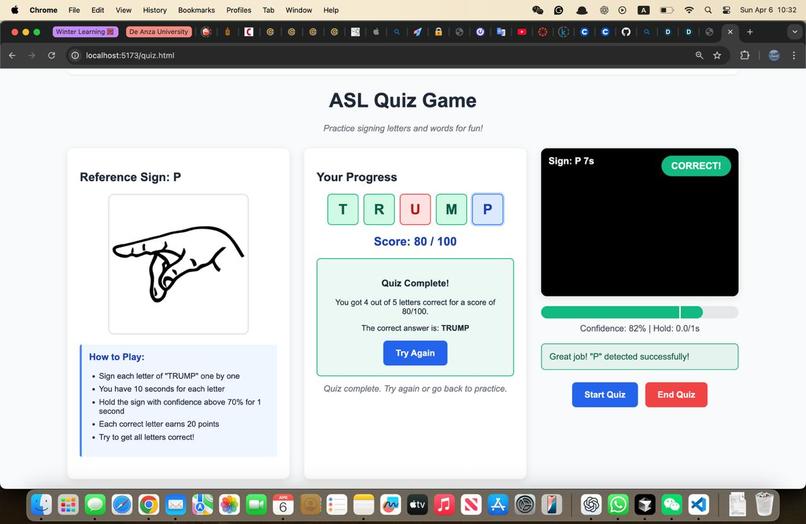
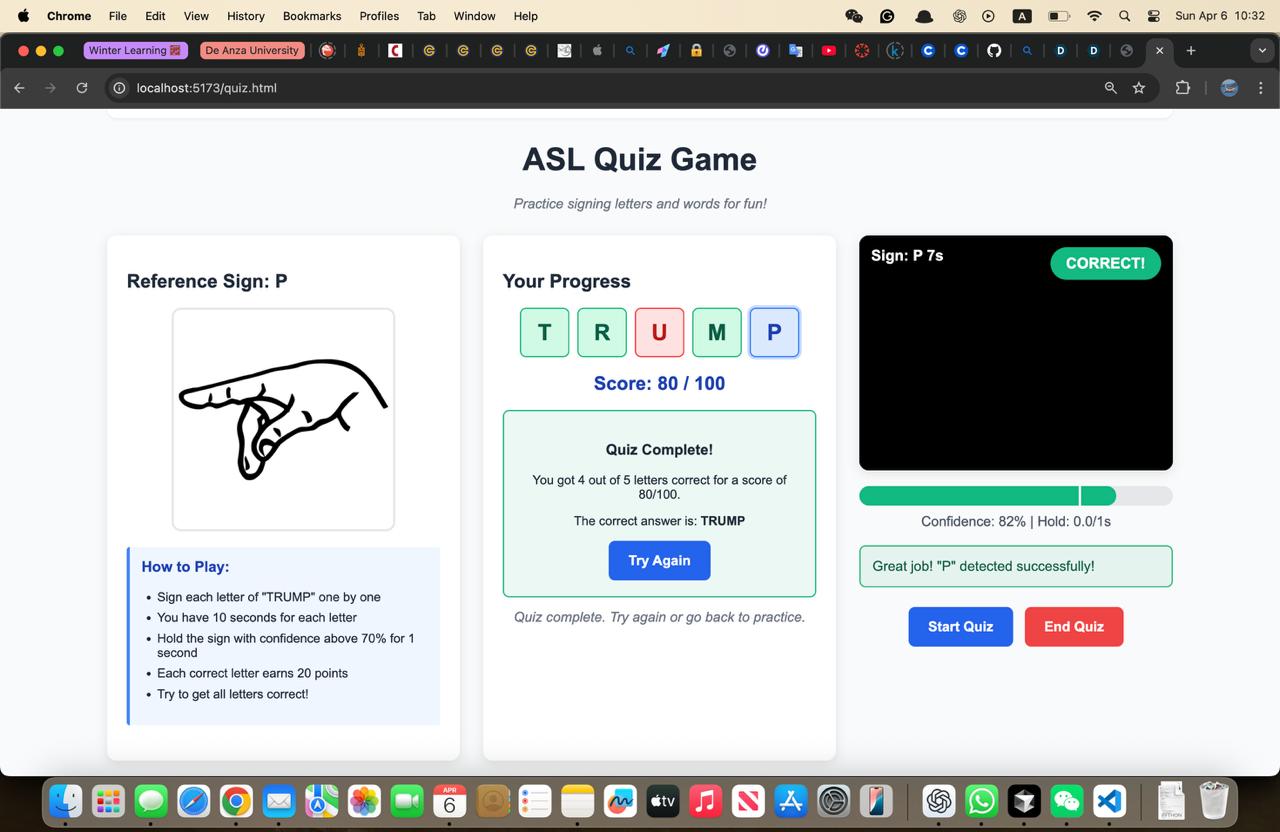
Quiz Game Result
Inspiration
This project was inspired by a desire to bridge the communication gap between the Deaf and hearing communities. Learning American Sign Language (ASL) can be intimidating or inaccessible for many, especially without hands-on guidance. We wanted to build something that makes ASL learning approachable, engaging, and truly interactive—with no special equipment or prior experience required.
What We Learned
- The fundamentals of computer vision and how it can be applied to gesture recognition
- How machine learning models like Random Forest can classify hand signs effectively
- Real-time webcam integration using OpenCV and MediaPipe
- Building accessible web apps that are intuitive and inclusive
How We Built It
- Hand Detection: Used Google’s MediaPipe to track hand landmarks from the webcam
- Sign Classification: Trained a Random Forest model to recognize ASL alphabet signs based on hand landmark positions
- Interface: Developed a Python-based GUI for desktop, and are now working on converting it to a browser-based app for broader accessibility
- Feedback Loop: Implemented real-time prediction display and user prompts to help learners practice and improve
Challenges We Faced
- Ensuring high accuracy across diverse lighting conditions and hand sizes
- Distinguishing similar-looking ASL signs (like G and H)
- Creating a responsive, real-time system without lag
- Designing a user-friendly interface that works smoothly on the web
Built With
- flask
- html
- javascript
- mediapipe
- python
- react


Log in or sign up for Devpost to join the conversation.