Inspiration
What inspired us to create this program is that this Hackathon was made for females to do it and it reminded us of people who didn’t have as much of an advantage, just like the people with disabilities of being deaf. In the past, women had a lot of rights removed from them and they were highly discriminated against. Just like how disadvantaged the women were, people who were deaf also weren’t as fortunate. We believe that everyone should be equal, like the fortunate time where women get to have the same rights as deaf people. This inspired us to make a sign language translator, where the deaf could input any letter of the English alphabet and convert it to the American Sign Language. In this way, the deaf are able to communicate with their loved ones and feel like they fit in with the rest of the world.
What it does
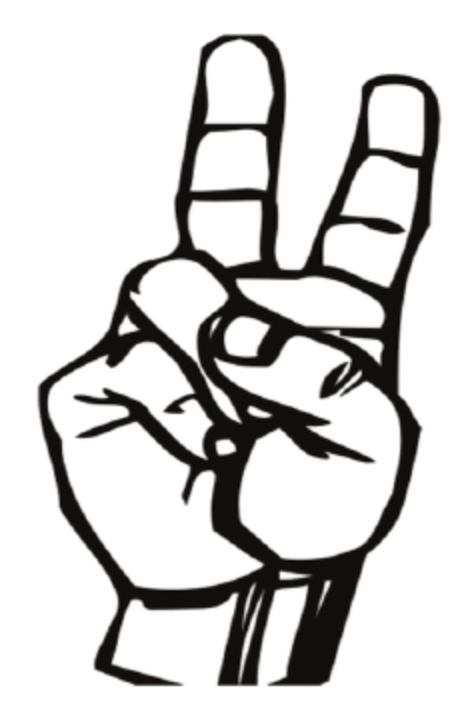
This product translates letters into American Sign Language. You can input a letter, any letter, into the program, and it will output the hand signal in a popup. This helps not only people learn sign language, it also helps disadvantaged people who are deaf improve their ability to communicate with others.
How we built it
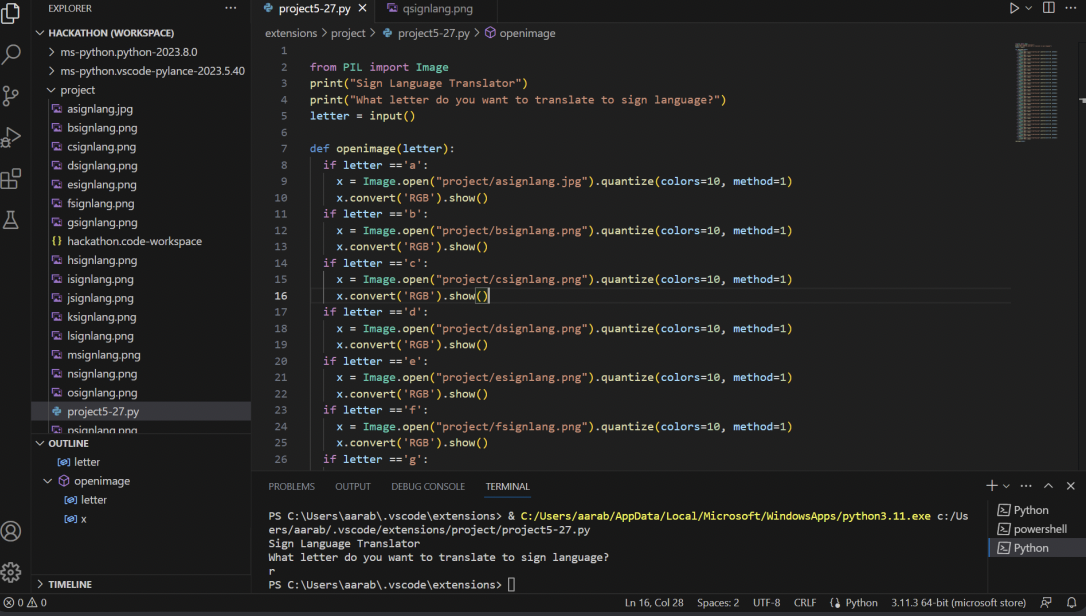
We built the sign language translator by using Replit where we created the basic structure of how we wanted our code to work, including a database, if statements, and functions. After that, because the images weren’t running on Replit, we used Visual Studio Code (VSC) to port the code, where we ran across many syntax errors, and had to debug them. Once debugged, our software was finalized. During this whole Hackathon, we used Python to code.
Challenges we ran into
One of the biggest challenges we ran into was a lack of Python knowledge. Although we had some experience, we weren’t fully educated on the language. For example, we had a tough time working with the images, and making them run successfully in our program. Our goal was that when an English letter was inputted, the respective sign would appear as an image. At first, this wasn’t easy to accomplish. But through trial and error, we eventually got our desired output.
Accomplishments that we're proud of
Some accomplishments that we’re proud of is persevering and trying again even though our project didn’t work at first. In the beginning, we were skeptical about the outcome of our project. It was a very foggy landscape and everything was not clear in the beginning. But later, as we kept working and solving problems together, our desired output came! And this, we were really proud about.
What we learned
We learned the importance of collaboration. While we made the program, we realized how important collaboration is to the productivity of the program, as it makes the process faster. By using each other’s strengths, we can create a successful program. We also learned a lot about the coding language Python. We learned about Pillow, the useful library that allowed us to have images in our program. We also learned many other things about Python, like the basics, databases, commenting, etc.
What's next for Sign Language Translator
In the future, we will be making our program in such a way so that words can also be translated as well. At first, we will be manually adding translations for the most common words, then we will eventually add translations for anything a person types. In the era of artificial intelligence, we can also implement AI into our code, not only making the translation more accurate, but it will also include better grammar.
Built With
- replit
- vsc


Log in or sign up for Devpost to join the conversation.