-
-
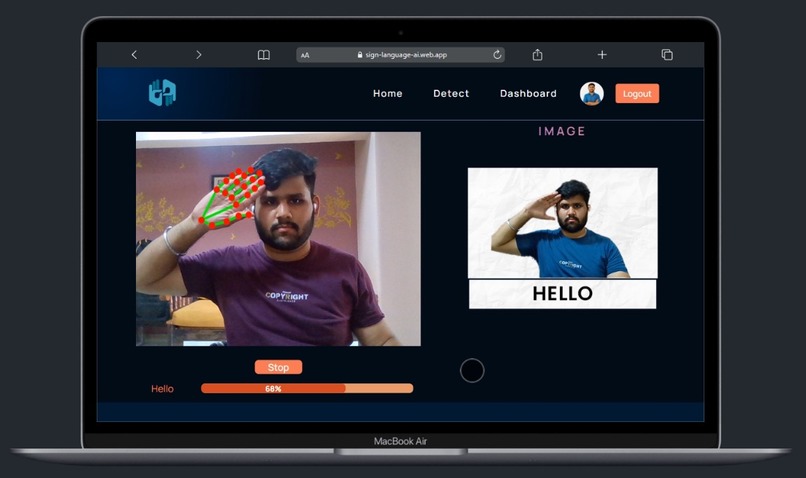
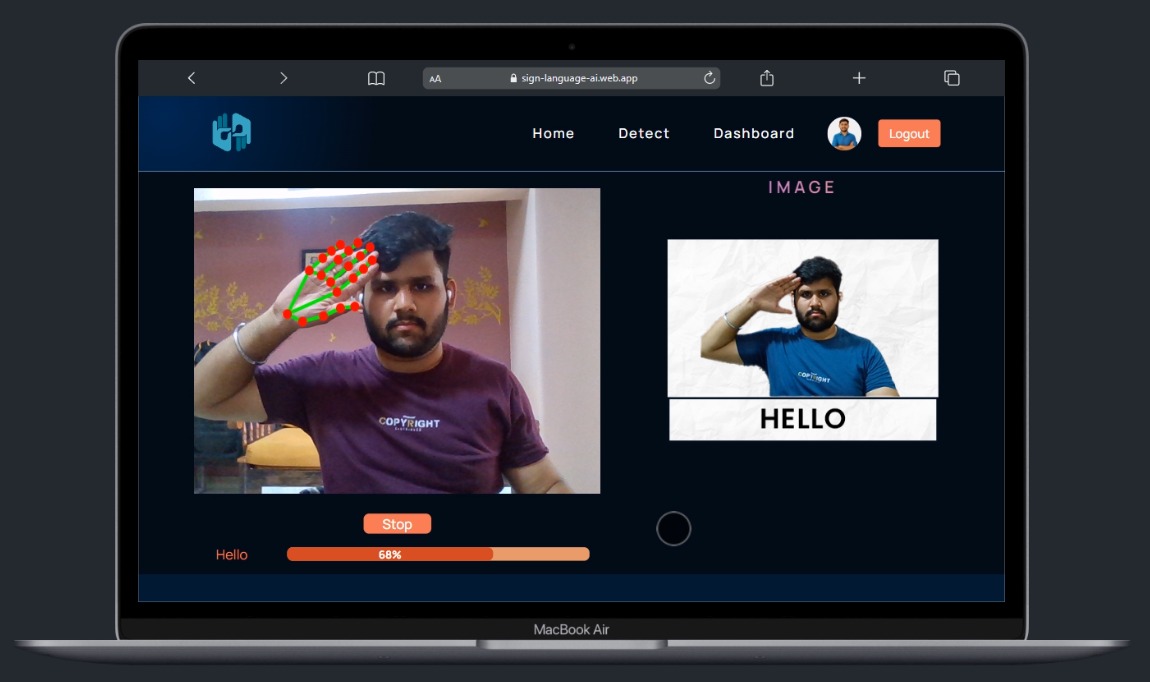
HELLO Sign
-
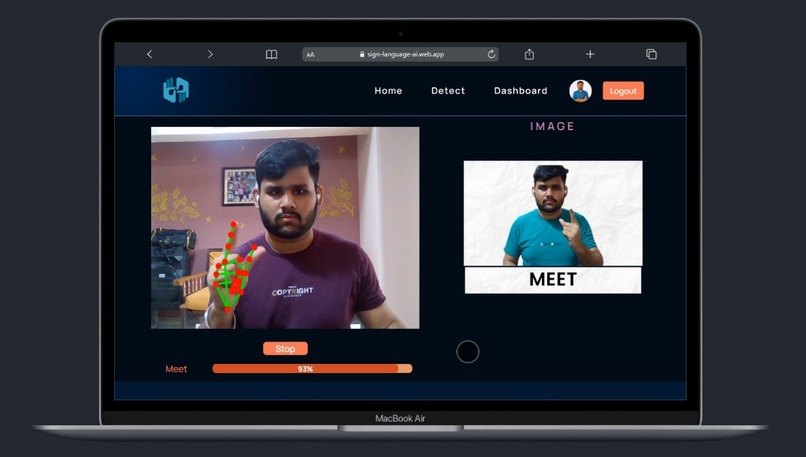
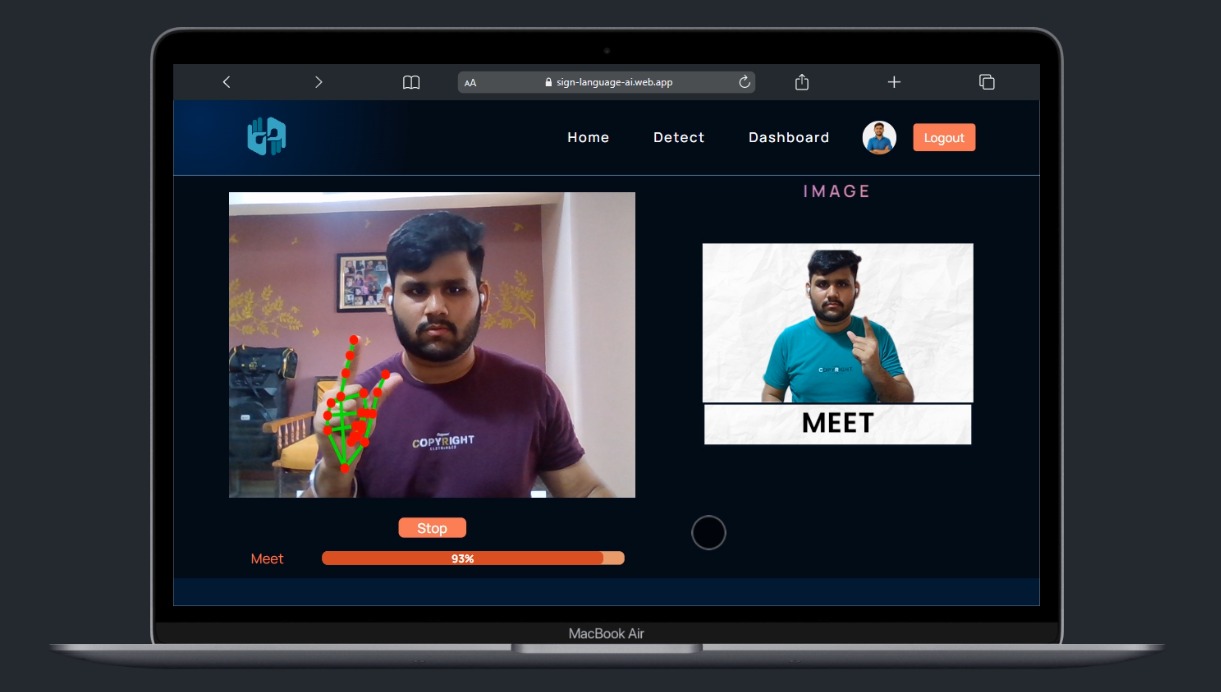
MEET Sign
-
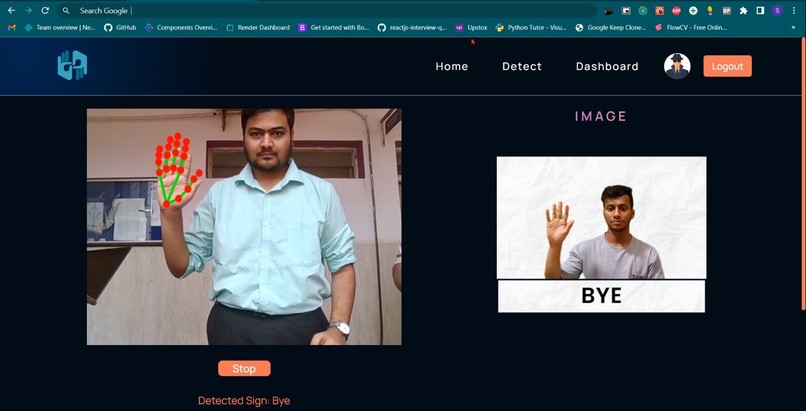
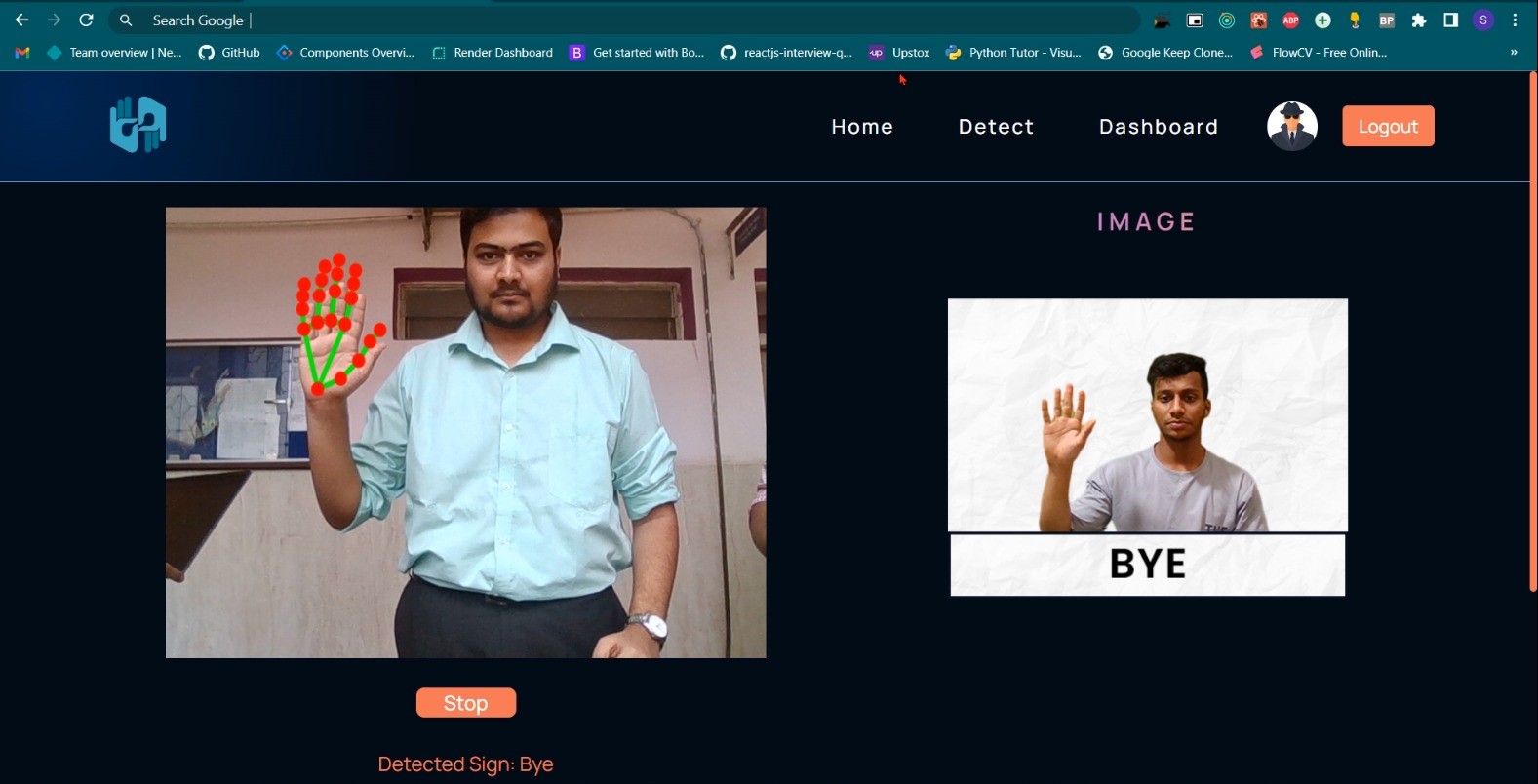
BYE Sign
-
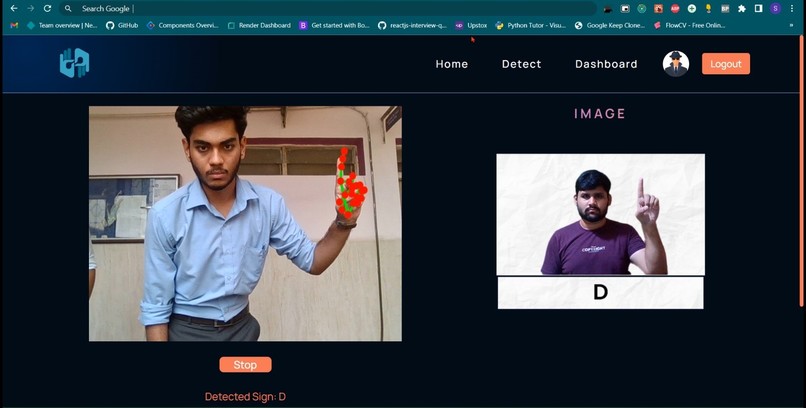
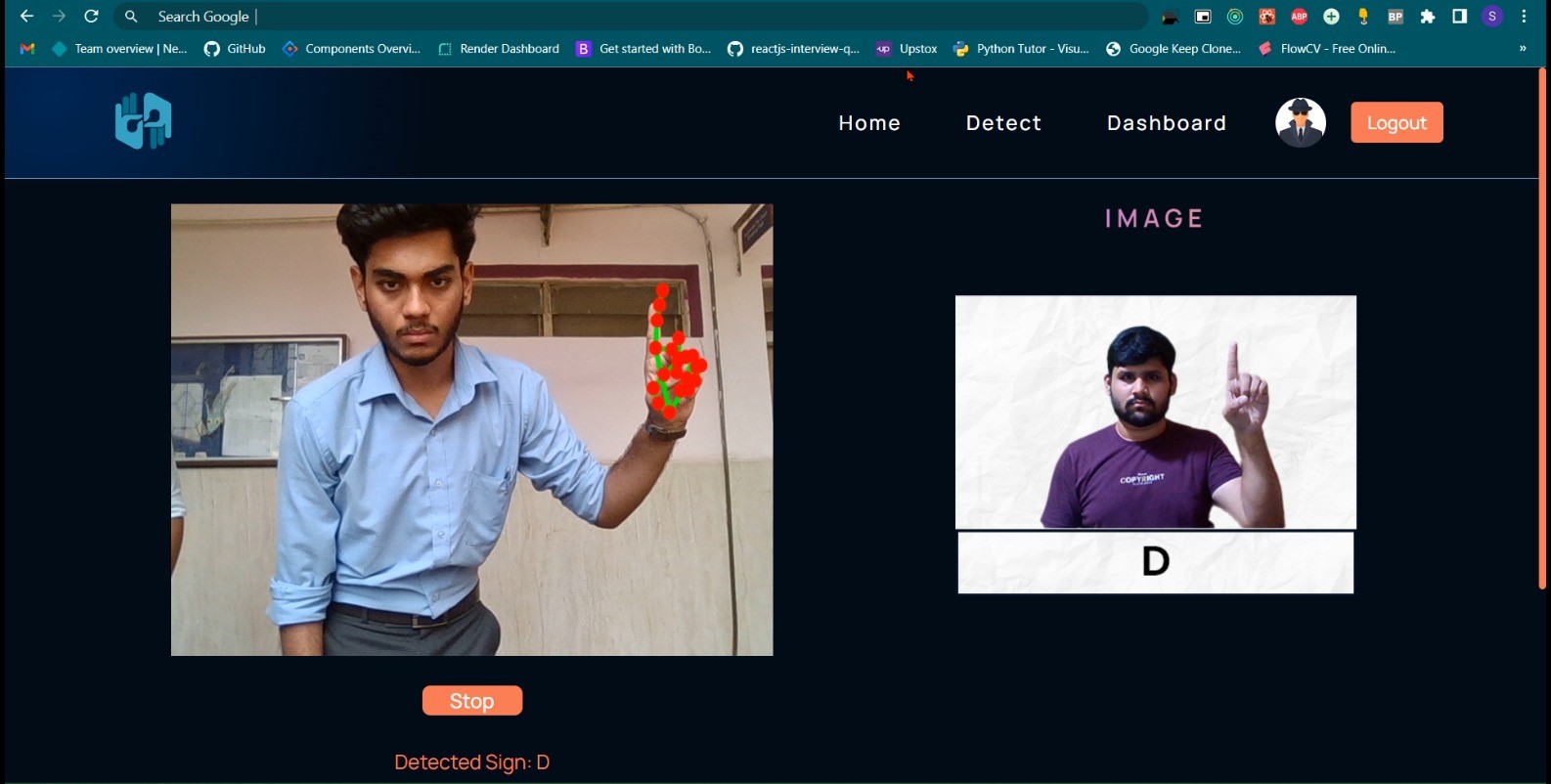
D Sign
-
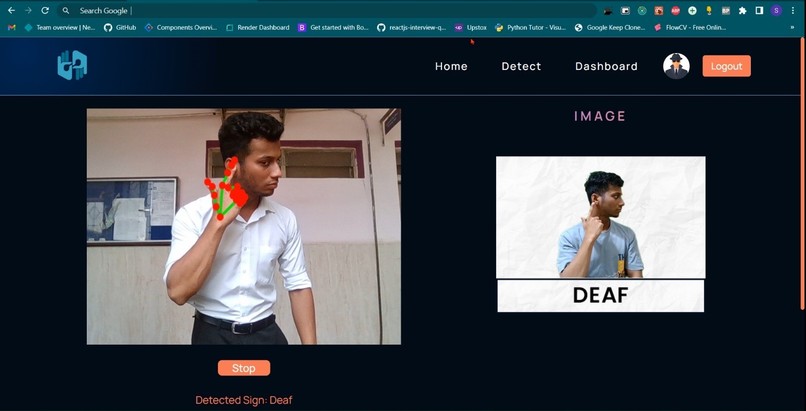
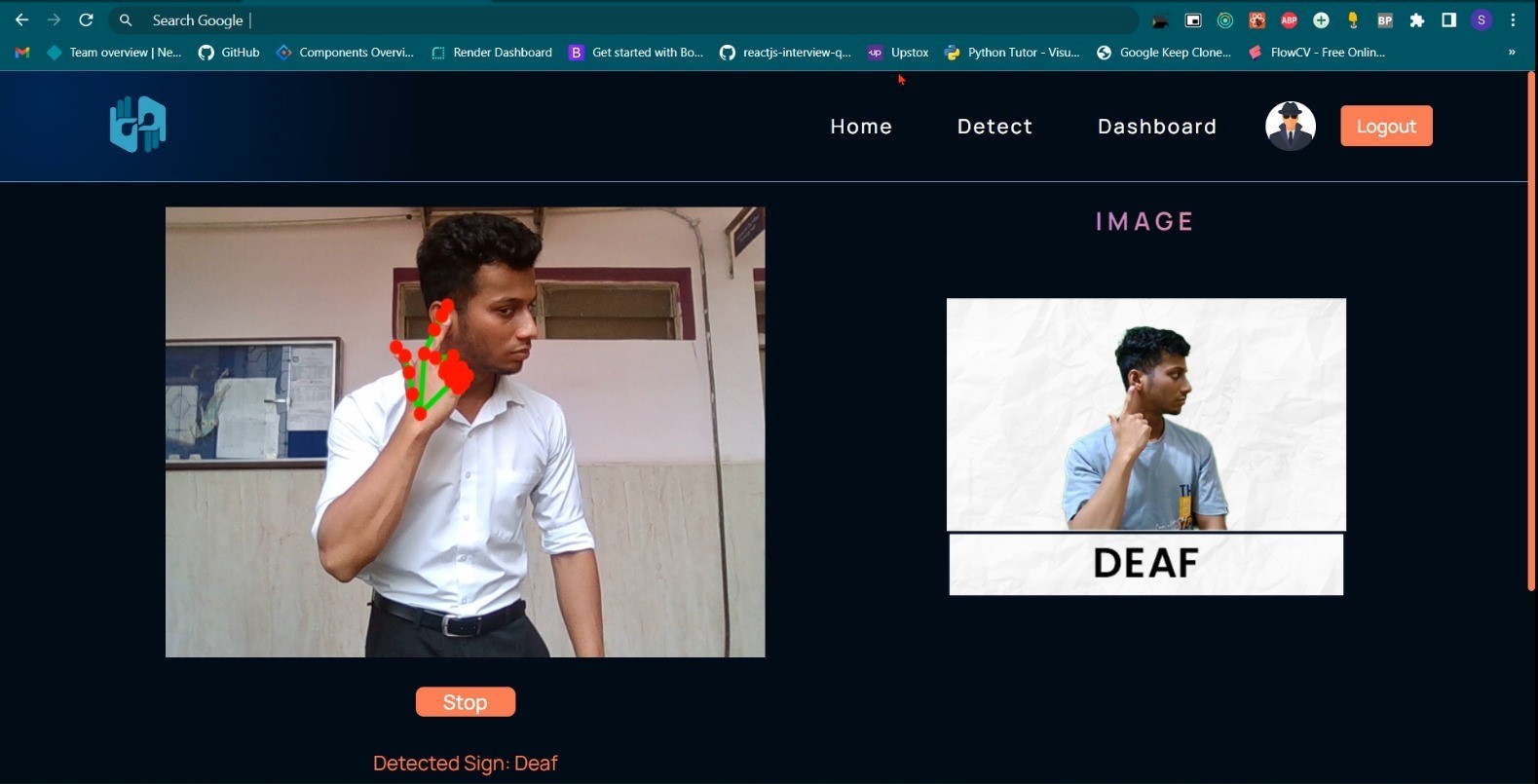
DEAF Sign
-
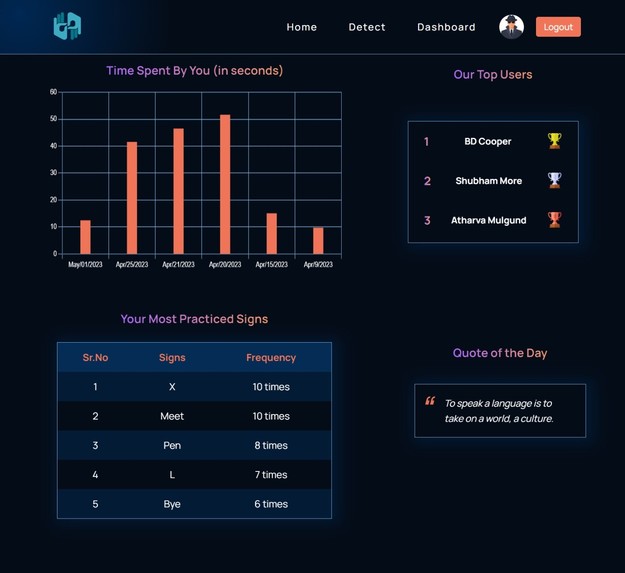
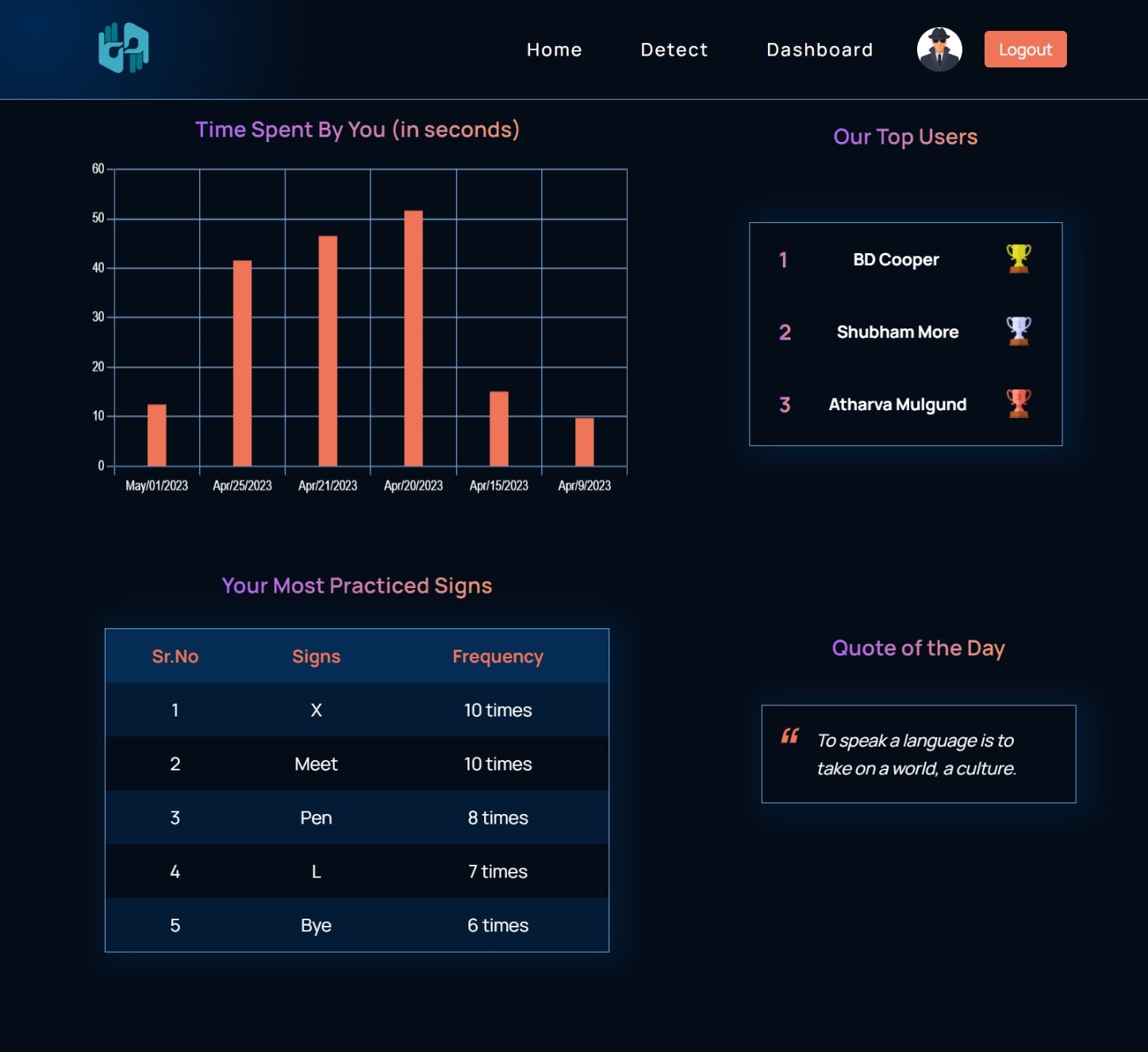
Dashboard
🤟 Sign Language Recognition for Deaf and Dumb
Welcome to Sign Language Recognition for Deaf and Dumb — an innovative real-time application built to bridge communication gaps for the deaf and hard-of-hearing community. Leveraging the power of machine learning and computer vision, this project recognizes American Sign Language (ASL) gestures through a webcam, enabling seamless, intuitive communication for everyone.
“Technology is best when it brings people together.”
This application embodies that vision by empowering the deaf community with a tool that recognizes and translates their gestures into digital interaction.
🌟 Project Tagline
Empowering Communication Through Vision — Real-Time ASL Recognition for All.
📌 What Inspired Us?
The spark behind this project was the realization that millions of people face daily communication barriers due to hearing and speech impairments. We wanted to build a tool that not only addresses this but also promotes inclusivity, awareness, and technological empowerment. With rapid advancements in AI, we saw an opportunity to combine gesture recognition with real-time feedback to make sign language more accessible and interactive.
📚 What We Learnt
- Deep dive into gesture recognition using MediaPipe Hands and its application in real-time scenarios.
- Effective integration of React, Redux, and Firebase to build scalable and responsive front-end and back-end systems.
- Best practices in state management, live data processing, and adaptive model training.
- Implementing leaderboards, authentication, and progress analytics using modern tech stacks.
🛠️ How We Built It
We started by collecting a custom dataset of ASL alphabets and words. Then we used MediaPipe Hands to track gestures and map them to trained data. A React.js frontend provided a dynamic user interface, while Firebase handled authentication, real-time database, and hosting. Redux was used for managing the application state and Redux-Thunk enabled async logic.
The project is structured to continuously improve as users interact with it — learning their patterns and adapting for better accuracy.
🚀 Key Features
- ✅ Real-Time Gesture Recognition: Detects and translates ASL signs instantly via webcam.
- 📈 User Progress Tracking: Visual dashboard showing learned signs and engagement time.
- 🧠 Adaptive Learning: The system improves recognition accuracy as more users interact.
- 🏆 Global Leaderboard: Compete and see your ranking among other signers.
- 🔒 Secure User Authentication: Powered by Firebase.
- 📊 Insightful Visual Analytics: Charts and graphs show your learning journey.
🧠 How It Works
- MediaPipe Hands processes video input from the webcam to track finger and hand landmarks.
- These landmarks are fed into a trained machine learning model that maps gestures to letters or words.
- The output is displayed in real-time on the screen along with progress tracking.
- Firebase stores user-specific progress data, enabling feedback and leaderboard updates.
🧪 Model Training
- Trained on 26 ASL alphabets + 16 frequently used ASL words.
- Uses key hand landmarks (21 points) detected via MediaPipe for pattern matching.
- Continuous learning by storing user gestures for further improvement.
🎯 Challenges We Faced
- Mapping noisy gesture data to consistent output.
- Fine-tuning the ML model to differentiate between similar ASL signs.
- Achieving smooth webcam integration with real-time feedback.
- Managing async state changes across Redux and Firebase.
- Deployment configuration for Vite and Firebase Hosting compatibility.
💡 Future Enhancements
- Add voice synthesis to convert recognized signs to speech.
- Expand dataset to include full ASL phrases.
- Enable multi-user chat using signs.
- Integrate with AR devices for immersive experience.
Built With
- firebase
- firebase-authentication-api
- firestore
- google-cloud
- html
- javascript
- mediapipe
- react
- redux
- vite


Log in or sign up for Devpost to join the conversation.