

Inspiration
The journey of creating our Sign Language Object Detection Project began with a spark of inspiration. It all started when one of our team members, Rachel, encountered a deaf person struggling to communicate with others in a public setting. Witnessing the challenges and barriers faced by individuals with hearing impairments sparked a deep sense of empathy and a desire to contribute towards bridging the communication gap.
What it does
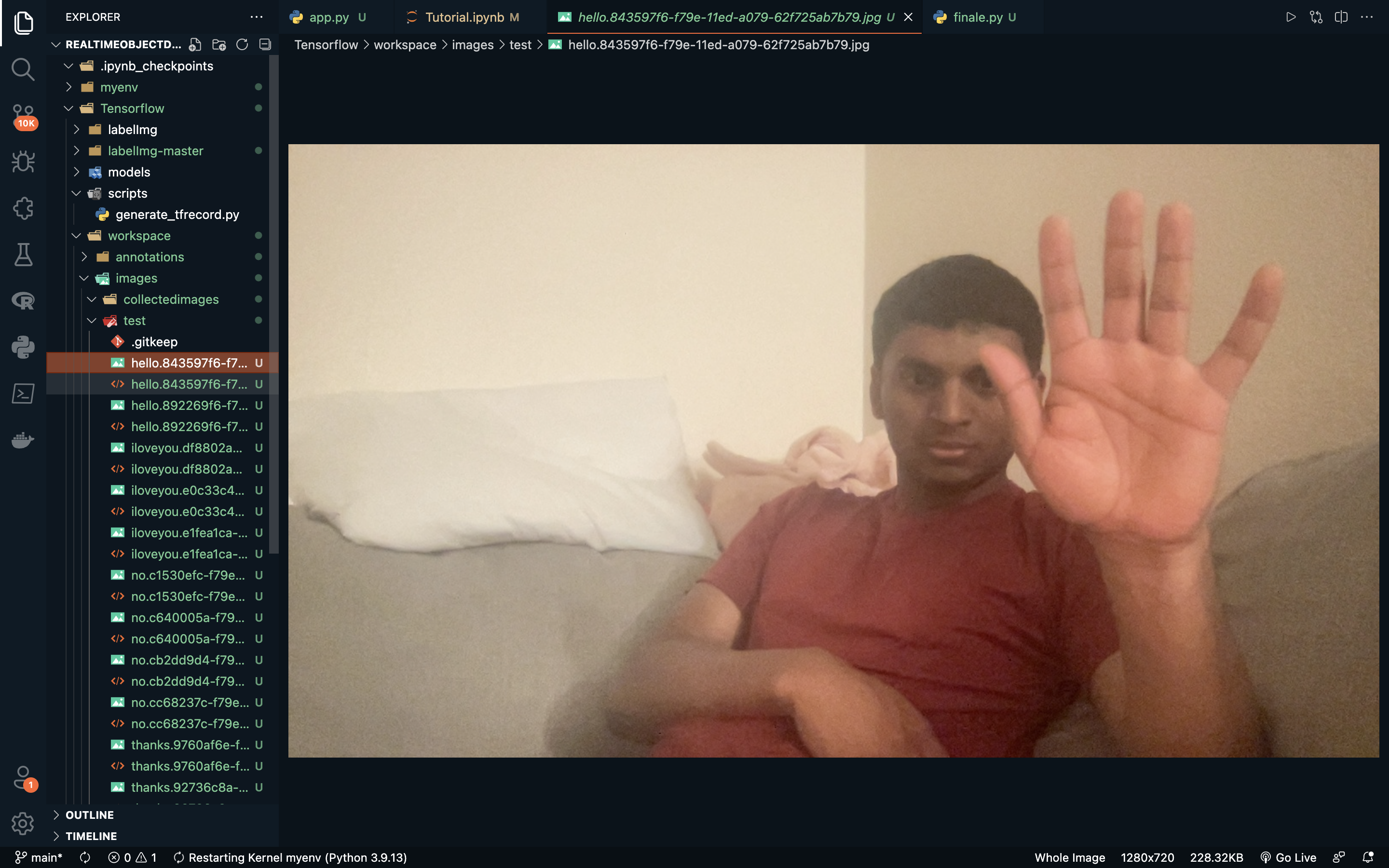
Motivated by the idea of empowering the deaf community, we set out to develop a Sign Language Object Detection Program. The program aims to facilitate real-time translation of sign language into text or spoken language. By utilizing computer vision and deep learning techniques, the program detects hand gestures and translates them into meaningful messages. This breakthrough technology has the potential to revolutionize communication for the deaf community, fostering inclusivity and understanding in various contexts.
How we built it
Building this ambitious project required a multidisciplinary approach. Our team consisted of computer vision experts, machine learning specialists, and software developers. Leveraging their diverse skills, we embarked on an intense development process.
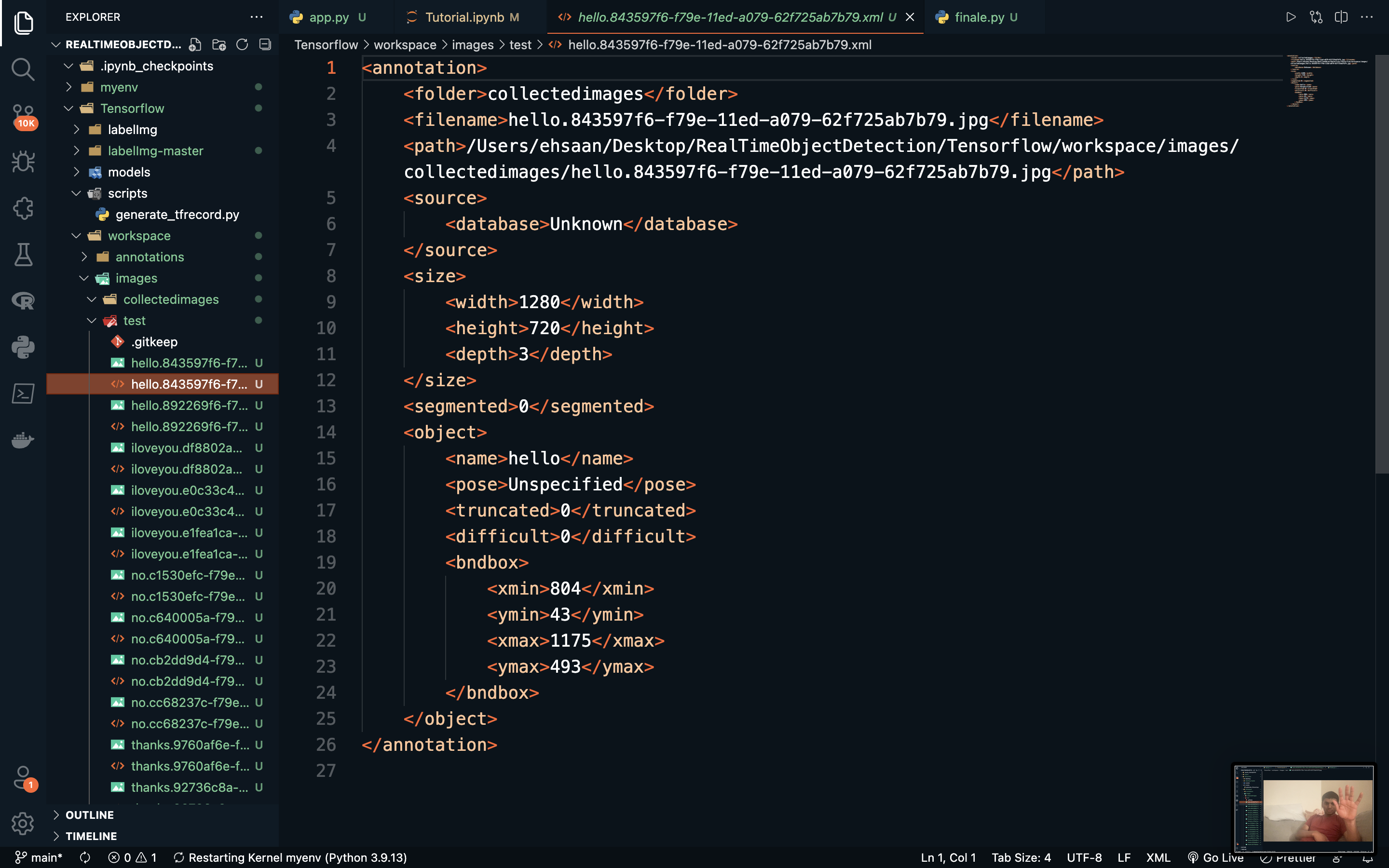
We started by collecting a comprehensive dataset of sign language gestures, encompassing various gestures and their corresponding meanings. This dataset served as the foundation for training our object detection model. Using deep learning frameworks such as TensorFlow, Keras, and PyTorch, we developed a custom object detection algorithm capable of accurately recognizing sign language gestures in real-time.
To enhance the user experience, we built an intuitive user interface that enables users to interact with the program seamlessly. The interface displays the translated text or spoken language corresponding to the detected sign language gestures, enabling effective communication between deaf and hearing individuals.
Challenges we ran into
Throughout the development process, we encountered several challenges. Training a robust object detection model required a large and diverse dataset, which was time-consuming to collect and annotate. Fine-tuning the model for optimal performance and accuracy also proved to be a complex task.
We faced computational limitations when deploying the program on edge devices. Optimizing the model to run smoothly on resource-constrained hardware required careful consideration of model architecture, quantization techniques, and efficient memory management.
Additionally, accurately mapping sign language gestures to their corresponding meanings presented its own set of challenges. We worked closely with members of the deaf community, seeking their valuable insights and feedback to refine the translation process.
Accomplishments that we're proud of
Despite the challenges we encountered, we're proud to have developed a functional Sign Language Object Detection Program. Our algorithm achieves impressive accuracy in real-time gesture recognition, enabling effective communication for the deaf community. We successfully integrated the program with low-power edge devices, making it accessible and portable.
Moreover, the collaboration and partnerships we formed with the deaf community throughout the development process are achievements we hold dear. Their feedback and involvement ensured that the program caters to their unique needs and preferences, making it a truly inclusive solution.
What we learned
Creating the Sign Language Object Detection Project was a transformative experience for our team. We gained in-depth knowledge about computer vision, deep learning, and the challenges faced by individuals with hearing impairments.
We learned the importance of empathy and inclusivity in the design process. Involving the end-users and considering their perspectives helped shape the project into a solution that genuinely addresses their needs.
Moreover, we honed our skills in optimizing models for edge devices, overcoming computational constraints, and delivering a smooth user experience in resource-limited settings.
What's next for Sign Language Object Detection Project
The journey does not end here. We are committed to continually improving the Sign Language Object Detection Program and expanding its capabilities. Our roadmap includes:
- **Enhancing Gesture
Recognition**: We aim to improve the accuracy and robustness of the gesture recognition model by incorporating advanced machine learning techniques and expanding the dataset.
Support for Multiple Languages: We aspire to extend the program's translation capabilities to support multiple spoken languages, ensuring that it becomes a universal tool for effective communication across different cultures and regions.
Incorporating Natural Language Processing: By integrating natural language processing techniques, we strive to enhance the program's ability to interpret complex sign language sentences and deliver more accurate translations.
Community-driven Development: We will continue collaborating closely with the deaf community, seeking their feedback and insights to guide the evolution of the program. Their involvement remains crucial in ensuring that the Sign Language Object Detection Project addresses their evolving needs effectively.
In conclusion, our journey to create the Sign Language Object Detection Program has been fueled by empathy, innovation, and the desire to empower individuals with hearing impairments. Through our efforts, we hope to break down communication barriers, foster inclusivity, and create a world where everyone can express themselves freely, regardless of their abilities.
Built With
- labelimg
- machine-learning
- python


Log in or sign up for Devpost to join the conversation.