Inspiration
SignFlow was inspired by the communication barriers faced by deaf and hearing individuals. We wanted to explore how AI could help make everyday conversations more accessible and inclusive.
What it does
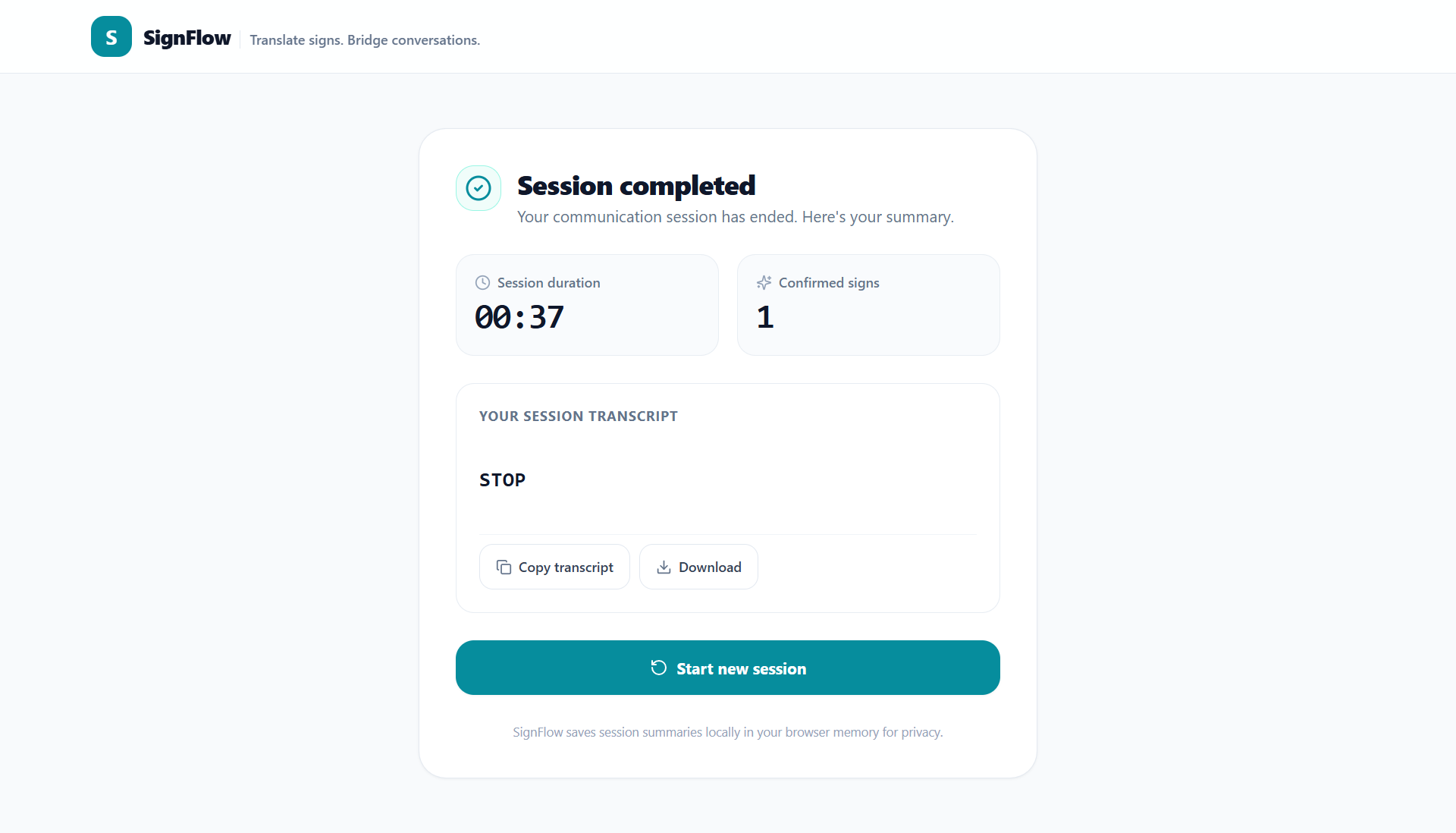
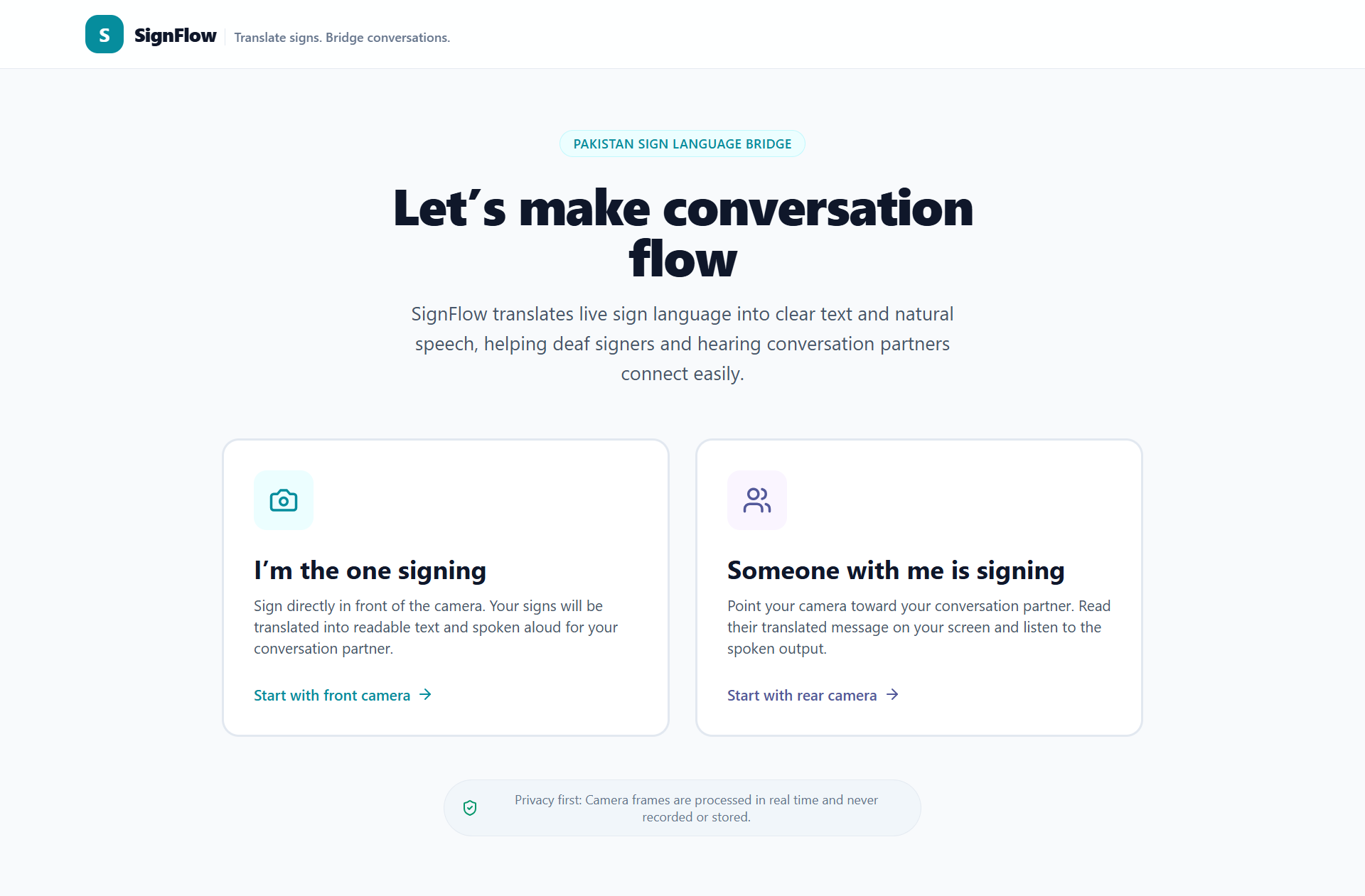
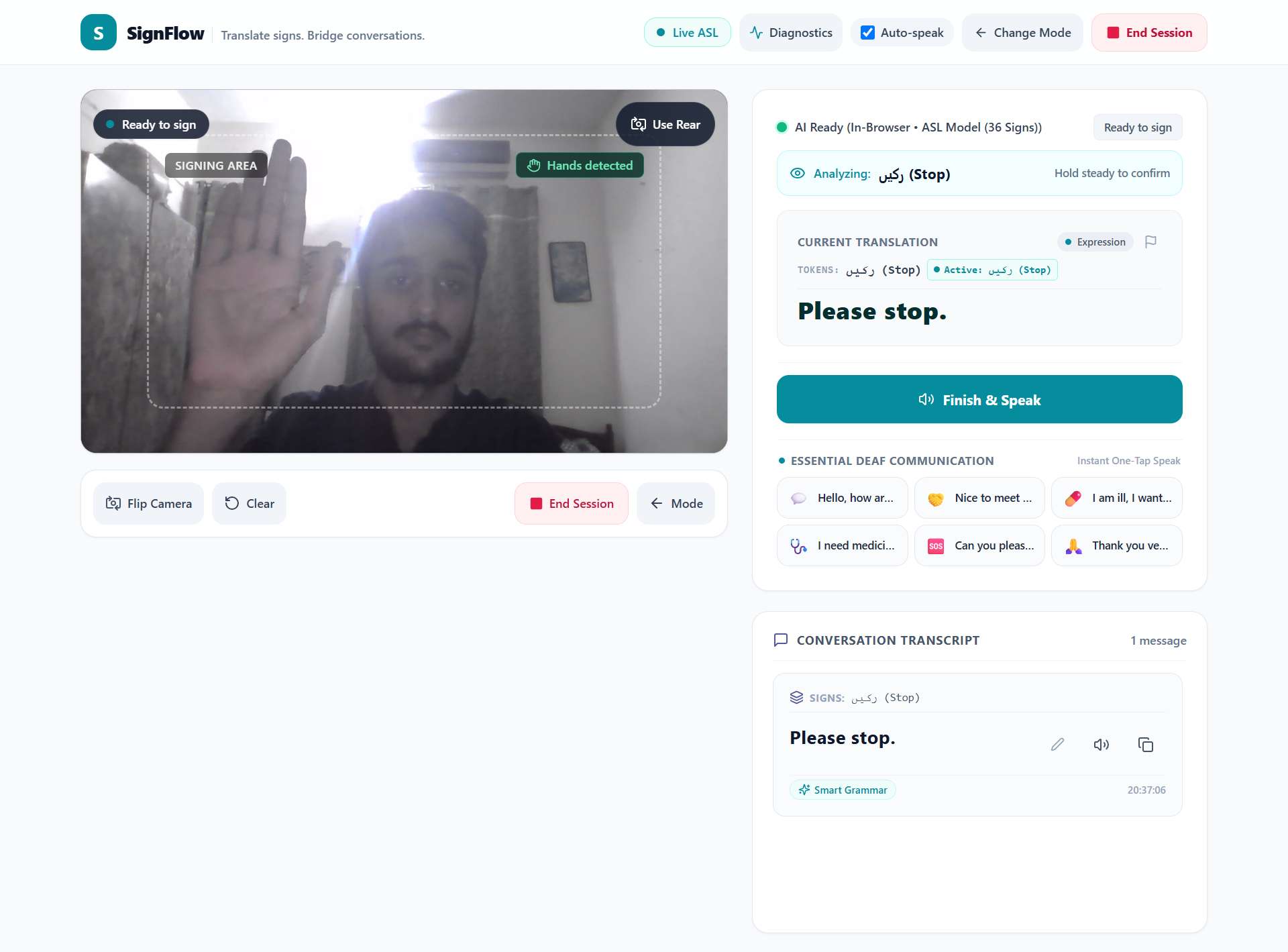
SignFlow is a web-based prototype that explores real-time sign language recognition and translation, with the goal of converting signs into readable text and spoken communication.
How we built it
We built SignFlow using Next.js for the frontend and FastAPI for the backend, with Python and MediaPipe for hand landmark detection. The system uses a WebSocket connection to support real-time communication between the frontend and the computer vision service.
Challenges we ran into
Our biggest challenge was developing reliable sign recognition, especially understanding hand movements and translating gestures into meaningful communication. Training and improving the model while working under hackathon time constraints was challenging.
Accomplishments that we're proud of
We successfully developed a working web interface and an end-to-end prototype demonstrating our vision for accessible sign language communication. We are proud of turning our idea into something tangible that can be explored and improved.
What we learned
We learned about computer vision, hand landmark detection, real-time communication, and integrating AI components into a web application. We also learned how important diverse datasets, model accuracy, and continuous testing are for sign language recognition.
What's next for SignFlow
Our next goal is to improve recognition accuracy, develop a more reliable sign language model, support continuous signing and full sentences, and expand accessibility features to make SignFlow more practical for everyday communication.
Built With
- and
- fastapi
- mediapipe
- next.js
- python
- react
- typescript
- websockets

Log in or sign up for Devpost to join the conversation.