-
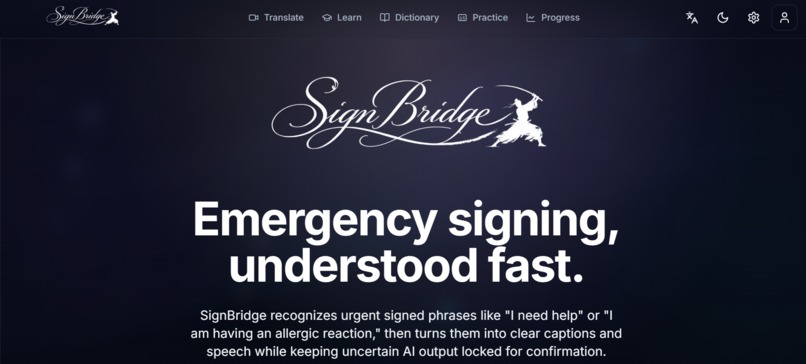
Homepage
-
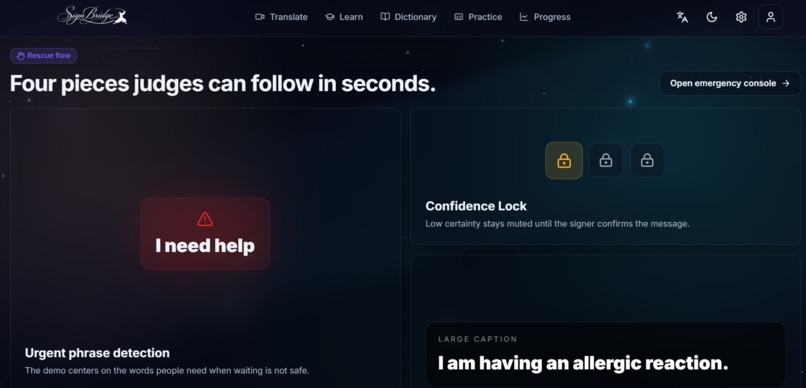
Homepage 2
-
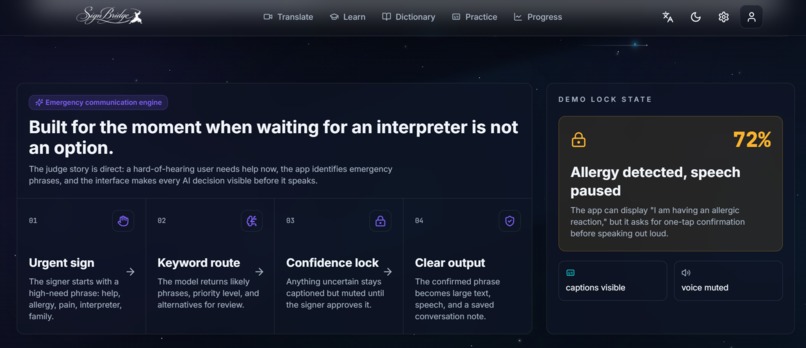
Homepage 3
-
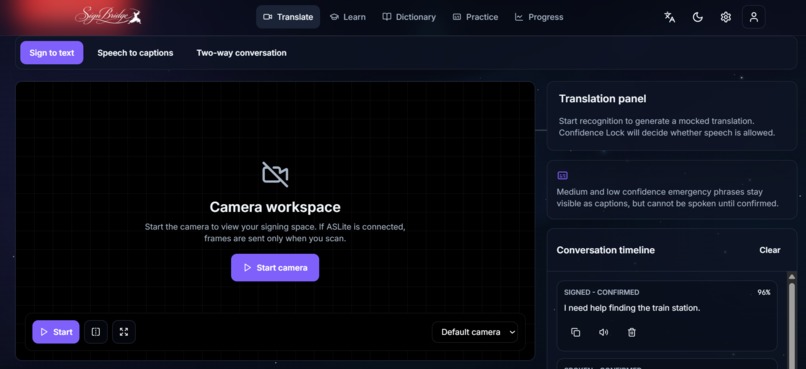
Translate page 1
-
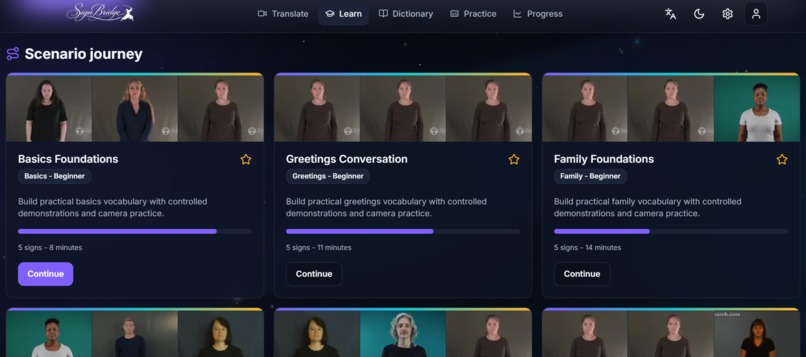
Learn Page
-
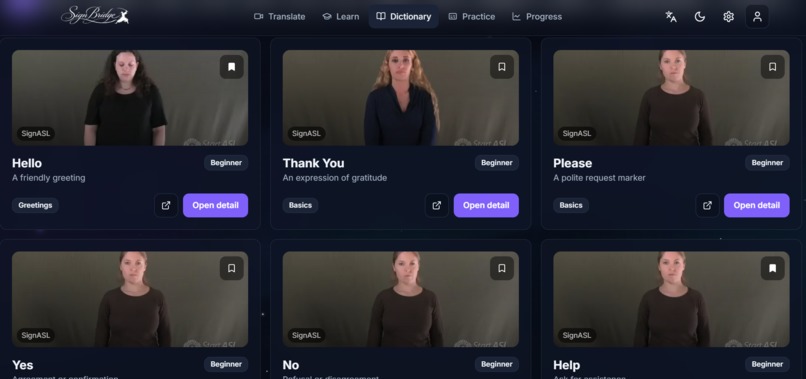
Dictionary page
-
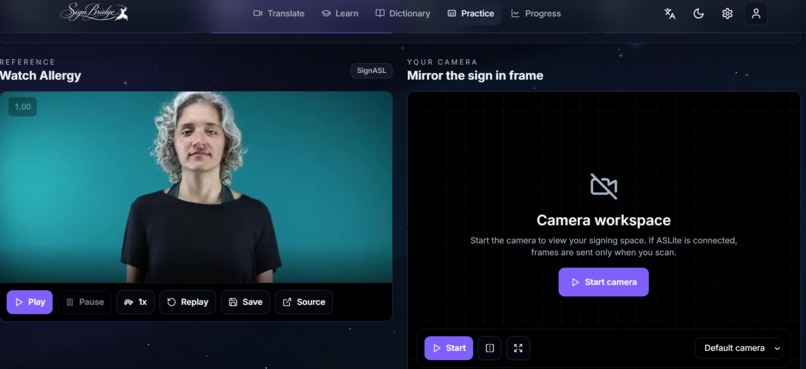
Practice page
-
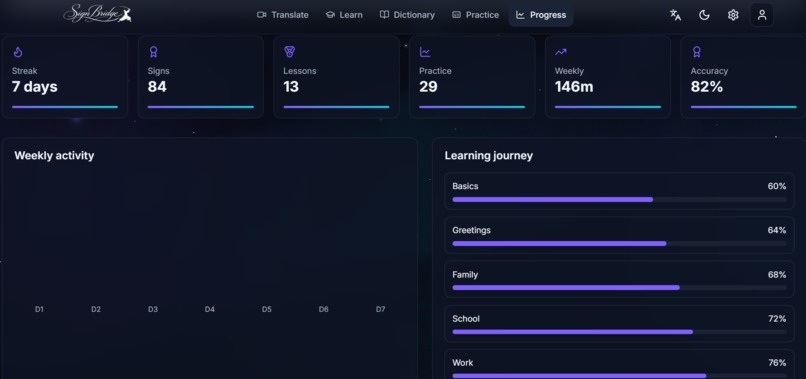
Progress page
-
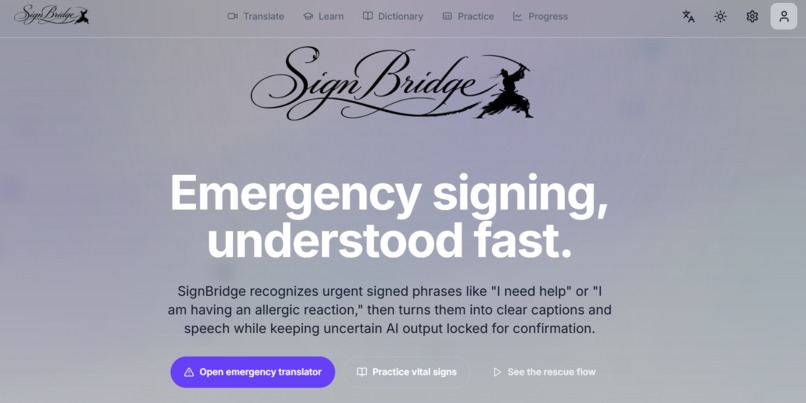
Light mode
-
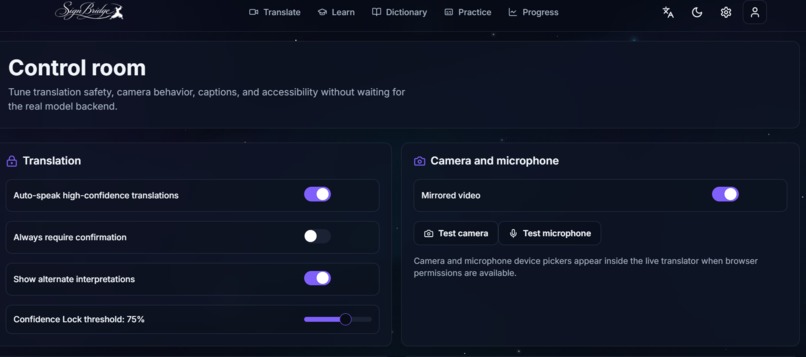
Settings page
Inspiration
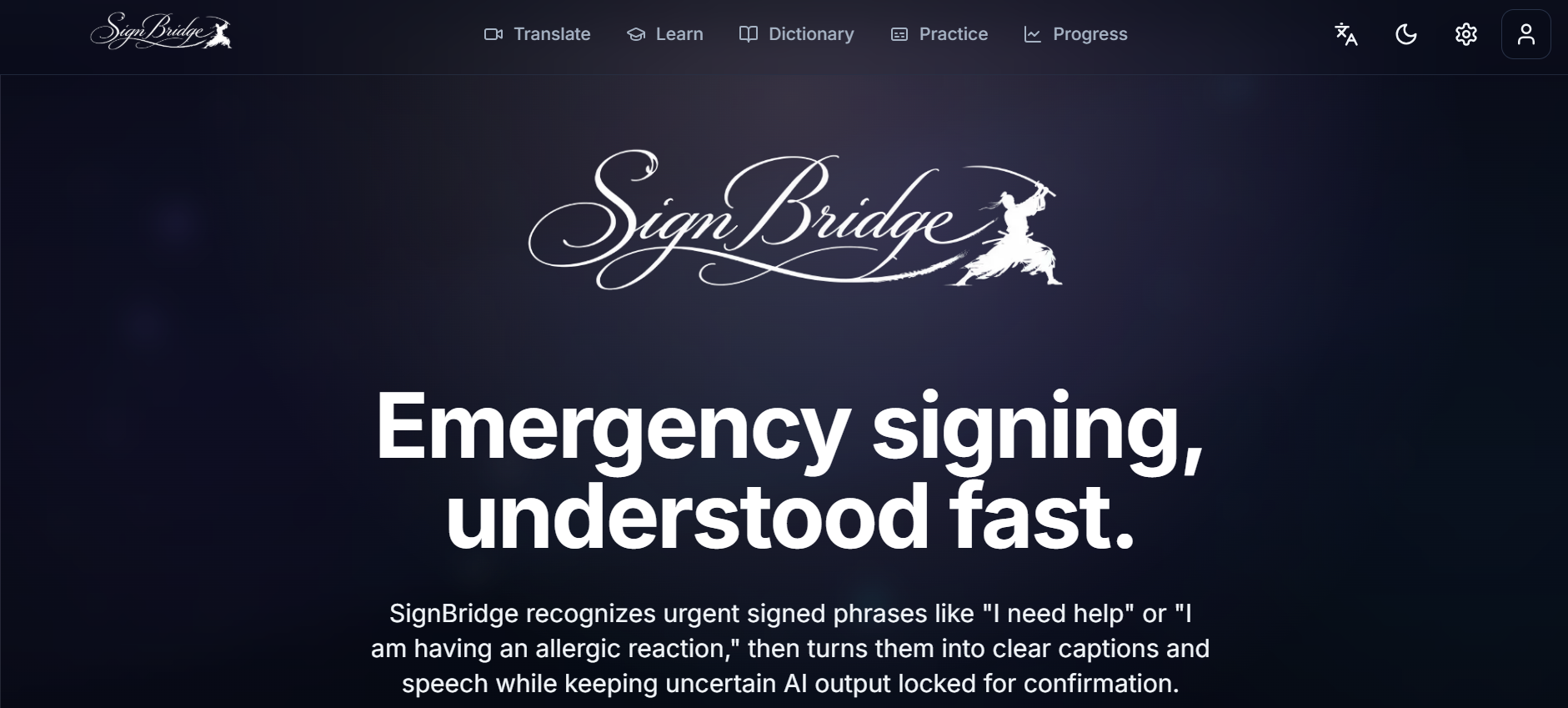
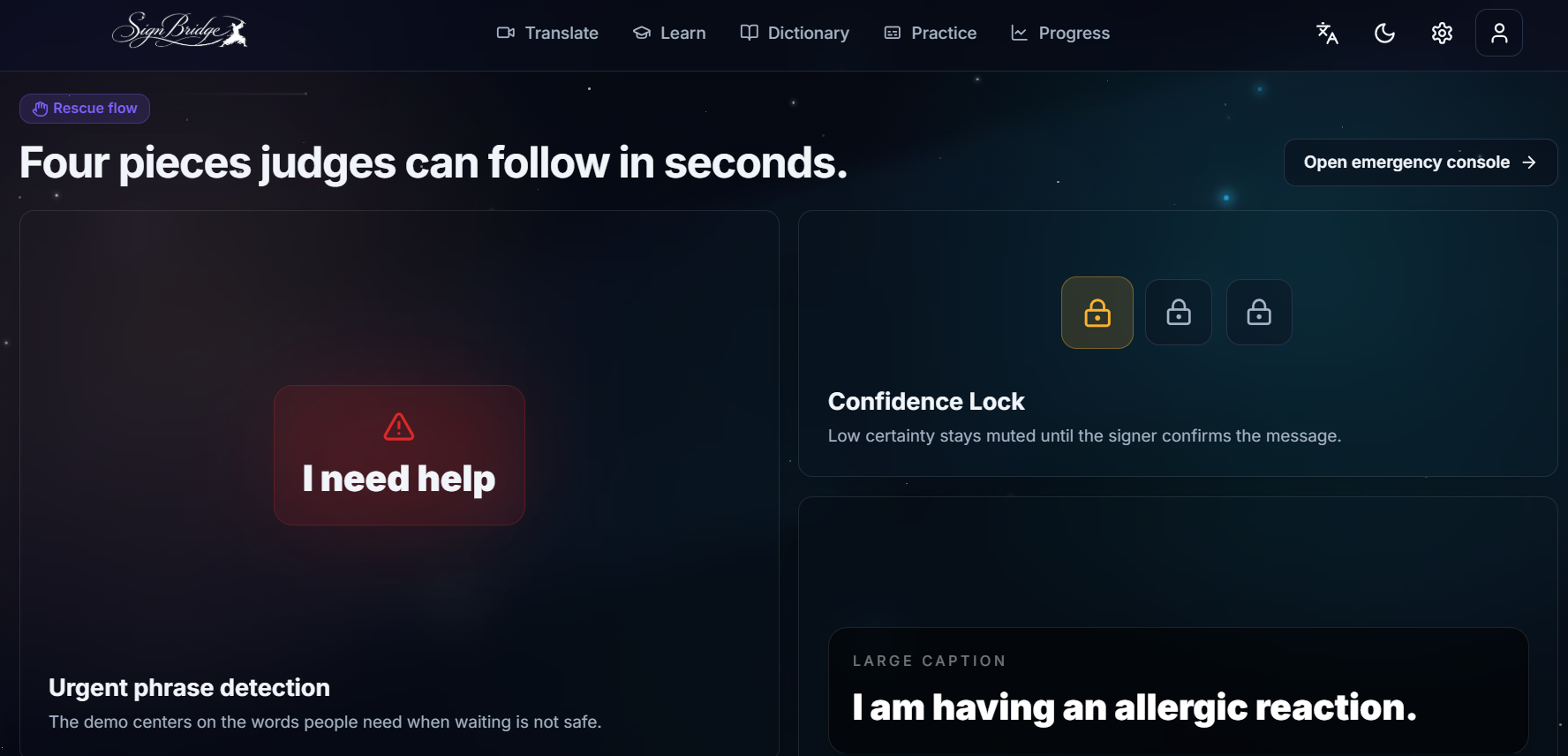
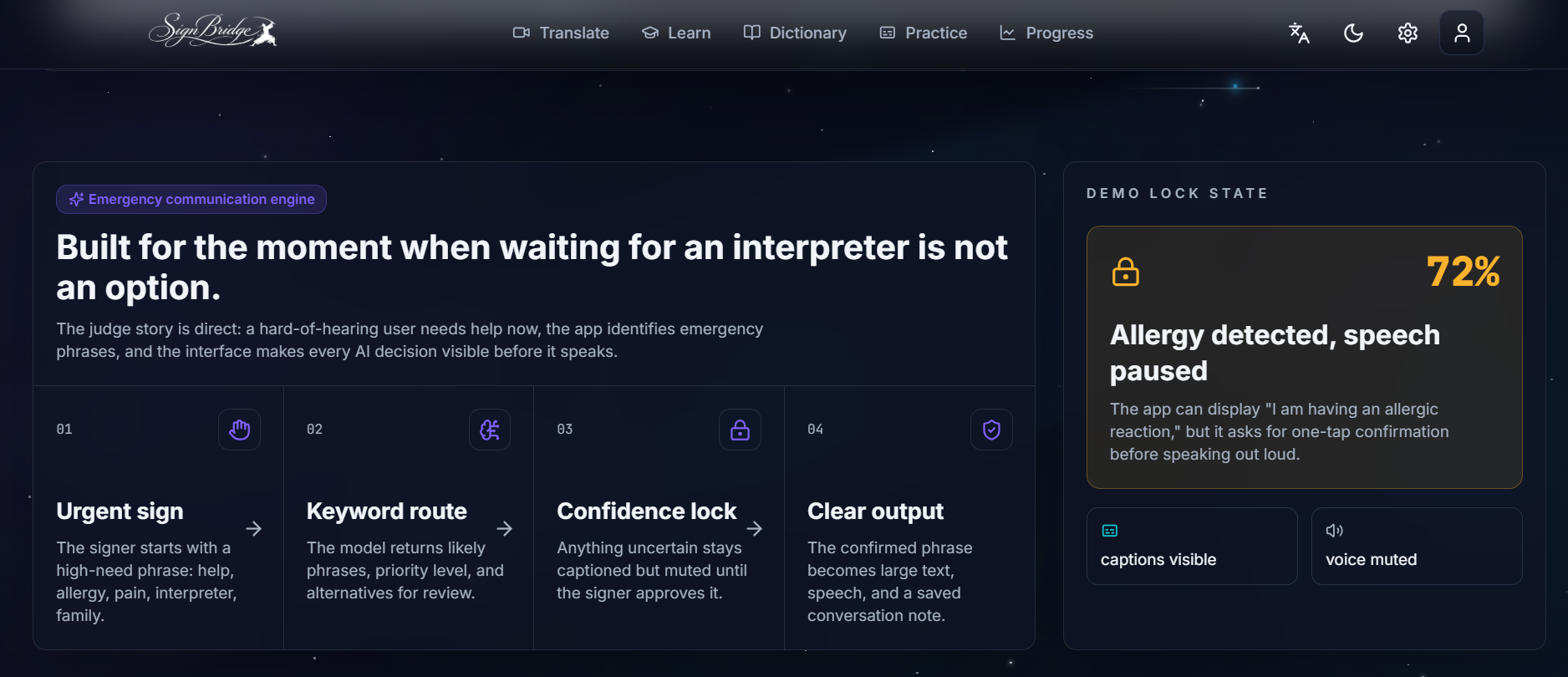
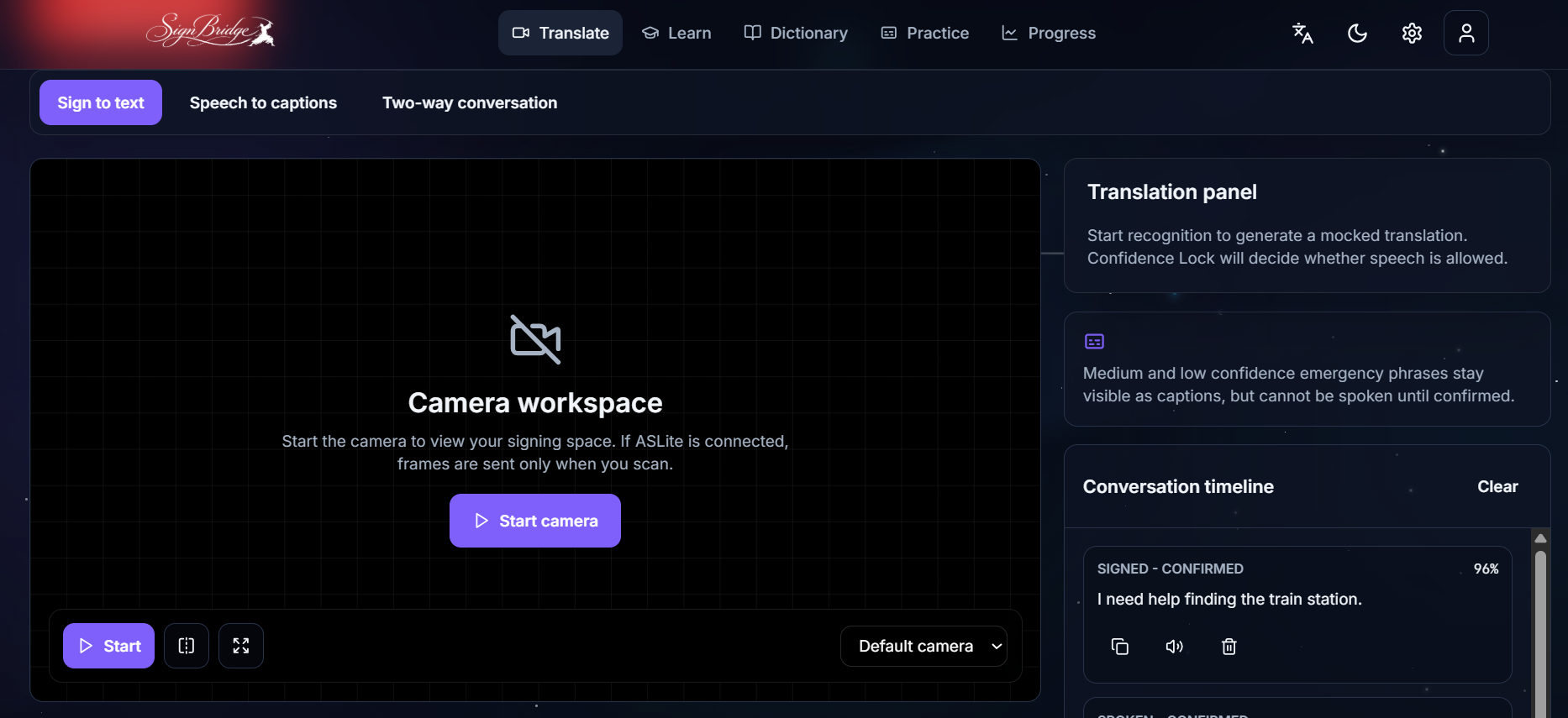
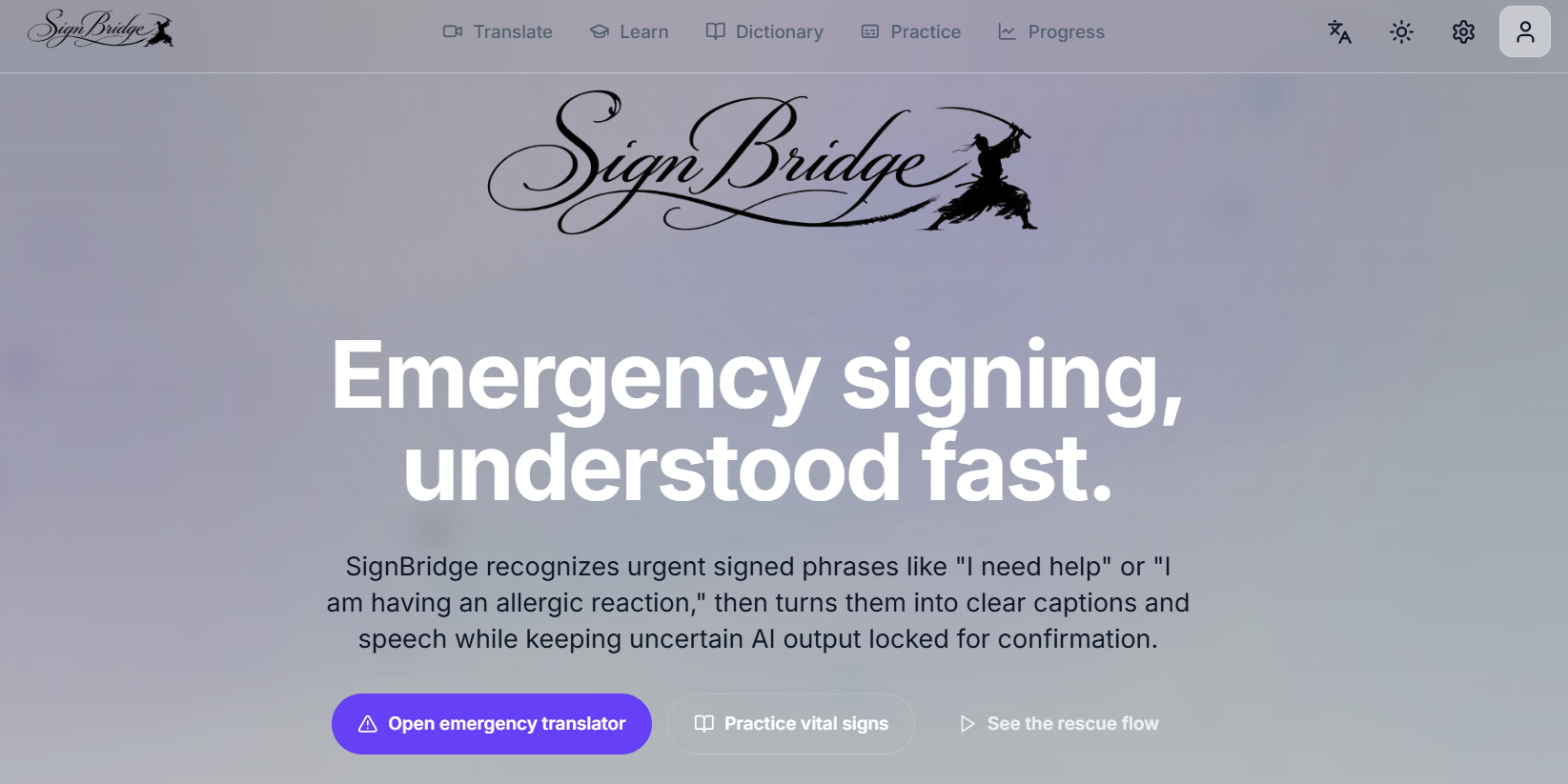
We built SignBridge for moments when communication cannot wait. If someone who is deaf or hard of hearing is in an emergency and no interpreter is nearby, even simple phrases like “I need help,” “I am having an allergic reaction,” or “please call my family” can become hard to communicate quickly. Signbridge ASL connects to ASLite-core, which is a backend we designed for taking video streams, captioning them, and also adding TTS output.
What it does
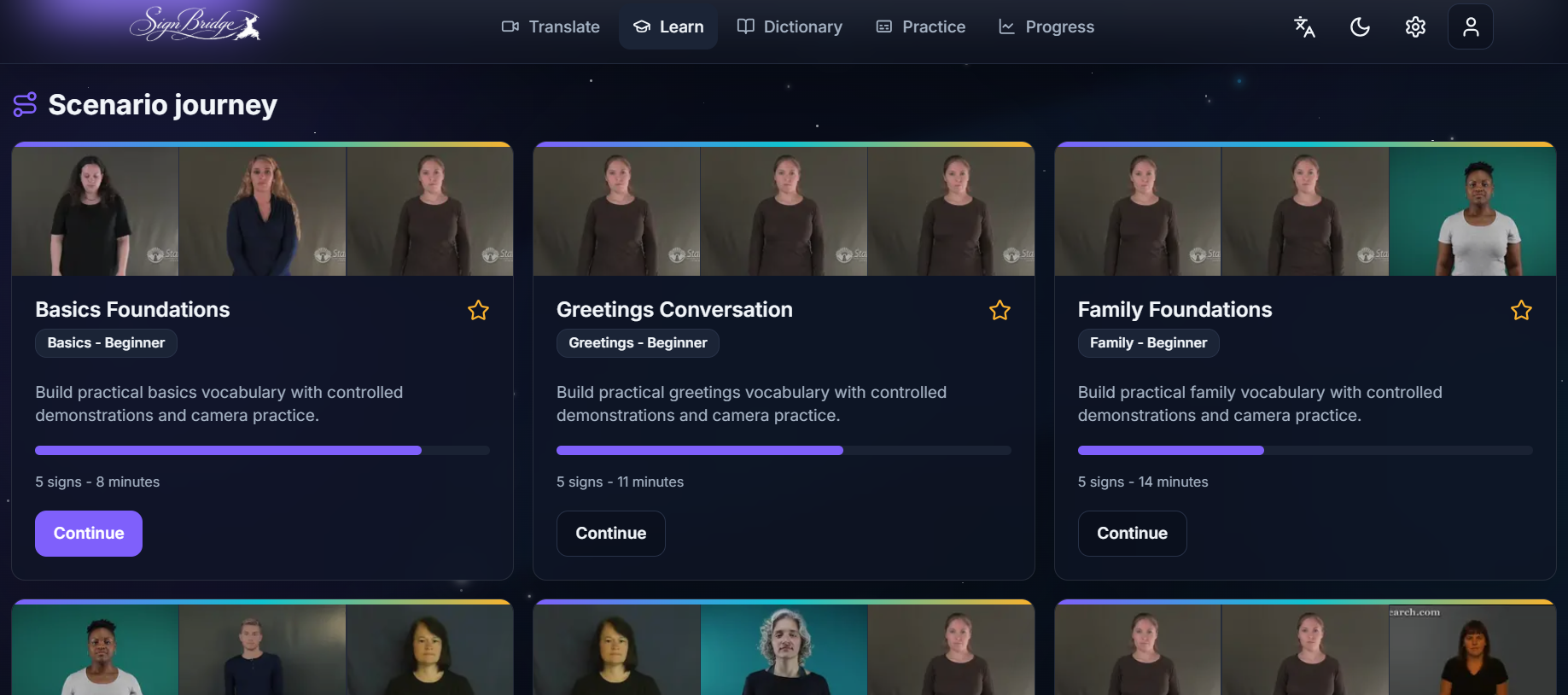
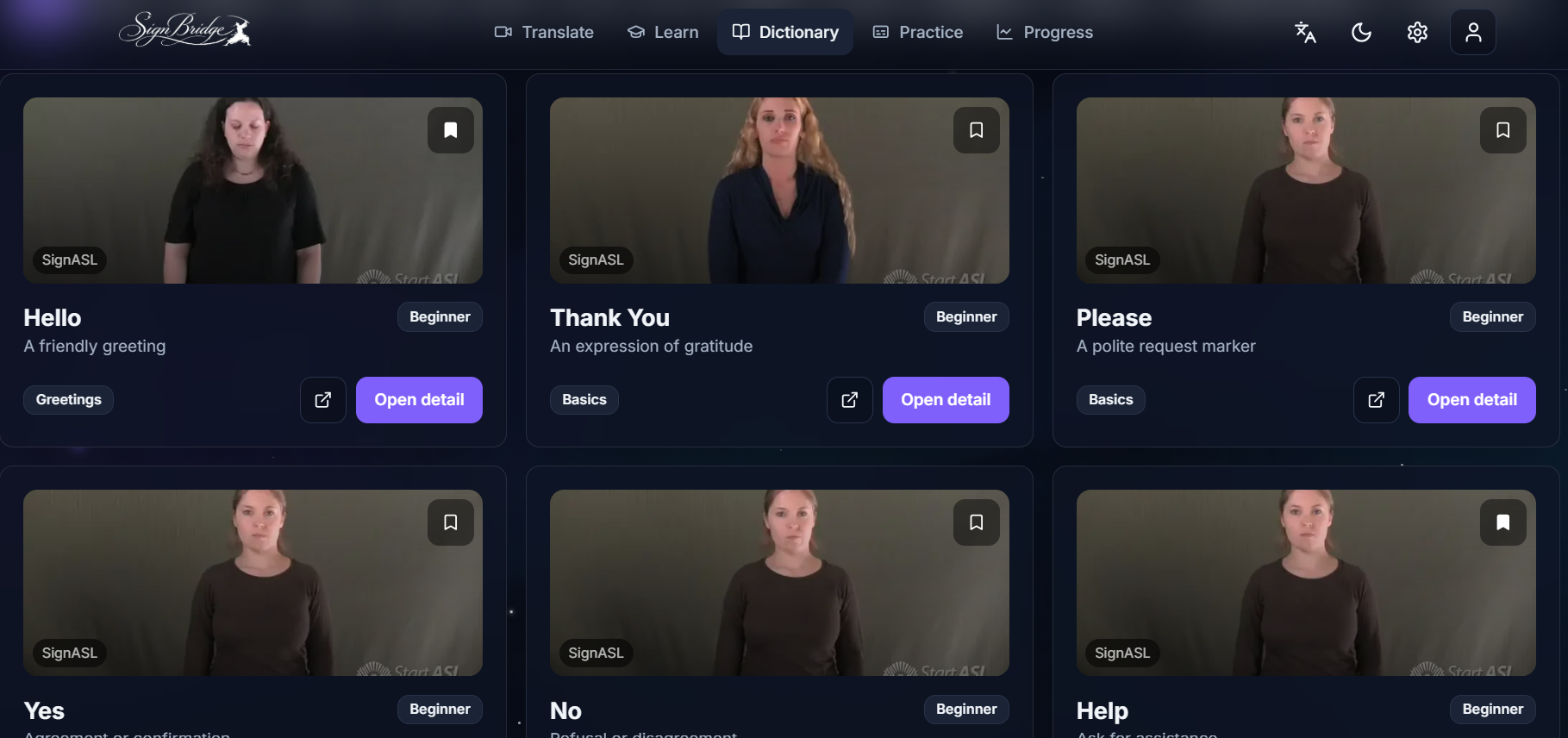
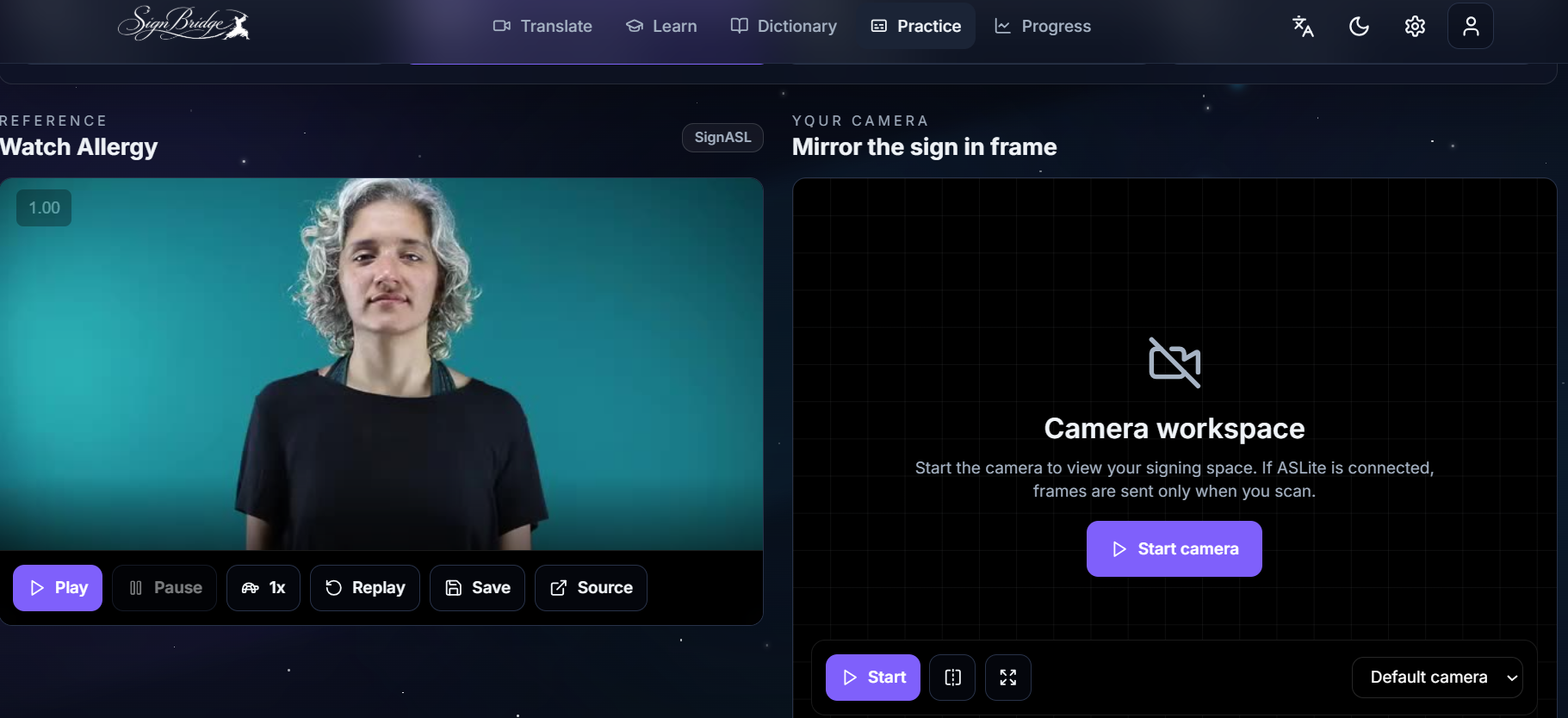
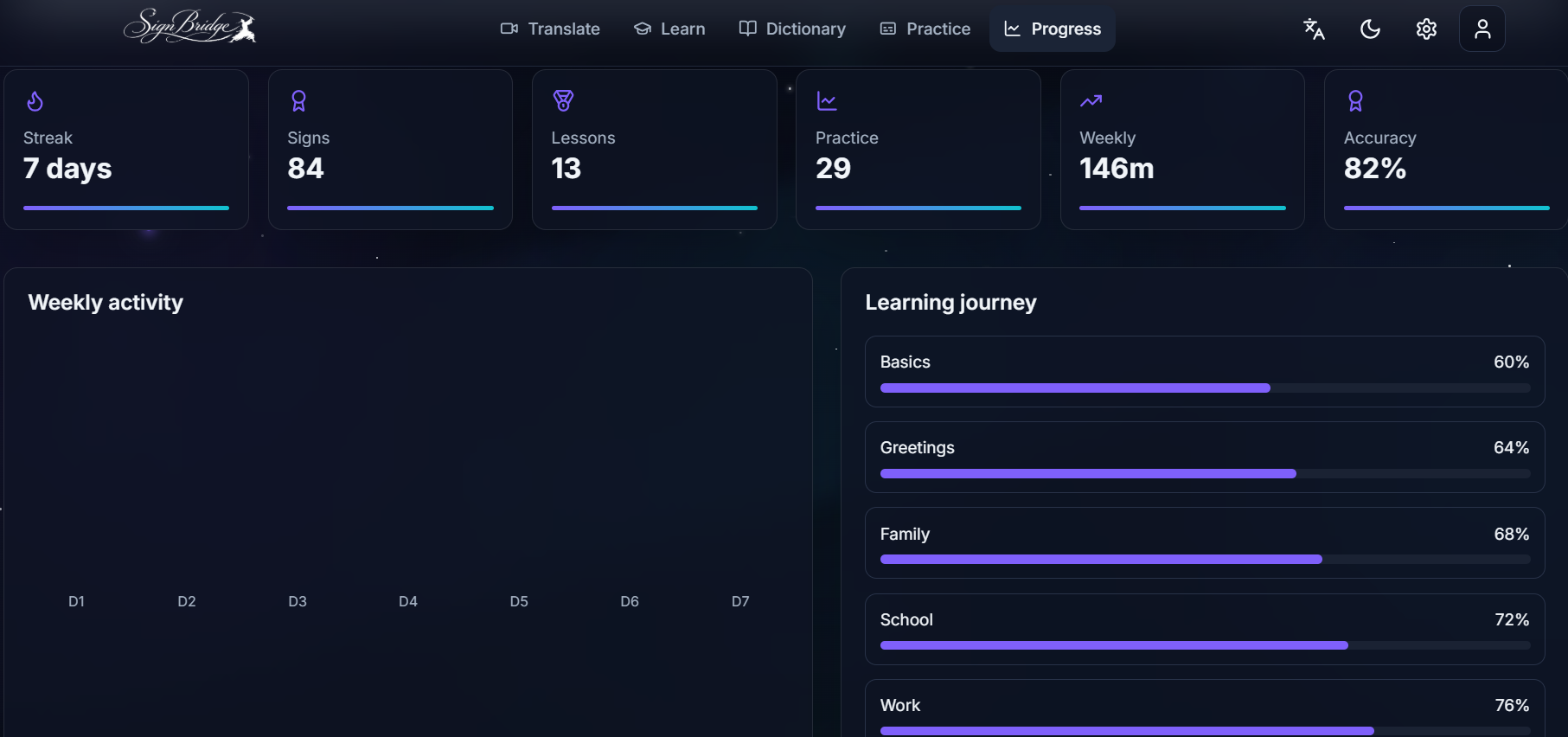
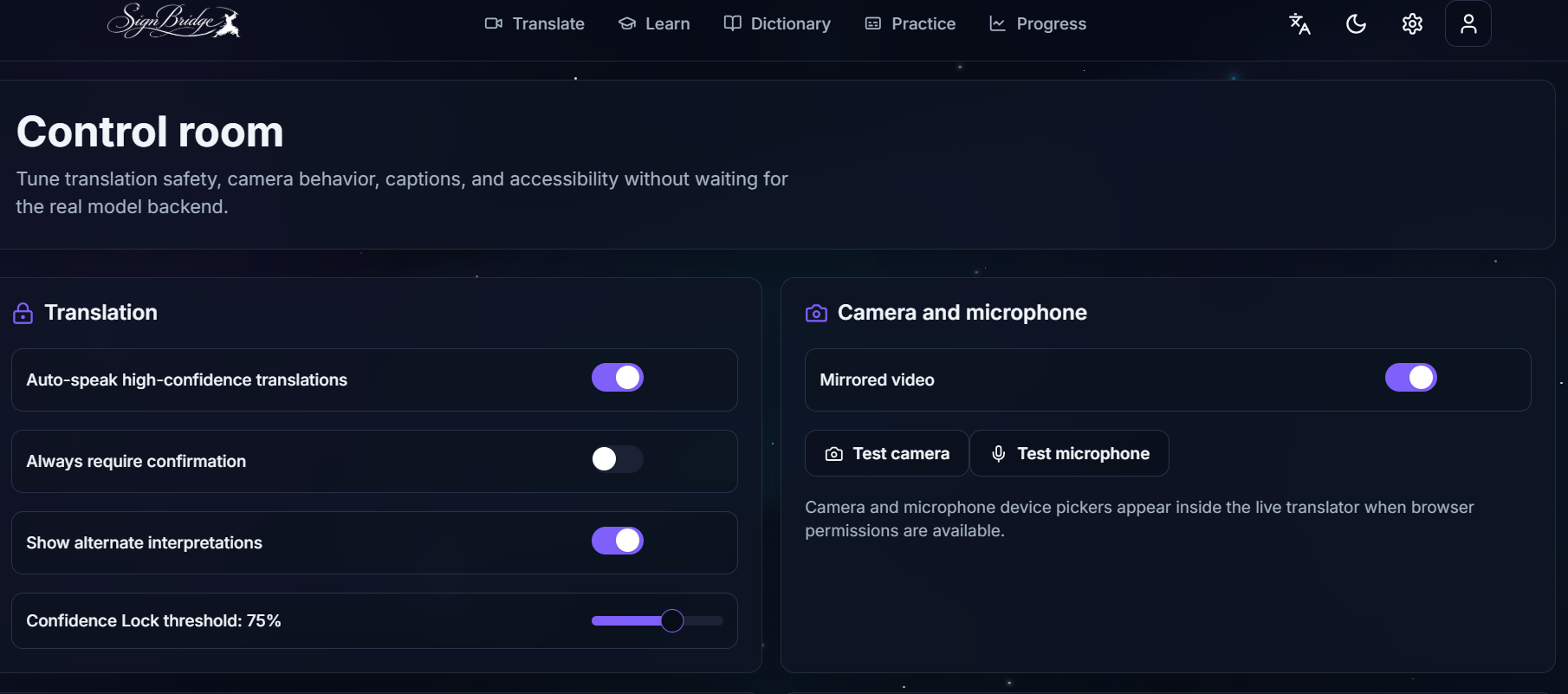
SignBridge is an emergency-first ASL communication and learning app. Users can learn and practice important signs, browse a visual dictionary, and use a camera-based translation flow designed for urgent situations. The app also includes Confidence Lock, which prevents uncertain AI output from being spoken until the user confirms it.
How we built it
We built the frontend with Next.js, React, TypeScript, Tailwind CSS, and Vercel. The app includes an ASL dictionary, lesson pages, practice mode with camera preview, emergency translation UI, and scaffolding for a hosted model backend.
The backend uses OpenVINO for vision. Due to a lack of compute, instead of training our own model, we used the openvino asl-recognition-0004 model for input, linking it via a queue to a custom T5-based quantized and pruned model that dynamically rearranges the words from "glosses" to a form that matches English. We then used KittenTTS for the text-to-speech output, dynamically locking words in the output queue from the T5 model to ensure that words already spoken remain consistent with what the T5 model sees.
Challenges
The hardest part was designing around safety. In emergencies, a wrong translation can be worse than no translation, so we focused on clear confirmation states instead of blindly trusting AI output. We also worked on making the UI feel polished, calm, and easy to use under stress.
The backend needed a way to keep the AI from stumbling over its words while being quick, which is how we ended up with the dynamic locking solution.
What we learned
We learned how important accessibility design is beyond just adding features. The product needed to feel fast, readable, and trustworthy, especially for users in high-pressure situations.
What's next
Next, we plan to improve emergency phrase detection, add more signs, and test with real users.
In the future, we could add more words to the vision model with a bigger dataset, given access to a crazy computer.
Built With
- accessibility
- ai
- asl
- computervision
- fastapi
- huggingface
- machine-learning
- next.js
- opencv
- python
- react
- speechsynthesis
- tailwindcss
- typescript
- vercel
- webrtc


Log in or sign up for Devpost to join the conversation.