-
-
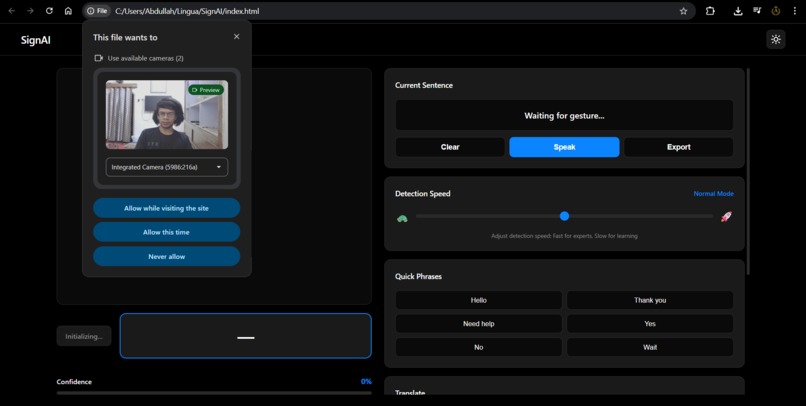
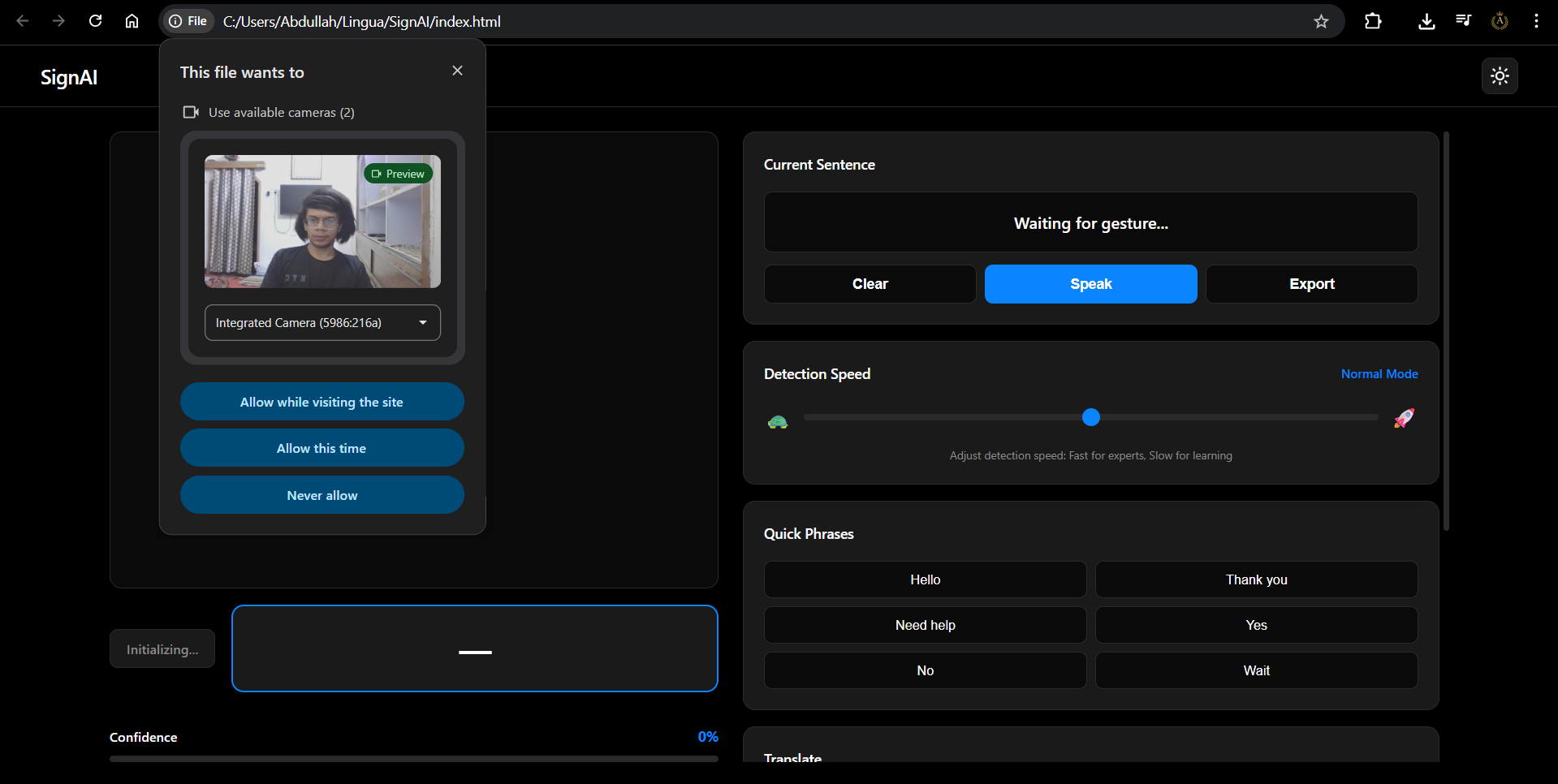
Desktop-View-Dark-Mode
-
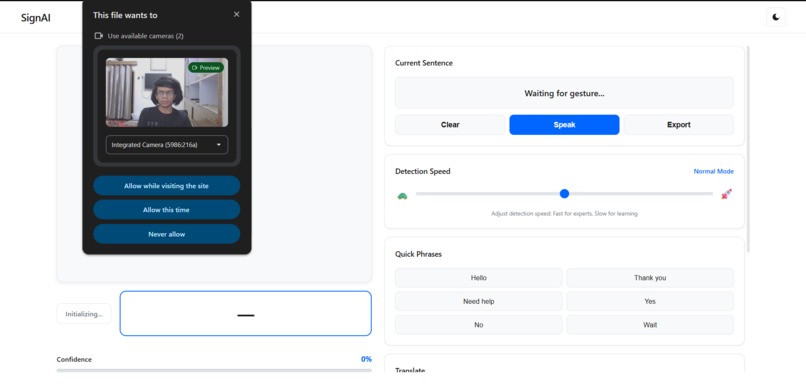
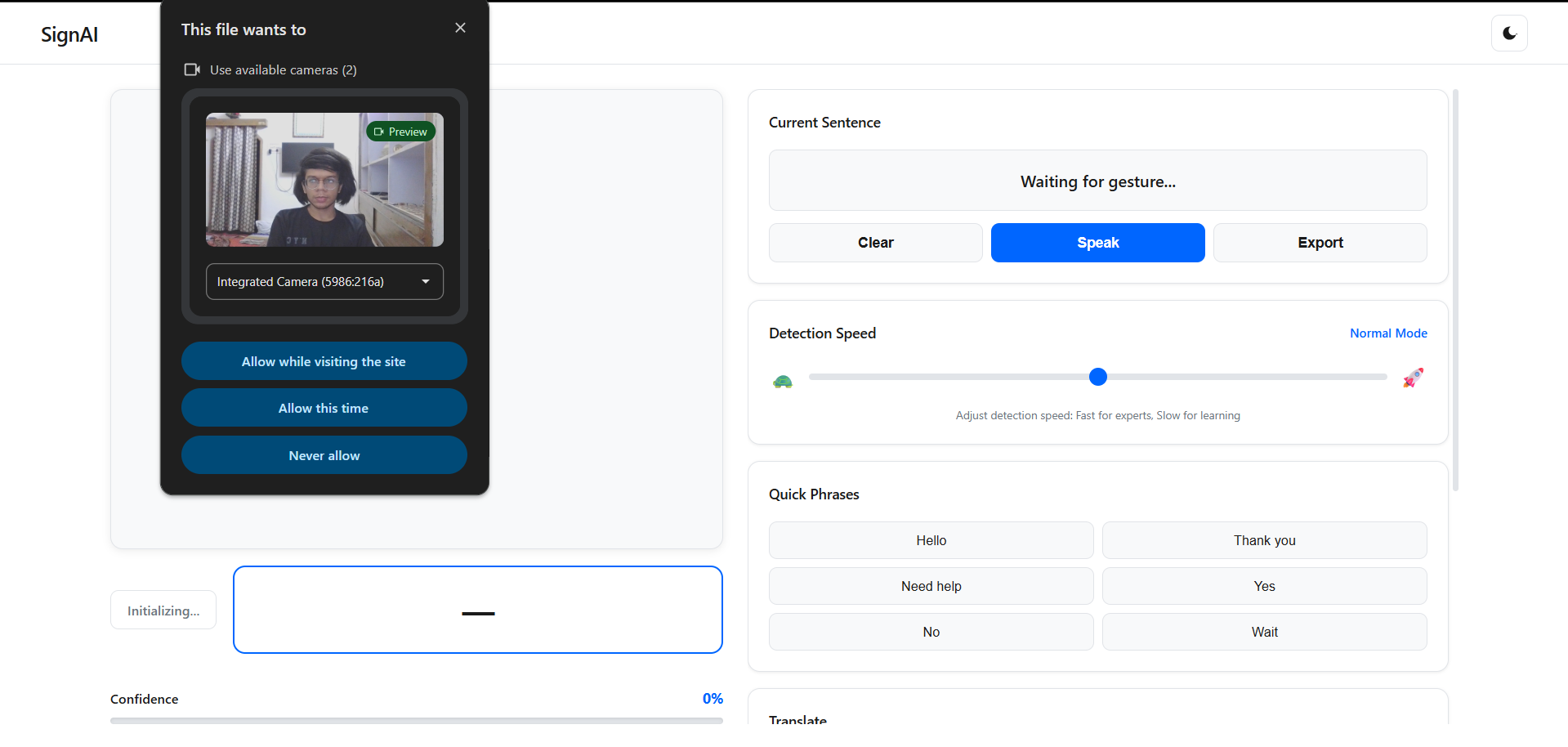
Desktop-View-Light-Mode
-
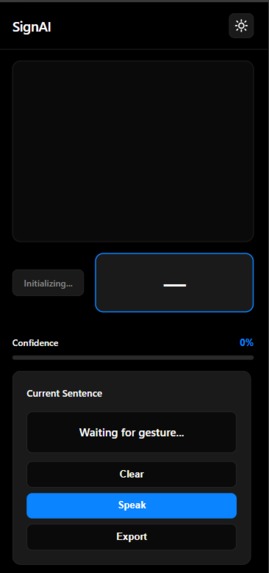
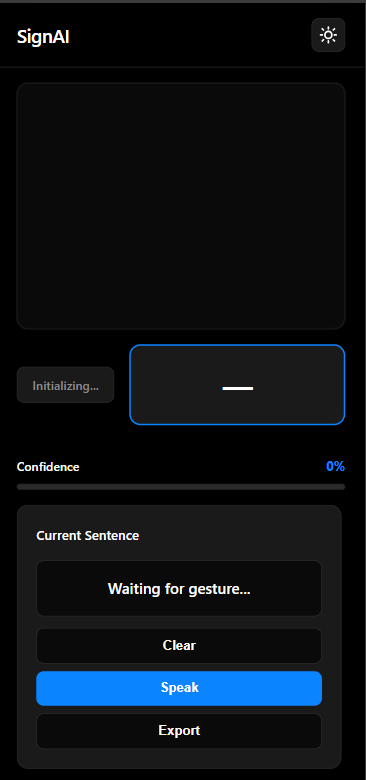
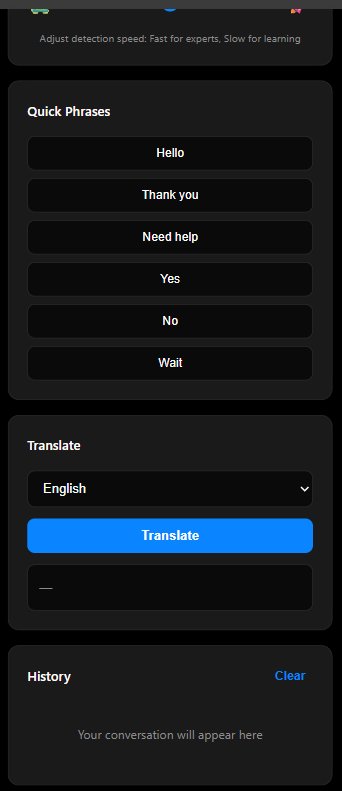
Mobile-View-Dark-Mode
-
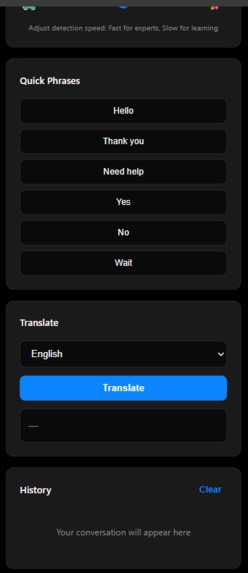
SignAI - Breaking Communication Barriers with AI
Inspiration
466 million people worldwide have disabling hearing loss. I witnessed a deaf individual unable to communicate during an emergency - couldn't call for help, couldn't be understood. That moment changed everything.
Most hearing people don't know sign language. Deaf individuals face daily barriers in hospitals, stores, and emergencies. Communication is a fundamental human right.
SignAI translates sign language into speech instantly, in any language, accessible to anyone with a browser.
What It Does
Real-time AI sign language translator running entirely in your browser:
Camera → MediaPipe AI → Gesture Recognition → Sentence Builder → Translation → Speech
- Recognizes 9 essential ASL gestures (88-95% confidence)
- Combines gestures into natural sentences ("Help" + "You" = "Do you need help?")
- Translates to 6+ languages (Hindi, Tamil, Telugu, French, Spanish)
- Speaks output using text-to-speech
- Zero installation, zero backend
How We Built It
Tech Stack:
- MediaPipe Hands (Google AI) - Real-time hand tracking with 21 landmarks
- JavaScript - Custom geometric gesture classifier
- Canvas API - Visual feedback with hand skeleton
- Web Speech API - Text-to-speech
- MyMemory API - Neural translation
Key Innovations:
- Geometric ratio-based finger detection (tip-to-wrist vs PIP-to-wrist)
- Hand-specific gestures (Help requires right hand only)
- Hardware-accelerated rendering (60fps)
- Gesture stabilization buffer (removes jitter)
- Adjustable detection speed (Fast/Normal/Learning modes)
Challenges
1. Gesture Confusion (Hello vs Help)
- Both have 4-5 fingers extended
- Solution: Finger spread analysis + hand-specific detection
2. Camera Performance
- Video stuttering made detection unreliable
- Solution: Hardware acceleration + frame skipping + reduced model complexity
3. Translation Quality
- Free API returned garbage ("Delhi metro me apka swagat hai")
- Solution: Keyword filtering + validation checks
4. Gesture Precision
- Thumbs up/down triggering incorrectly
- Solution: Strict priority ordering + tightened thresholds + Y-axis validation
Accomplishments
- 100% browser-based (no installation, no backend)
- Real-time 30fps AI inference client-side
- 88-95% gesture accuracy
- Multilingual support (6+ languages)
- Production-ready UX (history, export, confidence meter, speed control)
What We Learned
- Computer vision is hard - Geometric ratios beat absolute positions
- Performance matters - 60fps requires hardware acceleration + frame skipping
- Simplicity wins - Reduced from 17 to 9 gestures for better accuracy
- 466M people need this - Technology can bridge communication gaps
What's Next
Immediate:
- Full ASL alphabet (A-Z)
- 50+ vocabulary words
- Offline mode
- Mobile optimization
Advanced:
- Two-hand gestures
- Voice-to-sign (reverse translation)
- Video call integration (Zoom/Meet overlay)
- Personal custom gestures
Scale:
- Partner with deaf communities
- Healthcare kiosks
- Education platform
- Open-source SDK
Impact
Who Benefits:
- 466M people with hearing loss
- Families with deaf members
- Healthcare workers treating deaf patients
- Service workers assisting deaf customers
Real Scenarios:
- Emergency rooms: Deaf patient signs "Help" → Doctor understands
- Grocery stores: Customer asks "Where is milk?" via gestures
- Airports: Travelers navigate security
- Video calls: Remote communication with live translation
Why It Matters:
"Accessibility is not a feature. It's a fundamental human right."
SignAI is free, instant, universal, and multilingual. No subscriptions, no downloads, no barriers.
SignAI: Where hands speak, and AI listens.
Built With
- javascript
- mediapipe
- mymemoryapi
- webspeechapi

Log in or sign up for Devpost to join the conversation.