Inspiration
The idea for SignAI was born from the vision of creating a barrier-free communication society. I was inspired by the daily challenges faced by deaf and speech-impaired people, where simple communication often becomes difficult. This motivated me to explore how AI can bridge that gap.
What I Learned
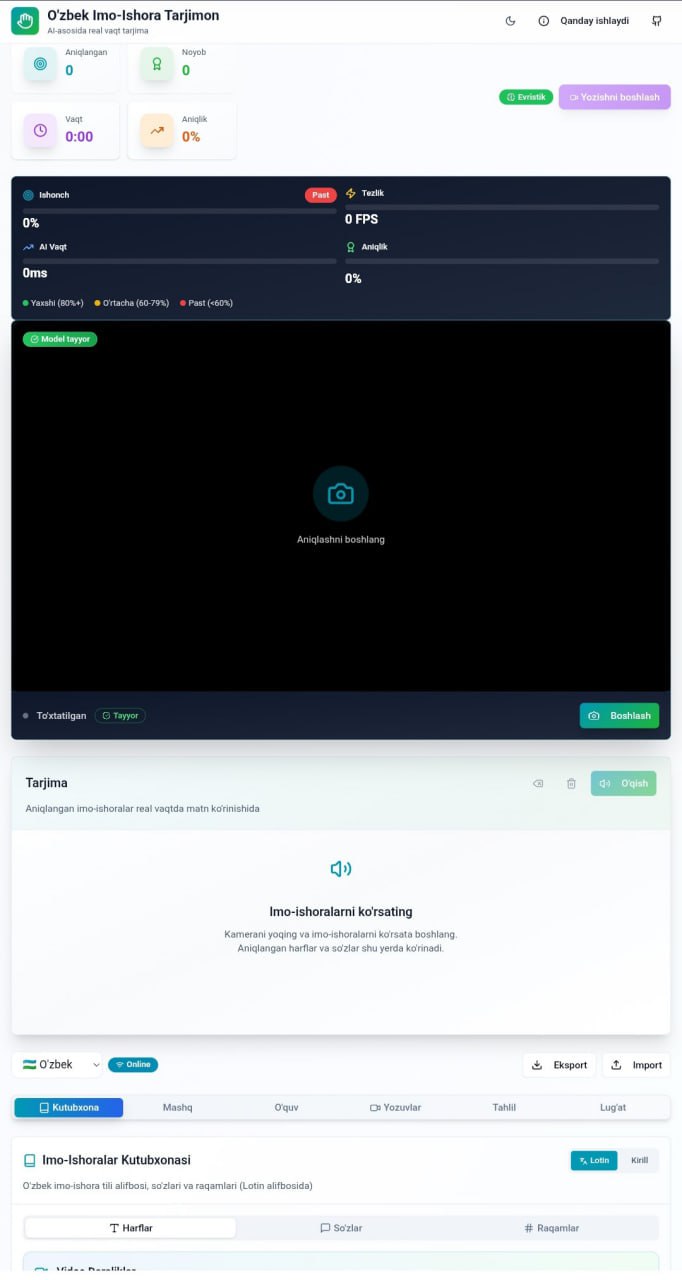
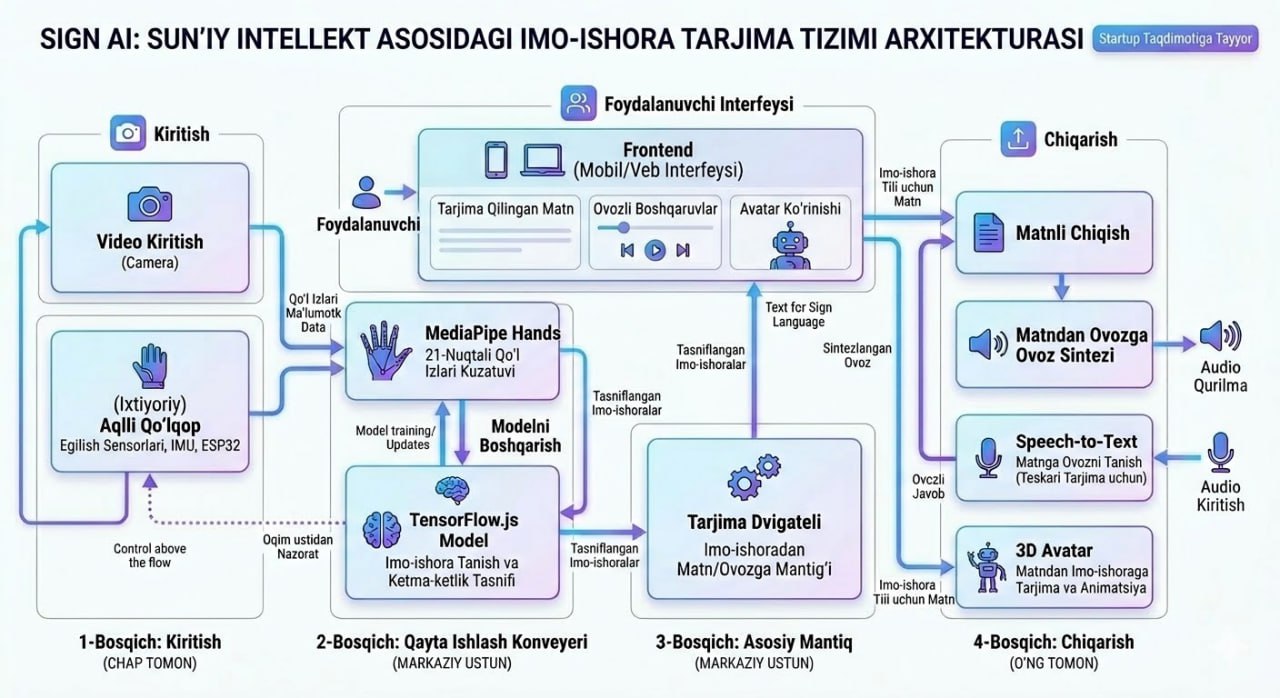
During this project, I explored and learned: Computer Vision for gesture recognition Natural Language Processing (NLP) Real-time audio and video processing systems Deep learning models for sign language interpretation A key mathematical foundation used: How the Project Was Built SignAI was developed using a modular and scalable architecture: Frontend: React.js + WebRTC (real-time communication) Backend: Python (FastAPI) AI Models: TensorFlow / PyTorch for gesture recognition Mobile App: Flutter (cross-platform support) Database: PostgreSQL + Redis (caching layer) Real-time Communication: WebSockets
Cloud & Services
AWS / Google Cloud for model deployment and scaling Firebase for authentication and notifications Docker + Kubernetes for containerization and orchestration OpenAI API for language understanding and translation tasks
Challenges Faced
Improving real-time gesture recognition accuracy Handling variations in sign language between individuals
Achieving low latency (<100ms) for real-time communication Limited and inconsistent sign language datasets
Outcome
SignAI is more than a technical project — it is a step toward an inclusive future where communication barriers no longer exist between people.


Log in or sign up for Devpost to join the conversation.