Inspiration
In theory, users would be rewarded with Sigma tokens when they visit a website in exchange for the website provider collecting their data when they place cookies on their machines. Nowadays, when you visit a typical website, there's usually a disclaimer at the bottom requesting whether or not a user agrees to the privacy policy and how they use cookies to help improve the functionality of the website, but you have the option of rejecting those cookies or accepting them and even in some situations they still collect your data even without your awareness.
What it does
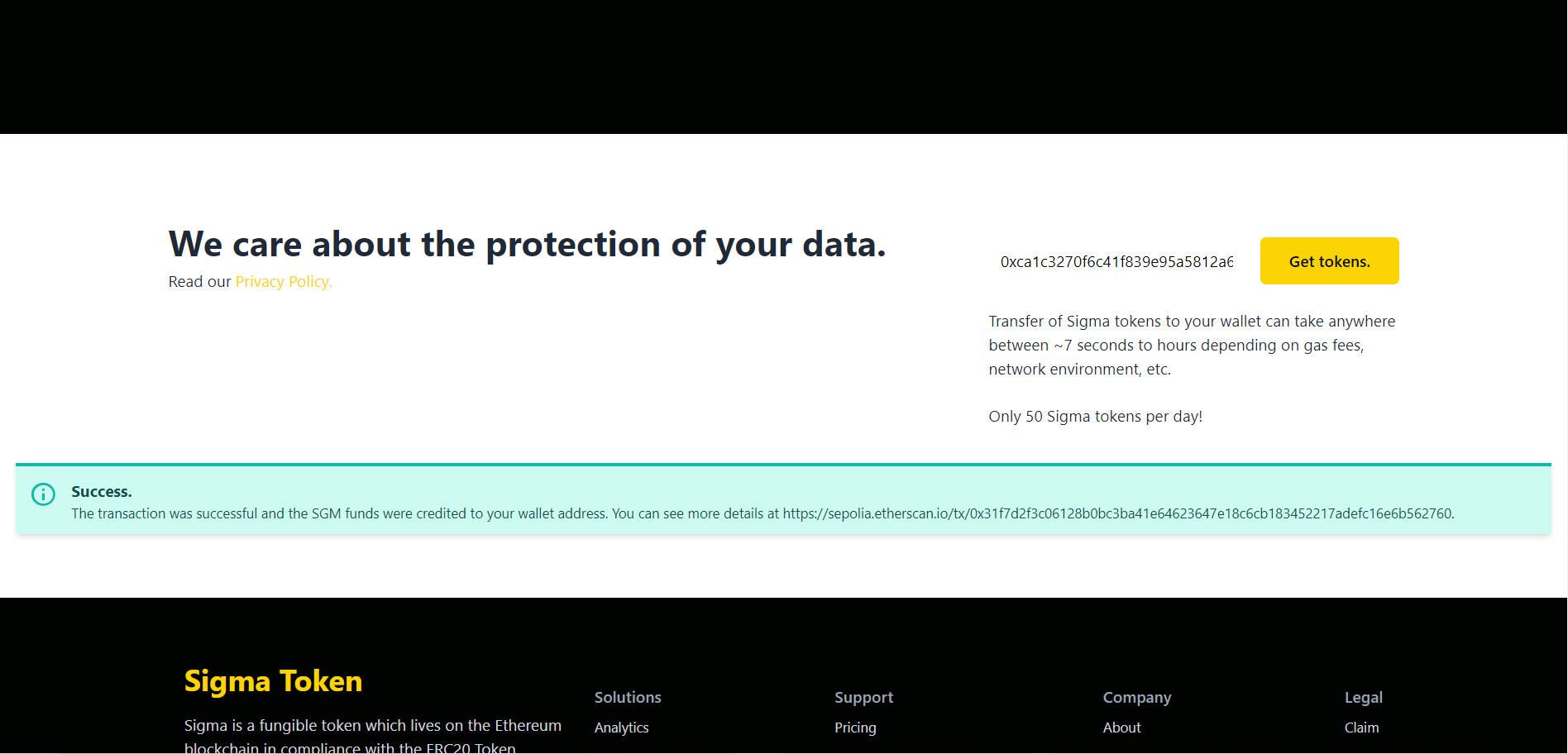
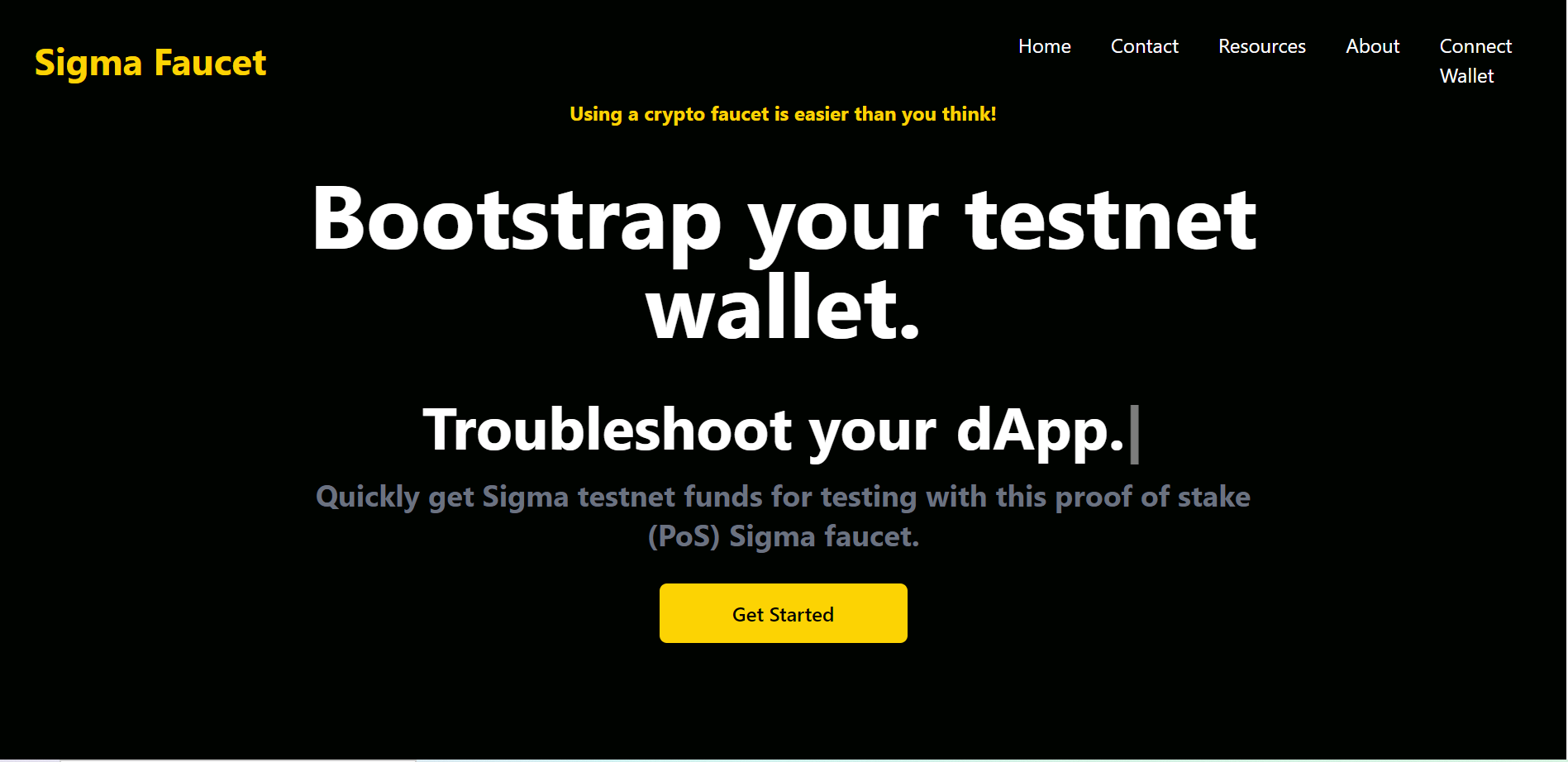
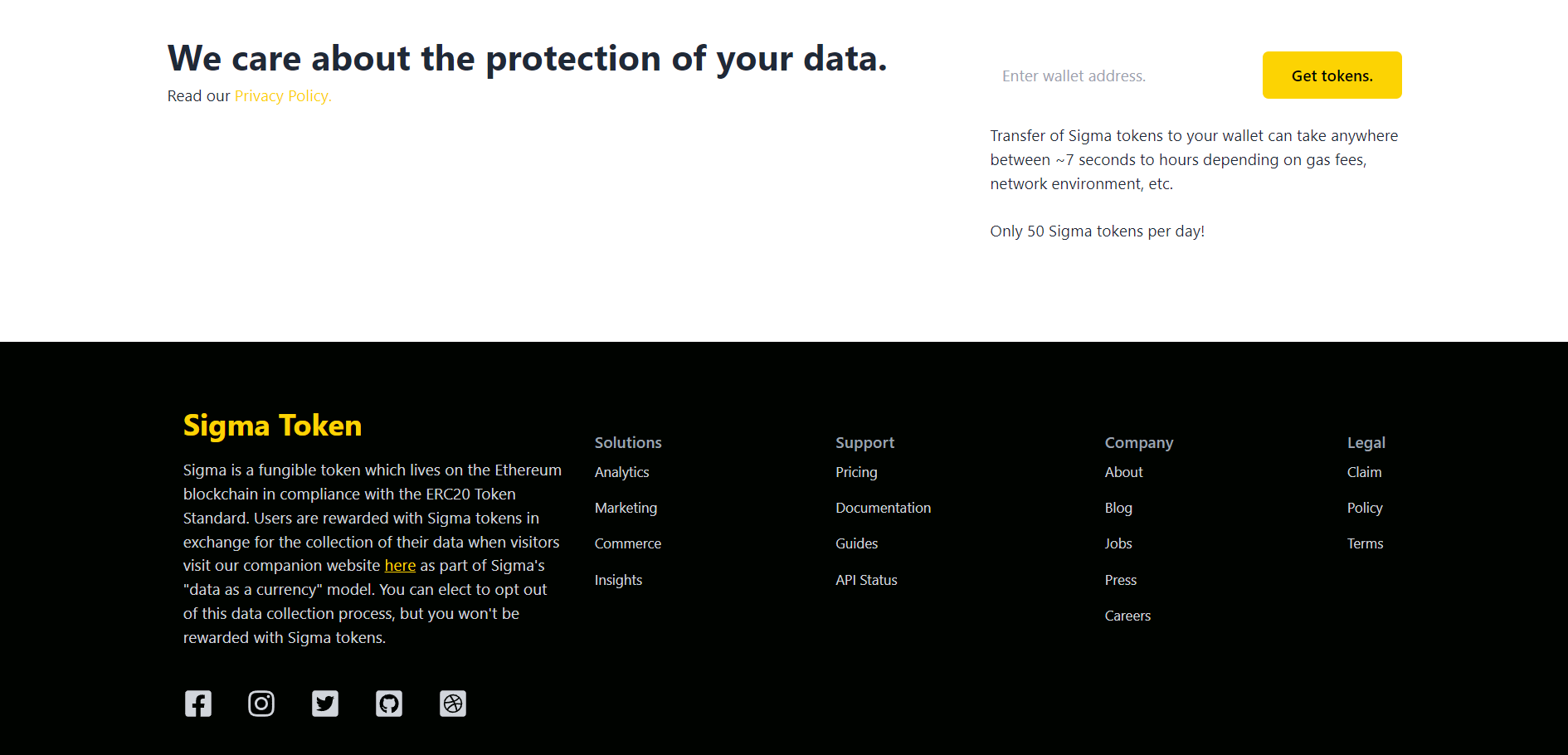
This hackathon project is a crypto faucet which distributes small amounts of Sigma testnet tokens to users on the platform.
How we built it
The technologies I used were JavaScript as my programming language of choice react for the frontend, Ethers.js to make the RPC calls from the client to the Ethereum blockchain under the hood and for the backend, I used Solidity to write the smart contract code which has the logic for the faucet contract and the Sigma token and lastly I used Hardhat to run some unit tests for possible scenarios that might happen in the wild when this application is deployed.
Challenges we ran into
- Solidity JSON ABI was not working correctly which is needed to create an abstraction of the smart contract from the client-side.
- The Goerli and Rinkeby faucets were not working to get test Ether. Had to find alternatives.
Accomplishments that we're proud of
The Sigma token contract is living on the Ethereum testnet as well as the faucet contract. Also, the crypto faucet app runs as expected locally.
What we learned
Using Infura as a service provider to interact with the Ethereum blockchain.
What's next for Sigma - "Data as a Currency" POC
There's a companion Web 3.0 NFT-based app that I'm also developing which is the actual platform that users will go to for this use case.
Built With
- ethereum
- ethers.js
- hardhat
- infura
- javascript
- metamask
- react
- solidity

Log in or sign up for Devpost to join the conversation.