-
-
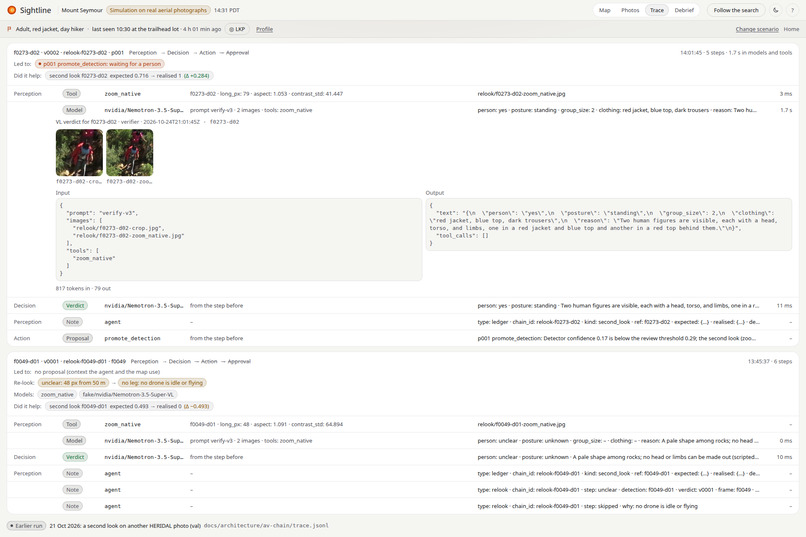
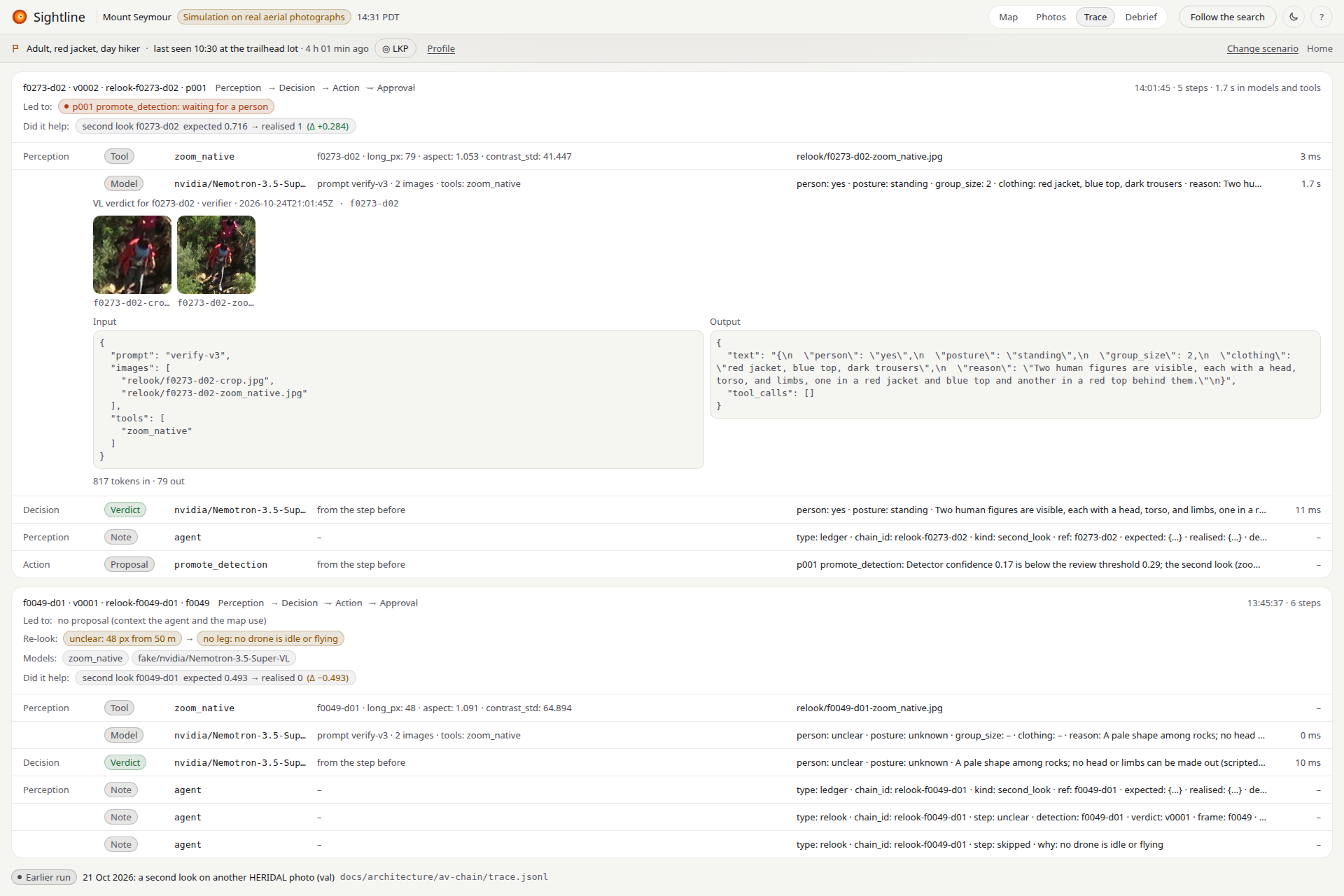
Which NVIDIA model did what: the Trace view, step by step: OpenCV zoom, the Nemotron VL call with its images and verdict, then the proposal.
-
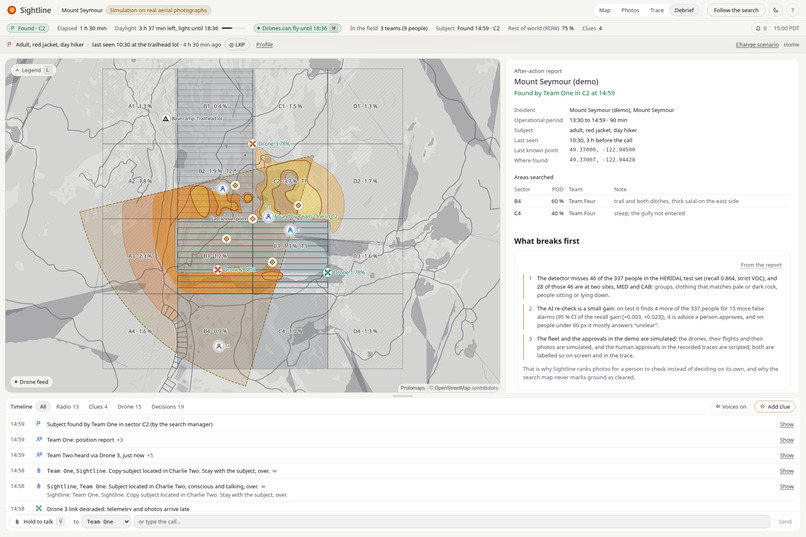
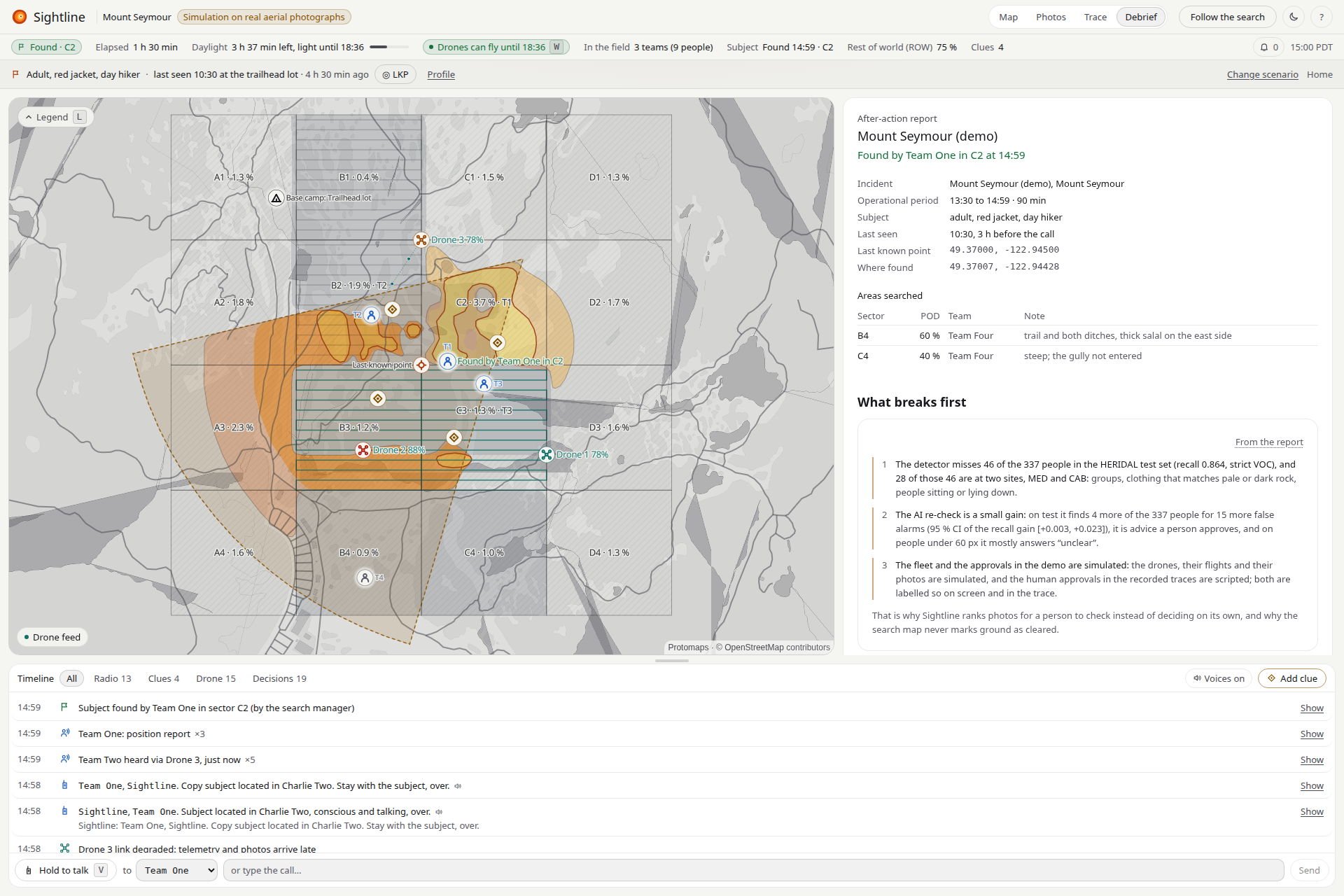
The Debrief after the find: the after-action report, the areas searched at their POD, and what breaks first.
-
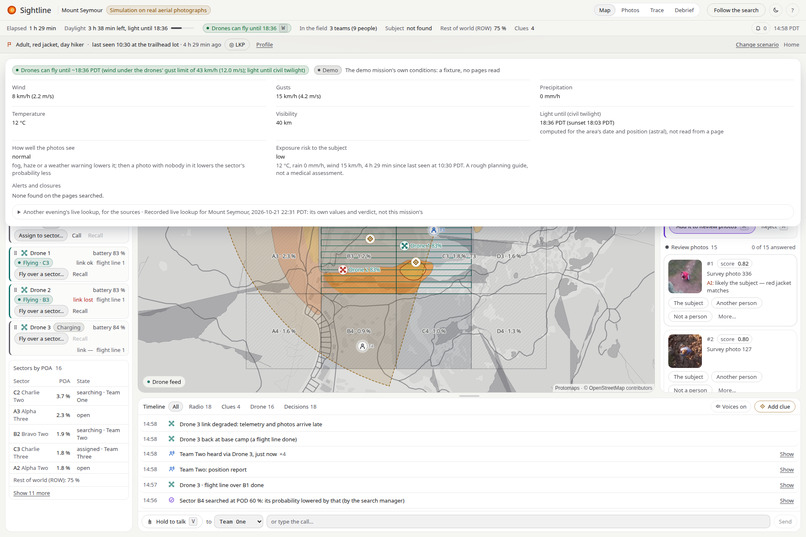
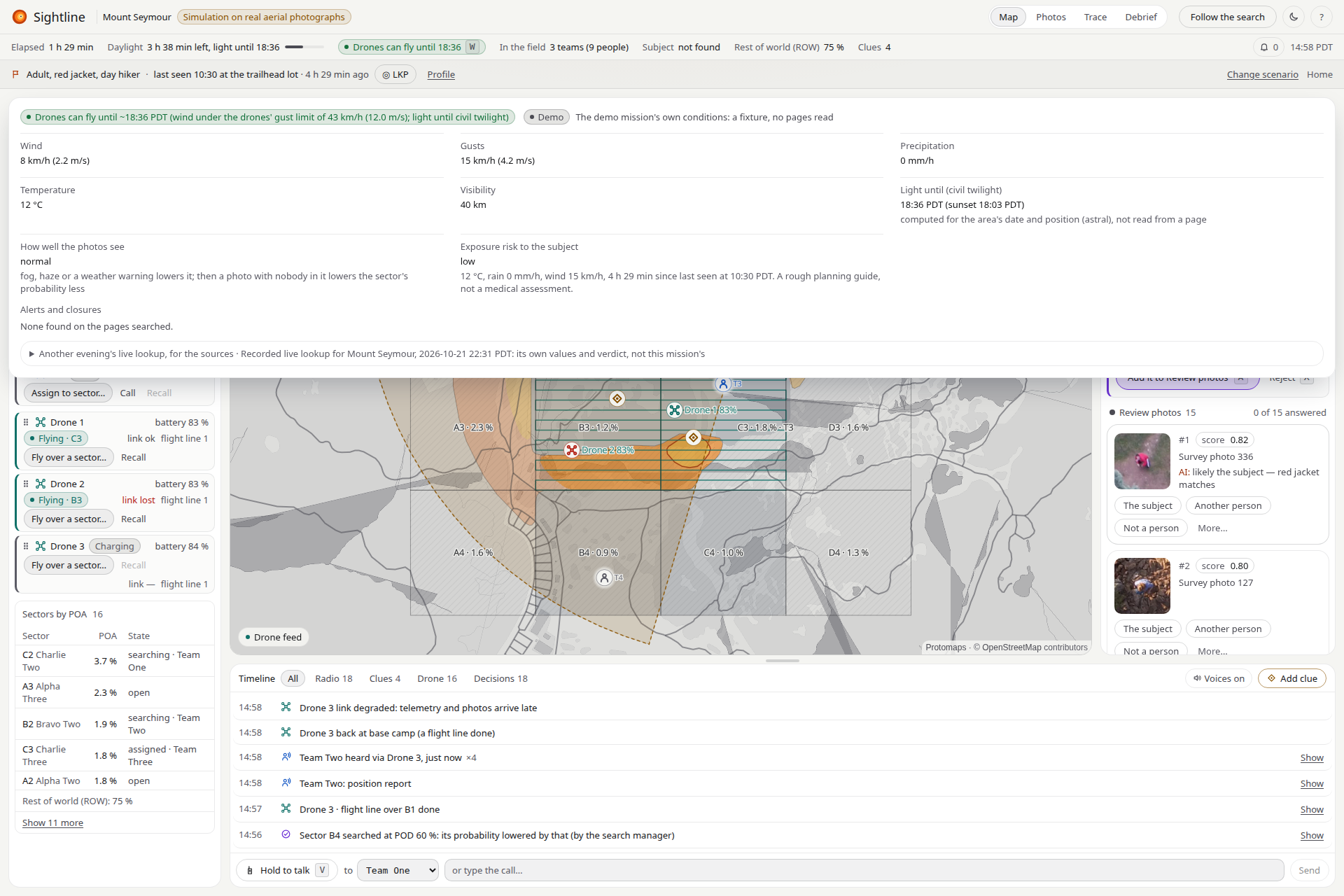
Physical AI: drones and ground teams act on one map; Conditions (Tavily pages read by Nemotron 3 Nano, each value quoted) gate flying.
-
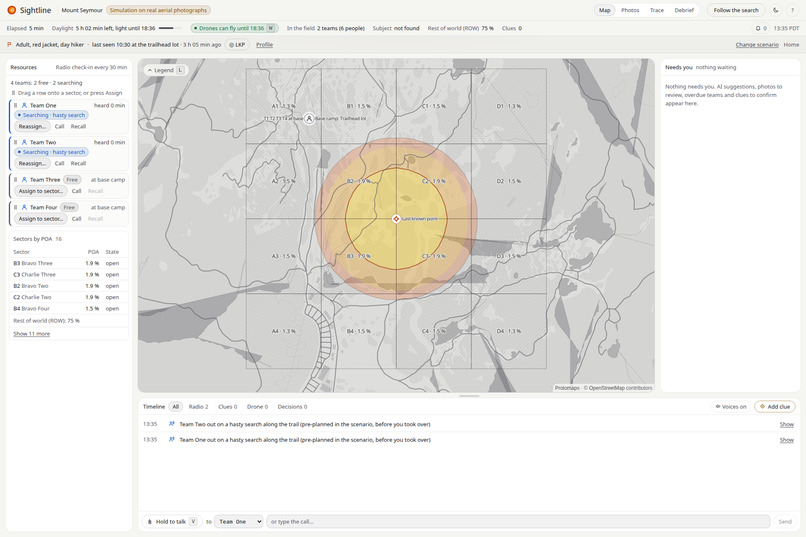
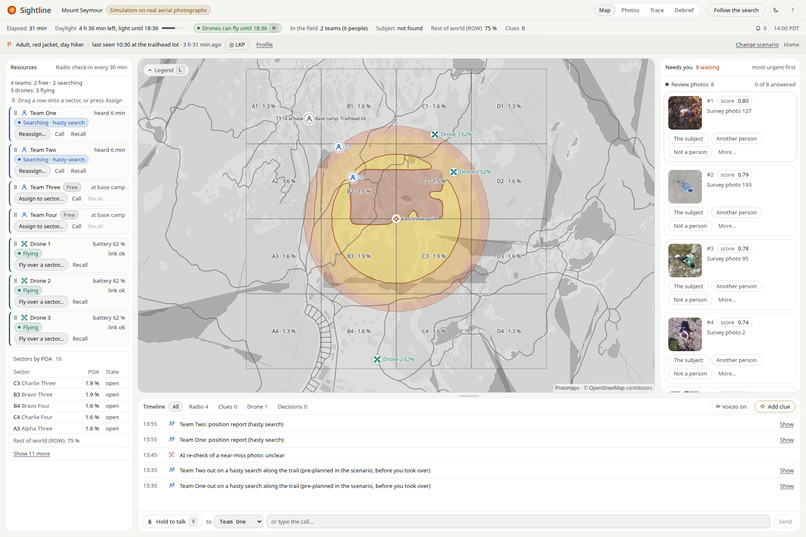
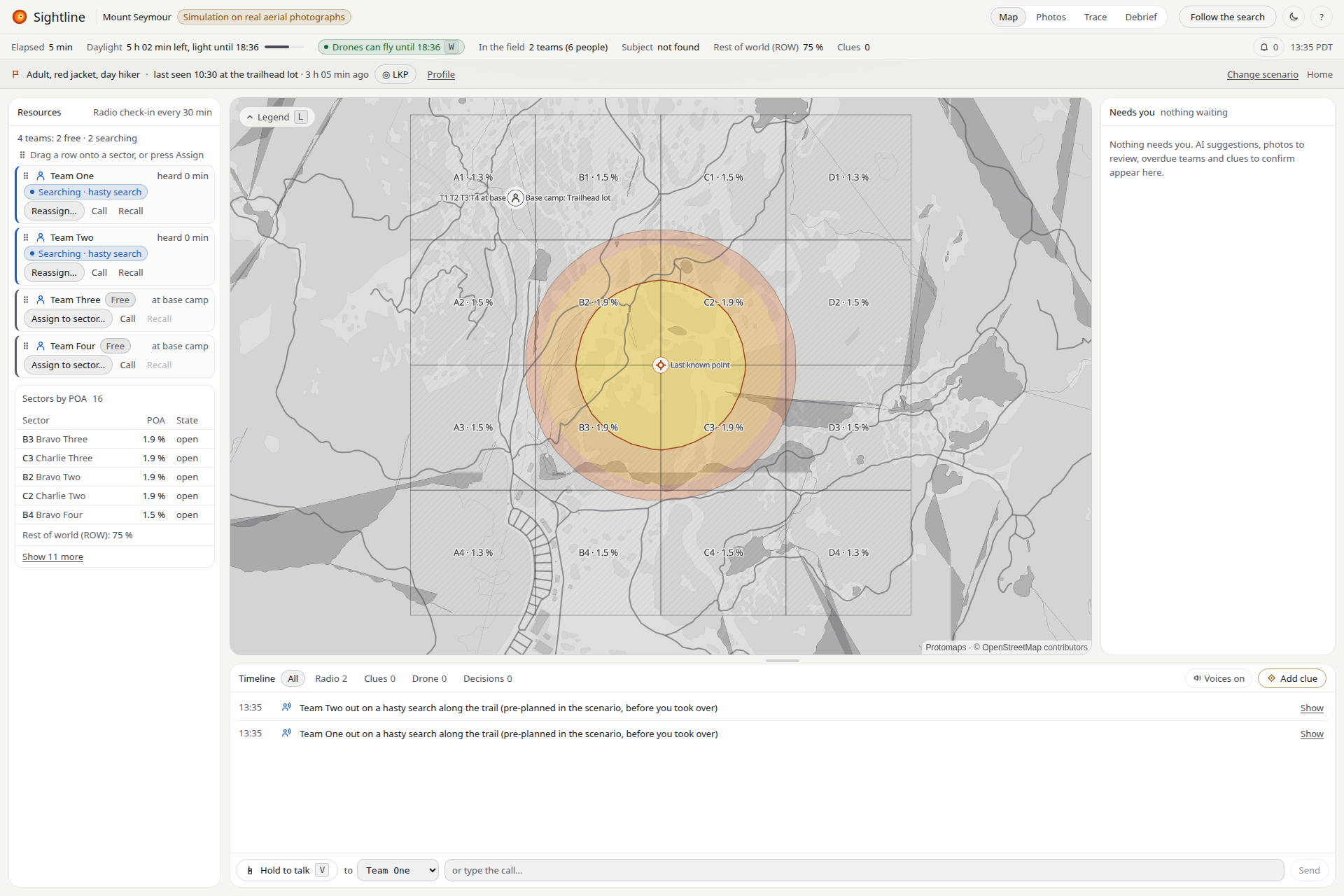
13:35, the call: the console on the overdue-hiker mission, lost-hiker rings on the probability map, two teams out and two at base camp.
-
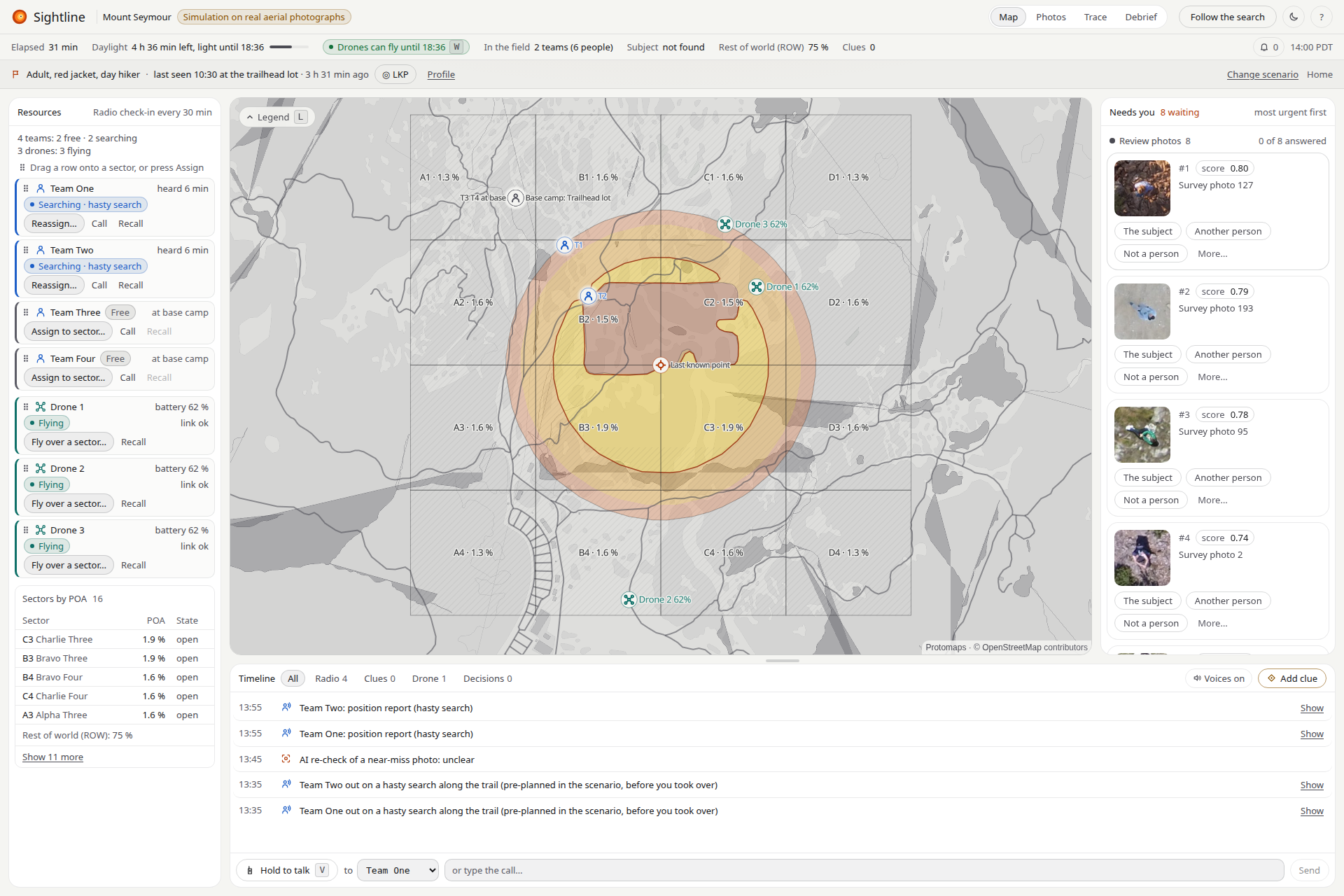
Photos landing: each real HERIDAL photo on a simulated drone's flight path is ranked by the detector and placed on the map as it lands.
-
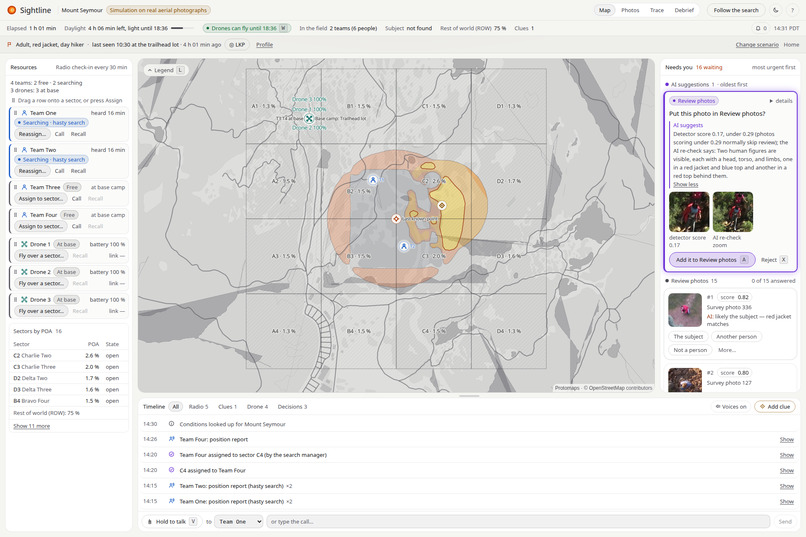
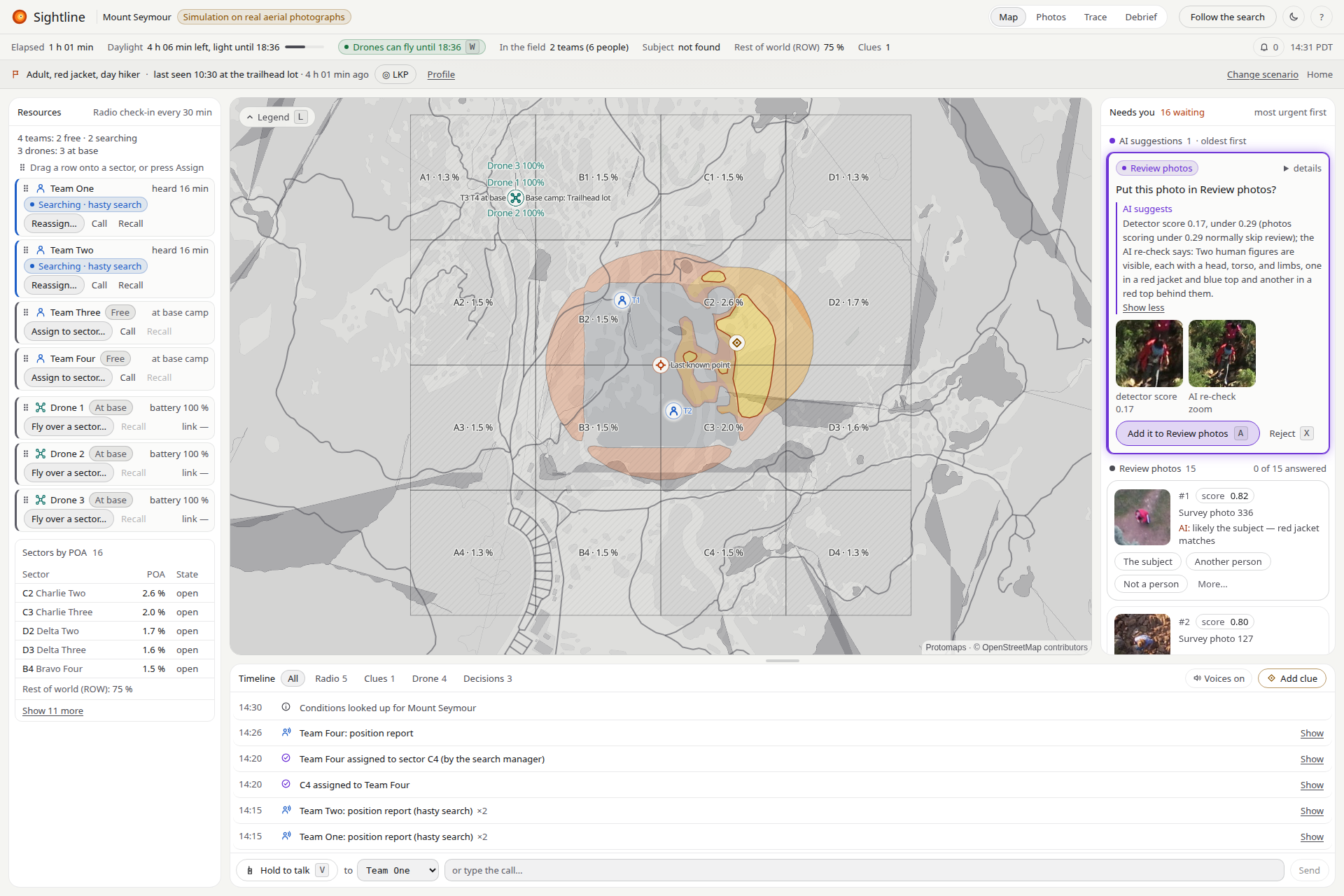
The second look: a 0.17 candidate under the review line; Nemotron 3.5 Super VL on Nebius Token Factory says two people standing; you decide.
Inspiration
A search-and-rescue drone brings back hundreds of photos per flight; a missing person is about 70 px wide in each, and people reviewing by eye found 68 % of them in the published study. Meanwhile the search manager decides where drones and teams go next, from radio calls and a paper map. Drone tools stop at a flagged pixel; mapping tools track clues. None I found keeps one probability map that photos, sweeps and radio reports all update, and that directs both drones and people.
What it does
- Detects each drone photo as it lands and places it on the map from its own GPS and camera pose.
- Updates a probability map with every photo, review, searched sector and clue. Searched ground shows how well it was searched; the software never rules an area out.
- Nemotron VL takes a second look at uncertain detections, from OpenCV re-look images.
- Proposes the next drone flight, re-task, team assignment or alert, with its reason. A person approves every move, logged with who and when.
- A radio desk for ground teams: Parakeet speech to text, Nemotron 3 Super with tools, Magpie speech. A clue is logged only after a readback.
- Conditions from Tavily at run time decide whether drones may fly.
On the live site you are the search manager in a three-minute guided simulation: the AI proposes, you decide, and the end screen compares a manual search with yours (Without Sightline vs with Sightline, every assumption with its source). Open the console runs the same mission hands-on.
Run a real search: #new starts a live mission on the AWS API: drop aerial photos and each is detected with OpenCV 5 cv2.dnn on the server and placed on the map.
Physical AI: drones sense, the agent decides, drones and people act, and each action changes what is sensed next. A team's clue re-tasks the nearest drone; that drone's photo shows the person. The fleet is simulated, flying over real HERIDAL aerial photos through the same photo API a real drone would use.
How I built it
Every language and vision model call goes through Nebius Token Factory, through one OpenAI-compatible client, and every model is an NVIDIA open model:
| Job | NVIDIA model | Runs on |
|---|---|---|
| Second look at uncertain detections | Nemotron-3.5-Super-VL | Token Factory |
| Briefings; reading conditions pages with quotes | Nemotron 3 Nano 30B-A3B | Token Factory |
| Radio turns with tool calls | Nemotron 3 Super 120B-A12B | Token Factory |
| Speech to text / text to speech | Parakeet TDT 0.6B v2 / Magpie TTS 357M | RTX 4080 SUPER (NeMo) |
- Every AI step in the demo is a real Nemotron answer from Nebius Token Factory: the demo mission and all four scenarios were re-recorded on Oct 26 with live calls (34 new calls, 50.1 s in all): three Nemotron 3.5 Super VL second looks per mission and one Nemotron 3 Nano briefing per assignment, replayed word for word, each labelled on screen with its model, "Nebius Token Factory" and its time; the Trace view counts them per mission.
- The VL verdict takes 1.35 s p50, about $0.00033 per detection, and 461 of 461 replies were valid JSON. A radio turn's first sound comes back in 2.5 s p50.
- A Nebius Serverless Job detected the simulated fleet's 711 photos with OpenCV 5
cv2.dnnin 483 s on 16 vCPUs, about $0.10; a Serverless Endpoint serves the same detector one photo at a time (5.68 s p50, $0.38 per 1,000 photos). - Tavily searches and extracts the forecast, warnings and park alerts; Nemotron Nano keeps each value only with a verbatim quote. Nemotron Nano can also call Tavily itself to read a public missing-person bulletin.
- AWS runs the live API and photo worker; the web console is React, TypeScript and MapLibre.
Challenges I ran into
- Small people: below 60 px Nemotron VL mostly answers "unclear". I kept that abstention rather than prompt it away.
- Keeping a voice model honest: with thinking off, Nemotron 3 Super sometimes put its reasoning in the reply, and once invented weather without calling the tool. Both are now enforced in code.
- Never letting software rule an area out: tests check every proposal, briefing and screen string.
Accomplishments that I'm proud of
- Five NVIDIA models in one loop, each doing one job, each call traced.
- 6 of 6 radio clue reports read back and confirmed before they were logged.
- With Token Factory fully down, a mission pays about 82 s in all, not minutes per call; the approval gate held in 12 of 12 runs.
- What breaks first, stated up front: the detector misses 46 of 337 test people; the second look adds only 4 people for 15 false alarms; the fleet is simulated.
What I learned
Tool calling with thinking off needs code-side guards for anything safety-relevant, and thinking tokens count against max_tokens, silently. A Serverless Endpoint needs no TLS or auth code on my side, but it has no scale to zero. Per-tool notes: docs/feedback/nebius.md.
What's next for Sightline
A Jetson field kit without internet (roadmap only, not yet run on a Jetson); thermal for night searches; real drone photos straight from the drone platform; a field trial with a search-and-rescue team.
Built With
- amazon-ec2
- amazon-sqs
- amazon-web-services
- docker
- fastapi
- magpie
- maplibre
- nebius
- nebius-serverless
- nebius-token-factory
- nemotron
- nvidia
- nvidia-nemo
- onnx
- opencv
- parakeet
- python
- pytorch
- react
- sahi
- tavily
- typescript
- ultralytics
- vercel
- yolo

Log in or sign up for Devpost to join the conversation.